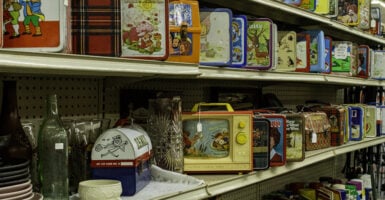
Playground Equipment Removed From Schoolyards
Recess once came with a burn risk, a fall risk, and a fair chance of losing a tooth. The equipment was steel, the ground was blacktop, and the only safety feature was a teacher with a whistle standing forty yards away.
Most of it is gone now. Federal safety guidelines, insurance carriers, and a long run of lawsuits cleared American schoolyards piece by piece from the 1970s onward.
Some of the removals were overdue, and some still get argued about at reunions.
The Giant Stride

A tall steel pole, a rotating cap, and a ring of chains with handles hanging down. Children grabbed on, ran in a circle, and lifted their feet, and momentum carried them outward until they were flying at head height.
The giant stride was standard equipment in the early 1900s and mostly gone by midcentury. A child who let go became a projectile, and the swinging handles caught anyone standing nearby.
The Consumer Product Safety Commission still names it in its handbook as equipment that should not be used on any public playground.
The Witch’s Hat
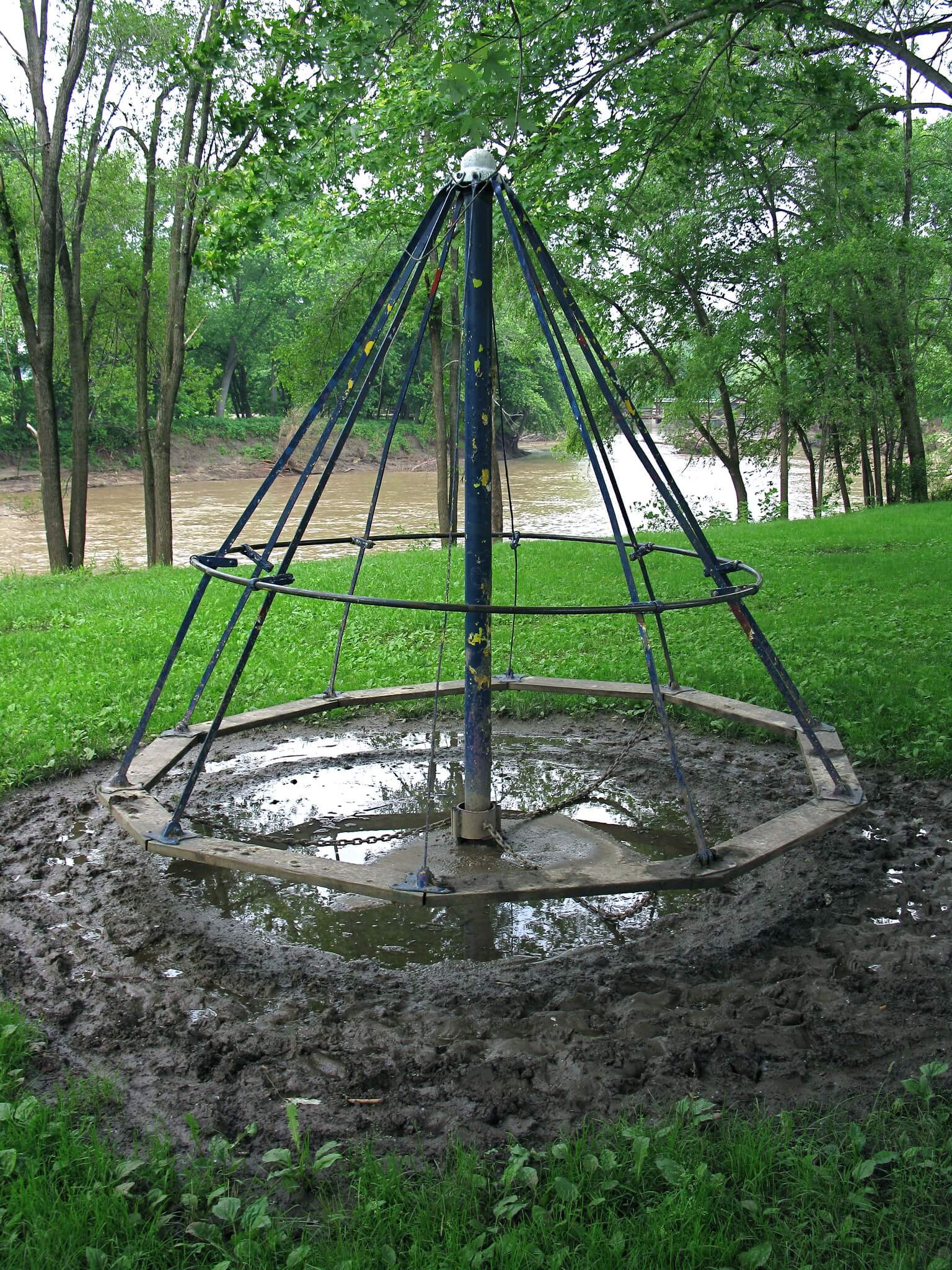
This was a cone-shaped steel frame hung from the top of a center pole, with a wooden bench around its lower rim. It spun, and because it hung loose, it also tilted and swayed as riders shifted their weight.
That second motion caused the trouble. The rim could swing in hard against the pole with a child’s leg or hand between the two.
Sometimes sold as the ocean wave, it appeared in schoolyards on both sides of the Atlantic before safety reviews in the 1970s and 1980s removed nearly all of them.
Steel Merry-Go-Rounds
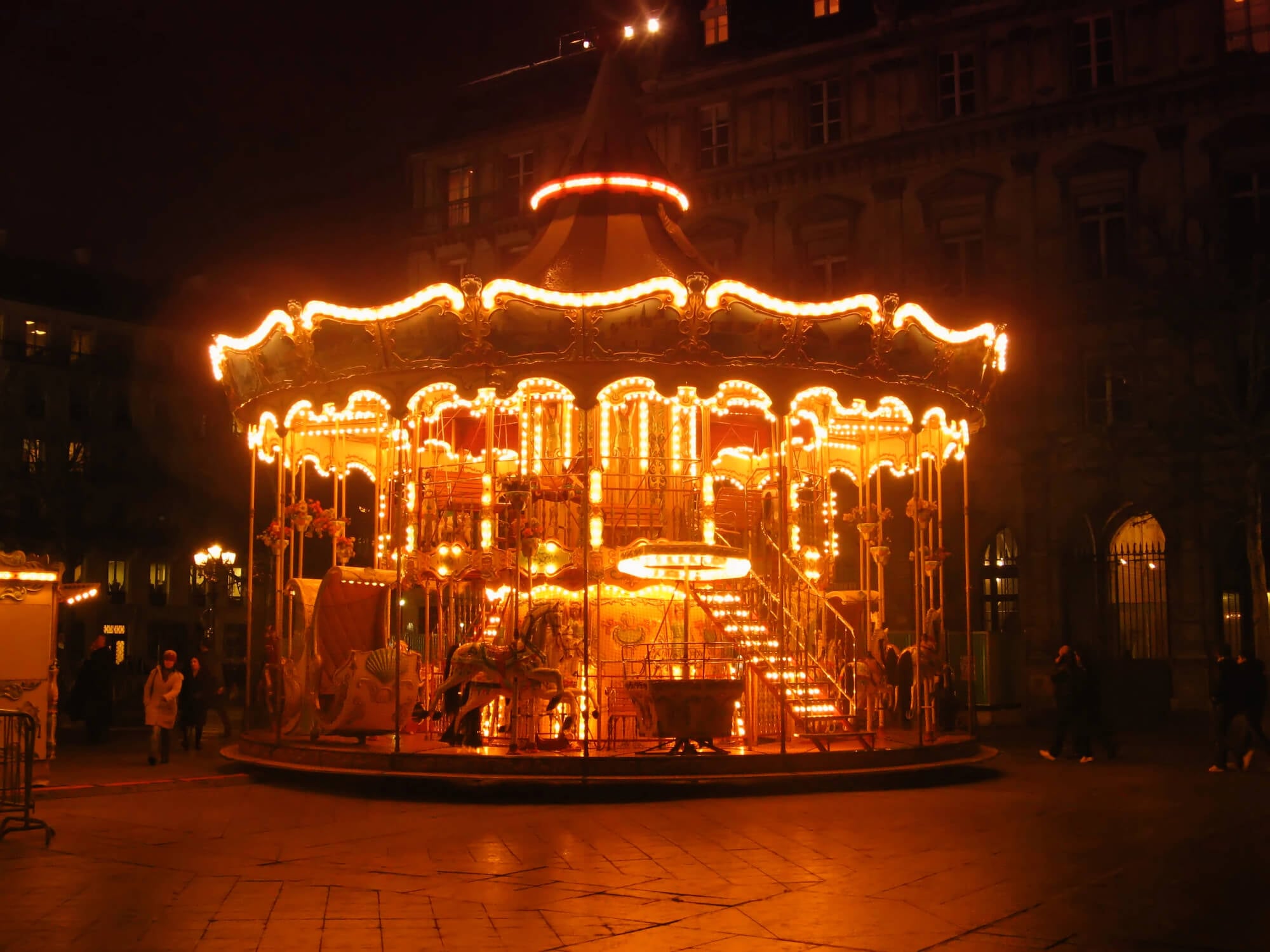
The classic version was a steel disc with pipe handrails, pushed by whichever children were biggest. It had no speed limit.
Riders at the rim felt real centrifugal force, and the ones who lost their grip slid off across gravel or asphalt. The gap beneath the platform trapped feet.
Current guidelines allow merry-go-rounds only with limited speed, a platform flush with the ground, and deep surfacing all around, and older units met none of those tests. Many districts decided removal was cheaper than retrofitting.
A few survive in small town parks, usually rusted in place.
Twelve-Foot Metal Slides

The old slide was a narrow ladder to a small platform with minimal railings, followed by a long chute of bare sheet steel. In direct summer sun the metal reached temperatures that raised blisters on bare legs, and the federal safety commission has issued specific warnings about burns from playground surfaces.
The height was the larger problem. A fall from the top platform onto packed dirt was a fall of ten feet or more.
Replacements are shorter, molded from plastic, enclosed at the top, and noticeably slower, as any adult who tries one will confirm.
Wooden Plank Seesaws
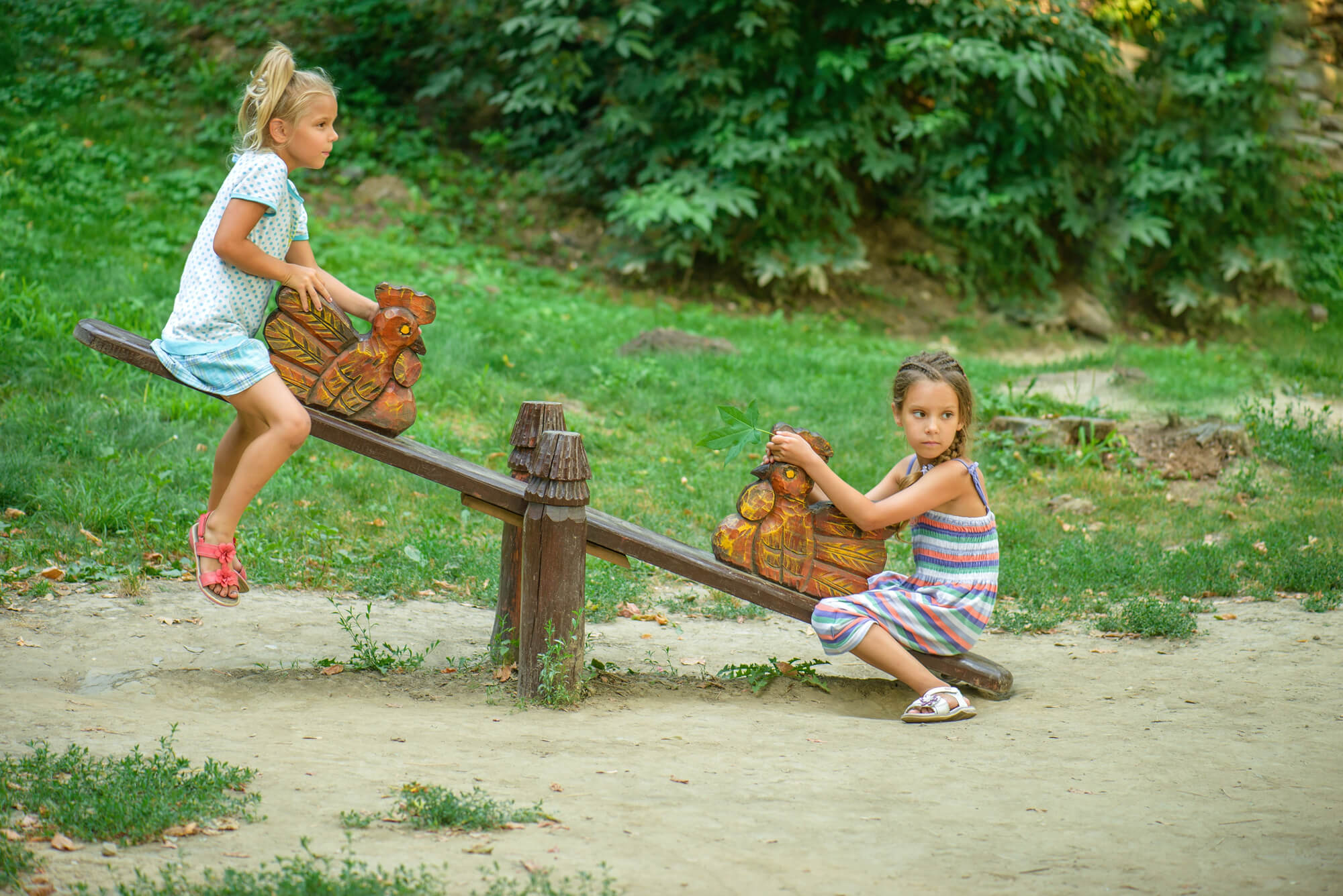
A seesaw required trust, and children are not reliably trustworthy. The standard prank was to hop off at the bottom and let the partner drop, which delivered a jolt straight up the spine.
Fingers got caught at the pivot, and chins met the rising board. Modern guidelines call for shock-absorbing material under each seat and say pivot seesaws are not appropriate for preschoolers at all.
Most schools simply took them out. Spring-centered versions that cannot slam down replaced a few, though they lack the drama that made the original popular.
Jungle Gyms Over Asphalt

Sebastian Hinton, a Chicago patent attorney, filed for a patent on the jungle gym in 1920 and tested early versions with schoolchildren in Winnetka, Illinois. His idea was a three-dimensional grid of pipe for climbing in every direction.
The design worked, and schools installed thousands. The trouble was what sat underneath.
For decades the cubes stood directly on blacktop or concrete, and a fall from the top bar meant hitting both the lower bars and the pavement. The climbing cube itself still exists in shorter forms, but the tall steel original over hard ground is gone.
Swinging Gates
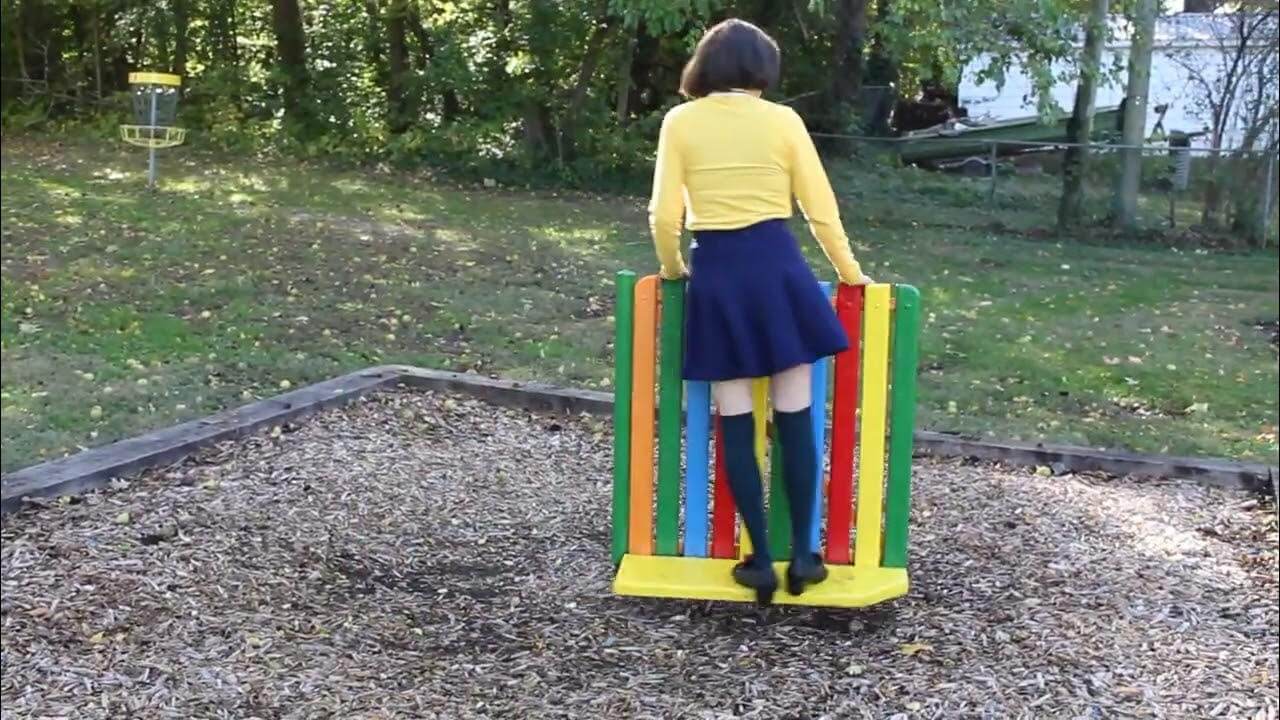
This one puzzles people who never saw it. A swinging gate was a heavy steel gate mounted on a post for the sole purpose of being ridden.
Children stood on the lower rail and pushed off while others shoved it back and forth. The hinge side formed a crushing point, and the free end swept through a wide arc at the height of a small child’s head.
It appears on the federal list of equipment not recommended for any age group. Few photographs of them survive, which suggests schools were not especially proud of owning one.
Animal Figure Swings
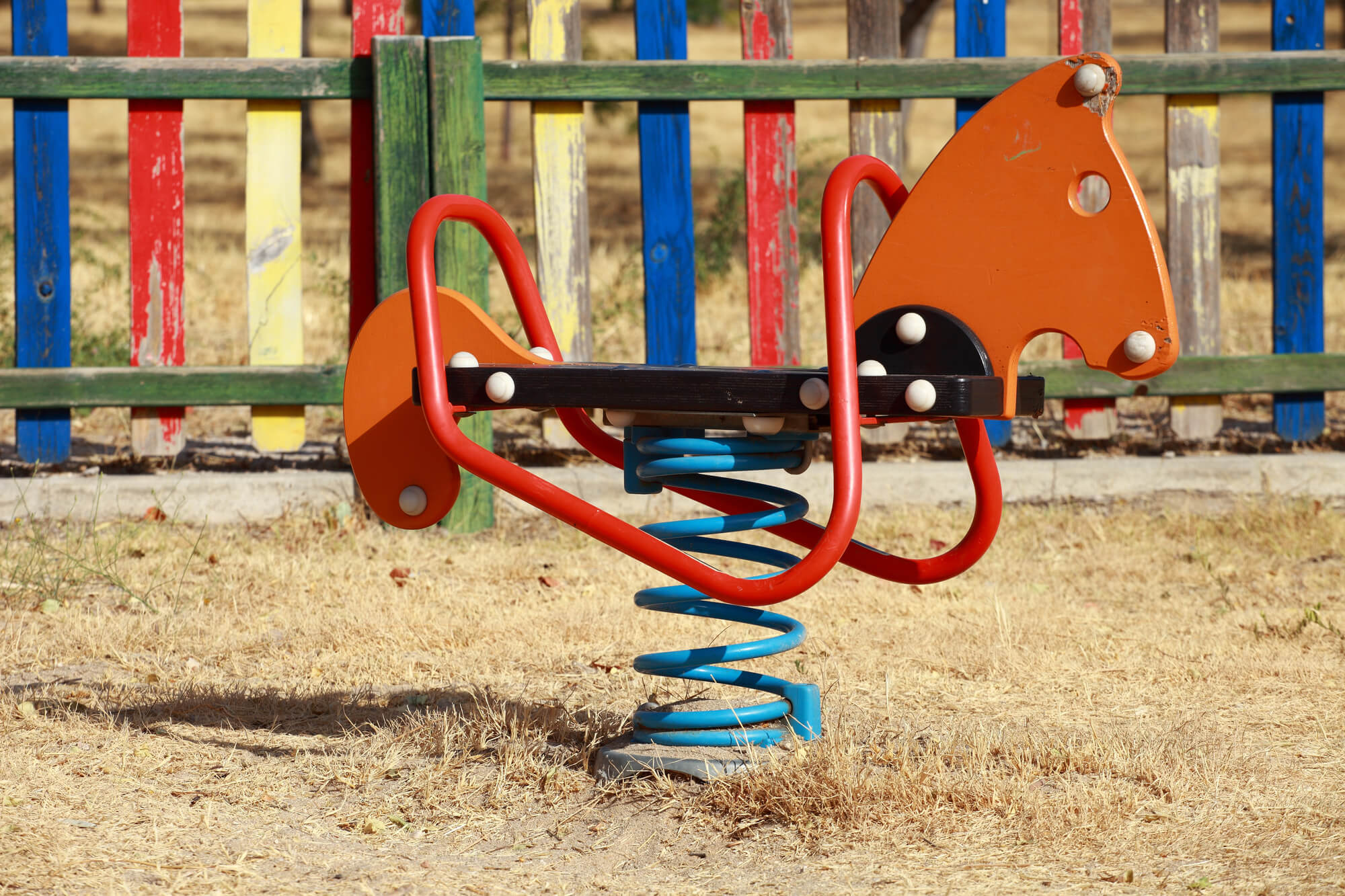
These were swings shaped like horses, ducks, or elephants, built from rigid cast metal or heavy plastic on a steel frame, with a seat for a small child inside. They looked gentle.
An empty one in motion weighed enough to seriously injure a toddler who wandered into its path, and federal guidelines now list heavy animal swings among equipment to be removed from public playgrounds. The rigid frame was the hazard, since nothing about it gave on impact.
Belt seats made of flexible rubber replaced them and weigh almost nothing by comparison.
Glider Swings Built for Four
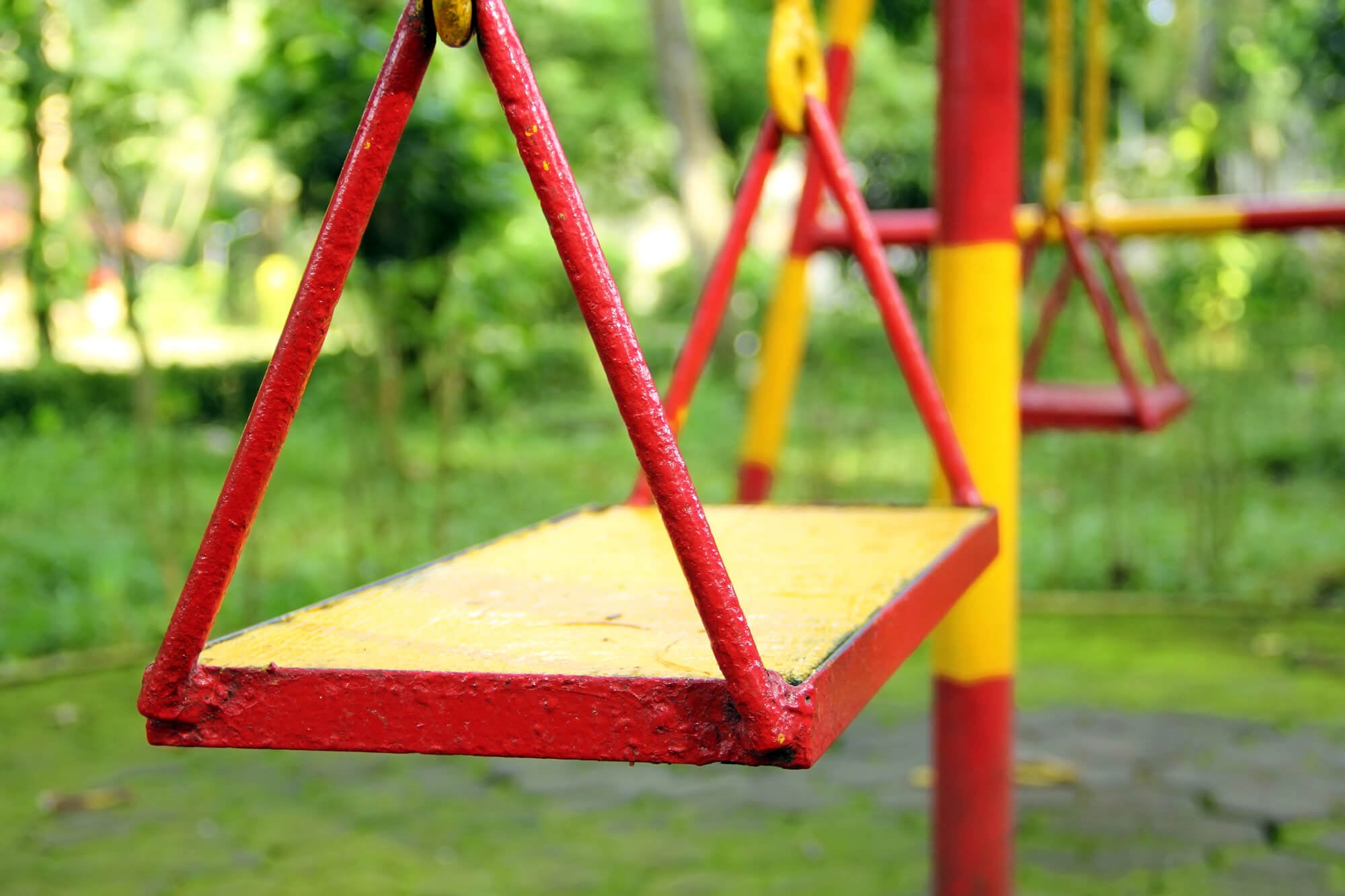
The glider held two or four children facing each other on bench seats, swinging together on a shared frame. It was sociable, and it was heavy.
The loaded carriage had far more mass than a single swing, and anyone who ran past at the wrong moment took the full force of it. Federal guidelines advise against multiple occupancy swings on public playgrounds, with the tire swing as the lone exception.
Backyard versions lasted longer than the schoolyard ones. Churches and day care centers removed theirs as licensing inspectors began citing them.
Trapeze Bars and Rings on Long Chains
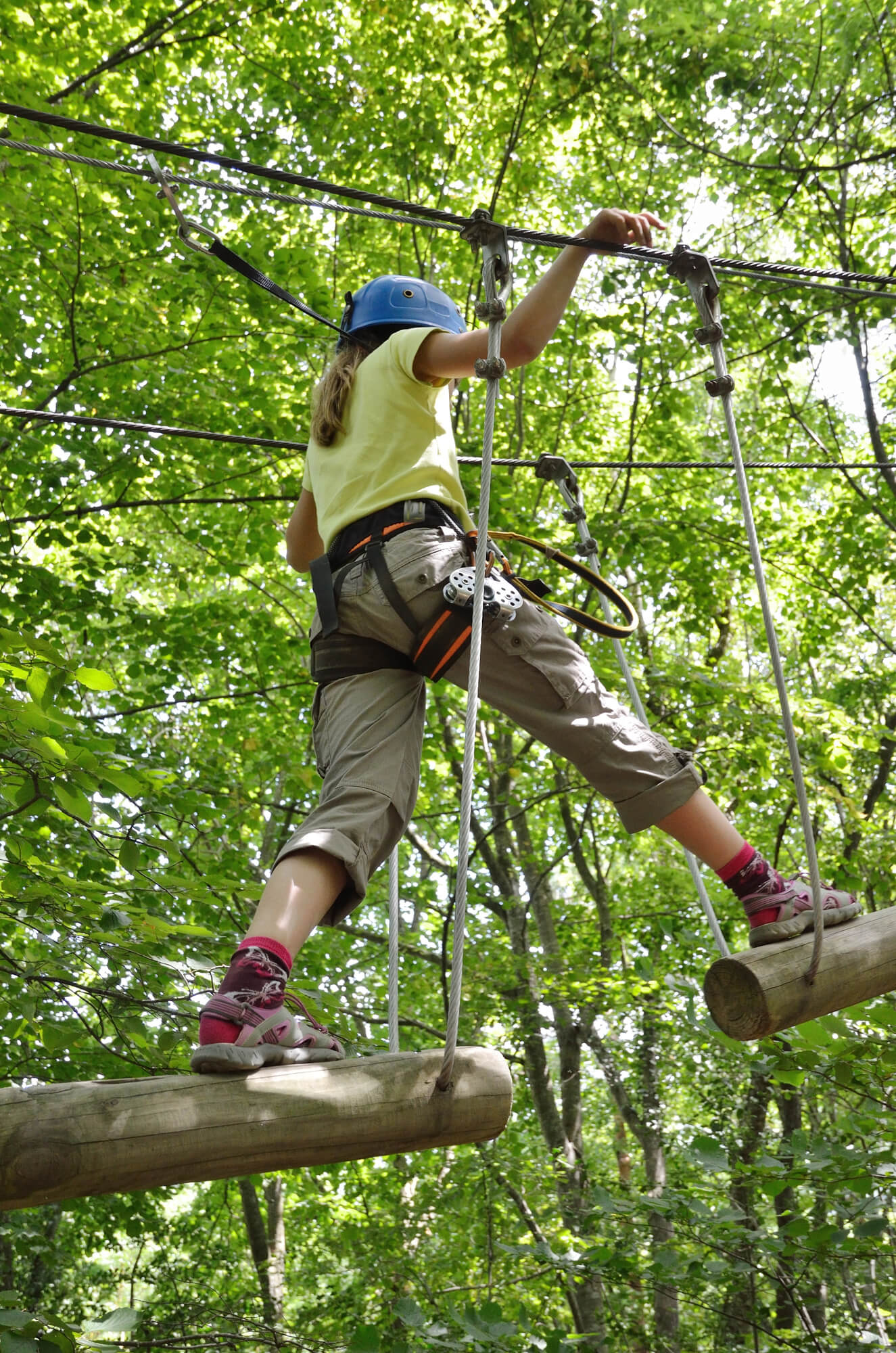
Older swing frames often carried a trapeze bar and a pair of steel gymnastic rings alongside the regular seats. Children hung by their knees, flipped through the rings, and performed dismounts learned from watching the circus.
The long chains allowed a wide swing, so a fall could happen at the top of the arc and headfirst. The safety commission lists swinging dual exercise rings and trapeze bars on long chains as not recommended for any public playground.
Fixed overhead rings, which let children cross hand over hand, remain acceptable and are a different thing entirely.
Free-Hanging Climbing Ropes
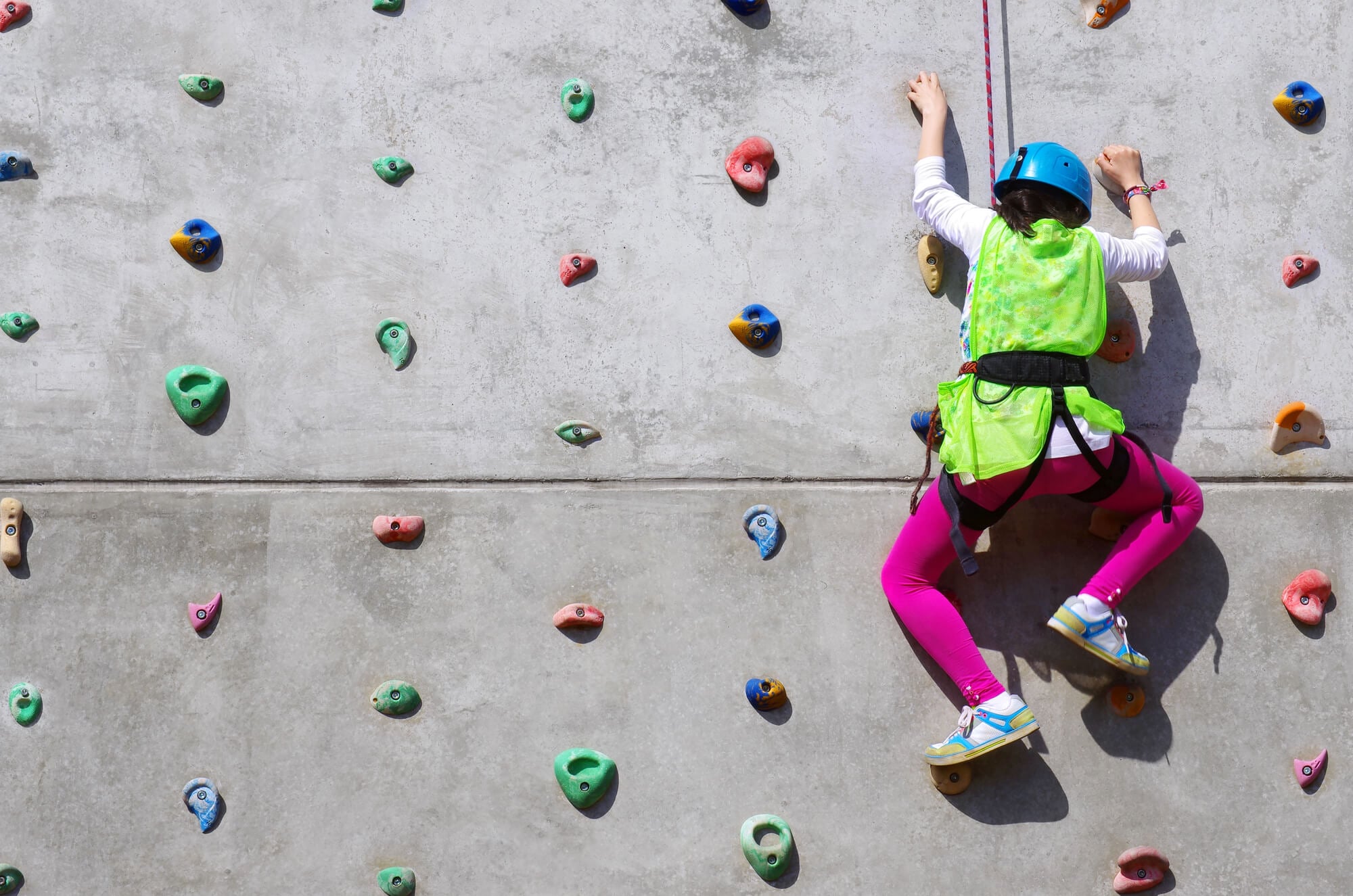
A thick knotted rope hung from a crossbeam and ran straight down to the ground with nothing securing the lower end. Climbing it built real upper body strength, and many gym teachers considered it essential.
The hazard had little to do with falling. A loose rope can be looped, and a loop at neck height on a playground is a strangulation risk that guidelines now treat as unacceptable.
Climbing ropes remain allowed only when anchored at both ends so they cannot form a noose. Most schools chose to take the ropes down instead.
Rope Swings
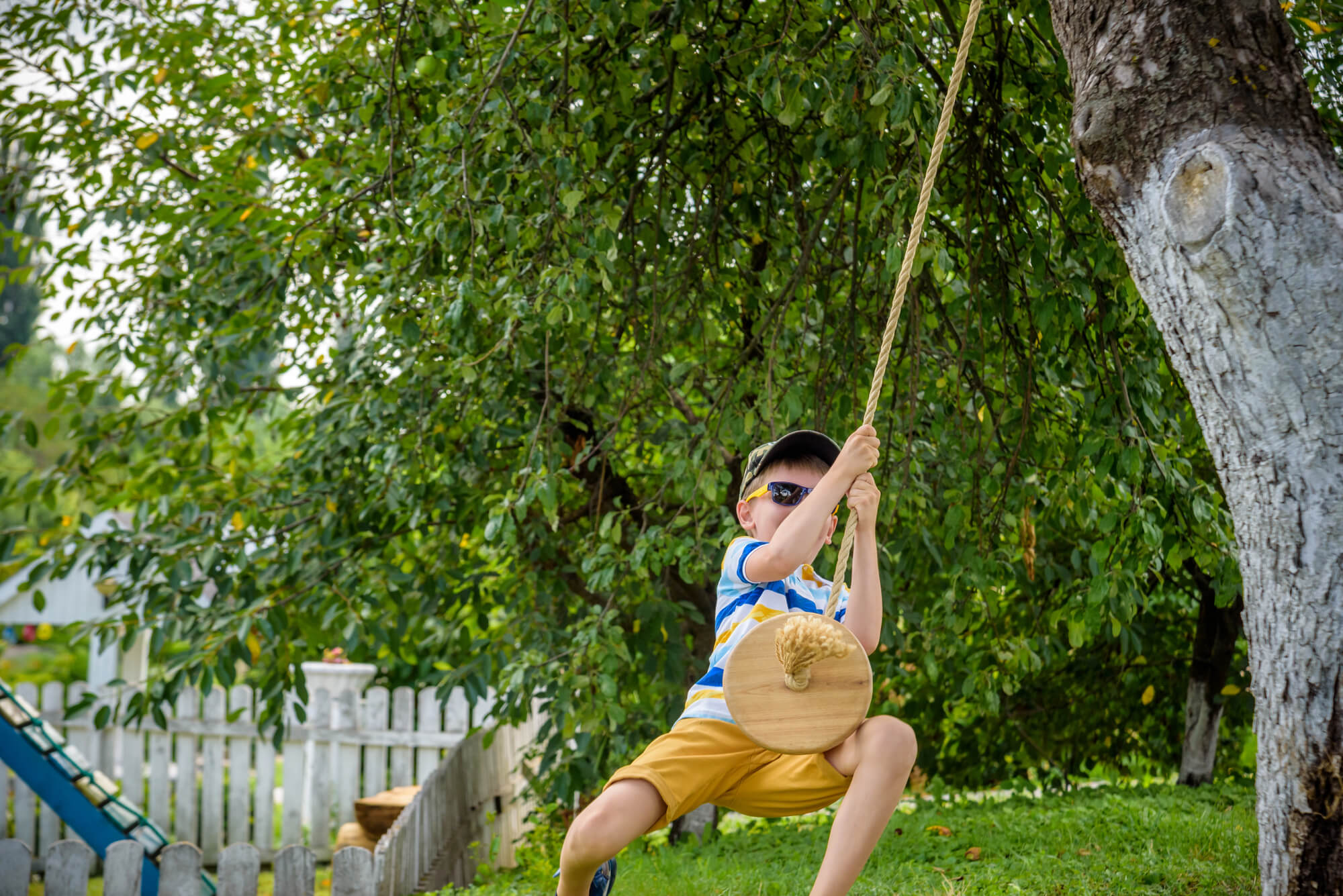
A single rope with a knot or a wooden disc at the bottom, tied to a beam or a tree limb at the edge of the schoolyard, was the cheapest play equipment ever installed. It was also unpredictable.
Unlike a chain swing on a fixed pivot, a rope swing travels in any direction, including into the tree. Ropes fray invisibly from the inside and fail under load.
Federal guidance groups rope swings with the equipment that should not appear on public playgrounds. They live on at swimming spots and in backyards, where nobody files an inspection report.
Wooden Plank Swing Seats

Before the flexible rubber belt seat, swings had flat seats of hardwood or steel. An occupied swing hits hard enough, but an empty plank seat swinging back after a child jumped off was the classic injury, usually to the face of the next child in line.
Safety guidelines now call for lightweight seats of rubber or plastic specifically to reduce the force of impact. The belt seat also grips the rider, which makes standing on it harder.
Children did stand on the wooden ones, routinely, often two at a time facing each other.
Towering Swing Frames
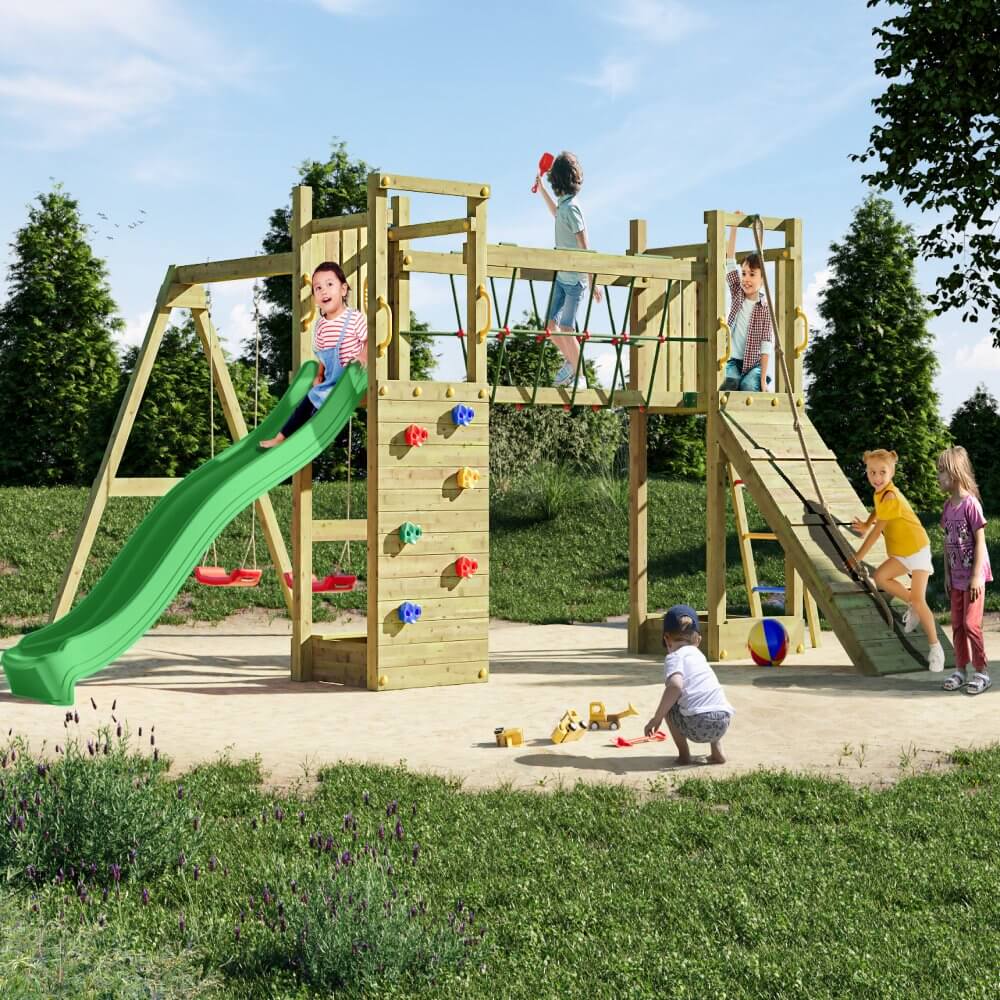
Schoolyard swing sets once ran twelve feet tall and higher, with chains long enough to send a child on a sweeping arc well above the heads of the adults watching. The height made the jump at the top of the swing a serious event, measured afterward by who landed farthest.
Longer chains also meant a bigger danger zone front and back. Newer frames are typically shorter, with wide cleared areas and deep surfacing extending in both directions.
The ride is safer and smaller, and older visitors tend to notice the difference immediately.
Trampolines Rolled Out From the Gym
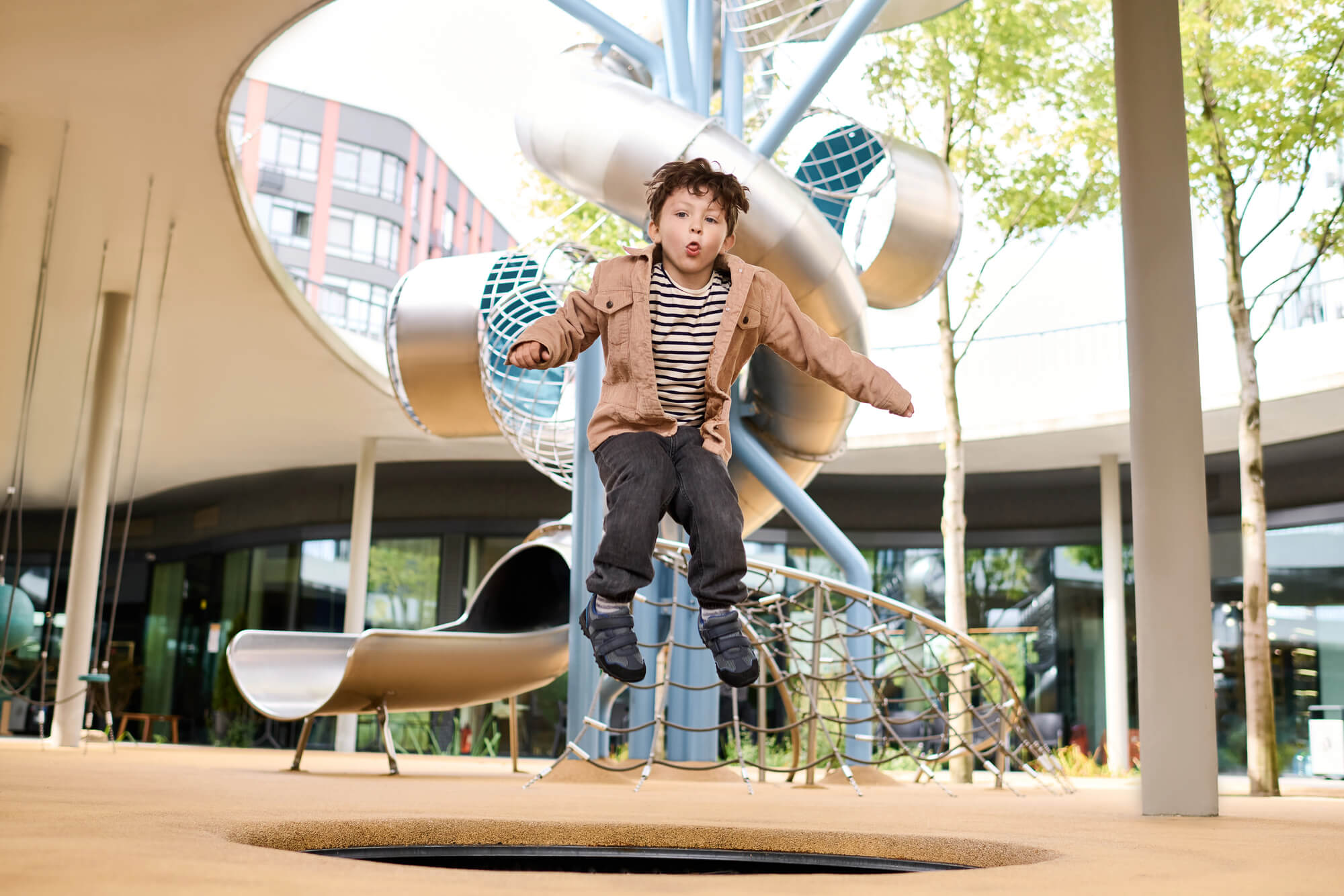
Through the 1960s and 1970s many schools owned a full-size trampoline, used in physical education and sometimes wheeled outside in good weather. Spinal injuries followed.
In 1977 the American Academy of Pediatrics called for trampolines to be banned from school programs, and the Consumer Product Safety Commission lists them as not recommended for public playgrounds. Most districts sold or scrapped theirs within a few years.
Competitive gymnastics programs kept them under strict supervision. The backyard trampoline boom came later, and pediatricians have been issuing similar warnings about those ever since.
Rocket Ship Climbers
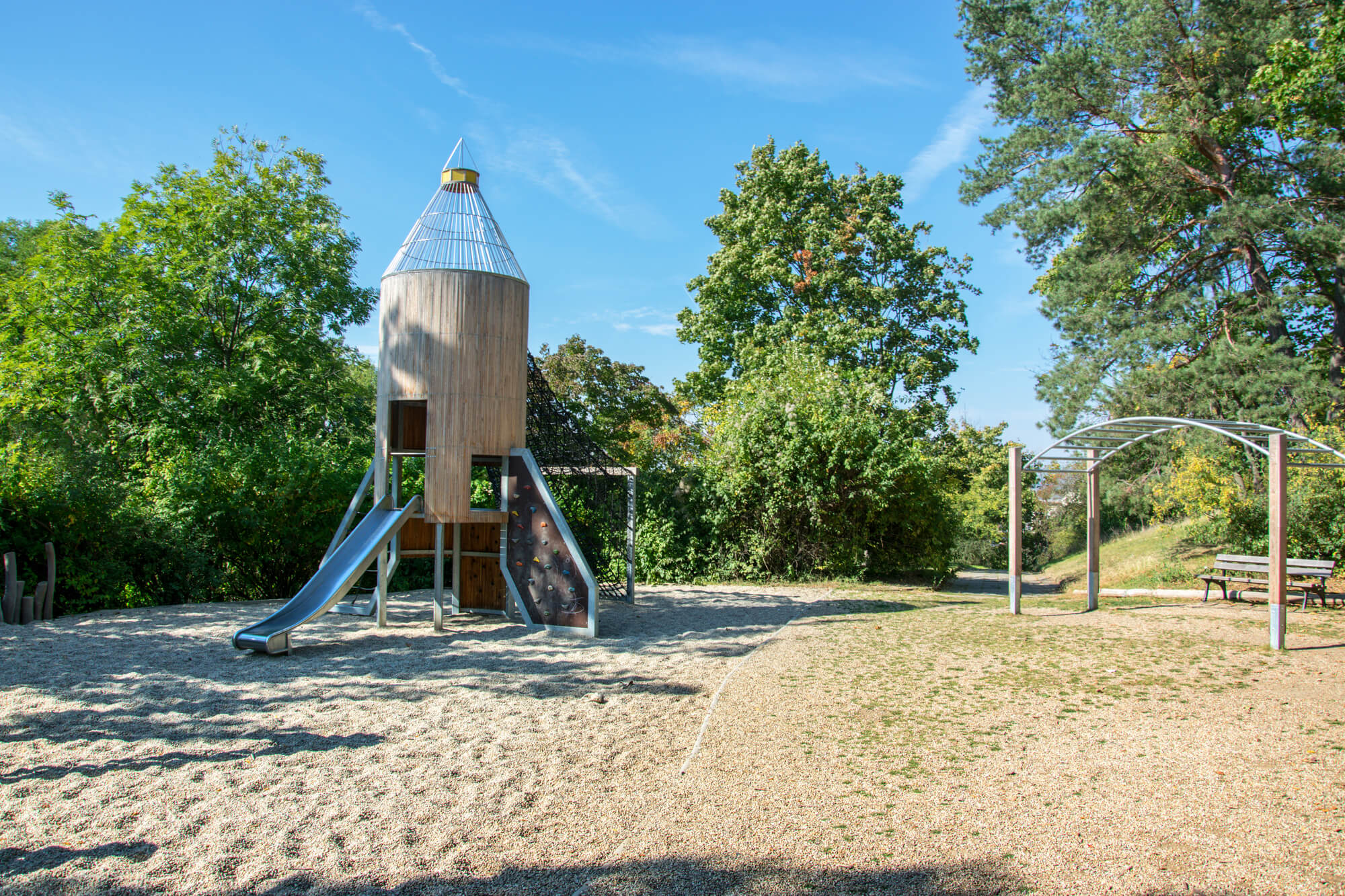
The space race reached the playground in the early 1960s. Manufacturers sold steel rockets three and four stories tall, with caged platforms connected by ladders, a steering wheel in the nose cone, and a slide exiting from the second level.
They were magnificent and hard to supervise, since a teacher on the ground could not see or reach a child thirty feet up. Narrow openings between bars also failed later head entrapment standards.
Several towns have preserved their rockets as landmarks, sometimes with the upper levels welded shut, which rather defeats the purpose.
Geodesic Dome Climbers
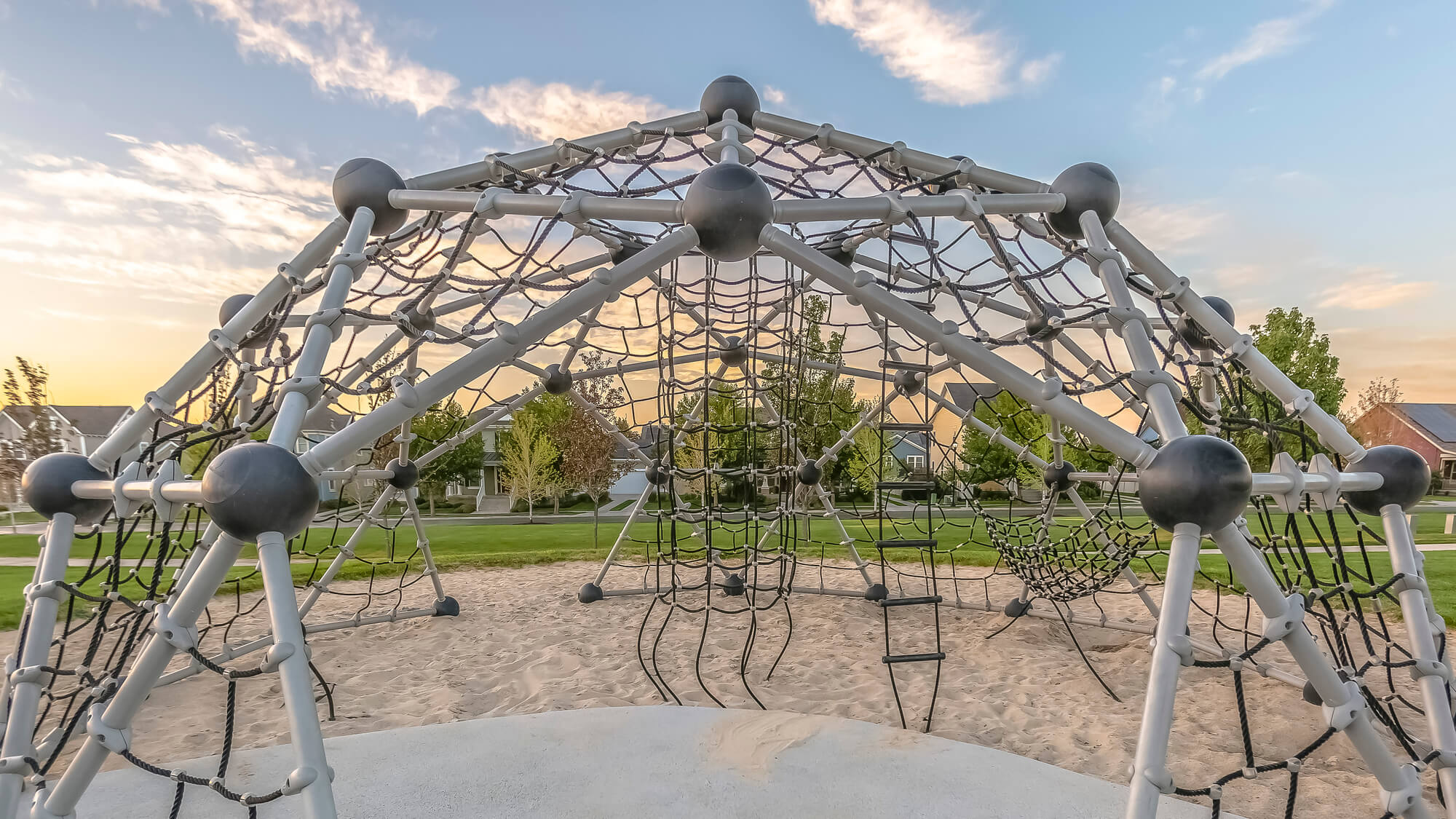
The climbing dome borrowed its geometry from Buckminster Fuller and arrived in schoolyards in the 1960s and 1970s. Steel tubes formed a half sphere of triangles, and the goal was to reach the top and sit there.
Falls went two ways, either down the outside or straight through the middle onto whoever was underneath. The originals usually stood on blacktop.
Domes are still manufactured, but current versions are lower and installed over deep wood chips or rubber. The tall bare steel ones, scorching by noon in June, were largely hauled away.
Concrete Culvert Tunnels
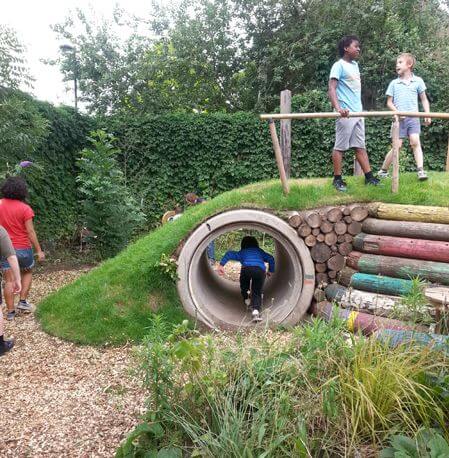
Some of the most durable play equipment ever installed was a section of precast drainage pipe set on the ground. Children crawled through it, sat on top of it, and hid inside it.
The material was the problem, since every surface was as hard as the pavement the guidelines warn against. The interior also put children completely out of a supervisor’s sight.
Tunnels collected broken glass, standing water, and wasps. Schools replaced them with plastic crawl tubes that have windows cut into the sides, which solves the visibility problem and removes most of the appeal.
Concrete Turtles and Camels
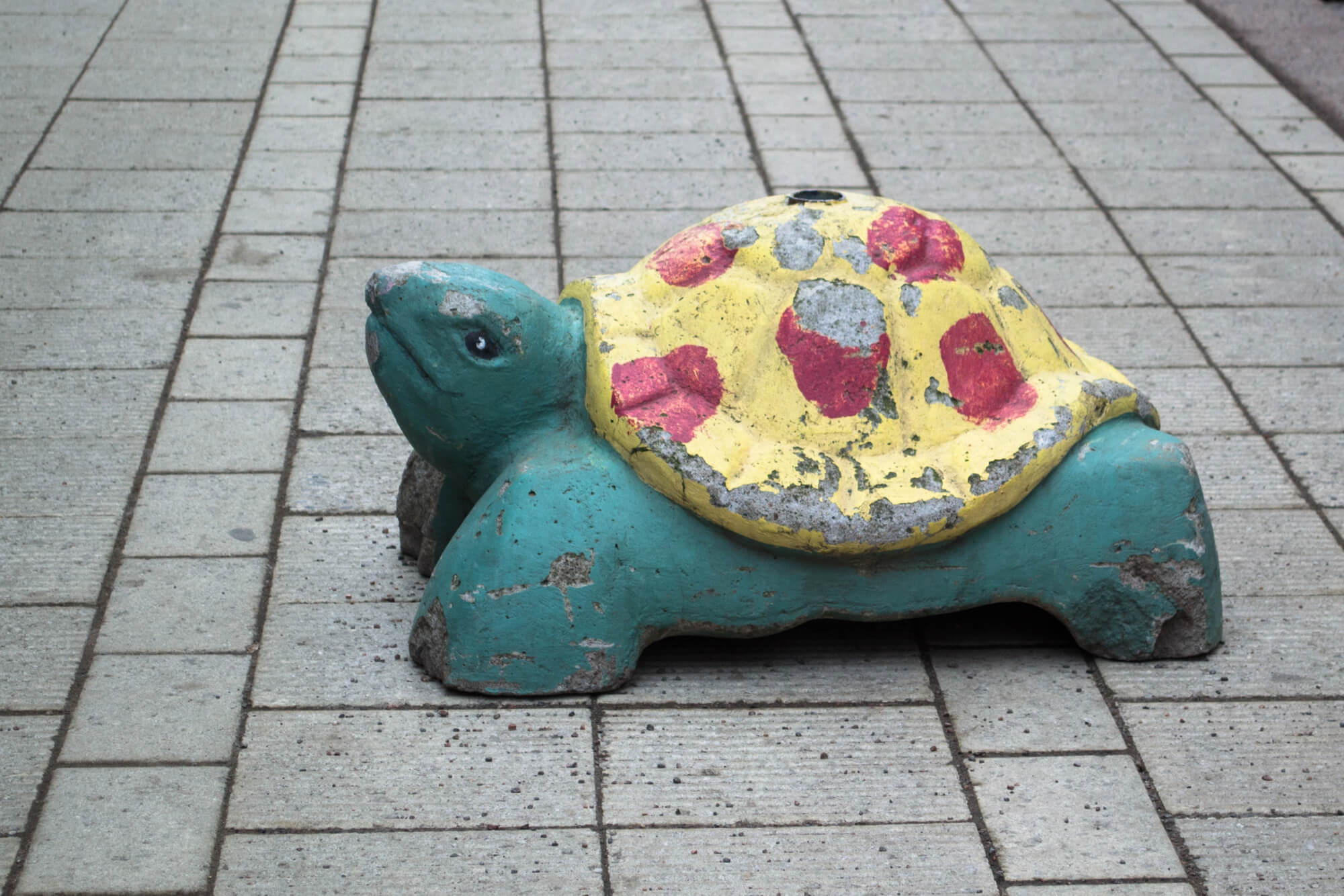
Cast concrete animals were a fixture of midcentury playgrounds, and many came from one Michigan sculptor, Jim Miller-Melberg, who began producing turtles, camels, and porpoises for parks and schools in the 1960s. Children climbed them, slid off them, and used the turtle as home base for every game.
They were nearly indestructible. They were also unyielding, abrasive, and slick when wet, and a fall against one meant stitches.
A number have been rescued by preservation groups who now treat them as modernist sculpture, which is what they were all along.
Tractor Tire Climbers
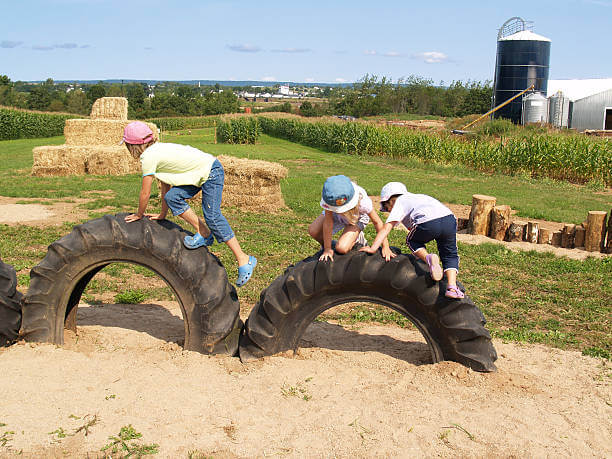
Used tires were free, and for a couple of decades schools and parent committees built entire play areas from them. Giant tractor tires stood upright and half buried as tunnels, and smaller ones were bolted into pyramids and swings.
The drawbacks showed up slowly. Tires hold rainwater and breed mosquitoes, the black rubber gets extremely hot, and worn treads expose steel belt wires.
Questions about chemicals in the rubber added to the unease. Most tire structures were dismantled by the 2000s, although the horizontal tire swing remains specifically permitted under federal guidelines.
Arsenic-Treated Timber Forts
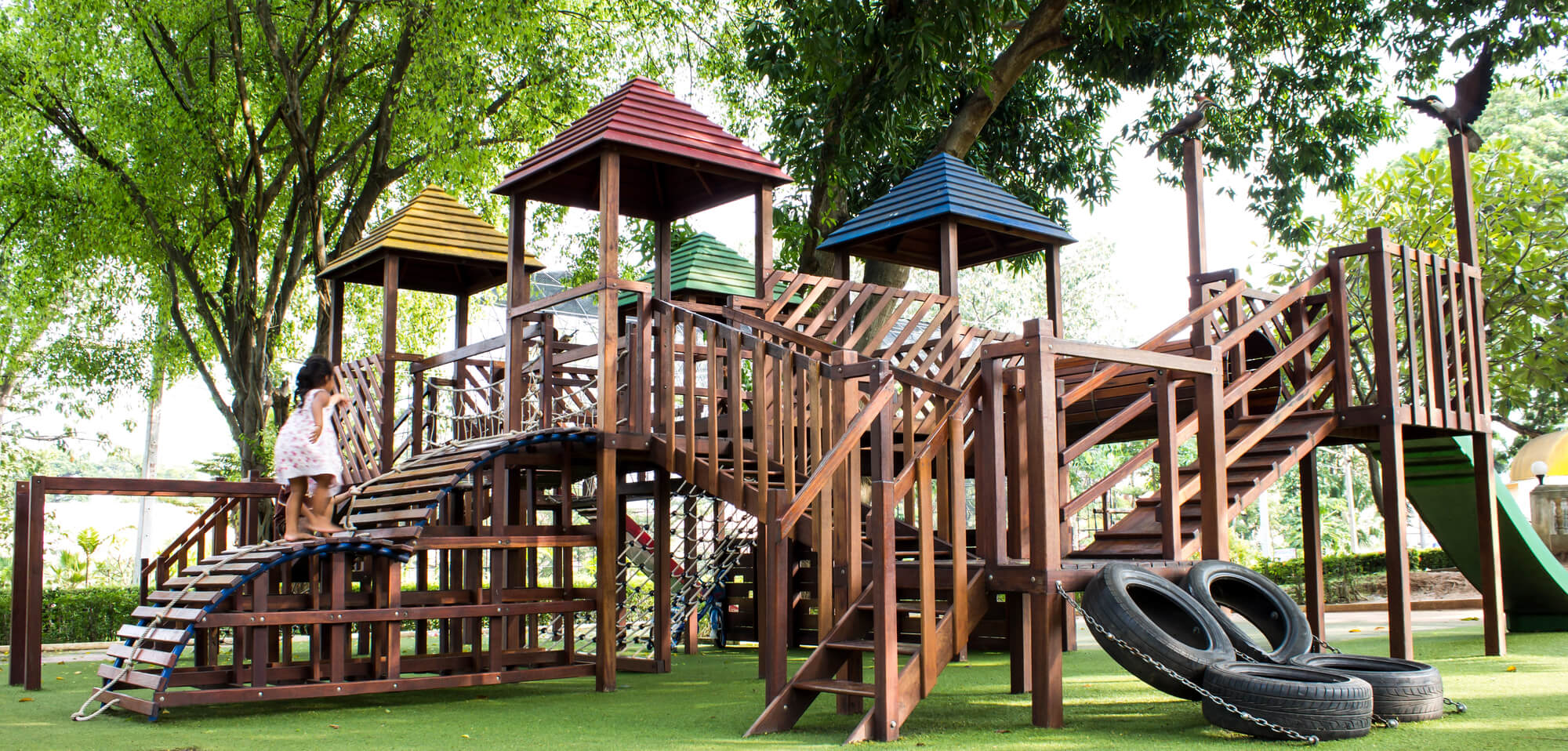
In the 1980s and 1990s, communities across the country raised money and spent weekends building sprawling wooden castle playgrounds, many designed by the Ithaca architect Robert Leathers. Most were built with lumber pressure-treated with chromated copper arsenate, which protects wood from rot and also leaves arsenic residue on the surface.
Manufacturers agreed with the Environmental Protection Agency to end its use for residential and playground lumber at the close of 2003. Schools faced a choice between sealing the wood every year or tearing the structure down.
Splinters and aging hardware usually settled the question.
Cast Metal Spring Riders

The bouncing animal on a coil spring has been around for decades, and the early ones were heavy castings of aluminum or iron mounted on a large exposed spring. The open coils pinched fingers and toes as they compressed.
The castings had hard edges and handles at face height, and a vigorous rider could rock far enough forward to hit the ground. Current models use molded plastic bodies and springs designed to prevent pinching.
The originals have become collectible, and restored examples turn up at auctions of vintage park and carnival equipment.
The Log Roll
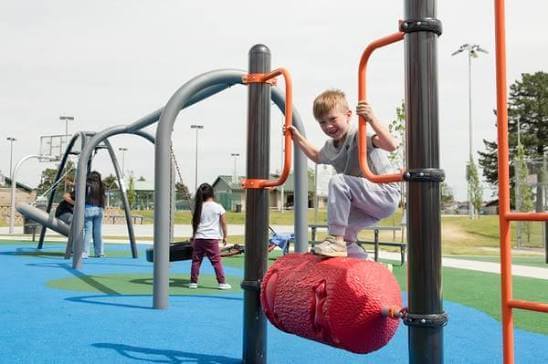
A log roll was a horizontal cylinder mounted on an axle between two posts, with a handrail above. The child stood on top and walked in place while it turned, in the manner of a lumberjack.
It demanded balance that many children did not have, and losing it meant a fall across a spinning drum with an arm still hooked over the rail. Federal guidance now says log rolls are not appropriate for younger children and requires handholds and surfacing for older ones.
Most schools owned an older version that met neither condition.
The Sandbox

The sandbox seems harmless, and its removal had nothing to do with falls. Open sand attracts neighborhood cats, and health departments grew concerned about parasites and bacteria in uncovered boxes.
Sand also hides broken glass and whatever else gets dropped in overnight. Keeping it clean requires raking, covering, and periodic replacement, which school maintenance budgets rarely allowed.
Many districts filled theirs in during the 1980s and 1990s. Preschools with fenced yards and fitted covers kept the tradition going, and the elementary schoolyard largely lost it.
Lead-Painted Steel
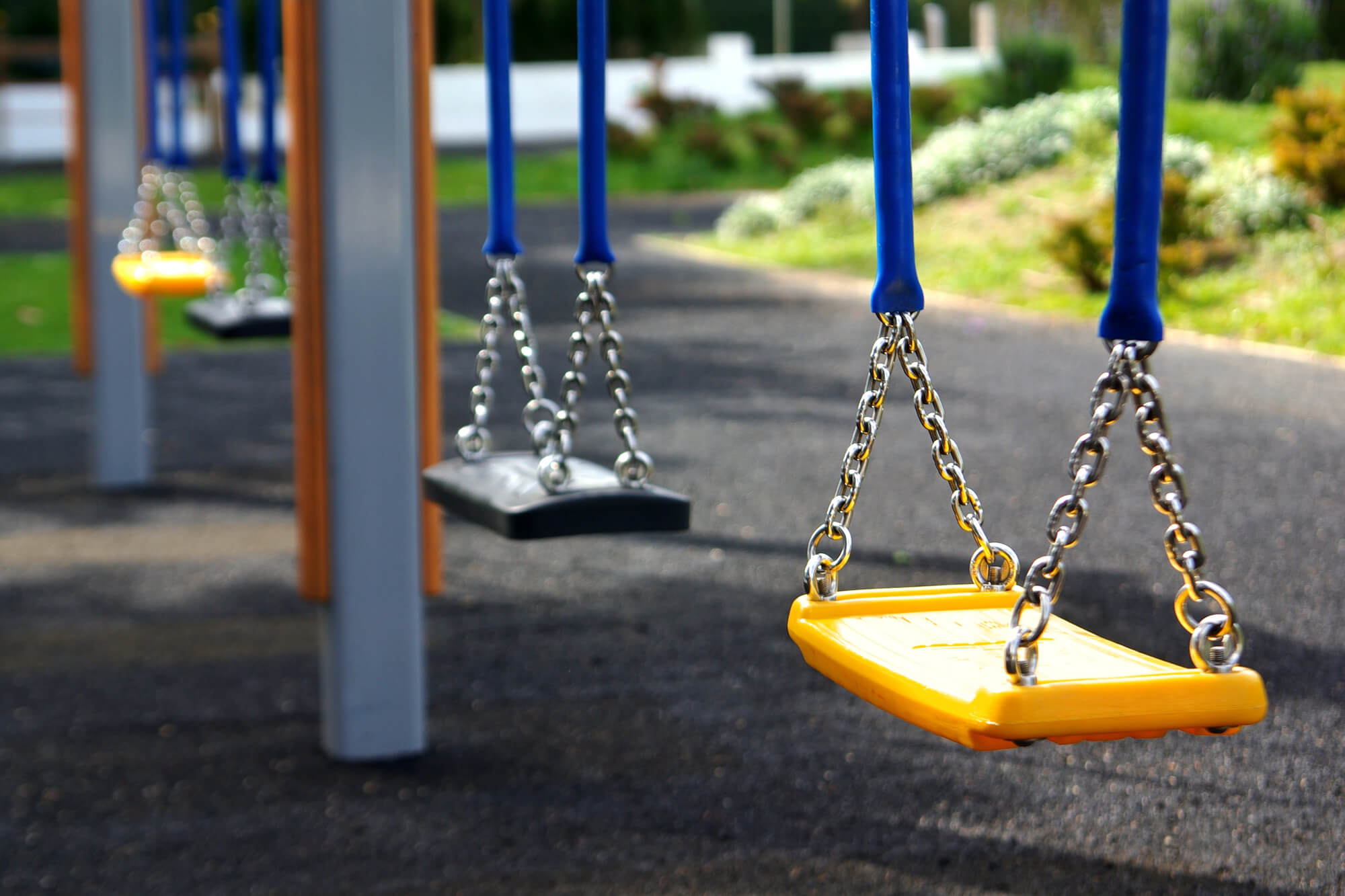
Much of the equipment installed before 1978 was coated in lead-based paint, in the bright reds, yellows, and greens that defined the look of a midcentury playground. As the paint aged it chipped and chalked, and small children put their hands in their mouths.
The Consumer Product Safety Commission tested public playgrounds in cities around the country in 1996 and found deteriorating lead paint on equipment in a number of them. Stripping and repainting old steel safely is expensive.
For many schools that report became the final argument for replacing everything at once.
Blacktop Beneath It All
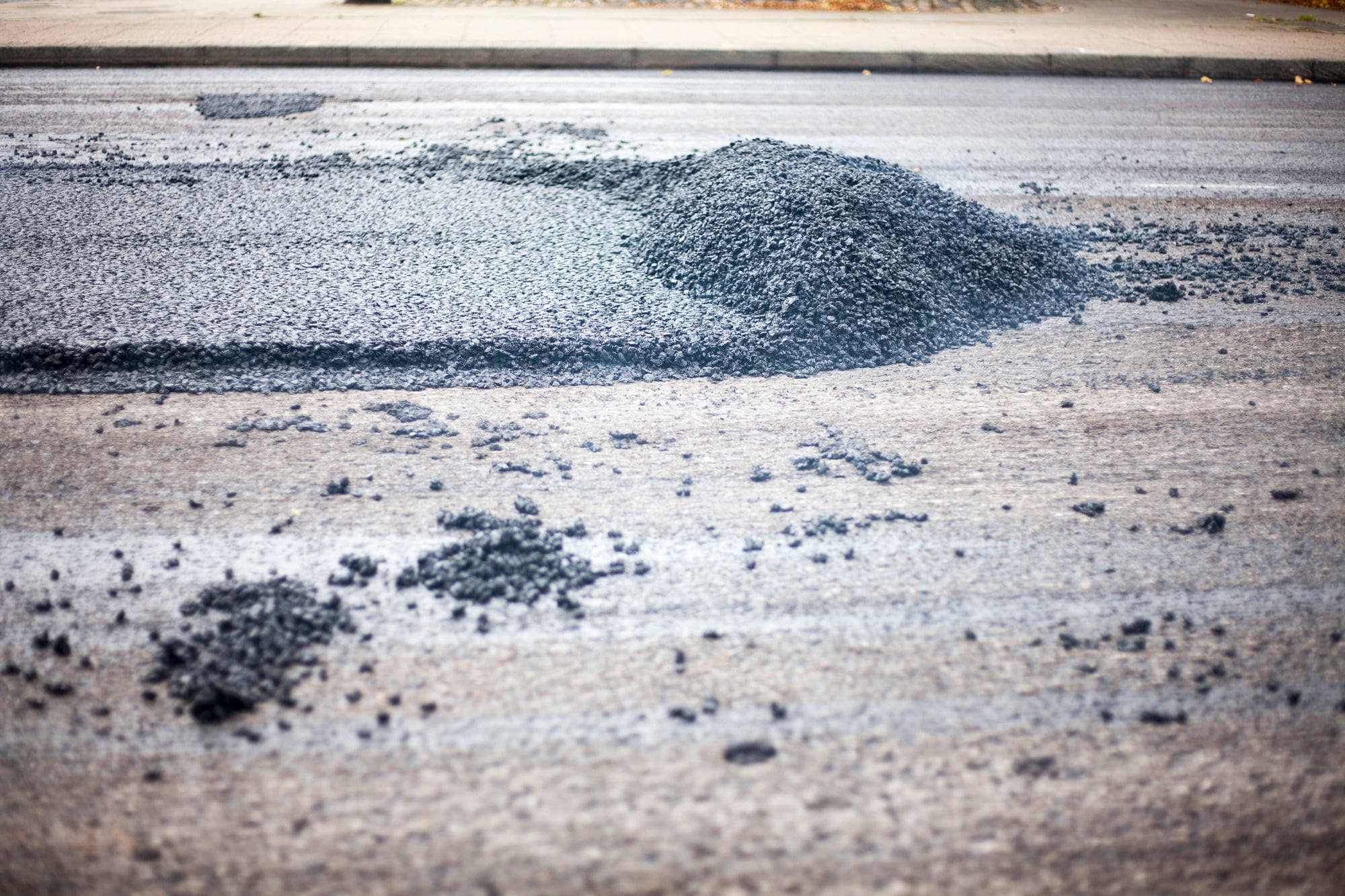
The most dangerous feature of the old schoolyard was the ground. Swings, slides, and climbers routinely sat on asphalt, concrete, or dirt packed as hard as either.
The first federal playground safety handbook in 1981 advised against installing equipment over paved surfaces, and every edition since has repeated it, because falls are the leading cause of playground injuries. Hospitals treat more than two hundred thousand of those injuries each year.
Wood chips, pea gravel, shredded rubber, and poured rubber mats replaced the pavement. It was the least nostalgic change and almost certainly the one that mattered most.
Risk Was Part of the Curriculum

Every item here came out for a documented reason, and the injury records make grim reading. No one seriously argues for bringing back the giant stride or putting a slide over concrete.
The handbook exists because children were getting hurt in predictable ways on predictable equipment.
Still, some researchers and designers have begun asking what was lost. A playground with no height, no speed, and no chance of failure teaches very little about judgment.
Newer designs try to restore manageable risk through tall net climbers, boulders, and loose parts, all over forgiving ground. The goal is a schoolyard where a child can still be a little scared, and still walk back to class afterward.
More from Go2Tutors!

- The Romanov Crown Jewels and Their Tragic Fate
- 13 Historical Mysteries That Science Still Can’t Solve
- Famous Hoaxes That Fooled the World for Years
- 15 Child Stars with Tragic Adult Lives
- 16 Famous Jewelry Pieces in History
Like Go2Tutors’s content? Follow us on MSN.