Pranks That Fooled the Entire World
People want to believe interesting things. That basic human tendency has allowed pranksters to fool millions of people at once, sometimes for years.
The best hoaxes don’t just trick you—they make you feel foolish for not seeing through them sooner. These are the pranks that crossed borders, fooled experts, and convinced entire populations that something impossible was actually real.
Spaghetti Growing on Trees

In 1957, the BBC aired a documentary segment about Swiss farmers harvesting spaghetti from trees. The footage showed people carefully plucking strands of pasta from branches and laying them in the sun to dry.
The narrator explained how a mild winter and the elimination of the “spaghetti weevil” had led to an exceptional harvest. Thousands of viewers called the BBC asking how they could grow their own spaghetti trees.
The network reportedly told them to place a sprig of spaghetti in a tin of tomato sauce and hope for the best. This worked because many British people had never seen or eaten spaghetti before. Italy seemed exotic and foreign.
If rice grew in paddies and wheat grew in fields, why couldn’t spaghetti grow on trees? The BBC’s reputation for serious journalism made the story credible.
Nobody expected the network to broadcast an outright lie on April Fools’ Day.
The Planet That Never Existed

In 1835, a New York newspaper called The Sun published a series of articles about incredible discoveries made by astronomer Sir John Herschel. Using a powerful new telescope, Herschel had allegedly observed life on the moon.
The articles described bat-winged humanoids, herds of bison, and forests of exotic plants. Readers devoured every detail. The Sun’s circulation skyrocketed.
Other newspapers reprinted the stories. Scientists debated the findings.
The articles became an international sensation. None of it was true. A reporter named Richard Adams Locke had invented the entire thing.
Herschel was a real astronomer, but he was in South Africa and knew nothing about the hoax until months later. By then, The Sun had sold thousands of extra copies.
When they finally admitted the truth, many readers refused to believe the confession.
Martians Invading New Jersey

Orson Welles terrified America on October 30, 1938. His radio adaptation of “The War of the Worlds” was presented as a series of news bulletins interrupting regular programming.
Martians had landed in Grover’s Mill, New Jersey. They were destroying everything with heat rays. The military couldn’t stop them.
Thousands of listeners panicked. Some fled their homes.
Others called police stations. The next day, newspapers reported mass hysteria, though modern scholars debate how widespread the panic actually was.
The newspapers might have exaggerated the reaction because they saw radio as competition. Still, enough people believed it to make the broadcast legendary.
The format felt real. News interruptions were how people received important information.
The show used that familiarity against them. It helped that many listeners tuned in late and missed the introduction explaining it was fiction.
Taco Liberty
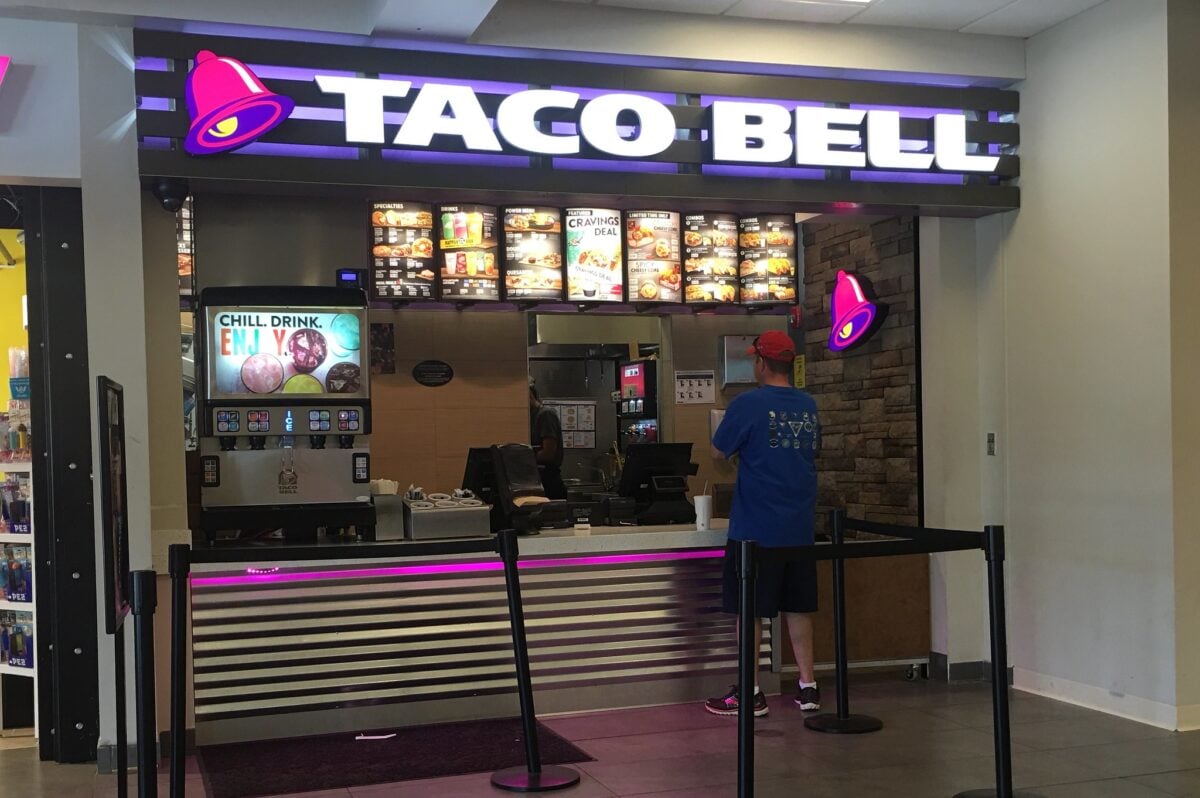
In 1996, Taco Bell took out full-page ads in major newspapers announcing they had purchased the Liberty Bell. They were renaming it the Taco Liberty Bell.
The company claimed they were helping reduce the national debt. Outraged citizens flooded the National Park Service with calls.
How could the government sell a national treasure? The Park Service’s phone lines jammed. Hundreds of journalists called to verify the story.
Taco Bell revealed the hoax that afternoon. They had chosen April Fools’ Day deliberately.
The prank generated massive publicity. The boldness of the claim—a fast food chain buying the Liberty Bell—made it work.
It was ridiculous enough to be funny but presented seriously enough that people believed it at first.
Left-Handed Burgers

Burger King announced in 1998 that they had developed a special Whopper for left-handed customers. The new burger had the same ingredients but they were rotated 180 degrees to better suit left-handed eaters.
The announcement appeared in USA Today as a full-page ad. Thousands of customers went to Burger King to request the left-handed Whopper.
Many others specifically requested the right-handed version. The prank worked because it sounded technical and thoughtful.
Companies really do develop specialized products. The idea wasn’t completely absurd, just unnecessary.
This prank showed how people often don’t think critically about marketing claims. If a major corporation says they’ve developed something, customers assume it makes sense.
The left-handed Whopper became one of the most successful April Fools’ pranks in advertising history.
Flying Penguins of Antarctica

The BBC struck again in 2008 with a nature documentary about a newly discovered species of Adélie penguin that could fly. The footage showed penguins taking flight and soaring over Antarctica.
Narrator Terry Jones explained how they migrated to the rainforests of South America each winter. The video looked legitimate.
The BBC’s production values were excellent. The footage was convincing enough that people believed it until they checked the date.
The network posted the video online where it went viral. Millions watched penguins apparently defying everything we know about their biology.
The hoax worked because people wanted it to be true. Flying penguins would be amazing.
The footage was too good to be fake. And the BBC had built decades of trust with nature documentaries.
That credibility made the impossible seem plausible for just long enough.
The Piltdown Conspiracy
In 1912, amateur archaeologist Charles Dawson announced an extraordinary find near Piltdown, England. He had discovered fragments of a skull that appeared to be the missing link between apes and humans.
The “Piltdown Man” had a human-sized brain but an ape-like jaw. Scientists accepted it as genuine for over 40 years.
It fit theories about human evolution popular at the time. British scientists especially loved it because it meant human evolution had occurred in England, not Africa.
The skull appeared in textbooks and museum displays worldwide. Chemical testing in 1953 revealed the truth.
The skull was a forgery—a human cranium combined with an orangutan’s jaw, both artificially aged. Someone had filed down the teeth to make them look more human.
Who created the hoax remains disputed, but Dawson is the primary suspect. This wasn’t a harmless prank.
It diverted scientific research for decades. It shows how even experts can be fooled when they want to believe something that confirms their biases.
Crop Circles and Alien Artists
Throughout the 1970s and 1980s, elaborate geometric patterns began appearing overnight in fields across England. Theories ranged from alien communications to mysterious earth energies.
Books were written. Experts emerged claiming to interpret the patterns.
Tourism boomed in areas where circles appeared. In 1991, two men named Doug Bower and Dave Chorley confessed they had created the circles using planks, rope, and a wire sighting device.
They demonstrated their technique to journalists. Their simple tools could create elaborate patterns in hours.
Many people refused to believe the confession. Some circles were too complex, they argued.
The patterns appeared in multiple countries. Bower and Chorley couldn’t have made them all.
And they were right—copycat circle makers had emerged worldwide. But the original mystery had a mundane explanation.
Two guys with planks had fooled the world.
The Surgeon’s Photograph

The most famous photo of the Loch Ness Monster was supposedly taken by a London surgeon named Robert Kenneth Wilson in 1934. The image showed a long neck and a small head rising from the water.
It became the defining image of “Nessie” and convinced millions that a prehistoric creature survived in a Scottish lake. The photo remained unexplained until 1994, when a man named Christian Spurling confessed to helping create it.
The “monster” was a toy submarine fitted with a carved wooden neck and head. Wilson had been recruited to give the photo credibility because doctors were considered trustworthy.
The prank was revenge against the Daily Mail newspaper, which had previously embarrassed one of the hoaxers. For 60 years, this fake photo shaped how the world imagined the Loch Ness Monster.
Countless investigations, sonar searches, and tourist industries were based on an image of a toy in a bathtub.
The Boy Who Didn’t Float Away

In October 2009, American news networks interrupted regular programming with breaking news. A six-year-old boy was trapped inside a homemade helium-filled craft floating thousands of feet over Colorado.
Millions watched live as the craft drifted for two hours before landing in a field. Emergency crews rushed to the scene.
When they opened it, the boy wasn’t inside. Rescue teams frantically searched the area, fearing he had fallen out.
Then someone checked the family’s garage. The boy was hiding there. He had never been in the craft.
Within days, evidence emerged that the family had staged the incident to gain publicity for a reality TV show. The boy accidentally revealed the truth during a television interview.
His parents were convicted of charges related to the hoax. The incident had cost authorities thousands of dollars and diverted emergency resources from real crises.
Alien Autopsy Footage

In 1995, a British businessman named Ray Santilli released grainy black-and-white footage allegedly showing the autopsy of an alien recovered from the Roswell crash in 1947. The film showed doctors examining a hairless humanoid body with large black eyes and six fingers.
Television networks worldwide aired the footage. Experts debated its authenticity. Some claimed the medical equipment and clothing looked period-appropriate.
Others pointed out anatomical inconsistencies. Fox Television aired a special about it.
The footage became central to alien conspiracy theories. Santilli finally admitted in 2006 that the film was mostly a reconstruction.
He claimed he had seen original footage but it was damaged, so he recreated it based on his memories. The admission came only after years of profiting from the hoax.
By then, the fake autopsy had shaped popular culture’s image of aliens.
The Mechanical Turk

In 1770, inventor Wolfgang von Kempelen presented a chess-playing automaton to Empress Maria Theresa of Austria. The machine, called the Mechanical Turk, could defeat most human opponents.
It consisted of a wooden cabinet with a turbaned mannequin seated behind a chessboard. The Turk toured Europe and America for 84 years, defeating countless challengers including Napoleon Bonaparte and Benjamin Franklin. People marveled at this mechanical intelligence.
How could a machine think strategically? It couldn’t. A human chess master was hidden inside the cabinet, controlling the mannequin’s movements through a complex system of levers and gears.
The cabinet’s design used mirrors and sliding panels to hide the operator when it was opened for inspection. The deception fooled some of the era’s greatest minds.
The hoax succeeded because people wanted to believe machines could think. The desire to see artificial intelligence isn’t new—it has existed for centuries.
False Stones and Real Careers

In the 1990s, archaeologist Shinichi Fujimura repeatedly made spectacular discoveries in Japan. He found stone tools that dated back far earlier than expected, rewriting the history of human habitation in Japan.
His discoveries made him famous. Textbooks were revised.
Museum displays changed. In 2000, a newspaper published photos of Fujimura burying artifacts at a site before “discovering” them the next day.
He confessed to fabricating discoveries for over a decade. Every major find was fake.
He had planted store-bought and recently made stone tools, then pretended to excavate them. The scandal destroyed careers and forced a complete reassessment of Japanese prehistory.
Archaeology depends on trust. When that trust is betrayed, years of work become suspect. Fujimura’s confession was particularly damaging because he had manipulated the scientific process itself, not just the public.
When Belief Outlasts Truth

Truth fades when belief digs in deep. Hoaxes that stick tend to have things in common.
What folks wish were true makes them easier to swallow. A source that sounds trustworthy helps sell it.
Small bits of specifics make the story feel solid. When people take it in, letting go becomes hard.
Folks keep hunting for the Loch Ness creature, long after that famous doctor’s picture got debunked. Out in fields, crop patterns pull in true fans – confessions from pranksters hardly matter.
A few folks swear the War of the Worlds radio show didn’t stir fear at all. Meanwhile, someone else claims it sparked chaos way beyond what really happened.
Surprises like these show what happens inside our minds when things aren’t quite real. Our brains hunt for shapes in chaos, always piecing together loose ends.
A familiar voice or face can feel solid, beyond doubt, even if it isn’t. Owning up to being tricked? That doesn’t come easily.
Fooling us taps into deep habits – yet somehow, that flaw adds flavor. A colorless place it would become, should doubt rule every thought.
Yet here lies the path: wonder stays alive when foolishness gets left behind.
More from Go2Tutors!

- 16 Historical Figures Who Were Nothing Like You Think
- 12 Things Sold in the 80s That Are Now Illegal
- 15 VHS Tapes That Could Be Worth Thousands
- 17 Historical “What Ifs” That Would Have Changed Everything
- 18 TV Shows That Vanished Without a Finale
Like Go2Tutors’s content? Follow us on MSN.



