Quirky Features in Classic Cars
Spend enough time around old cars and you start to notice things. A button that does something completely unexpected.
A compartment built for a purpose that made perfect sense in 1957 and makes almost none today. Classic cars are full of these moments — features that engineers and designers added with genuine conviction, some of which worked brilliantly and some of which disappeared so fast it’s a wonder they made it to production at all.
Here are some of the best ones.
The Motorized Trunk Release on the 1950s Chrysler

Several Chrysler models in the 1950s featured a trunk that opened when you twisted the license plate frame. No key, no button on the dash — you physically rotated the plate, which triggered a mechanism that popped the lid.
It was clever in a secret-compartment kind of way, and it baffled anyone who didn’t already know about it. Mechanics who weren’t familiar with the system reportedly spent considerable time looking for a conventional lock that wasn’t there.
Dagmar Bumpers and What They Were Actually Called

The chrome bullet-shaped protrusions on the front bumpers of early 1950s GM cars — most visibly on the Cadillac — were unofficially nicknamed “Dagmars” after a television personality known for a similar silhouette. Officially they were just bumper guards, designed to protect the bodywork in low-speed collisions.
But they became one of the defining styling elements of the era and are now among the most recognized design details of postwar American cars. The fact that everyone called them something entirely different from their official name tells you something about how people actually related to the cars of that period.
The Ford Thunderbird’s Porthole Window
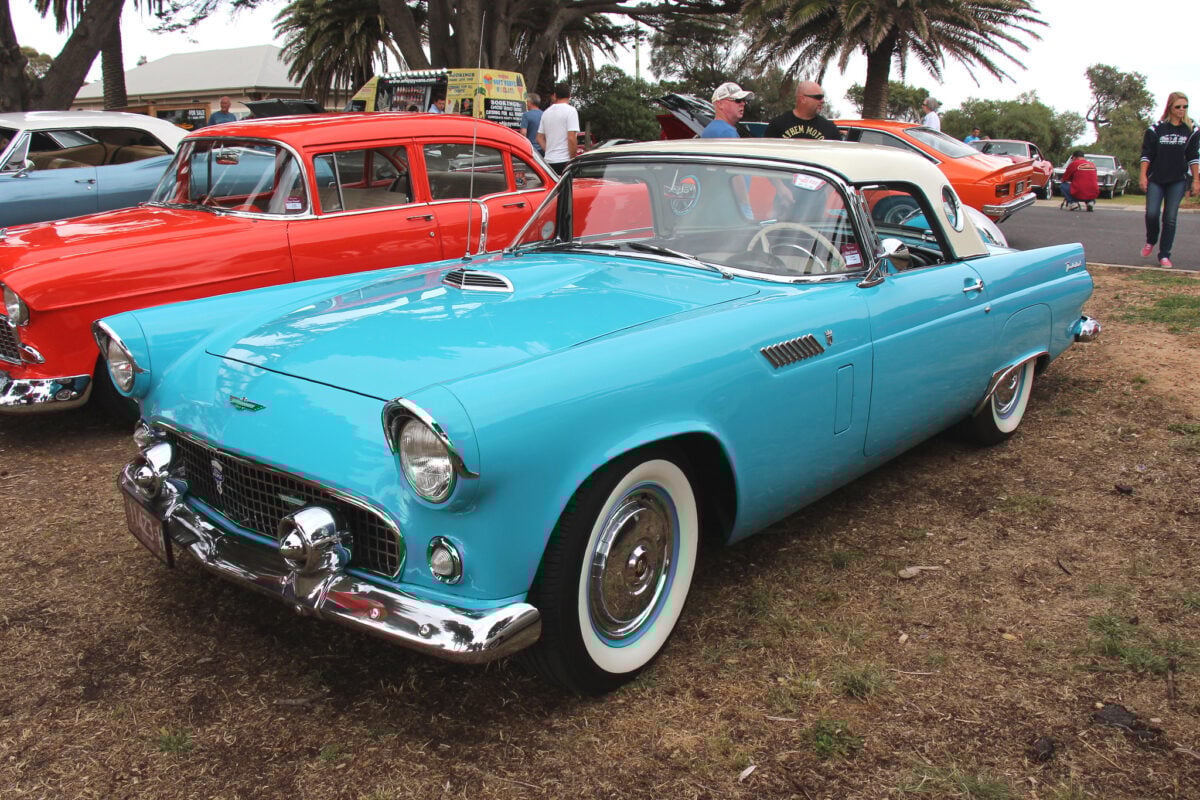
When Ford added a removable hardtop to the Thunderbird in 1956, it created a blind spot that made reversing genuinely difficult. The solution was a small oval porthole cut into each side of the hardtop.
It didn’t offer much visibility, but it was distinctive enough that it became a signature design element and was carried forward in various forms through later Thunderbird generations. A problem got turned into a style statement, which is a fairly common story in classic car design.
The 1958 Edsel’s Toilet Seat Grille
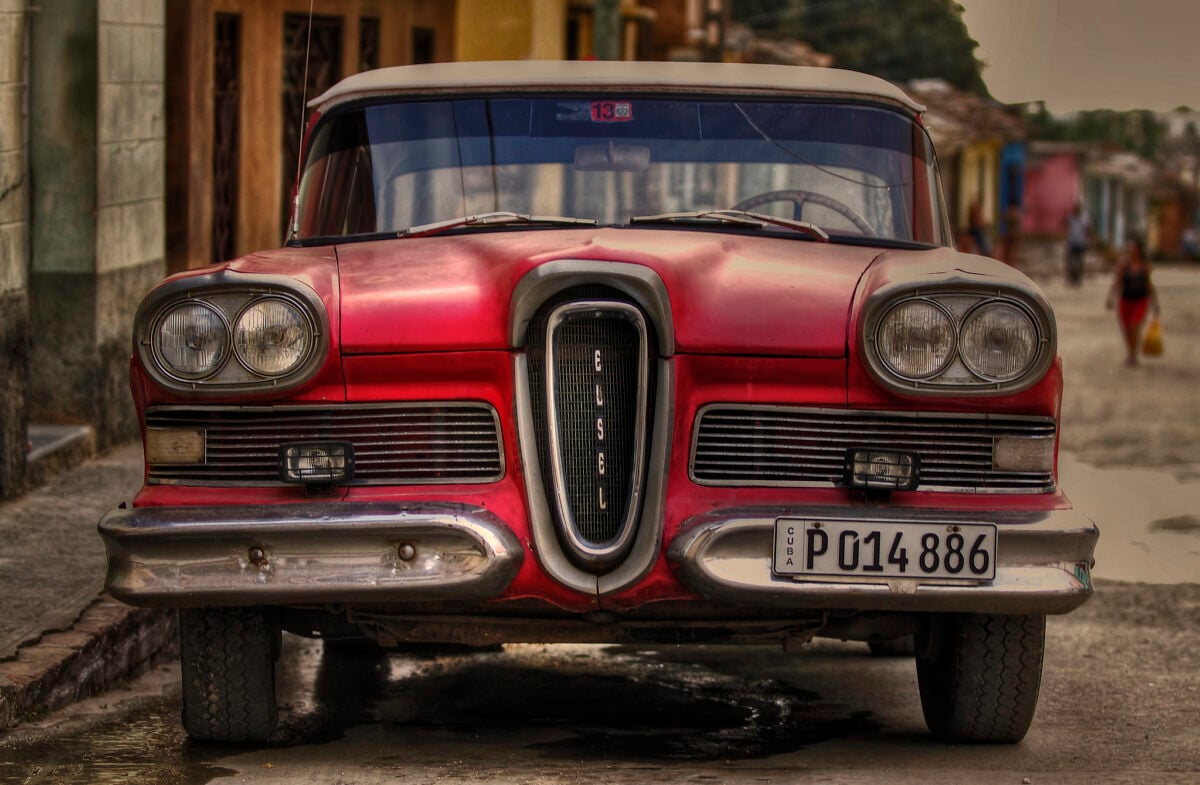
Ford invested enormous resources into the Edsel, and the centerpiece of its design was a vertical oval grille mounted in the center of the front end — surrounded by horizontal chrome on either side. The automotive press immediately dubbed it the toilet seat grille, and the name stuck.
The Edsel became a commercial disaster for reasons that went well beyond the grille, but the design choice remains one of the most discussed styling decisions in American automotive history. It’s a reminder that what looks bold in a design studio doesn’t always translate the same way on a showroom floor.
Push-Button Transmissions on 1950s Chrysler Products

For a period in the late 1950s and early 1960s, Chrysler offered push-button automatic transmissions on models including the DeSoto and Dodge. Instead of a shift lever, a row of buttons on the dashboard — labeled R, N, D, L, and P — selected the gear.
The system worked well mechanically, and drivers who used it said it was actually quite intuitive. Regulators eventually raised concerns about buttons being accidentally activated, and the design was phased out.
It has since become one of the more fondly remembered automotive oddities of the era, occasionally resurrected in concept cars as a retro nod.
The Studebaker’s Rear-Facing Jump Seat
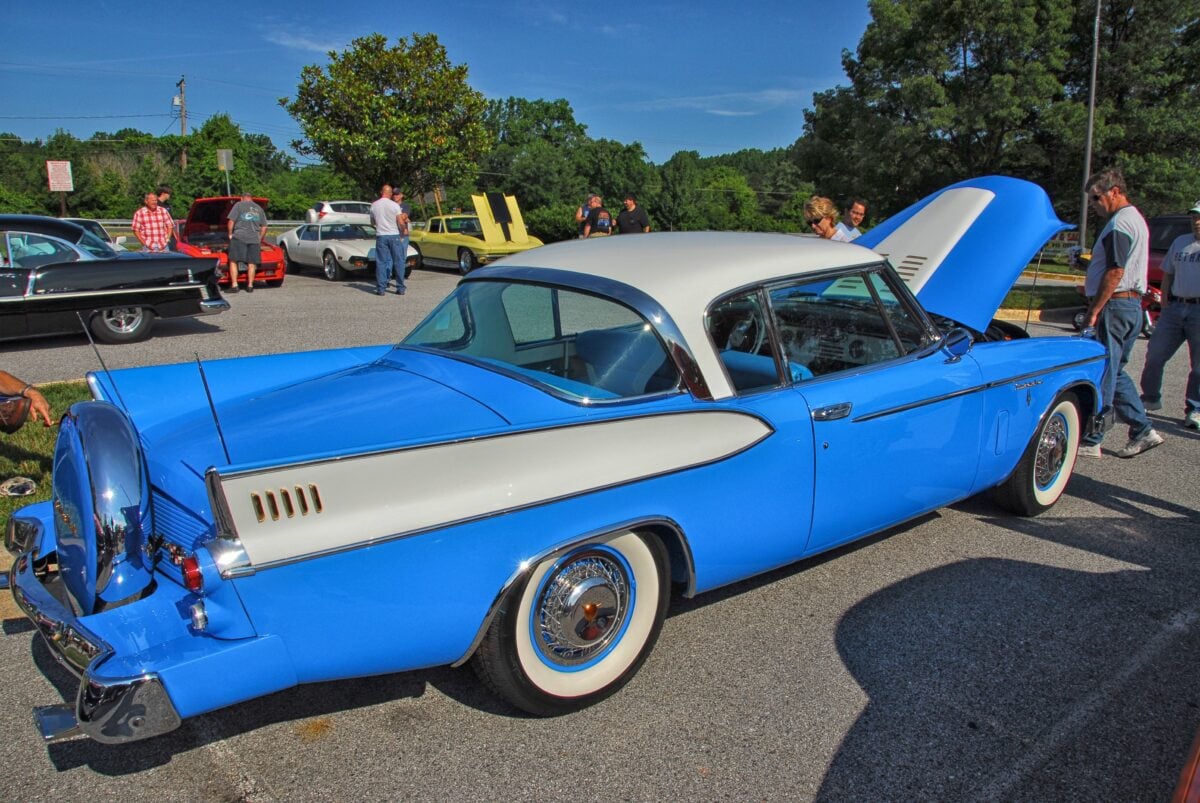
Several Studebaker station wagons from the late 1950s and early 1960s came with a rear-facing third-row seat that let passengers look directly out the back window as the car drove forward. Children in particular apparently loved it.
Adults were less universally enthusiastic. There were no safety standards governing the arrangement at the time, so it remained available until regulations began requiring more formalized seating positions.
Anyone who rode in one remembers it — watching the road disappear behind you while the car moved forward is not an experience you forget.
The Citroën DS’s Self-Leveling Hydraulic Suspension

When the Citroën DS launched in 1955, it introduced a hydropneumatic suspension system that kept the car level regardless of load or road surface. You could remove a wheel and the car would still sit level on the remaining three.
The system allowed the driver to raise or lower the ride height from inside the car, which was useful on rough roads. It was so far ahead of conventional suspension design that other manufacturers spent decades trying to replicate it.
The DS could also be driven slowly on three wheels if a tire blew out, which is not something any car today can claim to manage with the same composure.
Hidden Headlights That Weren’t Always Reliable

Retractable headlights appeared on various classic cars from the 1930s through the 1990s, and they had a reputation for dramatic visual appeal paired with occasional mechanical unreliability. The motors that operated them could fail in cold weather, leaving the lights stuck in the closed position — which created an obvious problem after dark.
Owners of cars like the early Lamborghini Miura and the original Lotus Elan developed a habit of manually checking that the headlights would open before night driving. The look was worth it to most of them.
The Packard’s Electro-Matic Clutch

Packard introduced a semi-automatic clutch system in the late 1930s called the Electro-Matic. When you touched the gear lever, sensors detected the contact and automatically disengaged the clutch.
Let go of the lever and the clutch re-engaged. You still had to select your own gears, but the footwork was eliminated. It was a genuine engineering achievement for the era, and it previewed the fully automatic transmissions that would arrive a few years later.
Packard marketed it as a major convenience feature, which it genuinely was for urban driving in a time when traffic was already a daily frustration.
Cord’s Dashboard-Mounted Gearshift

The 1936 Cord 810 put the gear selector on the dashboard, operated by a small chrome lever. It was a proper manual transmission controlled by what looked like a miniature column-mounted switch.
The setup required a brief pause between selecting a gear and engaging it — the system used vacuum pressure to complete the shift — which meant hurried driving required some anticipation. It sounds limiting, but owners who knew the car well considered the pause a feature rather than a flaw.
It encouraged deliberate driving rather than rushed inputs.
The Nash Ambassador’s Fold-Flat Seats
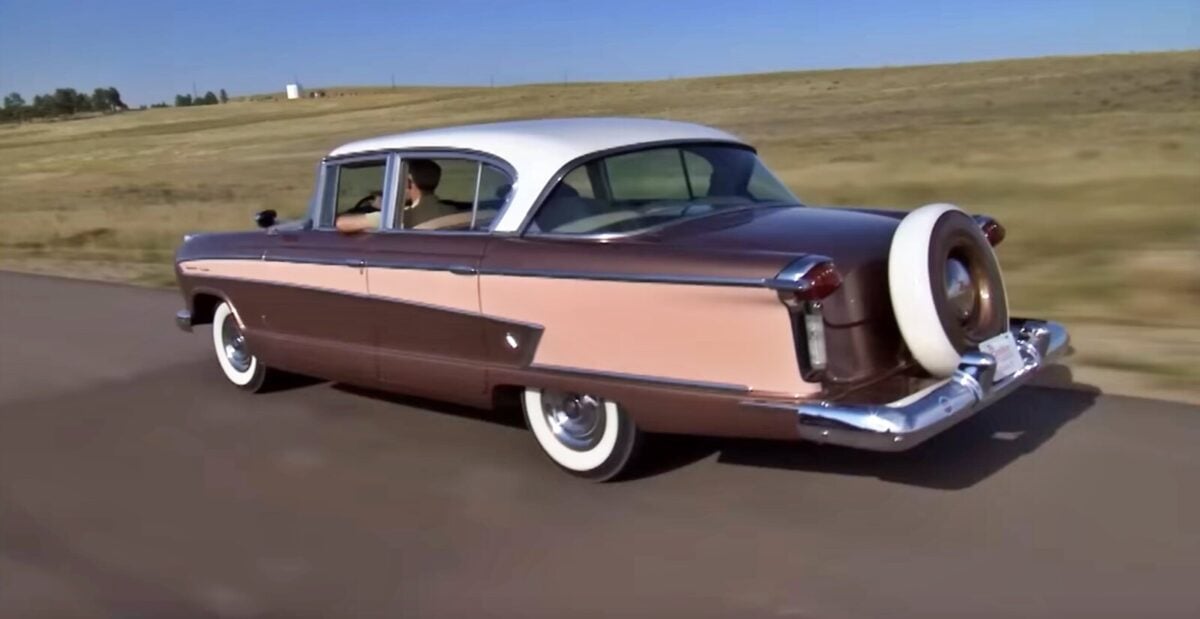
Nash advertised its fold-flat front seats in the early 1950s with a level of enthusiasm that made the marketing team’s intentions fairly transparent. The seats in the Ambassador and Rambler could recline fully flat, turning the car into something resembling a small bedroom.
Nash leaned into this in print ads, which amused some buyers and apparently alarmed others. The feature was eventually toned down in the marketing materials, but the seats themselves continued to be a practical option for long road trips where one person wanted to sleep while the other drove.
The Amphicar’s Ability to Do Two Things Poorly
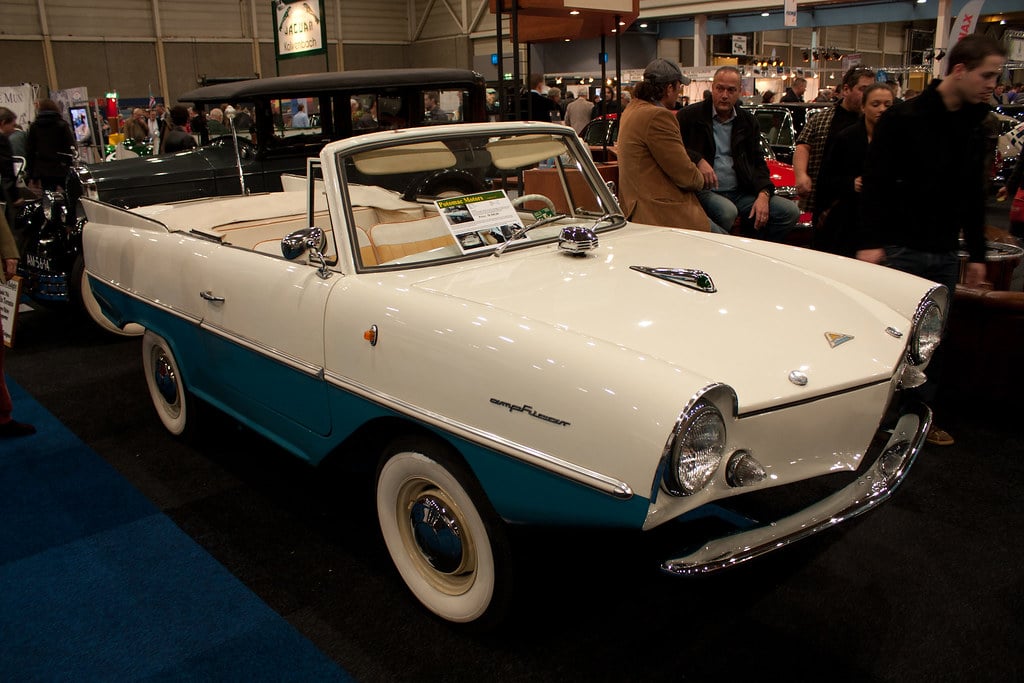
The Amphicar 770, produced in Germany from 1961 to 1968, was both a car and a boat. It drove on roads at around 70 mph and floated on water at around 7 mph.
Neither performance figure was impressive by the standards of dedicated vehicles, and maintenance requirements were high because of the constant exposure to water. Yet roughly 3,878 were built and sold, many of them still in operation today.
It occupies a special place in automotive history as a vehicle that was fully committed to a dual purpose without being particularly good at either, and somehow remains one of the most beloved oddities ever produced.
Rolls-Royce’s Built-In Umbrella Holders

For decades, Rolls-Royce fitted recessed umbrella holders into the door panels of its cars — slender tubes designed to store a full-length umbrella within easy reach of the passenger. The umbrellas were custom-made to fit the holder and could be dried by a small drain in the bottom of the tube.
It was an entirely practical feature for the British climate, executed with the same attention to detail as everything else on the car. It also said something specific about who Rolls-Royce imagined buying their vehicles and what those buyers expected from a motor car.
The DeLorean’s Stainless Steel Body Panels

John DeLorean built his DMC-12 with an unpainted stainless steel body, which meant the car never rusted in the conventional sense but also couldn’t be repainted if scratched or dented. Any damage was either polished out or lived with permanently. The material also meant that early cars showed fingerprints visibly, which led the factory to include polishing cloths with each vehicle.
The stainless steel exterior is now the most immediately recognized thing about the car — partly thanks to a certain film series — but at the time it was a genuinely unconventional material choice with real practical tradeoffs.
The Lincoln Continental’s Self-Harm Doors

Self-harm doors — rear-hinged back doors that open in the opposite direction from conventional doors — were a feature of the fourth-generation Lincoln Continental from 1961 to 1969. The name comes from the risk of being thrown out if a door opened accidentally while the car was moving.
Lincoln used them purely for elegance: the wide, uninterrupted sill they created when both front and rear doors were open made entering and exiting the car a noticeably graceful act. Secret Service agents were reportedly not fans of the design for reasons that became tragically relevant in November 1963, when President Kennedy was assassinated riding in one.
The Humber Super Snipe’s Picnic Tables
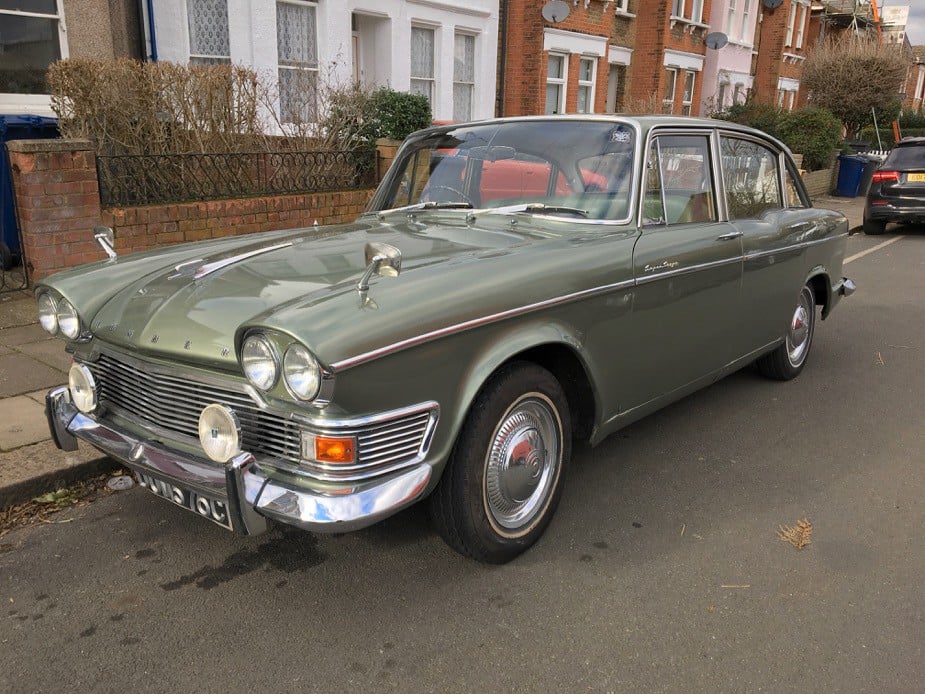
Several British luxury cars from the 1950s and 1960s, including the Humber Super Snipe, came with fold-out picnic tables built into the backs of the front seats. These were genuine wooden or leather-trimmed trays, sized for proper cups and plates, and they folded away neatly when not in use.
The feature assumed a way of traveling — stopping in the countryside, unpacking a proper lunch, eating inside the car — that was entirely normal for a certain kind of British motoring at the time. It’s a small detail that tells a very complete story about what car ownership meant to the people who bought those vehicles.
What Old Cars Actually Tell You

Stay near old cars awhile, suddenly little quirks stop looking wrong – they start reading like choices made by builders who knew exactly what they wanted. Some of those decisions flopped hard.
A handful aimed at times most folks couldn’t see coming. Now and then one slips out during eras when rules were thin, letting wild ideas pass quietly and unchallenged.
Inside old cars that remain – whether parked away or still driven – you’ll find bits of history caught in seat fabric, woven through mat fibers. That tilted badge? It didn’t happen by accident.
The stories behind it often catch folks off guard once they learn the truth.
More from Go2Tutors!

- The Romanov Crown Jewels and Their Tragic Fate
- 13 Historical Mysteries That Science Still Can’t Solve
- Famous Hoaxes That Fooled the World for Years
- 15 Child Stars with Tragic Adult Lives
- 16 Famous Jewelry Pieces in History
Like Go2Tutors’s content? Follow us on MSN.