Rarest and Most Expensive Woods
Wood is one of the oldest materials humans have ever worked with, and most of it is remarkably ordinary. Pine, oak, birch — useful, abundant, cheap. But at the other end of the spectrum sit woods so rare, so dense, or so beautiful that they command prices that would make a jeweller pause.
Some of these come from trees that take centuries to mature. Others are prized for colours and grain patterns that look almost impossible.
A few are so scarce that trade in them is tightly controlled or outright banned.
African Blackwood

African Blackwood, known scientifically as Dalbergia melanoxylon, is widely considered the most expensive wood in the world by weight. It grows slowly across a narrow band of sub-Saharan Africa, and a single tree may take 200 years to reach harvestable size. The wood is so dense it sinks in water.
Woodworkers prize it for its extraordinary stability and the way it responds to fine cutting tools, which is why it has been the preferred material for professional-grade oboes, clarinets, and bagpipes for centuries. A kilogram of quality African Blackwood can cost more than most hardwoods cost per cubic metre.
Agar wood
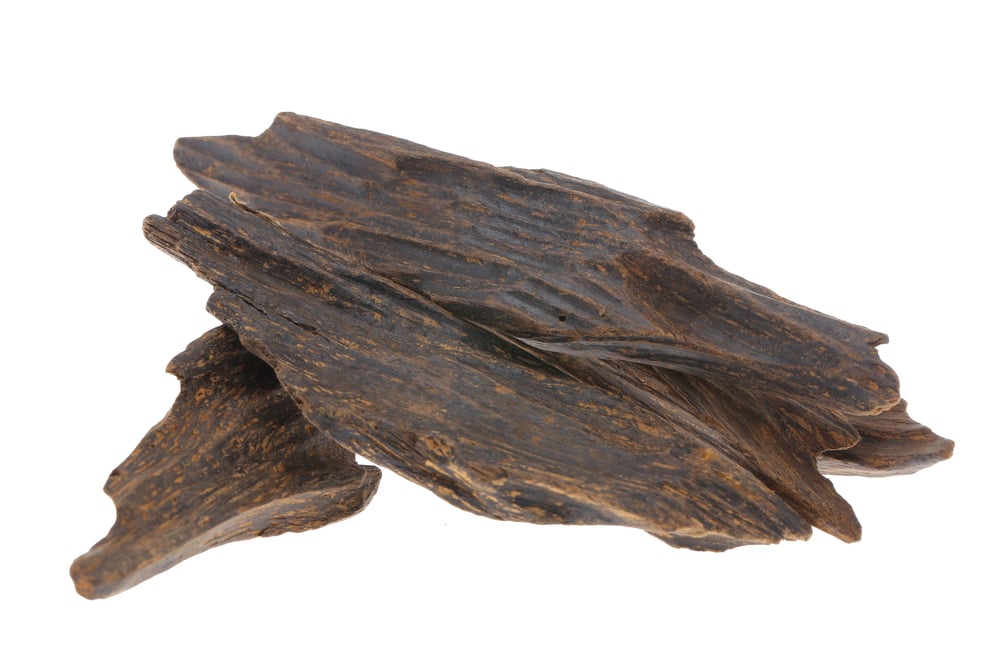
Agar wood doesn’t come from a rare tree — it comes from a reaction inside a common one. When certain trees in the Aquilaria genus become infected with a particular mould, they produce a dark, fragrant resin as a defence response.
The resin-saturated heartwood that results is called agar wood, and it’s the source of one of the most expensive natural substances on Earth. High-grade agar wood sells for tens of thousands of dollars per kilogram.
Most of it goes into luxury perfumes and incense. Wild agar wood-producing trees have become critically endangered from decades of over-harvesting.
Pink Ivory

Pink Ivory comes from a small tree native to southern Africa, most commonly found in Zimbabwe, Mozambique, and South Africa. The wood is striking — a vivid, almost artificial-looking pink that deepens with age and exposure to light. Zulu royalty historically treated the tree as sacred, and possession of Pink Ivory was supposedly restricted to the royal family.
Whether that history is accurate or embellished, the rarity of the tree is real. It grows slowly, produces small amounts of usable timber, and the distinctive colour makes it highly sought after for decorative work and turning.
Lignum Vitae

Lignum Vitae, Latin for “wood of life,” is the hardest and densest wood in the world. It comes from a small, slow-growing tree in the Caribbean and northern South America.
The wood is so dense that it sinks in water, and it contains natural oils that make it self-lubricating. For centuries, before synthetic materials existed, Lignum Vitae was the material of choice for ship propeller shaft bearings — a job that requires extreme hardness and resistance to wear.
The trees are now endangered, trade is restricted, and genuine Lignum Vitae commands high prices wherever it appears.
Bocote

Bocote is a Mexican hardwood with one of the most visually dramatic grain patterns of any wood. The base colour ranges from golden yellow to rich brown, overlaid with bold, dark streaks and swirling figures that look almost like they were painted on.
It’s used for high-end guitar backs and sides, knife handles, and decorative woodwork. The trees are not as endangered as some others on this list, but they grow slowly, are found in limited areas, and the most visually striking pieces are genuinely difficult to source.
The best Bocote is expensive enough that it’s sold by the piece rather than the board.
Sandalwood

Sandalwood has been valued for thousands of years, used in religious ceremonies, traditional medicine, and perfumery across South Asia, East Asia, and the Middle East. The most prized variety, Indian Sandalwood (Santalum album), has been harvested so heavily over centuries that wild populations are now severely depleted and trade in wild Indian Sandalwood is strictly regulated.
The fragrant oil is concentrated in the heartwood, and trees must grow for decades before they’re worth harvesting. High-quality Indian Sandalwood oil sells for several thousand dollars per kilogram, and the wood itself commands prices that reflect its scarcity.
Ebony

Ebony covers several species in the Diospyros genus, all characterised by an extremely dense, fine-grained black or near-black heartwood. It has been prized since ancient Egypt, when it was brought to the pharaohs as a luxury item from sub-Saharan Africa.
Today, genuine ebony is in short supply. Gaboon Ebony, one of the most valued species, is listed as endangered. The wood is used for piano keys, fingerboards on guitars and violins, and high-end decorative objects.
Because the trees grow slowly and produce small amounts of true black heartwood relative to their overall size, usable ebony is genuinely scarce.
Ziricote

Ziricote grows in Central America and southern Mexico, and the wood it produces is unlike almost anything else. The heartwood is dark, ranging from grey-brown to near black, with thin, intricate lines running through it in patterns that can resemble a spiderweb or a landscape seen from the air. It’s heavy, hard, and takes a fine finish.
Luthiers — the craftspeople who build guitars — prize Ziricote for high-end instruments, and the combination of its acoustic properties and appearance makes it worth paying for. Supply is limited and the trees are not farmed at any scale, so good Ziricote is consistently hard to find.
Purple Heart
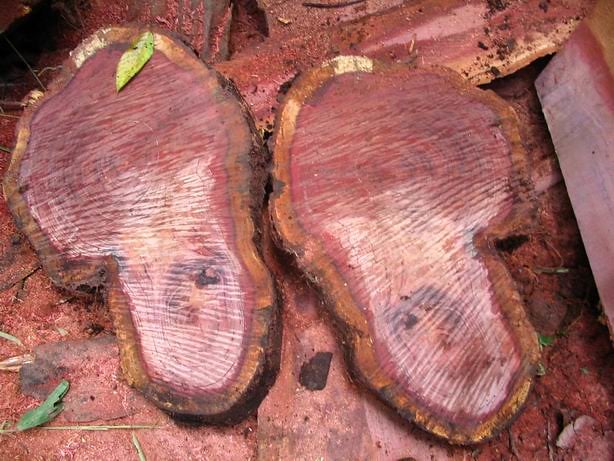
Purple Heart is one of the few woods that earns its name without any creative stretching. Freshly cut, the wood is a vivid, saturated purple.
It comes from a genus of trees called Peltogyne, native to tropical rainforests in Central and South America. Over time, exposure to light shifts the colour toward brown, though the purple base remains visible in protected surfaces.
The wood is extremely hard and dense, which makes it difficult to work but very durable. It’s used in flooring, furniture, and decorative objects.
The combination of unusual colour and hardness keeps it consistently in demand.
Mun Ebony
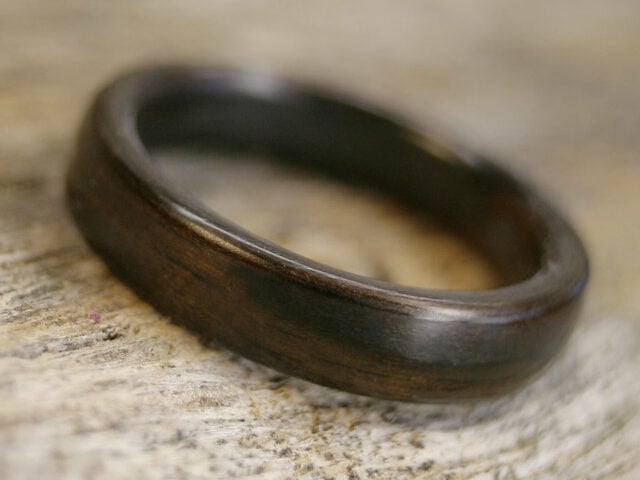
Mun Ebony, or Diospyros mun, is a Vietnamese species considered critically endangered by conservationists. It produces wood with a distinctive wavy grain pattern — dark brown to near-black with lighter streaks running through it in a way that resembles flowing water.
The Vietnamese name roughly translates to “ebony with a beautiful grain.” Legal trade is heavily restricted, which has done little to stop illegal logging.
What appears on the open market legally tends to come from reclaimed sources or antique pieces, and the price reflects both the quality and the scarcity.
Figured Maple

Figured Maple isn’t a separate species — it’s a growth anomaly that occurs in several maple species, most commonly in the eastern United States and Canada. Under the right conditions, the wood grain develops a rippled, three-dimensional pattern called “figure” that catches light differently from different angles, creating a shimmering or wavy effect.
The most dramatic examples are called “curly maple” or “quilted maple.” Luthiers prize it for violin backs and guitar tops.
Not all maple trees produce it, you can’t predict or force it, and the most extreme examples are rare enough to be genuinely valuable.
Bubinga

Bubinga comes from several tree species in West Africa. The heartwood ranges from pink to reddish-brown, often with dark purple or red veins running through it in dramatic patterns.
It’s heavy, hard, and visually striking — used for high-end furniture, drum shells, and decorative veneers. Export restrictions from several African countries have tightened in recent years, limiting supply to international markets.
Wood that was sourced before export restrictions tightened is increasingly valuable, and freshly sourced legal Bubinga is difficult and expensive to obtain outside Africa.
Perpendicular Grain Woods
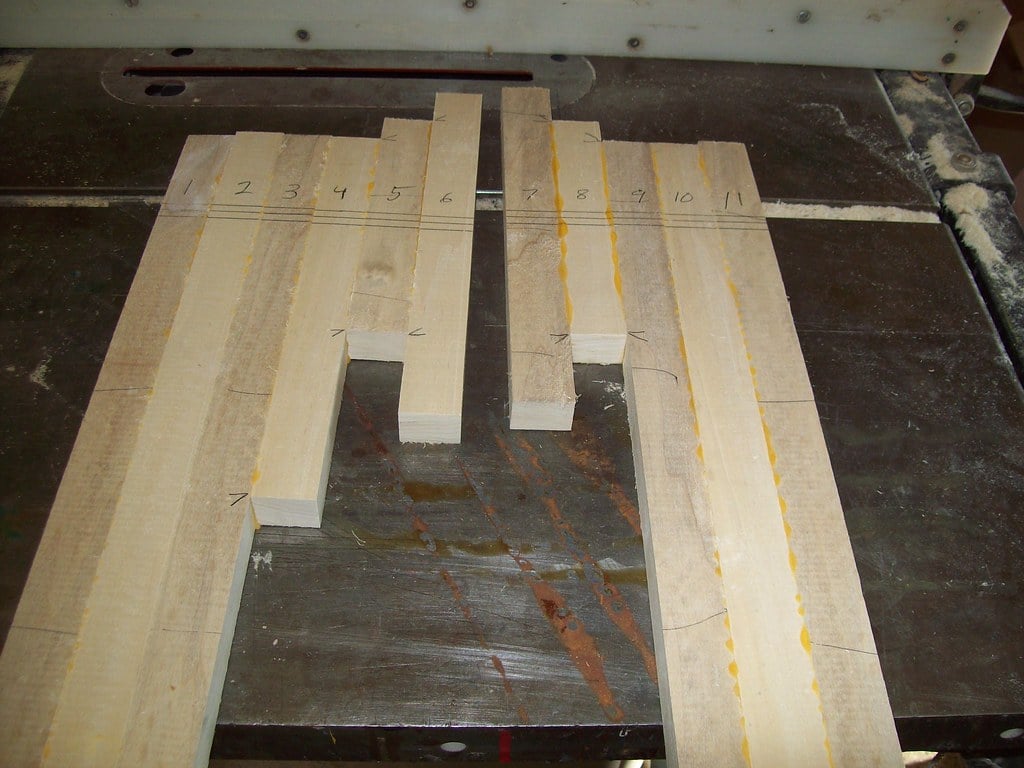
This is less a single wood and more a category worth understanding. When certain woods — particularly spruce and cedar — are sawn so that the growth rings run perpendicular to the face of the board, the result is called “quarter-sawn” or “straight-grained” timber.
For instrument making, this matters enormously. A perfectly straight-grained spruce top for an acoustic guitar can cost hundreds of dollars for a single piece.
The grain affects how sound waves travel through the wood, and the best examples take many years to locate and are sold individually to serious builders who inspect each piece in person.
The Price of Patience
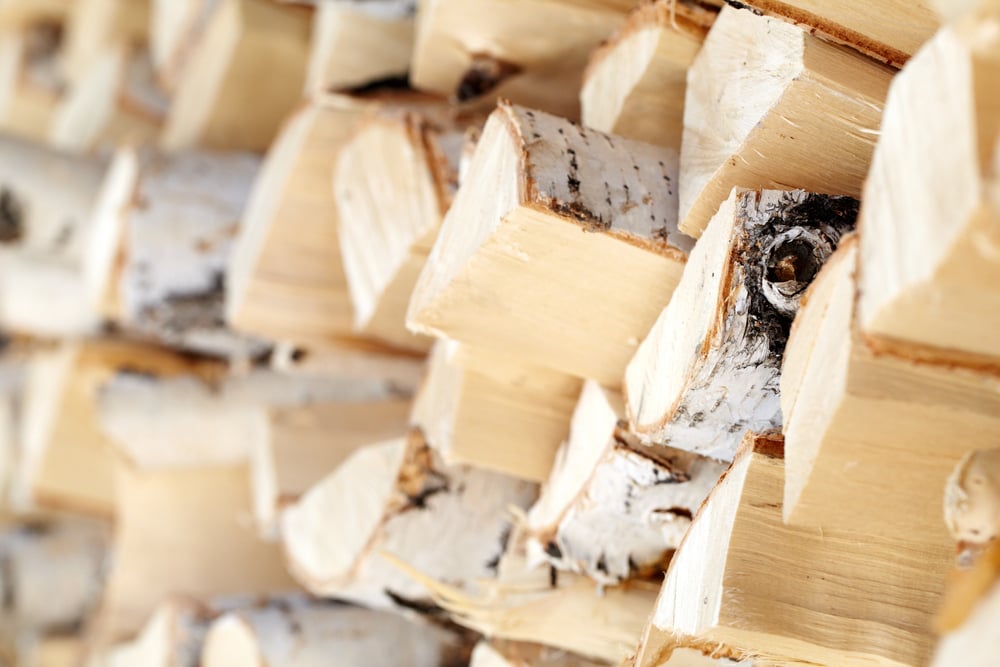
The Cost of Waiting Time is the only thing that almost all of these woods share. In fact, the features that make a wood valuable – such as its density, colour figure and even fragrance – are the result of very slow growth stretching over decades or even centuries.
You simply cannot make an African Blackwood tree that is 200 years old or a beautifully figured piece of maple in a short time. And as the areas of natural forests become smaller and it is more difficult to grow old growth wood, only the difference between common wood and exceptional wood gets bigger.
The rarest pieces are already being regarded less as building materials and more as the natural objects they are – having taken a lifetime to develop rather than being manufactured in a few months.
More from Go2Tutors!

- The Romanov Crown Jewels and Their Tragic Fate
- 13 Historical Mysteries That Science Still Can’t Solve
- Famous Hoaxes That Fooled the World for Years
- 15 Child Stars with Tragic Adult Lives
- 16 Famous Jewelry Pieces in History
Like Go2Tutors’s content? Follow us on MSN.



