Recently Added Words to the Dictionary
Words never sit quietly. They grow by stealing pieces from elsewhere, shrinking when convenient, shifting shape as speakers need.
What we write down isn’t law carved in stone – it’s more like notes taken during a long conversation. Updates slip in after someone notices a term keeps showing up, used again and again with purpose.
These choices aren’t loud declarations. A word just shows up enough times, doing real work, until it sticks.
Most new entries come from long periods of watching, arguing, testing. Not sudden whims.
What shows up in dictionaries reflects deeper shifts – how people now connect through language. Spotting fresh terms helps trace the quiet evolution of everyday talk.
A fresh peek inside shows exactly how fresh vocabulary slips into reference books. Not every phrase earns a spot – some prove too fleeting.
Think slang that fizzles by next season. Others stick, shaped by real usage across websites, chats, even speeches.
It isn’t just tech jargon either. Everyday talk matters more than you might guess.
Words tied to culture shifts often show up early. Surprisingly, playful blends sometimes last longer than expected.
These updates sketch a picture – not staged or forced – of how people actually speak now.
How Dictionaries Decide a Word Belongs

Dictionaries do not create words, nor do they approve them based on popularity alone. Editors at institutions like Merriam-Webster and the Oxford English Dictionary track how language is actually used in the real world.
A word must appear repeatedly across books, journalism, transcripts, and other credible written sources before it is even considered.
Consistency matters as much as frequency. Editors look for stable meaning rather than vague or shifting usage.
When a word shows up in different contexts but carries the same core idea, it signals that people understand it in a shared way. That shared understanding is what turns an informal expression into a legitimate dictionary entry.
Internet Culture as a Source of New Language

Online spaces have become one of the most productive environments for new vocabulary. Digital communities move quickly, and language often evolves as a form of shorthand, humour, or shared identity.
Words born in these spaces spread fast because they are designed to be repeated, remixed, and adapted.
What often helps these terms stick is their flexibility. A word may begin with a narrow meaning, then expand as people apply it to new situations.
Over time, that adaptability allows it to survive beyond the moment that first made it popular. Dictionaries pay close attention to this process, because it separates lasting language from short-lived novelty.
Technology and Everyday Vocabulary

Technological change has a direct impact on how people speak and write. As tools become more embedded in daily routines, they bring new actions and concepts that require names.
Dictionaries respond by documenting these terms once they become common enough to be widely understood.
Many of these additions feel practical rather than playful. They describe small, repeated actions that people perform without thinking, yet would struggle to explain clearly without shared language.
When a word consistently makes communication more efficient, its inclusion becomes less about trend-watching and more about necessity.
There is also a steady pattern to how these terms mature. What starts as a specialized language within a specific field often spreads outward, losing its technical edge as more people adopt it.
By the time a dictionary entry appears, the word is usually already familiar to a broad audience.
Borrowed Words and Global Influence
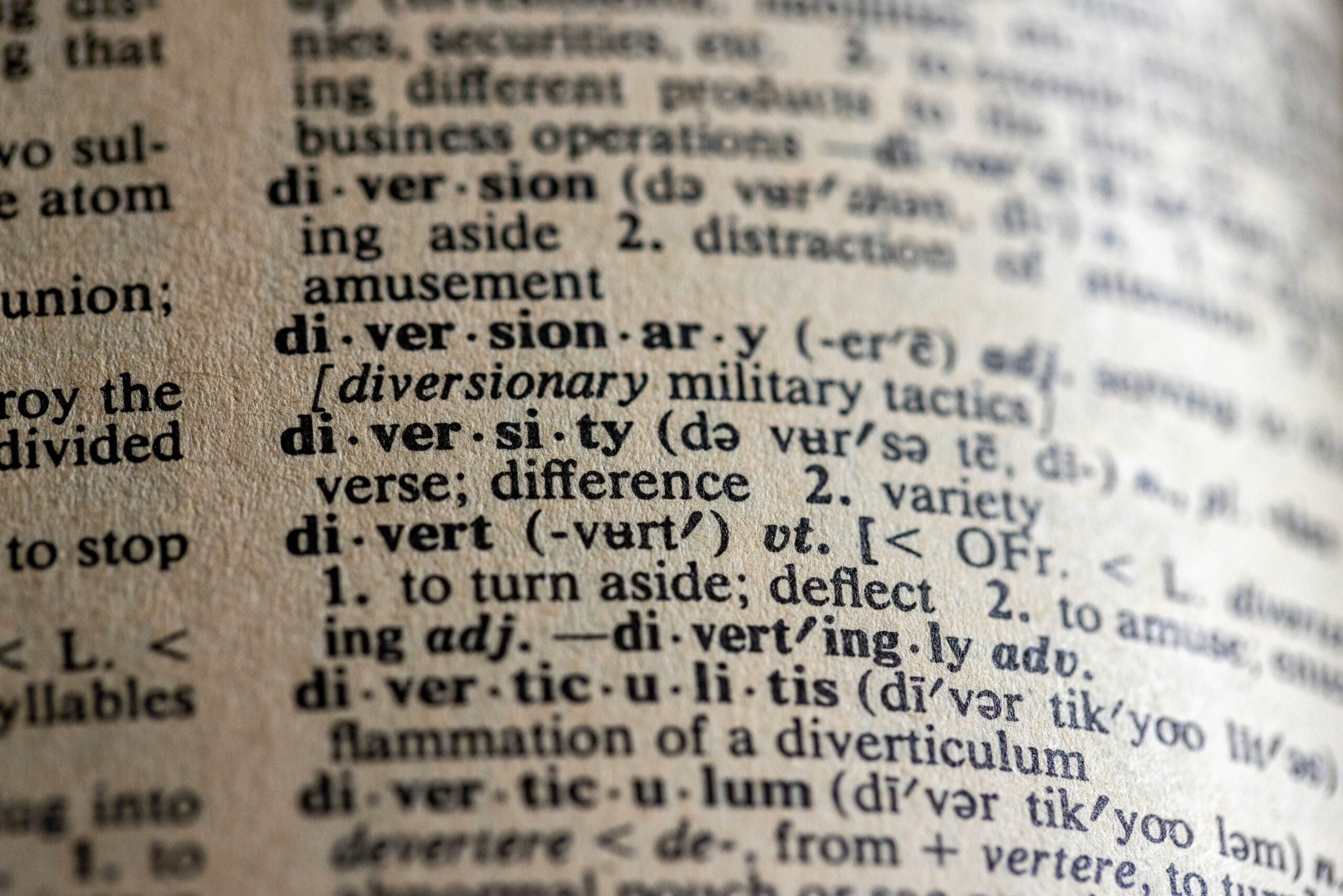
English has always absorbed words from other languages, and recent updates continue that tradition. These borrowed terms often capture ideas that lack a precise equivalent, making them useful additions rather than decorative ones.
Once adopted, they tend to retain their original flavour while adapting to English grammar and usage.
Global communication has accelerated this process. Words that once stayed within regional or cultural boundaries now travel quickly through media, travel, and online interaction.
When a borrowed term begins appearing regularly in English-language writing, dictionaries take note.
This reflects a broader shift toward a more globally influenced version of English. Instead of drawing solely from one region, modern vocabulary increasingly mirrors a connected world where ideas move freely and language follows.
From Spoken Use to Written Record

Most new words begin in speech. They are tested informally, passed between people, and refined through repetition.
Writing usually comes later, once the word feels familiar enough to appear in articles, interviews, and commentary without explanation.
This transition is crucial for dictionary editors. Written evidence provides a clearer trail of usage, context, and meaning.
Once a word appears consistently in print, it becomes possible to define it accurately and distinguish it from similar terms.
The shift from spoken to written use also tends to stabilise meaning. As writers adopt a word, they help fix its definition, making it easier for dictionaries to capture how it is understood at a specific moment in time.
When Definitions Expand Instead of Adding New Words

Not every update involves a brand-new entry. Many changes involve expanding or refining existing definitions to reflect how usage has evolved.
A word that once described a narrow idea may take on broader meaning as people apply it in new contexts.
These updates are essential to keeping dictionaries relevant. Without them, definitions would lag behind real-world usage, creating confusion rather than clarity.
Revising an entry acknowledges that language grows not just by adding words, but by reshaping old ones.
Over time, these expanded meanings often become the dominant ones. Dictionaries record this shift, preserving earlier definitions while making room for how the word is used today.
Different Dictionaries, Different Priorities

Not all dictionaries update in the same way or at the same pace. Some focus on contemporary usage, while others prioritise historical documentation.
Cambridge Dictionary, for example, often emphasises current meaning and accessibility, particularly for learners.
The Oxford English Dictionary takes a longer view, tracing the history of words across centuries. A term may appear in a modern dictionary years before it receives a full historical entry.
Together, these approaches create a layered record of the language.
This diversity of focus explains why some updates appear uneven at first glance. What looks new in one dictionary may already exist in another, serving a different purpose or audience.
Why New Words Sometimes Spark Resistance

Every round of updates brings criticism from some readers. New entries are sometimes seen as lowering standards or legitimising informal speech.
Similar concerns have surfaced repeatedly throughout history, often when dictionaries recognised everyday language that had long been in use.
What these reactions overlook is the descriptive role of dictionaries. They document how people communicate; they do not instruct anyone on what to say or write.
Including a word does not endorse it, nor does it replace more formal alternatives.
In many cases, the controversy fades once the word becomes familiar. What initially feels jarring often blends into the background of everyday language within a few years.
Language as a Record of Its Time

Lists of recently added words often read like cultural snapshots. They capture what people are talking about, building, and navigating in a given period.
Even ordinary-sounding entries can reveal larger shifts in behaviour and priorities.
This is why these updates hold value beyond curiosity. They show how language responds to new realities, whether driven by technology, global interaction, or changing social habits.
Each addition marks a small but telling adjustment.
Over time, these words form a quiet archive. Future readers will be able to trace how people once described their world, even when the details of that world have changed.
Why It Still Matters

The ongoing expansion of dictionaries reflects a simple truth: language belongs to its users. New words are added not because they are fashionable, but because they serve a purpose and endure.
They help people communicate more clearly, efficiently, or precisely.
By recording these changes, dictionaries remain useful rather than static. They acknowledge that English is shaped daily by the people who speak and write it.
As long as life continues to evolve, the dictionary will continue to grow alongside it, one carefully chosen word at a time.
More from Go2Tutors!

- The Romanov Crown Jewels and Their Tragic Fate
- 13 Historical Mysteries That Science Still Can’t Solve
- Famous Hoaxes That Fooled the World for Years
- 15 Child Stars with Tragic Adult Lives
- 16 Famous Jewelry Pieces in History
Like Go2Tutors’s content? Follow us on MSN.