Recess Games Lost to Time
Playgrounds used to be filled with games that kids taught each other, passed down through generations without anyone writing down the rules. These weren’t video games or organized sports with referees and uniforms.
They were simple activities that required nothing more than imagination, some space, and a group of willing participants. Kids made up variations, argued over rules, and somehow kept these games alive for decades.
But somewhere along the way, many of these playground traditions quietly disappeared. The games that defined recess for previous generations have largely vanished from modern schoolyards.
Fewer kids today know the thrill of a good game of Red Rover or the strategy behind British Bulldog.
Red Rover

Red Rover had kids form two lines facing each other while holding hands, creating human chains that were supposed to be unbreakable. One team would call out ‘Red Rover, Red Rover, send [name] right over,’ and that person would run full speed trying to break through the linked arms.
If they broke through, they got to take someone back to their team, but if they failed, they joined the other side. The game required a mix of speed, strength, and the ability to spot the weakest link in the opposing chain.
Schools started banning Red Rover in the 1990s and 2000s because kids were getting injured, with broken arms and dislocated shoulders becoming too common. The game that once defined recess roughhousing became a liability issue that most schools decided wasn’t worth the risk.
British Bulldog

British Bulldog turned the playground into a battlefield where one person stood in the middle while everyone else tried to run past them to the other side. The person in the middle had to tag runners, and anyone tagged joined them in the middle for the next round.
The game continued until only one person remained untagged, and that person became the winner and the first bulldog for the next game. Things got intense when half the class was in the middle, creating a gauntlet that seemed impossible to cross.
British Bulldog vanished from most playgrounds for the same reason as Red Rover, with schools citing too many injuries from collisions and rough tackles. The game’s very name also became problematic in an era more sensitive to bullying concerns.
Four Square
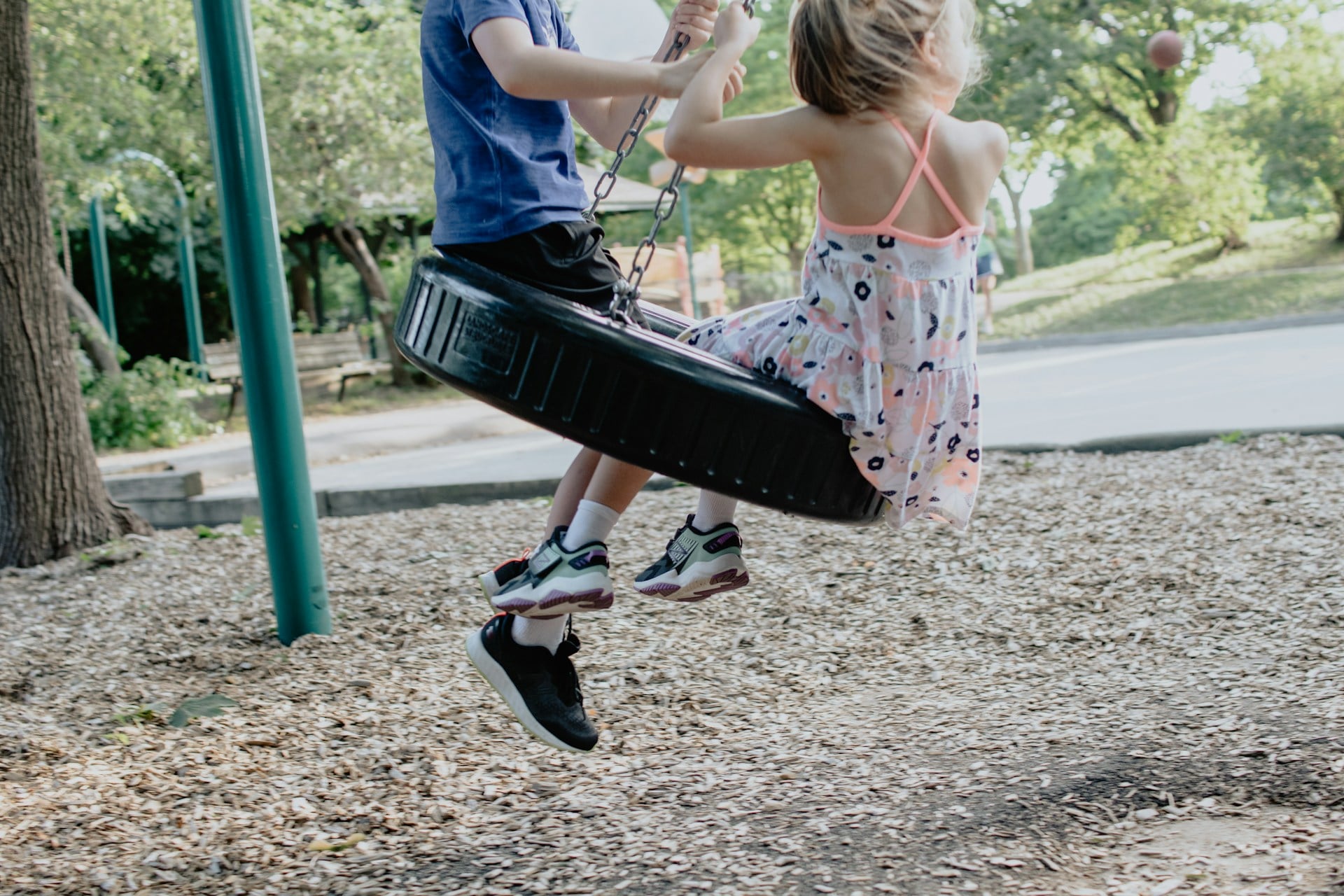
Four Square required nothing but a playground painted with four connected squares and a rubber orb, yet it created complex social hierarchies during recess. Players stood in squares ranked from lowest to highest, with the ace square being the most coveted position.
The ace served the orb, and players had to hit it into other squares without letting it bounce twice in their own area. Getting out meant going to the end of the line while everyone moved up a square.
Four Square had countless local variations with rules like ‘cherry bomb,’ ‘around the world,’ and ‘bus stop’ that differed from school to school. The game declined as schools removed painted squares from playgrounds during renovations and never bothered to paint them back.
Dodgeball
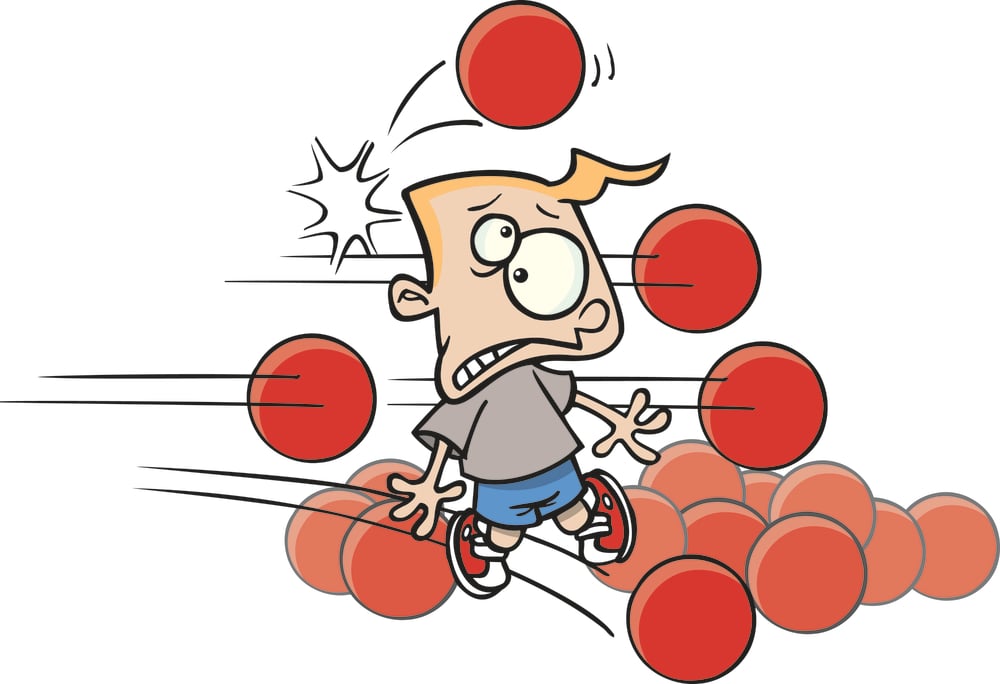
Dodgeball split kids into two teams that threw orbs at each other until one side had everyone eliminated. Getting hit meant sitting out unless a teammate caught an orb, which brought eliminated players back into the game.
The game rewarded both throwing accuracy and dodging ability, creating a mix of offensive and defensive strategies. Some kids lived for dodgeball while others dreaded it, making the game divisive even in its heyday.
Schools began phasing out dodgeball in the early 2000s, with critics arguing it encouraged bullying and targeted weaker students. The debate over dodgeball became surprisingly heated, with some people defending it as character-building while others called it legalized cruelty.
Wallball

Wallball needed only a tennis orb and a wall, yet it spawned dozens of variations depending on which region kids played in. The basic version had players throw an orb against a wall and catch it, with different rules for what happened if someone dropped it or missed their catch.
Some versions required running to touch the wall before someone else hit you with the orb, while others involved complex point systems. The game could occupy kids for entire recesses with nothing but a wall and an orb that cost less than a dollar.
Wallball faded as schools became more concerned about orbs hitting windows and kids running into walls during intense games.
Hopscotch

Hopscotch involved a course drawn with chalk where kids hopped through numbered squares, skipping any square that had a marker in it. Players tossed a small object like a stone or beanbag onto a numbered square, then hopped through the course while avoiding that square.
The game required balance, accuracy in tossing, and the ability to hop on one foot without wobbling out of bounds. Different countries had their own hopscotch variations, some with numbers up to 10 and others with more complex patterns.
Hopscotch declined as playgrounds switched from asphalt to rubber surfaces where chalk wouldn’t show up, and schools stopped allowing students to bring chalk to school.
Heads Up Seven Up

Heads Up Seven Up gave kids a break from running around while still being more fun than sitting quietly at their desks. Seven students stood at the front of the room while everyone else put their heads down and thumbs up.
The seven students each pressed one person’s thumb down, then returned to the front and said ‘Heads up, seven up.’ The students whose thumbs were pressed tried to guess who picked them, and if they guessed correctly, they swapped places.
Teachers loved this game because it kept kids relatively calm and quiet, making it popular during indoor recess on rainy days. The game disappeared as schools moved away from whole-class activities and teachers faced pressure to use every minute for academic instruction.
Kickball
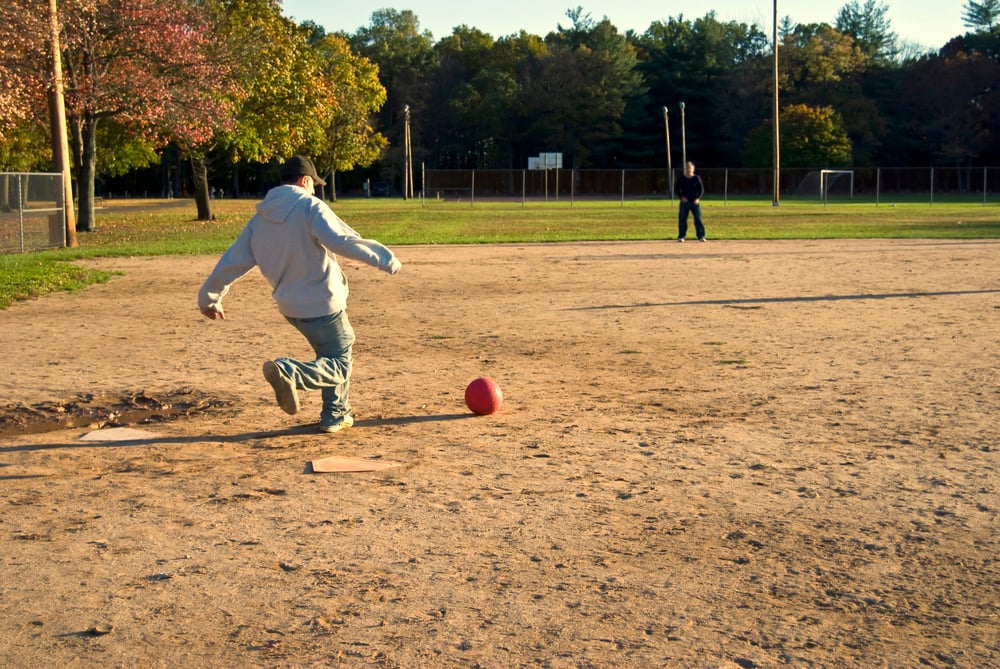
Kickball combined baseball rules with a rubber orb that kids kicked instead of hit with a bat, making it accessible to everyone regardless of athletic ability. Teams took turns kicking and fielding, with the same basic structure of bases, outs, and innings that made baseball work.
The game required minimal equipment and could be played with anywhere from 10 to 30 kids. Kickball created its own culture of trash talk, dramatic plays, and arguments over whether someone was safe or out.
Many schools still have kickball, but it’s become an organized activity with adult supervision rather than something kids spontaneously start during recess.
Tag variations

Tag spawned countless variations that each had their own rules and strategies that made them feel like completely different games. Freeze tag turned tagged players into statues until someone unfroze them by crawling between their legs.
TV tag gave players immunity if they yelled out a television show name before getting tagged. Blob tag had tagged players join hands with whoever was ‘it,’ forming a growing chain that made the game harder as more people got caught.
These variations kept tag interesting because kids could switch up the rules whenever they got bored. Modern playgrounds still have tag, but many schools banned the classic tackle version and some of the more physical variations.
Marbles

Marbles used to be serious business on playgrounds, with kids bringing collections and playing for keeps in games where winners took the marbles they knocked out of the circle. Players drew circles in the dirt and took turns shooting marbles to knock other marbles out while keeping their shooter inside the ring.
Different marble sizes, weights, and materials gave players advantages, and some kids became known for their rare or particularly effective shooters. Trading marbles was almost as important as playing the actual game, with certain types becoming highly valuable.
Marbles vanished from playgrounds partly because schools banned ‘playing for keeps’ and partly because dirt patches gave way to paved surfaces where the game didn’t work as well.
Red Light Green Light

Red Light Green Light had one player face away from the group while everyone else tried to sneak forward when their back was turned. The person at the front would yell ‘green light’ to allow movement, then suddenly spin around while shouting ‘red light’ to catch anyone still moving.
Players caught moving had to go back to the starting line, and the first person to reach the front became the next caller. The game taught patience and stillness, skills that don’t come naturally to energetic kids at recess.
Red Light Green Light still exists but mostly in organized gym classes rather than as something kids spontaneously play during free time.
Tetherball
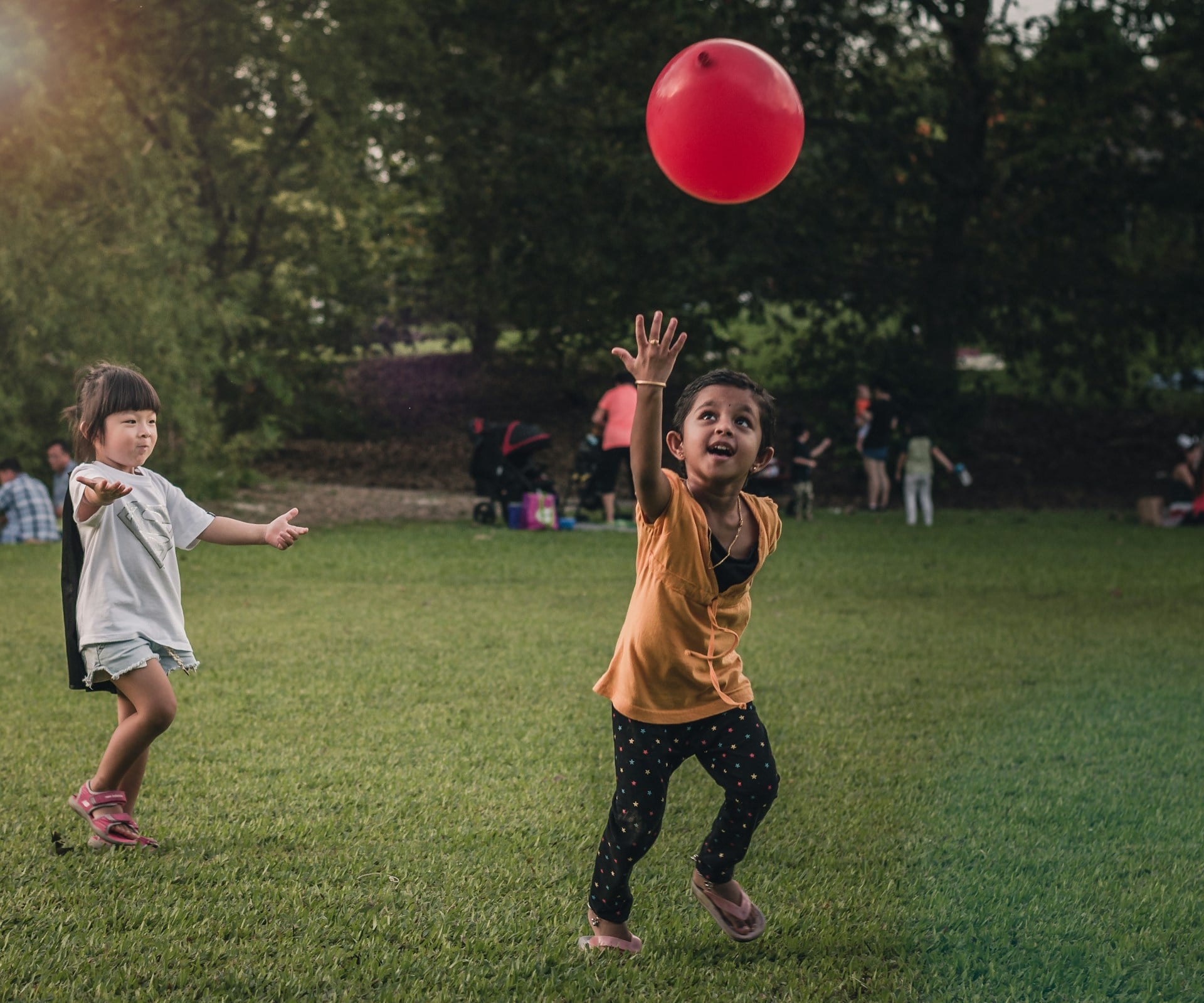
Tetherball attached an orb to a pole with a rope, and two players hit the orb in opposite directions trying to wrap the rope completely around the pole. The game required timing, height, and the ability to spike the orb hard enough that your opponent couldn’t return it.
Tetherball poles became fixtures on playgrounds across America, often with lines of kids waiting for their turn. Players developed different hitting styles, with some favoring powerful overhead smashes while others used precise control shots.
Schools removed many tetherball poles during playground upgrades, and the game lost its prominence as equipment wasn’t replaced.
Mother May I

Mother May I put one player in charge while everyone else stood at a starting line trying to reach them first by following commands. The ‘mother’ would tell players to take certain steps forward like ‘Take three giant steps’ or ‘Take five baby steps,’ but players had to ask ‘Mother may I?’ before moving.
Forgetting to ask or moving without permission sent players back to the start, adding a memory component to the physical game. The winner became the next mother, creating a rotation that let everyone have a turn being in charge.
This game disappeared partly because it required space and partly because modern playgrounds moved away from games with authority figures and obedience themes.
Jacks

Jacks involved bouncing a small rubber orb and picking up metal pieces before the orb bounced twice, with the number of jacks increasing each round. Players started by picking up one jack at a time, then twos, threes, and so on until they tried to scoop up all the jacks in one grab.
The game required hand-eye coordination and quick reflexes, skills that improved with practice. Kids played jacks on smooth surfaces during indoor recess or in quiet corners of the playground.
Jacks faded as schools discouraged kids from bringing small objects that could become choking hazards, and the game never made the transition to becoming an organized activity.
Chinese Jump Rope

A stretchy band loops around two friends’ feet, tight enough for a third kid to leap through. Moving inside then outside the shifting shape, each step follows tricky sequences that grow harder every round.
Up past the calves it climbs, rising toward the hips once skill builds. Hours vanish like chalk marks wiped by rain, just three children chasing rhythm with almost no gear.
Crowded yards took over, rules changed for safety, open ground shrank – so did room for bouncing games. Space grew scarce where long hops once fit.
Duck Duck Goose

A circle forms when children play Duck Duck Goose, one walker moving behind others while touching each head. Instead of skipping names, they say duck each time – over and over – until choosing someone by calling out goose suddenly.
That kid leaps up fast, scrambling to catch the runner circling back through legs and gaps. Sitting down just in time means safety, slipping into the vacant space without getting caught.
Getting tagged changes nothing except having another turn as chaser immediately after. Simpler rules keep little ones focused, avoiding rough pushes seen in rowdier outdoor matches.
Energy stays low compared to wilder group contests where shoving sometimes happens anyway. Some classrooms include it now during indoor movement periods set by teachers.
It shows up more often led by grown-ups than played freely at break times lately.
The evolution of play

Nowadays, playgrounds aren’t what they used to be back when children played those old-school games. Safety improved over time, yet equipment became rigid – built for one purpose instead of allowing free-form play.
Classrooms worry about accidents, lawsuits follow close behind, certain games did carry real risks without adult eyes nearby. Still, a quiet shift happened when younger kids no longer learned from older ones, inventing new rules just by playing together.
Lost along with those forgotten games was a way kids used to figure things out together – setting their own rules, working through arguments, building little worlds just by playing. Today’s play spaces may lower the risks, yet often feel more rigid, as grown-up plans take over the wild, self-made energy that once filled break time.
More from Go2Tutors!

- The Romanov Crown Jewels and Their Tragic Fate
- 13 Historical Mysteries That Science Still Can’t Solve
- Famous Hoaxes That Fooled the World for Years
- 15 Child Stars with Tragic Adult Lives
- 16 Famous Jewelry Pieces in History
Like Go2Tutors’s content? Follow us on MSN.