Scariest Creatures in the Sea
The ocean covers most of the planet, but humans have explored less than 20 percent of it. What lurks in the remaining depths remains mostly unknown.
The creatures scientists have discovered so far range from bizarre to absolutely terrifying. Some have teeth longer than their bodies.
Others glow in the dark to lure prey into their jaws. Many look like they escaped from a horror movie set.
Most of these animals live so deep that sunlight never reaches them. They’ve adapted to crushing pressure, freezing temperatures, and total darkness.
Their survival tactics include venomous spines, transparent skin, extendable jaws, and parasitic mating rituals. These aren’t the colorful fish you see in aquariums.
These are the monsters that make you rethink swimming in the ocean.
Anglerfish Turn Males Into Parasites
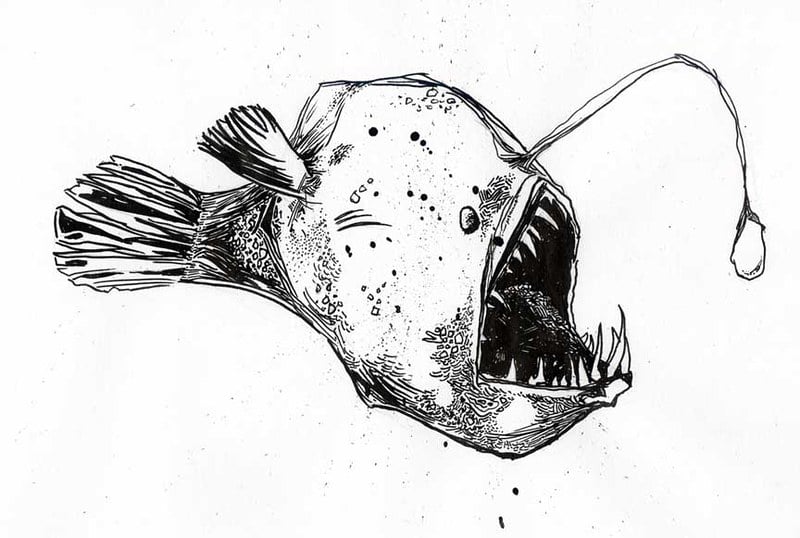
The anglerfish sits at the top of the nightmare fuel list. The female sports a bioluminescent lure dangling from her head like a glowing fishing rod.
She waves it around in the pitch-black depths, and curious prey swim right into her gaping mouth. Her teeth point inward, so nothing escapes once it enters.
But the truly horrifying part is how these fish mate. The tiny male anglerfish bites into the female’s body and fuses with her permanently.
His tissues merge with hers. He becomes a parasitic appendage that does nothing except fertilize her eggs for the rest of their lives.
He loses his eyes, internal organs, and everything that made him an independent creature. Multiple males can attach to a single female, creating a grotesque cluster of fused bodies.
Female black seadevils grow only about six inches long, but they look much larger when you see their enormous mouths and spindly teeth jutting out at odd angles.
Viperfish Can’t Close Their Mouths

The viperfish earns its name honestly. Its fangs are so long and needle-sharp that they don’t fit inside its mouth.
Instead, they curve backward toward its eyes, creating a permanent horrifying grimace. These teeth can be half the length of the fish’s entire body.
The viperfish has a hinged skull and an expandable stomach, allowing it to swallow prey larger than itself whole. It lures victims using a photophore on its dorsal spine that flashes like a strobe light in the darkness.
Anything attracted to the light meets those impossible teeth. During the day, viperfish dive to depths of 5,000 feet where food is scarce.
At night, they swim to shallower depths around 2,000 feet to hunt. Scientists know surprisingly little about these predators because they live so deep.
Most specimens get discovered when deep-sea fishermen accidentally catch them.
Goblin Sharks Have Extending Jaws

The goblin shark looks prehistoric because it basically is. This living fossil has barely changed over millions of years.
Its elongated snout gives it an alien appearance, and its pinkish skin appears almost transparent in certain light. The most terrifying feature is its jaw.
When the goblin shark hunts, its jaws shoot forward from its skull to grab prey. The mechanism happens so fast that the prey can’t react.
One moment the shark’s mouth sits normally under its snout. The next moment, those needle-like teeth are inches closer, having extended outward at incredible speed.
Goblin sharks grow up to 13 feet long and inhabit deep waters in the Pacific, Atlantic, and Indian Oceans. They’re rarely seen, which somehow makes them more frightening.
Something that looks strange is hunting in the dark depths right now, and humans have barely documented it.
Frilled Sharks Are Living Dinosaurs

The frilled shark survived from the age of dinosaurs, earning its nickname as a living fossil. It swims with an eel-like motion through waters as deep as 4,000 feet.
Its body stretches over six feet long, and its head looks remarkably snake-like. This shark has approximately 300 teeth arranged in 25 rows throughout its mouth.
Each tooth has three sharp points. The frilled shark swims with its mouth wide open, which researchers think attracts prey.
Once something swims close enough, those rows of teeth snap shut. Frilled sharks can swallow prey up to half their body size whole.
Their diet consists almost entirely of squid, which they hunt in the cold, dark waters where few other predators venture. When fishermen occasionally haul one up from the depths, it often dies from the pressure change before reaching the surface.
Giant Isopods Look Like Alien Insects

Imagine a pill bug the size of a house cat. That’s basically a giant isopod.
These crustaceans grow up to 16 inches long and crawl along the seafloor at depths reaching 7,000 feet. They represent a phenomenon called abyssal gigantism, where deep-sea creatures grow much larger than their shallow-water relatives.
Giant isopods are scavengers with four sets of jaws. They eat dead fish, squid, and whale carcasses that sink to the ocean floor.
But they’ll attack live prey when the opportunity presents itself. Their 14 legs carry them across the seafloor, and they can swim using fan-like structures on their tails.
These creatures can survive for years without food. One captive giant isopod in Japan went five years without eating before it died.
Their slow metabolism and patient hunting style make them efficient predators of the deep.
Fangtooth Fish Have Proportionally Massive Teeth

The fangtooth fish has the largest teeth proportional to body size of any fish in the ocean. Its fangs are so enormous that the fish evolved special sockets on either side of its brain to accommodate them when its mouth closes.
Otherwise, those teeth would pierce its own skull. Despite their terrifying appearance, fangtooth fish only grow about six inches long.
Their dark skin and scales help them stay hidden from both prey and larger predators. They live at depths between 1,650 and 7,000 feet, where their black coloration renders them nearly invisible.
These fish are ambush predators that wait for smaller fish, squid, and crustaceans to swim close. Their huge teeth ensure that anything they bite doesn’t escape.
The fangtooth’s oversized head houses those impressive jaws, giving the fish an aggressive, angry appearance.
Box Jellyfish Kill Within Minutes
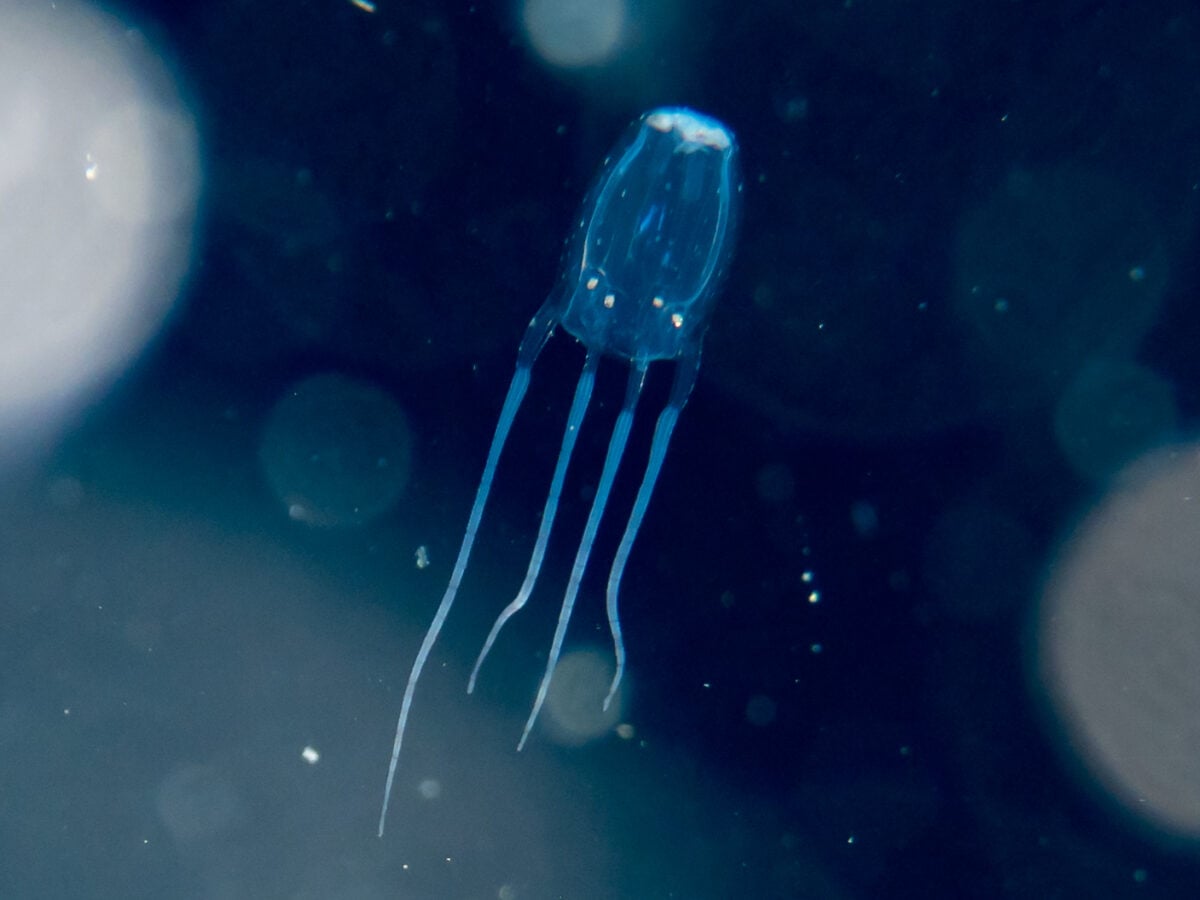
The box jellyfish ranks among the most venomous creatures in the ocean. Its tentacles, which can stretch up to 10 feet long, are covered with thousands of tiny darts filled with poison.
The venom attacks the nervous system, heart, and skin cells simultaneously. A box jellyfish sting causes excruciating pain immediately.
The venom can trigger cardiac arrest or death within minutes if the sting is severe enough. Survivors report that the pain is unbearable.
The Australian box jellyfish kills an estimated 20 to 40 people annually. The jellyfish itself is nearly transparent with a pale blue tint.
Its cube-shaped bell gives it the name. It swims actively through the water rather than drifting like many jellyfish species, and it can see through 24 eyes arranged around its body.
This makes it an efficient hunter that deliberately pursues prey.
Blue-Ringed Octopus Carries No Antivenom

The blue-ringed octopus is smaller than a human hand, but it’s one of the most dangerous animals in the ocean. Its venom contains tetrodotoxin, a neurotoxin that shuts down the respiratory system and causes heart failure.
No antivenom exists for its bite. The octopus displays brilliant blue rings across its body when threatened.
These rings serve as a warning. If something ignores the warning and gets too close, the octopus bites.
Victims often don’t feel the bite at first because it’s so small. Then the paralysis starts.
A single blue-ringed octopus carries enough venom to kill 26 adult humans. The toxin works by blocking sodium channels in nerve cells.
Muscles can’t contract. Breathing becomes impossible.
Victims remain conscious but completely paralyzed. Death occurs from respiratory failure unless medical assistance provides artificial ventilation until the toxin wears off.
Stonefish Blend Into the Seafloor

The stonefish earned its title as the most venomous fish in the world from Guinness World Records. It sits motionless on the ocean floor, perfectly camouflaged among rocks and coral.
Its bumpy texture makes it nearly impossible to spot. When an unsuspecting victim steps on a stonefish, 13 sharp dorsal spines inject venom through the foot.
The pain is immediate and excruciating. Victims describe it as the worst pain they’ve ever experienced.
Without treatment, the venom can cause tissue death, shock, and paralysis. Stonefish are found throughout the Indo-Pacific region.
They don’t hunt actively. They simply wait for prey to swim close enough, then strike faster than the eye can follow.
Their camouflage protects them from predators while making them incredibly dangerous to humans who wade in shallow waters.
Sarcastic Fringehead Has an Explosive Mouth
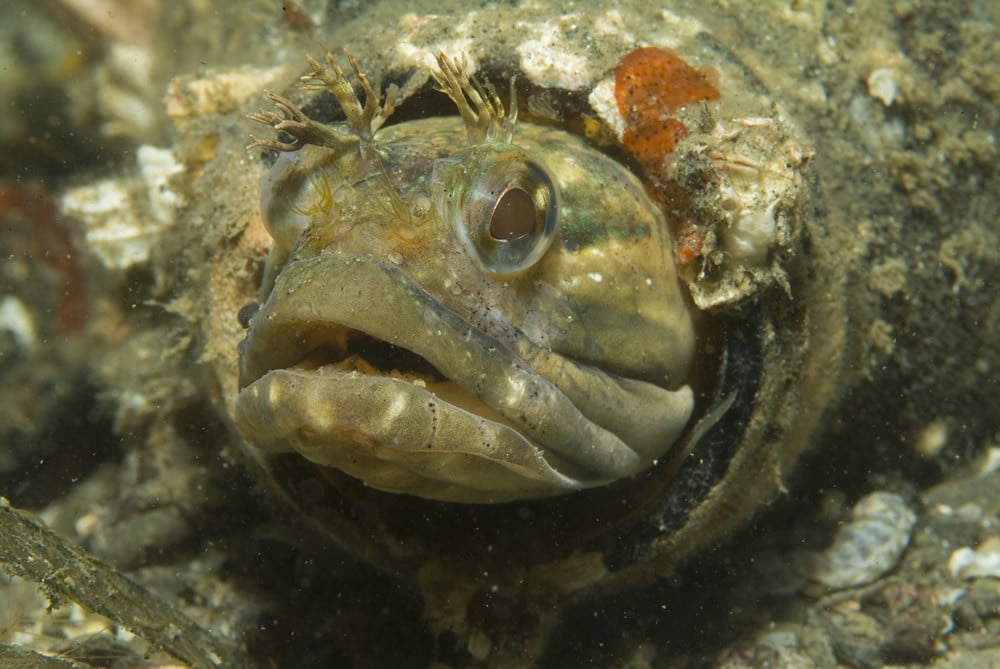
The sarcastic fringehead looks relatively normal until it feels threatened. Then it transforms into something from a monster movie.
Its mouth opens to an impossible width, displaying a bright interior lined with needle-like teeth. These fish are extremely territorial and attack creatures much larger than themselves.
When two fringeheads meet, they press their wide-open mouths together in a battle to establish dominance. The fish with the bigger mouth usually wins.
Sarcastic fringeheads have attacked human divers who ventured too close to their territory. They live off the west coast of North America and make their homes in empty shells, crevices, or abandoned cans on the seafloor.
Despite growing only about a foot long, they show absolutely no fear when defending their space.
Vampire Squid Isn’t Actually a Vampire

The vampire squid’s scientific name translates to “vampire squid from hell,” but this creature is actually quite docile. It’s neither a true squid nor a vampire.
Instead, it’s the last surviving member of an ancient lineage that evolved before squids and octopuses split into separate groups. The squid’s eight arms are connected by a cloak-like webbing of skin lined with fleshy spines.
When threatened, it pulls this cloak over its body like a vampire’s cape. The reddish coloration gives it an eerie appearance in the deep ocean.
Vampire squids thrive at depths where oxygen levels drop to just three percent. Most creatures can’t survive in such conditions, but the vampire squid has adapted perfectly.
It feeds on marine snow (dead organic matter that drifts down from above) rather than hunting live prey. Its bioluminescent displays can confuse predators in the darkness.
Stargazer Fish Bury Themselves and Wait

The stargazer earned its name because its eyes sit on top of its flat head, allowing it to look straight up while buried in sand. Only its eyes and mouth remain visible.
Everything else hides beneath the seafloor. When prey swims overhead, the stargazer’s enormous mouth opens and creates suction that pulls the victim down.
The attack happens so fast that the prey has no chance to escape. To make matters worse, some stargazer species can generate electric shocks to stun their victims.
Two venomous spines sit just behind the stargazer’s head. These serve as a defense against larger predators.
The combination of ambush tactics, suction feeding, electric shocks, and venomous spines makes this fish a highly effective and deeply unsettling predator.
Great White Sharks Sense Blood From Miles Away

Great white sharks need no introduction. These apex predators can grow over 20 feet long and weigh more than 5,000 pounds.
Their rows of serrated teeth function like steak knives, designed to tear through flesh and bone. What makes great whites truly terrifying is their sensory abilities.
They can smell blood from over a quarter mile away. Electroreceptors in their snouts detect the electrical fields generated by all living creatures.
This allows them to find prey even in murky water or complete darkness. Great whites breach when hunting seals, launching their entire bodies out of the water.
The force of these attacks can stun or kill prey instantly. While attacks on humans are rare, the power and precision of these predators command genuine fear and respect.
Sea Spiders Crawl Through the Abyss

Sea spiders aren’t actually spiders, but they look disturbingly similar. Over 1,300 species exist, and they can be found at depths reaching 7,000 feet.
Their leg spans range from one millimeter to over 10 inches. These creatures have a proboscis that they use to pierce prey and suck out the insides.
They feed on soft-bodied animals like jellyfish and sea anemones. Their bodies are so small that their digestive system extends into their legs for extra space.
Sea spiders move slowly across the ocean floor on their spindly legs. Their alien appearance and the way they drain their prey like tiny vampires make them deeply unsettling to encounter.
They’ve thrived in Earth’s oceans for over 400 million years.
Wolffish Have Multiple Rows of Teeth
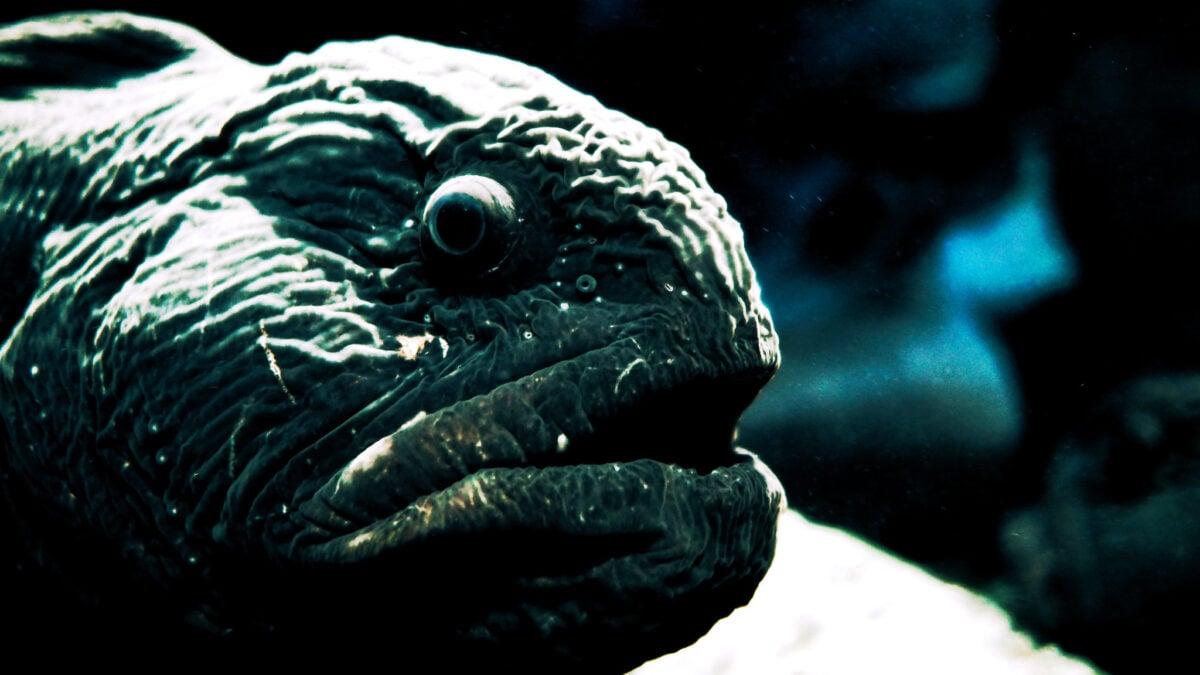
The Atlantic wolffish has a face only a marine biologist could love. Its mouth contains four to six fang-like teeth at the front, with three rows of crushing teeth behind those.
The throat contains another set of serrated teeth. This fish is basically a swimming food processor.
Wolffish use their impressive dental array to crack open hard-shelled prey like sea urchins, crabs, and mollusks. They’re bottom-dwellers that patrol the seafloor looking for anything crunchy to eat.
Despite their fierce appearance, they’re generally not aggressive toward humans unless provoked. These fish can grow up to five feet long and produce a natural antifreeze protein in their blood that allows them to survive in freezing Arctic waters.
Their powerful jaws can easily crush a human finger, though they rarely bite unless handled roughly.
When the Deep Reveals Its Secrets

Every deep-sea expedition discovers new species. Every submersible dive captures footage of creatures science has never documented.
The ocean holds more mysteries than all the continents combined. Some of these mysteries have teeth.
Others have venom. Many have features so strange that researchers struggle to explain their purpose.
The creatures listed here represent just a fraction of what’s really down there. For every anglerfish photographed, there might be ten other species still unknown.
For every frilled shark caught by accident, there might be larger, stranger predators lurking deeper. You can’t see them from the beach.
You can’t spot them from a boat. But they’re there, adapted to conditions that would kill a human in seconds, thriving in darkness so complete that eyes become nearly useless.
The deep ocean isn’t empty. It’s full. And most of what fills it remains undiscovered, unnamed, and potentially more terrifying than anything described in these pages.
More from Go2Tutors!

- 16 Historical Figures Who Were Nothing Like You Think
- 12 Things Sold in the 80s That Are Now Illegal
- 15 VHS Tapes That Could Be Worth Thousands
- 17 Historical “What Ifs” That Would Have Changed Everything
- 18 TV Shows That Vanished Without a Finale
Like Go2Tutors’s content? Follow us on MSN.