Scientific Hoaxes That Fooled the World
Science thrives on truth, evidence, and peer review. But even the most rigorous scientific communities have been duped by clever frauds and honest mistakes that spiraled into elaborate deceptions.
Some hoaxes were born from ambition, others from mischief, and a few from genuine confusion that nobody wanted to admit. What makes these stories fascinating isn’t just the deception itself but how smart people managed to fall for them, sometimes for decades.
Here is a list of scientific hoaxes that managed to fool experts, newspapers, and the public before the truth finally came out.
Piltdown Man

Between 1911 and 1912, skull and jaw fragments discovered in England were claimed to be the missing link between humans and apes. The discovery set the pace for evolutionary research for decades and established Britain as an important site in human evolution.
The big-brained, ape-jawed specimen turned out to be a human cranium paired with an orangutan’s jaw and teeth. The hoax lasted over 40 years before being exposed in the 1950s, misleading an entire generation of anthropologists.
Cardiff Giant

In the fall of 1869, two farmers digging a well in central New York unearthed what appeared to be a petrified giant stretching 10 feet in length. News spread quickly, and George Hull charged a 50 cent viewing fee to curious visitors and scientists who came to see the spectacle.
Hull had spent about $3,000 to produce, transport, and bury the giant, but made over $20,000 in admission fees before selling it to investors for about $36,000. When sculptors finally admitted they’d been hired by Hull to carve the statue, the truth emerged.
Archaeoraptor

In 1999, National Geographic unveiled a fossil that appeared to be a missing link between dinosaurs and birds, but it turned out to be artfully created from parts of different animals. X-ray computer scans later showed the specimen was built from 88 fragments of rock and fossil in three layers.
A Chinese paleontologist discovered the tail section had been stolen from a land-bound dinosaur and glued to a bird’s body. National Geographic was forced to retract the story just months after the splashy announcement, making it one of the magazine’s most embarrassing blunders in its 125-year history.
Shinichi Fujimura’s Archaeological Fraud

Amateur archaeologist Shinichi Fujimura claimed to have found stone artifacts dating back to the Lower and Middle Paleolithic periods in Japan, pushing the country’s known history back by hundreds of thousands of years. Known as the archaeologist with ‘divine hands’ for his uncanny ability to find ancient artifacts, Fujimura participated in about 180 archaeological digs in northern Japan.
In November 2000, the Mainichi Shimbun newspaper published photographs of Fujimura digging pits and burying 61 artifacts at a site before his team later unearthed them. The scandal forced a complete rewrite of Japanese textbooks and museum displays.
Jan Hendrik Schön’s Physics Fraud

German physicist Jan Hendrik Schön briefly rose to prominence after a series of apparently successful experiments with semiconductors that were later discovered to be fraudulent. In 2000 alone, Schön published eight papers in Science and Nature, and his name appeared on a paper an average of every 8 days in 2001.
Researchers eventually noticed that two experiments carried out at very different temperatures had identical noise patterns in the data. When confronted, Schön claimed he kept no laboratory notebooks and his raw data files had been deleted because his hard drive wasn’t big enough.
Hwang Woo-suk’s Stem Cell Hoax

In 2004 and 2005, South Korean scientist Hwang Woo-suk claimed to have created human embryonic stem cells through cloning, which would have represented a major breakthrough in biotechnology. Time magazine named Hwang one of its ‘People Who Mattered 2004,’ stating that he had already proved human cloning was no longer science fiction.
A Seoul University committee determined that none of the DNA in the eleven cell lines reported matched the DNA from the somatic cell donors. The hoax damaged South Korea’s reputation as a biotechnology epicenter and led to criminal charges against Hwang for embezzlement and bioethics violations.
Nebraska Man

In 1922, paleontologist Henry Fairfield Osborn described a worn fossil tooth from Nebraska as belonging to an anthropoid ape, which he named Hesperopithecus haroldcookii. An artist for the Illustrated London News created a reconstruction of ‘Nebraska Man’ and his family based solely on this single tooth.
Further field work in 1925 and 1926 uncovered other parts of the skeleton, revealing the tooth belonged to an extinct species of peccary, a pig-like animal. The misidentification was attributed to severe weathering of the specimen, though pig and peccary teeth are quite similar to human teeth even in good condition.
Benveniste’s Water Memory

In 1988, French researcher Jacques Benveniste published a report claiming water retained a ‘memory’ of molecules it once contained in solution, even after extreme dilution. If true, it would have meant physicists and biologists would need to drastically alter their view of matter, and pharmacologists would have to rethink conventional drug treatment.
Nature’s editor sent a team including magician James Randi to investigate, and they concluded the experiments were flawed with no substantial effort made to exclude systematic error. The investigation didn’t find evidence of fraud, but determined the laboratory had fostered and cherished a delusion about interpreting its data.
Bigfoot Hoax
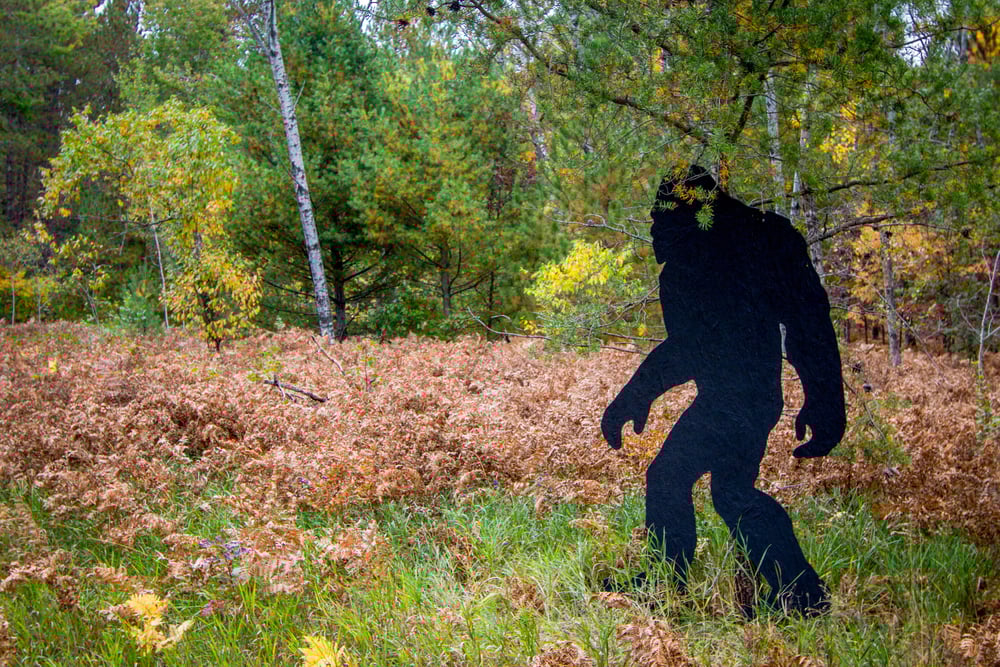
Ray Wallace pressed wooden feet into the ground in 1958, creating tracks that launched thousands of Bigfoot sightings over the following decades. Wallace sought no accolades or money, only amusement from his elaborate prank.
Over the 65 years since he first pressed those wooden feet into the ground, thousands of people have reported seeing Bigfoot. Even after Wallace’s family revealed the hoax following his death, believers continued to report sightings, proving that some hoaxes take on a life of their own regardless of the evidence.
Kensington Runestone

The Kensington Runestone, discovered in Minnesota, purported to prove that Scandinavians were the first Westerners to explore the region. Swedish immigrant Olof Öhman is widely considered to have been the hoaxer, wedging the runestone under a tree on his farm.
Some historians believe he hoped to establish an ethnic link to North America, turning the tables on those who resented Swedish immigrants as latecomers. The stone remains controversial, with believers and skeptics still debating its authenticity more than a century later.
Fiji Mermaid

In 1842, a man calling himself Dr. J. Griffin presented New York City with the body of a ‘mermaid’ supposedly caught in the South Pacific. Dr. Griffin gave lectures arguing there were seagoing counterparts to all land creatures, so merpeople must exist alongside regular people.
Dr. Griffin was actually Levi Lyman, an accomplice of circus showman P.T. Barnum, and the ‘mermaid’ was an ape sewn to a fish, crafted by a Japanese fisherman. The press and public ate it up, proving that spectacle often trumps skepticism.
Blonde Extinction Hoax

In 2002, news organizations issued ‘scientific’ proof that blonde-haired humans were slowly becoming extinct, backed by a WHO report predicting the gene for natural blonde hair would be weeded out by 2202. The WHO had never conducted the research and stressed they had no opinion on the future existence of blondes.
Scientists quickly pointed out that genes don’t simply die out, and there’s no single gene coding for light-colored hair in humans anyway. The hoax spread rapidly through major news outlets before being debunked.
Loch Ness Monster Photograph

A photograph sold to the Daily Mail in 1934 by London surgeon R. Kenneth Wilson appeared to show a mysterious creature in Loch Ness, Scotland. The image became one of the most famous pieces of evidence for the monster’s existence.
Later investigations revealed the photo was likely staged, though debates continue about exactly how it was faked. Scottish authorities aren’t looking too closely into the matter, as the mythical creature has created a booming tourist industry in the Highlands.
Crop Circles

The mysterious circles first appeared in the British countryside, and their origin remained a mystery until September 1991, when Doug Bower and Dave Chorley confessed they had created crop circles for decades as a prank. They wanted to make people think UFOs had landed.
They never claimed to have made all the circles, as many were copycat hoaxes done by others, but their hoax was responsible for launching the crop circle phenomena. Despite the confession, crop circles continue to appear worldwide, with believers insisting some must be genuine.
Raelian Human Clone

In 2004, a religious sect called the Raelians claimed a group of their scientists had created the world’s first human clone, a seven-pound baby girl named Eve. Leader Rael, who claims to have descended from extraterrestrials, said the ultimate goal was to achieve immortality.
The announcement was met with widespread public condemnation and skepticism among scientists. No evidence was ever produced to support the claim, and the Raelians refused to allow independent verification of the supposed clone.
Furry Trout

When a Wisconsin fisherman posted a furry trout photo to a news website in 2015, some readers fell for its hook, line, and sinker. The investigative website Snopes fact-checked the fishy tale and determined trout don’t actually wear fur coats.
This modern hoax shows how easily misinformation spreads in the digital age. Museums have mounted these magical creatures on their walls throughout history, blurring the line between taxidermy humor and genuine deception.
America’s Stonehenge
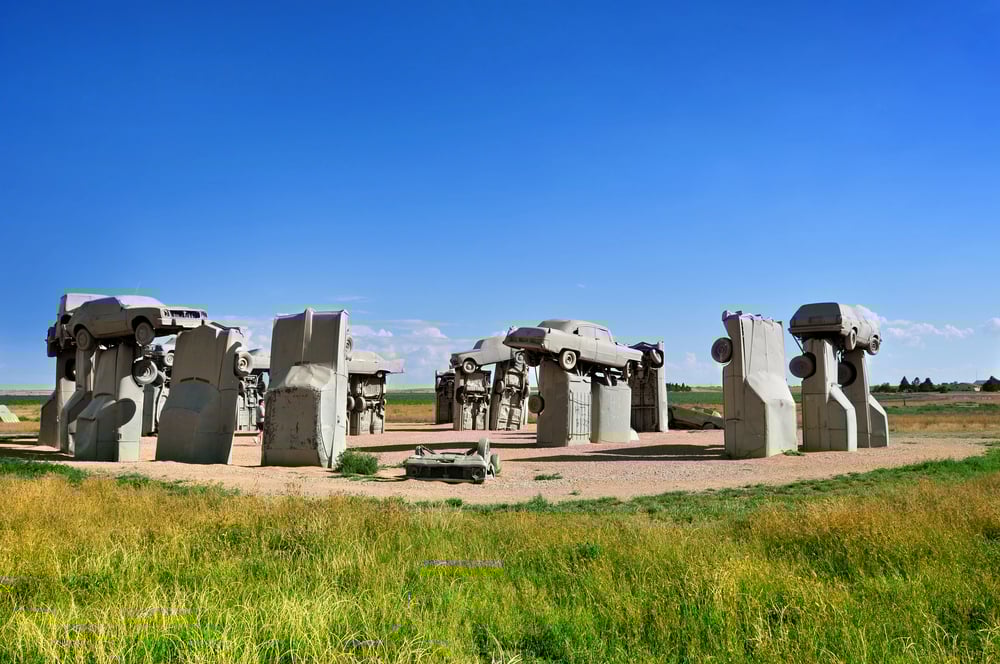
Believers claim the one acre of granite rock formations inside Salem, New Hampshire’s ‘Oracle’ chamber date back some 4,000 years. Critics believe 19th-century shoemaker Jonathan Pattee built his home on the site, and debate has been ongoing for decades.
Plymouth State University archaeologist David Starbuck calls it ‘unquestionably provocative, puzzling and, above all, controversial’ but admits there is probably no serious archaeologist who believes it was created thousands of years ago. The site continues to attract visitors during the equinoxes, keeping the mystery alive regardless of expert opinion.
How Hoaxes Shape Science

These hoaxes reveal something important about how science works. The self-correcting nature of scientific inquiry eventually exposed every single fraud on this list, though some took longer than others.
What’s striking isn’t just that people were fooled but that scientists themselves often played a role in perpetuating the deceptions, whether through overeagerness, carelessness, or outright fabrication. The lesson here isn’t that science is unreliable but rather that scientific progress depends on skepticism, replication, and the willingness to admit when we’re wrong.
More from Go2Tutors!

- The Romanov Crown Jewels and Their Tragic Fate
- 13 Historical Mysteries That Science Still Can’t Solve
- Famous Hoaxes That Fooled the World for Years
- 15 Child Stars with Tragic Adult Lives
- 16 Famous Jewelry Pieces in History
Like Go2Tutors’s content? Follow us on MSN.