Secrets of Germany’s Fairytale Castle
Perched high in the Bavarian Alps like something straight out of a storybook, Neuschwanstein Castle captures hearts from around the world. This towering white limestone fortress with its soaring spires and romantic turrets has inspired countless fairy tales and Disney movies.
But behind its picture-perfect facade lies a story filled with obsession, mystery, and tragedy. The castle that millions visit each year holds secrets that few people know about its eccentric builder and the strange circumstances surrounding its creation.
So what really happened inside those stone walls? The truth is far more fascinating than any fairy tale.
A king without real power built it

King Ludwig II of Bavaria built this dazzling palace to withdraw from public life after losing his power in the Austro-Prussian war. He felt completely powerless as a constitutional monarch with no real authority.
Politics bored him, and he preferred spending his time dreaming about art, music, and medieval legends. The castle became his escape from the real world where he could create his own kingdom.
It’s believed that he built his new castle as the centerpiece for an imagined kingdom—one in which he was the true king.
It was designed by a theater set painter

Most people think architects designed this famous castle, but that’s not quite right. The design of the castle was based on sketches by Christian Jank, a stage painter who worked with Wagner, and her work depicted scenes from several of Wagner’s operas.
Jank painted theatrical backdrops for a living, which explains why the castle looks so much like a movie set. The theatrical background shows in every tower and turret. This explains why Neuschwanstein feels more like a fantasy than a real medieval fortress.
Like Go2Tutors’s content? Follow us on MSN.
Construction took 17 years and was never finished

Construction began in 1868 and was never completed. Ludwig hoped to move in within three years, but workers were still building when he died in 1886.
Only about one-third of the planned rooms were ever completed. The king lived in the castle for just 172 days before his mysterious death.
Today, visitors can only tour 15 rooms out of the planned 65 rooms that were supposed to fill the castle.
It inspired Disney’s most famous castles

Sleeping Beauty’s Castle was inspired by Ludwig’s Neuschwanstein, as was Cinderella’s Castle. Walt Disney visited the castle in the 1950s and fell in love with its romantic design.
The Bavarian castle’s “dainty turrets and romantic views,” as well as its “cylindrical towers” and Romanesque style made it the perfect architectural model for both Cinderella and Sleeping Beauty’s castles. Millions of Disney fans have unknowingly admired Ludwig’s creation every time they visit the theme parks.
The king paid for it entirely with his own money

The King paid for his construction projects by private means and from his civil list income. Contrary to frequent claims, the Bavarian treasury was not directly burdened by his buildings.
Ludwig borrowed huge amounts of money against his personal fortune to fund the construction. He spent millions of marks of his own money on this dream project.
The enormous costs eventually contributed to his downfall when the Bavarian government grew concerned about his spending habits.
Like Go2Tutors’s content? Follow us on MSN.
Wagner’s operas inspired every room

Ludwig II brought together elements from Wartburg Castle and from the fictional Castle of the Holy Grail from Wagner’s opera ‘Parsifal’. King Ludwig II commissioned Neuschwanstein Castle to be built as an ode to his favorite composer, Richard Wagner.
Every room tells a story from German mythology or Wagner’s operas. The Singers’ Hall features murals of medieval knights and minstrels straight from Wagner’s stories.
Ludwig was so obsessed with Wagner that he designed his entire castle around the composer’s work.
The throne room has no throne

The most important room in the castle sits empty to this day. Ludwig died before his golden throne could be installed, leaving just an empty platform where it was supposed to sit.
Today, the empty platform whispers of a king who never ruled from it. The room features beautiful Byzantine-style decorations and a chandelier shaped like a crown, but the centerpiece remains missing.
This empty space perfectly represents Ludwig’s unfulfilled dreams of absolute power.
Advanced technology filled the medieval-looking rooms
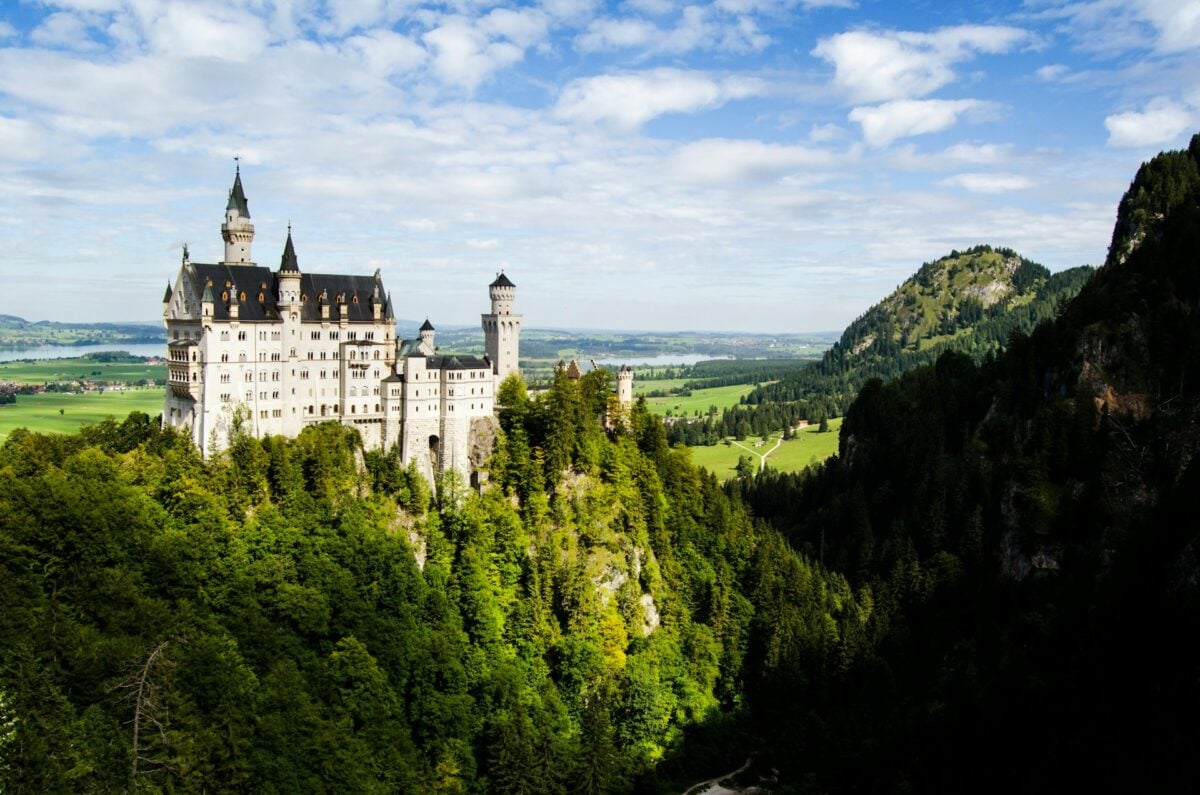
Despite its medieval appearance, Neuschwanstein featured cutting-edge technology for the 1880s. The castle had central heating throughout, running water on every floor, and flush toilets in many rooms.
A sophisticated ventilation system kept fresh air flowing through the building. Ludwig even installed electric lights in some areas, making it more advanced than most homes of its time.
The combination of medieval style with modern convenience shows Ludwig’s practical side alongside his romantic fantasies.
Like Go2Tutors’s content? Follow us on MSN.
Only 15 rooms were ever completed

Out of the planned 65 rooms, workers finished just 15 before Ludwig’s death halted construction. The completed rooms showcase incredible craftsmanship with hand-carved woodwork, colorful murals, and intricate mosaics.
The palace’s rooms reflected the lavish lifestyle of the ‘Mad King’ and were filled with colorful mosaics and intricate woodcarvings. Each finished room took years to complete because Ludwig insisted on the finest materials and most skilled craftsmen available.
The king lived there for less than six months
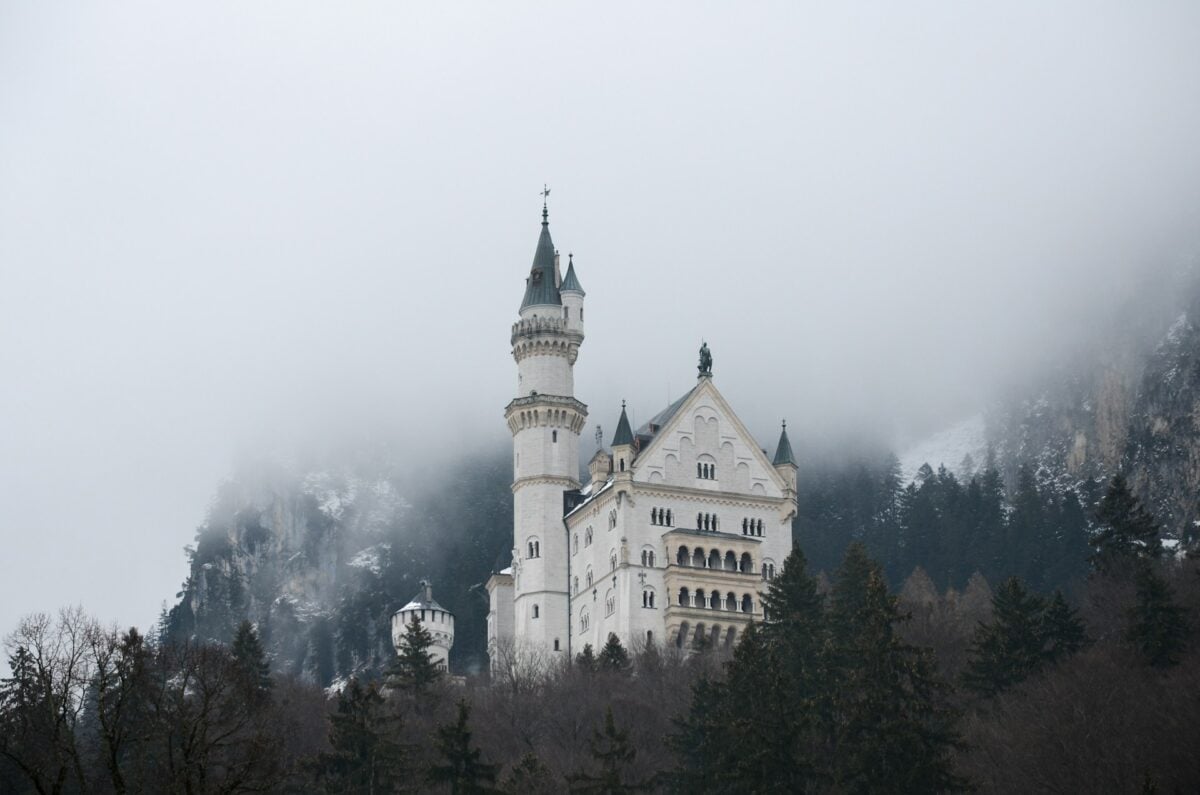
Ludwig spent only 172 days in his dream castle before his mysterious death in 1886. He first moved in during September 1884, but construction continued around him.
The king preferred to stay in the castle during winter months when fewer people could bother him. Most of his short residency was spent alone, writing letters and listening to private Wagner concerts in his unfinished halls.
Modern conservation efforts reveal hidden artwork

Restoration work continues to uncover hidden details that even many visitors miss. Conservators recently discovered original paint colors that had faded over time, revealing much brighter decorations than what people see today.
Hidden symbols and messages appear in the decorative work throughout the castle. Each restoration project brings new discoveries about Ludwig’s vision and the incredible skill of his craftsmen.
Like Go2Tutors’s content? Follow us on MSN.
From fantasy to reality, dreams live on

What started as one man’s escape from political disappointment became the world’s most recognizable castle. Ironically the castle that Ludwig desired to be his own private sanctuary, built away from the public eye in a remote mountain setting, now welcomes over a million visitors annually from every corner of the globe.
The lonely king who built it to avoid people would be amazed to see families from every continent climbing his mountain paths. Ludwig’s private dream became humanity’s shared fairy tale, proving that sometimes the most personal visions become the most universal inspirations.
His fairytale castle is surely one of the most photographed buildings in the world.
More from Go2Tutors!

- 16 Historical Figures Who Were Nothing Like You Think
- 12 Things Sold in the 80s That Are Now Illegal
- 15 VHS Tapes That Could Be Worth Thousands
- 17 Historical “What Ifs” That Would Have Changed Everything
- 18 TV Shows That Vanished Without a Finale
Like Go2Tutors’s content? Follow us on MSN.