Strangest rules in sports
Every sport has rules to keep things fair and organized, but some of these regulations make people scratch their heads in confusion. From bizarre dress codes to penalties that seem to come out of nowhere, sports rulebooks contain some truly odd requirements.
These strange rules often have interesting backstories, whether they were created to solve a specific problem or simply because someone thought it was a good idea at the time. Some make sense once you understand the history, while others remain baffling no matter how much you think about them.
Ready to discover which sports have the weirdest regulations? Here are some rules that prove sports can get pretty strange when you dig into the fine print.
You can’t ice your own puck in hockey

When a hockey team shoots the puck all the way down the ice past the opposing goal line from their own side of center ice, play stops and they get penalized with an icing call. The team that iced the puck can’t make any substitutions, and the faceoff happens back in their own defensive zone.
This rule exists to prevent teams from just blasting the puck away whenever they’re tired or under pressure. It forces teams to actually play hockey instead of turning every game into a long-distance shooting contest.
Baseball players can’t have distracting stuff on their gloves

Major League Baseball has a rule that fielders can’t wear white or gray gloves because those colors might blend in with the baseball and confuse batters. The rule extends to any ‘distracting’ item or color that might give the fielding team an unfair advantage.
Pitchers face even stricter rules about what they can wear on the mound, including restrictions on wristbands and jewelry. The league takes these regulations seriously enough that umpires will make players change equipment if it violates the dress code.
You can score a point without touching the football

In American football, a safety is worth two points and happens when the offensive team gets tackled in their own end zone. But there’s also a one-point safety that almost never occurs and most fans don’t even know exists.
This can happen during a point-after-touchdown attempt if the defending team gains possession and then gets tackled in their own end zone. The rule is so rare that it’s only happened a handful of times in college football and never in the NFL.
Tennis players have to wear mostly white at Wimbledon

The oldest tennis tournament in the world requires players to wear outfits that are almost entirely white, and they’re incredibly strict about enforcing this rule. Even undergarments need to be white if they’re visible during play.
Players have been forced to change clothes mid-match because their shorts had too much color trim or their bra straps weren’t the right shade. The tournament instituted this rule in the 1800s because they thought colored clothing looked less proper, and they’ve stubbornly kept it ever since despite complaints from players and designers.
Goalkeepers can’t pick up a back pass in soccer

If a teammate deliberately kicks the orb back to their own goalkeeper, the keeper can’t pick it up with their hands. They can still stop it with their feet, chest, or head, but using their hands results in an indirect free kick for the other team.
FIFA added this rule in 1992 to make soccer more exciting and prevent teams from wasting time by constantly passing back to the goalkeeper. Before this change, some matches turned into boring exhibitions where teams just kept the orb away from opponents by playing it back to the keeper over and over.
You have to bounce the basketball

Traveling violations in basketball penalize players for taking too many steps without dribbling, but the exact rules get surprisingly complicated. A player can take two steps after picking up their dribble, but they have to release the shot or pass before taking a third step.
The NBA allows players to gather the orb while taking a step, which doesn’t count toward the two-step limit, creating some debate about what counts as traveling. Different leagues interpret these rules slightly differently, which sometimes makes players look like they’re breaking the rules when they technically aren’t.
NASCAR has a minimum speed requirement

While most racing focuses on going as fast as possible, NASCAR requires drivers to maintain a minimum speed or risk getting black-flagged and sent to the pits. This prevents drivers from going dangerously slow on the track where faster cars might crash into them.
The minimum speed varies by track and is usually around 115% of the pole winner’s qualifying time. Drivers who can’t keep up due to car damage or mechanical issues have to pull off the track rather than becoming rolling obstacles.
You can’t advance a fumble in the NFL after two minutes
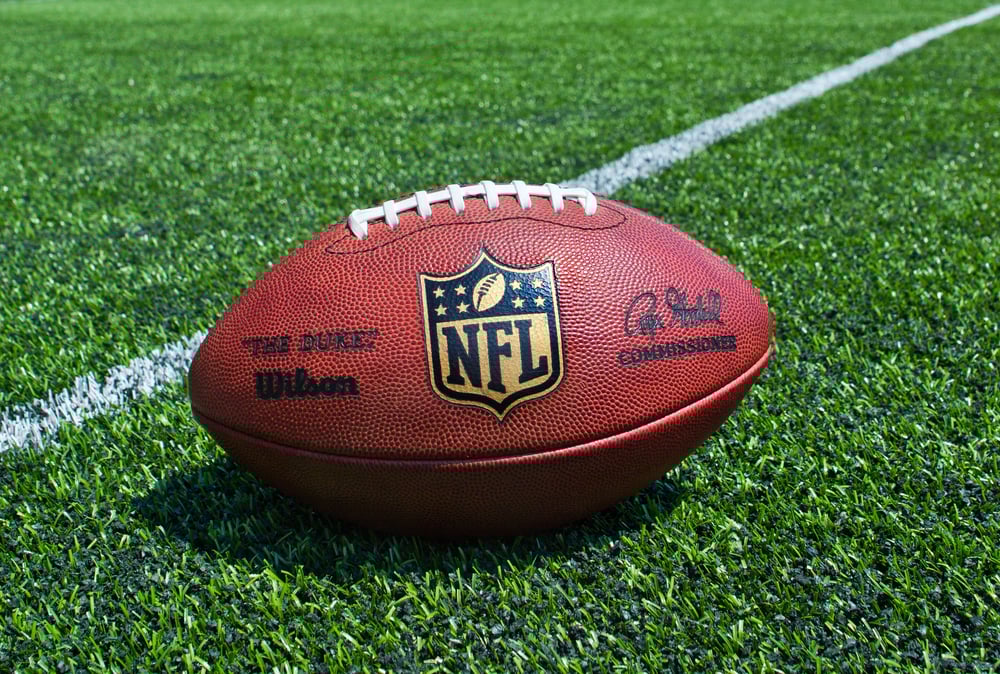
During the final two minutes of each half in professional football, only the player who fumbled can advance the orb if they recover it. If a teammate picks up the fumble, the play is dead at that spot.
This rule exists because of a play called the Holy Roller in 1978, when the Oakland Raiders deliberately fumbled forward multiple times to score a touchdown as time expired. The NFL decided this was too easy to exploit, so they changed the rules to prevent teams from using intentional fumbles as a strategy.
Curling stones must be from one Scottish island
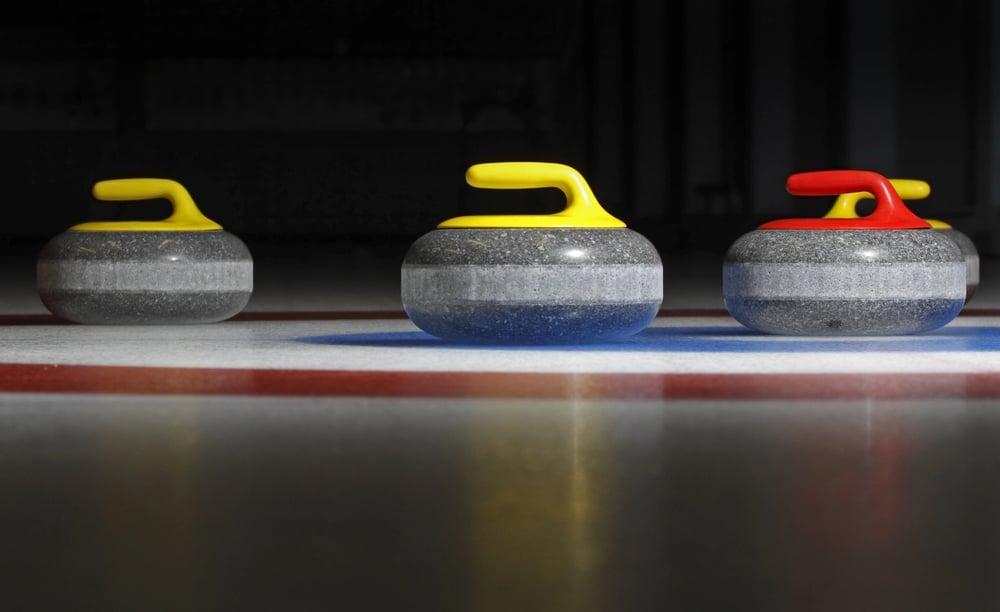
All curling stones used in major competitions must come from Ailsa Craig, a tiny island off the coast of Scotland. The island has a special type of granite that’s perfect for curling because it’s incredibly dense and smooth.
Only one company has the rights to harvest this granite, and they do it very rarely to preserve the island. Each stone takes significant skill to craft, and a set of 16 stones can cost over $10,000, making them some of the most expensive equipment in sports.
Golf limits you to 14 clubs

Golfers can’t carry more than 14 clubs in their bag during a tournament round, and breaking this rule results in serious penalties. Players who start a round with 15 clubs must immediately remove the extra one and face a penalty of two strokes per pit where they had too many clubs, with a maximum of four strokes.
The rule was created in 1938 after some players started showing up with 20 or more clubs for every possible situation. The USGA decided this was getting ridiculous and gave everyone a limit.
Sumo wrestlers can’t grab the belt knot
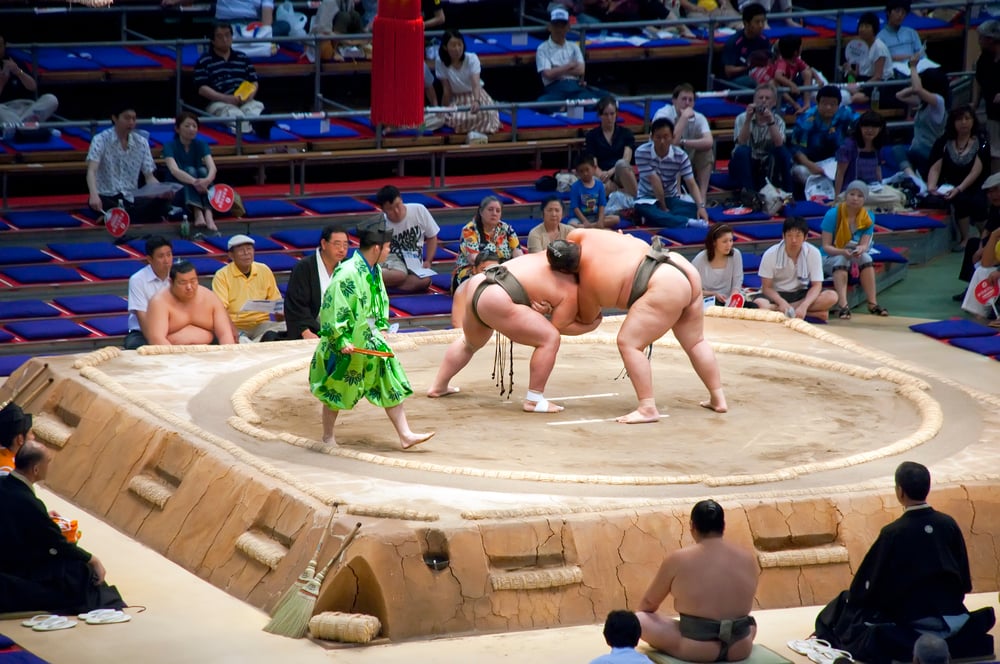
Wrestlers in sumo can grab their opponent’s belt and use it for throwing or pushing, but they’re forbidden from grabbing the knot that ties it together. This rule exists because the knot could come undone if grabbed, which would be embarrassing and potentially dangerous.
Sumo has tons of specific rules about what techniques are legal, with 82 recognized winning moves but hundreds of banned actions. Fighters also can’t pull hair, punch with a closed fist, or poke eyes, which seems pretty reasonable compared to some combat sports.
You can’t substitute a player for a penalty kick in soccer

Once a penalty kick is awarded and the referee designates which player will take it, that player must shoot unless they’re injured and physically can’t continue. The team can’t suddenly swap in their best penalty taker if someone else was fouled and expected to take the kick.
This prevents teams from gaming the system by having their worst shooters get fouled in the box and then subbing them out for specialists. The rule adds an element of pressure and unpredictability to penalty situations.
Basketball rims must break away

NBA and college basketball require breakaway rims that flex when players dunk to prevent backboards from shattering. Before breakaway rims became mandatory in the 1980s, powerful dunks would sometimes break the entire backboard, causing lengthy game delays.
Darryl Dawkins famously shattered two backboards in the same season, which prompted the league to upgrade their equipment. Now the rims are designed to bend and then snap back into place, absorbing the force that used to destroy the glass.
Volleyball players have different colored jerseys

In volleyball, the libero wears a different colored jersey from their teammates and faces special restrictions on what they can do. They can’t attack the orb above the net’s height, can’t serve in certain rotations, and can’t set the orb with their hands while standing in the attack zone.
The libero position was created to make rallies last longer and give teams a defensive specialist who could come in and out without counting as a substitution. The different jersey helps referees quickly identify who can and can’t perform certain actions.
You can’t wear jewelry in high school sports

Most high school athletic associations ban all jewelry during competition, including earrings, necklaces, rings, and bracelets. The rule applies even if the jewelry is taped over or considered religious or cultural.
Schools enforce this strictly because jewelry can cut other players, get caught on equipment, or cause injuries to the person wearing it. Many young athletes have been shocked to learn they need to remove items they never take off, leading to some emotional moments before big games.
Cricket has a leg before wicket rule

Picture this: a cricket batter stands guard, but the orb thuds into their leg rather than the bat. If that same delivery would’ve crashed into the stumps, they might be dismissed – called out for leg before wicket.
It stops players blocking with legs alone, turning limbs into makeshift barriers. Now imagine layers piling up – the spot where the orb first bounced matters.
So does where on the pad it struck. Was the batter trying to play a shot? That too shapes judgment.
Umpires now lean on high-tech tools, yet decisions often spark fierce debate. Odd how such moments keep stirring tension across grounds.
Controversy clings tight, even after tech steps in.
You can’t ice the kicker in college overtime

Right before a kick, pro teams might pause the clock to rattle the kicker. Not so once college games shift into overtime.
That switch arrived because too many extra sessions became about saving timeouts, not scoring. Unlike the NFL, college play drops squads at the 25 to start sudden rounds.
Cold feet from coaches won’t slow things down when tension peaks. No freezing the kicker there.
Momentum stays alive that way.
When rules get weird

What feels natural to longtime followers of a game can feel like nonsense to someone just tuning in. Because one odd moment years ago, a fix got invented – now it lives on, however weird it seems now.
Even when no longer useful, some bits stay locked in place, held by habit more than logic. Yet without such limits, players might twist things until nothing resembles the original contest.
When confusion hits over a call that makes little sense today, think back – someone likely broke new ground in foolishness once, forcing a line to be drawn.
More from Go2Tutors!

- The Romanov Crown Jewels and Their Tragic Fate
- 13 Historical Mysteries That Science Still Can’t Solve
- Famous Hoaxes That Fooled the World for Years
- 15 Child Stars with Tragic Adult Lives
- 16 Famous Jewelry Pieces in History
Like Go2Tutors’s content? Follow us on MSN.