Stunning Places Royals Have Vacationed
Royal families have always had options. While most people spend months planning a single holiday, royals have historically treated the world’s most beautiful and remote places as personal retreats — returning to the same spots year after year, or discovering somewhere new and making it famous simply by showing up.
Some of these destinations became household names because of royal visits. Others were already beloved, and the royal connection just added another layer to their story.
Balmoral, Scotland

Balmoral has been the British royal family’s summer retreat since Queen Victoria fell in love with the Scottish Highlands in the 1840s. She and Prince Albert bought the estate in 1852 and rebuilt it into the castle that still stands today.
The British royals have returned every summer since, spending August and September in the Cairngorms — fishing, walking, and hunting across the 20,000-acre estate. The landscape is genuinely dramatic: purple heather moorland, granite peaks, and the River Dee running through the valley.
It’s a place that looks like a painting and functions as one of the most private addresses in the world.
Mustique, St Vincent and the Grenadines

Mustique is a private island in the Caribbean, and for decades it was one of the most exclusive addresses in the world largely because of Princess Margaret. The British princess was given a plot of land on the island as a wedding gift in 1960 and built a villa called Les Jolies Eaux — “the beautiful waters.”
She spent weeks there every year, and her presence turned Mustique into a magnet for celebrities, aristocrats, and anyone wealthy enough to rent one of its villas. The island has no public beach access, strict building controls, and a guest policy that keeps it deliberately quiet.
The water really is that shade of turquoise.
Sandringham, Norfolk
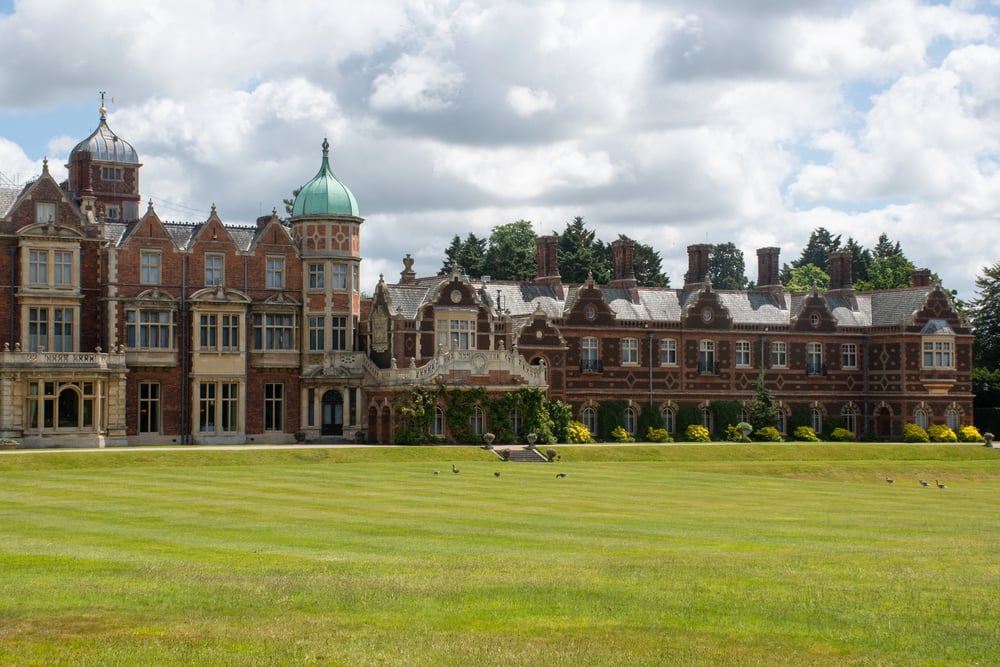
Sandringham has been in the British royal family since 1862, when it was purchased for the future King Edward VII. It sits in the Norfolk countryside, surrounded by flat farmland and woodland, and the royals spend Christmas and New Year there each year.
The estate covers around 20,000 acres and includes farms, woodland, and the house itself, which is more comfortable than palatial. It’s a working country estate rather than a showpiece, and the landscape — wide skies, hedgerows, and quiet lanes — is a particular kind of understated English beauty that’s easy to overlook until you’re standing in it.
Cascais, Portugal
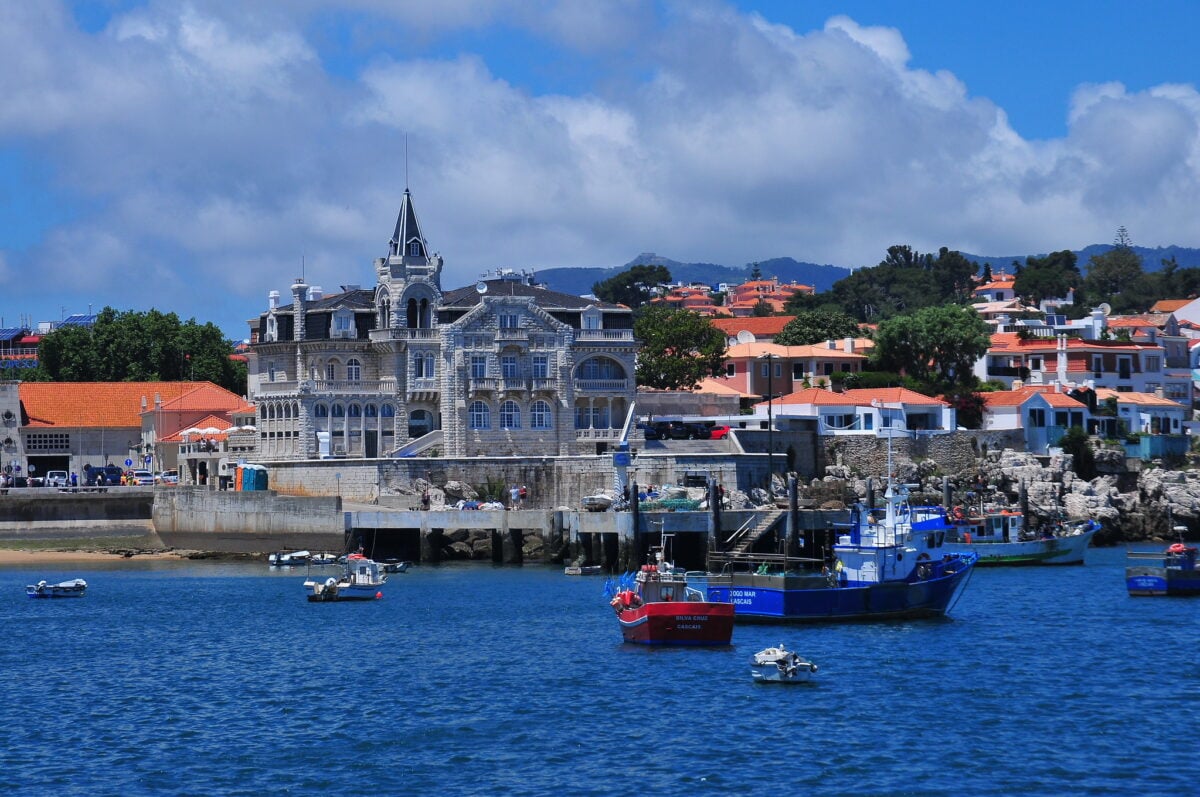
The Portuguese royal family discovered Cascais in the 19th century, and King Luís I turned it from a small fishing village into a royal summer residence. He built a summer palace there and spent his summers by the Atlantic.
The royal connection brought the aristocracy, who brought wealth, and the town developed into one of the most charming coastal resorts on the Iberian Peninsula. Even after the Portuguese monarchy ended in 1910, Cascais continued to attract European royalty and nobility — several dethroned royal families settled there in exile.
Today it’s a genuinely beautiful town of whitewashed buildings, Atlantic breezes, and excellent seafood.
The French Riviera

The French Riviera has hosted so many royals over the past 150 years that listing them all would take longer than the article. Queen Victoria wintered in Nice and Menton repeatedly in the 1880s and 1890s.
King Edward VII was a regular visitor to Cannes and Monaco. Grace Kelly, who became Princess of Monaco, made the entire coastline synonymous with glamour.
Monaco itself is technically a principality, and the Grimaldi family has ruled it for over 700 years — meaning the royals didn’t just visit the Riviera, they own part of it. The combination of warm winters, dramatic coastline, and clear Mediterranean water made it irresistible to anyone who could afford to be there.
Jodhpur, India
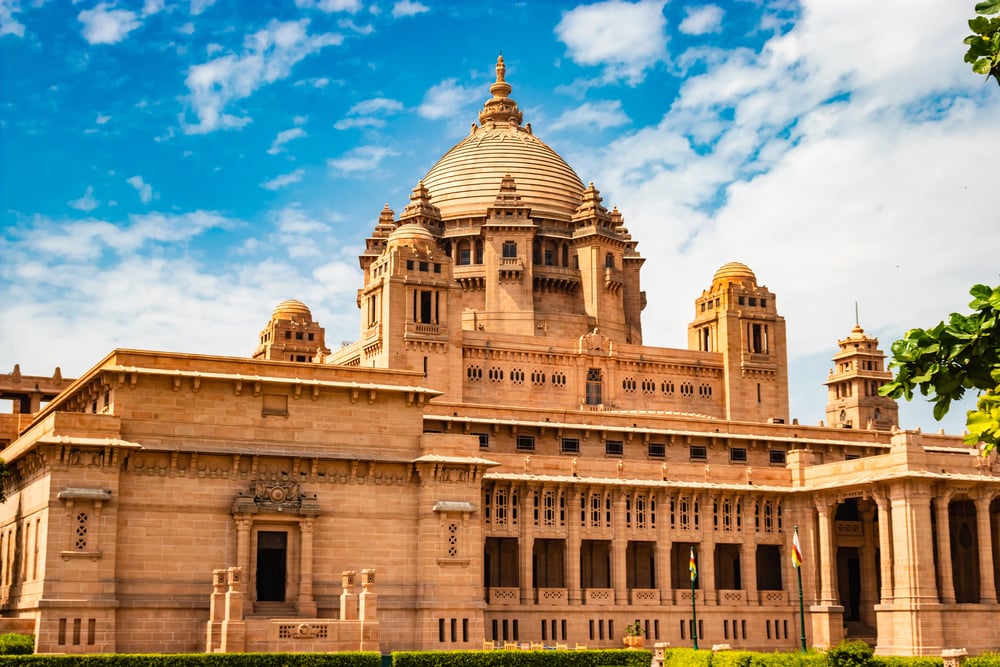
The Maharajas of Jodhpur built Umaid Bhawan Palace between 1928 and 1943 — one of the last great palaces constructed in India before independence. Part of it still serves as the private residence of the royal family, and another section operates as a luxury hotel. Jodhpur itself is the Blue City, named for the distinctive blue paint that covers buildings across the old town.
The colour was originally used to mark Brahmin homes, but spread across the city over time. The streets below Mehrangarh Fort, one of India’s most impressive fortresses, are a dense, winding maze of blue-walled lanes. It’s the kind of place that looks almost too vivid to be real.
Sylt, Germany
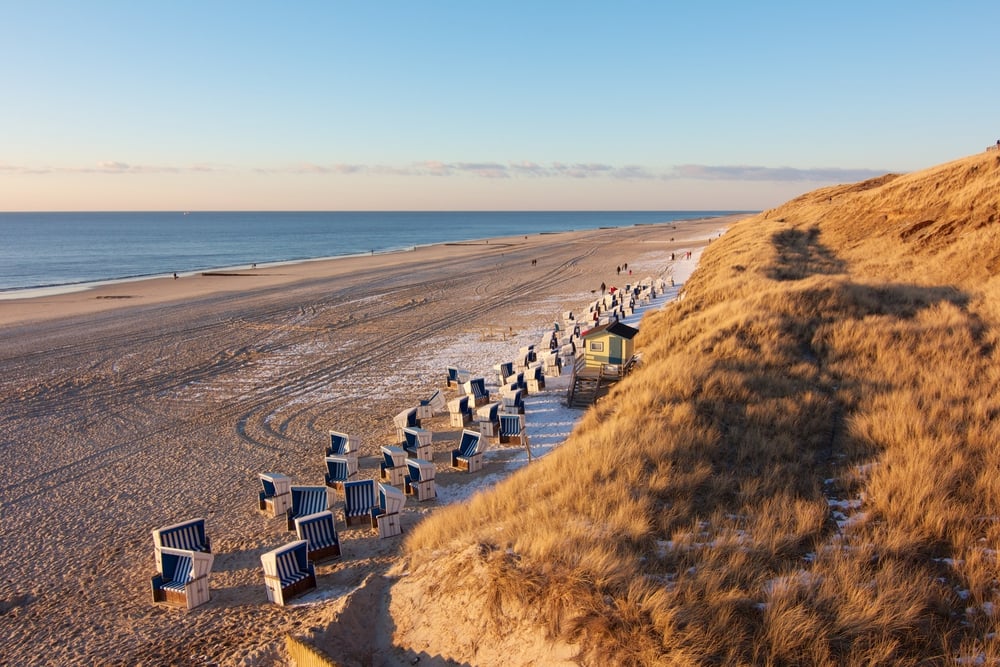
Sylt is a long, narrow island off the northwestern coast of Germany, connected to the mainland by a single railway causeway. It has white sand beaches, thatched-roof villages, and North Sea winds that keep it bracing even in summer.
The German imperial family vacationed there in the early 20th century, and the island developed a reputation as an exclusive retreat for the wealthy and well-connected. European royals have continued to visit — the Dutch royal family has been known to holiday there, and the island remains one of the most expensive addresses in Germany.
The landscape is quietly beautiful rather than dramatic: dunes, sea grass, and enormous skies.
Taormina, Sicily

Taormina sits on a clifftop on Sicily’s eastern coast, with views across the Mediterranean to Mount Etna. It has been attracting visitors since ancient times — the ancient Greeks built a theatre there in the third century BC that still hosts performances today.
In the 19th century, European royalty and aristocracy discovered it as a winter retreat. Kaiser Wilhelm II of Germany was a particularly devoted visitor, staying repeatedly in the early 1900s.
The town is small, terraced into the cliff, and filled with flower-lined streets that open unexpectedly onto views of extraordinary depth. The combination of history, climate, and scenery makes it one of the most visually concentrated places in the Mediterranean.
Biarritz, France
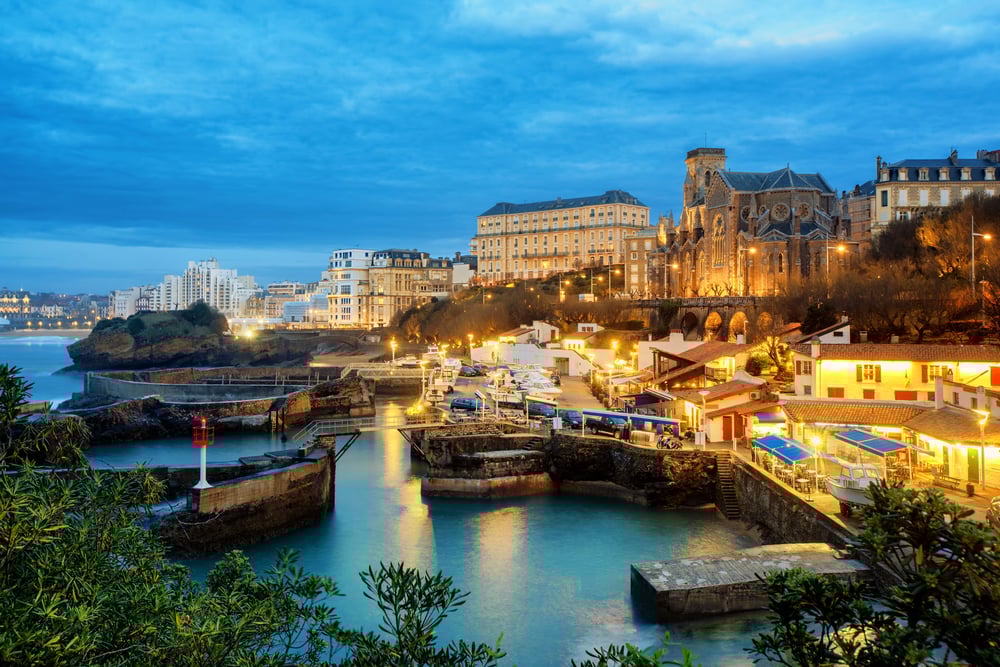
Biarritz was a quiet Basque fishing village until Napoleon III built a summer palace there for Empress Eugénie in 1855. Within a decade, every significant royal family in Europe was making the trip to the Atlantic coast of France.
Queen Victoria visited. King Edward VII returned so many times that the town has a street named after him. The grand hotels, casinos, and beachfront architecture that went up in the second half of the 19th century were built to accommodate royal and aristocratic guests.
The town sits where the Pyrenees meet the Atlantic, and the surfing, which nobody cared about in the 19th century, now draws a different but equally devoted crowd.
Necker Island, British Virgin Islands
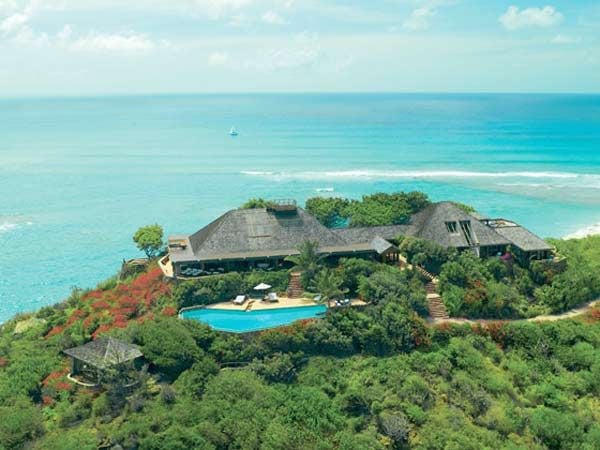
Necker Island is privately owned, which puts it in a slightly different category — but it has hosted royals as guests, including Princess Diana, who vacationed there in the mid-1990s. The island is a single estate in the British Virgin Islands, ringed by coral reefs and white sand.
The surrounding water is shallow enough to show the seafloor in shades of green and blue that look digitally enhanced. As private island retreats go, the British Virgin Islands set a high bar, and Necker sits at the top of it.
Sanremo, Italy

Sanremo on the Italian Riviera was another 19th-century royal favourite, particularly for northern European royals escaping winter. Empress Maria Alexandrovna of Russia wintered there.
Queen Victoria visited. The Russian imperial connection was strong enough that the Russian Orthodox Church of Christ the Saviour was built there in 1913 to serve the Russian aristocracy spending the season.
The town is built on terraced hillsides above the Ligurian Sea, surrounded by flower farms that supply much of Europe’s cut flower trade. The climate is mild enough that palm trees grow naturally in the streets.
Lake Bled, Slovenia
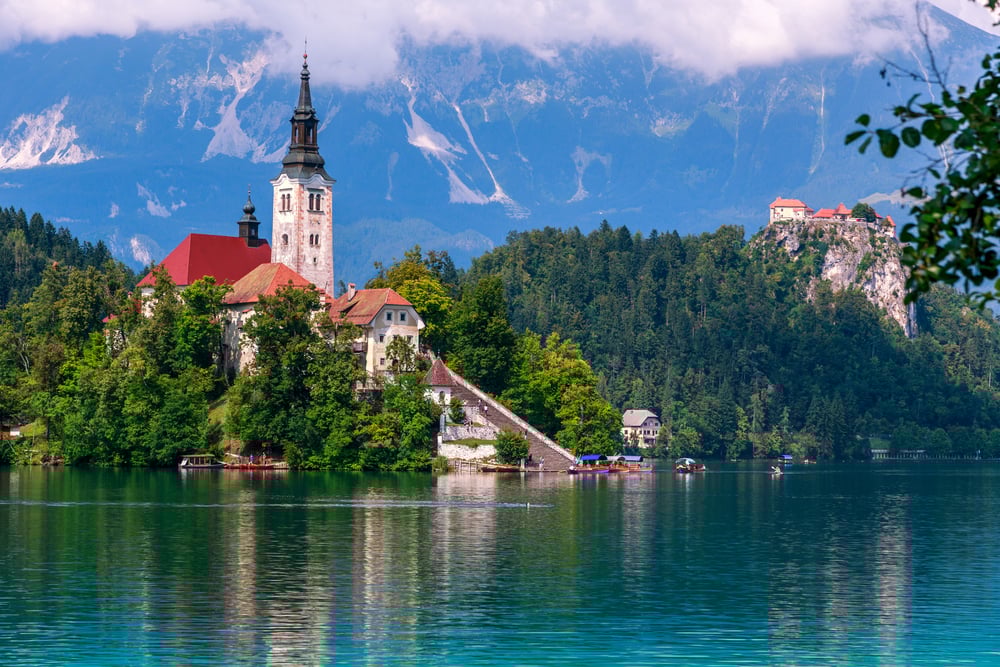
Lake Bled was a retreat for Yugoslav royalty in the early 20th century. King Alexander I of Yugoslavia built a summer residence there in the 1930s, and the Slovenian lake became associated with royal privacy and natural beauty.
The setting is extraordinary — a glacial lake surrounded by the Julian Alps, with a small island in the centre bearing a Baroque church, and a medieval castle perched on a cliff above the water. The combination of elements looks almost theatrical in its arrangement, like someone designed it deliberately.
After decades of relative obscurity outside Yugoslavia, it has become one of Europe’s most photographed destinations.
The Amalfi Coast, Italy
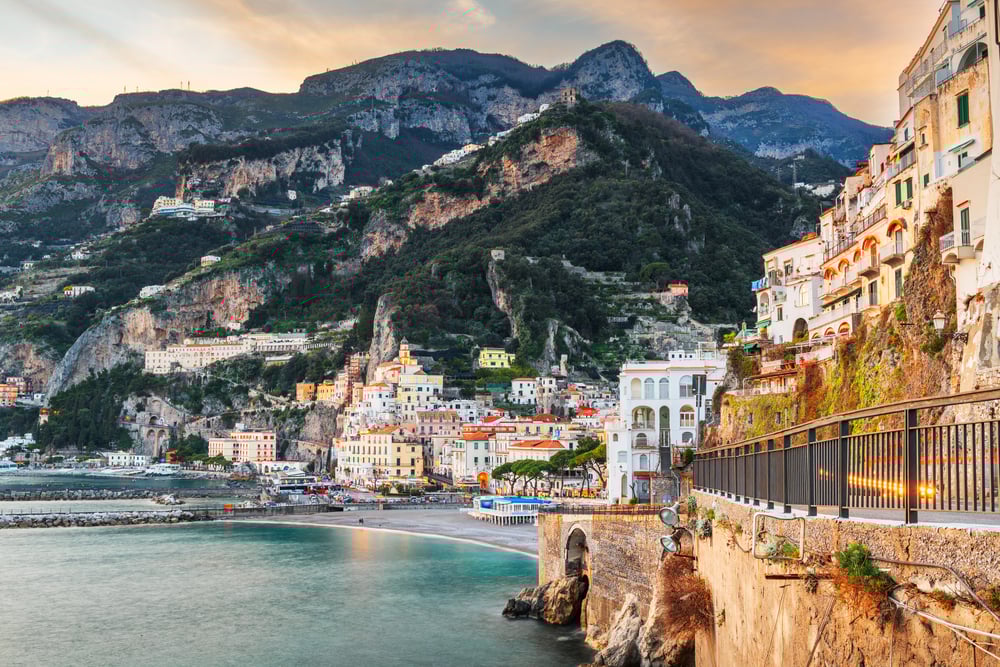
The Amalfi Coast has drawn rich people since the time of the Roman Empire, and it is only natural that royal families have been among them throughout the history of the area. The Norwegian royal family has enjoyed the Italian coast, as members of the European nobility and aristocracy have also been there over the centuries.
A road follows the coast, – literally carved out of the cliffs above the Tyrrhenian Sea – linking housing along the coast where the houses seem to grow right out of the rock. Positano, Ravello, and the town of Amalfi are places where the combination of architecture and nature has produced something so stunning that it is almost overpowering.
An area like this is very difficult to photograph badly.
Where the World Looks Best

What joins all these locations is the fact that, no matter what else you think of royals, they historically had the best geographical advice at their disposal, the most reliable word-of-mouth, and the means to travel wherever they wanted. Therefore, the places they ended up at weren’t determined by an algorithm or a magazine ranking.
Instead, they were places that people who could travel anywhere and still kept coming back over the centuries had chosen. This is a form of endorsement in itself.
More from Go2Tutors!

- The Romanov Crown Jewels and Their Tragic Fate
- 13 Historical Mysteries That Science Still Can’t Solve
- Famous Hoaxes That Fooled the World for Years
- 15 Child Stars with Tragic Adult Lives
- 16 Famous Jewelry Pieces in History
Like Go2Tutors’s content? Follow us on MSN.