Tallest Statues Around the World And Their Stories
Humans have always built big. Long before skyscrapers or satellites, civilizations were stacking stone and casting bronze to reach toward the sky.
Statues, in particular, carry something more than ambition — they carry meaning. A colossal figure rising above a landscape says something about what the people who built it believed, feared, honored, or hoped for.
Some of the world’s tallest statues are centuries old. Others were finished just a few years ago.
All of them have a story worth knowing.
The One That Stands Above Everything Else

The Statue of Unity in the Indian state of Gujarat currently holds the title of the world’s tallest statue, standing at 182 meters. That’s nearly twice the height of the Statue of Liberty.
It depicts Sardar Vallabhbhai Patel, the statesman who played a central role in uniting India’s hundreds of princely states into a single nation after independence in 1947. Construction finished in 2018, and it took roughly 30,000 workers and craftspeople to complete it.
The statue is hollow — visitors can ride an elevator to an observation deck inside Patel’s chest and look out over the Narmada River valley. The project was controversial.
Critics argued the funds could have gone toward rural development in the region. Supporters called it a long-overdue tribute to a figure often overshadowed by Nehru and Gandhi in popular history.
A Buddha That Took Decades to Build

The Spring Temple Buddha in Henan province, China, reaches 128 meters — and that’s just the statue itself. When you factor in the throne it sits on and the hill beneath that, the total height climbs past 200 meters.
Work began in 1997 and finished in 2008. The figure depicts Vairocana Buddha, a central figure in certain branches of Buddhism associated with wisdom and the concept of emptiness.
The site sits within a tourist and resort complex, which has drawn some criticism from Buddhist communities who feel commercialization and spiritual significance don’t mix well. Still, pilgrims travel from across Asia to visit it, and the scale of the thing is genuinely hard to process until you’re standing at its base.
Myanmar’s Sleeping and Standing Giants

The Laykyun Sekkya in Myanmar stands at 116 meters and is one of the tallest standing Buddha statues in the world. It sits in the Monywa region, an area that doesn’t appear on most tourist itineraries but is home to some of the most remarkable Buddhist art and architecture in Southeast Asia.
What makes the site especially striking is what lies behind the standing figure: a 90-meter reclining Buddha that stretches across the landscape like a fallen giant. The reclining posture traditionally represents the moment of the Buddha’s passing into nirvana.
Together, the two statues create an unusual visual pairing — one figure resting, one reaching skyward — that feels almost like a conversation about life and its end.
Japan’s Looming Figure in Ibaraki

The Ushiku Daibutsu in Ibaraki Prefecture, Japan, stands 100 meters tall and was once the tallest statue in the world before newer projects surpassed it. It depicts Amitabha Buddha and was completed in 1993 after years of construction.
Inside, there are four floors open to visitors. The lowest holds an aquarium and a garden meant to evoke the Pure Land of Buddhist tradition.
Higher up, small openings in the chest area allow visitors to look out over the surrounding countryside. The statue appears almost weightless despite its size — a result of careful proportioning that its designers spent years refining.
The One Everyone Already Knows
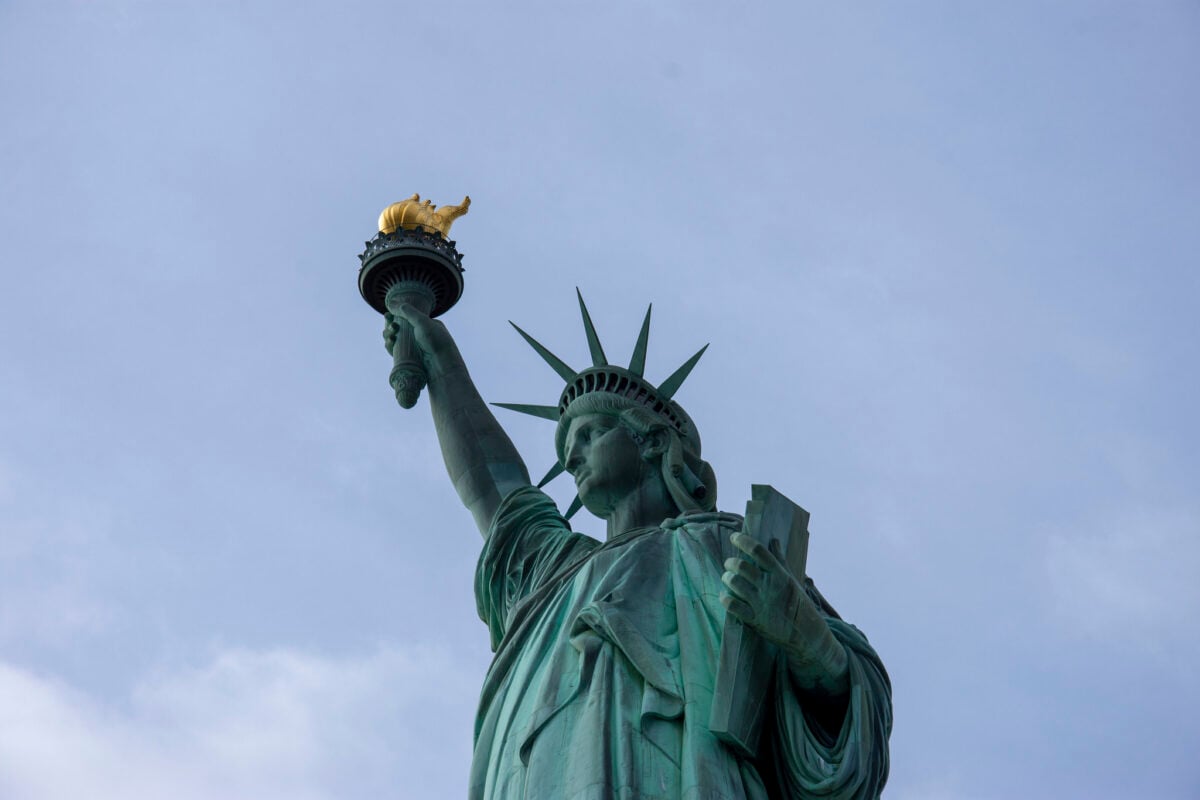
The Statue of Liberty in New York Harbor is 93 meters tall from the ground to the tip of the torch. It was a gift from France, designed by sculptor Frédéric Auguste Bartholdi with its iron framework engineered by Gustave Eiffel — the same man who built the tower in Paris.
It arrived in pieces across 214 wooden crates and was assembled on its island pedestal, opening to the public in 1886. For millions of immigrants arriving by ship in the late 19th and early 20th centuries, it was the first thing they saw of America.
That history gives it a weight that has nothing to do with its physical dimensions. The torch has been closed to visitors since 1916, when an explosion at a nearby munitions depot damaged it beyond safe access.
Christ Above Rio
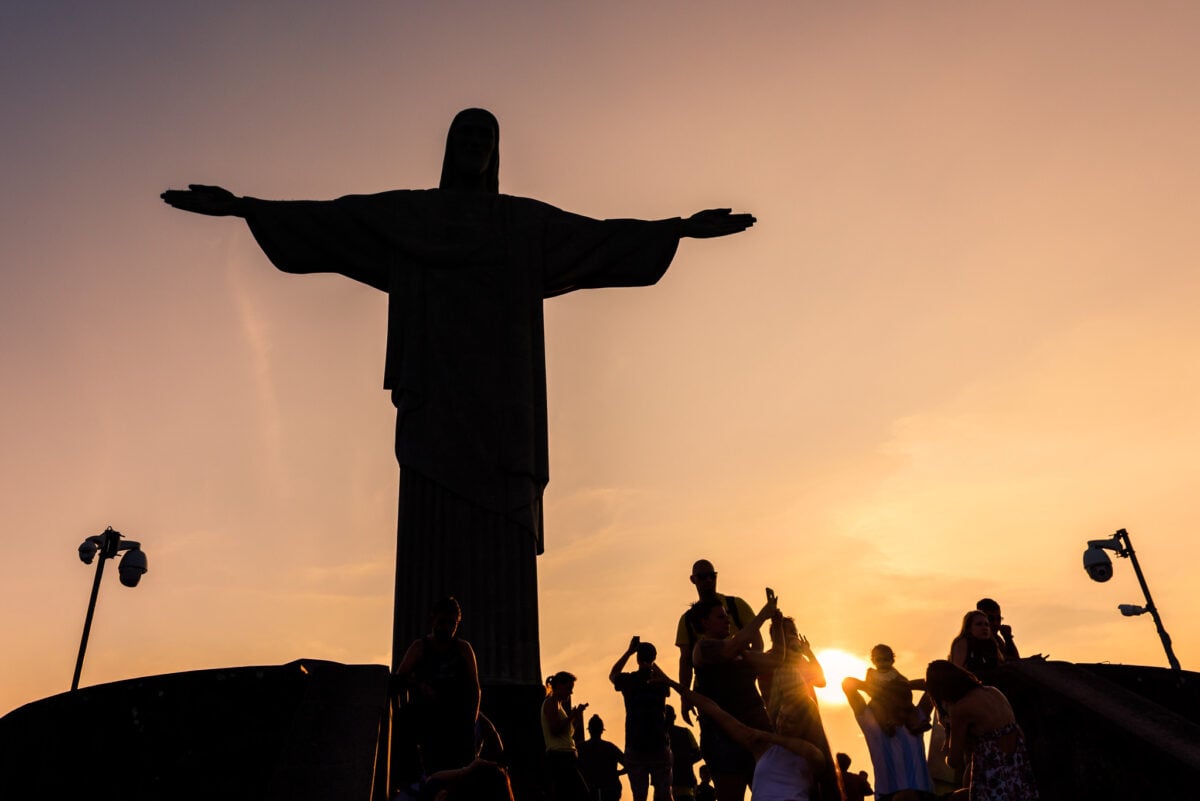
Christ the Redeemer in Rio de Janeiro is 30 meters tall — modest compared to others on this list — but few statues in the world carry more visual power. It stands at 710 meters above sea level atop Corcovado mountain, arms outstretched over the city below.
The statue was built with a concrete core and an outer layer of soapstone tiles, chosen for their durability and soft texture. Brazilian engineer Heitor da Silva Costa designed it, and French sculptor Paul Landowski created the head and hands.
It was consecrated in 1931 and has since become one of the most photographed images on earth. Lightning strikes it several times a year. Restoration teams regularly replace damaged soapstone tiles, many of which carry the names of visitors who have left their mark inside.
Russia’s Monument to Grief and Defiance
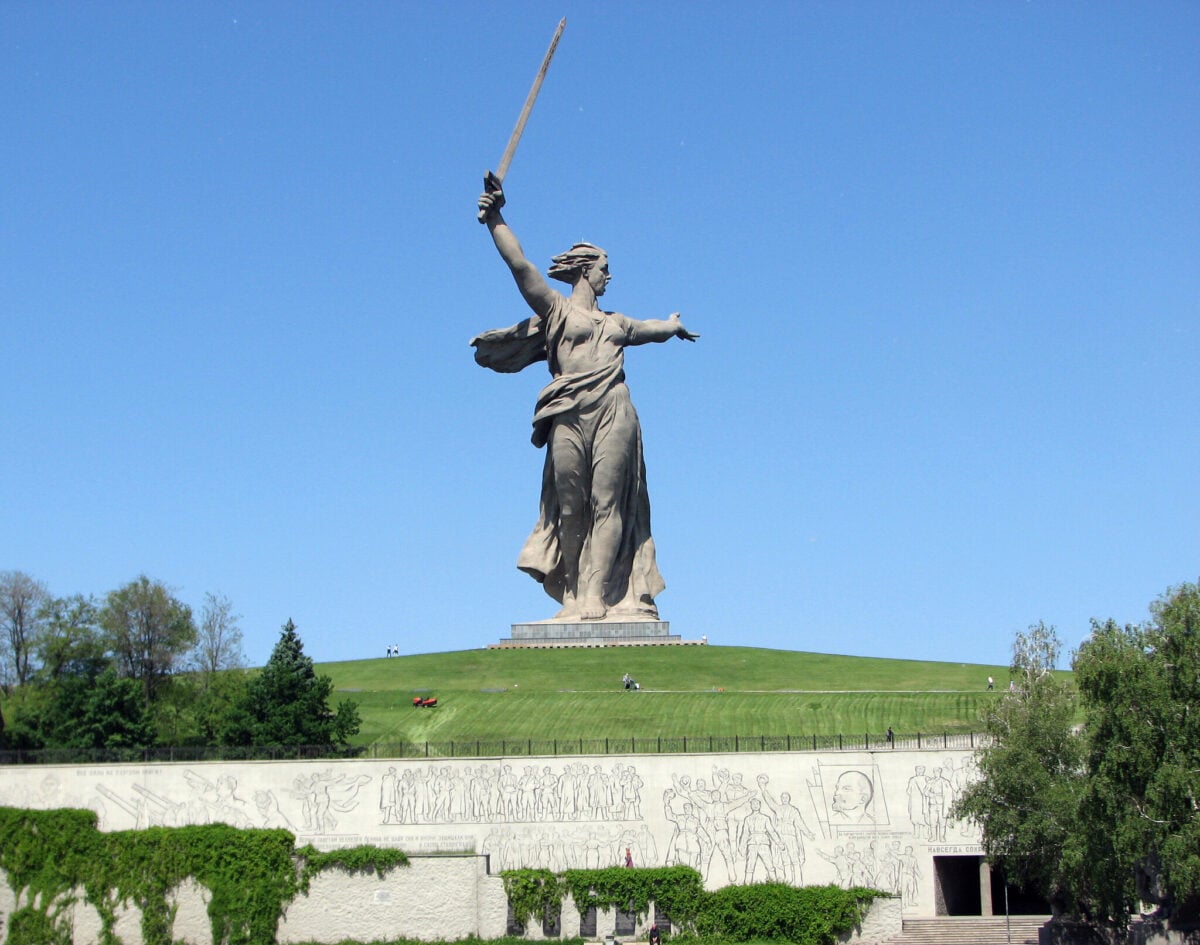
The Motherland Calls in Volgograd, Russia, stands 85 meters and depicts a woman mid-stride, sword raised, mouth open. She commemorates the Battle of Stalingrad, one of the deadliest battles in human history, where over a million Soviet soldiers died between 1942 and 1943.
Sculptor Yevgeny Vuchetich finished it in 1967. The figure leans forward at a steep angle, which required an internal structure of extraordinary engineering complexity to keep it upright.
Inside, the statue is hollow, with a network of cables holding the concrete shell in tension. The sword alone weighs 14 tons.
Locals call her Rodina-Mat — Mother Russia — and the statue has a presence that photographs don’t fully capture.
A Statue Born from Devotion in Rajasthan
The Statue of Belief, also known as Vishwas Swaroopam, in Nathdwara, Rajasthan, was completed in 2022 and stands 72 meters tall. It depicts the Hindu god Shiva and was built by artist Naresh Kumawat as an act of personal devotion rather than a state commission.
The project took over a decade and was funded through private donations. Kumawat reportedly spent years living on-site, overseeing every detail of the construction.
The statue faces west so that the setting sun illuminates the face each evening — a detail that took considerable planning to get right and has made the site a popular spot for evening visitors.
Peter the Great Amid Controversy
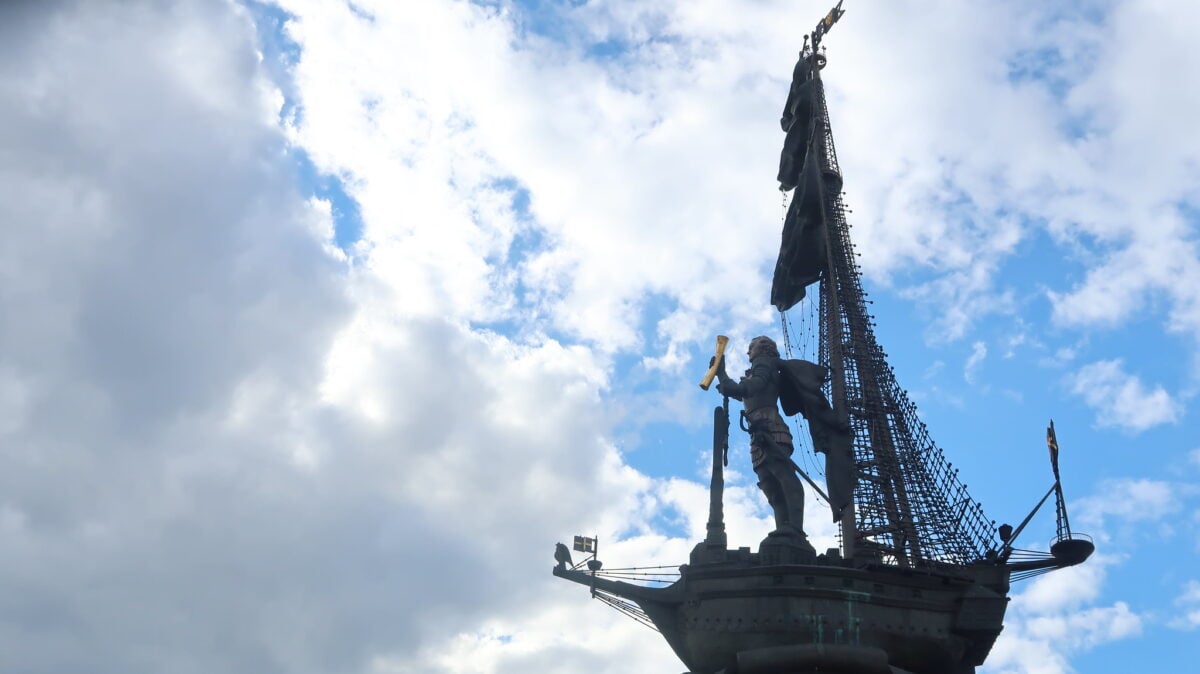
The statue of Peter the Great in Moscow, built by Georgian-Russian sculptor Zurab Tsereteli, stands roughly 98 meters and has been controversial since its unveiling in 1997. Critics called it artistically poor and historically awkward — Peter the Great’s legacy is tied to St. Petersburg, not Moscow, where the statue ended up.
There were serious proposals to move it or demolish it in the years after its installation. It stayed. Over time, Muscovites have reached an uneasy accommodation with it, and it has become one of those landmarks that people love to argue about.
Tsereteli, who has a habit of building very large things, reportedly designed it originally as Christopher Columbus, then repurposed it when no American city would accept it.
Guan Yu, God of War and Brotherhood
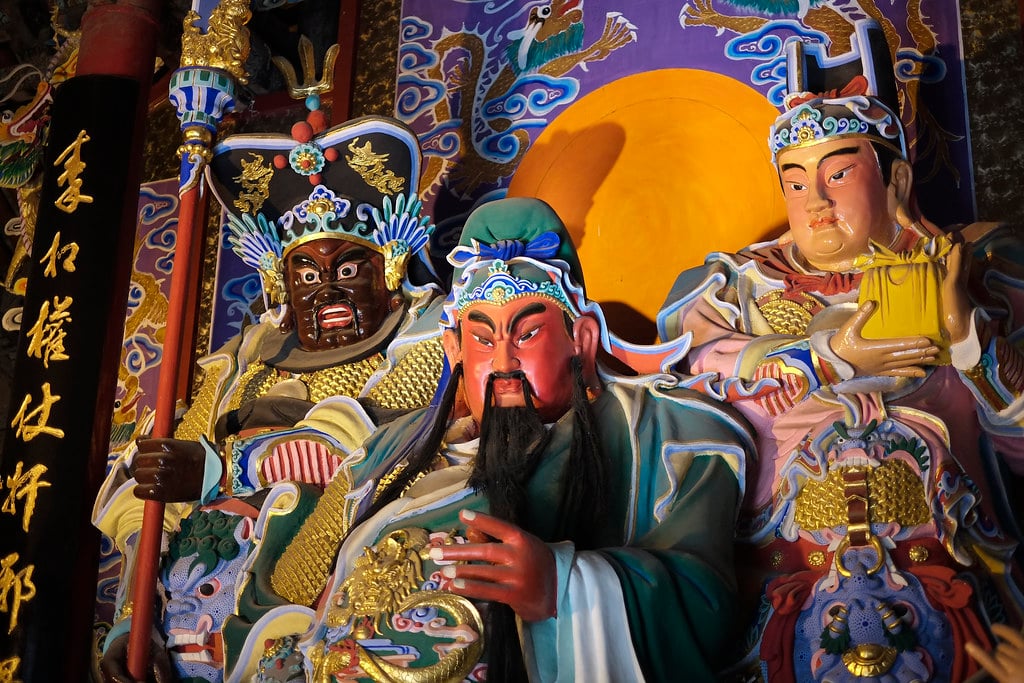
In Jingzhou, China, a 58-meter statue of Guan Yu — the deified general from the Three Kingdoms period — was completed in 2016. Guan Yu is one of the most widely worshipped figures in Chinese culture, revered by Buddhists, Taoists, and ordinary people alike as a symbol of loyalty, courage, and integrity.
The statue became a local talking point for reasons beyond its size. Chinese authorities later ordered it moved because its position disrupted the traditional feng shui layout of the ancient city it overlooked.
Moving a 1,320-ton statue is not a small undertaking. It was relocated, piece by piece, to a new site outside the city walls, a process that took years and drew significant attention.
Bali’s Giant on a Clifftop

Up high in Bali, Indonesia, the Garuda Wisnu Kencana statue reaches 121 meters into the sky. Vishnu, a major Hindu deity, sits on the back of Garuda, who takes the shape of a giant bird.
Though the vision began in the 1990s with artist Nyoman Nuarta, it took nearly three decades to finish. Work stretched across years, finally ending in 2018 when the structure stood complete.
From first sketch to final placement, time moved slowly, yet steadily forward. A massive frame of steel supports sheets of copper and brass forming the statue.
Wings stretching wide give Garuda an imposing presence across southern Bali’s skyline. Performances of old dances now unfold beneath it, along with displays of local artwork near its foundation.
To people here, the image means more than history – it stands as Indonesia’s emblem, carved into official seals and honored widely.
A Buddhist Statue Overlooking Northern Japan

A towering statue called Sendai Daikannon rises in Miyagi Prefecture, Japan, measuring exactly 100 meters high. In its grasp, it holds a tiny representation of Kannon, a being tied to kindness and empathy.
Though images of Kannon appear widely throughout East Asia, this particular version – finished in 1991 – ranks as one of the most massive ever built. Plain beside grander temples, this figure stands bare. Among green slopes near Sendai, its pale shape holds stillness like weight.
Openings pierce the torso across levels – tiny glimpses framed by stone. Those climbing narrow steps inside may peer outward from where sight begins.
When waves and shaking tore through in 2011, wreckage followed fast. Yet the frame remained, untouched deep within.
The Quiet Sentinel in Arkansas
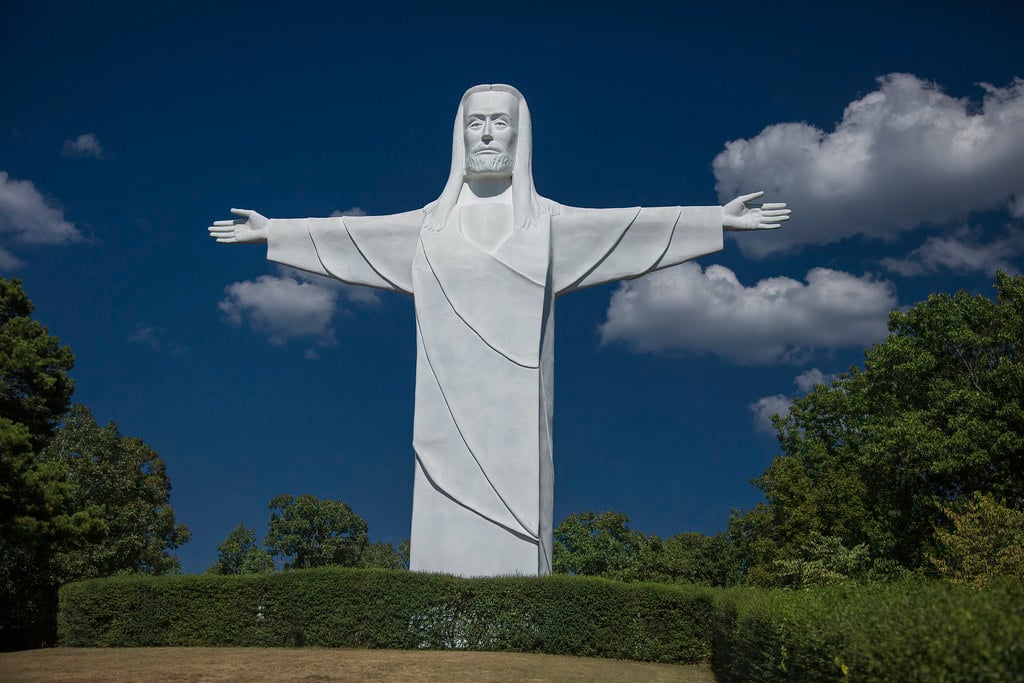
Towering nearly 22 meters near Eureka Springs, the Christ statue in Arkansas feels modest beside its peers – yet something about how it appears catches attention. From certain views, the arms seem to fade into shapeless stone, leaving only broad geometric masses behind. Each shift in position reveals another version of the face, never quite the same twice.
What lacks in scale builds instead on strangeness, standing apart through form rather than height. Finished in 1966 by sculptor Emmet Sullivan, the figure stands without finely carved hands; locals claim this was done on purpose, suggesting open arms instead of any fixed motion.
Truth behind that idea? Unclear – maybe it grew up around the sculpture’s unusual form. Each summer, a passion play unfolds at the location, pulling crowds from distant places.
Over time, the statue gained status as a local landmark, perhaps due to – or simply alongside – that peculiar outline.
Figures Reflect Their Makers

Each figure here rose because someone believed big meant something. Building huge felt more important than price tags, time spent, broken plans.
A few shouted what a country thought of itself. Others turned personal faith into open display.
The instant some stood complete, they stopped being art and started standing for power.
One thing never changes: crowds always show up.
Whether faithful, visitors, skeptics, or just passing through – each arrives to face what towers far above them. Perhaps that is the true role of such figures.
Not honoring deities, rulers, or flags, yet offering moments where people pause, tilt their heads skyward, experience a rare shrinking sensation one might confuse with peace.
More from Go2Tutors!

- The Romanov Crown Jewels and Their Tragic Fate
- 13 Historical Mysteries That Science Still Can’t Solve
- Famous Hoaxes That Fooled the World for Years
- 15 Child Stars with Tragic Adult Lives
- 16 Famous Jewelry Pieces in History
Like Go2Tutors’s content? Follow us on MSN.



