The Most Beautiful Desert Oases On The Planet
Empty they may seem, deserts burst with intensity instead. Heat presses down, distances stretch far, quiet hums loud, time crawls slow.
From such sharp edges, oases emerge – never random, always precise. Up comes water, roots dig in, creatures arrive one by one, living tight within narrow lines.
Beauty in desert oases comes less from looks, more from limits. Geology draws the line, humans follow – palm by palm, spring by spring.
Life settles only where rock permits, care preserves. Here, grace grows through exactness, never waste.
Culture rose where staying alive meant paying attention. A second glance reveals quiet wonders where sand meets life, each spot surviving despite heat that cracks the earth.
These pockets glow softly under vast skies, held apart by silence thicker than stone.
Siwa Oasis, Egypt
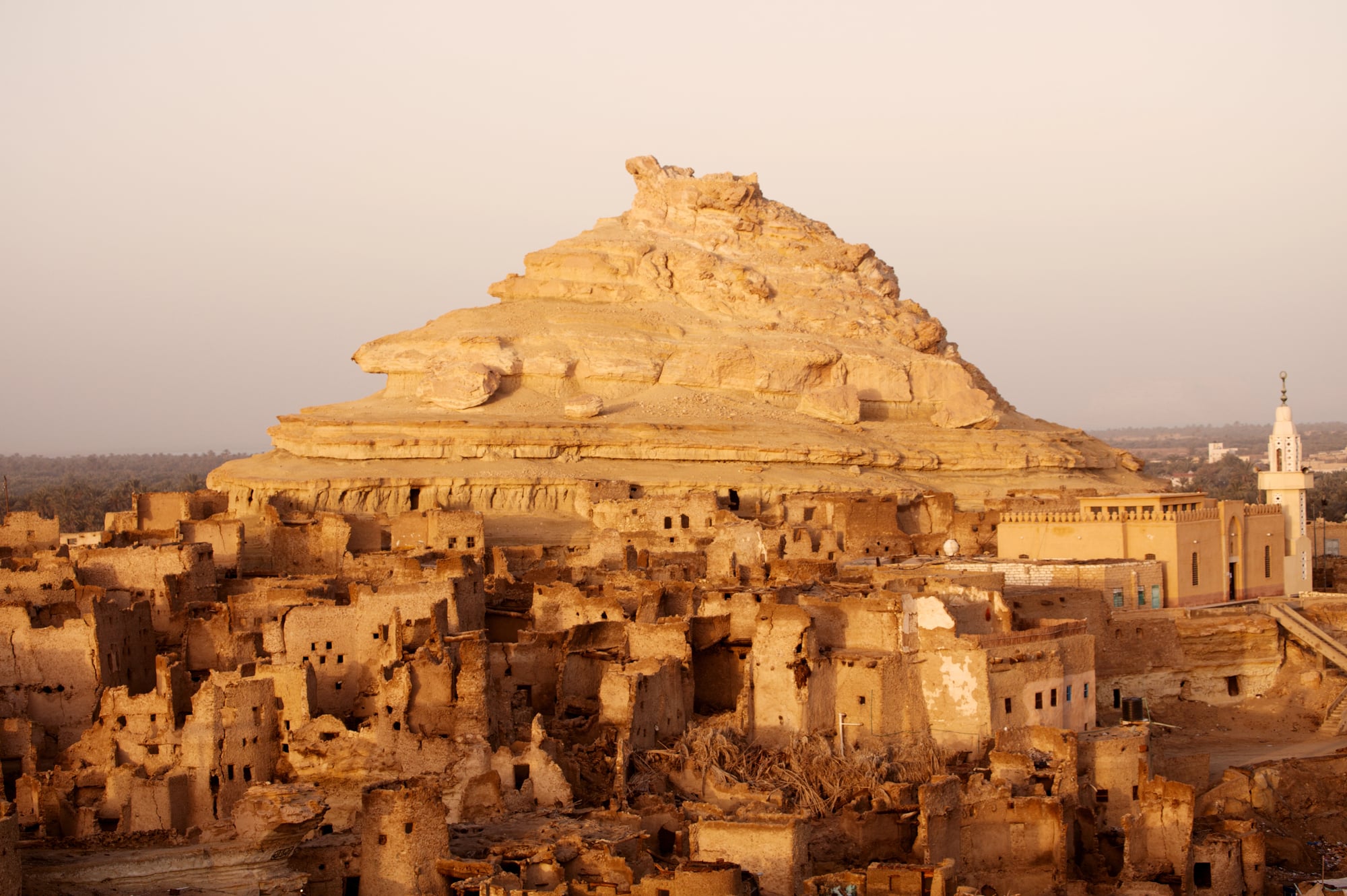
Siwa Oasis lies far from Egypt’s main population centers, surrounded by vast stretches of sand and salt flats. Dense palm groves wrap around freshwater springs, creating a sheltered basin that feels removed from time.
The light here is softer, filtered through greenery that seems out of place in the surrounding terrain. That sense of isolation shaped Siwa’s identity.
The oasis supported a self-contained community for centuries, complete with distinct traditions and architecture adapted to heat and scarcity. Its beauty comes from cohesion rather than scale.
Everything in Siwa feels connected, shaped by the same slow rhythm of water and survival.
Huacachina, Peru
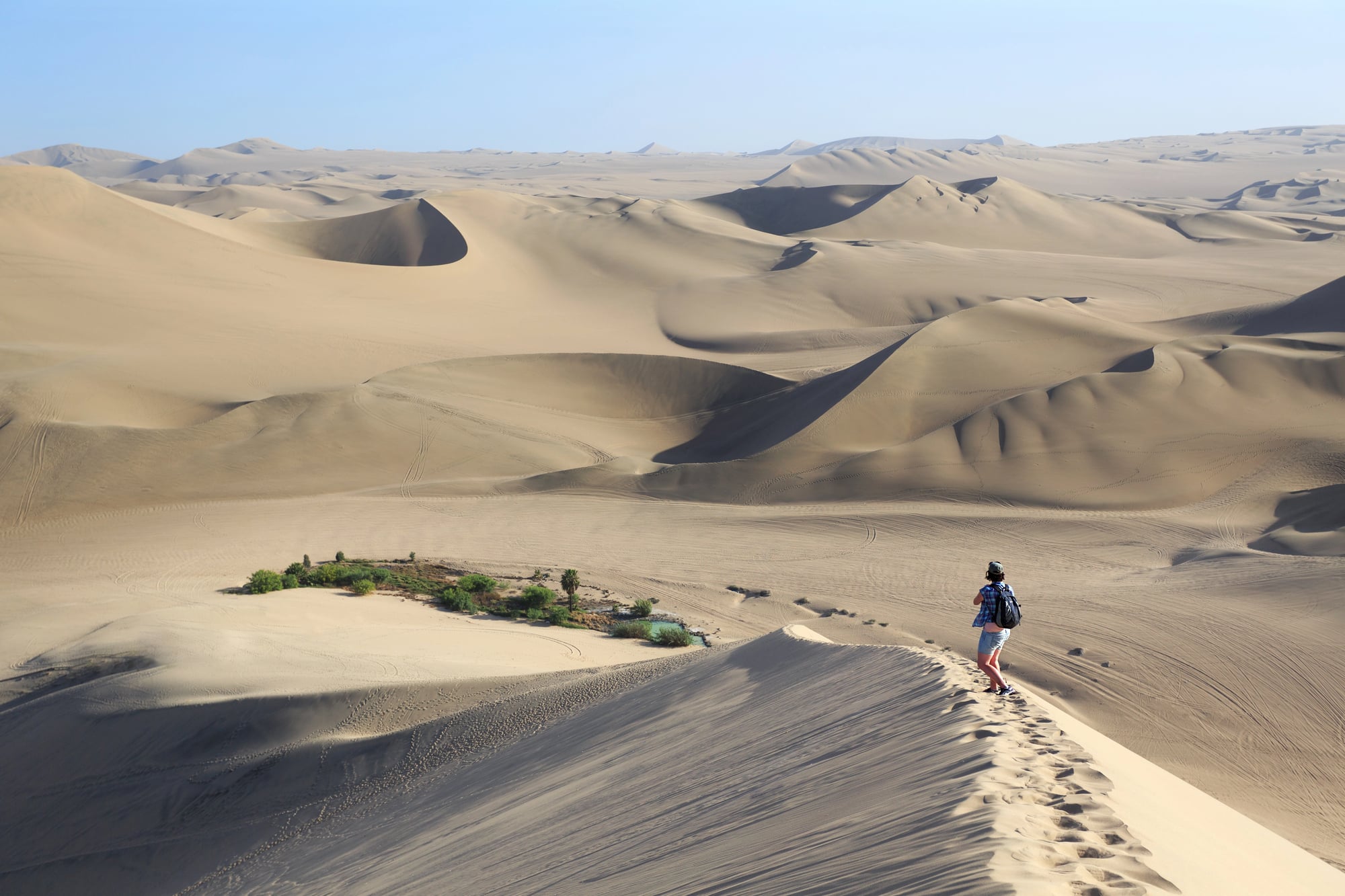
Huacachina appears suddenly in Peru’s coastal desert, a small lagoon encircled by towering dunes. Palm trees cluster tightly around the water, while sand rises steeply on all sides.
The contrast is immediate and almost theatrical. Still, what makes Huacachina striking is its fragility.
The oasis is compact, easily overwhelmed by the landscape around it. That vulnerability gives it a dreamlike quality, as though it could vanish if left unattended.
Its beauty lies in that tension, a reminder that not all oases are vast or permanent.
Al-Ahsa Oasis, Saudi Arabia
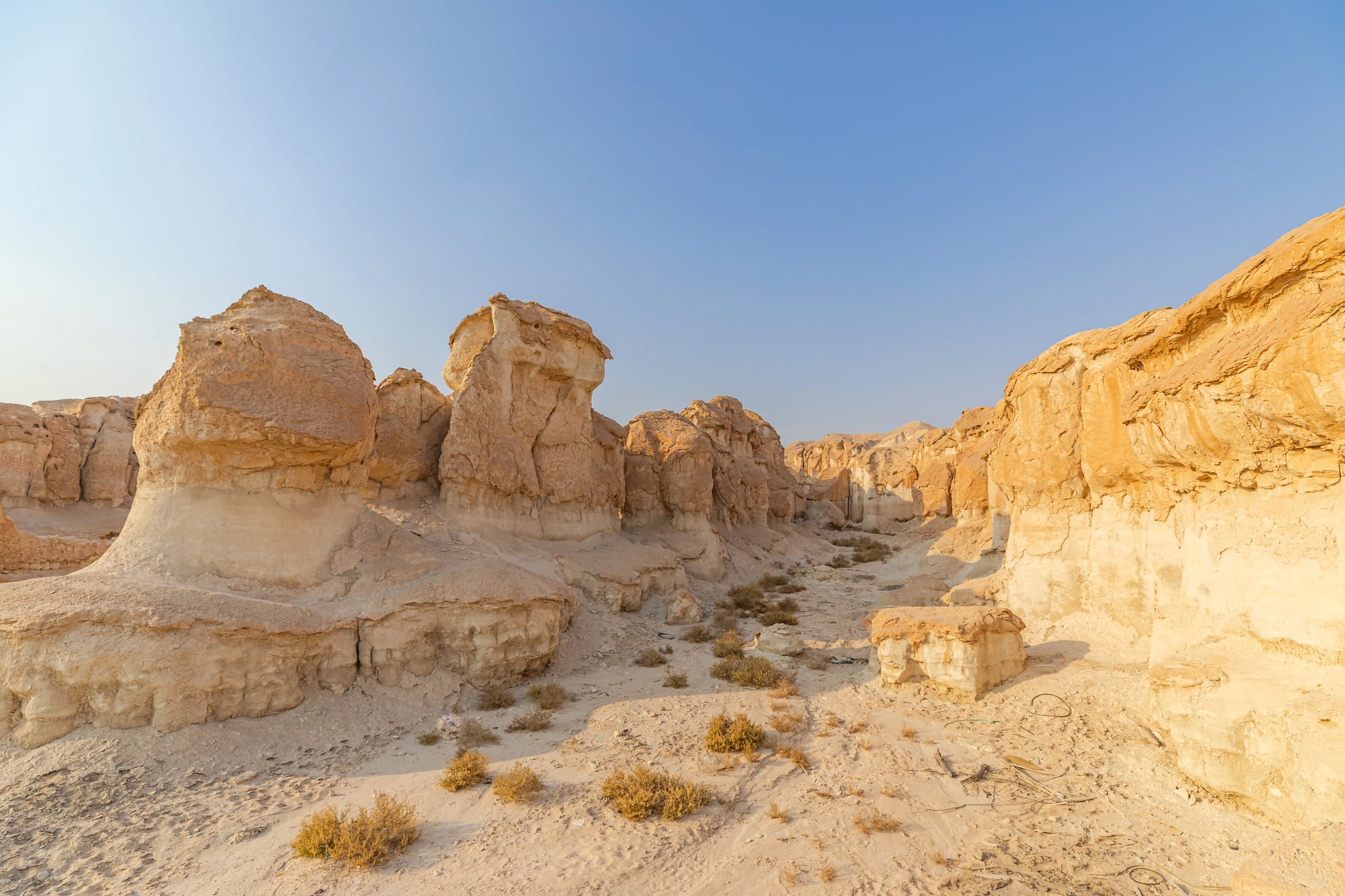
Al-Ahsa Oasis is one of the world’s largest oases, stretching across miles of farmland and palm groves. Unlike smaller oases that feel tucked away, Al-Ahsa functions as a living system, supporting towns, agriculture, and intricate irrigation networks.
That said, its beauty is subtle rather than dramatic. Water flows through ancient channels that still follow historical patterns.
The landscape shows how long-term stewardship can turn scarcity into stability. Al-Ahsa is not a pause in the desert, but a sustained conversation with it.
Chebika Oasis, Tunisia
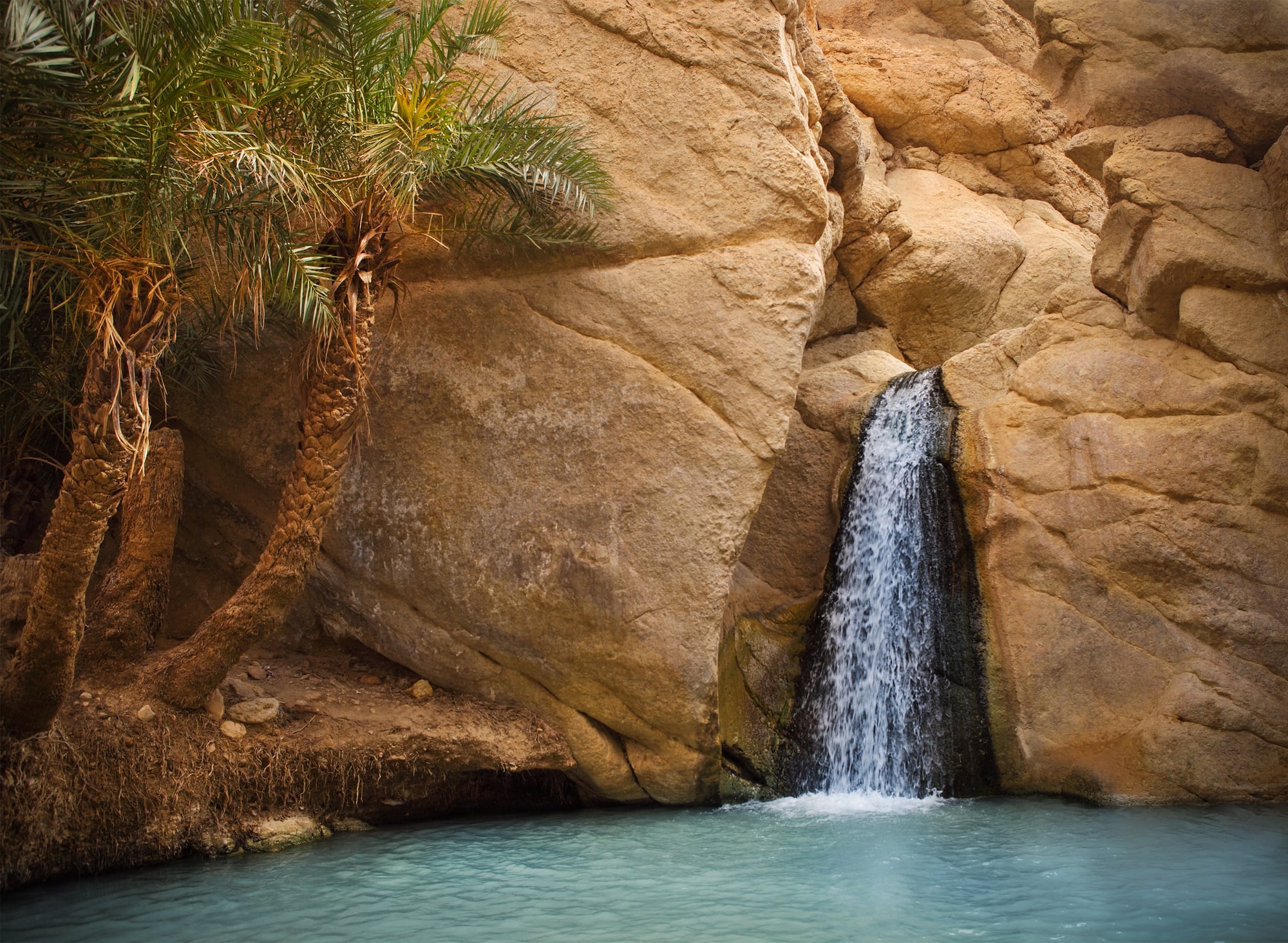
Chebika sits near the edge of the Sahara, pressed against rocky slopes of the Atlas Mountains. Water cascades down stone walls into shallow pools, feeding narrow ribbons of green.
Palm trees grow where the land permits, not where symmetry demands. Even so, Chebika’s beauty comes from sound and movement.
Flowing water echoes off rock faces, creating a sense of life that feels earned. The oasis looks shaped by terrain rather than imposed upon it, making its presence feel both temporary and resilient.
Crescent Lake, China
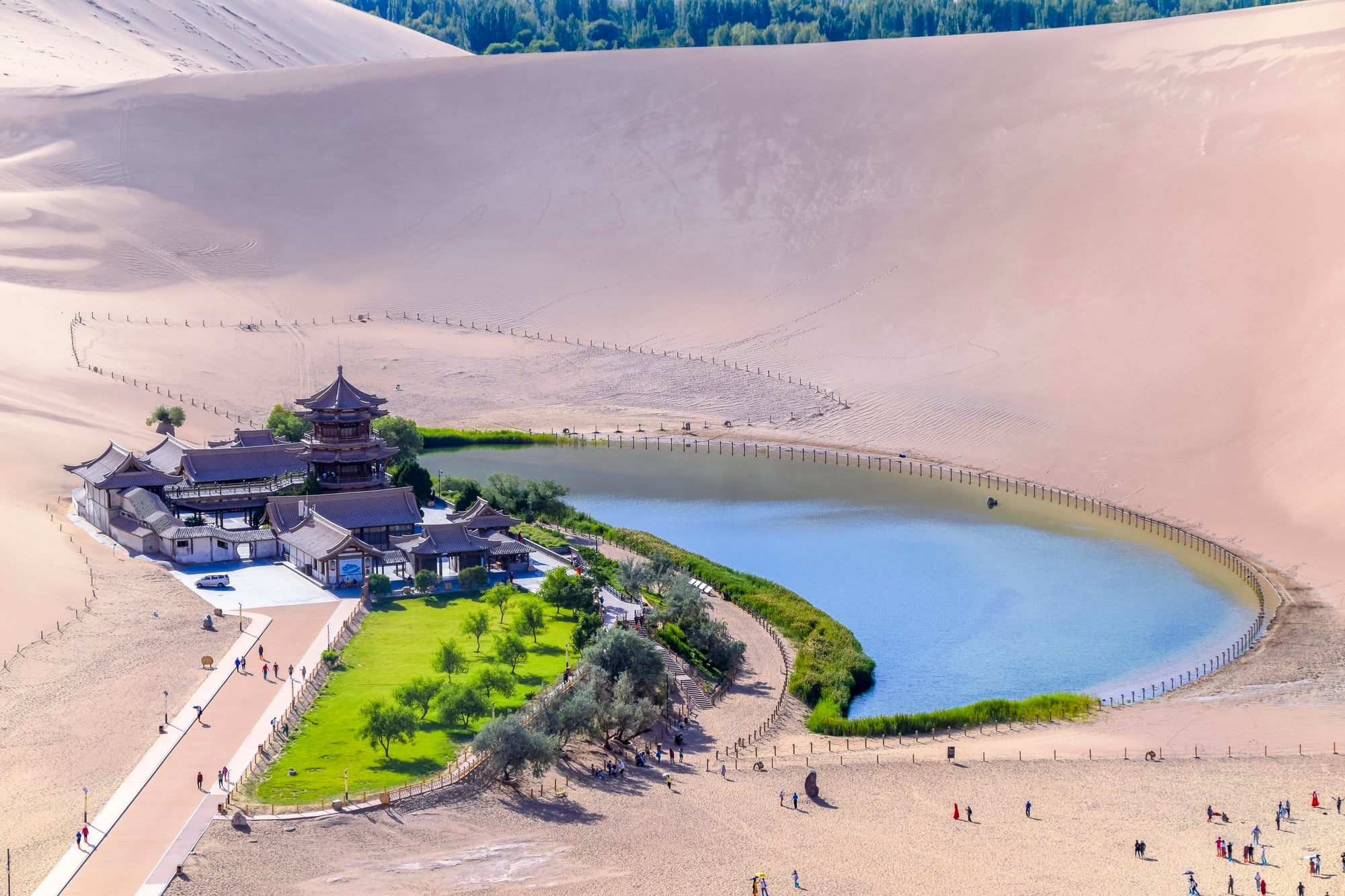
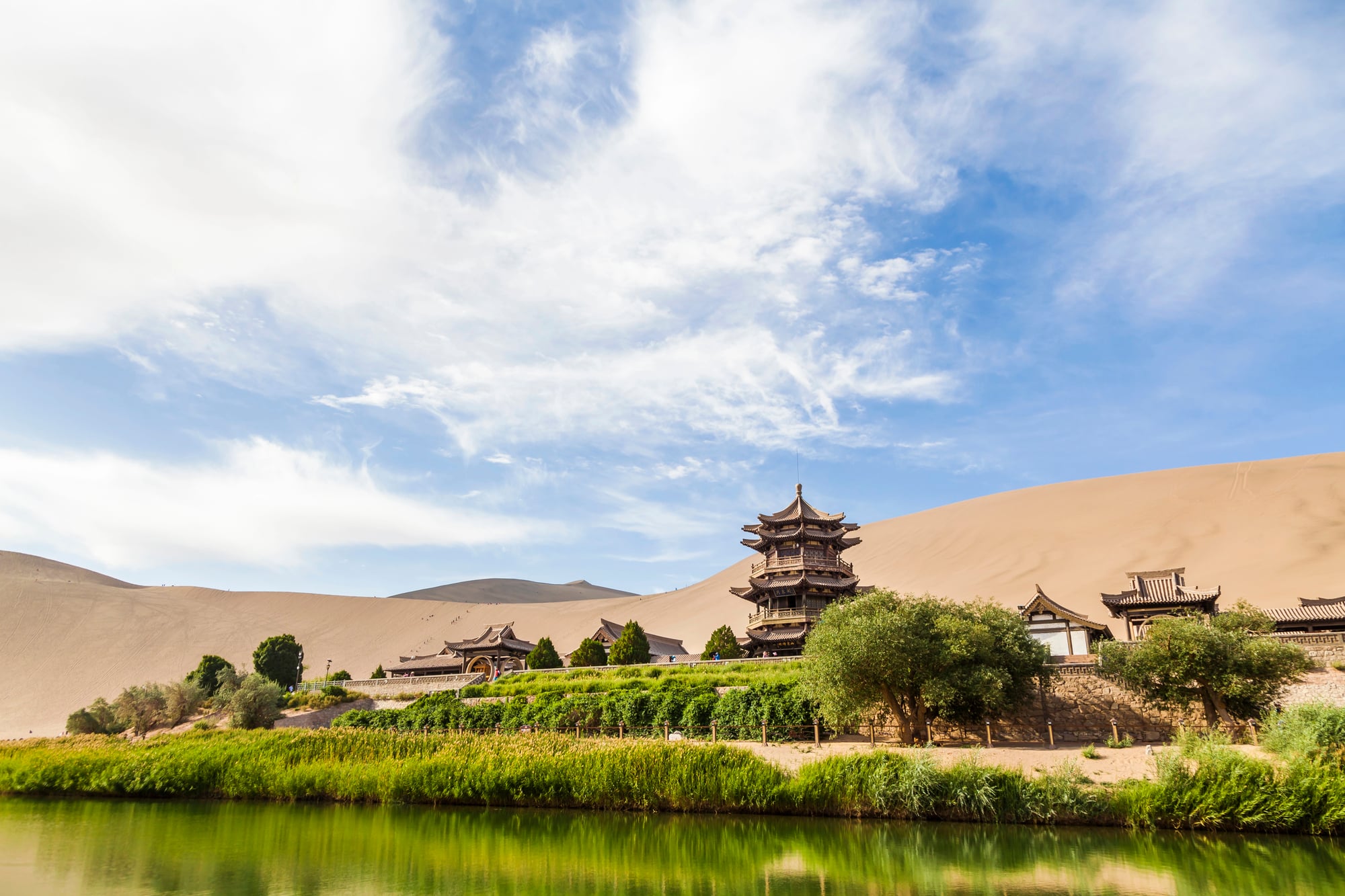
Crescent Lake sits at the edge of immense sand dunes near Dunhuang, its curved shape forming a near-perfect arc. The lake’s outline looks designed rather than natural, intensifying the contrast between water and sand.
Still, Crescent Lake feels perpetually at risk. Winds constantly shift dunes toward its edge, threatening to reclaim it.
Preservation efforts have helped maintain its balance, but the tension remains visible. Its beauty lies in that ongoing negotiation between water and movement.
Tozeur Oasis, Tunisia
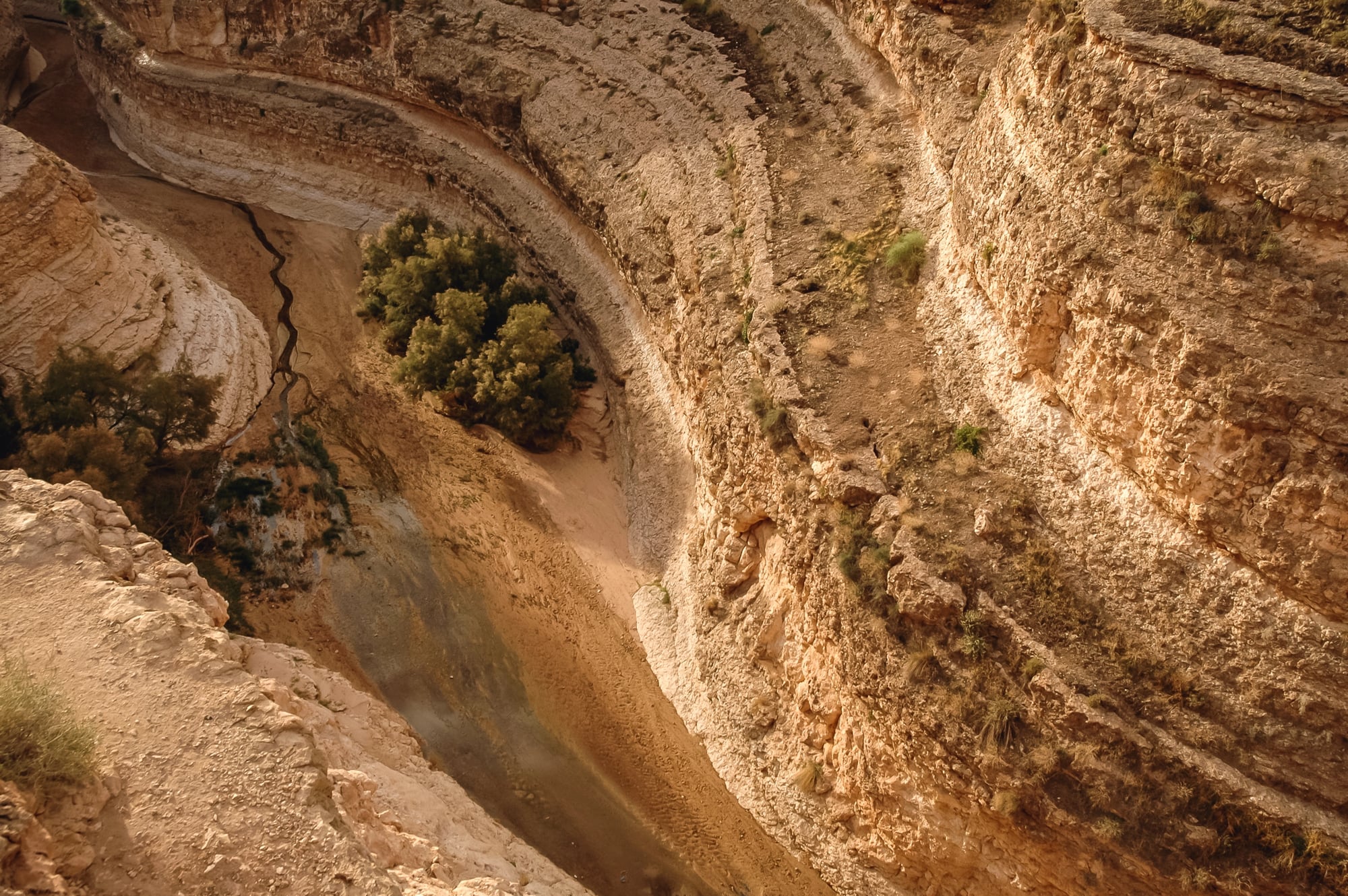
Tozeur spreads outward in a structured network of palm groves and irrigation canals. The land is divided into orderly plots, each shaded by layers of vegetation designed to protect crops below.
That structure gives Tozeur its visual rhythm. Patterns repeat across the landscape, offering relief from surrounding heat.
The oasis feels engineered yet organic, shaped by generations of refinement. Its beauty comes from order applied to an otherwise unpredictable environment.
Djanet Oasis, Algeria
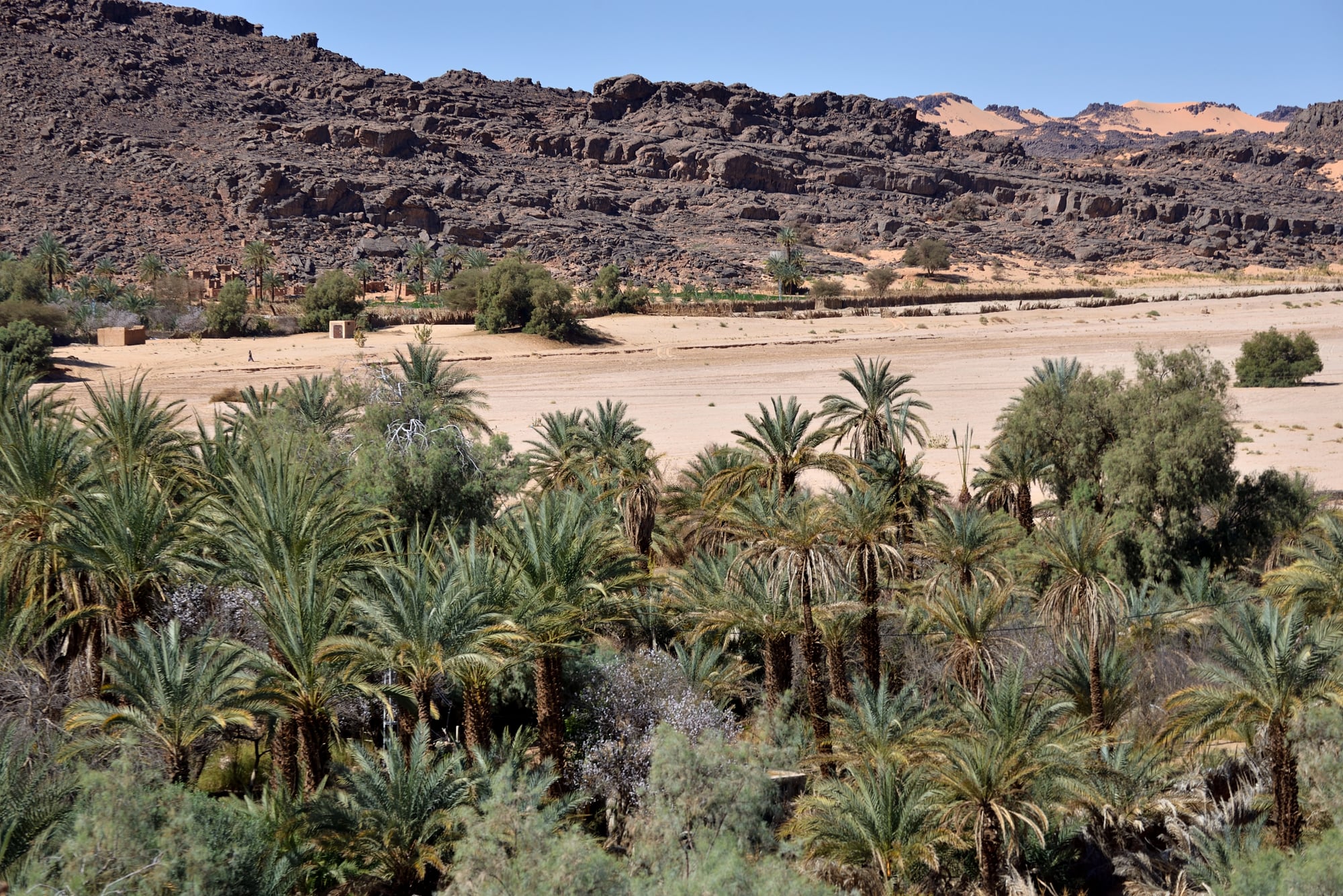
Djanet lies near the dramatic rock formations of the Tassili n’Ajjer plateau. Palm trees and gardens sit beneath towering sandstone cliffs etched with ancient carvings.
The oasis itself is modest, but its setting is vast. Even so, Djanet’s beauty is inseparable from time.
The surrounding rock art suggests a greener past, when water and wildlife were more abundant. The oasis feels like a thread connecting different eras, preserving human presence in a landscape that has transformed repeatedly.
Kharga Oasis, Egypt
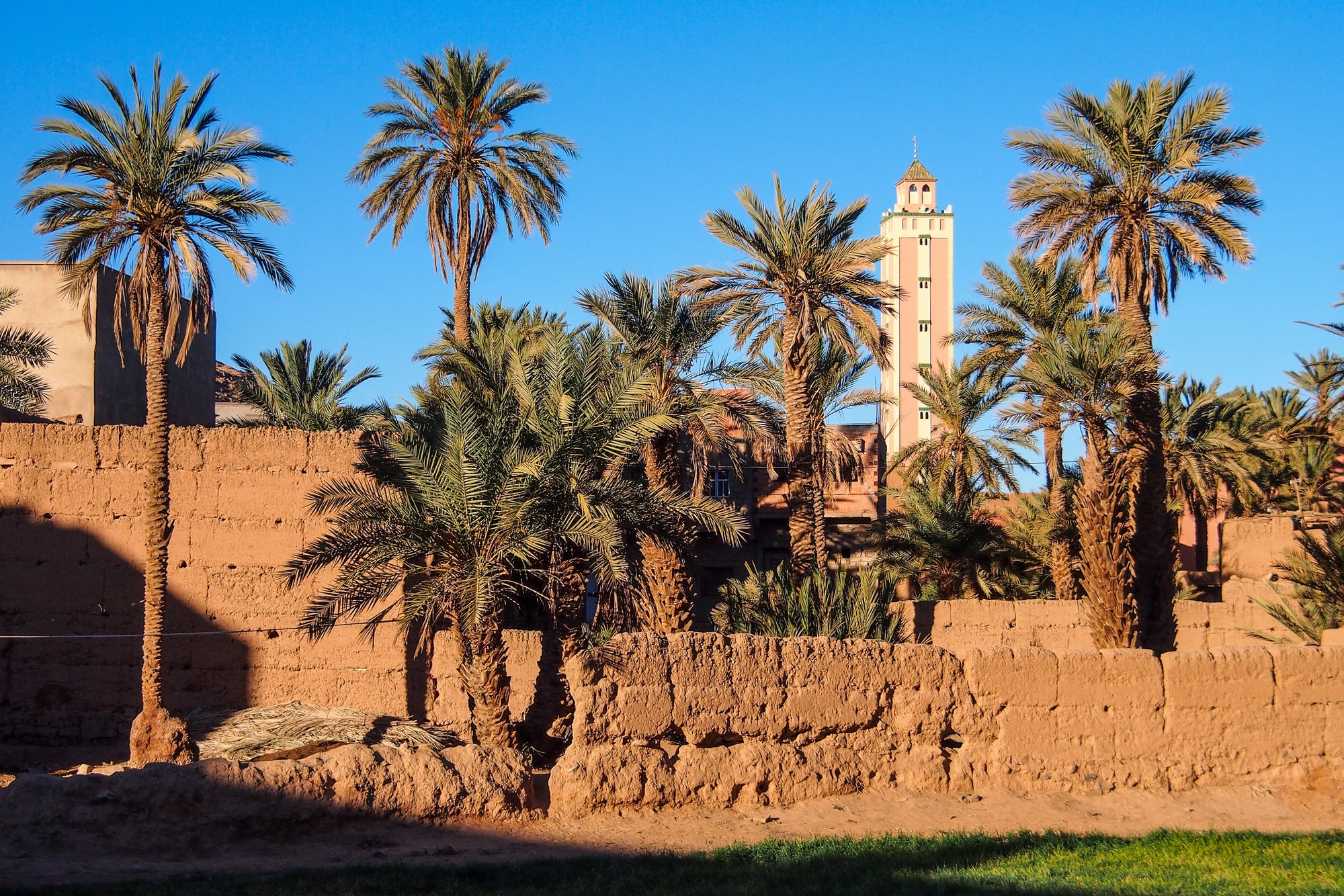
Kharga Oasis extends along a long depression in Egypt’s Western Desert, supported by groundwater close to the surface. Settlements and farms stretch in a line rather than clustering tightly, following the availability of water.
That layout gives Kharga a lived-in quality. It does not feel curated or monumental, but practical.
Roads, fields, and towns trace water’s path, showing how communities adapt to narrow opportunities. Its beauty lies in continuity rather than visual drama.
Liwa Oasis, United Arab Emirates
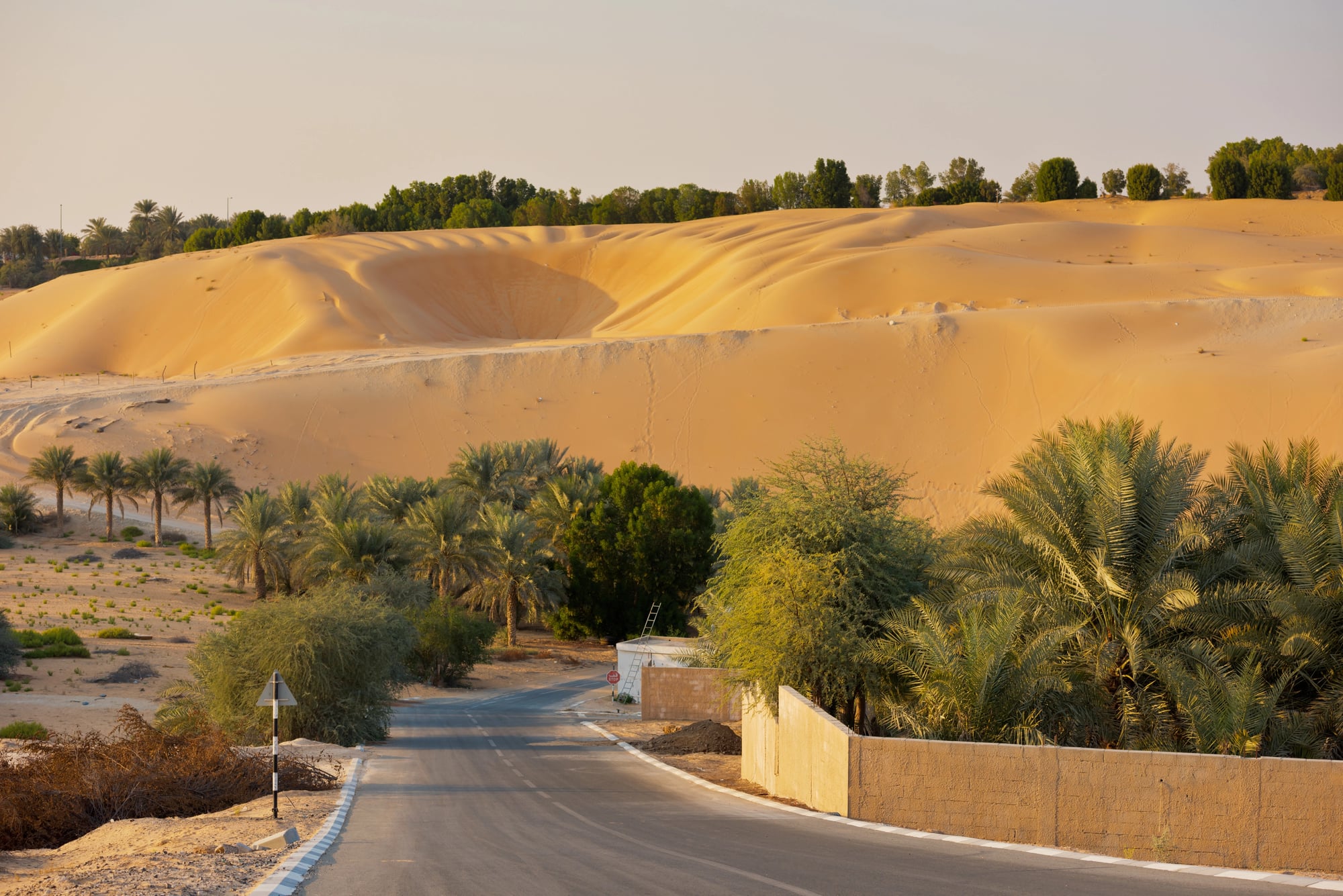
Liwa Oasis sits along the edge of the Rub’ al Khali, one of the world’s largest sand deserts. Long chains of date palms follow groundwater beneath towering dunes that stretch for miles.
That proximity creates striking contrast. Vast emptiness presses against cultivated land, highlighting how fragile and deliberate life is here.
Liwa’s beauty comes from scale, not abundance. It feels like a thin green line holding its ground against an overwhelming landscape.
Bahariya Oasis, Egypt
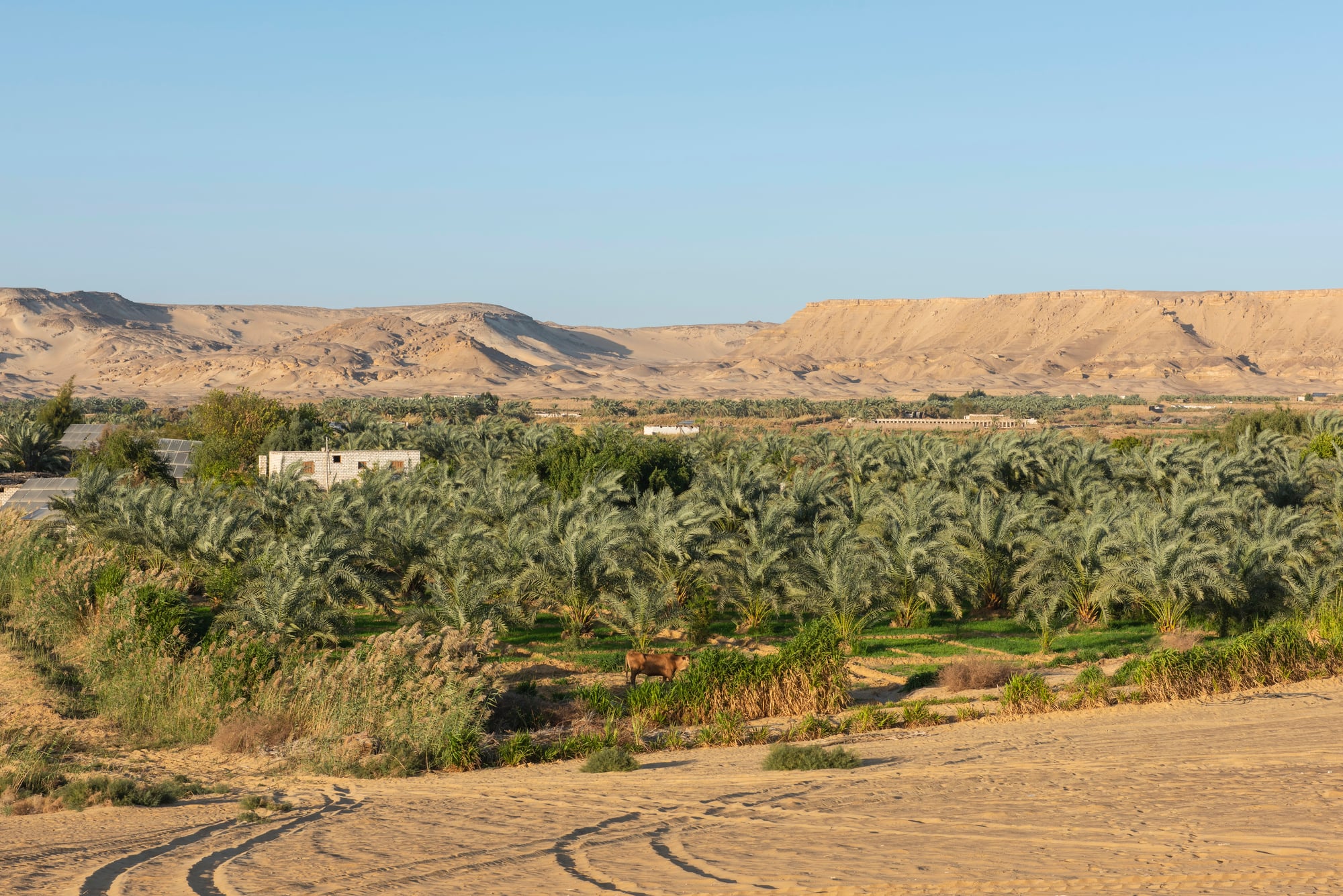
Bahariya Oasis is surrounded by black volcanic hills and sandy plains. Springs feed palm groves and farms, while villages cluster near water sources.
The landscape feels rugged, shaped by mineral-rich soil and stark contrasts. Still, Bahariya stands out for diversity.
The mix of agriculture, geology, and settlement creates visual complexity. It shows how oases can adapt to varied terrain, offering multiple forms of beauty within a single basin.
Why Desert Oases Still Matter
Out in the middle of harsh deserts, oases gave travelers a place to rest. Because of these green spots, caravans could cross vast lands without running out of supplies.
Not only did they feed people, but villages grew around them too. Where water appeared, life took hold – unexpectedly, steadily.
Trade paths bent toward them like roots seeking moisture. Power shifted wherever an oasis stood, quietly pulling cities into existence.
Movement across regions followed their hidden logic. From North Africa to Central Asia, history folded around these pockets of calm.
Now more than ever, they matter in ways we’re starting to notice. Because water is scarce, oases show what happens when people plan ahead, take only what’s needed, leaving room for growth.
Beauty here does not happen by chance. Instead, it grows quietly where care meets boundaries, where waiting matters just as much as doing.
When nature struggles, places like desert oases do more than look beautiful. What unfolds there reveals how life shifts toward care instead of control.
People learn to move with the land, not ahead of it.
More from Go2Tutors!

- The Romanov Crown Jewels and Their Tragic Fate
- 13 Historical Mysteries That Science Still Can’t Solve
- Famous Hoaxes That Fooled the World for Years
- 15 Child Stars with Tragic Adult Lives
- 16 Famous Jewelry Pieces in History
Like Go2Tutors’s content? Follow us on MSN.