The Most Impressive “Firsts” in Sports
There’s something magical about witnessing the impossible become possible. The first time anyone breaks through a barrier that seemed permanent, shatters a record that looked unbreakable, or does something no human has ever done before.
These moments don’t just change sports—they change what we believe about human potential itself. The word “first” carries weight in athletics that it holds nowhere else.
It means someone stood alone at the edge of what had been done before and decided to leap into the unknown (knowing they might fail spectacularly in front of thousands, sometimes millions, of people).
Roger Bannister

On May 6, 1954, Englishman Roger Bannister became the first runner to break four minutes in the mile with a time of 3:59.4 at Oxford University. Four minutes.
Such a tidy, round number that had become something like a curse in athletics. Doctors claimed the human heart would explode.
Scientists said the human body simply wasn’t built for it. Perhaps the most famous of firsts in athletics, Bannister’s achievement proved that the biggest barriers are often the ones we construct in our own minds.
Once he showed it could be done, suddenly runners everywhere started breaking four minutes. The impossible had become merely difficult.
Nadia Comăneci
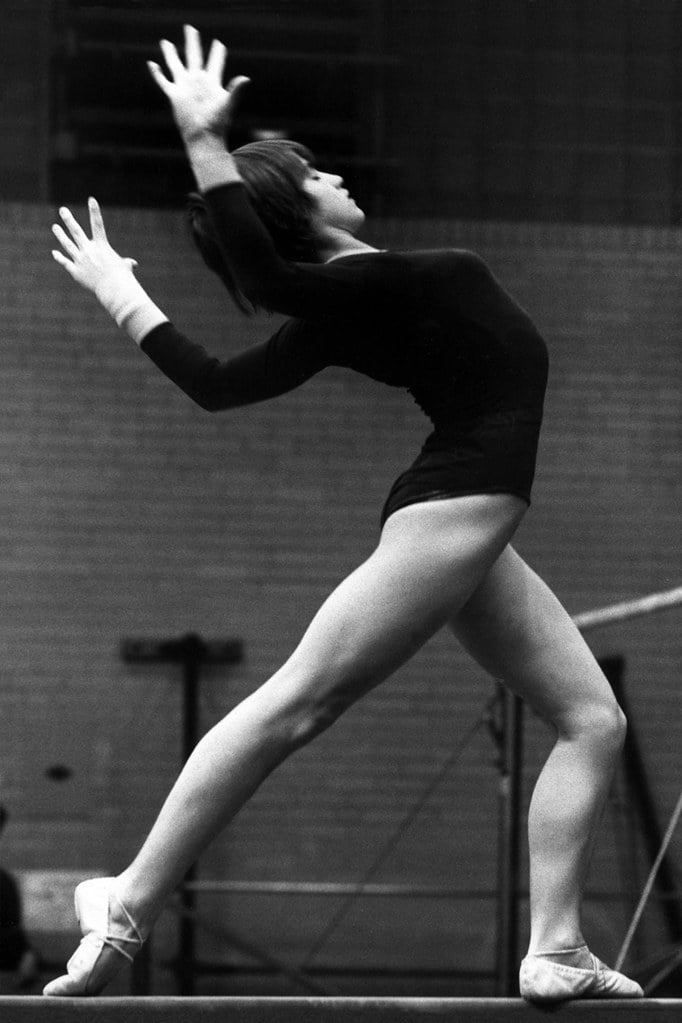
In 1976, at age 14, Comăneci was the first gymnast to be awarded a perfect score of 10.0 at the Olympic Games. On July 18, 1976, Comăneci made history at the Montreal Olympics.
During the team compulsory portion of the competition, she was awarded the first perfect 10 in Olympic gymnastics for her routine on the uneven bars. The scoreboard couldn’t even handle it.
Omega SA, the official Olympics scoreboard manufacturer, had been led to believe that competitors could not receive a perfect 10, and had not programmed the scoreboard to display this score. Comăneci’s perfect 10 thus appeared as “1.00”.
Imagine being so good you broke the technology meant to measure your performance. During the remainder of the Montreal Games, Comăneci earned six additional “10s”.
She won gold medals for the individual all-around, the balance beam and uneven bars. Seven perfect scores in one Olympics.
She also holds the record as the youngest ever Olympic gymnastics all-around champion at age 14 — a record that can never be broken since the sport has since raised its age-eligibility requirements so that gymnasts must be at least 16 in the same calendar year of the Olympics in order to compete.
Jackie Robinson

He famously broke the color line of Major League Baseball when he appeared on the field for the Brooklyn Dodgers on April 15, 1947. On April 15, 1947, Jackie Robinson became the first African American to play Major League Baseball in the modern era.
This wasn’t just a sports story—it was American history unfolding on a diamond. The pressure was suffocating.
Some Dodger teammates openly protested against having to play with an African American, while players on opposing teams deliberately pitched pitches at Robinson’s head and spiked him with their cleats in deliberately rough slides into bases. He endured racial slurs and death threats on and off the field.
“Plenty of times I wanted to haul off when somebody insulted me for the color of my skin, but I had to hold to myself,” he later said. “I knew I was kind of an experiment.”
“The whole thing was bigger than me.” Not only did he survive—he excelled.
During his 10-year MLB career, Robinson won the inaugural Rookie of the Year Award in 1947, was an All-Star for six consecutive seasons from 1949 through 1954, and won the National League Most Valuable Player Award in 1949. In 1962 he became the first African American inducted into the Baseball Hall of Fame.
Kurt Browning
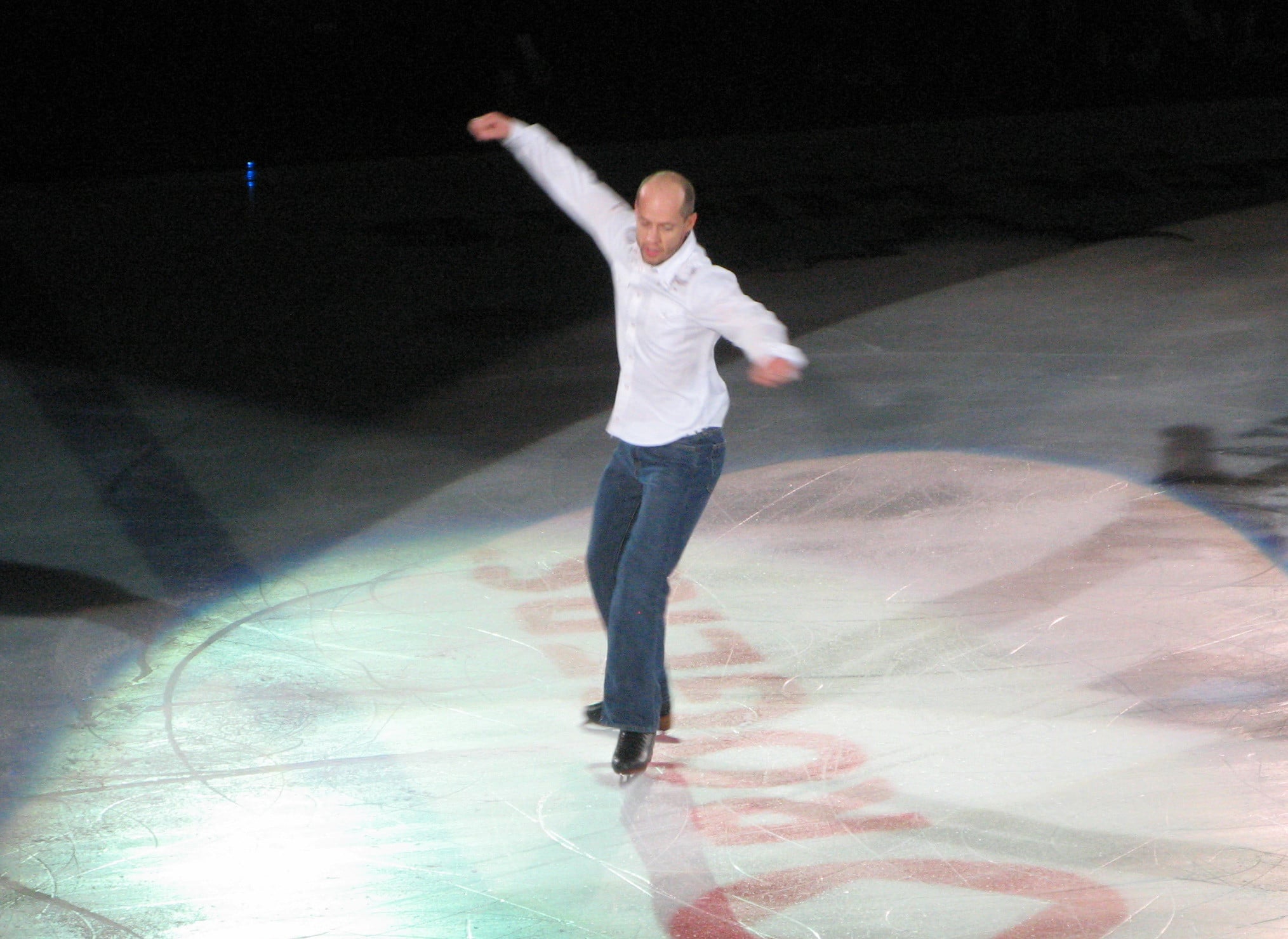
Before he became a four-time world champion, Kurt Browning landed the quad toe loop for figure skating’s first ever four-revolution jump in competition at the 1988 World Championships. Someone was bound to do it eventually.
But the Canadian was courageously first to land it in front of the world, and thereby forever becoming a revolutionary figure in one of the most popular winter sports. The quadruple jump in figure skating had been theoretical for decades.
Skaters would attempt it in practice, crash into the boards, pick themselves up, and try again. But in competition?
That required a different kind of courage—the willingness to risk humiliation for a chance at history.
Usain Bolt

In 2009, Usain Bolt set the 100m world record with an astonishing time of 9.58 seconds at the World Athletics Championships in Berlin. This electrifying performance solidified his status as the fastest man in history.
On August 16, 2009, at the World Championships in Berlin, Bolt clocked an astonishing 9.58 seconds. His technique, particularly his stride length, played a crucial role.
At his peak, Bolt’s stride measured 2.44 meters, allowing him to cover the 100-meter distance in just 41 steps. Think about that—covering 100 meters in fewer than 42 steps while moving faster than any human in recorded history.
Michael Phelps

The Olympic run put together by Phelps is one of a kind. His 28 medals are 10 more than any other participant, but what separates him is his pure domination in the sport.
His 23 Olympic golds are 14 more than any other athlete. No other athlete in history has even 10 gold medals in Olympic competitions.
His most impressive feat came at the 2008 Beijing Olympics, where he won eight gold medals in a single Games, breaking Mark Spitz’s 1972 record of seven. Eight events.
Eight golds. In sports where hundredths of seconds separate winners from also-rans, Phelps didn’t just win—he demolished fields of swimmers who were themselves among the fastest humans alive.
Cal Ripken Jr.

During the 1995 season, he smashed Lou Gehrig’s record of 2,130 games played in a row. The Iron Man streak.
At one point in the streak, Ripken appeared in a staggering 8,243 consecutive innings — smashing the previous record of 5,152 held by George Pinkney. Consider what 2,632 consecutive games means.
No sick days. No family emergencies.
No broken bones that keep you out of the lineup. For over 16 years, Cal Ripken showed up to work every single day in a sport where careers regularly end due to injury.
And for perspective, he played alongside 150 different Orioles position players during the streak and eight different managers.
Simone Biles

In 2019, at the U.S. Gymnastics Championships, Biles became the first woman to land a triple-double (three twists and two flips) in competition on floor exercise. The move is now called “The Biles”—and she has multiple skills named after her.
A rare honor reserved for gymnasts who pioneer techniques no one else can perform. Simone Biles’s 37 World Championship and Olympic medals showcased unparalleled excellence and resilience, shattering stereotypes.
She didn’t just compete at the highest level—she redefined what the highest level could be. Her dominance became so complete that people started discussing whether she should compete in a different category entirely.
Jesse Owens
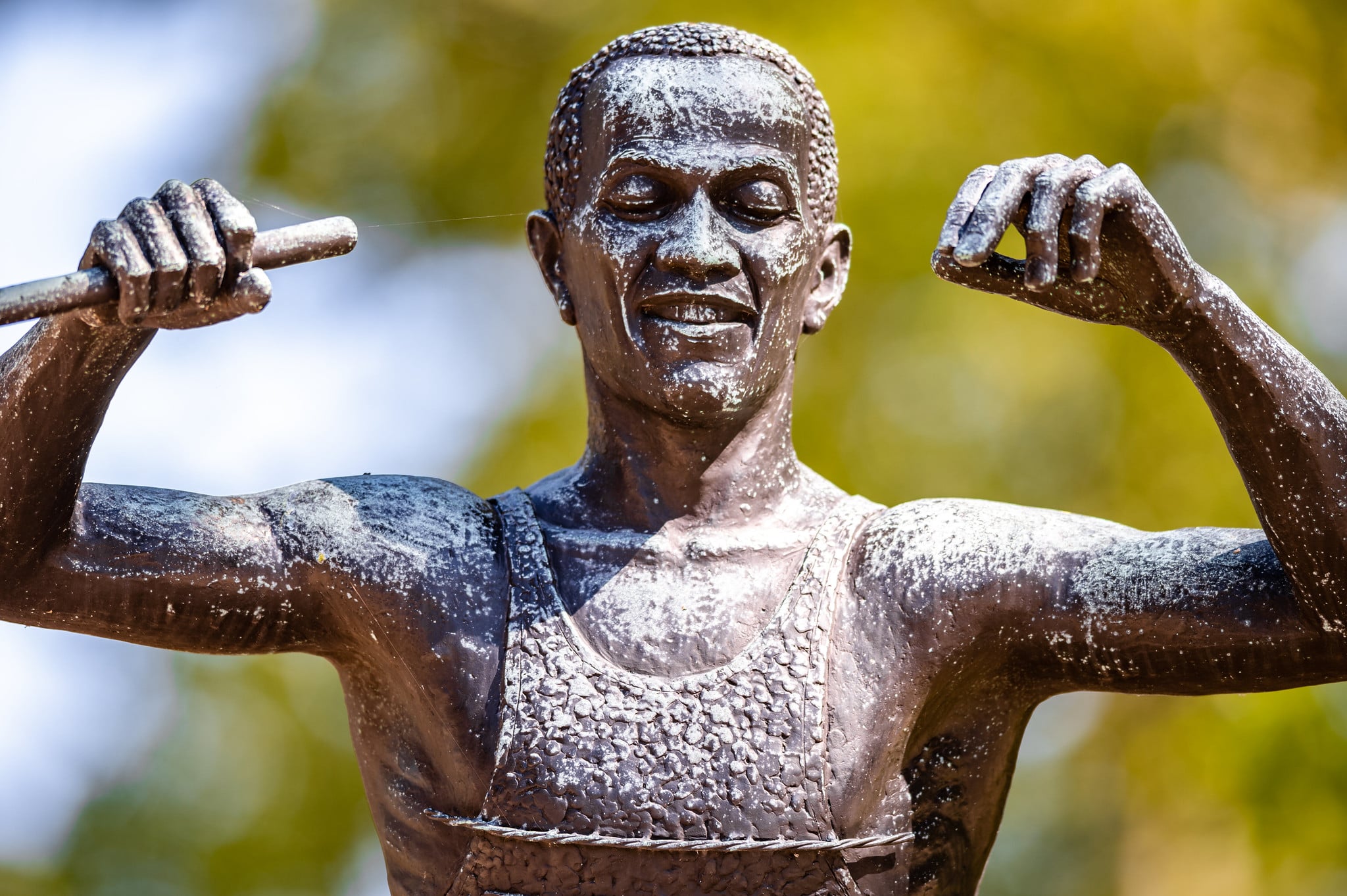
Jesse Owens starred at the first televised Olympic Games in Berlin, winning the 100m, long jump, 200m and 4x100m. This was 1936.
Berlin. Nazi Germany.
Adolf Hitler was in the stands, expected to witness the supposed superiority of the Aryan race. Instead, he watched an African American athlete from Ohio demolish every theory he’d built his regime around.
Owens didn’t just win four gold medals—he humiliated the ideology of racial supremacy on the world’s biggest stage. His achievements were athletic, but their impact stretched far beyond sports.
Don Larsen

So when Don Larsen pitched a perfect game in Game 5 of the 1956 World Series—MLB’s first postseason no-hitter—he secured an enduring place in sports history. A perfect game in the World Series.
Twenty-seven batters faced, twenty-seven batters retired. No hits, no walks, no errors, no runs.
The pressure of the World Series makes even routine plays feel monumental. To throw a perfect game under those circumstances?
It’s like performing brain surgery during an earthquake.
Steffi Graf

Be it man or woman, no tennis star has ever spent more weeks as the world’s number one singles player than Steffi Graf. Her 377 weeks at the top beats the men’s standard of Roger Federer (302 weeks) and dwarfs present day contemporaries in the women’s game such as Serena Williams.
But Graf’s most impressive first came in 1988 when she won all four major tournaments and Olympic gold in the same season. The first to do it was Germany’s Steffi Graf, in 1988.
Leading many to call it the “Steffi Slam.” Graf stood alone until 2021, when both Diede de Groot and Dylan Alcott joined her, sweeping the majors and winning gold in wheelchair tennis at the Tokyo Paralympics.
Shani Davis

In 2006, Shani Davis made history as the first Black athlete to win an individual gold medal at the Winter Olympics. He achieved this groundbreaking milestone in the 1,000-meter speed skating event at the Turin Games.
Davis’s victory was a monumental moment, breaking barriers in a sport with little diversity and inspiring athletes worldwide. Winter sports had been overwhelmingly white for their entire Olympic history.
Davis didn’t just break through that barrier—he dominated, proving that talent knows no boundaries and inspiring a generation of athletes who saw themselves reflected in his success.
Simone Manuel

In 2016, Simone Manuel made history as the first Black woman to win an individual Olympic gold medal in swimming. She achieved this groundbreaking feat in the 100m freestyle at the Rio de Janeiro Olympics, tying for first place with a time of 52.70 seconds.
Manuel’s victory shattered stereotypes in a sport with limited diversity and inspired a new generation of swimmers. Swimming had long carried unfortunate stereotypes about which bodies were “naturally” suited for the sport.
Manuel’s gold medal didn’t just break records—it broke down barriers of perception and opened doors for countless young swimmers who finally saw someone who looked like them standing atop the podium.
Gabby Douglas

In 2012, she made history at the London Olympics when she became the first person of color to become the Individual All-Around Champion. According to her official site, she also became “the first American gymnast to win gold in both the gymnastic individual all-around and team competitions at the same Olympic games.”
Douglas’s achievements came during a golden era of American gymnastics, but her firsts were about more than medals. They were about representation and proving that excellence comes in every form.
The Miracle That Lives in Memory

Some firsts transcend their sport entirely. They become cultural touchstones, moments that define eras and inspire generations.
It’s 1972, and the Super Bowl-winning Miami Dolphins become the first—and only, to this day— NFL team to go undefeated throughout the regular season and playoffs. Perfect seasons have been attempted thousands of times since.
Teams have come close, built hope, captured imaginations—only to stumble at the finish line. The 1972 Dolphins remain alone in their perfection, a reminder that sometimes the first time is also the only time.
These athletes didn’t just achieve firsts—they redefined what was possible. They looked at barriers that had stood for decades and decided those barriers were simply invitations.
Each breakthrough made the next one possible, each impossible moment proving that the only true limits are the ones we accept. In sports, as in life, the most powerful word might just be “first”—because it means someone was brave enough to try what no one else dared.
More from Go2Tutors!

- The Romanov Crown Jewels and Their Tragic Fate
- 13 Historical Mysteries That Science Still Can’t Solve
- Famous Hoaxes That Fooled the World for Years
- 15 Child Stars with Tragic Adult Lives
- 16 Famous Jewelry Pieces in History
Like Go2Tutors’s content? Follow us on MSN.