The World’s Highest Mountain Peaks and the Stories Behind Them
Mountains have a way of making everything else feel small. Not just physically, but in terms of what humans think they’re capable of — until someone goes and proves otherwise.
The highest peaks on earth have drawn explorers, climbers, scientists, and dreamers for centuries, each one carrying a story that goes far beyond altitude. Some of those stories are triumphant.
Others are cautionary. Many are both.
Everest — 8,849 Metres

Mount Everest sits on the border of Nepal and Tibet and is the highest point on earth above sea level. It was first summited on 29 May 1953 by Edmund Hillary of New Zealand and Tenzing Norgay, a Sherpa from Nepal.
The news reached London the morning of Queen Elizabeth II’s coronation, and the timing turned the climb into a symbol of postwar British optimism — though the achievement belonged as much to Nepal and to the Sherpa community as it did to any colonial narrative. The mountain is known in Nepali as Sagarmatha and in Tibetan as Chomolungma, both names predating the surveyor George Everest by centuries.
Everest himself never saw the mountain and reportedly objected to it being named after him. Today, Everest attracts hundreds of climbers each season.
Traffic jams near the summit have become a genuine problem, with photographs of queues at high altitude circulating widely. Over 300 people have died on the mountain, and the bodies of many remain on the slopes — the conditions making retrieval impossible or impractical.
K2 — 8,611 Metres

K2 is the second highest peak in the world and by most accounts the hardest to climb. Located on the border of Pakistan and China, it has a fatality rate significantly higher than Everest’s.
For every four people who have reached the summit, roughly one has died trying. The name K2 came from a survey designation — the second peak measured in the Karakoram range.
There was an attempt to rename it Chogori, but K2 stuck. It has no famous local name because the mountain is so remote that no permanent settlements exist nearby.
The first ascent came in 1954 by an Italian expedition led by Ardito Desio, with Lino Lacedelli and Achille Compagnoni reaching the summit. The climb was marked by internal conflict within the team and a lingering controversy over whether a third climber, Walter Bonatti, was denied his rightful place in the summit push.
The dispute lasted decades and was only officially resolved long after most of the participants had died.
Kangchenjunga — 8,586 Metres

Kangchenjunga, on the border of Nepal and the Indian state of Sikkim, is the third highest mountain in the world. It was first climbed in 1955 by a British expedition, with George Band and Joe Brown reaching the summit — stopping just short of the very top out of respect for a promise made to the Sikkimese government, who consider the peak sacred.
That tradition has largely been honoured by subsequent expeditions. Most climbers stop a few metres below the true summit, making Kangchenjunga one of the few peaks where the highest point technically remains unstepped.
Whether that counts as a true summit is a question the climbing community quietly debates.
Lhotse — 8,516 Metres
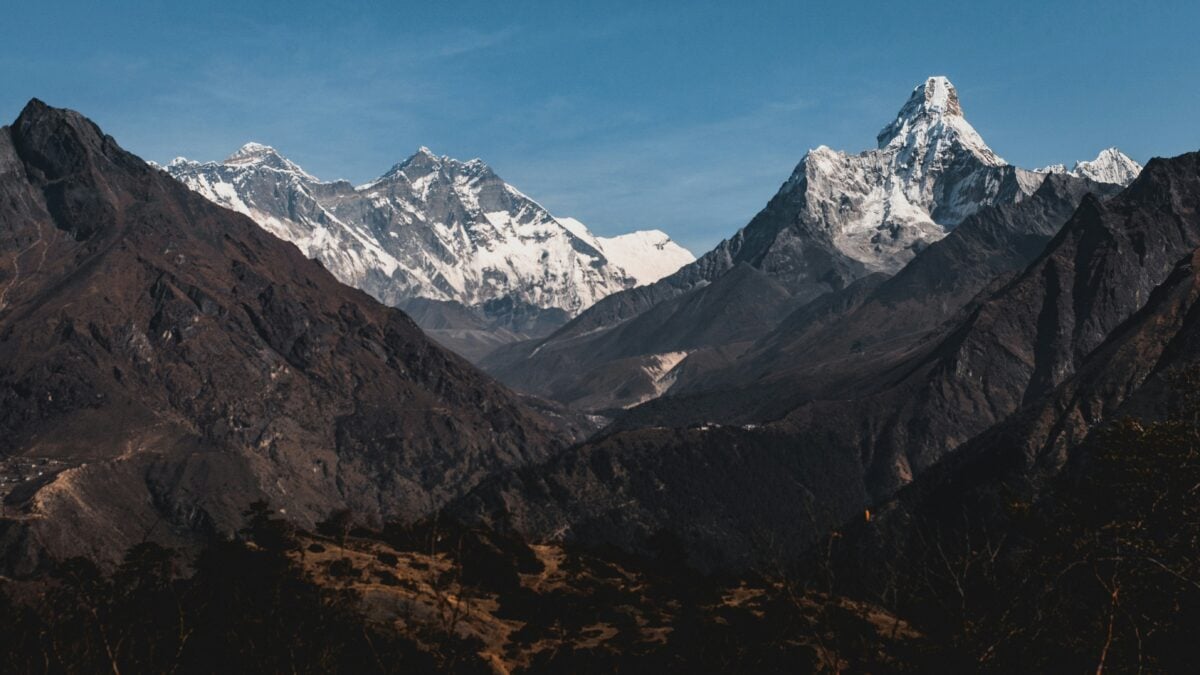
Lhotse is so physically close to Everest that the two share a climbing route for much of the approach. Despite this, Lhotse has its own identity and its own challenge. The Lhotse Face — a wall of blue ice rising over 1,000 metres — is one of the most demanding sections on any Himalayan climb, and it has to be crossed by anyone attempting either peak via the standard southern route.
The first ascent of Lhotse was made in 1956 by a Swiss team. For years, the mountain’s south face — an immense wall considered one of the great unsolved problems in mountaineering — resisted every attempt.
It was finally climbed in 1990 by Soviet climber Tomo Česen, though questions about whether the full face was completed remain contested in climbing circles.
Makalu — 8,485 Metres

Makalu sits about 19 kilometres east of Everest and is shaped like a near-perfect four-sided pyramid, making it one of the most visually distinctive peaks in the Himalayas. It was first summited in 1955 by a French expedition that achieved something remarkable — the entire team of nine climbers reached the summit within days of each other, one of the most successful high-altitude expeditions in history.
The mountain is technically demanding on all routes, with exposed ridges and sharp elevation changes that punish any lapse in attention. It has one of the lower success rates among the fourteen 8,000-metre peaks, and its remote location in Nepal means rescue options are limited.
Cho Oyu — 8,188 Metres

Cho Oyu sits on the Nepal-Tibet border west of Everest and has a reputation as the most accessible of the 8,000-metre peaks — which is relative, given the context. The standard route involves a gradual approach from the Tibetan side with no technical climbing above a certain altitude, making it a common choice for mountaineers attempting their first 8,000-metre summit.
The mountain was first climbed in 1954 by an Austrian team. Its relative accessibility has made it one of the most frequently summited of the high peaks, and it serves as a training ground of sorts for those working toward Everest or harder objectives.
Dhaulagiri — 8,167 Metres

Dhaulagiri, in north-central Nepal, stood as the highest known mountain in the world for 30 years — from its measurement in 1808 until Kangchenjunga was surveyed and found to be higher. For three decades, it was the ceiling of the known world.
The first ascent didn’t come until 1960, when a Swiss-Austrian team reached the summit after a route that required a small aircraft to ferry equipment to a high camp — the first use of aviation in a Himalayan expedition. Dhaulagiri is known for extreme weather and sudden avalanches, and it has claimed a significant number of lives on all its routes.
Manaslu — 8,163 Metres
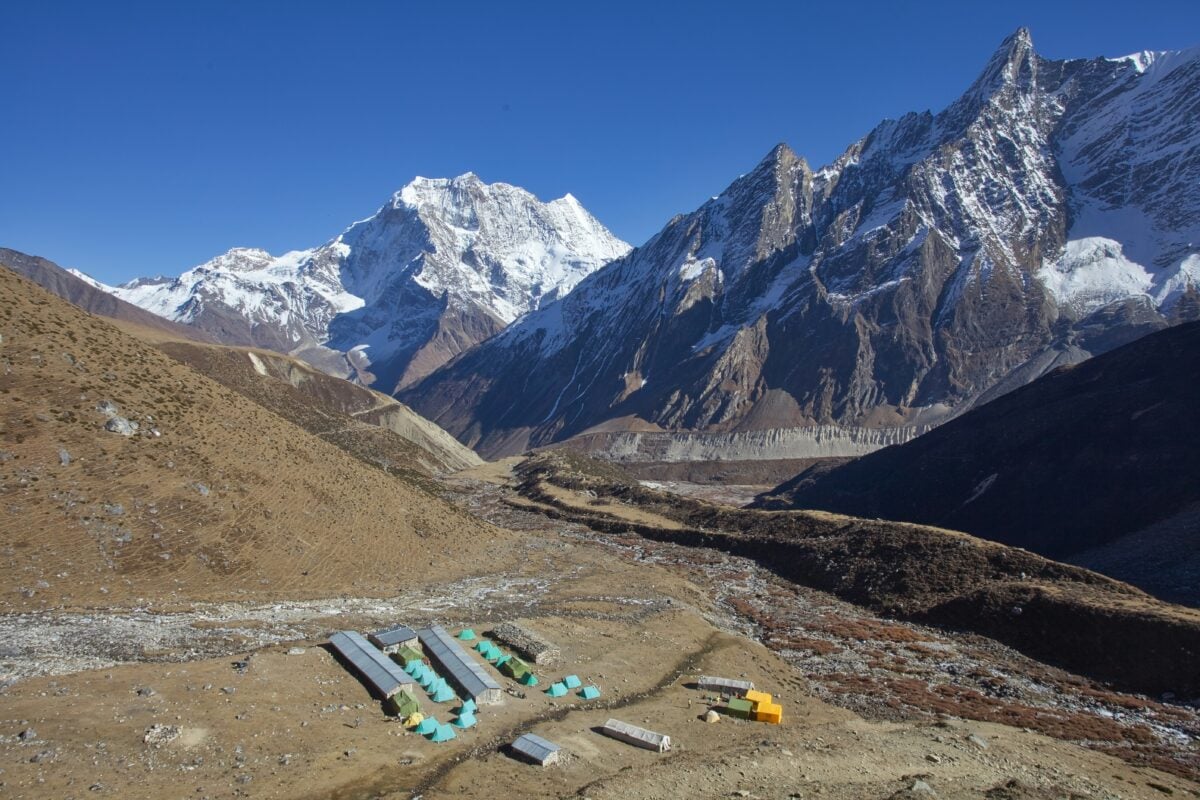
Manaslu, in the Gorkha district of Nepal, was first climbed in 1956 by a Japanese team — a significant moment for Japanese mountaineering at a time when the sport was dominated by European expeditions. The mountain’s name comes from the Sanskrit word for spirit or soul, and the surrounding region holds deep cultural significance for local communities.
A 1972 expedition to Manaslu ended in disaster when an avalanche hit a high camp, killing 15 people — one of the deadliest single incidents in Himalayan history. The mountain has continued to attract climbers, and a trekking circuit around its base has become one of Nepal’s more popular long-distance routes.
Nanga Parbat — 8,126 Metres

Nanga Parbat, in the Pakistani region of Gilgit-Baltistan, has one of the most tragic histories of any mountain in the world. Before its first successful ascent in 1953, it had killed so many climbers — 31 in the attempts before the first summit — that it earned the name Killer Mountain. A 1937 German expedition lost 16 members in a single night when an avalanche destroyed their camp while they slept.
The first ascent was made by Austrian climber Hermann Buhl, alone, without supplemental oxygen, after his climbing partner turned back. Buhl reached the summit and was forced to spend the night standing on a tiny ledge near the top — without shelter, food, or water — before descending the following day.
It remains one of the most audacious solo achievements in mountaineering history.
Annapurna — 8,091 Metres

Annapurna holds a specific place in mountaineering history: it was the first 8,000-metre peak ever climbed, summited in 1950 by a French team led by Maurice Herzog. The descent was catastrophic — Herzog and his partner Louis Lachenal suffered severe frostbite, and both lost fingers and toes.
Herzog later wrote a book about the climb that became one of the best-selling mountaineering accounts ever published. The mountain has the highest fatality rate of any 8,000-metre peak.
Roughly one in three people who attempt the summit dies on the mountain. Its avalanche-prone flanks and the complexity of its routes make it a mountain that commands a specific kind of respect even from the most experienced high-altitude climbers.
Gasherbrum I — 8,080 Metres

Gasherbrum I, also known as Hidden Peak, sits in the Karakoram range on the Pakistan-China border. It was the first 8,000-metre peak to be climbed by an American expedition, summited in 1958 by Pete Schoening and Andy Kauffman.
The name “Hidden Peak” came from the fact that the summit is not visible from the Baltoro Glacier approach — it only reveals itself as you get closer. In 1984, Reinhold Messner and Hans Kammerlein completed an alpine-style traverse of both Gasherbrum I and Gasherbrum II — climbing both peaks in a single push without returning to base camp between summits.
It was a landmark moment in the evolution of high-altitude climbing.
Broad Peak — 8,051 Metres

Broad Peak sits adjacent to K2 in Pakistan and takes its name from its wide summit plateau, which stretches over 1.5 kilometres between three distinct peaks. It was first climbed in 1957 by an Austrian team that included Hermann Buhl — the same climber who had made the solo first ascent of Nanga Parbat four years earlier.
Buhl died on the same expedition, falling through a cornice on the neighbouring peak of Chogolisa. He had survived Nanga Parbat’s summit night standing on a ledge in the dark.
He did not survive a routine section of descent. The mountains have a way of resetting the odds no matter what you’ve already survived.
Gasherbrum II — 8,034 Metres
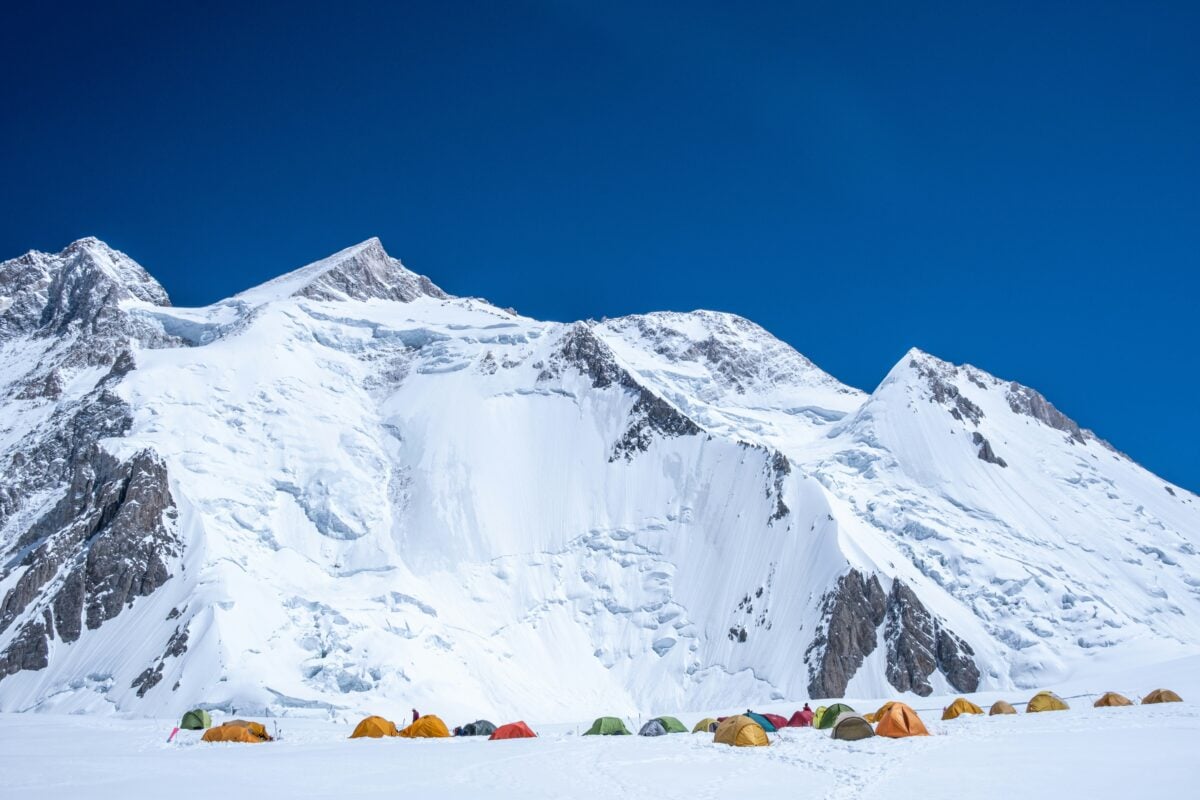
Gasherbrum II, just south of its companion peak in the Karakoram, was first climbed in 1956 by an Austrian team. It is considered one of the more technically straightforward of the 8,000-metre peaks, though straightforward at that altitude remains a relative term.
In 2011, three climbers — Simone Moro, Denis Urubko, and Cory Richards — made the first winter ascent of Gasherbrum II. Richards, caught in an avalanche during the descent, photographed himself immediately after — ice-covered, terrified, alive — and the image became one of the most widely published mountaineering photographs of the decade.
Shishapangma — 8,027 Metres
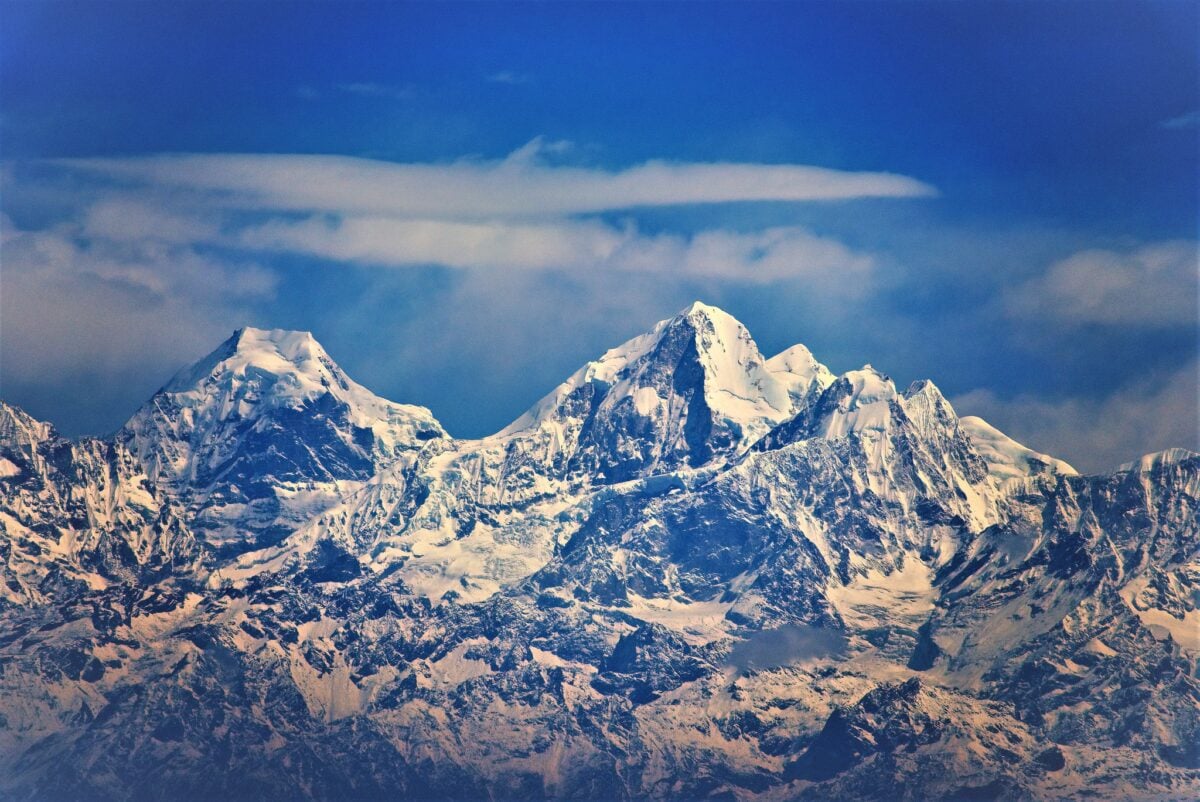
Shishapangma is the lowest of the fourteen 8,000-metre peaks and the only one located entirely within Tibet. It was the last of the fourteen to be first climbed, not because of difficulty but because China kept the region closed to foreign expeditions for years.
A Chinese team finally made the first ascent in 1964. The mountain has been climbed by relatively few people compared to the more accessible Nepali peaks, and its position entirely within Chinese-controlled territory means permit logistics add a layer of complexity that deters some expeditions.
Despite this, it has seen significant tragedies — including the deaths of renowned alpinists Alex Lowe and David Bridges in a 1999 avalanche, a loss that shook the climbing world deeply.
Where Stone Meets Sky

All fourteen 8,000-metre peaks are located in the Himalayas and the Karakoram, a mountain range formed by the collision of the Indian and Eurasian tectonic plates that has been happening for millions of years and is still going on. Everest even increases its height by a few millimeters every year.
Many studies have tried to explain the attraction to these wild and dangerous places, but none of them have satisfied everyone. Even the climbers themselves find it hard to put the motivations behind their passion into words.
It is true that there is danger, and the risk is great. It is also true that suffering will happen.
And yet every season, Mt. Everest, for example, is packed with people who have thought it through and decided the experience is worth the cost. The mountains don’t give any guarantees and maybe that’s exactly the point.
More from Go2Tutors!

- The Romanov Crown Jewels and Their Tragic Fate
- 13 Historical Mysteries That Science Still Can’t Solve
- Famous Hoaxes That Fooled the World for Years
- 15 Child Stars with Tragic Adult Lives
- 16 Famous Jewelry Pieces in History
Like Go2Tutors’s content? Follow us on MSN.