Things We Learned in School But Are Now Useless
School taught us plenty of skills that seemed essential at the time. Teachers insisted we’d need them for the rest of our lives, and we spent hours mastering techniques that felt important.
Fast forward a few decades, and technology has made many of those lessons completely unnecessary. Let’s look at some school staples that have become relics of a different era.
Cursive Handwriting
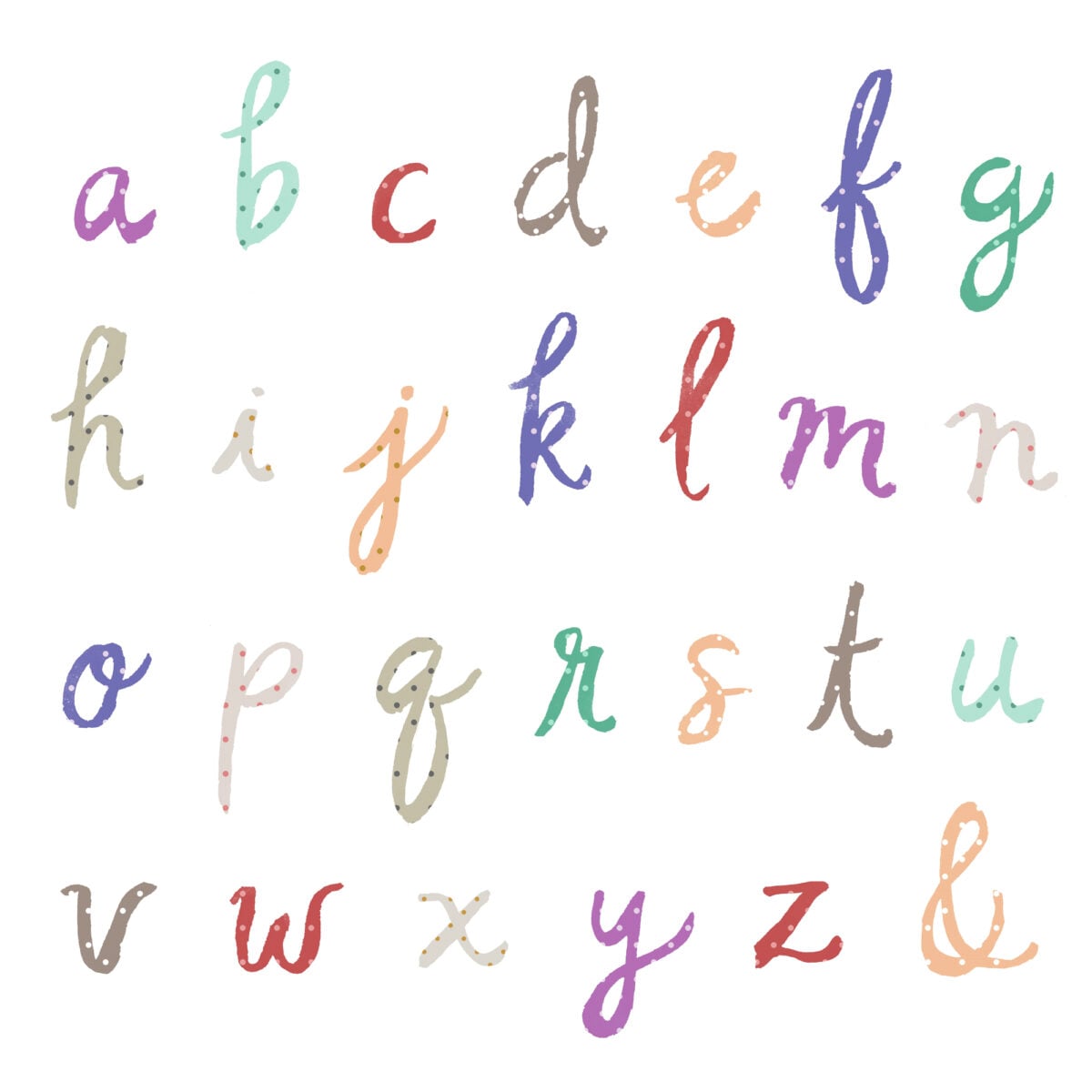
Students once spent entire school years perfecting their cursive letters, looping and connecting each character with precise strokes. Teachers warned that messy cursive would make job applications look unprofessional and that college professors would reject papers written in print.
Now, almost everything gets typed on keyboards or touchscreens, and most people under 30 can barely read cursive, let alone write it. The skill that once defined educated people has become as outdated as quill pens.
Using A Card Catalog

Libraries required students to master the Dewey Decimal System and navigate rows of wooden drawers filled with index cards. Finding a single book meant flipping through hundreds of cards organized by author, title, and subject, often taking 15 minutes just to locate what you needed.
Today, library databases let anyone find any book in seconds with a simple search bar. Those massive card catalog cabinets now sit in antique stores, and younger librarians have never used one in their careers.
Memorizing Phone Numbers

Everyone used to keep mental lists of dozens of phone numbers for friends, family, and important contacts. Forgetting a number meant being completely cut off from that person until you could find a phone book or call directory assistance for help.
Smartphones store thousands of contacts with a single tap, and most people today couldn’t recite more than two or three numbers from memory. The brain space once devoted to remembering phone numbers now holds Netflix passwords instead.
Reading Paper Maps

Road trips required carefully folding and unfolding enormous paper maps that tore at the creases after a few uses. Passengers became navigators, calling out turn-by-turn directions while trying to figure out which tiny line represented the current road.
GPS systems and smartphone apps now provide real-time directions with traffic updates, automatic rerouting, and even warnings about speed traps. Paper maps have become decorative wall art rather than practical tools.
Writing Checks

Schools taught proper check-writing format, including how to spell out dollar amounts in words and keep a balanced checkbook register. Students practiced filling out mock checks for imaginary purchases, learning about routing numbers and endorsements.
Digital payments, credit cards, and apps like Venmo have made paper checks nearly extinct, with many younger people never writing one in their entire lives. Some stores now refuse to accept checks because processing them takes too long.
Using Encyclopedias For Research

Research papers required trips to the library to check out heavy encyclopedia volumes with information that was often years out of date. Students would copy facts by hand onto note cards, spending hours finding information that now appears instantly with a Google search.
Wikipedia and other online resources provide constantly updated information with hyperlinks to related topics. Those 30-volume encyclopedia sets that families spent thousands of dollars on now collect dust in basements.
Diagramming Sentences
English classes devoted weeks to breaking down sentences into subjects, predicates, direct objects, and prepositional phrases with complex visual diagrams. Teachers insisted this skill was crucial for understanding grammar and becoming a good writer.
Most professional writers today have completely forgotten how to diagram sentences and rely on grammar-checking software instead. The elaborate tree diagrams that once filled chalkboards have vanished from modern classrooms.
Typing On Actual Typewriters

Typing classes required students to learn on mechanical typewriters that jammed if you typed too fast and required correction fluid for every mistake. The loud clacking of keys filled computer labs, and students had to master the exact finger positions without looking at the keyboard.
Modern keyboards are silent, forgiving, and equipped with backspace keys that make corrections instant. Typewriters now appear only in vintage shops and nostalgic movies about journalists.
Memorizing Multiplication Tables Beyond Basics
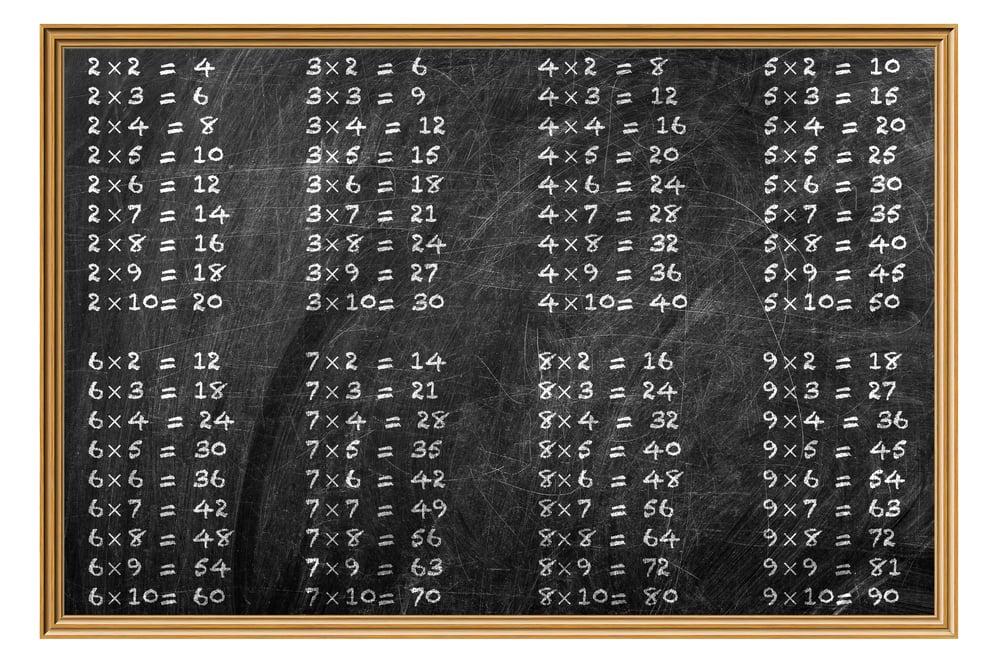
Teachers made students memorize multiplication facts all the way up to 12 times 12, insisting calculators wouldn’t always be available. Students spent hours with flashcards, drilling themselves on products like 7 times 8 and 9 times 6 until the answers became automatic.
Every smartphone now has a calculator app that handles complex math in milliseconds, making mental multiplication largely unnecessary for daily life. The mental gymnastics once required for grocery shopping have been replaced by apps that calculate totals and discounts automatically.
Learning To Use A Rotary Phone

Schools actually taught the proper technique for dialing a rotary phone, including how to wait for the dial to return before starting the next number. Making a call with several nines or zeros in the number took forever because each rotation back to the starting position seemed to last an eternity.
Touch-tone phones replaced rotary dials decades ago, and now even physical phones are disappearing in favor of smartphones. Younger generations see rotary phones as bizarre antiques that look impossibly complicated to operate.
Perfecting Penmanship Drills
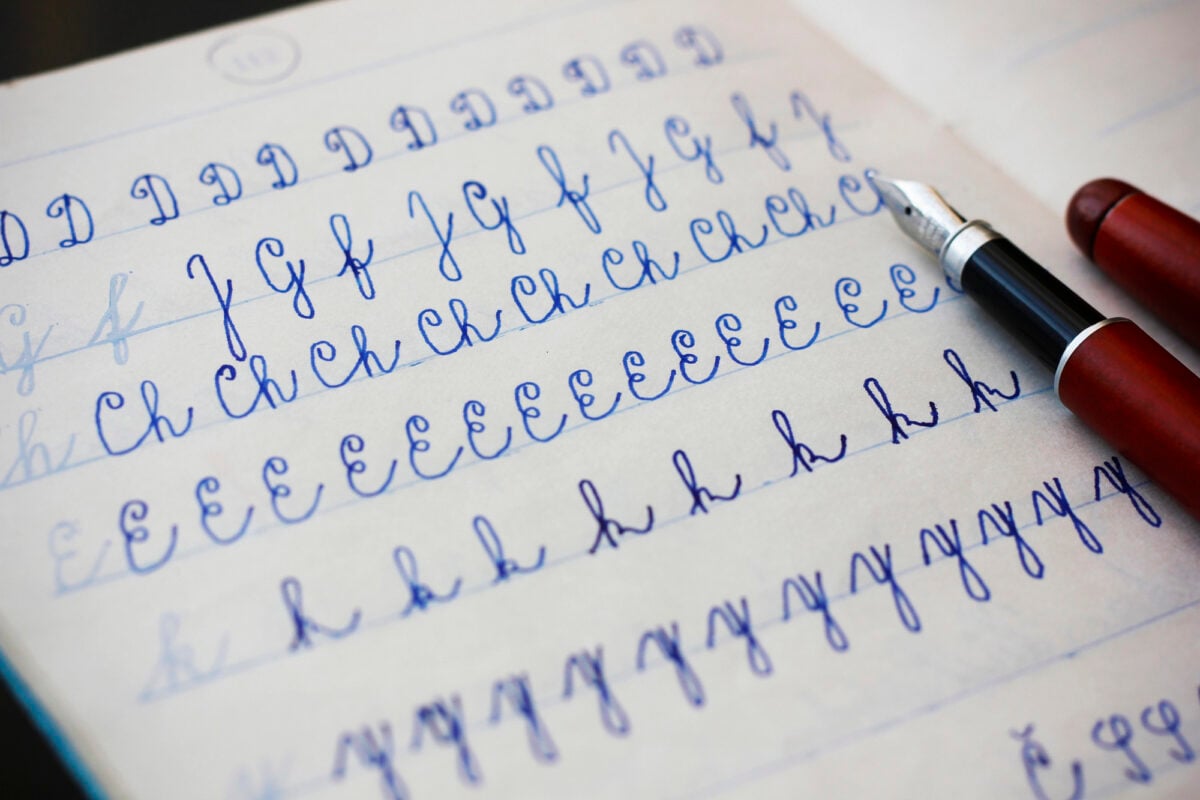
Handwriting classes forced students to practice writing the same letters over and over on lined paper with specific spacing requirements. Teachers graded assignments partly on how neat the handwriting looked, and messy writing could lower an otherwise perfect paper’s score.
Digital communication has made handwriting almost irrelevant except for signatures, and even those are often done electronically now. The careful letter formation that once took up hours of school time has no practical application in a world of keyboards and voice-to-text.
Using A Slide Rule For Calculations

Science and math students had to learn slide rules for complex calculations before electronic calculators became affordable and widely available. These mechanical calculating devices required understanding logarithmic scales and precise alignment of sliding pieces to get accurate answers.
The skills took months to master and became completely obsolete almost overnight when pocket calculators hit the market. Most people today have never seen a slide rule outside of a museum display about outdated technology.
Memorizing State Capitals

School lessons once made kids learn every U.S. state capital, usually by doing quiz after quiz under a ticking clock. Because the pressure never seemed to stop, many found it exhausting just keeping track.
Still, educators insisted knowing these details mattered for grasping how America’s regions connect with news today. Yet outside classrooms, nearly everyone loses hold of those facts fast – years pass and memories fade.
Now, answers pop up instantly with a quick search online whenever someone needs them. Instead of drilling that Montpelier runs Vermont, time might have been used on things people truly apply later.
Balancing A Physical Checkbook Register

Nowhere near as common these days are the tiny ledger books once handed out by banks. Students used to copy each purchase into them, one by one, using pen and paper.
A single number written wrong meant everything after became unreliable. Fixing it often took hours flipping back through old pages just to spot where things went sideways.
Digital accounts display current totals instantly, no adding required. Updates happen on their own, moment by moment, without any effort at all.
Paper logs sit unused because they simply do not match up with how money moves now.
Using Microfiche Readers
Flipping through reams of film once defined research work, frame by frame on bulky devices. Tiny prints from aged newsprint filled the screen, often smudged or too faint to catch at first glance.
Each hunt for a single article could stretch into hours, crawling past countless blurred headlines. Today, that effort shrinks to a few keystrokes – search bars pull up exact matches in seconds.
Old cabinets stand empty where rows of film used to live, stacked neatly in drawers long since closed. Machines gather dust now, tucked behind shelves, their purpose faded like the ink they once revealed.
What Replaced The Old Ways

Not long ago, those old techniques vanished quietly, slipping out of reach before anyone really paid attention. Machines took their place – faster, quieter, doing the work without mistakes.
Homes lost the gadgets first, then classrooms followed, leaving only questions where knowledge used to live. Learning shifted toward screens, logic, and checking sources rather than repeating numbers or practicing hand-driven tasks.
It wasn’t a sudden switch, more like a slow fade, until one day the past felt foreign. Now few recall when such skills mattered at all.
More from Go2Tutors!

- The Romanov Crown Jewels and Their Tragic Fate
- 13 Historical Mysteries That Science Still Can’t Solve
- Famous Hoaxes That Fooled the World for Years
- 15 Child Stars with Tragic Adult Lives
- 16 Famous Jewelry Pieces in History
Like Go2Tutors’s content? Follow us on MSN.



