Weirdest Things Found in Deep-Sea Dives
The ocean covers more than 70 percent of our planet, yet humans have explored less than five percent of its depths. That means there’s a whole lot of mystery lurking down there in the dark.
Every time scientists send cameras or submarines into the deep, they seem to stumble across something that makes them scratch their heads or gasp in amazement. Deep-sea exploration has revealed some truly bizarre discoveries over the years, from ancient relics to creatures that look like they belong in a science fiction movie.
Here is a list of the weirdest things ever found during deep-sea dives.
Mysterious Golden Orb

In August 2023, scientists exploring the Gulf of Alaska at nearly two miles deep spotted something that left them completely baffled. A smooth, golden, dome-shaped object about four inches across was stuck tight to a rock, looking like something out of a fairytale.
Even after bringing it to the surface and examining it in their lab, researchers could only confirm it was ‘biological in origin’ but had no clue what species created it. Some speculated it might be an egg casing, while others thought it could represent an entirely new species or an unknown life stage of an existing creature.
Underwater Crop Circles

Back in 1995, divers off the coast of Japan discovered intricate geometric patterns on the sandy ocean floor that looked eerily similar to crop circles. These formations, measuring about seven feet across, remained a mystery for nearly two decades until scientists finally caught the culprit in action.
Turns out, tiny male pufferfish create these elaborate designs to attract mates. The five-inch fish spend seven to nine days using their fins to carve valleys and ridges into the sand, even decorating the circles with seashells as a finishing touch.
The Titanic Wreckage

When oceanographer Robert Ballard discovered the Titanic in September 1985, he found the legendary ship resting more than 12,400 feet below the surface of the Atlantic Ocean. The wreck lies in two major pieces, with the bow section remarkably intact while the stern is severely mangled from the impact.
What really caught researchers off guard were the rusticles covering nearly every surface—rust-colored, stalactite-like formations created by iron-eating bacteria that are slowly consuming the entire ship.
Apollo 11 Rocket Engines

Amazon founder Jeff Bezos funded a private expedition that recovered massive F-1 rocket engines from the Atlantic Ocean floor in 2013, more than 40 years after they splashed down. These behemoths, which stood over 18 feet tall and generated 1.5 million pounds of thrust, had been sitting at a depth of nearly 14,000 feet since they powered Apollo missions to the moon.
Conservators later identified serial numbers that confirmed at least one engine came from Apollo 11, the mission that put the first humans on the lunar surface.
Giant Isopods
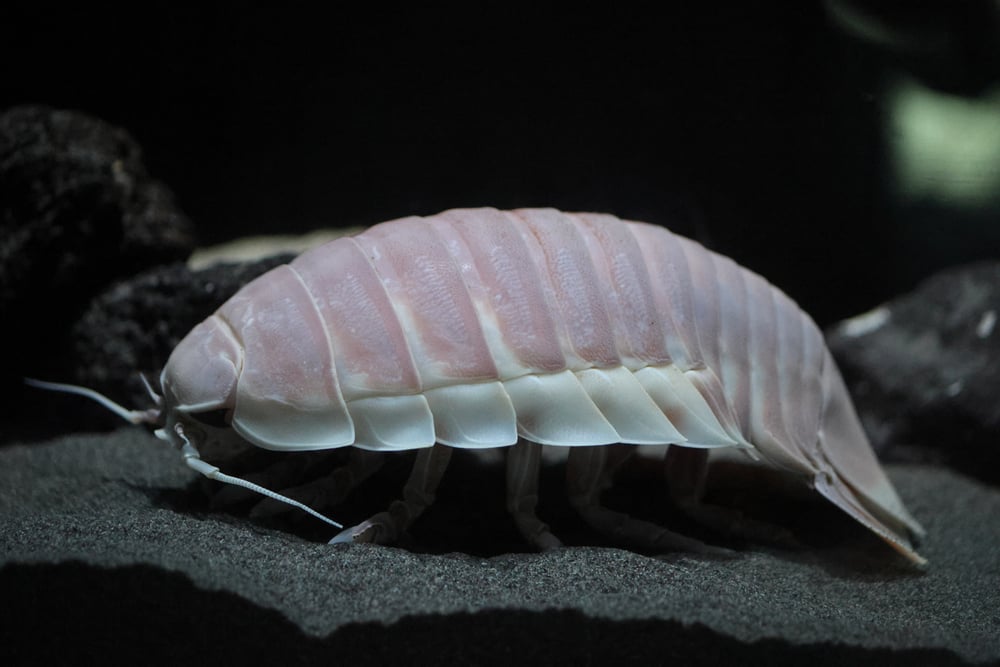
These enormous crustaceans look like something that should have gone extinct millions of years ago. Giant isopods are basically supersized versions of the roly-poly bugs you find in your garden, except these deep-sea scavengers can grow up to 2.5 feet long.
They patrol the ocean floor acting as nature’s cleanup crew, feeding on dead animals that sink from above. Their alien-like appearance and considerable size make them one of the ocean’s most unsettling residents.
Death-Orb Carnivorous Sponge
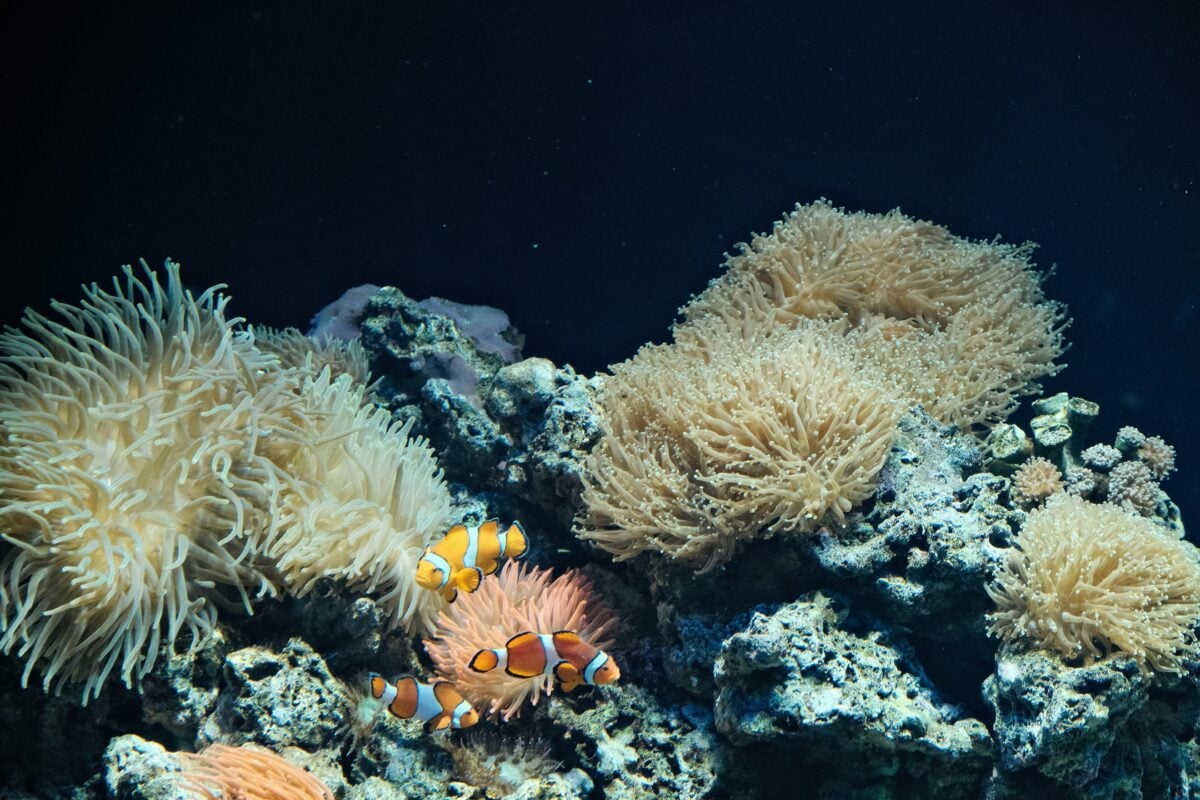
Scientists exploring the Southern Ocean near Antarctica discovered a carnivorous sponge so bizarre they dubbed it the ‘death-orb sponge.’ Unlike typical sponges that filter water for nutrients, this species actively traps and consumes small animals that get too close to its surface.
The discovery was part of an expedition that found 30 previously unknown deep-sea species in one of the most isolated and least-explored regions on Earth. This particular sponge represents just how little we understand about what thrives in the planet’s coldest waters.
E.T. Sponge

During a 2016 expedition in Hawaiian waters, scientists spotted a strange sponge perched on a rocky outcrop about two miles down. The creature looked so otherworldly that researchers immediately nicknamed it the ‘E.T. sponge,’ and the name stuck even after it was formally described as Advhena magnifica, which literally translates to ‘magnificent alien’ in Latin.
The sponge’s unusual structure and appearance earned it a spot on the World Register of Marine Species’ top-ten marine species list for 2020.
Plastic Bag in the Mariana Trench

In 2018, scientists made a depressing discovery while reviewing footage from the Mariana Trench, the deepest point in all the world’s oceans. A common grocery store plastic bag was spotted resting on the seafloor nearly seven miles down.
This finding drove home an uncomfortable truth about how far human pollution has spread—if plastic debris can reach the most remote depths of the ocean, nowhere on Earth remains untouched by our waste.
Underwater River

Divers exploring Cenote Angelita Cave in Mexico encounter what looks like a flowing river beneath the water’s surface. This surreal optical illusion occurs when a thick cloud of hydrogen sulfide, formed by decomposing organic material, settles between layers of fresh and salt water.
The resulting halocline creates such a distinct separation that divers literally appear to be swimming through one body of water and then descending into another river below it.
Ancient Statue of Christ
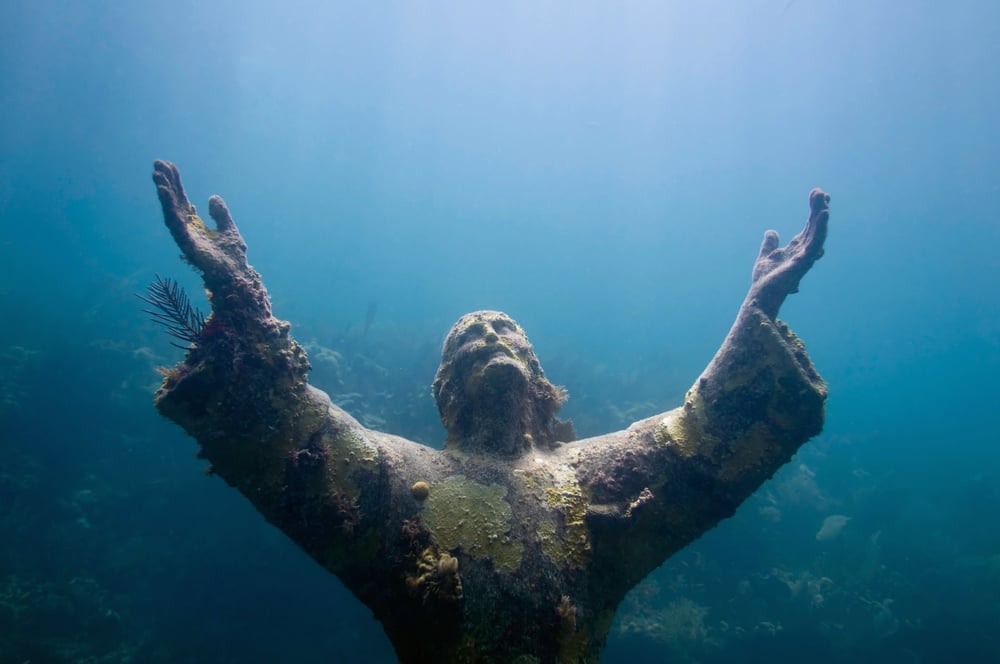
Off the coast of the Italian Riviera, divers encounter a bronze statue of Jesus Christ standing on the Mediterranean seabed with arms raised upward. This sculpture wasn’t lost or sunken by accident—it was deliberately placed there in 1954 as a memorial to Italian scuba diver Dario Gonzatti, who died while diving in that exact location.
Over the decades, the statue has become completely covered with marine life, giving Christ an otherworldly, organic appearance that makes the underwater shrine even more haunting.
Underwater City of Baia

Just off the coast of Naples, Italy, lies one of the world’s only underwater archaeological parks where ancient Roman ruins rest beneath the waves. The city of Baia was once a glamorous resort town for wealthy Romans, but volcanic activity caused much of it to sink into the sea.
Divers can now swim through remarkably preserved streets, villas, and mosaics that have been submerged for centuries, offering a ghostly glimpse into daily life during the Roman Empire.
WWII Gas Masks and War Relics

Deep-sea divers occasionally stumble across eerie reminders of past conflicts scattered across the ocean floor. Gas masks, military trucks, and crashed warplanes from World War II still litter certain regions where intense fighting took place.
Finding a gas mask staring up at you from the murky depths is the kind of experience that tends to stick with divers long after they surface.
Ghost-like Octopod

At the beginning of a 2016 expedition near Hawaii, scientists spotted a small, pale octopod unlike anything they’d seen before. The creature was observed at a depth of more than 14,000 feet, making it the deepest sighting of this type of octopod on record.
Its ghostly, translucent appearance gave it an ethereal quality that mesmerized researchers, though the primary purpose of that particular dive was geological data collection rather than searching for new species.
Pockmark Field
Off the coast of Big Sur, California, scientists discovered a field of more than 5,200 circular depressions on the ocean floor covering an area comparable to the size of Los Angeles. These pockmarks average about 574 feet across and 16 feet deep, creating a landscape that looks disturbingly unnatural.
Researchers now believe sediment gravity flows, similar to underwater avalanches, created and maintained these features over hundreds of thousands of years, though the sheer scale and uniformity of the formations still unsettle anyone who sees them.
Mermaid’s Purses by the Million

When scientists explored an ancient underwater volcano off Canada’s coast in 2023, they found it still active and covered with up to one million egg cases. Pacific white skates had turned the seamount into a massive nursery, laying their rectangular-shaped eggs—nicknamed ‘mermaid’s purses’—all across the volcanic rock.
The warm, nutrient-rich water spouting from the volcano creates perfect conditions for the eggs to develop, and once they hatch, the young skates can grow in this protected habitat before venturing into the wider ocean.
Pristine Coral Reefs
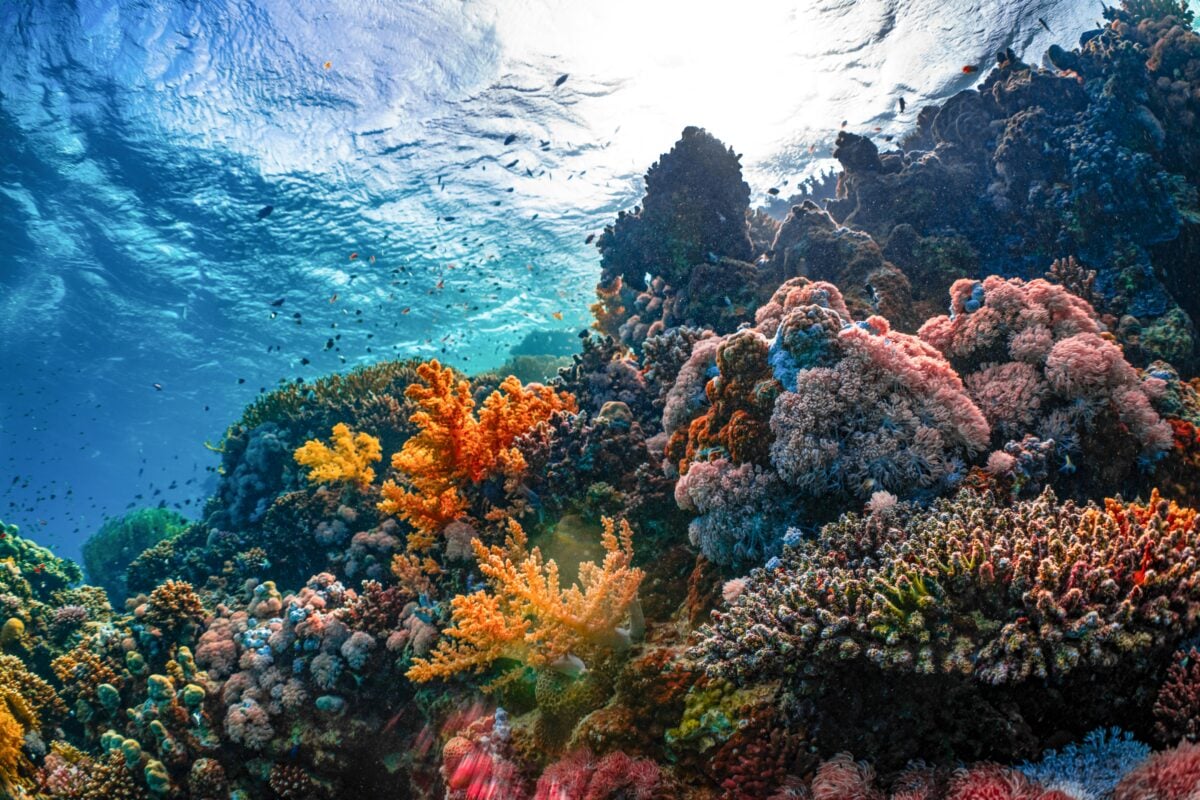
During a 30-day expedition near the Galápagos Islands, ocean explorers discovered a pair of deep-sea coral reefs that had somehow escaped human notice despite being more than 2,600 feet long. These reefs sit around 1,000 feet beneath the surface, much deeper than most coral formations, and appeared to be thriving in near-perfect condition.
The discovery suggested that there might be many more of these hidden ecosystems in waters we simply haven’t explored yet.
Chemosynthetic Communities in Hadal Trenches
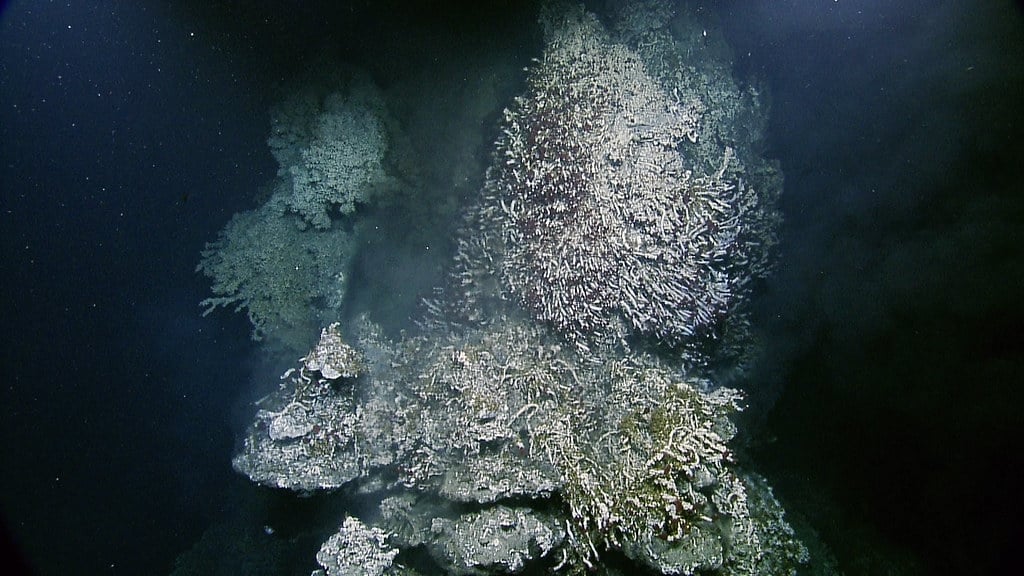
In 2025, scientists exploring trenches between Russia and Alaska at depths exceeding six miles discovered thriving communities of life that survive without any sunlight whatsoever. These ecosystems rely on chemosynthesis, where organisms create energy from gases seeping through cracks in the ocean floor rather than from the sun.
The discovery revealed dense clusters of tube worms, clams, and other creatures living in conditions that would seem absolutely impossible for complex life, fundamentally changing our understanding of where life can exist on Earth.
What the Deep Still Guards

These discoveries span from the tragic to the awe-inspiring, from ancient history to distressing evidence of modern pollution. Each expedition into the deep reveals that the ocean floor holds secrets we’re only beginning to understand, whether they’re bizarre creatures that rewrite biology textbooks or forgotten artifacts from humanity’s past.
The fact that we’ve barely scratched the surface of ocean exploration means countless more mysteries are waiting in the depths. Perhaps the most unsettling realization is that the deep sea remains more alien and less mapped than the surface of Mars, despite being right here beneath the waves of our own planet.
More from Go2Tutors!

- The Romanov Crown Jewels and Their Tragic Fate
- 13 Historical Mysteries That Science Still Can’t Solve
- Famous Hoaxes That Fooled the World for Years
- 15 Child Stars with Tragic Adult Lives
- 16 Famous Jewelry Pieces in History
Like Go2Tutors’s content? Follow us on MSN.



