What Makes Certain Vintage Lunch Boxes Command Hundreds at Auction
There’s something quietly stubborn about a metal lunch box. It was made to carry a sandwich and maybe a thermos of soup — nothing more — and yet decades later, collectors are bidding against each other at auction houses, sometimes dropping four figures on a piece of lithographed tin that once sat under a cafeteria seat.
The ones that survive in decent condition carry something with them: a specific kind of nostalgia that doesn’t just belong to the person who owned it, but to a whole era. Understanding why certain lunch boxes pull serious money while others end up in a dollar bin at a yard sale comes down to a set of factors that are more deliberate than they might seem.
The Condition of the Lithography
Condition is everything. A lunch box with faded, chipped, or scratched lithography is worth a fraction of what a clean example commands — sometimes literally pennies on the dollar compared to a near-mint piece.
Collectors grade these the same way coin dealers grade silver: unforgiving, precise, and largely without sympathy for sentimental value.
The Original Thermos

A lunch box without its matching thermos is like a suit missing the jacket — technically functional, materially diminished. Thermoses were made to specific boxes and carried the same artwork, and they break far more often than the tin itself, which makes surviving matched sets genuinely scarce.
At auction, a complete set can fetch double what the box alone would pull.
The Year It Was Manufactured

The years between roughly 1950 and 1970 represent the golden window of American lunch box production — when lithography was at its most vivid, character licensing was still new enough to feel exciting, and the cultural references packed onto 8 inches of tin were bracingly specific to their moment. A box from 1954 carries a different weight than one from 1982, not just culturally but materially: earlier boxes used heavier-gauge steel that ages more gracefully than the thinner metal that came later.
So the manufacturing year isn’t trivia — it’s one of the first things a serious buyer asks about.
The Licensing Deal Behind the Artwork

The lunch box licensing business was a surprisingly sharp commercial operation, and the artwork on any given box traces directly back to a studio or network that approved it. Boxes tied to properties with short broadcast windows — a TV show that ran one season in 1966, say — are automatically scarcer than those tied to long-running franchises, and that scarcity gets baked into the price immediately.
It’s not just the image that matters: it’s the contractual history behind why that image existed at all.
Character Rarity and Cultural Specificity
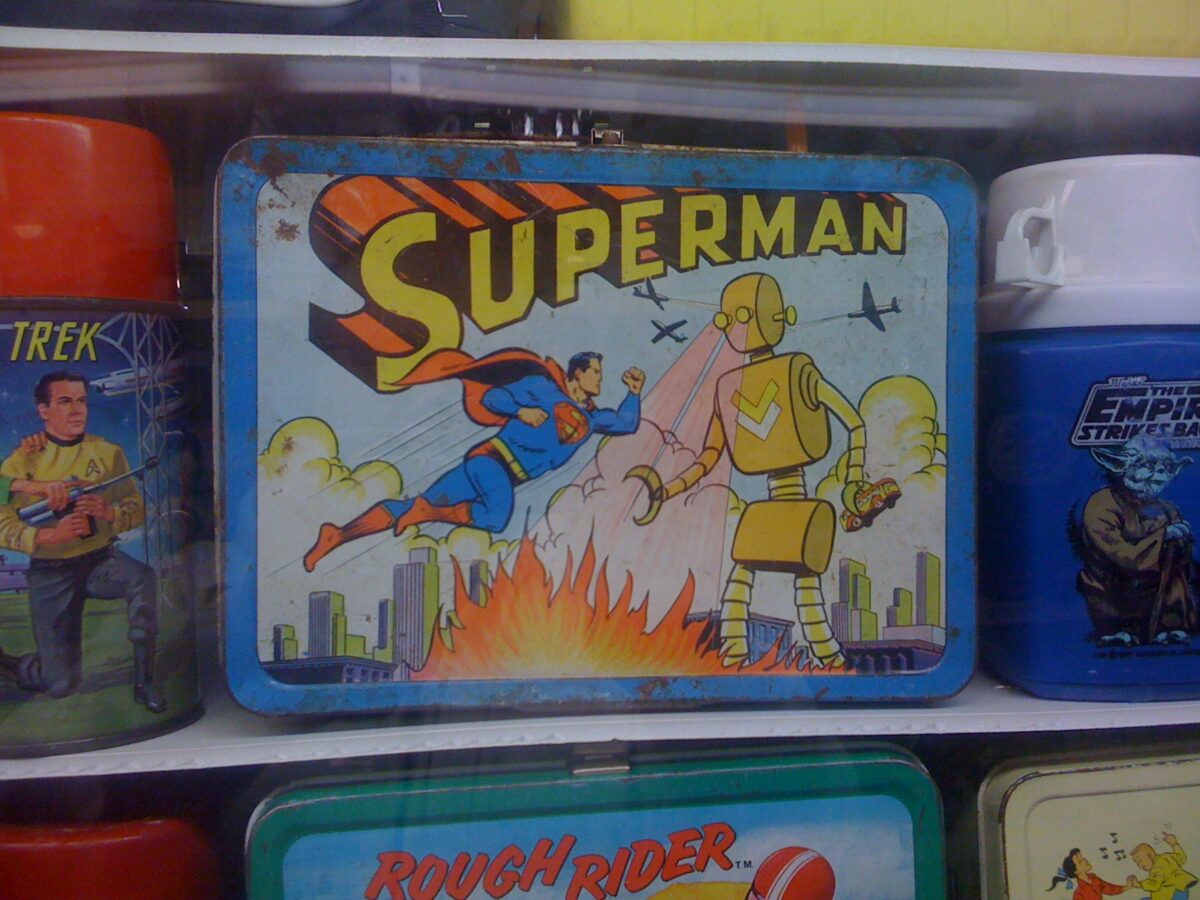
Some characters aged into icons. Others vanished so completely that most people under fifty have no idea they ever existed — and that obscurity, paradoxically, is what drives collector interest to irrational heights.
A lunch box featuring a character from a forgotten regional TV show or a one-season Saturday morning cartoon is rarer than a Superman box by pure production volume, and rarity is the one variable that nearly always wins in a bidding room.
The Manufacturer’s Mark
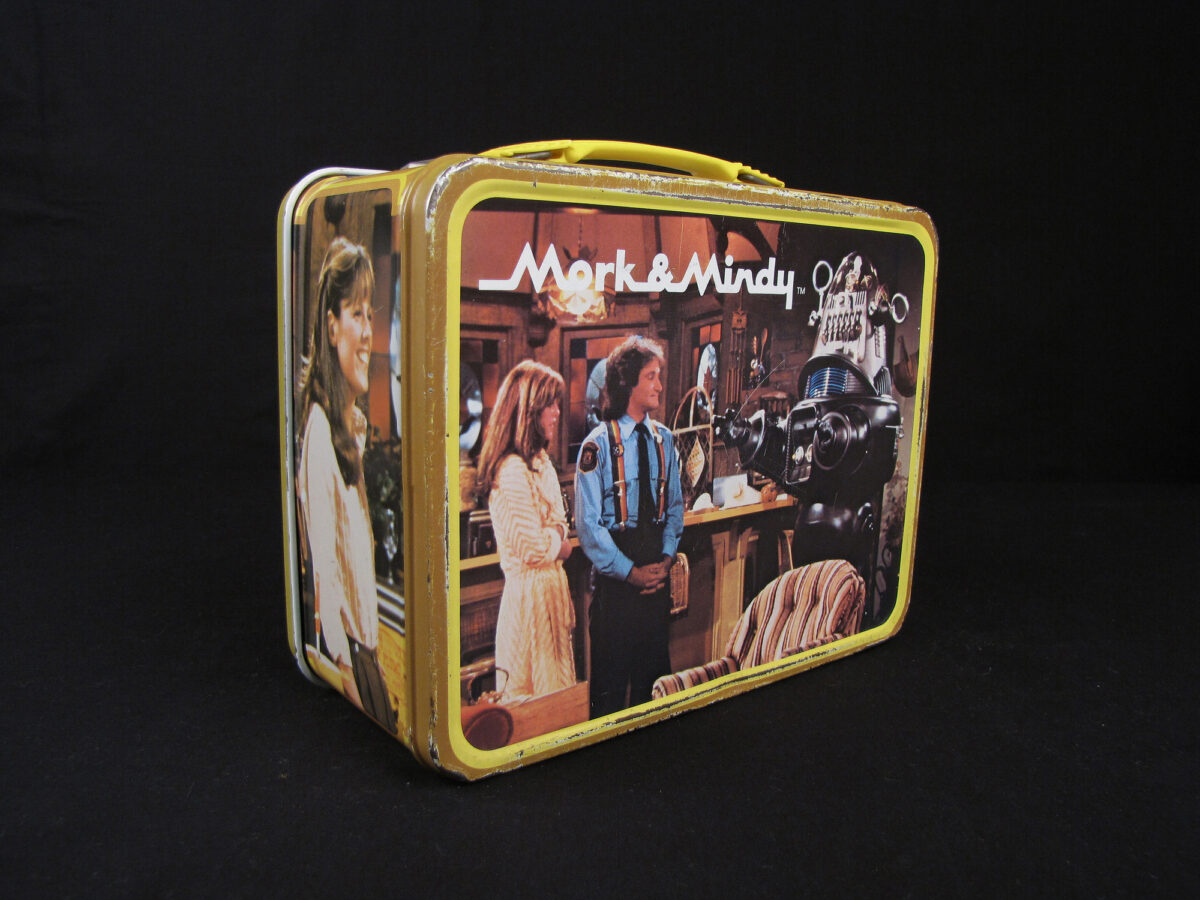
Not all lunch boxes were made equal, and the name stamped inside the lid matters more than most casual observers would expect. American Thermos, Aladdin Industries, and King-Seeley Thermos were the dominant manufacturers of the classic era, and boxes bearing their marks carry a baseline of authenticity that buyers trust.
A box without a clear manufacturer’s mark — or worse, one with a mark that doesn’t match known production records — gets discounted immediately, which is fair enough given how many reproductions have circulated since the 1990s.
The Dome Top versus Flat Top Debate
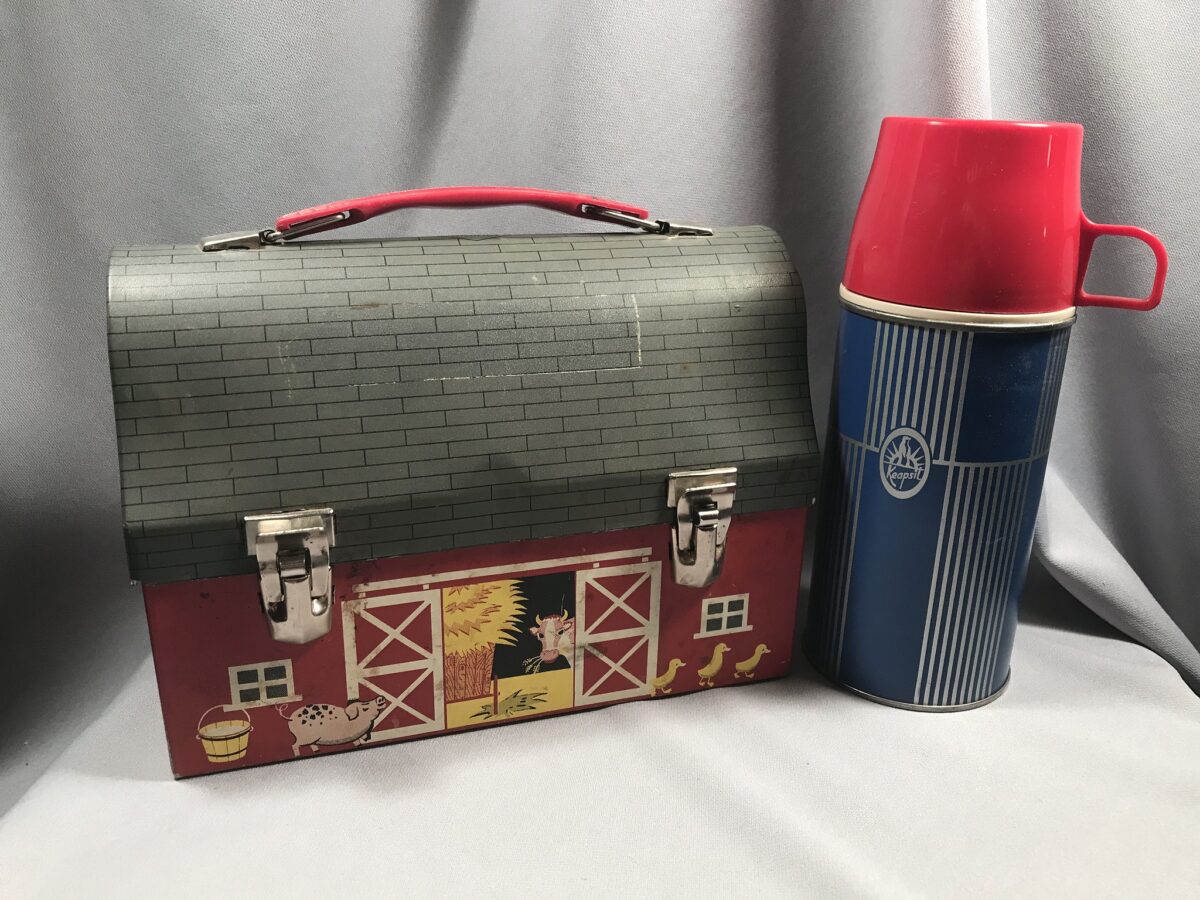
The dome-top lunch box — that rounded, bread-loaf shape that became associated with blue-collar workers and then got repurposed for children’s character boxes — commands a premium over flat-top versions for reasons that are partly aesthetic and partly historical. Dome tops were structurally more practical for thermoses and are associated with an earlier, more considered period of design.
Collectors have preferences here the way furniture people have preferences about joinery: strong, specific, and not particularly open to counterargument.
TV Westerns as a Collector Category
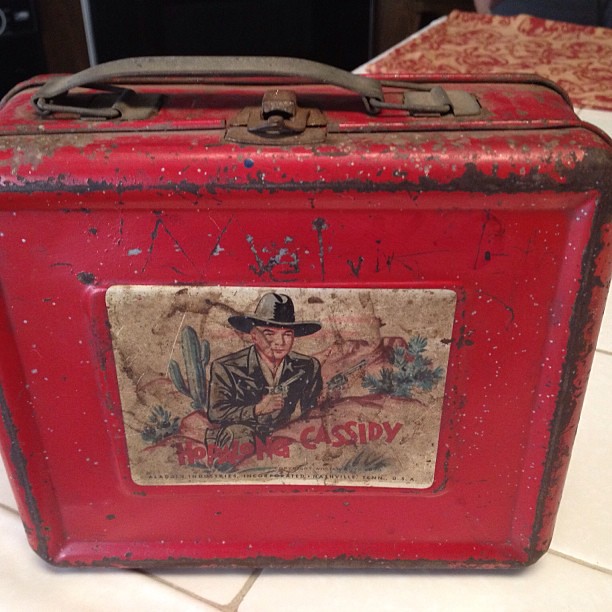
The western-themed lunch box occupies its own corner of the market, and it’s a devoted one. Shows like Hopalong Cassidy, Bonanza, and Have Gun – Will Travel produced some of the most visually striking boxes of the 1950s and 60s, with lithography that treated tin like a small canvas — horses rendered in motion, desert reds and burnt ochres that still hold their color after seven decades.
The Hopalong Cassidy box from 1950 is widely considered the first mass-produced character lunch box, which gives it a historical status that no amount of condition issues can entirely erase.
The Space Race Era Boxes
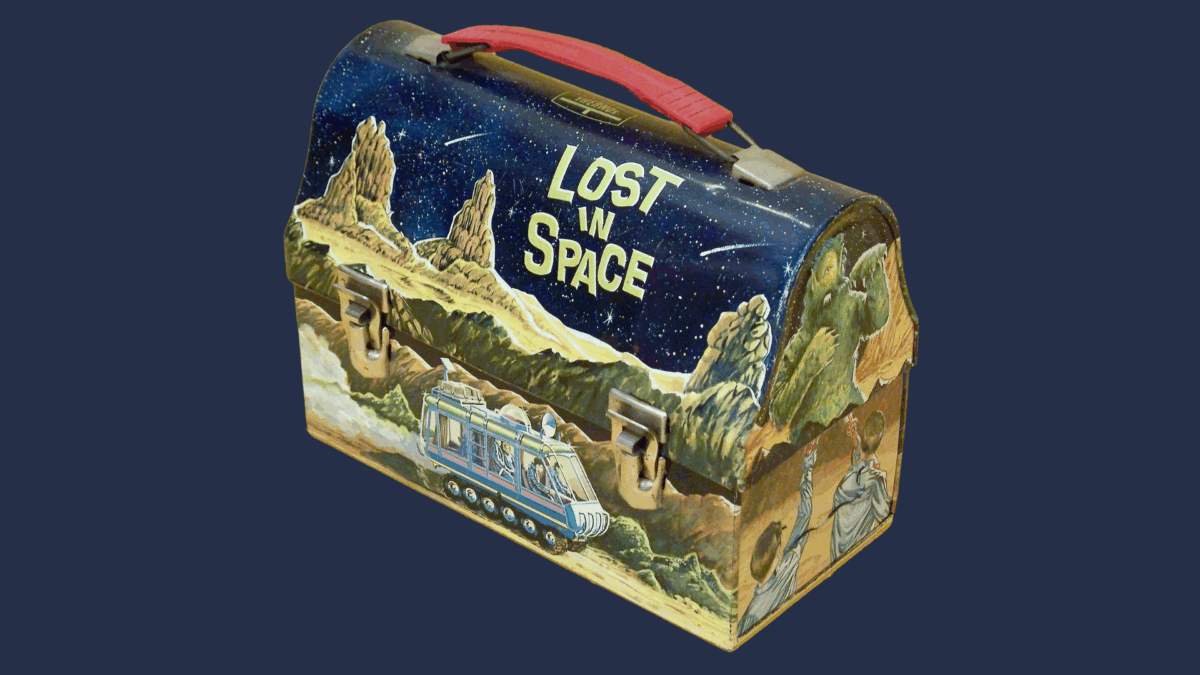
A lunch box from 1957 to 1969 that depicts rockets, astronauts, or space exploration carries the compressed excitement of an entire national mood inside its lithography. These boxes weren’t just merchandise — they were artifacts of a moment when Americans genuinely believed the future was happening right now, this week, on a launchpad in Florida.
That specific intensity reads through the artwork in a way that later, more ironic space-themed products simply don’t replicate.
First-Year Production Runs
When a new character license hit the market, the first-year production run was typically the smallest — manufacturers were cautious about quantities until they knew demand. Those first-year boxes are the ones that show up in auction records with the highest prices, sitting next to near-identical boxes from the following year that go for a quarter of the amount.
The difference isn’t visible to the eye; it lives entirely in the production date, which is why provenance documentation matters so much in this market.
Crossover Appeal and Multiple Collector Communities
The most valuable lunch boxes don’t just attract lunch box collectors — they pull in people chasing space memorabilia, TV history, animation cels, advertising ephemera, and mid-century design objects simultaneously. When a single item sits at the intersection of five different collecting communities, the bidding gets competitive in a way that a niche item simply can’t replicate.
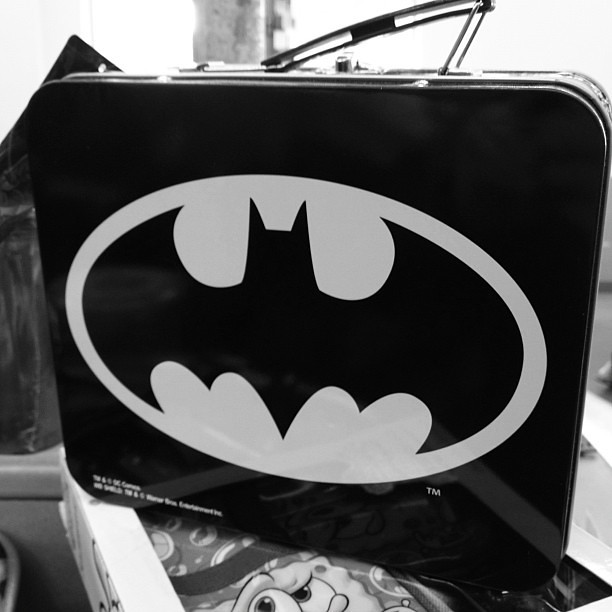
A 1967 Batman lunch box isn’t just a lunch box: it’s a Batman collectible, a 1960s pop art object, and a piece of licensing history all at once, and every one of those communities sends a representative to the auction.
Storage and Provenance
A lunch box that spent fifty years in a climate-controlled attic in rural Ohio is a different object than one that sat in a garage through twenty Midwestern winters. Provenance — where it’s been, who owned it, how it was stored — shapes condition in ways that are immediately visible under good light.
Boxes that arrive with original purchase receipts, family photographs showing the item in use, or documented estate sale origins command a premium that reflects the confidence buyers feel about what they’re getting.
The Reproductions Problem
Reproductions entered the market in volume during the 1990s, and they were good enough to fool casual buyers who relied on general appearance rather than material specifics. The steel gauge is wrong, the lithography colors are slightly off, and the interior seams don’t match original manufacturing tolerances — but you have to know what you’re looking for.
This problem permanently elevated the status of professionally authenticated pieces, because the alternative is spending serious money on something that came off a press in 1997.
The Role of Major Auction Houses
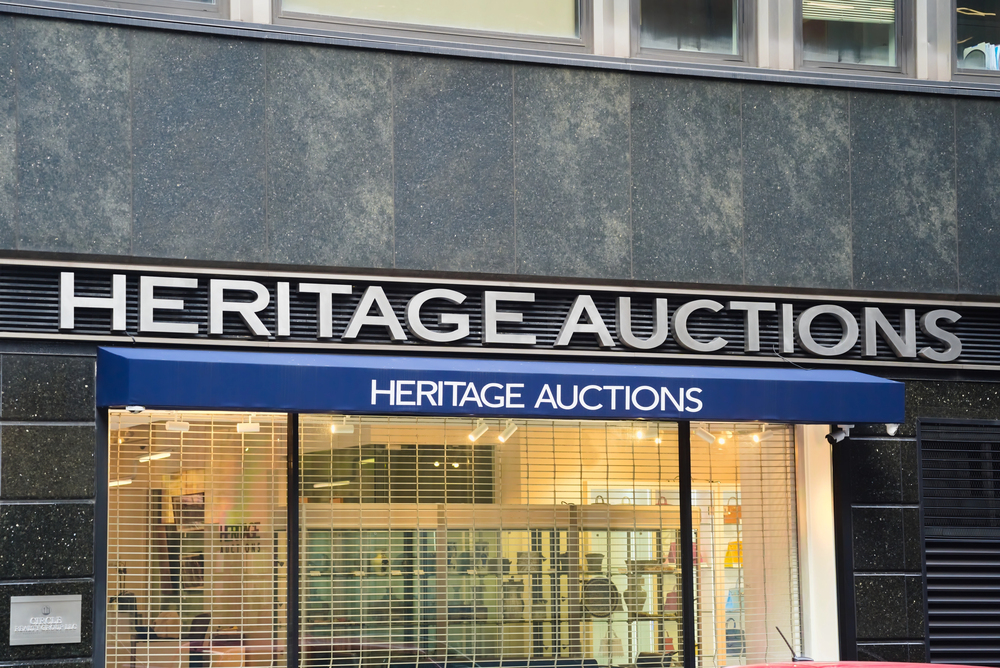
When Heritage Auctions or Morphy Auctions puts a lunch box in a dedicated pop culture sale, the legitimacy that comes with the catalog listing does measurable work on the final price. These houses authenticate, photograph, and describe the item in a context that signals seriousness, which draws serious buyers — and serious buyers drive serious prices.
A box that sold for $80 at a flea market in 1995 can legitimately appear in a Heritage catalog twenty years later with a $600 estimate, and that’s not inflation alone: it’s the authentication premium.
The Emotional Physics of Nostalgia
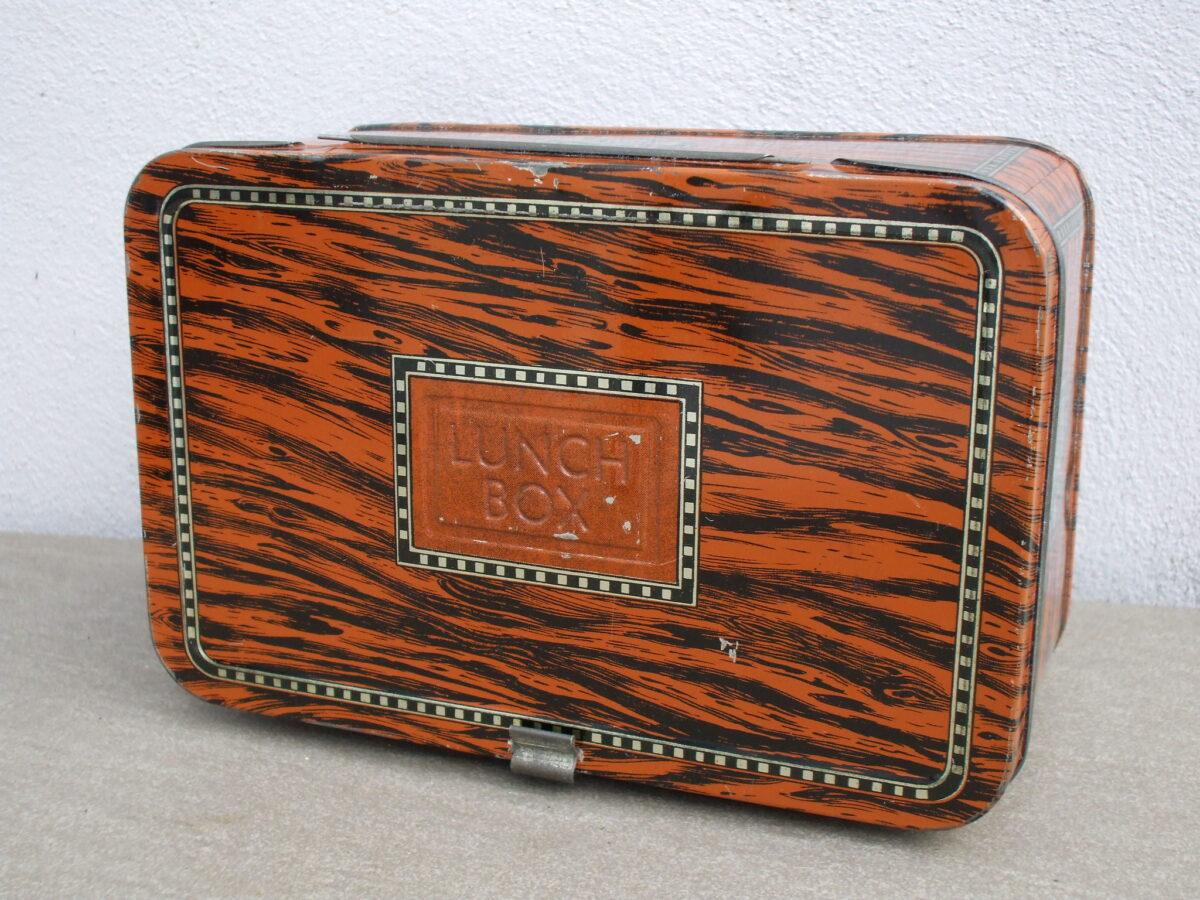
Nostalgia is not a gentle force. It operates with a kind of stubborn gravity that pulls grown adults toward objects they haven’t thought about in thirty years, and it doesn’t particularly care whether the resulting purchase is rational. The collectors who spend $400 on a 1963 Jetsons lunch box aren’t making a purely financial calculation — they’re buying back a specific feeling attached to a specific age, and that transaction is immune to most market logic.
Which is, to be fair, exactly what makes this category so consistently interesting at auction.
When Rarity and Condition Align
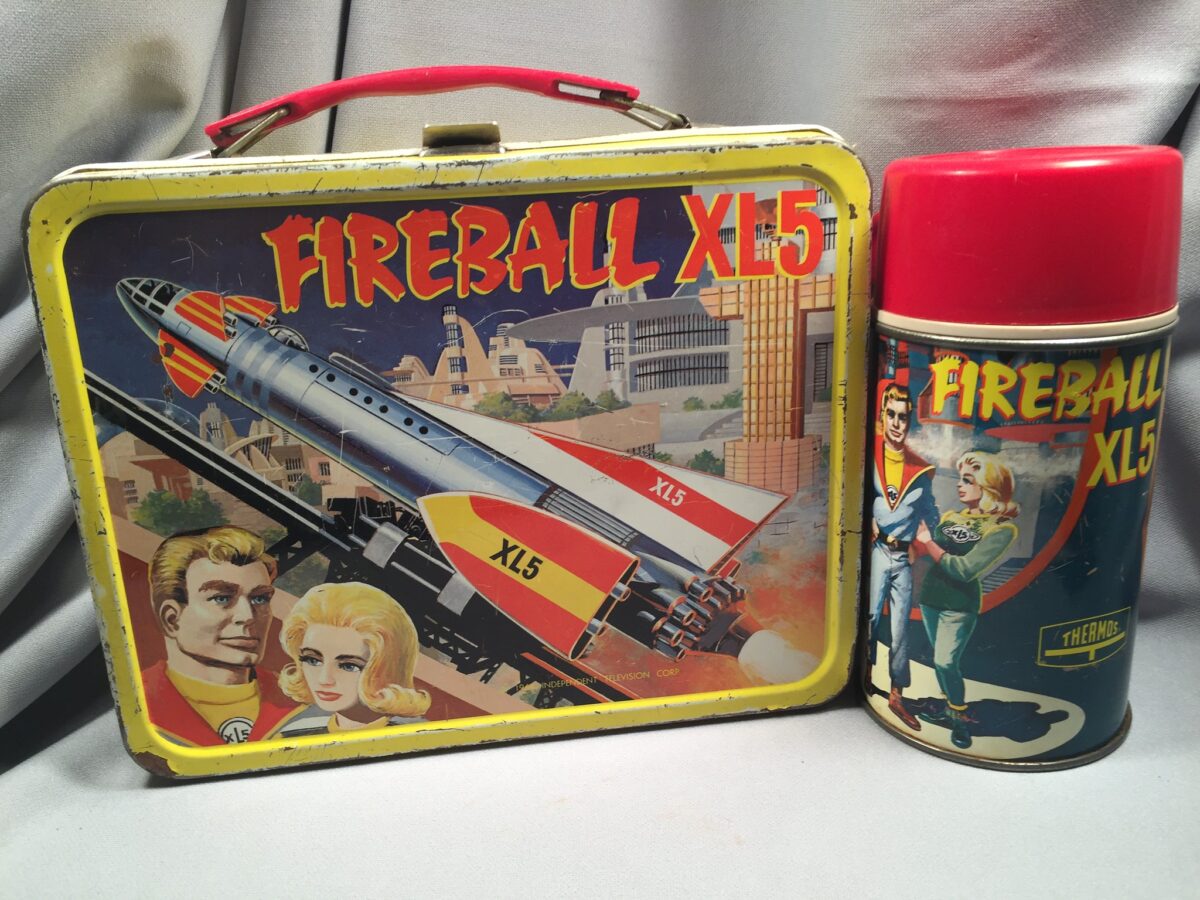
The highest prices in the vintage lunch box market happen when a genuinely scarce item — limited production run, short-lived license, unusual regional distribution — also happens to survive in exceptional condition. These two factors don’t often appear together, because the same cultural obscurity that makes a box rare also meant fewer people thought it was worth preserving carefully.
When they do align, the result is the kind of auction record that gets cited in price guides for the next decade.
The Thermos Brand Paradox
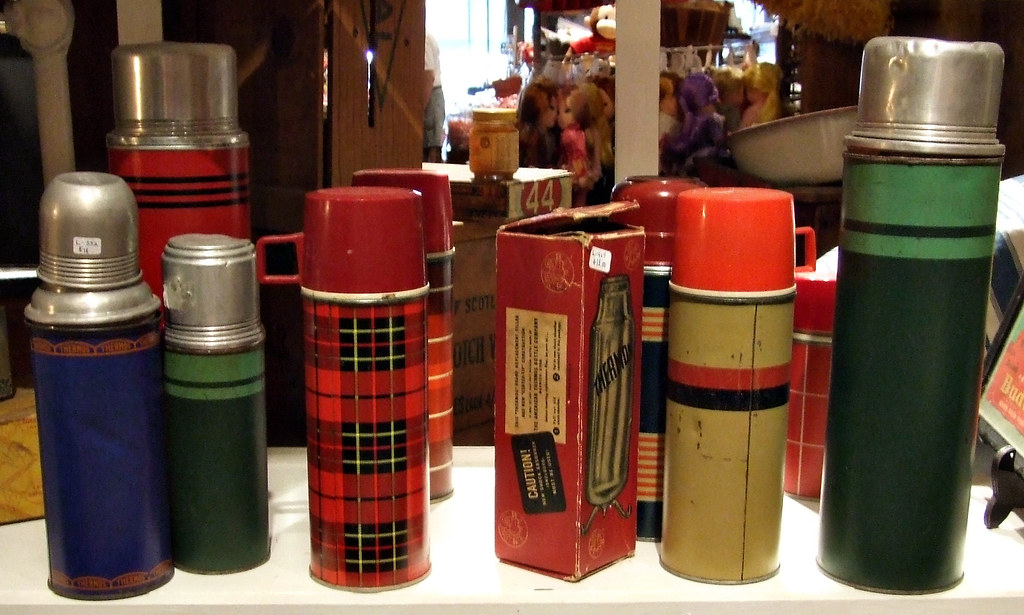
The name “Thermos” is technically a genericized trademark — it entered common language as a word for any vacuum-insulated container — but in the lunch box world, a bottle marked with the original Thermos brand carries specific collector value that generic contemporaries don’t. Collectors are more exacting about brand identity than the general public tends to assume, and that precision extends to every component of the set.
It’s a small distinction that shows up as a real dollar difference at auction.
The Plastic Transition and What It Killed
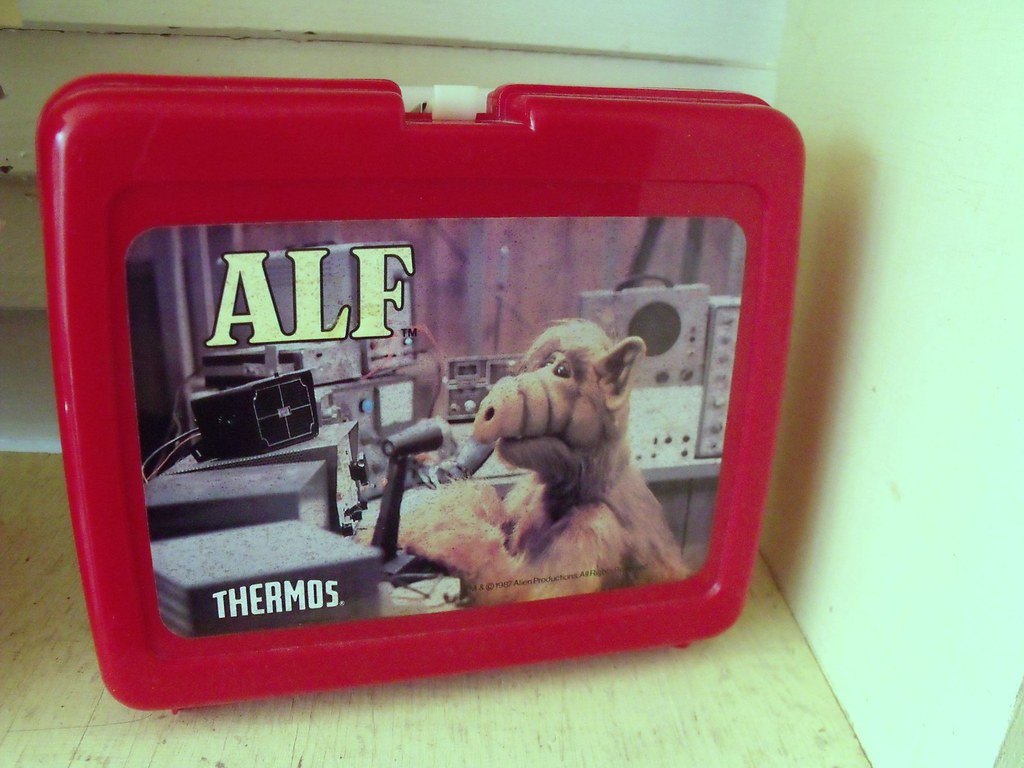
Somewhere around the mid-1980s, metal gave way to plastic as the dominant lunch box material, and the collectible market essentially froze at that transition point. Plastic boxes don’t age with the same visual character, don’t carry the same weight in the hand, and don’t photograph with the same quality of light — and those are the sensory properties that drive collector desire.
The metal era ended not because the designs got worse but because the material changed, and the market has judged that change harshly ever since.
The Record Holders
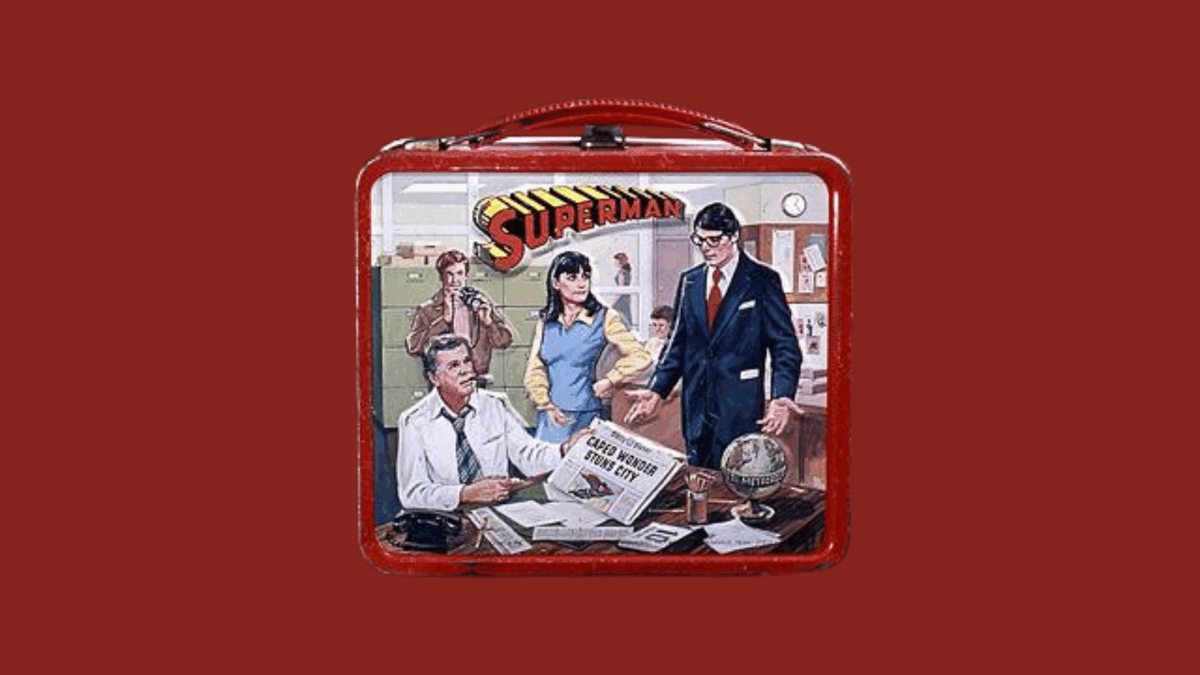
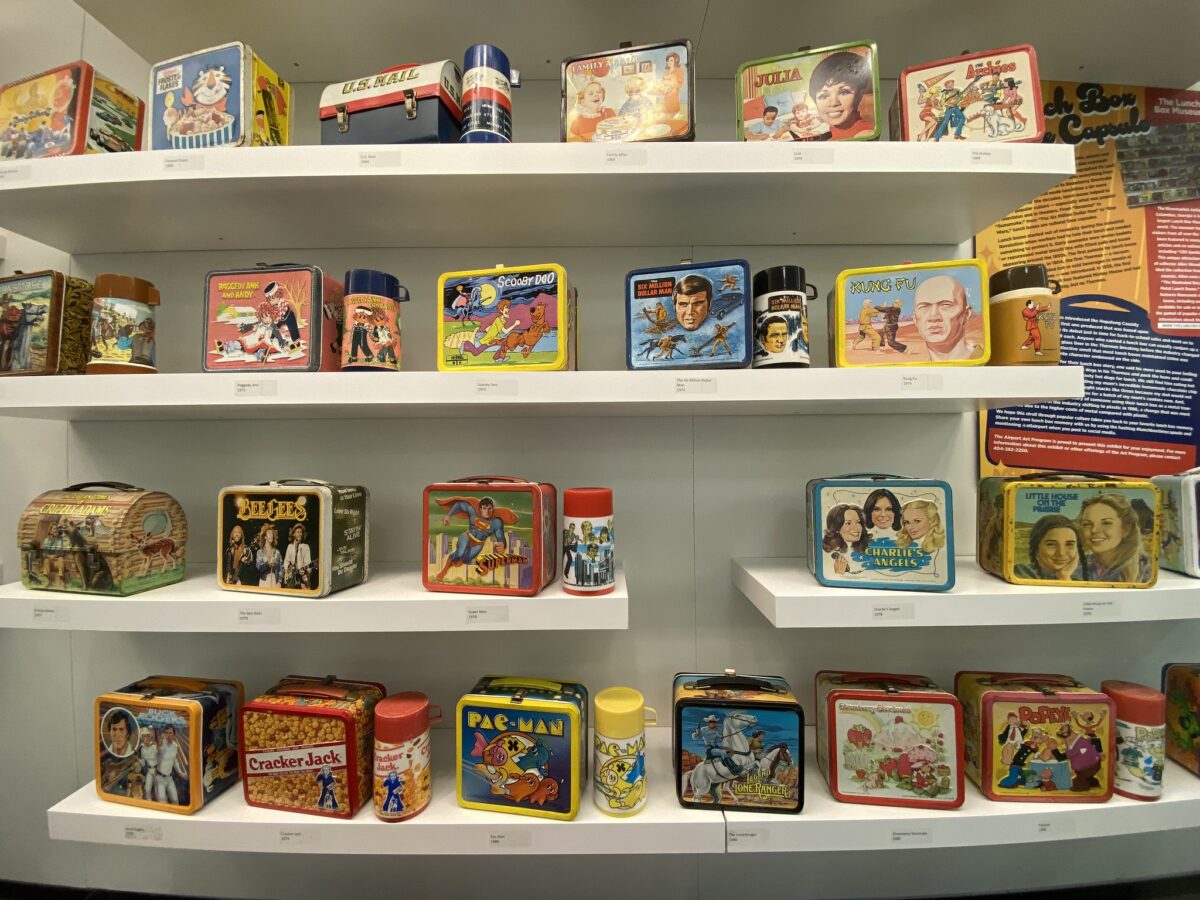
A handful of specific boxes have set prices that still define what the category can reach. The 1954 Superman lunch box, certain early western examples in mint condition, and the 1963 Jetsons set have all cleared $1,000 at legitimate auction — a number that surprises people who think of lunch boxes as yard sale fodder.
These aren’t outliers that distort the market; they’re proof of concept, demonstrating that the right item in the right condition finds its buyer reliably.
What the Market Looks Like Right Now
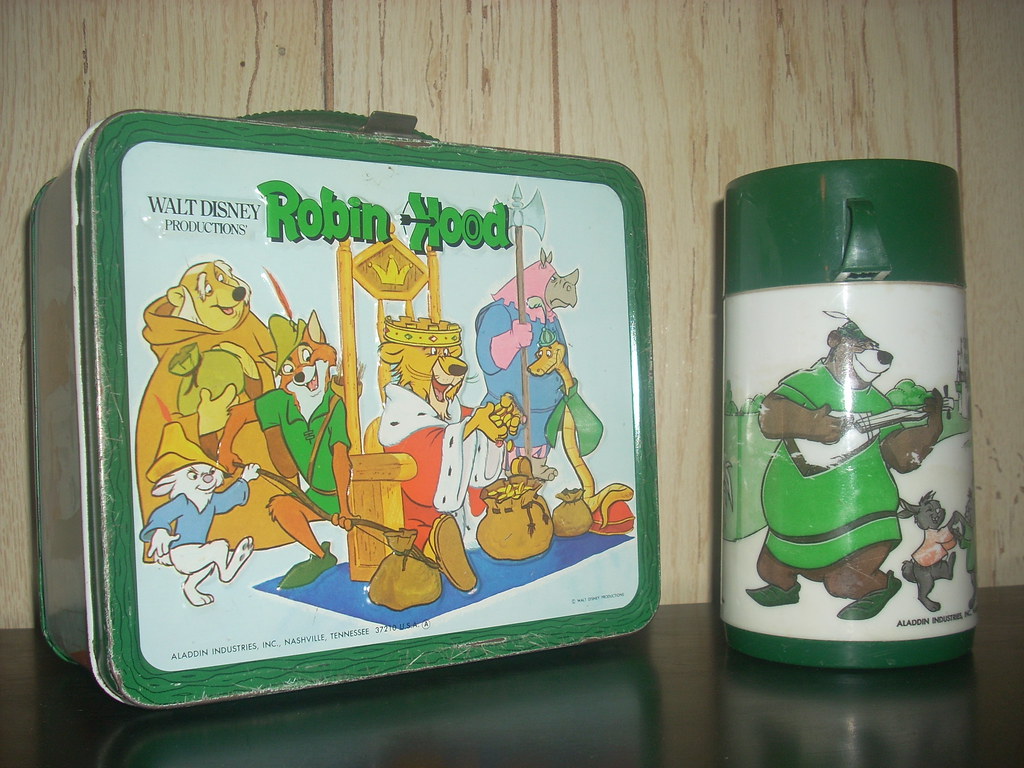
The vintage lunch box market in the 2020s is more organized, more documented, and more transparent than it was twenty years ago — which cuts both ways. Prices are easier to research, which protects buyers from overpaying, but it also means the era of accidentally finding a $500 box for $10 at an estate sale is largely over.
The collectors who entered early and bought widely now hold inventories worth considerably more than they paid, which is a pleasant position to be in, which is saying something for a market built entirely on childhood lunch habits.
Why Sellers Consistently Underestimate Them
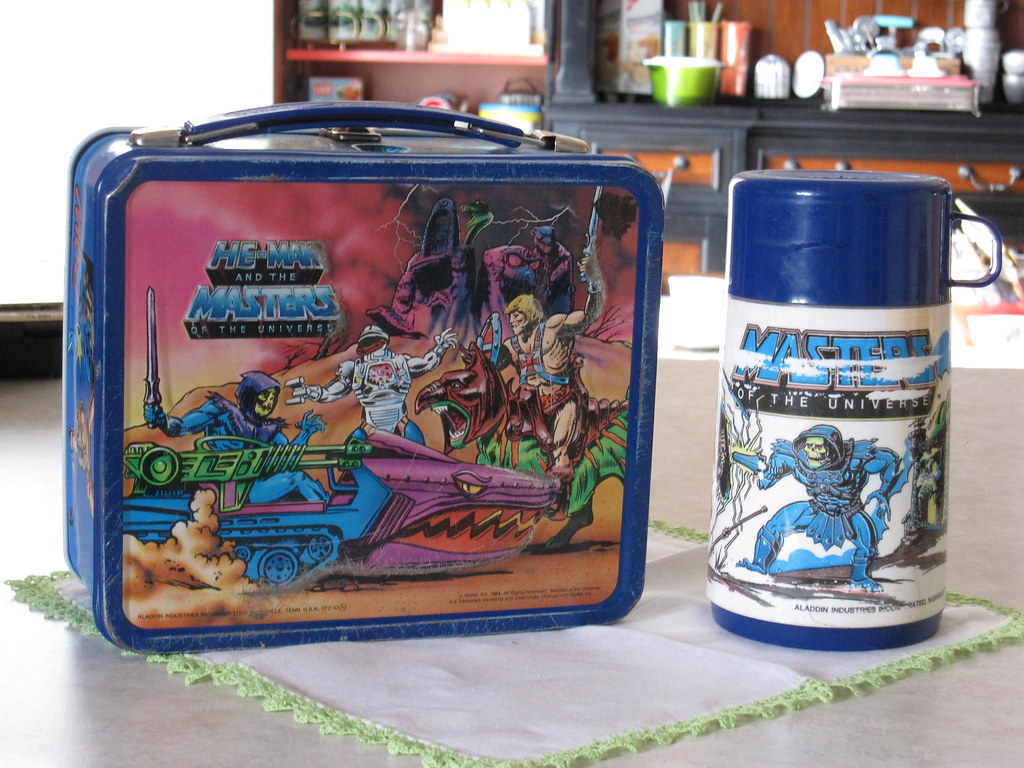
Estate sale companies and secondhand dealers undervalue vintage lunch boxes with remarkable consistency — pricing them as decorative trinkets rather than documented collectibles with established auction histories. Part of this is unfamiliarity with the category; part of it is that a scratched-up metal box doesn’t announce its own value the way a piece of furniture or jewelry might.
That persistent gap between perceived value and actual value is what keeps serious collectors showing up at estate sales on cold Saturday mornings.
Before the last bidder raises their paddle, there’s always that moment — the one where the room goes quiet and everyone is calculating at the same time. The lunch box sitting under the auction lights was built for a child’s cafeteria table, designed to be forgotten by Friday, and here it is decades later commanding the room’s full attention.
That’s not ironic. That’s just what happens when an ordinary object survives long enough to become the only one left.
When an Object Outlives Its Purpose
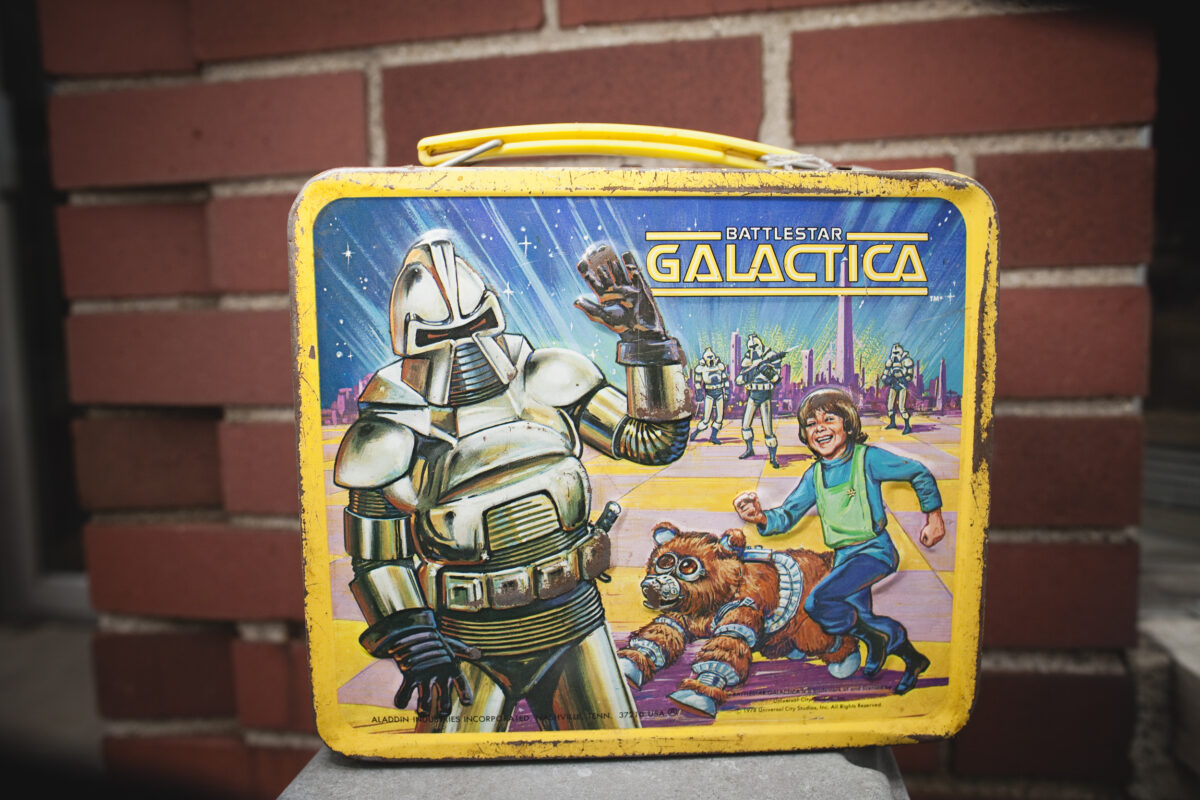
The most honest thing that can be said about the vintage lunch box market is that it has nothing to do with lunch. These objects traded in their original function decades ago and became something stranger and more durable: physical evidence that a particular moment in American culture existed, felt a specific way, and produced specific things.
You can hold one and feel the weight of the steel and look at the lithography and understand — not just know, but actually understand — that 1965 was a real year that real people lived through. That’s what auctions are actually selling. The sandwich is long gone.
More from Go2Tutors!

- The Romanov Crown Jewels and Their Tragic Fate
- 13 Historical Mysteries That Science Still Can’t Solve
- Famous Hoaxes That Fooled the World for Years
- 15 Child Stars with Tragic Adult Lives
- 16 Famous Jewelry Pieces in History
Like Go2Tutors’s content? Follow us on MSN.