Words That Have No English Translation
You’re in the middle of describing a feeling to someone when you realize something frustrating. English doesn’t have the words you need.
You know exactly what you want to say, but there’s no single word that captures it. You end up using five or six words to explain something that another language handles with one.
This happens more often than you think. Languages develop words for experiences that matter to their speakers.
English has its strengths, but it also has gaps. Other languages fill those gaps with words so specific, so perfect, that you wonder why English never bothered to create them.
The words that follow come from cultures around the world. Each one describes something real, something you’ve probably felt or experienced, but couldn’t quite name in English.
Hygge: The Danish Art of Coziness

Danish speakers have a word that captures something special about comfort. Hygge describes the warm feeling you get when you’re relaxed with people you care about.
Think of a winter evening at home, candles burning, warm blankets, maybe some wine, surrounded by friends or family. The word goes beyond just “cozy.” It’s about creating an atmosphere of contentment and wellbeing.
You can hygge a room by making it feel inviting. You can spend an evening hygge-ing with friends.
The concept is so important in Danish culture that it shapes how people design their homes and plan their social lives. Similar words exist in other Scandinavian languages.
Deutsch has Gemütlichkeit. Swedish has gemytlig. Norwegian has hyggelig.
These northern cultures clearly value this particular kind of warmth.
Schadenfreude: When Someone Else’s Misfortune Feels Good

German gives us a word that English speakers often pretend they don’t need. Schadenfreude combines schaden (harm) and freude (joy) to describe the pleasure you take in someone else’s misfortune.
You’ve felt this. Your annoying coworker trips in the hallway.
A politician you dislike gets caught in a scandal. Your rival’s team loses the championship.
That little spark of satisfaction? That’s schadenfreude. English has no equivalent, which is odd considering how universal the feeling is.
You have to say “taking pleasure in someone else’s pain” or some other clunky phrase. German just says it directly.
Saudade: The Portuguese Ache

Portuguese speakers use saudade to describe a deep emotional state that combines nostalgia, longing, and melancholy all at once. It’s the feeling of missing something or someone, but more complex than simple absence.
Saudade can be for a person who’s gone, for a place you left behind, for a time that’s passed. It carries a bittersweet quality.
The memory brings both happiness and sadness. You cherish what you had while aching that it’s no longer present.
The word appears constantly in Portuguese music and poetry. It’s considered a defining characteristic of Portuguese and Brazilian culture, a way of experiencing the world that the language captures perfectly.
Mamihlapinatapai: The Longest Shortest Word
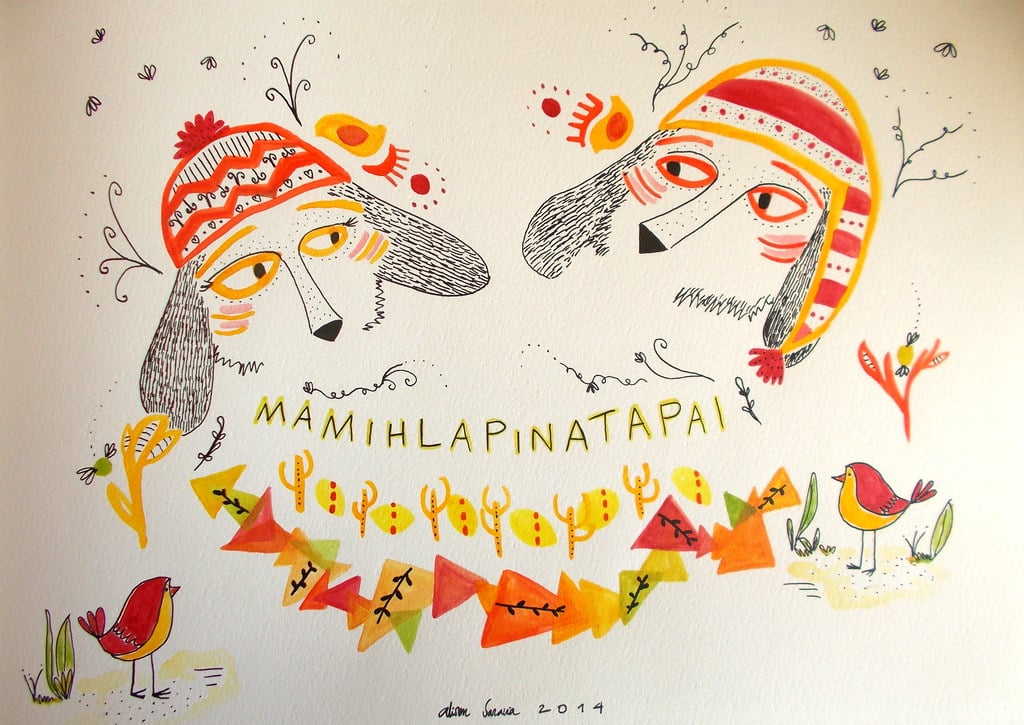
The Yaghan language of Tierra del Fuego gives us what the Guinness Book of World Records calls “the most succinct word.” Mamihlapinatapai describes a very specific moment between two people.
You and someone else both want to initiate something. Maybe it’s asking a question, making a move, or starting a conversation.
But you’re both hesitant. You share a look.
In that look, you both understand what the other is thinking. You both know the other understands.
You’re in complete unspoken agreement about your shared reluctance. That’s mamihlapinatapai.
English needs several sentences to explain what Yaghan captures in one word.
Tsundoku: Books You’ll Never Read

Japanese has a word specifically for people who buy books and let them pile up unread. Tsundoku describes this exact habit.
You acquire more books than you can possibly read. They stack up on your nightstand, your desk, your shelves.
You fully intend to read them. Someday.
Eventually. But new books keep arriving before you finish the old ones.
The pile grows. You’re not a hoarder exactly.
You’re a tsundoku practitioner. The word doesn’t judge.
It simply acknowledges a behavior that book lovers worldwide recognize instantly.
L’esprit de l’escalier: The Perfect Comeback, Too Late

French speakers have a phrase for the frustrating experience of thinking of the perfect response after the conversation has ended. L’esprit de l’escalier literally means “staircase wit.”
The image is clear. You’re leaving a party, walking down the stairs, when suddenly you realize what you should have said.
The argument you lost? You just thought of the perfect rebuttal.
The joke that fell flat? You now know how to deliver it. But the moment has passed.
Everyone has experienced this. The French just named it.
Tartle: The Name You Can’t Remember

Scottish gives us tartle, which describes the hesitation before introducing someone when you’ve suddenly forgotten their name. You’re standing there, about to make introductions, when your mind goes completely blank.
You know this person.
You’ve known them for years. But right now, in this crucial moment, their name has vanished from your brain.
You panic slightly. You stall. You try to remember. That awkward pause? That’s tartling.
Iktsuarpok: Anticipation at the Window

The Inuit language has iktsuarpok, which describes the feeling of anticipation that makes you keep going outside to check if someone has arrived yet. You’re waiting for a guest, a delivery, a friend.
You can’t sit still. You walk to the window.
You go outside and look down the street. Nothing yet.
You go back inside, wait two minutes, then check again. This restless, expectant behavior gets its own word in Inuit.
English makes you describe the whole situation.
Waldeinsamkeit: Alone in the Woods

German offers another word that English lacks. Waldeinsamkeit describes the feeling of being alone in the woods. Not lonely—alone.
There’s a specific emotion that comes from standing by yourself surrounded by trees. A sense of peace, of connection to nature, of solitude that feels good rather than isolating.
Hikers and campers know this feeling well. German gives it a name.
Sobremesa: Lingering After the Meal

Spanish has sobremesa, which describes the time spent sitting at the table after a meal has finished, talking with the people you’ve eaten with. The food is done.
The plates are empty. But nobody wants to leave yet.
The conversation continues, relaxed and unhurried. In many Spanish-speaking cultures, sobremesa is an important part of dining.
The meal feeds your body. The sobremesa feeds your relationships.
English just calls it “hanging out after dinner,” which doesn’t quite capture the intentionality and value placed on this time.
Fernweh: The Ache for Distant Places

German has wanderlust, which English borrowed. But German also has fernweh, which is similar but different. Fernweh means the ache or longing for faraway places.
It’s more intense than simple wanderlust. It’s a homesickness for places you’ve never been.
You feel pulled toward somewhere distant. You can’t explain why.
You just know you need to go there. That yearning, that restless desire for the unknown? Fernweh.
Komorebi: Light Through Leaves

Japanese has komorebi, describing the specific kind of light that filters through tree leaves. Sunbeams break through the canopy, dappling the ground below.
That interplay of light and shadow as sunlight moves through branches. English can describe this.
You can say “sunlight filtering through leaves.” But it takes multiple words to paint the picture.
The Japanese do it with one.
Cafuné: Fingers Through Hair

Brazilian Portuguese gives us cafuné, which means running your fingers through someone’s hair. The gentle, affectionate gesture of stroking or playing with another person’s hair.
Parents do it to children. Lovers do it to each other.
It’s intimate and comforting. English has no single word for this specific action.
You have to describe the whole thing: “running my fingers through your hair.” Portuguese just says cafuné.
Wabi-Sabi: Beauty in Imperfection

Japanese philosophy offers wabi-sabi, a worldview that finds beauty in imperfection, impermanence, and incompleteness. It embraces things that are weathered, worn, or flawed.
A cracked teacup has wabi-sabi. An old wooden table with marks and scratches has wabi-sabi. Aging has wabi-sabi.
The concept accepts that imperfection is part of existence. Growth and decay are natural. Simple, humble, and imperfect things can be more beautiful than pristine, perfect ones.
Wabi-sabi is an aesthetic, a philosophy, and a way of seeing the world that English has no equivalent for.
The Spaces Between Languages

What lies beneath these terms shows a quiet truth about speech. Not merely alternate labels for identical ideas, they slice life into pieces shaped by culture.
Where one tongue pauses, another pushes forward – mapping meaning through habit and history. Snow gets lots of names in certain languages – just not English.
That mix-up? Often pinned on Inuit tongues. Still, English grabs words like schadenfreude from others, which says a lot.
Here’s the thing – each tongue misses something. Moments left unnamed since tradition ignored their weight.
Pick up one of these untranslatable terms, and suddenly you’re not memorizing sounds. You shift sightlines instead.
Feelings existed long before yet stayed hidden simply because speech refused to mark them. One day, words like that might sneak into English too.
History says it’s happened already. Dictionaries started listing schadenfreude out of nowhere.
For months, hygge popped up in nearly every design article you’d find. Across centuries, tongues have quietly borrowed bits from neighbors without asking.
Still, for now, each phrase stands as a quiet proof – life holds moments no tongue fully names.
More from Go2Tutors!

- The Romanov Crown Jewels and Their Tragic Fate
- 13 Historical Mysteries That Science Still Can’t Solve
- Famous Hoaxes That Fooled the World for Years
- 15 Child Stars with Tragic Adult Lives
- 16 Famous Jewelry Pieces in History
Like Go2Tutors’s content? Follow us on MSN.