13 American Landmarks Every History Buff Should Visit
America’s landscape is dotted with physical reminders of the events and people that shaped the nation. From revolutionary battlefields to preserved homes of influential figures, these sites offer more than just photo opportunities—they provide immersive connections to pivotal moments in American history. The past comes alive when you stand in the exact locations where history unfolded.
Here is a list of 13 American landmarks that deserve a spot on every history enthusiast’s travel itinerary.
Independence Hall

The birthplace of both the Declaration of Independence and the U.S. Constitution stands proudly in Philadelphia. This modest brick building witnessed intense debates as the founding fathers crafted documents that defined American democracy.
The Assembly Room remains furnished as it was during the sweltering summer of 1776, allowing visitors to imagine Franklin, Jefferson, and Adams passionately shaping a nation not yet formed.
Gettysburg National Military Park

Few battlefields capture the gravity of the Civil War like Gettysburg. This Pennsylvania site marks where over 50,000 soldiers fell during three days of brutal fighting in July 1863.
The preserved landscape features monuments, cannon placements, and the cemetery where Lincoln delivered his famous address. Walking these grounds offers a perspective on the conflict’s enormous human cost that history books cannot convey.
Ellis Island

Between 1892 and 1954, approximately 12 million immigrants passed through this processing station in New York Harbor. The restored main building now houses a museum chronicling the American immigration experience.
Family historians can access records of ancestors who entered through these doors, while the Registry Room echoes with countless stories of hope, fear, and new beginnings.
Mesa Verde

The ancient cliff dwellings of Mesa Verde in Colorado provide a rare glimpse into pre-Columbian Native American life. Built by the Ancestral Puebloans around 1200 CE, these remarkable structures were carved directly into sandstone cliffs.
Their engineering prowess in creating multi-story apartment complexes with limited tools continues to impress modern visitors. Mesa Verde preserves an often-overlooked chapter of American history predating European arrival.
Mount Vernon

George Washington’s meticulously restored Virginia estate offers insights into the private life of America’s first president. The mansion features original furnishings and personal items, while the surrounding farm demonstrates Washington’s agricultural innovations.
His modest tomb on the property reminds visitors that beyond being a revolutionary leader and president, Washington considered himself foremost a farmer and citizen.
Alcatraz Island

This former federal prison in San Francisco Bay housed some of America’s most notorious criminals from 1934 to 1963. The weathered cell blocks tell stories of famous inmates like Al Capone and daring escape attempts.
Audio tours featuring former guards and inmates bring the harsh daily routines to life. Beyond its penitentiary fame, Alcatraz played roles in military history and Native American activism that shaped California’s development.
Pearl Harbor National Memorial

The USS Arizona Memorial in Hawaii floats above the sunken battleship where 1,177 sailors and Marines lost their lives on December 7, 1941. Oil still seeps from the submerged vessel, creating what many call “tears of the Arizona.”
Nearby museums house artifacts and personal accounts from the attack that propelled America into World War II. The site offers a solemn space for reflection on the consequences of war.
The Alamo
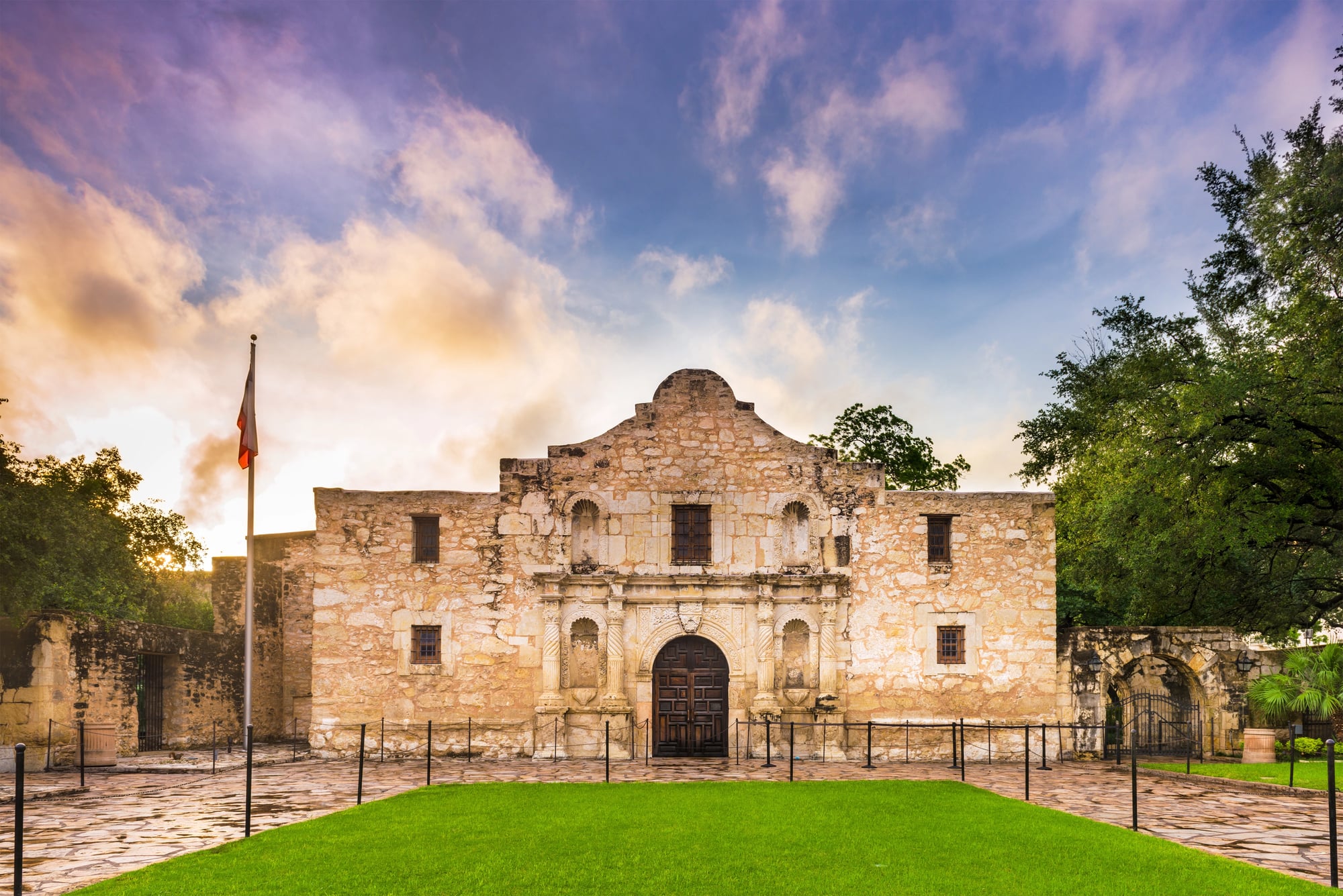
This former Spanish mission in San Antonio gained immortality during the Texas Revolution when a small group of defenders held out against Mexican forces for 13 days in 1836.
Though the battle ended in defeat, “Remember the Alamo” became a rallying cry that inspired Texan independence. The preserved limestone structure may appear small, yet its impact on American expansion remains vast.
Little Bighorn Battlefield

The site of Custer’s Last Stand in Montana commemorates one of the most significant Native American victories against U.S. military forces. White marble markers show where soldiers fell in the 1876 battle, while red granite markers honor the Lakota and Cheyenne warriors who defended their way of life.
This landmark provides a dual perspective, offering a deeper understanding of the complex relationship between westward expansion and indigenous nations.
Monticello

Thomas Jefferson’s architectural masterpiece near Charlottesville, Virginia reflects the brilliant yet contradictory mind of its creator. The home features Jefferson’s innovative designs alongside his extensive library and scientific instruments.
Recent interpretations at Monticello now include the experiences of enslaved people who built and maintained the estate, creating a more honest examination of early American paradoxes regarding freedom and bondage.
The Freedom Trail

This 2.5-mile red brick path through Boston connects 16 significant Revolutionary War sites. Visitors can follow in the footsteps of colonial patriots past the Old North Church, Paul Revere’s house, and the site of the Boston Massacre.
The trail culminates at Bunker Hill Monument, where the famous order “Don’t fire until you see the whites of their eyes” was given. Walking the entire route provides an immersive timeline of America’s path to independence.
Fort Sumter

The first shots of the Civil War rang out at this sea fort in Charleston Harbor on April 12, 1861. The bombardment lasted 34 hours before Union forces surrendered, igniting four years of devastating conflict.
Today, boat tours transport visitors to the pentagonal brick fortress where rangers explain the significance of this opening salvo. Standing on these walls helps visitors grasp how regional tensions escalated into a national war.
The National Mall

This expansive green space in Washington, D.C. contains more American history per square foot than perhaps anywhere else in the country. Flanked by the Capitol and the Lincoln Memorial, the Mall houses monuments to presidents, war veterans, and civil rights leaders.
The Smithsonian museums preserve the nation’s cultural, scientific, and political artifacts. A full day spent exploring this area provides a comprehensive overview of America’s triumphs, challenges, and evolving ideals.
Footprints in Time

These thirteen landmarks are just a glimpse of the historical treasures waiting to be explored across the United States. Each site connects visitors to the people and events that shaped the nation.
The true value of visiting these places lies not just in seeing famous structures, but in understanding how past decisions continue to influence contemporary life. History isn’t merely something that happened long ago—it’s an ongoing conversation between past and present.
More from Go2Tutors!

- The Romanov Crown Jewels and Their Tragic Fate
- 13 Historical Mysteries That Science Still Can’t Solve
- Famous Hoaxes That Fooled the World for Years
- 15 Child Stars with Tragic Adult Lives
- 16 Famous Jewelry Pieces in History
Like Go2Tutors’s content? Follow us on MSN.