14 Scientific Papers Published Under Completely Fake Names
The world of academic publishing is built on credibility and trust. Yet throughout scientific history, researchers have occasionally snuck papers into prestigious journals under completely fabricated author names – sometimes as pranks, sometimes to make a point about peer review standards, and sometimes for more complex reasons.
Here is a list of 14 remarkable instances where scientific papers were published under entirely fake names, demonstrating both the cleverness of the perpetrators and the occasional blind spots in academic gatekeeping.
Stronzo Bestiale

In the 1980s, American physicist William Hoover needed to publish some controversial papers on statistical mechanics. When faced with rejection from American journals, he invented the Italian physicist ‘Stronzo Bestiale’ (which translates to something quite vulgar in Italian) as a co-author.
Surprisingly, the papers bearing this offensive pseudonym were accepted and published in reputable journals like the Journal of Statistical Physics. The fake Italian scientist even gained some citation credibility before the truth emerged.
Grete and Rainer Lienau

These supposed East German scientists published in Western scientific journals during the Cold War, but they never existed. Their papers were actually written by physicists in the Soviet Bloc who couldn’t publish under their real names due to political restrictions.
The fictitious couple authored multiple papers on experimental physics between 1988 and 1990, allowing real scientists’ work to cross the Iron Curtain without political consequences.
Alireza Haji-Akbari Balou

This entirely made-up researcher was listed as an author on a 2019 materials science paper. The actual authors later admitted they fabricated this co-author because they thought “having an Iranian name on the paper would lend it credibility” in their particular field.
The journal retracted the paper after discovering the deception, creating a minor scandal in the materials science community.
H.K. Frensley

In 1972, a paper on particle physics appeared in a specialized journal authored by H.K. Frensley from “The Institute for Advanced Study.” After citation for several years, it was discovered that neither Frensley nor his affiliated institution existed – the paper had been written by a graduate student whose advisor had rejected the theories.
The student created the pseudonym to circumvent the rejection and get his ideas into the scientific discourse.
Lucas McGeorge and Annette Kin
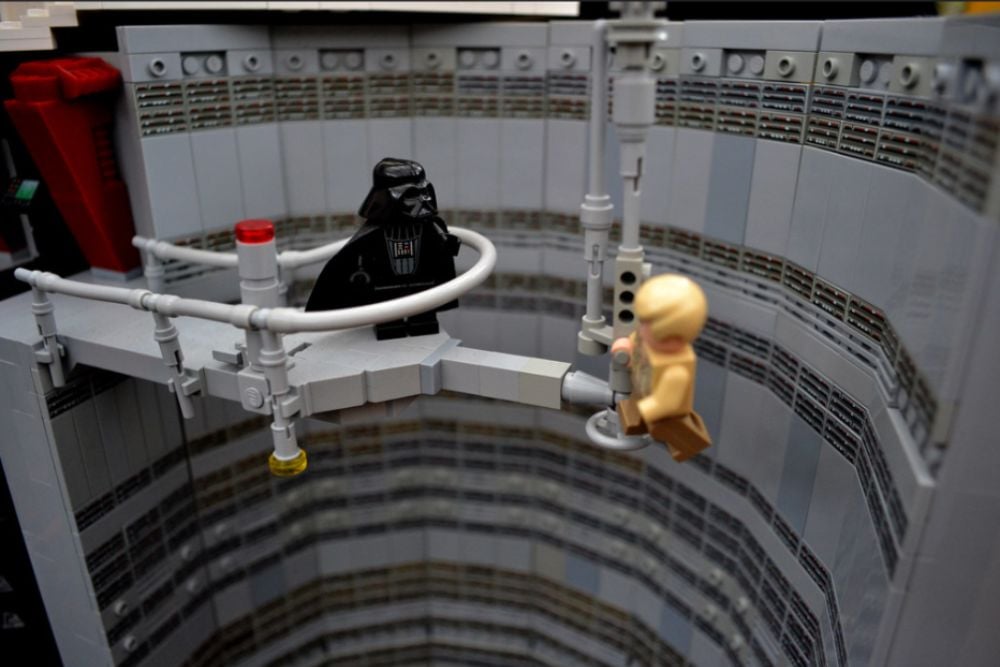
These fictional authors managed to get a paper about ‘midi-chlorians’ – the fictional microscopic life forms from Star Wars – published in three scientific journals. The paper was deliberately filled with nonsense and Star Wars references as a sting operation to expose predatory journals with inadequate peer review.
Created by a group of science journalists in 2017, the paper exposed serious flaws in scientific publishing quality control.
Maggie Simpson and Edna Krabappel

In 2014, a paper supposedly co-authored by these two characters from ‘The Simpsons’ television show was accepted by two different scientific journals. The paper, titled ‘Fuzzy, Homogeneous Configurations,’ was complete nonsense generated by a computer program.
The sting operation revealed how some pay-to-publish journals would accept literally anything without proper review.
Ike Antkare

Computer scientist Cyril Labbé created this fictional researcher and used auto-generated papers to demonstrate flaws in academic metrics. By 2010, Google Scholar ranked the completely fictitious Ike Antkare as the 21st most cited scientist in the world – ahead of Einstein.
This exposed how citation metrics could be manipulated through paper mills and self-citation networks.
Marek Fisz

In a particularly bizarre case, a real mathematician’s name was used years after his death. Marek Fisz was a legitimate Polish statistician who died in 1963, but papers continued to appear under his name throughout the 1970s.
Investigation revealed that someone had been using his identity to publish their own work, creating a scientific ‘ghost writer’ in the most literal sense.
C.W. Scott-Giles
The mathematician Frank Kelly submitted a paper to a statistics journal in 1987 under this fake name that was an anagram of ‘Guess who I falsely cite.’ The paper contained deliberately flawed statistical reasoning but was nevertheless accepted for publication.
Kelly used this to demonstrate poor review standards and later revealed the deception to considerable embarrassment for the journal editors.
Polly Matzinger’s Dog
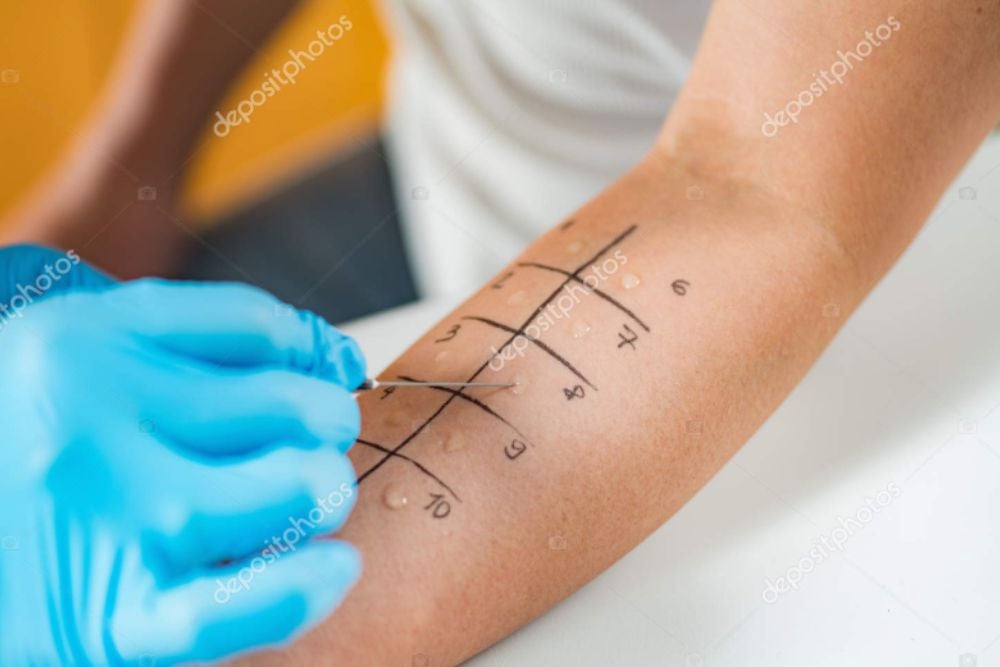
Immunologist Polly Matzinger famously listed her dog, Galadriel Mirkwood, as co-author on a 1978 paper published in the Journal of Experimental Medicine. The editors were furious when they discovered the deception, but Matzinger defended her choice by saying the dog had provided companionship during long hours in the lab.
The incident sparked debate about authorship standards in scientific publications.
Herbert Schlangemann

This fabricated medical researcher supposedly from the ‘Institute for Research in Reproductive Health’ presented findings at a scientific conference and published abstracts in conference proceedings before being exposed as fiction. The name roughly translates to ‘snake man’ in German, which should have been a clue.
The creators intended to demonstrate how easily conference organizers accepted submissions without proper vetting.
Alessandro Dot Costa

In 2013, a paper with this fictional author was submitted to and accepted by six different medical journals simultaneously – a clear violation of publishing ethics. The fake name was an anagram of ‘A sad case to alert,’ which was the perpetrators’ intention – to alert the scientific community to problems with the peer review system.
James O. Ossareh

This completely fictional environmental scientist was credited on several papers dealing with climate data in specialized journals between 2008-2010. The real author was a government scientist who wasn’t permitted to publish under his own name due to political sensitivities around climate change research during that time period.
The papers contained legitimate research but required a fake identity to reach publication.
Oliver Woshinsky

A political science paper published under this name in a mid-tier academic journal was later revealed to be written by an undergraduate student who couldn’t get his work taken seriously under his real name. After publication, the student revealed his true identity, causing significant discussion about age bias in academic publishing.
The paper itself has since been cited numerous times despite its unusual origin.
The Scientific Method’s Hidden Side

The phenomenon of fake author names on legitimate scientific papers reveals the complex human side of what most people imagine as a purely objective process. These cases demonstrate not just clever pranks, but serious issues with the scientific publishing ecosystem – from prejudice against certain nationalities or junior researchers to fundamental flaws in peer review.
The scientific community continues to grapple with these challenges, implementing stricter verification processes while acknowledging that the perfect system remains elusive. Perhaps most importantly, these stories remind us that behind every scientific paper are real humans with ambitions, frustrations, and occasionally, a mischievous sense of humor.
More from Go2Tutors!

- The Romanov Crown Jewels and Their Tragic Fate
- 13 Historical Mysteries That Science Still Can’t Solve
- Famous Hoaxes That Fooled the World for Years
- 15 Child Stars with Tragic Adult Lives
- 16 Famous Jewelry Pieces in History
Like Go2Tutors’s content? Follow us on MSN.