15 Iconic Military Watches That Collectors Are Hunting For
Military watches occupy a unique space in the collecting world. They weren’t designed to impress anyone or make a statement at a dinner party.
They were built to function under conditions that would destroy most timepieces, worn by people whose lives often depended on accuracy and reliability. That utilitarian heritage, combined with genuine scarcity and historical significance, makes certain military watches among the most sought-after pieces in the collecting community today.
Rolex Submariner 5513/5517 Military Issue
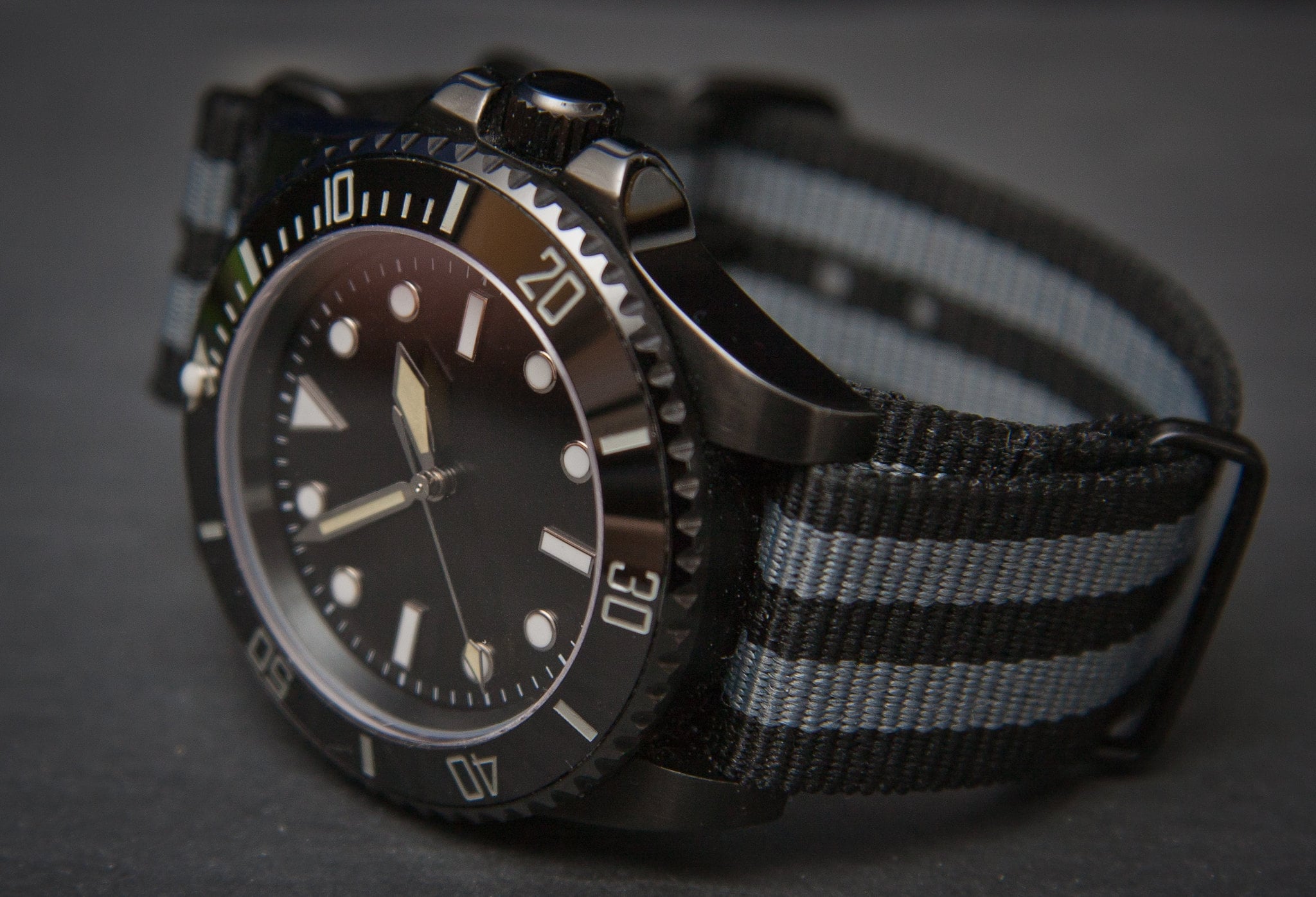
The British Ministry of Defence didn’t mess around when they needed dive watches. Standard Submariners got modified with fixed spring bars, different hands, and military-specific markings.
Only a few hundred were ever made. Finding one today is like stumbling across buried treasure.
The real ones command six-figure prices when they surface at auction.
Omega Speedmaster Alaska Project
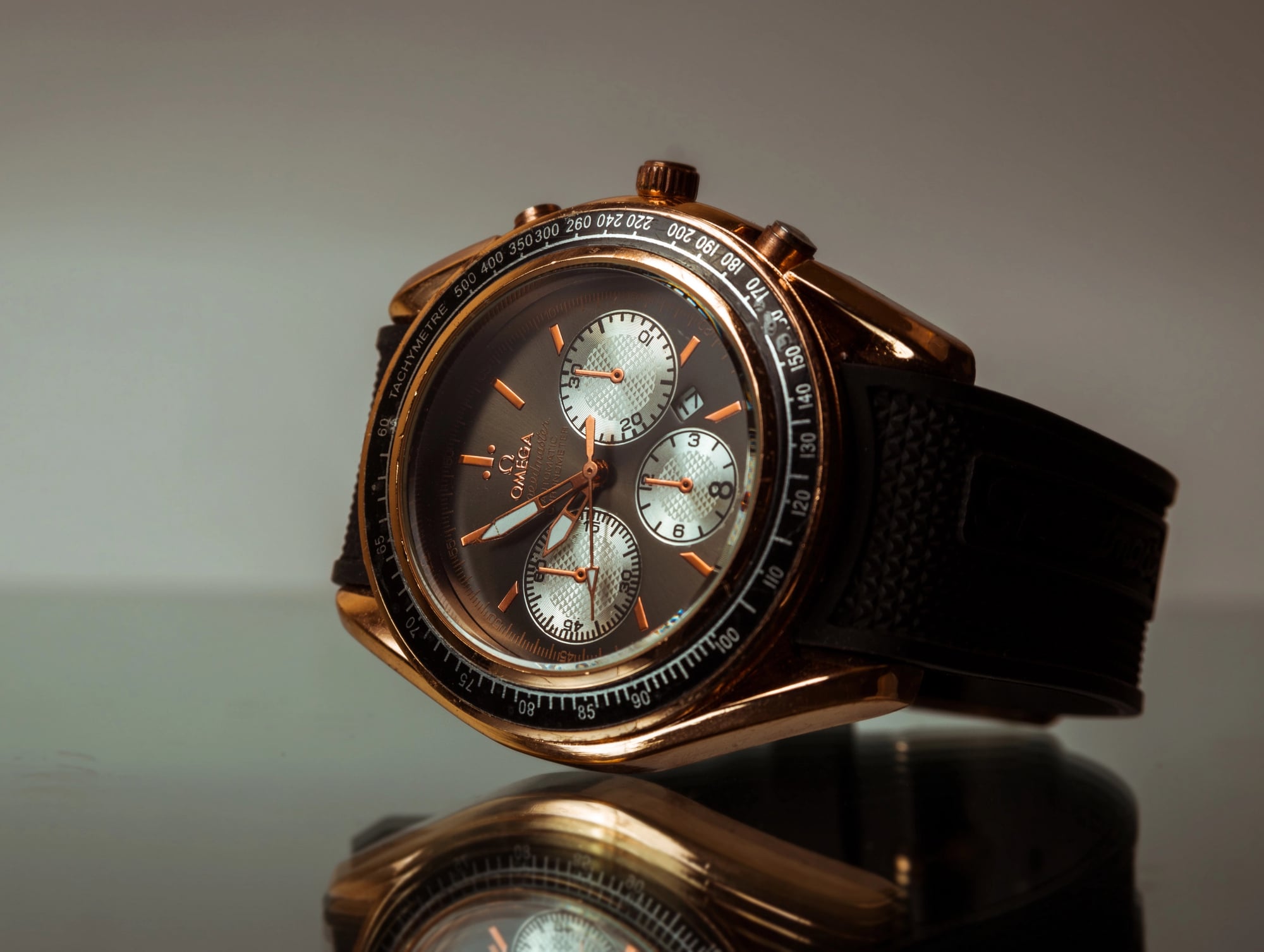
Back when NASA was planning moon missions (and had budgets to match), they commissioned Omega to create watches that could handle the extreme conditions of space exploration — temperatures that would swing from 250 degrees Fahrenheit in sunlight to minus 148 in shadow, and that’s assuming you stayed close to Earth.
The Alaska Project produced watches with titanium cases and white dials specifically for these missions, though most never made it past the prototype stage. And yet, that’s exactly what makes them irresistible to collectors today: the combination of space-age engineering and the tantalizing story of what might have been, wrapped up in a package that fewer than a dozen people on Earth actually own.
The few examples that survived (some say only three or four genuine Alaska Project watches exist) represent not just horological achievement but the audacious optimism of an era when putting a man on the moon seemed like just the beginning of what was possible.
A-11 Army Air Force
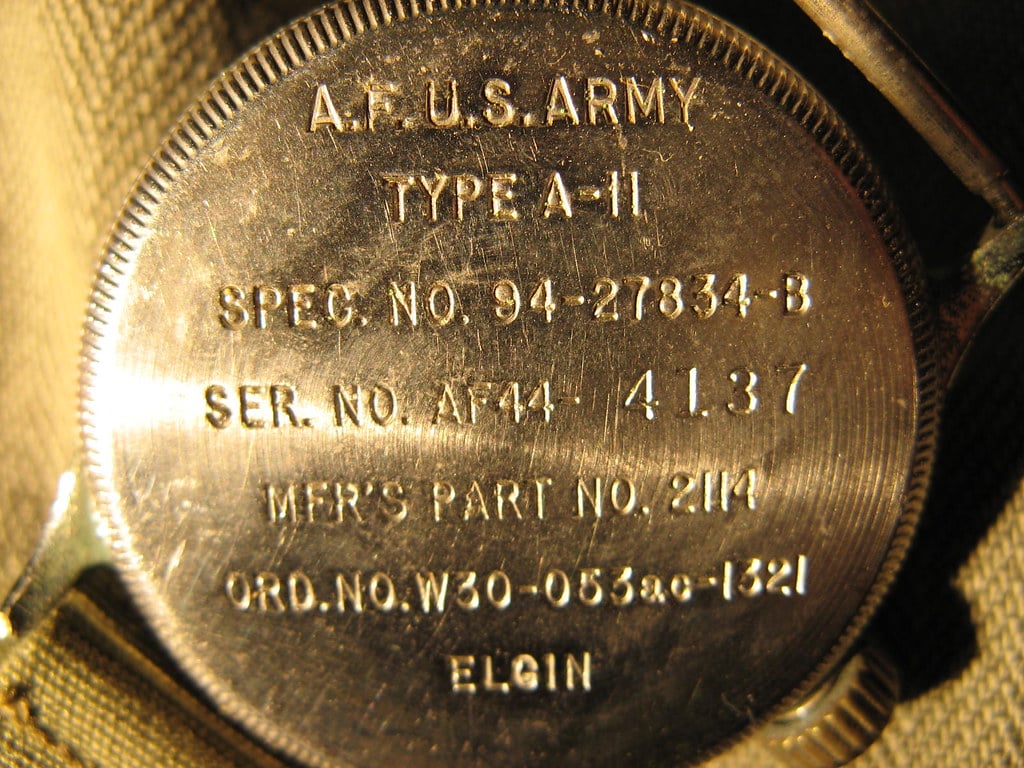
These humble watches powered the Allied victory in World War II. Every pilot, navigator, and bombardier wore one.
Elgin, Hamilton, and Waltham all produced them to identical specifications. The black dials have aged to chocolate brown on most survivors.
Collectors hunt for examples with original radium hands and unpolished cases. The patina tells the story better than any military record could.
Benrus Type I And Type II
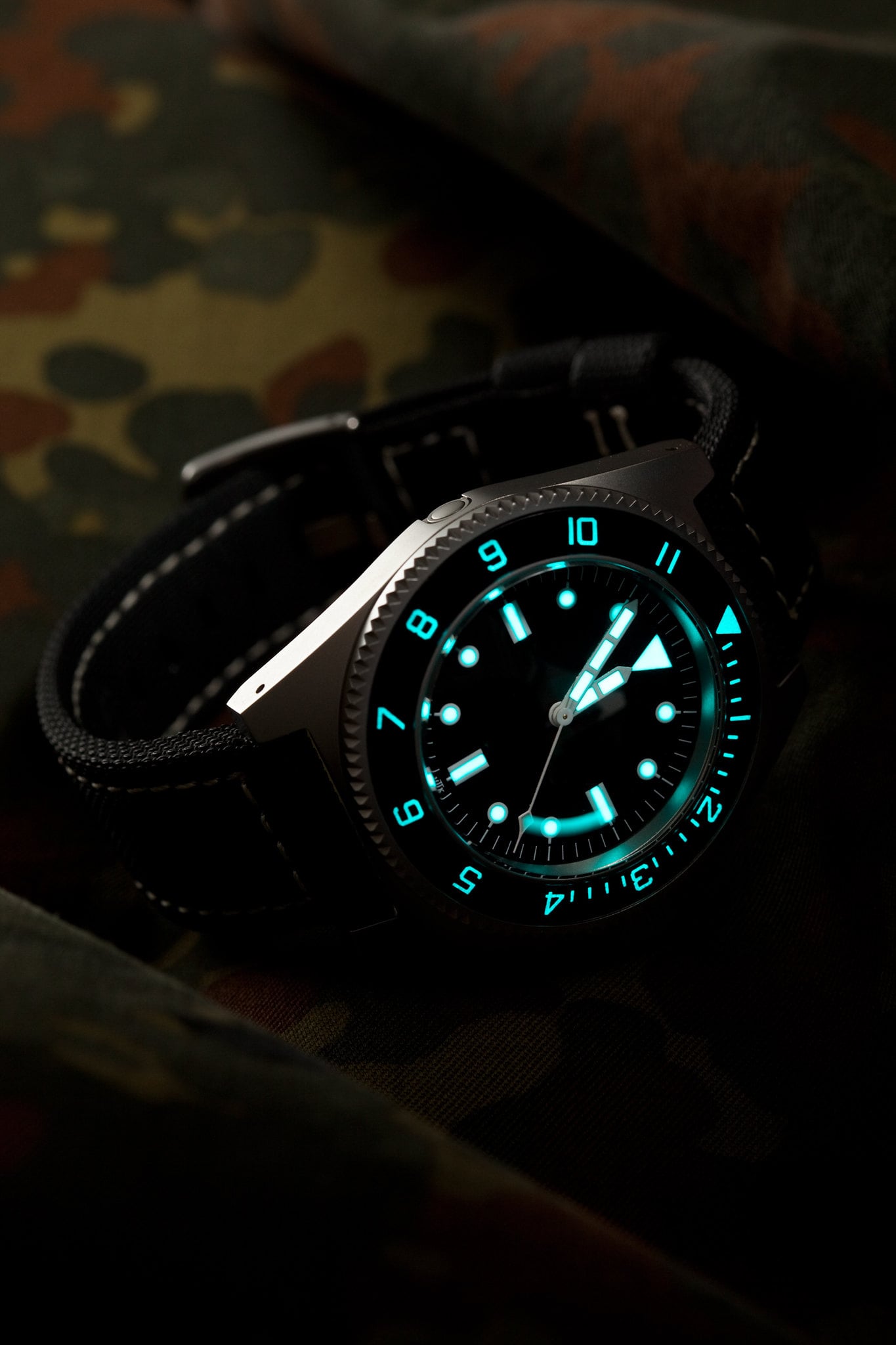
The U.S. military issued precise specifications for field watches, and Benrus answered with timepieces that looked deceptively simple but performed under the harshest conditions imaginable. Type I watches served in Vietnam, where humidity could ruin electronics and mud could clog the finest mechanisms, while Type II versions featured hack seconds for synchronized operations — a small detail that could mean the difference between mission success and catastrophe.
But here’s what makes them compelling beyond their technical merits: they represent the last era when American companies dominated military timekeeping, before Swiss manufacturers swept in with their own interpretations of what a field watch should be. Finding one with its original olive drab NATO strap feels like discovering a time capsule from when American manufacturing meant something different than it does today.
IWC Mark XI Royal Air Force
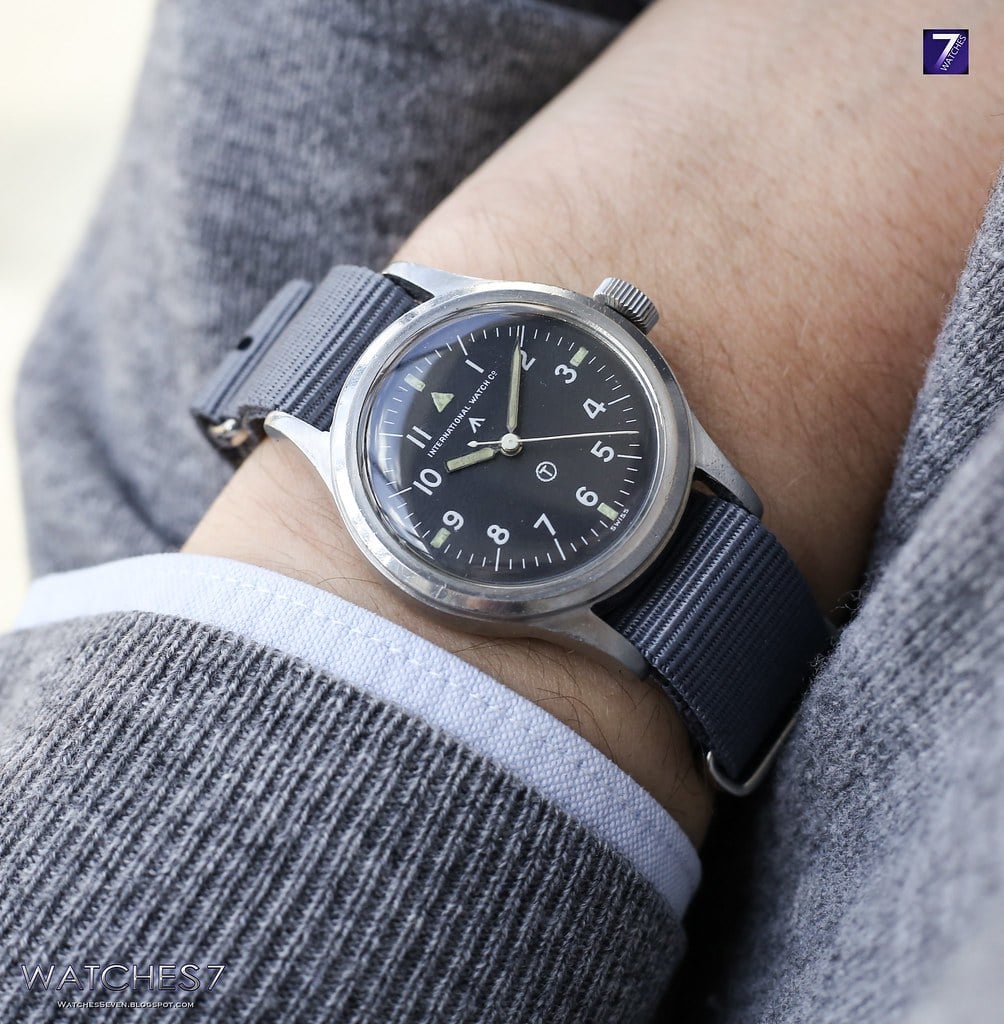
IWC built these for RAF pilots who needed antimagnetic protection. The soft iron inner case shielded the movement from aircraft instruments and radar systems.
Only 6,000 were ever made between 1948 and 1981. The broad arrow marking on the dial proves military provenance.
Collectors pay premium prices for examples that escaped the RAF’s disposal programs. Most military watches got destroyed or sold off in bulk lots.
The survivors are the lucky ones.
Jaeger-LeCoultre Polaris US Navy
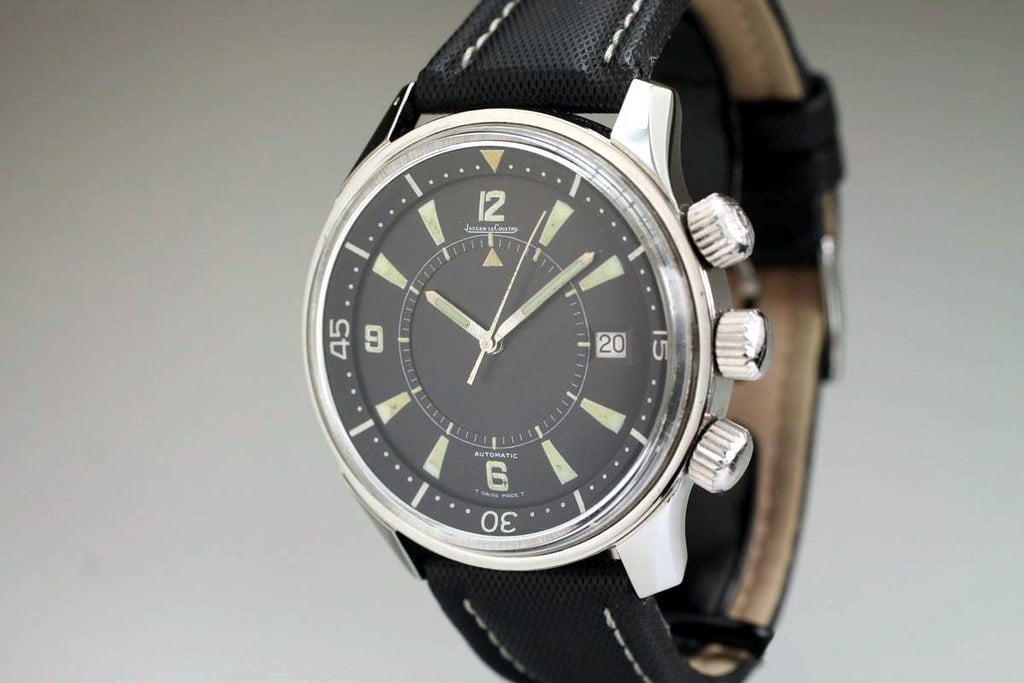
Sometimes the most interesting military watches are the ones that almost nobody knows about, hidden in the shadow of more famous siblings like the Rolex Submariner or Omega Speedmaster. The Polaris was JLC’s answer to the U.S. Navy’s need for a robust diving watch in the early 1960s, built around a movement that could handle the pressure changes and magnetic fields that submarine crews encountered daily.
Unlike the sleek consumer dive watches that would dominate the market later, the Polaris had a distinctly military aesthetic — thick case, oversized crown, and a bezel that clicked with the authority of a rifle bolt. The few examples that surface today often show the kind of honest wear that comes from actual underwater missions rather than weekend sailing trips, and that authentic patina commands respect from collectors who understand the difference.
Hamilton Navy Model 21 Chronometer
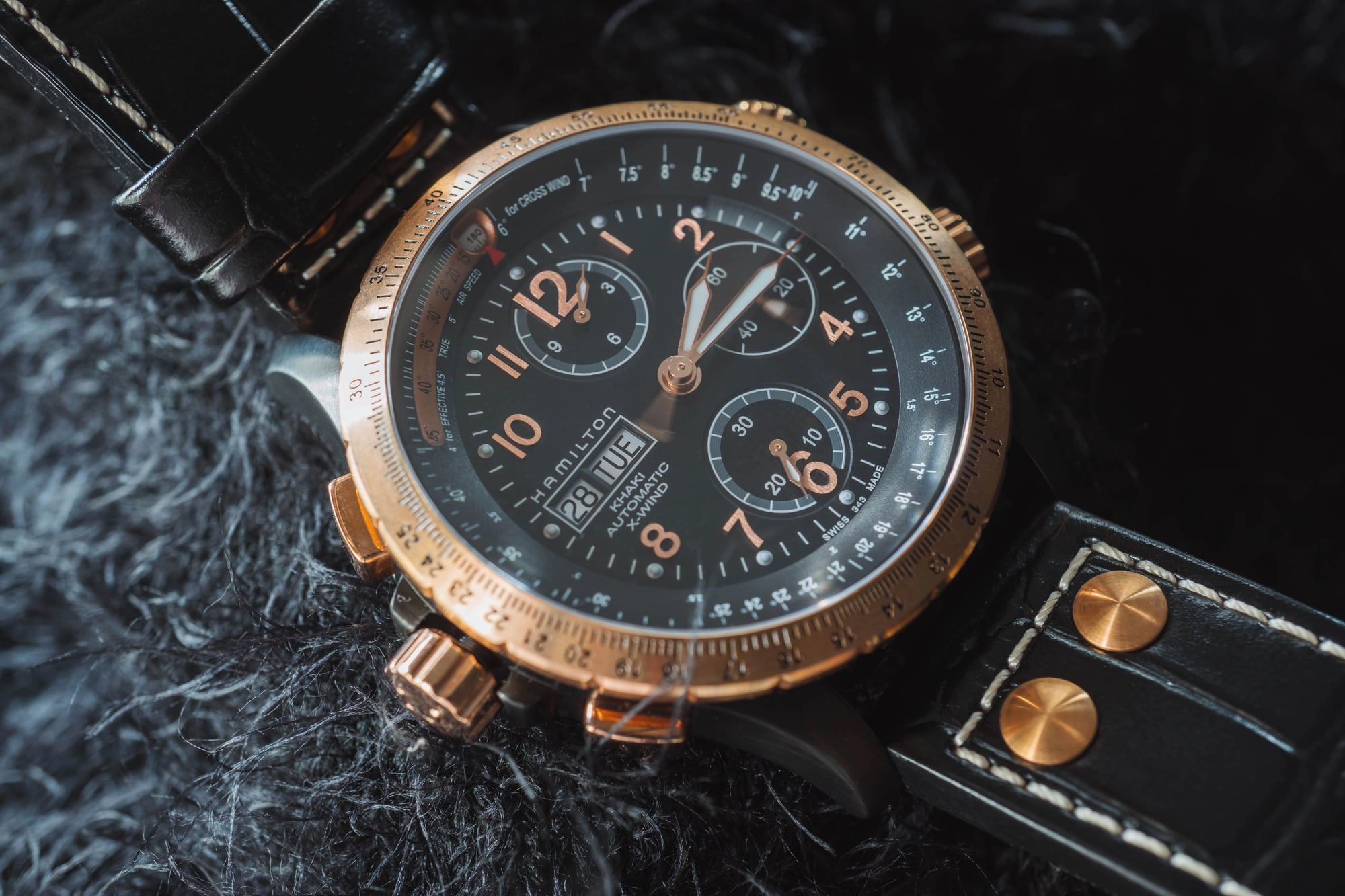
The U.S. Navy needed deck chronometers for navigation. Hamilton delivered precision timepieces that could keep accurate time through storms and combat.
These weren’t wristwatches — they were ship’s instruments housed in brass cases. Finding one with original paperwork and transport case doubles the value.
The movements are mechanical marvels that still rival modern chronometers for accuracy. Hamilton knew what they were doing when it came to precision timekeeping.
Heuer Bundeswehr Flyback Chronograph
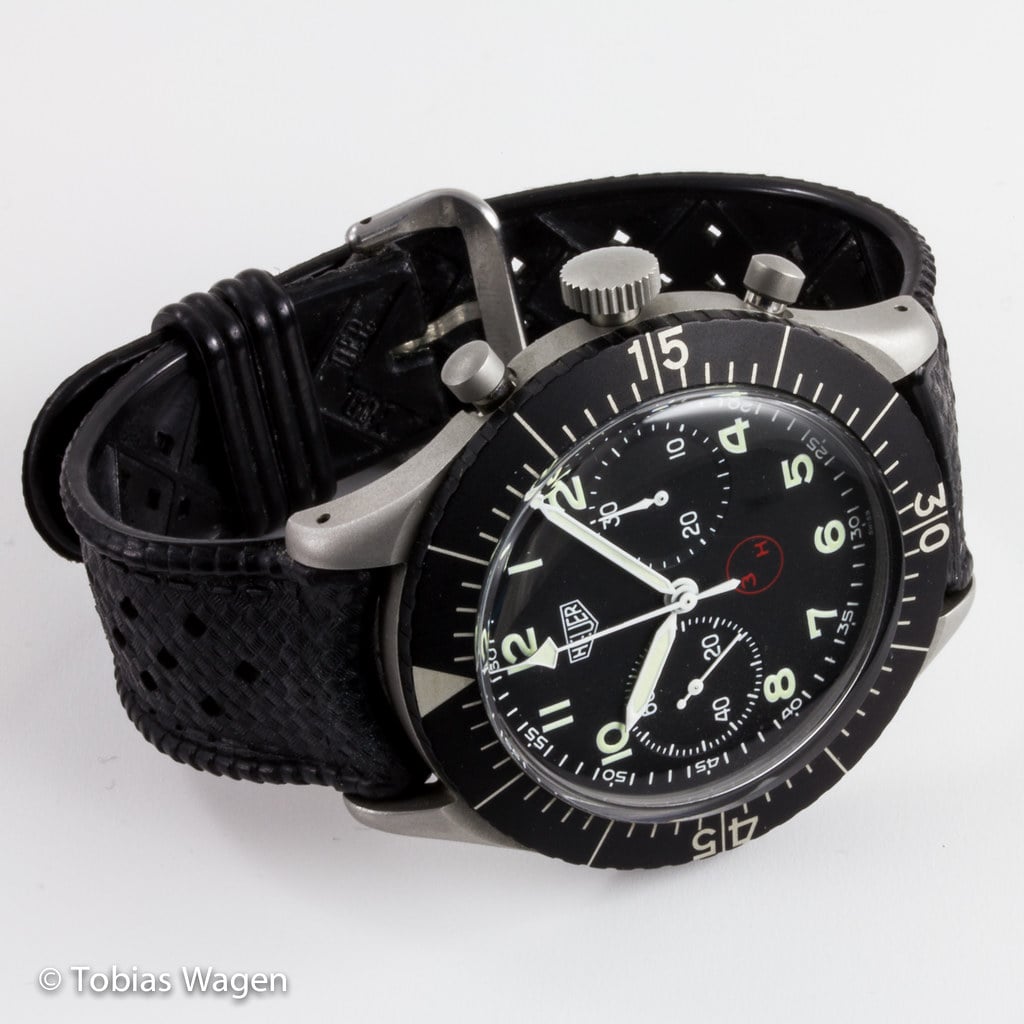
When the German military needed chronographs for their pilots in the 1960s, they turned to Heuer, but these weren’t the glamorous Monaco or Carrera models that would make the company famous in civilian circles — instead, they got utilitarian flyback chronographs with military-specific case backs and hands designed for maximum legibility in cockpit lighting conditions that ranged from blazing desert sun to the green glow of instrument panels.
The flyback complication (which allows the chronograph to reset and restart with a single push) wasn’t added for convenience but for tactical necessity, since pilots conducting bombing runs or reconnaissance missions needed to time multiple events in rapid succession without taking their eyes off the target.
So when you see one of these Bundeswehr Heuers today, you’re looking at a watch that was built for split-second decisions where hesitation could mean the difference between mission success and becoming a statistic in someone else’s war diary.
Lemania Single Button Chronograph
British and French forces both used these robust chronographs. The single button controlled start, stop, and reset functions.
Lemania movements were legendary for their reliability and precision. The military versions came with different dial configurations depending on the issuing service.
Collectors debate which variant is rarest, but they’re all expensive. Lemania knew how to build movements that lasted decades without service.
Marathon TSAR Search And Rescue
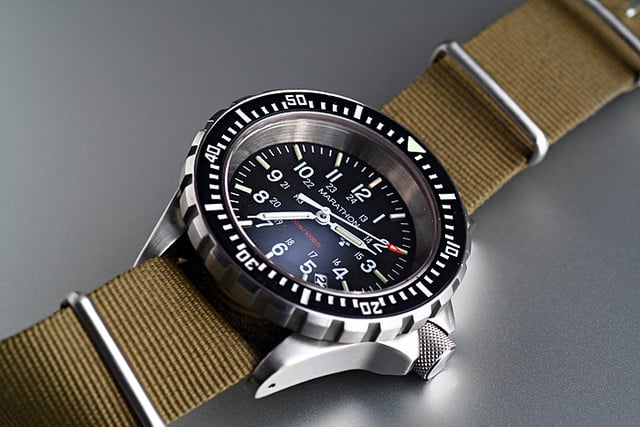
The Canadian military needed watches that could function in Arctic conditions where regular timepieces simply gave up and died, so Marathon created the TSAR with tritium tubes for constant illumination and a case that could handle temperature swings that would crack lesser watches like eggshells.
These weren’t issued to desk officers or ceremonial guards — they went to search and rescue teams operating in conditions where mechanical failure meant people didn’t come home, and the design reflects that brutal honesty in every oversized crown and thick case wall.
The tritium tubes glow with the steady light of reliability, not the flashy burst of luminous paint that fades when you need it most, and collectors who understand the difference between genuine military issue and military-inspired fashion accessories recognize the TSAR as the real thing.
But finding one that hasn’t been retired from service requires patience, since these watches tend to stay in the field until they’re literally worn out from saving lives.
Omega Seamaster 300 Royal Navy
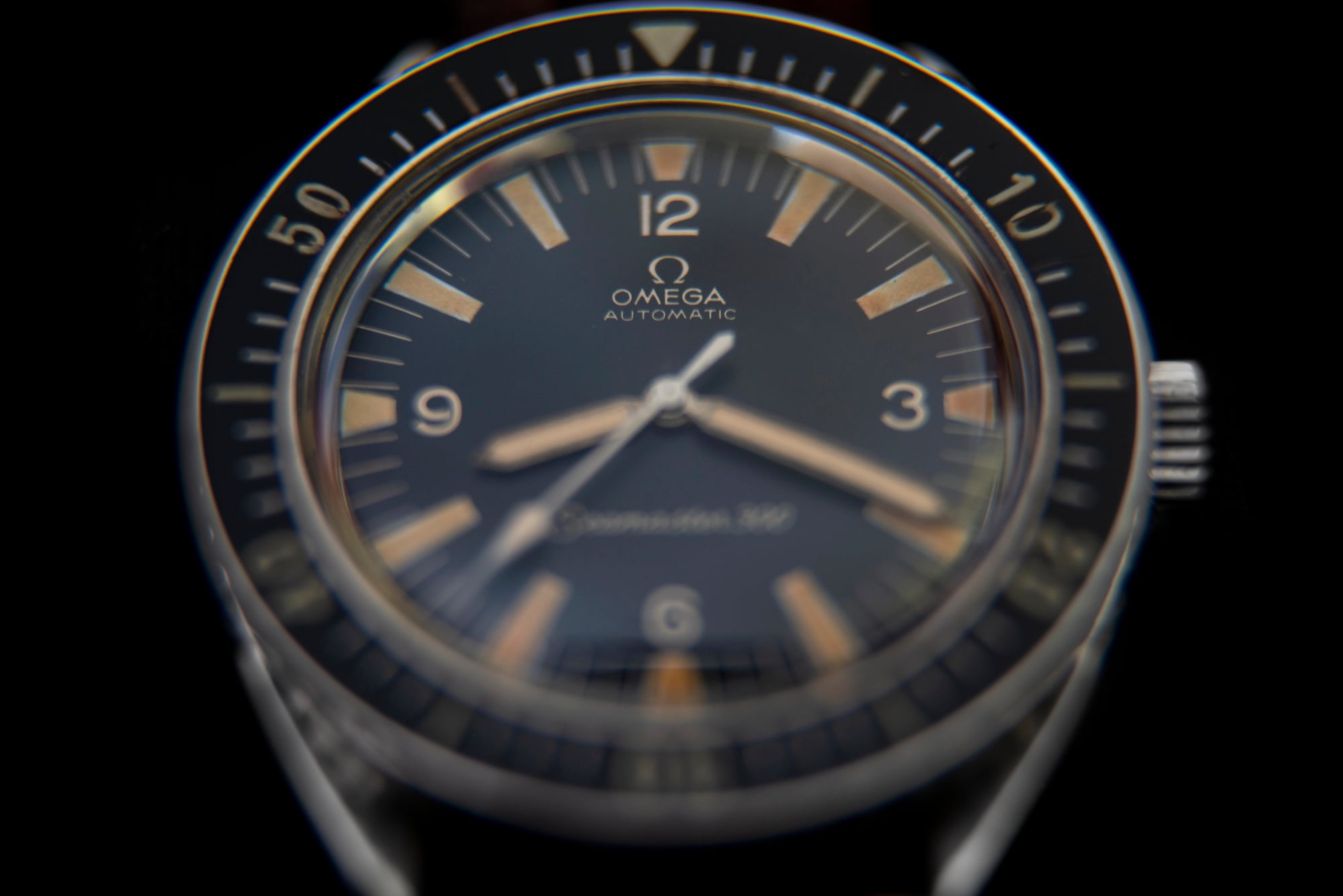
The Royal Navy’s Combat Swimmers needed dive watches that worked. Omega delivered Seamaster 300s with military markings and NATO stock numbers.
The broad arrow proved government ownership. Most got destroyed when they reached the end of service life.
The survivors command serious money from collectors who appreciate military heritage. The patina on genuine examples can’t be faked.
Glycine Airman Vietnam Issue
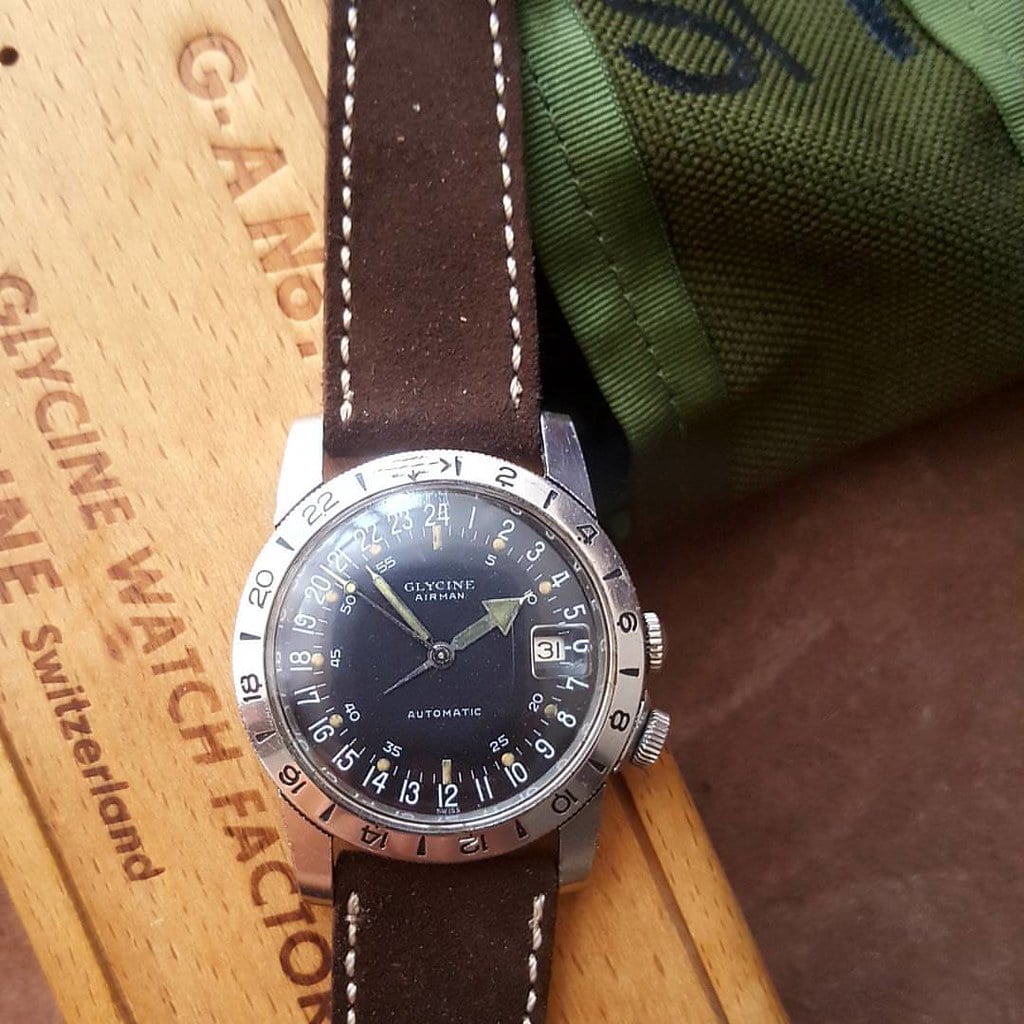
U.S. pilots flying missions across multiple time zones needed watches that could track both local time and GMT, and Glycine’s Airman delivered with a 24-hour dial that eliminated any confusion between day and night — crucial when flying combat missions that could stretch from afternoon briefings to pre-dawn bombing runs over North Vietnam.
The orange GMT hand wasn’t chosen for style points but for instant readability under red cockpit lighting, and the hack seconds feature let entire squadrons synchronize their watches before heading into airspace where timing could mean the difference between hitting the target and hitting friendlies.
These watches saw action in some of the most intense aerial combat of the Vietnam War, strapped to the wrists of pilots who flew missions that military historians still study today, and the few examples that made it back stateside carry stories that no civilian timepiece could ever match.
Finding one with original military provenance requires serious hunting, since most pilots either kept them as personal mementos or lost them along with everything else when their luck ran out over the jungle.
Tudor Submariner 7928 Military
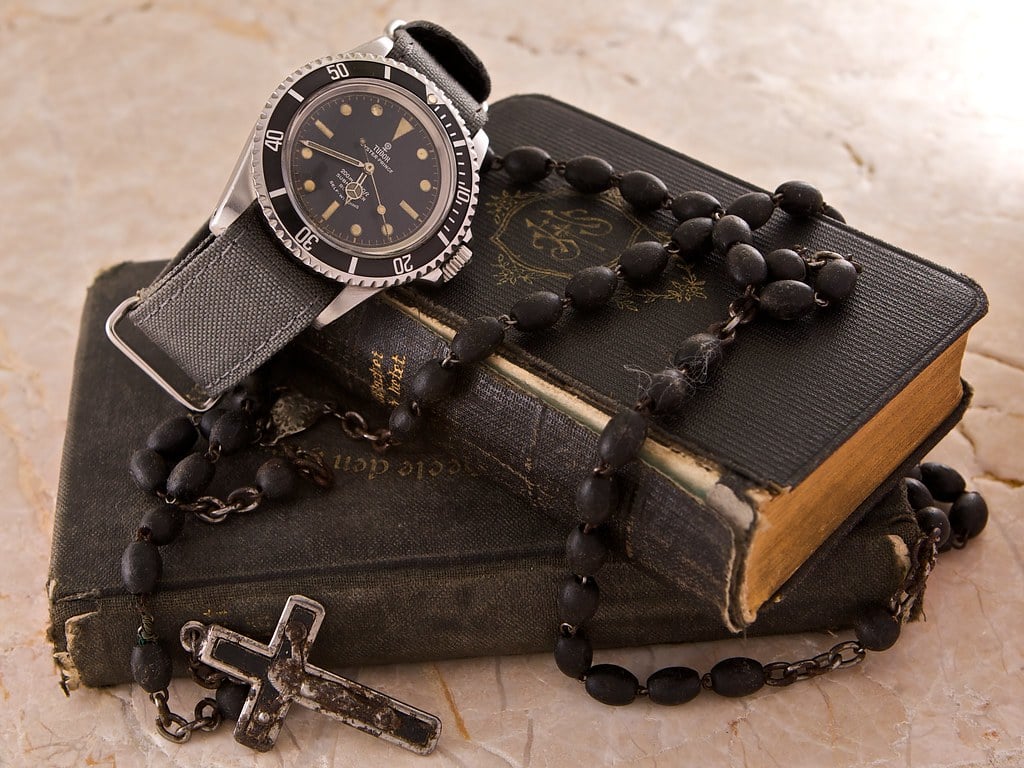
Tudor built these for navies that wanted Rolex quality at military budgets. The Swiss ETA movements proved just as reliable as Rolex calibers.
French Navy examples are particularly sought after. The squared crown guards and military-specific hands set them apart from civilian models.
Collectors pay attention to case back engravings that prove military issue. These watches earned their reputation through actual underwater service.
Hamilton GCT Military
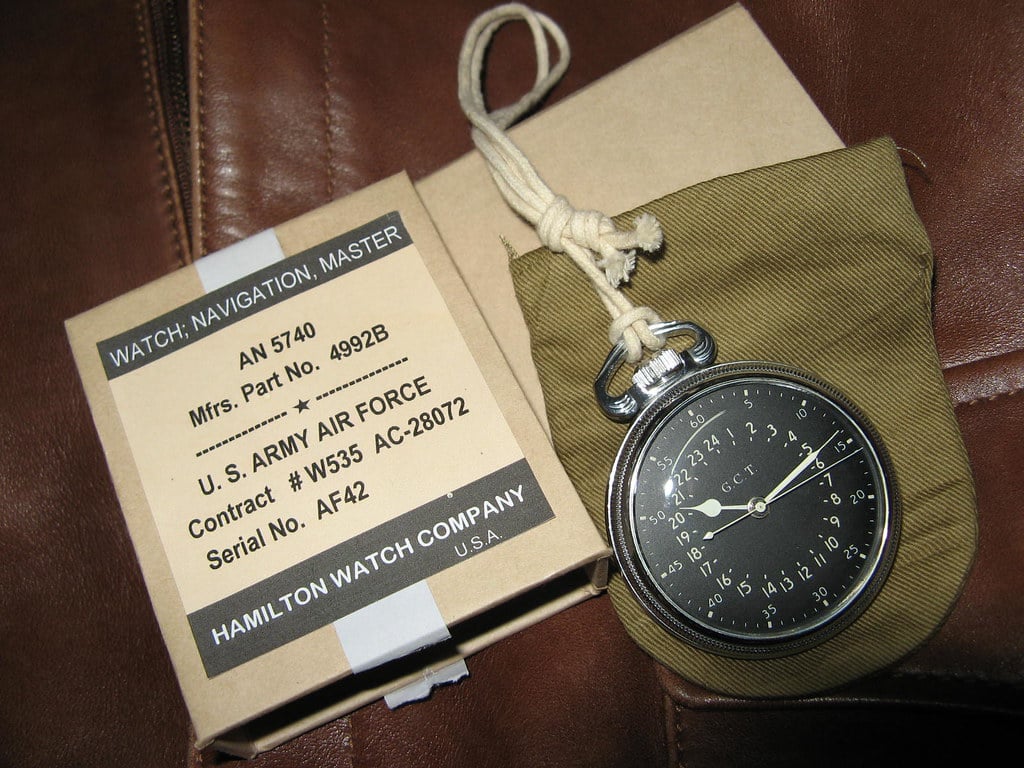
Like most things the military commissions, the Hamilton GCT (Greenwich Civil Time) chronograph was built to solve a specific problem that civilian manufacturers never had to consider — how do you create a timing instrument that works reliably when you’re coordinating operations across multiple continents and time zones, often under conditions where confusion about timing could compromise entire missions?
Hamilton’s answer was characteristically straightforward: a robust chronograph movement housed in a case designed to survive whatever the military could throw at it, with a dial layout that prioritized function over every other consideration.
The military-specific case back markings weren’t decorative elements but practical identifiers for supply and maintenance purposes, and the movement inside was built to military chronometer standards that exceeded what most civilians would ever need from a timepiece.
But here’s what makes surviving examples so compelling to collectors: they represent the pinnacle of American military timekeeping, produced during an era when Hamilton was synonymous with precision and reliability rather than fashion and marketing.
Vertex WWW British Army
The Dirty Dozen weren’t a military unit — they were twelve watch manufacturers commissioned to produce timepieces for British forces during World War II. Vertex was the smallest of the group and produced the fewest watches.
Finding a Vertex WWW today requires serious luck and serious money. The broad arrow marking and “W.W.W.” designation prove military issue.
Most collectors never see a genuine example outside of auction catalogs.
The Hunt Never Ends
Military watch collecting rewards patience and knowledge in equal measure. The stories behind these timepieces matter as much as their mechanical specifications.
Every genuine military watch represents someone who served, often in circumstances where reliability meant survival. That history can’t be manufactured or replicated, which is exactly why collectors keep hunting for the real thing.
More from Go2Tutors!

- The Romanov Crown Jewels and Their Tragic Fate
- 13 Historical Mysteries That Science Still Can’t Solve
- Famous Hoaxes That Fooled the World for Years
- 15 Child Stars with Tragic Adult Lives
- 16 Famous Jewelry Pieces in History
Like Go2Tutors’s content? Follow us on MSN.



