15 Massive Projects That Were Finished but Failed to Change the World
Some of humanity’s most ambitious projects promised to reshape civilization. Engineers drew up blueprints, governments allocated budgets, and construction crews spent years building monuments to human ingenuity.
The ribbon-cutting ceremonies were grand, the press coverage extensive, and the expectations sky-high. Then reality set in. Not every engineering marvel changes the world.
Some become cautionary tales about overconfidence, poor planning, or simple bad timing. Others work exactly as designed but discover that working and mattering are two different things entirely.
The Concorde

Air travel in the 1960s moved at the speed of conversation. The Concorde promised to change that, cutting transatlantic flight times in half with supersonic speeds that made the sound barrier look like a suggestion rather than a law of physics.
The engineering worked flawlessly (apart from that tragic 2000 crash, which wasn’t really about the fundamental design). But here’s what the engineers couldn’t solve: economics and politics.
Turns out, most people preferred cheaper tickets over faster flights — and most countries didn’t appreciate sonic booms rattling their windows twice a day. The Concorde became a luxury item for the wealthy rather than the revolution in mass transportation it was supposed to be.
Aviation didn’t leap forward; it just got more expensive for a very small group of passengers.
The Segway

Dean Kamen believed the Segway would transform urban transportation the way cars had transformed rural transportation a century earlier. Cities would redesign their infrastructure around these self-balancing scooters, and walking would become as quaint as riding horses to work.
The Segway worked exactly as advertised — which was part of the problem (since what it advertised was a solution to a problem most people didn’t know they had). Standing on a motorized platform felt less like the future of mobility and more like an expensive way to look ridiculous in public.
Mall cops adopted them, which somehow made them seem even less revolutionary. The technology was impressive; the need for it was largely imaginary.
Cities kept their sidewalks. People kept walking.
The Millennium Dome

Britain’s Millennium Dome was supposed to capture the optimism of the year 2000 and showcase the country’s creative and technological achievements to the world. The structure itself — a massive dome that could fit the Eiffel Tower lying on its side — was genuinely impressive from an engineering standpoint.
But impressive architecture doesn’t automatically translate into cultural significance (especially when the contents feel like a corporate team-building exercise designed by committee). The exhibits inside the dome struggled to live up to the grandeur of the building that housed them.
Visitors came, wandered through displays that felt more educational than inspirational, and left wondering what exactly they were supposed to have experienced. The dome became a symbol of millennial disappointment rather than millennial achievement — a beautiful shell around an empty promise.
Google Glass

Google Glass represented the first serious attempt to make augmented reality wearable and mainstream. The technology packed a computer, camera, and display into something that looked almost like regular eyewear — almost being the key phrase here.
The concept was genuinely forward-thinking: information floating in your peripheral vision, hands-free photography, real-time translation of foreign signs. But the execution created more problems than it solved.
The battery life was terrible, the price was astronomical, and wearing them in public made you look like either a tech enthusiast or a surveillance device. Privacy concerns killed adoption faster than any technical limitation could.
Society wasn’t ready to have cameras attached to everyone’s faces, and Google Glass became a cautionary tale about introducing technology before the social infrastructure exists to support it.
The Channel Tunnel
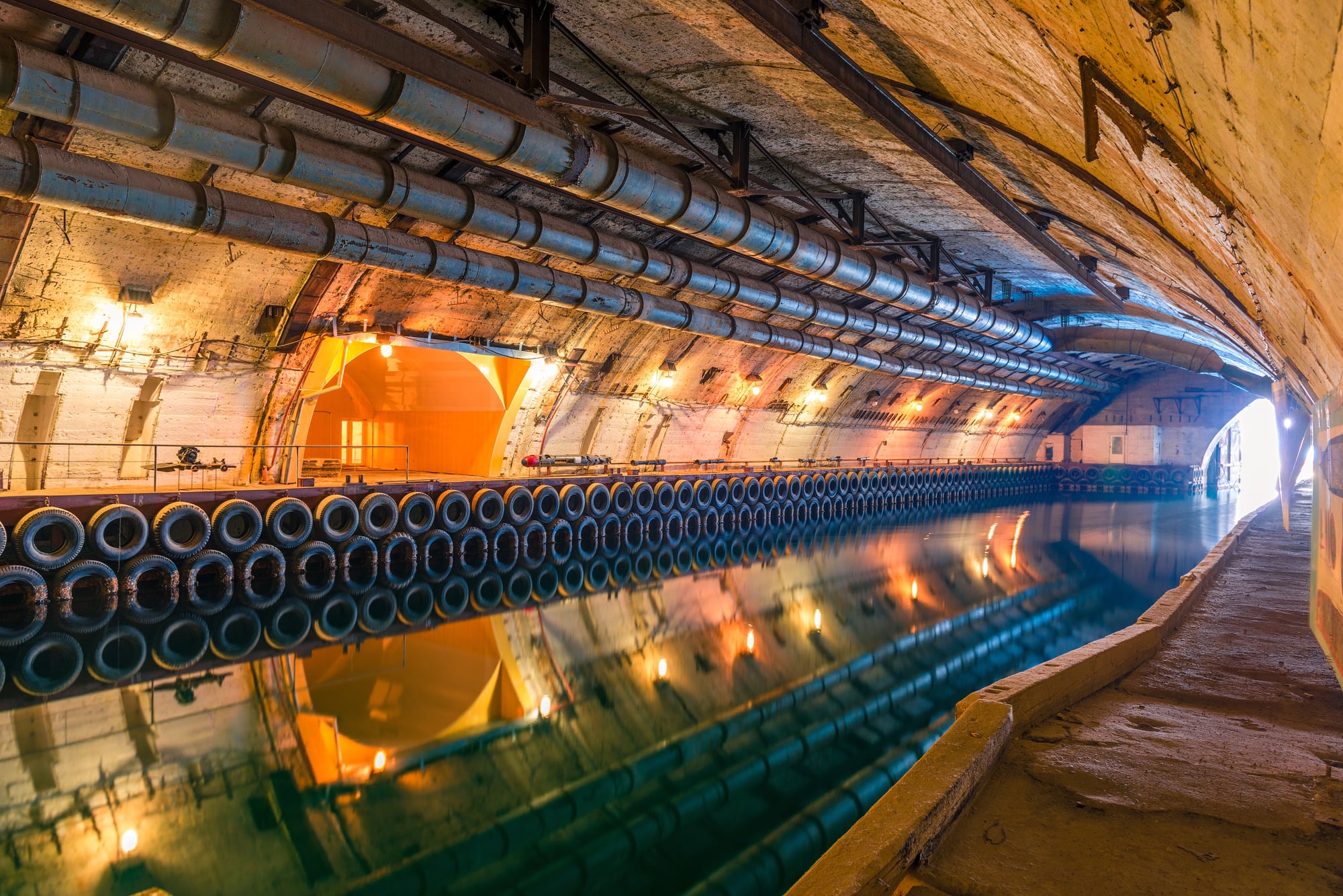
Few infrastructure projects capture human ambition like the Channel Tunnel — a 31-mile underwater railway connecting Britain and France through solid chalk beneath the English Channel. The engineering achievement was undeniable: boring through the seabed, creating a rail link that had been dreamed about for centuries, finally making it possible to travel from London to Paris without flying or taking a ferry.
Yet for all its technical brilliance, the Channel Tunnel never became the transformative force in European travel that its planners envisioned. The journey time was competitive with flying (once you factored in airport delays), but the cost remained high enough to keep it from becoming truly democratic transportation.
It carved out a niche for business travelers and tourists with flexible schedules, but it didn’t revolutionize the way ordinary Europeans moved around their continent. The tunnel succeeded as engineering; it struggled as economics.
Hydrogen Cars

The promise was elegant: cars that ran on the most abundant element in the universe and produced only water vapor as exhaust. Hydrogen fuel cells would eliminate both oil dependency and carbon emissions, creating transportation that was both environmentally sustainable and practically unlimited in range.
Toyota, Honda, and Hyundai built hydrogen cars that actually worked. They drove like regular cars, refueled faster than electric vehicles, and produced zero emissions.
The technology was sound, the environmental benefits were real, and the driving experience was perfectly normal. But infrastructure proved more stubborn than engineering.
Building a network of hydrogen fueling stations required coordinated investment on a massive scale, and consumers weren’t willing to buy cars they couldn’t reliably fuel. Electric vehicles offered a more pragmatic path to similar environmental benefits, using an electrical grid that already existed.
Hydrogen cars became the technically superior solution that lost to the practically superior one.
The Iridium Satellite Network

Before smartphones made internet connectivity ubiquitous, Motorola launched an ambitious project to provide global satellite phone coverage through a constellation of 66 satellites orbiting Earth. The Iridium network would make communication possible from anywhere on the planet — the middle of the ocean, remote mountain peaks, Antarctic research stations.
The system worked exactly as designed, which makes its commercial failure all the more instructive. Iridium phones were expensive, bulky, and required clear views of the sky to function properly.
More importantly, they launched just as terrestrial cell phone networks were expanding rapidly and becoming dramatically cheaper. The satellite solution arrived at precisely the moment when most people discovered they didn’t need it.
Iridium filed for bankruptcy in 1999, less than a year after completing its satellite constellation. The technology was impressive; the timing was disastrous.
3D Television

Television manufacturers convinced themselves that 3D was the next logical evolution of home entertainment. Every major electronics company produced 3D TVs, movie studios released 3D versions of major films, and sports broadcasts experimented with 3D coverage of live events.
The technology worked (though the glasses were annoying and the picture was often darker than regular HD). But 3D television suffered from a fundamental misunderstanding of how people actually watch TV at home, which is quite different from how they watch movies in theaters where 3D had found success.
Television viewing is often social, casual, and interrupted — exactly the opposite of the focused, immersive experience that 3D requires to be effective. People discovered that wearing special glasses to watch sitcoms felt ridiculous rather than futuristic.
The industry abandoned 3D TVs within a few years, moving instead toward higher resolution and better color reproduction. Turns out, clearer pictures mattered more than pictures that seemed to jump off the screen.
The Dvorak Keyboard

The QWERTY keyboard layout was designed in the 1870s to prevent mechanical typewriter keys from jamming — a problem that disappeared with electric typewriters and became completely irrelevant with computers. The Dvorak keyboard, patented in 1936, reorganized keys to optimize typing speed and reduce finger strain based on letter frequency and hand ergonomics.
Studies consistently showed that Dvorak typists could type faster and with less fatigue than QWERTY users. The layout was more logical, more efficient, and better designed for human hands.
It was objectively superior in nearly every measurable way. And none of that mattered. QWERTY had the insurmountable advantage of being first.
Every typist, typing teacher, and office worker already knew QWERTY. Switching to Dvorak required relearning a fundamental skill, and the benefits — while real — weren’t dramatic enough to justify the transition cost.
Dvorak became a case study in how superior technology can lose to inferior technology that got there first. Network effects proved stronger than technical advantages.
HD-DVD

The format war between HD-DVD and Blu-ray represented more than just competing technical standards — it was a battle for the future of home entertainment in the high-definition era. HD-DVD had several legitimate advantages: lower production costs, faster manufacturing times, and backing from Microsoft for Xbox integration.
The discs held slightly less data than Blu-ray, but not enough to matter for most movies. The players were cheaper to manufacture and hit the market first.
For a brief period, HD-DVD looked like it might establish the same dominance that VHS had achieved over Betamax decades earlier. But Sony learned from the Betamax failure and used its leverage as a major movie studio and PlayStation manufacturer to tip the scales toward Blu-ray.
When Warner Bros. announced exclusive Blu-ray support in early 2008, HD-DVD collapsed within months. The technology was viable; the business strategy wasn’t comprehensive enough to overcome a competitor with deeper pockets and more strategic partnerships.
Crystal Palace

London’s Crystal Palace, built for the Great Exhibition of 1851, was a marvel of Victorian engineering — a massive glass and iron structure that demonstrated new possibilities for prefabricated construction. After the exhibition, the building was moved to south London and reimagined as a permanent cultural center that would bring art, education, and entertainment to the masses.
The relocated Crystal Palace struggled to find its purpose (despite hosting everything from dog shows to early football matches to concerts). It was too large to feel intimate, too general to develop expertise in any particular area, and too expensive to maintain without a clear revenue model.
The building remained impressive, but impressive isn’t the same as necessary. When fire destroyed it in 1936, the loss was noted more for historical sentiment than for any ongoing cultural contribution.
The Crystal Palace proved that architectural innovation doesn’t automatically create social innovation.
The Seattle Monorail

Seattle’s monorail was built for the 1962 World’s Fair as a demonstration of futuristic urban transportation. The elevated train connected downtown Seattle to the Seattle Center in just two minutes, offering a glimpse of how cities might solve traffic congestion through three-dimensional transportation networks.
The monorail worked perfectly and still operates today, but it never expanded beyond its original 0.9-mile route. What seemed like the beginning of a transportation revolution remained a tourist attraction connecting two specific points.
Other cities built monorails for their own world’s fairs or theme parks, but none developed them into comprehensive transit systems. Monorails turned out to be more expensive and less flexible than conventional rail systems, and they required specialized infrastructure that couldn’t easily integrate with existing transportation networks.
The technology impressed visitors but didn’t convince urban planners.
Space Shuttles

NASA’s Space Shuttle program promised to make space travel routine and economical through reusable spacecraft that could launch like rockets and land like airplanes. The shuttles would reduce the cost of reaching orbit by eliminating the need for expensive single-use rockets, opening space to commercial activities and scientific research on an unprecedented scale.
The shuttles were genuinely impressive machines that accomplished remarkable missions, from deploying the Hubble Space Telescope to building the International Space Station. But they never achieved their core promise of making space access cheap and routine.
Each shuttle launch cost nearly $500 million and required months of refurbishment between flights. The reusable design, intended to reduce costs, actually increased complexity and maintenance requirements.
Two tragic accidents highlighted safety concerns that made routine commercial use impossible. The shuttle program ended in 2011, replaced by a return to simpler, more reliable expendable rockets.
Sometimes reusable isn’t better than replaceable.
Second Life

Second Life launched in 2003 as a virtual world where users could create avatars, build environments, and participate in a digital economy with real monetary value. Major corporations established virtual headquarters, universities created online campuses, and users bought and sold virtual real estate for actual money.
The platform peaked around 2007 with extensive media coverage and serious investment from Fortune 500 companies. IBM held meetings in Second Life, Harvard conducted classes, and entrepreneurs built profitable businesses selling virtual goods.
It seemed like a preview of how the internet might evolve into immersive digital spaces where people would spend increasing portions of their lives. But Second Life suffered from the same problem that affects many virtual worlds: it required too much effort from users to be genuinely compelling for most people.
Creating avatars, learning navigation, and building virtual environments felt more like work than entertainment. Social media platforms like Facebook and Twitter offered easier ways to connect online, while video games provided more engaging virtual experiences.
Second Life never disappeared, but it never became the mainstream digital universe its creators envisioned.
The Supersonic Transport Program

Before the Concorde, the United States had its own supersonic passenger jet program designed to leapfrog European aviation technology. Boeing’s 2707 was planned to carry more passengers at higher speeds than any competing aircraft, maintaining American dominance in commercial aviation through superior engineering.
The program consumed enormous resources and generated impressive technical innovations in materials science, aerodynamics, and engine design. Boeing solved complex problems related to variable-sweep wings and supersonic flight characteristics.
The prototypes looked futuristic and performed well in testing. Yet the program was canceled in 1971 before any production aircraft were built.
Environmental concerns about sonic booms and high-altitude emissions combined with economic worries about fuel consumption and operating costs to kill political support. The technical achievements were real, but the social and economic context had shifted.
By the time Boeing might have had a finished aircraft, the market had decided it preferred efficiency over speed. The engineering succeeded while the project failed — a reminder that technical possibility and practical desirability are different things.
When Ambition Meets Reality

These projects share a common thread that goes beyond their failure to change the world: they succeeded at what they were designed to do while failing at what they were supposed to mean. The Concorde flew faster than sound, the Segway balanced perfectly, and the Crystal Palace showcased Victorian engineering brilliance.
But working as designed isn’t the same as mattering in the way their creators hoped. The gap between technical achievement and cultural impact reveals something important about innovation itself.
The most transformative technologies aren’t necessarily the most impressive ones — they’re the ones that solve problems people actually have in ways that fit how people actually live. Sometimes the future looks different than we expect, not because our engineering wasn’t good enough, but because we built the right solution for the wrong moment.
More from Go2Tutors!

- The Romanov Crown Jewels and Their Tragic Fate
- 13 Historical Mysteries That Science Still Can’t Solve
- Famous Hoaxes That Fooled the World for Years
- 15 Child Stars with Tragic Adult Lives
- 16 Famous Jewelry Pieces in History
Like Go2Tutors’s content? Follow us on MSN.



