Facts About Famous Authors With Strange Habits
Genius rarely arrives quietly — and for some writers, it never shows up without a hint of madness.
Many of the world’s greatest authors relied on habits that blurred the line between routine and ritual, convinced those quirks kept inspiration alive.
Here’s a list of celebrated writers whose eccentric ways reveal the stranger side of literary genius.
Charles Dickens

Dickens was precise to the point of obsession.
His desk always faced north — he believed it improved focus and balance of mind.
When travelling, he carried a small compass to make sure everything aligned just right before he started work.
Strange, perhaps, yet his discipline produced pages filled with detail, structure, and life.
Everything in its proper place — even genius.
Victor Hugo

Deadlines terrified him, so Hugo came up with a drastic plan.
To stop himself from leaving the house, he locked away all his clothes and wrote wrapped in a blanket.
Ridiculous? Maybe.
But it worked — Les Misérables and The Hunchback of Notre-Dame were born out of that bare, self-imposed isolation.
Still, one hopes the room was warm enough.
Agatha Christie

Christie wrote wherever inspiration struck — the kitchen table, a bathtub, sometimes a train carriage.
She didn’t fuss about setting or structure, only progress.
Her notebooks were infamously chaotic, stuffed with crossed-out names and half-formed plots that only she could make sense of. From that mess came perfect mysteries.
A little chaos clearly suited her.
Friedrich Schiller

Schiller’s study carried a stench — intentionally. He kept rotting apples in his desk drawer, claiming the smell helped him think.
The idea seems unbearable, yet he swore the sour air jolted his creativity.
Most of us would’ve reached for air freshener; he found inspiration in decay.
Odd genius, that.
Franz Kafka

Kafka thrived in discomfort.
After long days at his insurance job, he’d write deep into the night — exhausted, half-hungry, and wide awake to the absurd.
Silence wasn’t enough; he needed a stillness that bordered on eerie.
Many of his stories slipped out between midnight and dawn, when reason softens and dream logic takes over.
Perfect timing for a man haunted by bureaucracy and bugs.
Truman Capote
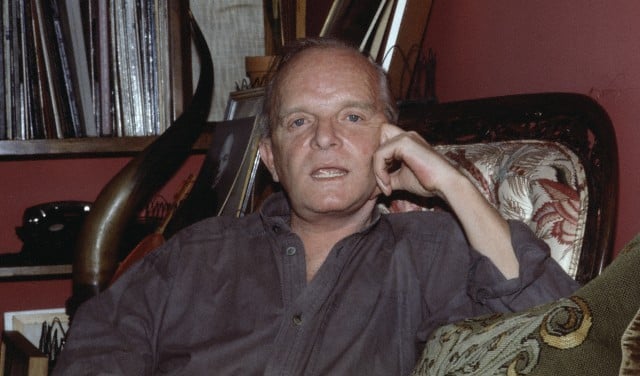
Capote never wrote sitting up.
He called himself a “horizontal writer,” working from couches or beds, starting the day with coffee and cigarettes and finishing it with martinis.
It sounds lazy — but it wasn’t.
His precision was as sharp as ever, his indulgence part of the rhythm.
Discipline disguised as decadence.
Maya Angelou

Angelou needed emptiness.
She wrote in anonymous hotel rooms, bringing only a Bible, a deck of cards, a bottle of sherry, and her tools.
Curtains closed, bed untouched, no distractions.
It wasn’t solitude she loved — it was silence. She wanted her words to echo, unchallenged by the world outside.
Toni Morrison

Morrison’s world began before sunrise.
She wrote in that quiet blue hour when everything feels suspended.
Each morning, she’d watch the sky lighten — her signal to begin.
Those moments became her sanctuary, a stillness where stories could unfold unhurried.
The day belonged to noise; dawn belonged to her.
Ernest Hemingway

Hemingway wrote standing up — always.
He said it kept his mind sharp and his prose lean.
Mornings were for writing, afternoons for boxing, fishing, or storytelling over rum.
His method felt casual, yet it was pure discipline dressed as rebellion.
The sentences were short, the life anything but.
Edgar Allan Poe

Poe treated writing like an experiment.
He measured rhythm with almost mathematical precision, counting syllables to make every line sing.
Candlelight was his muse — he claimed its flicker shaped the perfect atmosphere for creation.
You can picture him there, shadow and flame twisting over the page. Every word is deliberate.
Every silence earned.
Sylvia Plath

Plath’s mornings were sacred.
She wrote before breakfast, before her children stirred — before reality could interrupt.
Even her turmoil had a timetable.
She believed writing was how she survived her own thoughts, how she turned chaos into clarity.
It’s no wonder her poems still pulse with that intensity — ordered fire.
James Joyce

Joyce fought blindness and still refused to stop.
He wore a white coat to reflect extra light, hunching over the page, rewriting every sentence until it gleamed.
The process was excruciating.
Yet from that pain came precision — language so deliberate it changed literature forever.
Perfection, bought with persistence.
Gertrude Stein

Stein’s car was her studio.
She’d park somewhere quiet and write from the front seat, surrounded by open fields and the slow rhythm of cows.
Their calm, she said, steadied her thoughts.
Odd, yes — but it worked.
That measured pace seeped into her writing, giving it its strange, hypnotic rhythm.
Honore de Balzac

Balzac’s obsession was coffee.
He drank up to fifty cups a day — sometimes chewing the grounds for an extra jolt.
The result? Days and nights blurred together as he wrote through exhaustion and caffeine delirium.
He once said coffee sharpened his mind. Maybe so.
It certainly fueled an empire of novels.
Where Routine Becomes Revelation
Across centuries and continents, these strange customs share a single thread — control.
Each writer built a fragile system to hold chaos at bay just long enough to create something beautiful.
Some sought silence, others frenzy.
Even so, they proved the same truth: genius isn’t tidy.
It’s instinct wrapped in ritual — and often, a little madness too.
More from Go2Tutors!

- The Romanov Crown Jewels and Their Tragic Fate
- 17 Halloween Costumes Once Considered Taboo
- Famous Hoaxes That Fooled the World for Years
- 15 Child Stars with Tragic Adult Lives
- 16 Famous Jewelry Pieces in History
Like Go2Tutors’s content? Follow us on MSN.



