15 Rare Photos of Famous Landmarks Being Built
Looking at the Eiffel Tower or Statue of Liberty today, it’s hard to imagine these monuments as anything other than permanent fixtures in their landscapes. They feel timeless, as if they’ve always existed exactly where they stand.
But every iconic landmark started as an empty plot of ground, a wild idea, and years of painstaking construction that transformed sketches into the structures millions visit each year. These rare photographs capture that magical in-between moment when famous landmarks existed only partially—half-built dreams suspended between vision and reality.
The images reveal something unexpectedly moving: even the world’s most recognizable monuments had humble, messy beginnings.
Eiffel Tower

The iron lattice that now defines Paris was once considered an eyesore by the city’s residents. Construction began in 1887, and these photos show the tower’s skeletal frame rising piece by piece above the Parisian rooftops.
Workers assembled over 18,000 individual iron parts using 2.5 million rivets. The most striking images capture the tower at half-height, looking oddly stubborn and incomplete.
One photograph shows workers perched on narrow beams hundreds of feet above the ground, no safety equipment in sight. They’re building what would become the world’s tallest structure at the time, and they look remarkably calm about it.
Statue of Liberty
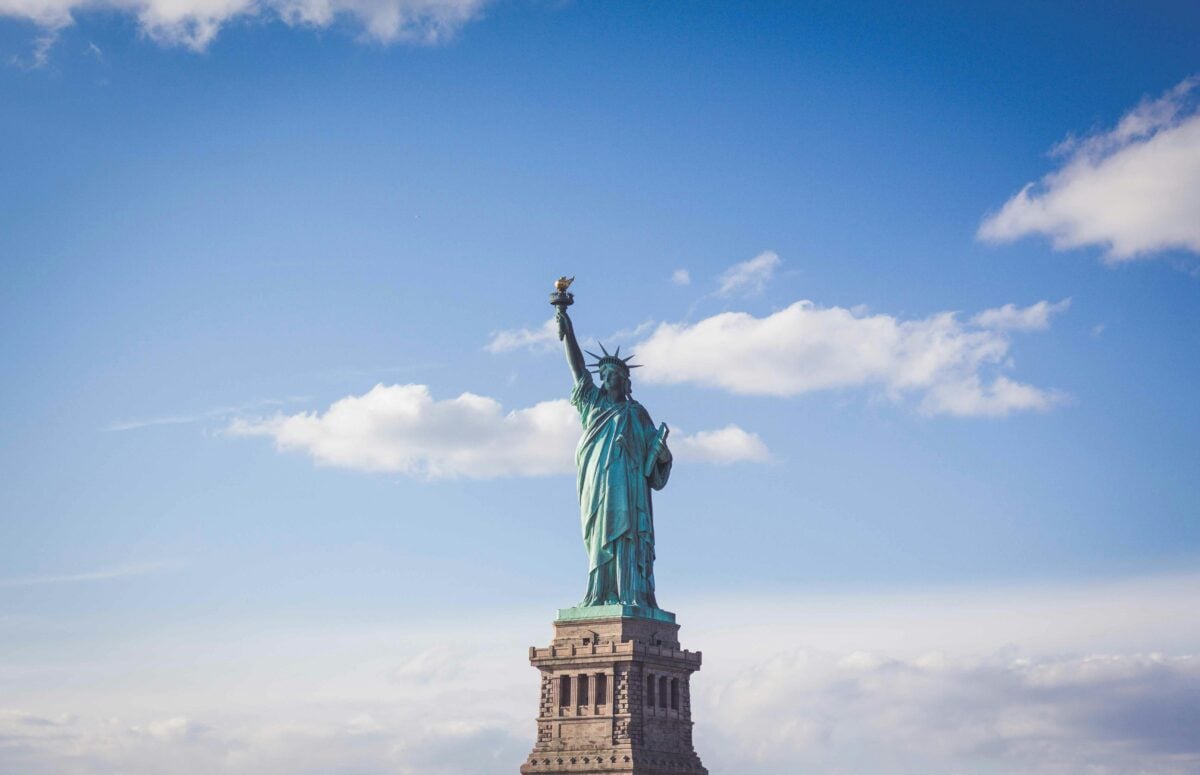
Lady Liberty arrived in New York Harbor in pieces, shipped from France in 214 crates. The construction photos tell two stories: her assembly in Paris and her reconstruction in New York.
The French workshop images show the statue’s massive copper sections being fitted together like pieces of an enormous puzzle—her arm here, her draped robes there, all dwarfing the workers who built them.
But the New York photographs capture something more dramatic (and if you’ve ever tried to assemble furniture from instructions, you’ll appreciate this): the moment when Americans realized they had a 151-foot copper statue but no proper pedestal to put her on. The fundraising campaign that followed produced some of the most unusual construction photos ever taken—Liberty’s torch being displayed in Madison Square Park to drum up donations while her body waited on Bedloe’s Island.
Mount Rushmore
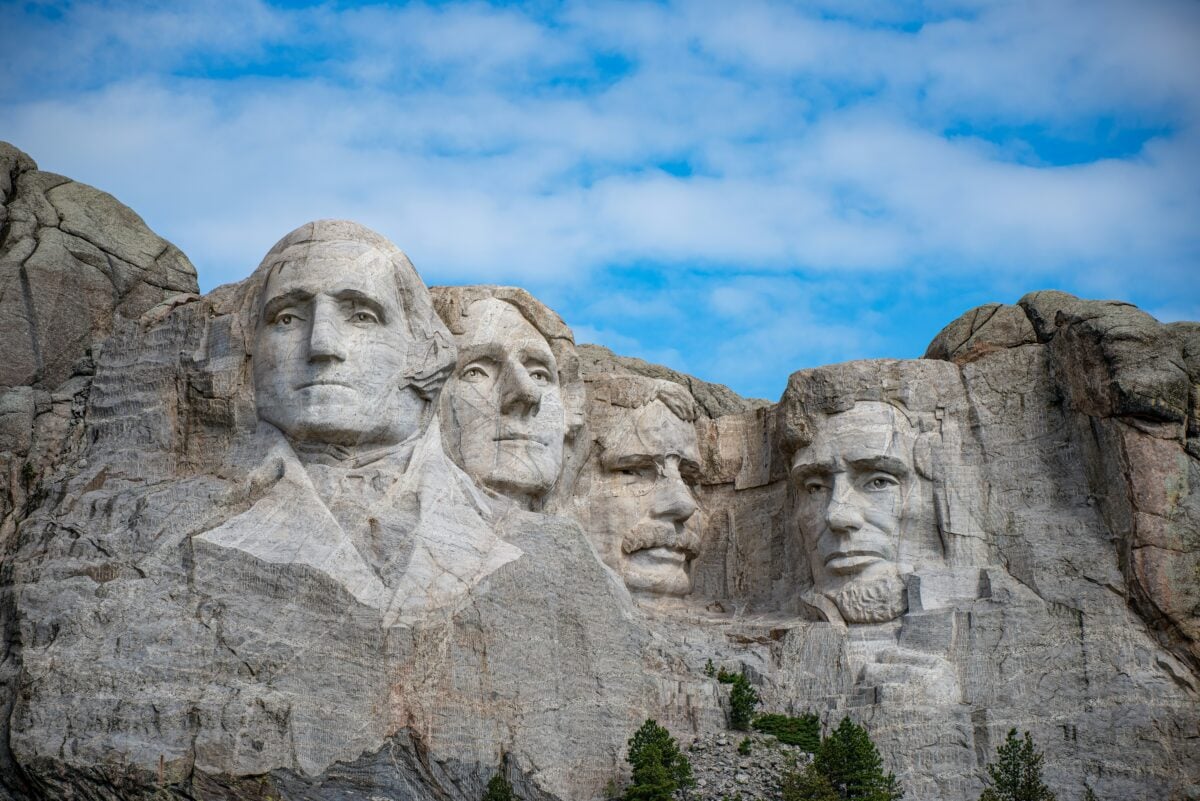
Gutzon Borglum’s presidential faces emerged from South Dakota granite through a process that photographs barely capture: the sheer audacity of the thing. Construction began in 1927, and the images show workers dangling from ropes, chiseling away tons of rock to reveal Lincoln’s beard or Roosevelt’s mustache.
The scale becomes clear only when you spot the tiny human figures working on what looks like a regular-sized nose but is actually 20 feet long. The most remarkable photos show the mountain before any carving began—just a blank granite cliff face where four presidents would eventually stare out over the Black Hills.
Some of the later images reveal Washington’s face nearly complete while Jefferson exists as only a rough outline. Even monuments, it turns out, have their awkward teenage years.
Golden Gate Bridge

The Golden Gate Bridge’s construction photos document what was considered an impossible feat of engineering. Starting in 1933, workers had to contend with fierce winds, thick fog, and treacherous currents while building a suspension bridge longer than any previously attempted.
The images capture the bridge’s towers rising from the water, connected by nothing but faith and steel cables. One photograph shows the bridge deck being built outward from both ends, the two halves not yet meeting in the middle.
Another captures workers spinning the massive cables that would support the roadway—a process that took six months and required perfect tension calculations. The bridge looks fragile in these images, which makes sense when you consider that 11 workers died during construction despite unprecedented safety measures.
Washington Monument

Washington’s obelisk took 36 years to complete, which explains why construction photos span several decades and show dramatically different building techniques. Work began in 1848 but stopped in 1854 due to funding issues and political disputes.
When construction resumed in 1877, the builders used slightly different marble, creating a visible line about one-third of the way up that you can still see today. The early photographs show the monument as a 150-foot stump surrounded by construction equipment.
Later images reveal the massive cranes and pulleys needed to lift stones to the upper levels. Workers had to haul each block up the interior of the monument using a steam-powered hoist. The final photographs show the aluminum cap being installed—a metal more precious than gold at the time.
Sydney Opera House

Jørn Utzon’s opera house challenged every assumption about what buildings should look like, which meant construction involved inventing new techniques as work progressed. Beginning in 1959, the project took 14 years and cost 14 times the original estimate.
The construction photos reveal why: the iconic shell-shaped roof sections required a completely new approach to concrete work (and if you’ve ever tried to build something that doesn’t follow standard architectural rules, you know the headaches that follow). The most fascinating images show the shells being constructed as sections of a perfect sphere—a mathematical solution that took years to figure out.
Workers had to pour concrete into complex molds while calculating curves that had never been attempted at this scale. One photograph captures the opera house with only half its shells complete, looking like a modernist sculpture that someone forgot to finish.
Brooklyn Bridge
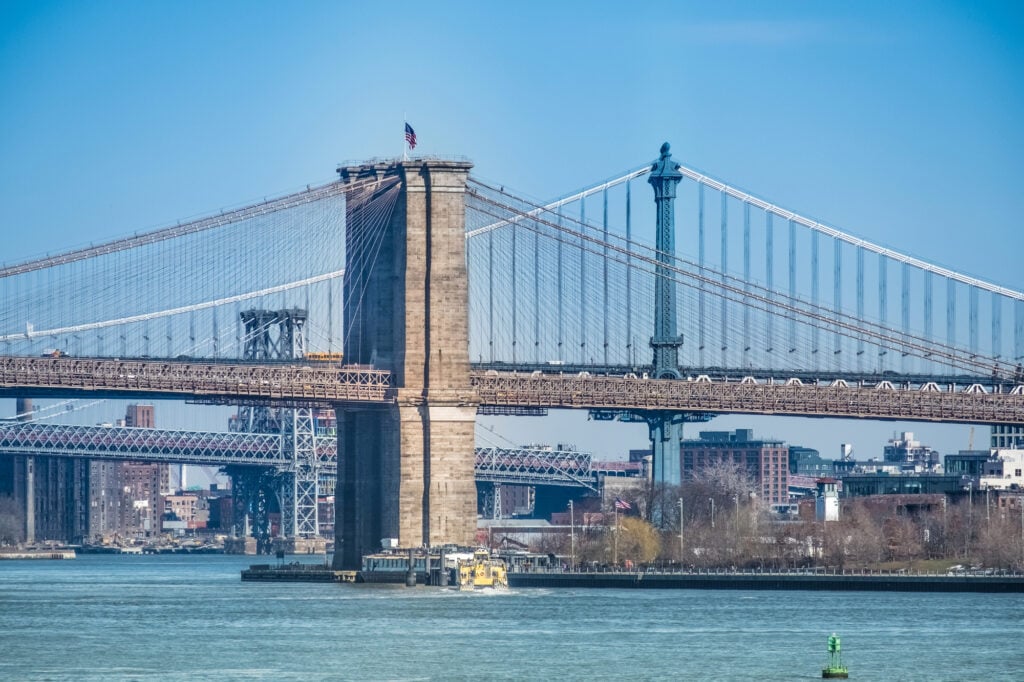
When John Roebling designed the Brooklyn Bridge, suspension bridges were still experimental technology. His son Washington took over the project after John died from tetanus, then Washington’s wife Emily effectively ran the construction when Washington became bedridden with decompression sickness.
The photographs document not just a bridge being built, but a family legacy being forged in steel and stone. The construction images show the massive granite towers being built using pneumatic caissons—underwater chambers where workers dug foundations in compressed air.
Many workers developed “caisson disease” (now known as decompression sickness) from ascending too quickly. One photograph shows the bridge’s roadway suspended between completed towers, looking impossibly thin across the East River.
Another captures the moment when the first cable was stretched between towers—a day when work stopped so everyone could witness what seemed like a miracle.
Christ the Redeemer

Rio’s Christ the Redeemer statue construction photos capture an undertaking that required building a railway up Corcovado Mountain just to transport materials. Beginning in 1922, workers had to haul thousands of soapstone pieces up the mountain to construct the 98-foot statue.
The engineering challenge wasn’t just building Christ—it was figuring out how to build anything on top of a 2,300-foot peak. The most striking images show the statue’s internal steel framework being assembled piece by piece, with Christ’s outstretched arms taking shape like an enormous scarecrow against the Rio skyline.
Later photographs reveal workers attaching the soapstone exterior panels that give the statue its smooth appearance. The final construction photos show Christ complete but surrounded by scaffolding and construction equipment—a surreal image of the sacred and industrial occupying the same space.
Empire State Building

The Empire State Building rose during the Great Depression, which meant construction moved at unprecedented speed—410 days from groundbreaking to completion. The photographs document what may be the most efficiently managed construction project in history.
Workers demolished the old Waldorf-Astoria Hotel and began building upward almost simultaneously, with steel arriving on schedule and crews working around the clock. The famous “Lunch atop a Skyscraper” photograph was actually taken during the construction of 30 Rockefeller Plaza, but the Empire State Building’s construction photos are equally dramatic.
Images show workers walking on narrow beams hundreds of feet above Manhattan with no safety equipment. One photograph captures the building’s mooring mast being installed—originally designed for dirigibles that never actually moored there.
The speed of construction becomes clear when you realize the building was completed just 13 months after ground was broken.
Tower Bridge
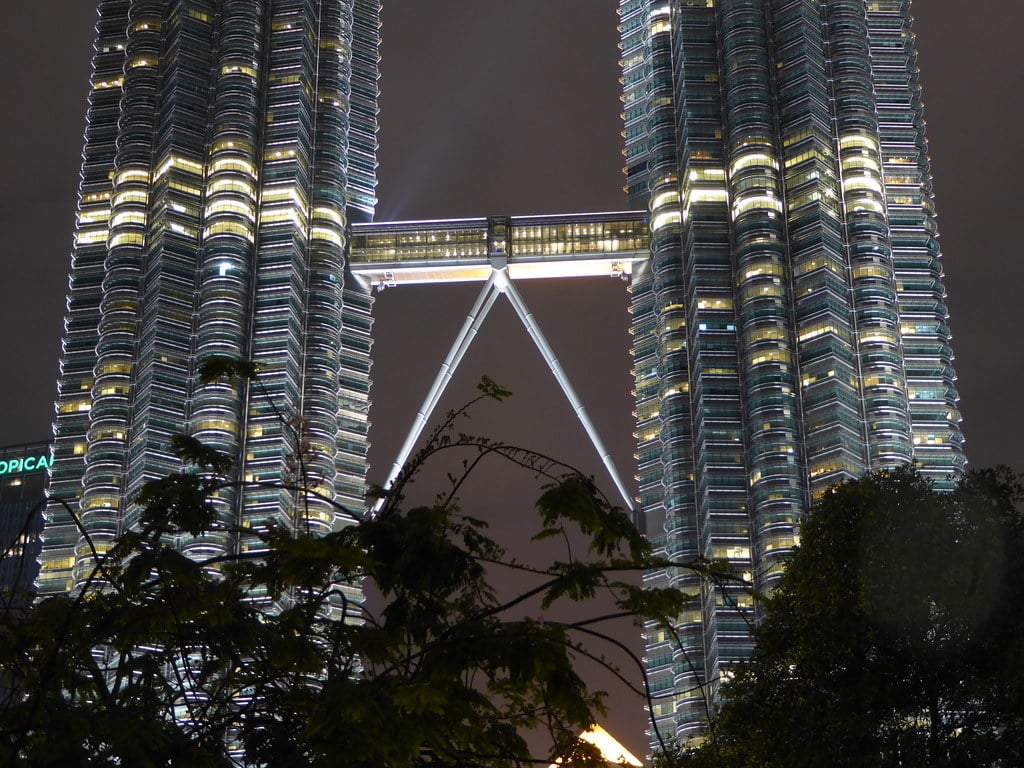
London’s Tower Bridge construction required a level of Victorian engineering ambition that photographs struggled to capture fully. Built between 1886 and 1894, the bridge needed to span the Thames while still allowing tall ships to pass underneath.
The solution—a bascule bridge that could split and rise—had never been attempted at this scale (and considering Victorian engineers’ track record with ambitious projects, this was either brilliant or catastrophic waiting to happen). The construction photos reveal the bridge’s massive steel framework being assembled inside a stone facade designed to match the nearby Tower of London.
Workers had to excavate foundations underwater using diving bells—a dangerous process that claimed several lives. One remarkable photograph shows the bridge’s bascules being tested, with the roadway split open and one half pointing toward the sky.
The mechanical complexity becomes obvious when you realize each bascule weighs over 1,000 tons yet can be raised in just five minutes.
Gateway Arch
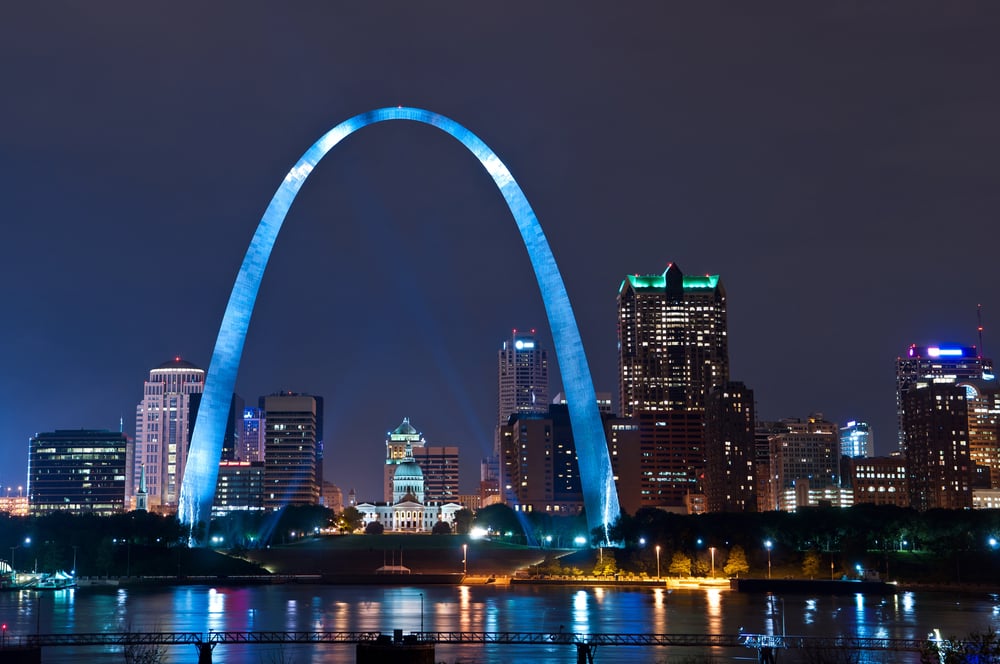
Eero Saarinen’s Gateway Arch presented a construction challenge that seemed almost impossible: building a 630-foot stainless steel arch with perfect symmetry. Construction began simultaneously from both ends in 1963, with crews racing to ensure the two halves would meet precisely at the top.
The margin for error was essentially zero—any miscalculation would result in an expensive pile of curved steel that didn’t connect. The construction photographs show the arch rising section by section, with massive cranes positioning each piece.
The most tense images capture the final months when the gap between the two halves grew smaller and smaller. Engineers had to account for thermal expansion—the arch’s steel sections would expand in sunlight, potentially preventing the final piece from fitting.
The solution involved starting work before dawn and using fire hoses to cool the steel. One photograph shows the moment the final section was installed, with workers celebrating 630 feet above the Mississippi River.
Space Needle
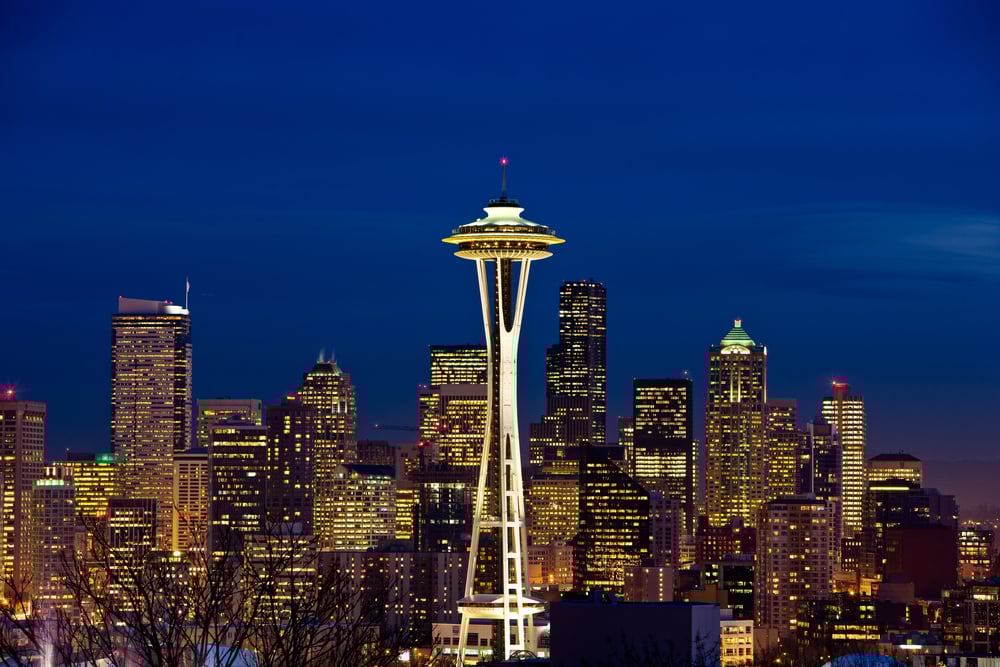
Seattle’s Space Needle was built for the 1962 World’s Fair, which gave designers just 18 months to create something that looked appropriately futuristic. The construction photos reveal a building process that was essentially improvised—workers were building a structure unlike anything previously attempted, with no established techniques to follow.
The Needle’s flying saucer-like top had to be balanced on a narrow stem while accounting for earthquake stability and high winds. The images show the Needle’s foundation being poured—a concrete base that extends 30 feet underground and weighs as much as the above-ground structure.
Later photographs capture workers assembling the top section’s distinctive shape using cranes and a lot of careful planning. One remarkable image shows the Space Needle nearing completion with the World’s Fair construction happening simultaneously around it—a snapshot of optimistic 1960s architecture rising from what had been an ordinary Seattle neighborhood.
Lincoln Memorial

The Lincoln Memorial’s construction spanned World War I, beginning in 1914 and finishing in 1922. The photographs document a massive undertaking that required draining swampland and creating an artificial foundation strong enough to support 175,000 tons of marble, granite, and limestone.
Workers had to build the memorial on what was essentially reclaimed marsh, which meant engineering solutions that weren’t in any textbook. The construction images show Daniel Chester French’s massive Lincoln statue being assembled inside the nearly complete memorial.
The statue arrived in pieces and had to be fitted together like an enormous puzzle. One photograph captures Lincoln’s head being lowered into position—a massive marble piece that took months to carve and position correctly.
The scale becomes clear when you see workers standing next to Lincoln’s hand, dwarfed by the proportions of a figure that stands 19 feet tall from head to foot.
Hoover Dam
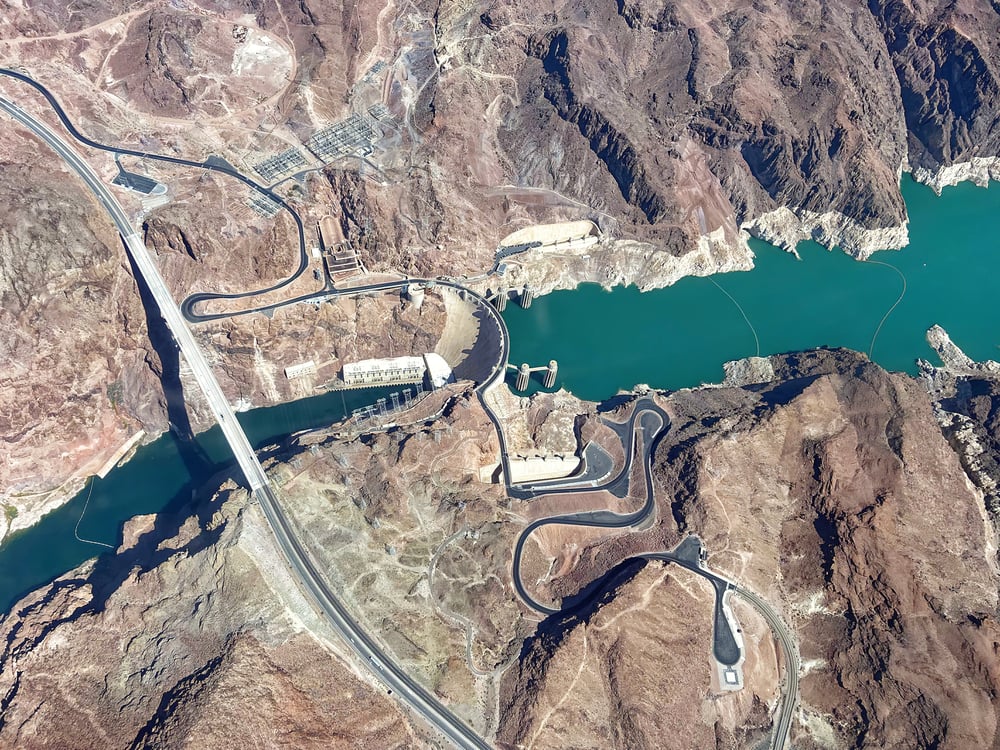
The Hoover Dam construction photos document one of the most ambitious engineering projects in American history. Built during the Great Depression, the dam required redirecting the Colorado River, blasting through solid rock, and pouring more concrete than had ever been used in a single project.
Work began in 1931 and employed over 20,000 workers in the middle of the Nevada desert. The images show the massive scale of excavation required—workers blasted away millions of tons of rock to create the dam’s foundation.
Later photographs capture the concrete pouring process, which had to happen continuously for two years to prevent cracking. One remarkable image shows workers suspended on ropes, smoothing the dam’s concrete face while it was still under construction.
The human cost becomes clear when you learn that 96 workers died during construction, though contrary to popular myth, none are buried in the dam’s concrete.
Pentagon

The Pentagon’s construction began just two months before Pearl Harbor, which meant the building was designed and built while America prepared for war. The photographs document the fastest construction of a major government building in U.S. history—groundbreaking to occupancy in just 16 months.
Workers built the world’s largest office building while military planners were still figuring out exactly what they needed it for. The aerial construction photos reveal the Pentagon’s distinctive five-sided shape taking form in what had been Virginia farmland.
The building’s unusual design was actually a practical solution—the original site was pentagonal, so architects designed a building to match. When the site was later changed, the five-sided design was kept because construction had already begun.
One photograph shows thousands of workers simultaneously building different sections of the Pentagon, a coordination feat that rivaled the military operations the building would eventually house.
Timeless Ambition

These construction photographs remind us that even the most permanent-seeming landmarks started as crazy ideas that required years of stubborn determination to complete. Each image captures a moment when failure seemed as likely as success—when the Eiffel Tower was just iron scaffolding, when Mount Rushmore was blank granite, when the Golden Gate Bridge was two unconnected towers rising from San Francisco Bay.
The workers in these photographs were building more than structures. They were constructing the landmarks that would define their cities and countries for generations.
They couldn’t have known their half-finished projects would become the icons tourists travel thousands of miles to see. They were just showing up each day, solving problems, and building something that had never been built before.
More from Go2Tutors!

- The Romanov Crown Jewels and Their Tragic Fate
- 13 Historical Mysteries That Science Still Can’t Solve
- Famous Hoaxes That Fooled the World for Years
- 15 Child Stars with Tragic Adult Lives
- 16 Famous Jewelry Pieces in History
Like Go2Tutors’s content? Follow us on MSN.



