15 Tech Founders Who Became Billionaires Before 40
The standard arc of building wealth used to take decades. You’d work your way up, accumulate assets gradually, and if things went very well, arrive at financial security somewhere in your fifties or sixties.
Then the internet arrived and compressed that timeline dramatically. A handful of founders didn’t just build successful companies — they built ones that scaled so fast, and captured so much value so quickly, that they crossed the billion-dollar threshold before most people had finished paying off their student loans.
Here’s who they are and how it happened.
Mark Zuckerberg
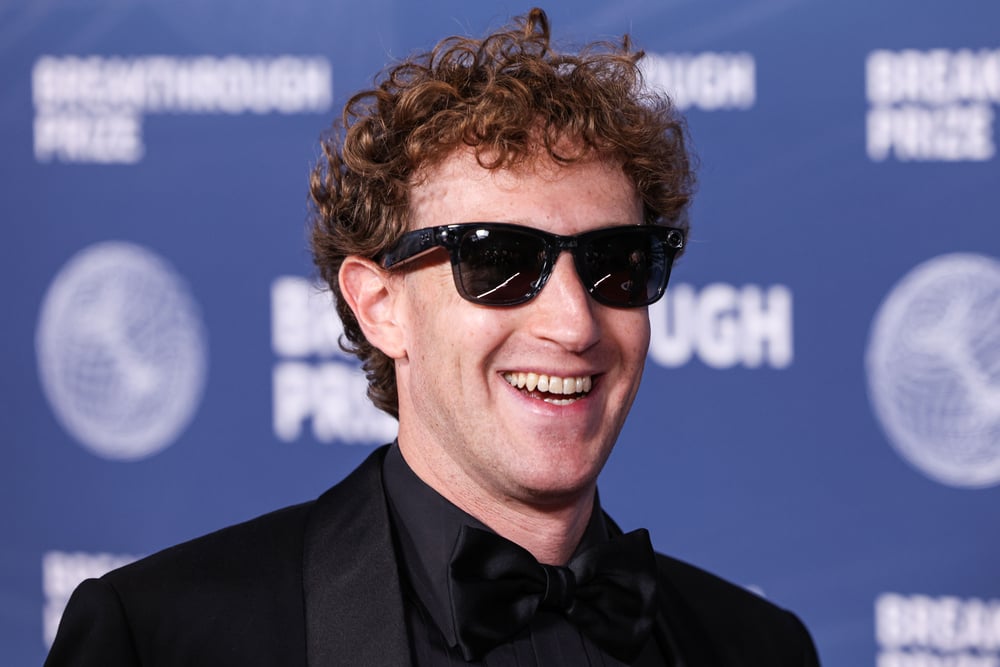
Mark Zuckerberg launched Facebook from his Harvard dorm room in 2004 at age 19. By 23, he was a billionaire.
The speed of that climb reflected something that would become a recurring pattern in Silicon Valley: a social product that got more valuable the more people used it, combined with a founder willing to turn down enormous acquisition offers and keep building. Microsoft reportedly offered $15 billion to acquire Facebook in 2007.
Zuckerberg said no. That decision, made at 23, shaped the next two decades of technology.
He remains one of the most striking examples of someone who understood exactly what he had built before the rest of the world fully caught up.
Kevin Systrom

Kevin Systrom co-founded Instagram in 2010 and sold it to Facebook just two years later for approximately $1 billion — at the time, one of the most talked-about acquisitions in tech. He was 28 years old.
What made the deal remarkable was that Instagram had 13 employees and was generating no revenue when the deal closed. Zuckerberg recognized the threat early and moved fast.
Systrom’s ability to build a product that 30 million users had already adopted, with almost no staff and no monetization, demonstrated something rare: an instinct for what people wanted to do with their phones before they could fully articulate it themselves.
Evan Spiegel

Snapchat launched in 2011, and Evan Spiegel was 21. By his mid-twenties, he had famously turned down a reported $3 billion acquisition offer from Facebook — an echo of Zuckerberg’s own decision years earlier. He was 25 when Snap’s valuation made him a billionaire on paper, and 26 when the company went public.
The path wasn’t smooth. Snap’s stock struggled after its IPO, and the company has faced sustained pressure from Instagram copying its core features.
But Spiegel built something that genuinely changed how a generation communicated, and he made that bet before turning 22.
Jan Koum

Jan Koum grew up in a small village in Ukraine and immigrated to the United States as a teenager with very little money. He taught himself programming and eventually landed at Yahoo before leaving to build WhatsApp.
He launched it in 2009, kept the team tiny, avoided advertising, and charged users a nominal fee. Facebook acquired WhatsApp in 2014 for $19 billion — still one of the largest tech acquisitions ever made.
Koum was 38. The journey from arriving in the US with almost nothing to that outcome is one of the more remarkable stories in Silicon Valley, and the product itself — simple, fast, private — reflected the values of someone who had grown up with genuine scarcity.
Brian Chesky

Brian Chesky and his co-founders launched Airbnb in 2008, at the worst possible moment — the financial crisis. The idea of renting out air mattresses in your apartment to strangers was widely dismissed, including by investors.
Chesky and his team famously funded early operations partly by selling novelty breakfast cereal. By 2012, the company had crossed a valuation that made Chesky a billionaire.
He was 31. The IPO in 2020, even in the middle of a pandemic, saw the stock price nearly double on its first day of trading.
The company that couldn’t get meetings with most investors eventually became one of the most recognized brands in the world.
Logan Green and John Zimmer

Lyft’s co-founders, Logan Green and John Zimmer built the company that kept Uber honest. Green was 28 and Zimmer 23 when they launched Lyft’s ridesharing product in 2012. Both reached billionaire status before 35 when the company went public in 2019.
Lyft was always the smaller of the two major ridesharing platforms, but its existence shaped the entire category. It forced Uber to compete on service and price in ways it wouldn’t have otherwise had to, and it built a genuine brand around a different kind of culture.
That second-place position came with real stakes and real wealth.
Patrick Collison
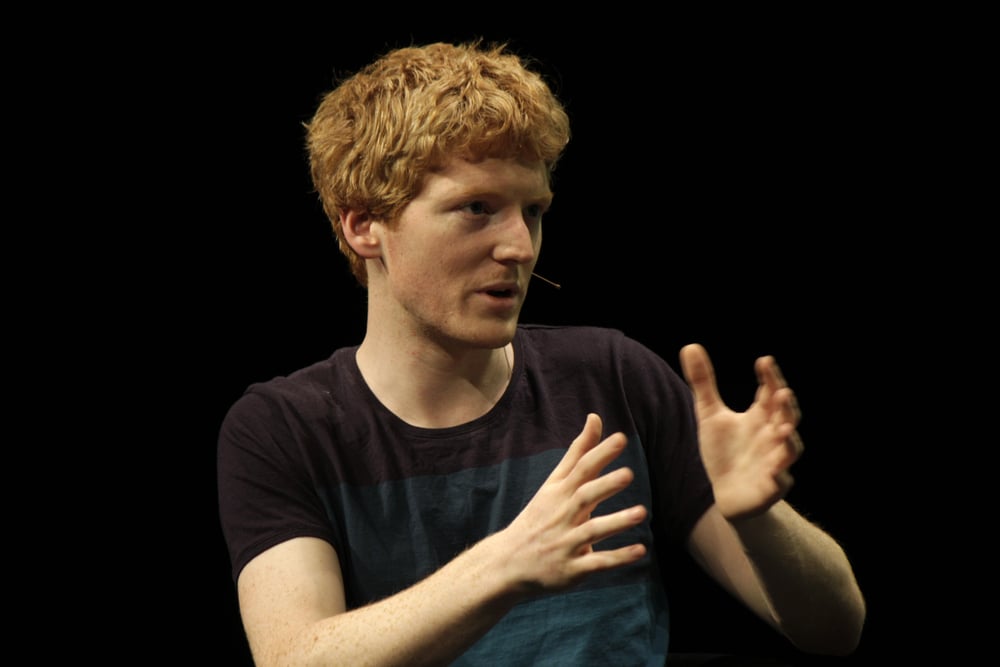
Patrick Collison started his first company at 16, sold it, and co-founded Stripe with his brother John in 2010 when he was 22. Stripe builds payment infrastructure — the behind-the-scenes technology that lets websites and apps accept money — and it scales by making something genuinely complicated much easier for developers to implement.
Collison was 26 when Stripe’s valuation crossed the billion-dollar mark. The company’s growth since then has been extraordinary, reaching a peak private valuation of $95 billion in 2021.
He is also one of the more publicly intellectually engaged founders in tech, known for reading widely and thinking carefully about topics far outside payments.
John Collison

Patrick’s younger brother John Collison co-founded Stripe at 19 and became the world’s youngest self-made billionaire at the time, at age 26, when Stripe crossed its first major valuation milestone.
He handles much of the company’s business and customer operations and is widely credited with building the relationships that brought large enterprise clients to the platform. The two brothers built something that most people have used without knowing it.
If you’ve ever bought something online, there’s a reasonable chance Stripe processed the payment somewhere in the chain.
Andrew Mason

Andrew Mason launched Groupon in 2008 and watched it scale into one of the fastest-growing companies in history. By 2010, Forbes had declared Groupon the fastest company ever to reach $1 billion in sales.
Mason became a billionaire in his late twenties. The story didn’t stay straightforwardly triumphant.
Mason turned down a reported $6 billion acquisition offer from Google in 2010, took the company public in 2011, and was fired by the board in 2013 as growth stalled. He sent a memo to employees upon leaving that became famous for its self-deprecating honesty: “I was fired today.
If you’re wondering why, you haven’t been paying attention.”
Palmer Luckey

Palmer Luckey built the first prototype of the Oculus Rift virtual reality headset in his parents’ garage at age 18. He launched a Kickstarter campaign in 2012 that raised $2.4 million.
Facebook acquired Oculus in 2014 for $2 billion. Luckey was 21 years old.
The acquisition made him one of the youngest tech billionaires on record. He later left Facebook under complicated circumstances and went on to found a defense technology company.
But the original bet — that consumer VR was possible and that someone working out of a garage could build it — turned out to be correct.
David Karp

David Karp dropped out of school at 15 and launched Tumblr in 2007 at age 20. The blogging and social platform grew into one of the defining spaces for creative, subculture-driven communities online — fandoms, artists, writers, and communities that didn’t quite fit anywhere else.
Yahoo acquired Tumblr in 2013 for $1.1 billion, making Karp a billionaire at 26. The subsequent years were difficult for the platform under Yahoo and later Verizon’s ownership, but what Karp built in his early twenties shaped online culture in ways that are still visible today.
Tony Xu

Tony Xu co-founded DoorDash in 2013 out of a Stanford class project, after interviewing small business owners and recognizing that food delivery logistics were deeply broken. The company grew slowly at first, then explosively, eventually overtaking its competitors to become the dominant food delivery platform in the United States.
DoorDash went public in December 2020. Xu was 35. The IPO made him a billionaire and validated a decade of grinding through a business that investors were initially reluctant to back, in a category that has notoriously thin margins and enormous operational complexity.
Melanie Perkins

Back in 2012, Melanie Perkins started Canva in Perth, down under. She brought her concept to life near crashing waves at a Silicon Valley kite-surfing meetup — investors happened to be there. Design skills aren’t needed anymore thanks to what she built.
Her idea took off quietly, spreading across continents without fanfare. Now countless users rely on it daily, far beyond its ocean-side beginnings.
At 34, Perkins joined the billionaires’ club after Canva hit a $6 billion value in 2020 — since then, that number has climbed much higher. Starting out far from Silicon Valley’s spotlight, she turned a little-known startup into software now found nearly everywhere online.
Daniel Ek

Back then, Daniel Ek started Spotify in Sweden when he turned 23. What seemed like a clear idea — hand over money monthly or hear ads between songs, plus get nearly every track made — was actually tough to pull off.
Getting big music companies on board before even finishing the app took forever of talks and patience. By his early thirties, Ek was already worth a billion.
When Spotify entered the market in 2018 via a rare direct listing, its valuation turned years of work into fact. Music listening across the planet shifted because of it — roughly a decade of effort remade the habits of hundreds of millions of people.
Whitney Wolfe Herd
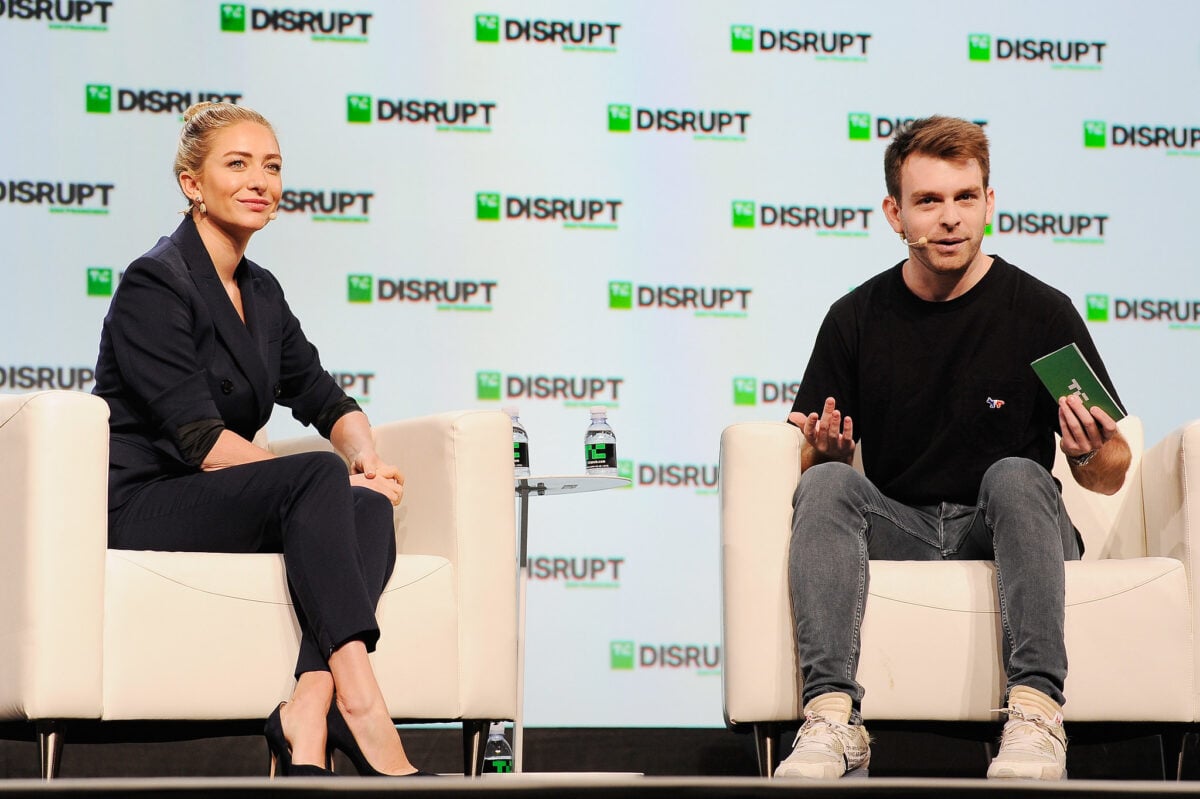
Whitney Wolfe Herd was 24 when she co-founded Tinder and 25 when she left under circumstances that ended in a widely reported legal settlement. Most people would have stepped back from the dating app space entirely.
Instead, she launched Bumble in 2014 — a dating app built around a single structural difference: women send the first message. That one design choice became the entire brand.
Bumble grew steadily and expanded beyond dating into friendship and professional networking. When the company went public in February 2021, Wolfe Herd was 31, making her the youngest female founder ever to take a company public in the United States.
The IPO valued Bumble at nearly $8 billion on its first day of trading.
The Pattern Behind the Numbers

Most of these founders got their start very young — many before their schooling was finished. They spotted a gap or a fault that others hadn’t noticed, and built quickly from there.
Turning down large acquisition offers came naturally to several of them, because they already sensed there was greater value ahead. That big payday is what people associate most with these stories.
But almost all the work looked likea a relentless grind — a long series of setbacks and near-breaks before anything resembling success showed up. The fame and the headline moment arrived at the end. What came before it was years of unnoticed, incremental building that nobody wrote about at the time.
More from Go2Tutors!

- The Romanov Crown Jewels and Their Tragic Fate
- 13 Historical Mysteries That Science Still Can’t Solve
- Famous Hoaxes That Fooled the World for Years
- 15 Child Stars with Tragic Adult Lives
- 16 Famous Jewelry Pieces in History
Like Go2Tutors’s content? Follow us on MSN.