15 Unusual Facts About the History of Eyeglasses
Eyeglasses sit on millions of noses every single day, correcting vision and finishing off outfits.
Most people don’t think twice about them.
But the story of how these frames ended up perched on our faces involves monks, Chinese judges, Arctic survival gear, and even a founding father sawing his lenses in half.
The journey from blurry existence to crystal-clear vision took centuries of trial, error, and some genuinely strange inventions along the way.
Let’s take a closer look at the surprising, odd, and downright fascinating facts that shaped the history of eyeglasses.
Reading stones came before actual glasses

Around the year 1000, people who struggled to read started using what they called reading stones.
These were small glass spheres, often made from rock crystal or quartz, that worked like handheld magnifying glasses.
You’d place the stone over text and slide it along as you read, watching the letters grow larger beneath the curved surface.
The reading stone was essentially humanity’s first vision aid, invented roughly 300 years before actual wearable eyeglasses showed up.
Monks loved these things because manuscripts had tiny, cramped handwriting that made their eyes ache after hours of copying religious texts.
The stones weren’t convenient, but they beat squinting until your head pounded.
Nobody knows who actually invented eyeglasses
Most historians point to Italy, specifically Pisa or Venice, as the birthplace of eyeglasses somewhere between 1285 and 1289.
Some stories credit a man named Salvino D’Armate, while others mention monks or craftsmen whose names got lost to history.
In 1306, a monk named Giordano da Rivalto mentioned during a sermon that ‘it is not yet twenty years since the art of making eyeglasses,’ suggesting they appeared around 1286.
The truth is, nobody recorded the inventor’s name with certainty.
What we do know is that once these vision aids appeared in Italy, they spread across Europe faster than anyone expected.
Within just a couple of decades, local guilds were already regulating their production and sale.
The first painting of someone wearing glasses appeared in 1352

Artist Tommaso da Modena created what’s believed to be the first known painting showing someone actually wearing eyeglasses, a work from 1352 depicting monks reading and writing manuscripts.
One monk in the painting uses a magnifying glass, but another has spectacles perched right on his nose.
This fresco in the Treviso Cathedral became the earliest visual evidence that people were wearing glasses, not just holding them.
Before this painting, we only had written mentions of eyeglasses.
The image proved these devices had moved beyond being rare curiosities and were actually being used by scholars and religious figures who spent their days reading.
Chinese judges wore dark glasses to hide their feelings

Judges in 12th-century China wore pieces of smoky quartz over their eyes during court sessions, not to correct their vision but to conceal their reactions to defendants on trial.
The dark lenses created an emotional barrier, keeping their faces neutral and unreadable.
This practice was designed to maintain objectivity and prevent their feelings from influencing their judgment.
It’s one of the earliest recorded uses of tinted lenses, centuries before sunglasses became a fashion statement.
The judges understood something we still recognize today: eye contact and facial expressions reveal a lot about what someone’s thinking.
By hiding behind dark lenses, they kept their authority mysterious and their verdicts seemingly impartial.
Inuit people invented snow goggles 2,000 years ago

More than 2,000 years ago, the Inuit created sunglasses from materials like wood, bone, and leather to protect their eyes from the intense glare of sunlight reflecting off snow.
These weren’t lenses at all.
They were solid pieces of material with narrow slits carved into them, limiting how much light could reach the eyes.
Snow blindness is a real and painful condition caused by too much UV exposure, and the Inuit figured out how to prevent it long before anyone understood the science.
These prehistoric snow goggles show that humans have been dealing with vision and eye protection challenges for thousands of years.
The design was simple but effective, proving that innovation doesn’t always require advanced technology.
Early glasses had no arms and just balanced on your nose

The first wearable eyeglasses had no temples, which are the side pieces that hook over your ears.
Instead, they simply balanced on the bridge of the nose or were held in front of the eyes with your hand.
These rivet spectacles clamped the nose between two lenses, which sounds about as uncomfortable as it was.
Imagine trying to read or work while constantly adjusting your glasses or holding them in place.
It wasn’t until Spanish craftsmen in the 1600s that someone thought to attach ribbons of silk or strings to the frames and loop them over the wearer’s ears.
Even then, they weren’t quite right.
The modern style of eyeglasses with proper frames that sit comfortably over the ears and nose wasn’t invented until 1727 by British optician Edward Scarlett.
The oldest surviving glasses were found under abbey floorboards

The oldest reported pair of eyeglasses ever recovered was discovered beneath the floorboards at Wienhausen Abbey, a Catholic convent in Germany, and they’re believed to date to around 1400.
These were rivet spectacles with no temples, the kind that pinched your nose to stay in place.
How they ended up under the floorboards remains a mystery.
Maybe a monk dropped them and couldn’t find them in the dim abbey light.
Maybe they were hidden there deliberately.
Either way, they survived for over 600 years, giving us a direct connection to what medieval people actually wore on their faces when they needed to see better.
Benjamin Franklin got tired of switching glasses and invented bifocals

Benjamin Franklin suffered from both myopia and presbyopia, which meant he needed different glasses for seeing things far away and reading things up close, and by the early 1780s, he was fed up with switching between two pairs.
So he did what any frustrated genius would do: he cut his lenses and combined the segments into one lens with a sharp division between the upper and lower sections.
This design, which he called ‘double spectacles,’ allowed him to see both near and far without constantly swapping glasses.
The design hasn’t changed much since Franklin’s time, though better materials and manufacturing methods have made modern bifocals more advanced and comfortable.
Franklin didn’t patent his invention, believing that knowledge should be freely shared.
Frames used to be made from horns, bones, and turtle shells

Way back in the early days of eyeglasses, frames were crafted from natural materials like horn, wood, and tortoiseshell.
Glass or metal would have been too expensive or impractical for most people.
It wasn’t until the early 1800s that metal frames became common.
The shift to metal and eventually plastic opened up possibilities for different shapes, colors, and styles.
But there’s something fascinating about imagining monks and scholars wearing glasses made from animal bones or polished turtle shells.
These materials were readily available, relatively easy to work with, and durable enough to last.
Some vintage tortoiseshell frames from the early 20th century are still highly sought after by collectors today.
Pince-nez glasses pinched your nose and fell off constantly

The pince-nez style was popular from around 1900 to 1920, featuring a small frame that sat high on the bridge of the nose and usually came without any temple arms or handles.
The name literally means ‘pinch nose’ in French, which tells you everything about how they stayed in place.
They were uncomfortable and easy to lose, but even President Theodore Roosevelt wore this style as late as 1901.
People tolerated the discomfort because pince-nez glasses looked sophisticated and refined.
Eventually, they fell out of favor as people realized that glasses that actually stayed on your face without constant adjustment were far more practical.
Still, they had a good run and remain an iconic symbol of the early 20th century.
Hollywood actors made glasses acceptable to wear

For most of their history, eyeglasses weren’t a popular fashion choice at all.
People who wore them were often seen as weak, bookish, or odd.
It wasn’t until Hollywood actors like Harold Lloyd in the 1920s and musicians like Buddy Holly in the 1960s wore them that glasses started to be considered acceptable, even stylish.
Buddy Holly became so synonymous with his thick, black horn-rimmed glasses that those frames are often called ‘Buddy Holly glasses,’ and John Lennon’s perfectly round metal frames are known as ‘John Lennon glasses.’
Lennon’s round glasses were inspired by the rimless spectacles worn by Mahatma Gandhi, adopting them as a symbol of his peace activism.
Suddenly, glasses weren’t just medical devices.
They became part of someone’s identity and image.
Wig spectacles had loops designed to hook into wigs

In the 1700s, a style called wig spectacles featured long temple pieces that extended over the ears with loops on the ends specifically designed to be inserted into a wig.
This was the height of fashion for upper-class men who wore elaborate wigs as status symbols.
The glasses had to be designed around the wigs, not the other way around.
Some men wore them as symbols of status rather than out of genuine necessity, proving that eyewear as a fashion statement isn’t a modern invention.
Imagine coordinating your glasses with your hairpiece.
It seems absurd now, but for wealthy men in the 18th century, it made perfect sense.
The first lenses only fixed farsightedness

When eyeglasses first appeared, they could only correct hyperopia and presbyopia, which are types of farsightedness that make it hard to see things up close.
The earliest glasses used convex lenses for magnification, and it wasn’t until the early 1400s that lenses for myopia, or nearsightedness, appeared.
This meant that for over a century, if you couldn’t see things in the distance clearly, eyeglasses couldn’t help you.
The development of concave lenses to correct nearsightedness was a major breakthrough.
By the 17th century, people understood the principles of both concave and convex lenses, and eyeglasses could finally be produced to correct different types of vision problems.
Hearing aids were hidden inside thick eyeglass frames

When thick-rimmed glasses were fashionable in the mid-20th century, some clever inventors realized they could hide hearing aids in the temple part of the frames.
British comedian Eric Sykes was known for wearing thick, square horn-rimmed glasses that were actually sophisticated hearing aids that helped him ‘hear’ through vibrations.
These combination eyeglass-hearing aids fell out of fashion after the 1970s as hearing aid technology advanced and became smaller, but there are still occasions when combined devices can be useful.
For a time, though, eyeglasses served double duty, correcting both vision and hearing in one discreet package.
It was an ingenious solution to a real problem faced by people with both impairments.
Mass production started in a small French town

The first known examples of industrialized glasses production happened in the Morez region of France starting in 1796.
By 1900, this small area was churning out 12 million pieces a year and is still considered the birthplace of modern eyewear manufacturing.
Before mass production, every pair of glasses was handmade by craftsmen, which made them expensive and accessible only to the wealthy.
The Industrial Revolution changed everything.
Suddenly, average working men and women could afford glasses, dramatically improving productivity and quality of life for millions of people.
In the 19th century, you could purchase reasonably priced eyeglasses from many shops and merchants, a far cry from the exclusive luxury items they once were.
From necessity to identity

Eyeglasses started as rare medical devices available only to monks and the wealthy, objects so precious that guilds regulated who could make them.
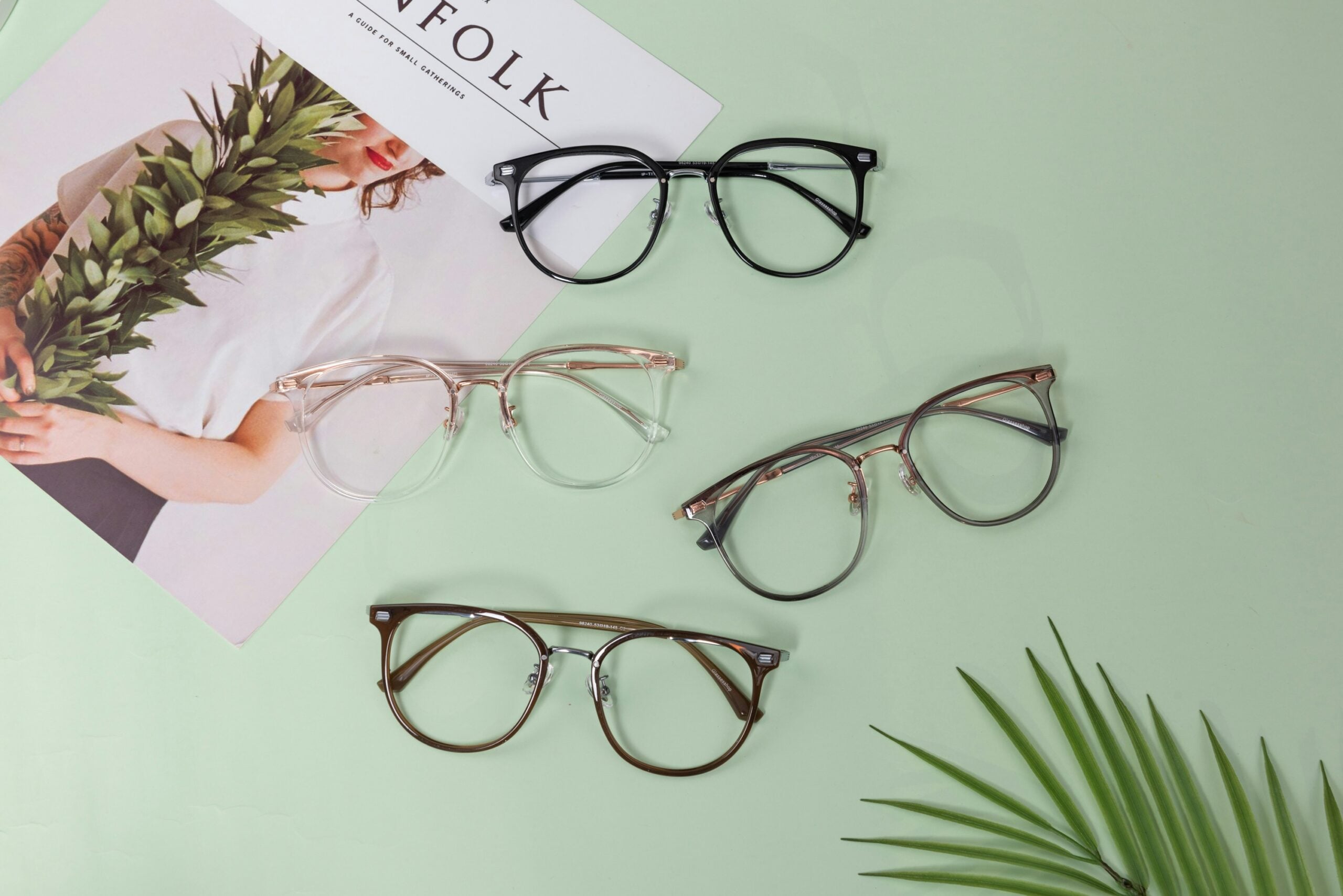
Today, they’re everywhere, in every shape and color imaginable, worn by people who don’t even need vision correction.
The journey from reading stones to designer frames took nearly a thousand years of innovation, accidents, and cultural shifts.
What hasn’t changed is the fundamental purpose: helping people see the world more clearly.
The fact that they’ve also become fashion statements, symbols of intelligence, and personal expressions just proves how deeply eyeglasses have woven themselves into human culture.
More from Go2Tutors!

- The Romanov Crown Jewels and Their Tragic Fate
- 17 Halloween Costumes Once Considered Taboo
- Famous Hoaxes That Fooled the World for Years
- 15 Child Stars with Tragic Adult Lives
- 16 Famous Jewelry Pieces in History
Like Go2Tutors’s content? Follow us on MSN.