15 Unusual Revolutions with Strange Outcomes
Revolutions rarely go according to plan. History shows us that uprisings meant to bring freedom sometimes deliver tyranny, peaceful protests can spiral into violence, and the most dramatic changes occasionally emerge from the most absurd circumstances. The gap between revolutionary ideals and actual results can be staggering, creating outcomes nobody saw coming.
From sports riots that reshaped empires to flower-wielding soldiers overthrowing dictatorships, these movements remind us that history has a twisted sense of humor. Here is a list of 15 revolutions that took unexpected turns and produced results their instigators never imagined.
The French Revolution Led to an Emperor

The French Revolution started in 1789 with grand promises of liberty, equality, and fraternity, but it ended up delivering something completely different. After deposing King Louis XVI and executing him in 1793, France descended into the Reign of Terror where over 17,000 people were guillotined.
The revolutionaries who fought to end monarchy watched in dismay as Napoleon Bonaparte crowned himself Emperor in 1804, establishing a regime more powerful than the one they’d destroyed. Just over two decades after the fall of the Bourbon monarchy, Louis XVI’s brother assumed the throne as Louis XVIII in 1814, bringing back the very dynasty the revolution had tried to eliminate.
The Nika Riots Started Over Chariot Racing
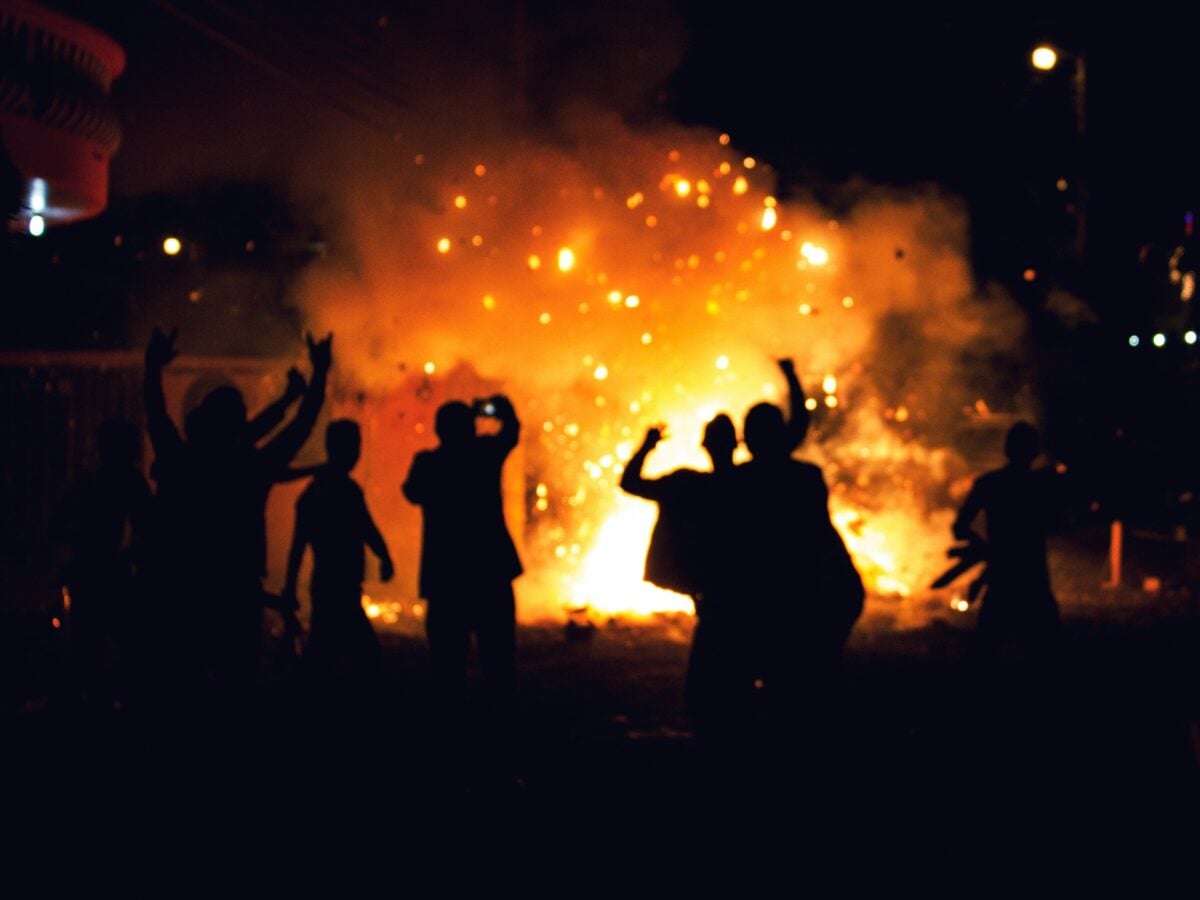
In 532 AD, a botched execution of chariot racing fans in Constantinople sparked one of history’s deadliest riots, with nearly half the city burned and tens of thousands killed. What began as sports hooliganism transformed into a full-blown attempt to overthrow Emperor Justinian.
The rival Blues and Greens factions, who normally fought each other, united under the chant ‘Nika’ meaning victory. The strange outcome came when Justinian’s wife Theodora convinced him to stay and fight rather than flee.
Troops trapped the rioters in the Hippodrome and massacred around 30,000 people, ending the revolt but giving Justinian the opportunity to rebuild Constantinople grander than before, including the magnificent Hagia Sophia.
Like Go2Tutors’s content? Follow us on MSN.
The Haitian Revolution Brought Freedom and Isolation

The Haitian Revolution was the only known slave rebellion in human history that led to the founding of a state which was both free from slavery and ruled by non-whites and former captives. Beginning in 1791, enslaved people in the French colony of Saint-Domingue achieved what seemed impossible, defeating French, Spanish, and British forces to establish Haiti in 1804.
The strange outcome was that their success terrified slave-owning nations worldwide. U.S. political leaders, many of them slaveowners, reacted with ambivalence and would not officially recognize Haitian independence until 1862.
France only recognized Haiti in 1825, immediately billing the Haitian government 150 million francs for property losses, forcing the world’s first black republic to pay for its own freedom.
The Carnation Revolution Used Flowers as Weapons
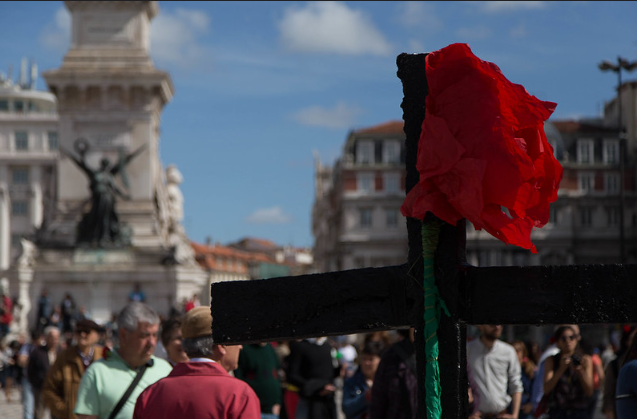
On April 25, 1974, military officers in Portugal overthrew the Estado Novo regime in a coup where almost no shots were fired, earning its name when restaurant worker Celeste Caeiro offered carnations to soldiers and demonstrators placed them in gun muzzles. The revolution was planned by officers exhausted from fighting colonial wars in Africa that consumed 40 percent of Portugal’s budget.
The unexpected outcome was how quickly it succeeded and how peacefully it transitioned Portugal from nearly 50 years of dictatorship to democracy. By the end of 1974, Portuguese troops were withdrawn from colonies, prompting a mass exodus of over a million Portuguese citizens from African territories, fundamentally reshaping both Portugal and Africa.
The American Revolution Championed Liberty While Keeping Slaves

The American Revolution proclaimed that all men are created equal, but the outcome revealed a glaring contradiction. The colonists fought British tyranny while simultaneously denying freedom to hundreds of thousands of enslaved Africans.
White colonists were accorded a level of independence not achievable in Britain, yet their prosperity was reliant upon the oppression of slaves and Natives. This irony became even stranger when you consider that many founding fathers who wrote eloquently about freedom were themselves slaveowners.
The revolution succeeded in creating a new nation but failed to resolve the moral contradiction that would eventually tear the country apart in civil war.
Like Go2Tutors’s content? Follow us on MSN.
The Rose Revolution Changed Georgia With Flowers Too

In November 2003, demonstrators led by Mikheil Saakashvili stormed Georgia’s Parliament session with red roses in hand, forcing President Eduard Shevardnadze to resign after disputed elections. The 20-day peaceful protest succeeded in ending Soviet-era leadership, but the strange outcome was how it relied heavily on foreign-funded NGOs and careful planning rather than spontaneous popular uprising.
According to the U.S. State Department, Georgia moved from a near-failed state in 2003 to a relatively well-functioning market economy by 2014. However, the new leadership’s approach to state-building often saw the imperative of consolidation override Western models of due process and democratic governance, creating a revolution that brought both progress and new authoritarianism.
The Industrial Revolution Created Modern Poverty

The Industrial Revolution wasn’t a political uprising, but it revolutionized society with consequences nobody anticipated. Factory owners soon began exploiting workers with harsh conditions, poor ventilation, toxic chemicals, and unstable machinery, forcing many workers including children to work 12-14 hours daily for six to eight dollars weekly. The strange outcome was that technological advancement meant to improve life instead created urban misery.
Water contamination allowed cholera to flourish in overcrowded industrial cities, with around 15,000 people dying from cholera in London between 1848-1849. Progress brought prosperity for some but grinding poverty and disease for millions of workers who powered the machines.
The Hussite Revolution Pioneered Military Innovation

The Hussite Revolution in 15th century Bohemia saw followers of religious reformer Jan Hus defeat five crusades sent against them in the 1420s using innovative military tactics. These rebels, declared heretics by the Catholic Church, revolutionized warfare with mobile fortifications and coordinated infantry tactics that influenced European military thinking for generations.
The peculiar outcome was that the revolution finally ended in 1434 when moderate Hussites defeated radical Hussites, then negotiated with the Catholic Church to practice modified rites. After defeating armies from across Europe, the movement essentially compromised its way back into the system it had fought against.
Like Go2Tutors’s content? Follow us on MSN.
The Glorious Revolution Was Remarkably Bloodless
England’s 1688 Glorious Revolution stands out for achieving major political change with minimal violence. Protestant nobles invited Dutch Prince William of Orange to invade England and replace Catholic King James II. The strange outcome was that an invasion became a revolution when James fled without fighting, essentially allowing a foreign prince to take the throne by walking in unopposed.
This revolution succeeded precisely because it avoided revolutionary chaos, establishing constitutional monarchy and parliamentary supremacy through what amounted to an aristocratic arrangement rather than popular uprising.
The Russian Revolution Replaced One Autocracy With Another

The 1917 Russian Revolution promised to bring power to the people and end centuries of tsarist oppression. Despite their failures almost everywhere and often their shipwreck joining the dark side of despotism, tyranny, and authoritarian power, their potentialities and legacy remained significant.
The Bolsheviks who overthrew the tsar created a system that became synonymous with totalitarianism and gulags. The strange outcome was that a revolution fought in the name of workers and peasants produced a bureaucratic dictatorship that controlled nearly every aspect of life, proving more repressive than the monarchy it replaced.
The Taiping Rebellion Became History’s Deadliest Civil War

The Taiping Rebellion in China from 1850 to 1864 began when Hong Xiuquan claimed to be the younger brother of Jesus Christ and led a religious movement to overthrow the Qing Dynasty. This bizarre premise led to the deadliest conflict of the 19th century, with estimated deaths ranging from 20 to 30 million people.
The strange outcome was that despite controlling significant territory and establishing a theocratic kingdom for over a decade, the rebellion ultimately failed completely. The Qing Dynasty survived, weakened but intact, while the revolutionary Christian kingdom vanished as quickly as it had appeared, leaving behind only devastation.
Like Go2Tutors’s content? Follow us on MSN.
The Prague Defenestrations Started Wars By Throwing People Out Windows
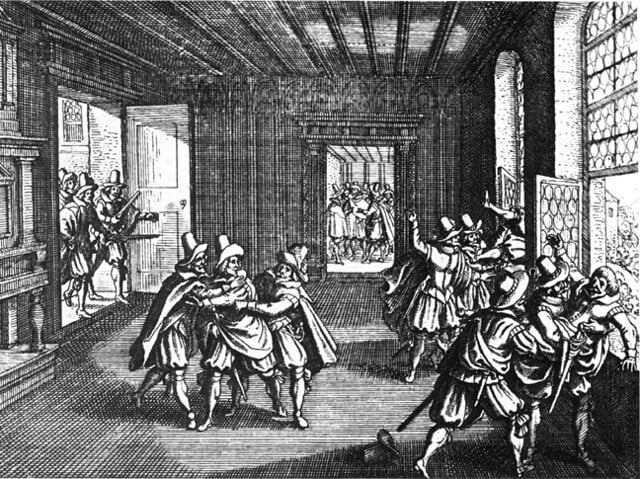
Czechs developed an unusual revolutionary tradition of throwing their political opponents out of windows, a practice called defenestration. In 1419 and again in 1618, they kicked off major political crises by throwing enemies from windows, with the first sparking the Hussite Wars and the second leading directly to the Thirty Years’ War.
In the 1618 incident, two Catholic governors were tossed from a Prague castle window but survived because they landed in a pile of manure. The absurd outcome was that this moment of dark comedy triggered three decades of religious warfare that devastated Central Europe and killed millions, proving that even the most ridiculous revolutionary acts can have catastrophic consequences.
The Young Turk Revolution Modernized Into Genocide

The Young Turk Revolution of 1908 in the Ottoman Empire began with progressive ideals of constitutional government and modernization. The Committee of Union and Progress forced Sultan Abdul Hamid II to restore the constitution and initially promised equality for all ethnic groups within the empire.
The horrific outcome came during World War I when these same modernizing reformers orchestrated the Armenian Genocide, systematically killing over a million Armenians. A revolution that started with Enlightenment principles ended in one of the 20th century’s worst atrocities, showing how quickly revolutionary idealism can transform into brutal nationalism.
The Zanzibar Revolution Lasted 38 Minutes
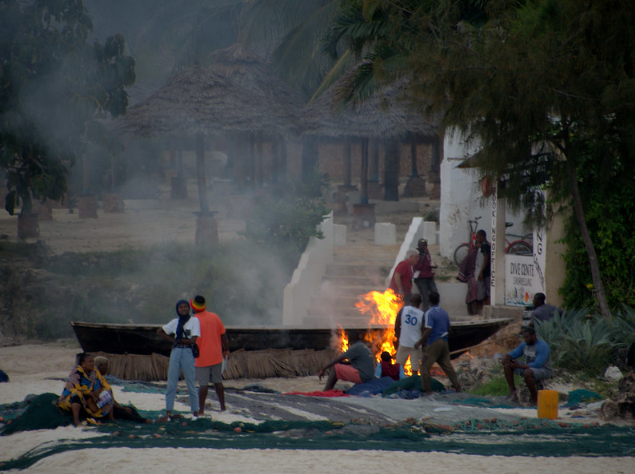
The Anglo-Zanzibar War of 1896 holds the record as the shortest war in history, lasting between 38 and 45 minutes. When Sultan Khalid bin Barghash seized power in a palace coup, the British demanded he step down. He refused, so the British navy bombarded his palace while he was still inside.
The strange outcome was that this wasn’t really a revolution at all but rather a colonial power’s overwhelming show of force dressed up in revolutionary language. Khalid fled to the German consulate, the British installed their preferred sultan, and the whole affair demonstrated that some revolutions succeed not through popular support but through having bigger guns.
Like Go2Tutors’s content? Follow us on MSN.
The Velvet Revolution Divorced a Country Peacefully

Czechoslovakia’s Velvet Revolution of 1989 peacefully ended communist rule, earning its name from the smooth transition of power. The unexpected twist came later when the unified spirit that overthrew communism couldn’t keep the country together.
In 1993, Czechoslovakia split into the Czech Republic and Slovakia in what became known as the Velvet Divorce. The strange outcome was that a revolution meant to unite people in freedom ultimately revealed they wanted freedom from each other.
The separation happened so amicably that both nations remain close partners today, proving that sometimes the most revolutionary act is agreeing to go separate ways.
When Ideals Meet Reality

Revolutionary movements consistently prove that good intentions don’t guarantee good results. The distance between what people fight for and what they actually get can span from the merely disappointing to the absolutely catastrophic.
Some revolutions swap one tyrant for another, others achieve their goals only to create new problems, and a few accidentally trigger consequences that dwarf their original aims. History keeps teaching this lesson, yet each generation of revolutionaries seems convinced their movement will be different.
Maybe that optimism is what makes revolutions possible in the first place, even when reality has other plans waiting.
More from Go2Tutors!

- 16 Historical Figures Who Were Nothing Like You Think
- 12 Things Sold in the 80s That Are Now Illegal
- 15 VHS Tapes That Could Be Worth Thousands
- 17 Historical “What Ifs” That Would Have Changed Everything
- 18 TV Shows That Vanished Without a Finale
Like Go2Tutors’s content? Follow us on MSN.



