17 Smartest Kids Who Shocked the World
Throughout history, certain children have displayed intellectual abilities so extraordinary that they’ve left scientists, educators, and the general public absolutely stunned. These young prodigies didn’t just excel in school—they revolutionized entire fields, solved complex problems that stumped adults, and achieved things most people couldn’t accomplish in a lifetime.
Here is a list of 17 remarkably intelligent children whose achievements continue to amaze us today.
Blaise Pascal
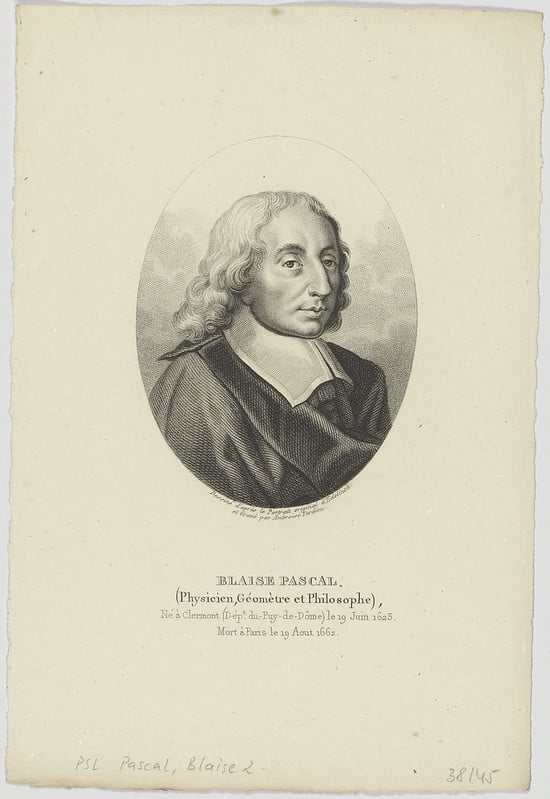
At just 12 years old, Blaise Pascal independently discovered the first 32 propositions of Euclid’s geometry using nothing but his own reasoning. His father had deliberately kept mathematical texts away from him, yet Pascal figured out complex geometric principles by drawing diagrams on the floor with charcoal. By age 16, he had written a groundbreaking essay on conic sections that impressed even the great mathematician René Descartes.
Wolfgang Amadeus Mozart
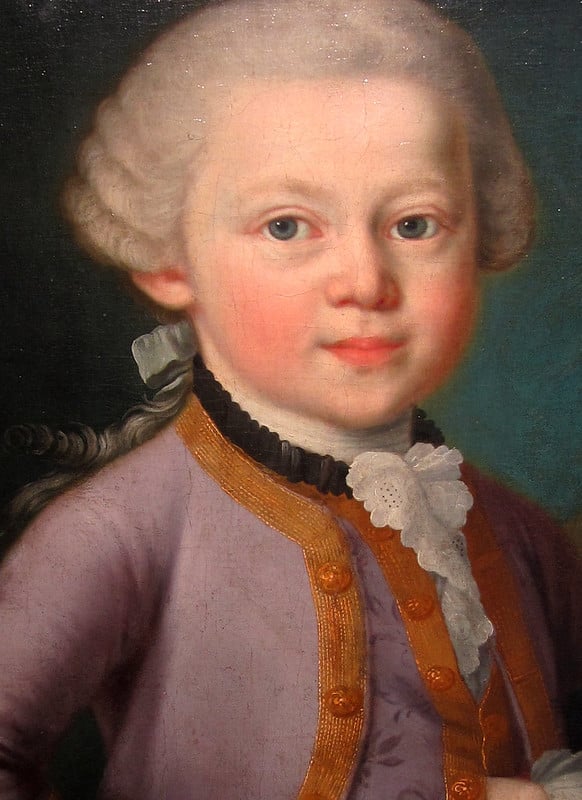
Mozart composed his first piece of music at age 5 and was performing complex concerts across Europe by age 6. What made him truly exceptional wasn’t just his early start, but his ability to memorize entire musical compositions after hearing them just once. He could write music faster than most people could copy it, often composing complete symphonies in his head before putting pen to paper.
Gauss Carl Friedrich

Known as the ‘Prince of Mathematics,’ Gauss amazed his elementary school teacher by instantly solving a problem that should have taken the entire class hours to complete. When asked to add all numbers from 1 to 100, the 10-year-old immediately wrote ‘5050’ on his slate, having mentally discovered the formula for arithmetic series. His teacher was so impressed that he bought Gauss advanced mathematics books with his own money.
Marie Curie

— Photo by fotokon
Long before she became the first woman to win a Nobel Prize, young Marie Sklodowska was reading by age 4 and had mastered Russian, German, and French by age 8. Growing up in Russian-controlled Poland, she attended illegal ‘floating university’ classes that moved locations to avoid detection. Her early brilliance in mathematics and science laid the foundation for discoveries that would change physics and chemistry forever.
Archimedes

Ancient Greek accounts describe Archimedes as a child who could solve mathematical puzzles that stumped grown scholars. By his teens, he was already developing the principles of physics and engineering that would later help defend his hometown of Syracuse against Roman invasion. His childhood fascination with levers and pulleys led to his famous quote about moving the Earth with the right fulcrum point.
Leonardo da Vinci

Da Vinci’s childhood notebooks reveal a mind that operated unlike any other. As a young apprentice, he could draw perfect circles freehand and mirror-write with his left hand faster than most people could write normally. His insatiable curiosity led him to dissect animals (with permission) to understand anatomy, and he filled thousands of pages with observations about everything from water flow to bird flight.
Isaac Newton

Newton’s intellectual gifts became apparent during his teenage years when he built working windmills, water clocks, and sundials that were more accurate than professional versions. While home from Cambridge during the plague years, the 23-year-old Newton developed calculus, formulated the laws of motion, and discovered that white light contains all colors of the spectrum. These achievements, accomplished in just 18 months, would have been remarkable for an entire career.
Albert Einstein
Contrary to popular myth, Einstein was actually a brilliant child who taught himself advanced mathematics by age 12. He wrote his first scientific paper at 16 and was asking profound questions about the nature of light and space that wouldn’t be fully understood until he developed relativity theory. His ability to conduct thought experiments—like imagining riding alongside a beam of light—showed an extraordinary capacity for abstract thinking.
Judit Polgar

At age 4, Judit Polgar was already beating adults at chess, and by 15, she had become the youngest grandmaster in history (a record later broken but still remarkable). Her systematic approach to the game was so advanced that she could calculate 20 moves ahead while her opponents struggled with 5. She proved that intellectual genius isn’t limited by gender by defeating world champions and becoming the strongest female chess player ever.
Terence Tao
Tao scored 760 on the math portion of the SAT at age 8, a score that most high school students would envy. By age 13, he had won a gold medal at the International Mathematical Olympiad, making him the youngest gold medalist in the competition’s history. His ability to see patterns and connections across different areas of mathematics has been compared to having a sixth sense for numbers.
Kim Ung-Yong

Recognized by the Guinness Book of World Records as having the highest IQ ever recorded (210), Kim Ung-Yong was speaking four languages fluently by age 4. NASA invited him to study in the United States when he was just 8 years old, where he worked on complex space projects while other kids his age were learning basic addition. His photographic memory allowed him to absorb information at an almost superhuman rate.
Akrit Jaswal

Known as the world’s smartest child, Akrit Jaswal performed his first medical procedure at age 7, successfully separating the fused fingers of a local girl in India. By age 12, he was attending medical university and had already mastered anatomy, physiology, and surgical techniques that medical students struggle with for years. His goal of finding a cure for cancer drives his continued research in molecular biology.
Gregory Smith

Gregory Smith entered college at age 10 and earned his bachelor’s degree by 13, but what set him apart was his work as a peace advocate. He was nominated for the Nobel Peace Prize four times before his 18th birthday for his efforts to promote understanding between different cultures and religions. His intellectual gifts were matched by an emotional intelligence rare in someone so young.
Aelita Andre

This Australian prodigy began painting at 9 months old and had her first art exhibition at age 2. Her abstract paintings sell for thousands of dollars and hang in galleries alongside works by established artists. Critics initially dismissed her work as lucky accidents until they observed her systematic approach to color, composition, and texture that rivals artists with decades of training.
Michael Kearney

Kearney graduated from college at age 10 with a degree in anthropology and went on to teach college courses while still a teenager. His ability to absorb and synthesize information across multiple disciplines allowed him to excel in everything from mathematics to literature. He holds several world records for academic achievements and continues to pursue advanced degrees in multiple fields simultaneously.
Priyanshi Somani

At age 11, Priyanshi Somani could calculate square roots of six-digit numbers in her head faster than most people could use a calculator. She won the Mental Calculation World Cup by performing calculations that involved millions of digits, all done mentally without any written work. Her brain processes numbers like a supercomputer, finding patterns and shortcuts that even mathematicians find difficult to follow.
Jacob Barnett
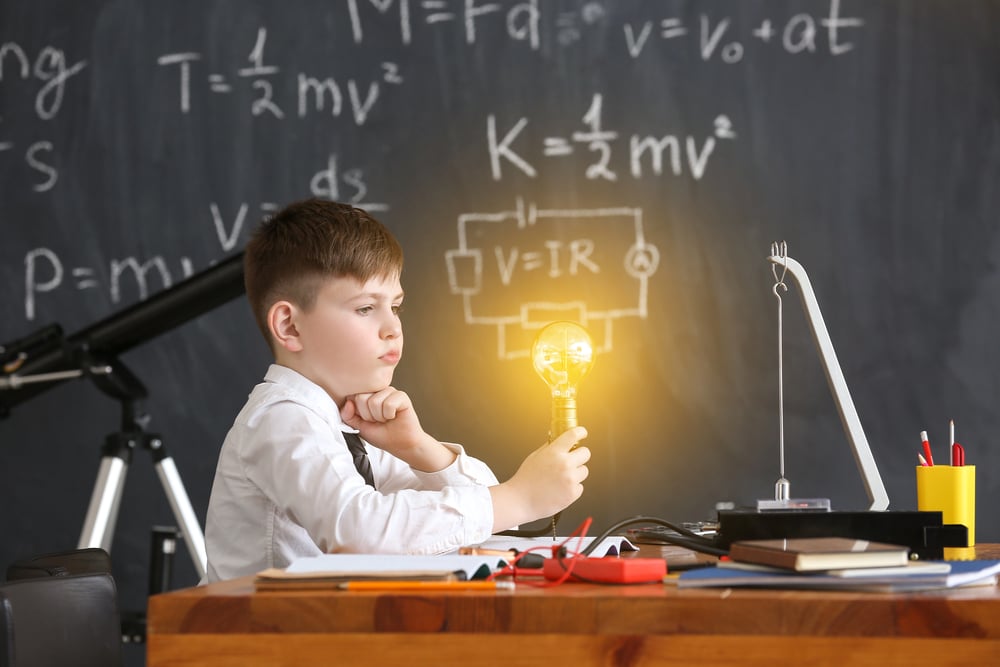
Diagnosed with autism at age 2, Jacob Barnett was initially thought to have learning disabilities until his true genius emerged. By age 10, he was auditing advanced physics courses at university and had developed his own theories about relativity that impressed professional physicists. His unique way of thinking allows him to see mathematical relationships that others miss, leading to insights that could revolutionize theoretical physics.
Where Genius Meets Opportunity

These remarkable young minds remind us that extraordinary intelligence can emerge at any age and in any circumstance. From Pascal’s geometric discoveries drawn in charcoal to Barnett’s autism-enhanced mathematical insights, each story shows how different types of brilliance can flourish when given the right environment and encouragement. While we may never fully understand what creates such exceptional abilities, these 17 individuals prove that the human mind’s potential truly knows no bounds. Their childhood achievements continue to inspire educators, parents, and researchers to recognize and nurture the hidden genius that might exist in any young person.
More from Go2Tutors!

- 16 Historical Figures Who Were Nothing Like You Think
- 12 Things Sold in the 80s That Are Now Illegal
- 15 VHS Tapes That Could Be Worth Thousands
- 17 Historical “What Ifs” That Would Have Changed Everything
- 18 TV Shows That Vanished Without a Finale
Like Go2Tutors’s content? Follow us on MSN.