17 Ways the Ancient World Shaped Modern Schools
Walk into any modern classroom and you might think education is a recent invention, but humans have been teaching and learning in organized ways for thousands of years. The ancient world laid the groundwork for almost everything we recognize about formal education today — from the way classrooms are arranged to the subjects students study.
These early civilizations figured out what works, and modern schools still use their innovations. Ancient educators were remarkably innovative, creating systems that have proven so effective they’ve lasted millennia.
Here’s a list of 17 ways the ancient world shaped modern schools, showing just how much we owe to our educational ancestors.
Age-Based Grade Levels

Ancient Greek schools grouped students by age rather than keeping everyone together regardless of development level. They recognized that children of similar ages could learn more effectively together since they shared comparable cognitive abilities and interests.
This revolutionary idea of organizing students into grades based on birth year became the standard model. Virtually every school system uses this approach today.
The Classical Curriculum
Ancient Greeks established the foundation of what we call a ‘well-rounded education’ by dividing learning into specific subjects. The trivium covered grammar, logic, and rhetoric — while the quadrivium included arithmetic, geometry, music, and astronomy.
Modern schools still structure education around distinct subject areas, though we’ve added quite a few more to the original seven liberal arts.
Like Go2Tutors’s content? Follow us on MSN.
Competitive Academic Contests

Ancient civilizations loved turning learning into competition, holding contests in everything from poetry recitation to mathematical problem-solving. Greek students competed in academic Olympics just as they did in athletic ones — understanding that friendly rivalry could motivate learning.
Today’s spelling bees, science fairs, math competitions, and debate tournaments all trace their roots back to these ancient academic contests.
Physical Education Integration

Ancient Greeks believed strongly in developing both mind and body together — the concept of ‘mens sana in corpore sano’ or ‘sound mind in a sound body.’ Their schools included gymnasiums where students exercised daily alongside their academic studies.
Modern schools maintain this tradition through required physical education classes and athletic programs that complement academic learning.
Standardized Testing

While ancient tests looked different from today’s bubble sheets, organized evaluation of student knowledge dates back thousands of years. Chinese imperial examinations tested candidates for government positions — while Greek schools used oral examinations to assess student progress.
These early assessment methods evolved into the standardized testing systems that modern schools use to measure student achievement and progress.
Like Go2Tutors’s content? Follow us on MSN.
School Buildings and Architecture

Ancient Romans developed the architectural blueprint for educational institutions that we still follow today. Roman schools featured rectangular classrooms arranged around central courtyards — with separate spaces for different activities.
Walking through any modern school reveals this ancient influence: rectangular classrooms, hallways connecting different areas, and central gathering spaces for assemblies.
Teacher Training and Certification

Ancient civilizations recognized that effective teaching required specific skills and knowledge beyond just knowing a subject. Greek and Roman teachers underwent formal preparation and often earned recognition from established educational authorities.
This concept evolved into modern teacher certification programs — education degrees, and continuing professional development requirements.
Homework and Practice

Ancient Egyptian scribal schools assigned students to practice writing hieroglyphs on pottery shards called ‘ostraca’ when papyrus was too expensive. Students would copy texts repeatedly until they mastered the characters — much like homework assignments today.
Roman students also took work home to practice their rhetoric and memorize poetry, establishing the tradition of extending learning beyond school hours.
Like Go2Tutors’s content? Follow us on MSN.
Libraries in Schools

Ancient Alexandria’s great library set the precedent for housing collections of knowledge within educational institutions. Schools began maintaining their own libraries where students could access texts for research and supplementary learning.
Modern school libraries, media centers, and even digital resource collections continue this ancient tradition — making knowledge readily available to learners.
Disciplinary Systems

Ancient schools developed structured approaches to student behavior that combined rewards and consequences. Roman schools used both praise and punishment to maintain order — while Confucian schools emphasized moral development alongside academic learning.
Modern disciplinary policies, honor codes, and character education programs reflect these early attempts to shape student behavior and values.
Educational Philosophy and Theory
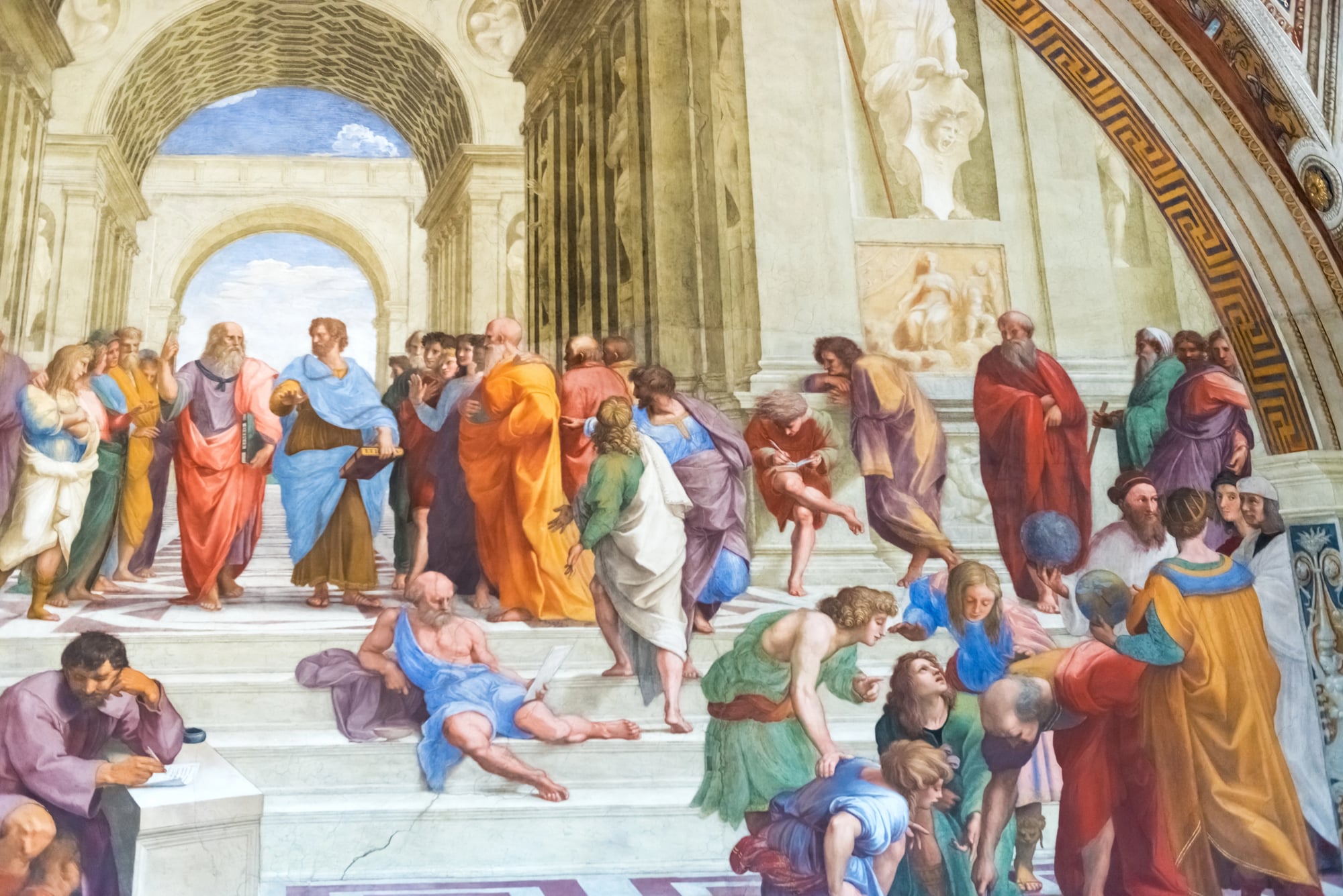
Ancient philosophers like Aristotle, Confucius, and Quintilian wrote extensively about how people learn and how teachers should teach. Their ideas about adapting instruction to different learning styles, the importance of practice, and the value of questioning continue to influence modern educational theory.
Contemporary teaching methods often rediscover principles that ancient educators established long ago. It’s fascinating how many ‘new’ educational innovations are actually quite old.
Like Go2Tutors’s content? Follow us on MSN.
Graduation Ceremonies

Ancient Greek and Roman schools marked the completion of education with formal ceremonies recognizing student achievements. These events celebrated the transition from student to adult member of society, often including speeches, demonstrations of learning, and community recognition.
Modern graduation ceremonies maintain this ancient tradition of publicly acknowledging educational accomplishments. Though today’s ceremonies feature caps and gowns rather than togas.
Textbooks and Curriculum Materials

Ancient schools created standardized texts that all students would study — Homer’s epics in Greece, Confucian classics in China, or religious texts in various cultures. These early textbooks ensured consistent education across different locations and established the practice of using common materials to deliver the curriculum.
Modern textbooks serve the same function of providing structured, standardized content for students and teachers. The delivery method has changed more than the basic concept.
School Calendars and Schedules

Ancient agricultural societies shaped school calendars around farming seasons, with breaks during planting and harvest times when children needed to help their families. Roman schools also followed regular daily schedules that divided learning into specific time periods for different subjects.
Modern school years and daily schedules still reflect these ancient patterns. Summer vacation isn’t just about fun — it’s an agricultural holdover that stuck around long after most families stopped farming.
Like Go2Tutors’s content? Follow us on MSN.
Extracurricular Activities

Ancient schools recognized that education extended beyond formal lessons — Roman students participated in debate clubs, Greek students joined musical ensembles, and Chinese students practiced calligraphy as an art form. These activities developed skills and interests that complemented academic studies.
Contemporary schools maintain this tradition through clubs, sports teams, arts programs, and other activities that enrich the educational experience. Students have always needed outlets beyond just sitting in classrooms.
Teacher-Student Relationships

Ancient educational traditions emphasized the special relationship between teacher and student, with many cultures viewing teachers as particularly respected members of society. The concept of mentorship — one experienced person guiding a younger learner — appears in educational systems worldwide.
Modern schools still recognize the importance of positive teacher-student relationships in effective learning. Though the formal reverence has softened considerably since ancient times.
Admission Standards and Selection

Ancient schools often had specific requirements for entry — Roman rhetorical schools required previous training in grammar, while Chinese academies demanded demonstrated scholarly ability. These institutions recognized that students needed certain foundational skills before advancing to higher levels of study.
Modern schools continue this practice through admission requirements, prerequisite courses, and placement testing that ensures students are prepared for the challenges ahead. Not everyone was ready for advanced study then, and that hasn’t changed now.
Like Go2Tutors’s content? Follow us on MSN.
Foundations That Still Stand

These seventeen ancient innovations prove that effective education builds on timeless principles rather than just trendy new techniques. While technology has transformed how we deliver education, the fundamental structures created by ancient civilizations remain remarkably relevant.
Modern schools function as they do because ancient educators figured out what works — organized learning environments, structured curricula, qualified teachers, and meaningful assessment.
Perhaps most importantly, these early educational pioneers understood that schools serve not just to transmit knowledge but to prepare young people for productive participation in society. That mission hasn’t changed in thousands of years.
It suggests that the ancient world’s greatest gift to modern education might be its recognition that learning is fundamentally about human development and community building. Some things really don’t need fixing — they just need refining.
More from Go2Tutors!

- 16 Restaurant Chains That Went Too Fast
- 12 Things Sold in the 80s That Are Now Illegal
- 15 Strange Things People Have Tried to Ban (And Failed)
- 16 Collectibles People Tossed Out Too Soon
- 17 Myths from Your Childhood That Were Actually Based on Real Things
Like Go2Tutors’s content? Follow us on MSN.



