18 Amazing Details of the Leaning Tower of Pisa
When you think of Italy’s most famous architectural blunder, the Leaning Tower of Pisa immediately comes to mind. This white marble masterpiece has been captivating visitors for centuries with its distinctive tilt that makes it look like it might topple over at any moment.
What started as a construction mishap became one of the world’s most beloved landmarks, drawing over 5 million tourists each year who come to witness this gravity-defying wonder. The tower’s story is far more fascinating than just a simple case of poor planning.
From its mysterious architects to its survival through wars and earthquakes, every aspect of this campanile tells a remarkable tale of human ingenuity, persistence, and sometimes sheer luck. Here is a list of 18 amazing details that reveal the true story behind this iconic Italian treasure.
It Was Built as Part of a Grand Religious Complex
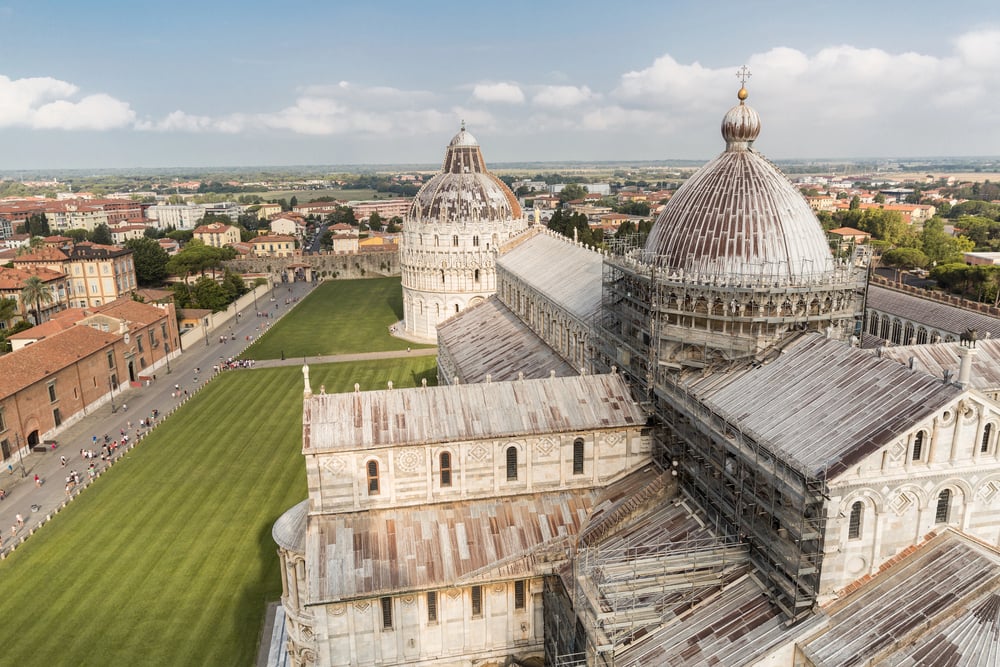
The Leaning Tower of Pisa wasn’t meant to stand alone as a tourist attraction. It was built as the campanile, or freestanding bell tower, of Pisa Cathedral and is one of three structures in Pisa’s Cathedral Square (Piazza del Duomo), which includes the cathedral and Pisa Baptistry.
The entire complex was designed to showcase Pisa’s growing wealth and power during the 12th century. After sacking Palermo in 1063, the city’s government needed a place to display all of the treasures that adventurers had brought back from Sicily, so they decided to construct the ‘Field of Miracles.’
Construction Took Nearly 200 Years to Complete
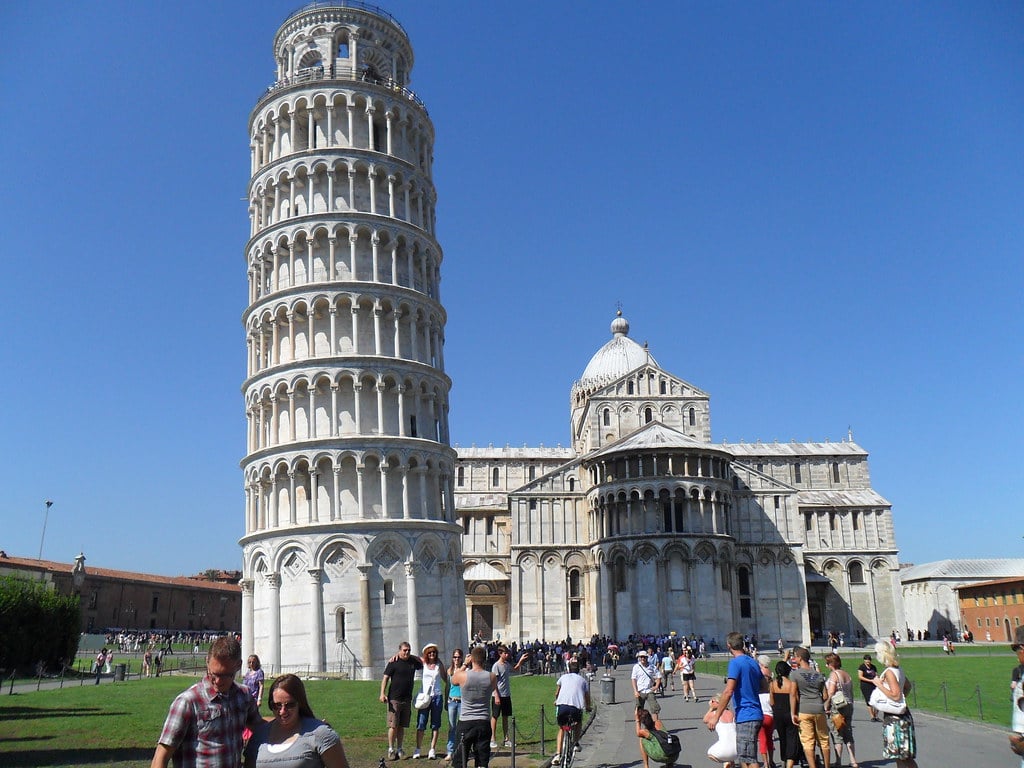
Construction of the tower occurred in three stages over 199 years. Work began in 1173 but was repeatedly interrupted by wars, financial problems, and engineering challenges. Construction was halted again in 1284 when the Pisans were defeated by the Genoese in the Battle of Meloria.
The seventh floor was completed in 1319. The bell-chamber was finally added in 1372. These lengthy delays actually saved the tower from collapsing, as they allowed the soft soil beneath to settle and compress under the weight.
The Tower’s Architect Remains a Mystery
Despite being one of the world’s most famous buildings, nobody knows for certain who designed the Leaning Tower of Pisa. The identity of the architect of the tower is a subject of controversy.
The design had long been attributed to a man named Guglielmo and to Bonanno Pisano, the latter a well-known 12th-century resident artist of Pisa known for his bronze casting. A 2001 study seems to indicate Diotisalvi was the original architect, due to the time of construction and affinity with other Diotisalvi works, notably the bell tower of San Nicola and the Baptistery, both in Pisa.
It Started Leaning Almost Immediately
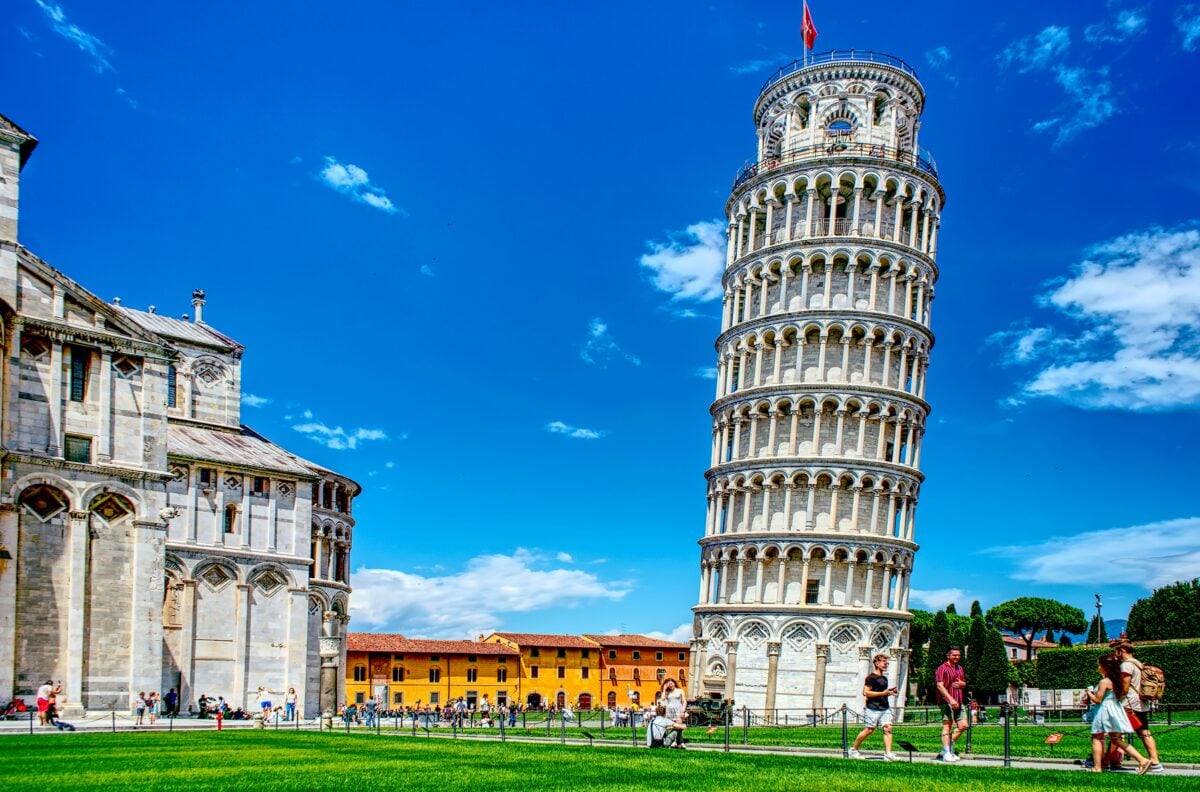
The tower began tilting when construction reached just the third floor in 1178, only five years after work began. The Tower began to sink under its own weight when the construction reached the third story (about 23m high).
This happened because of the particular nature of the alluvial soil in Pisa, where the tower was built. The foundation was only three meters deep, which was woefully inadequate for a structure of this height and weight built on soft clay soil.
The Foundation Was Doomed from the Start
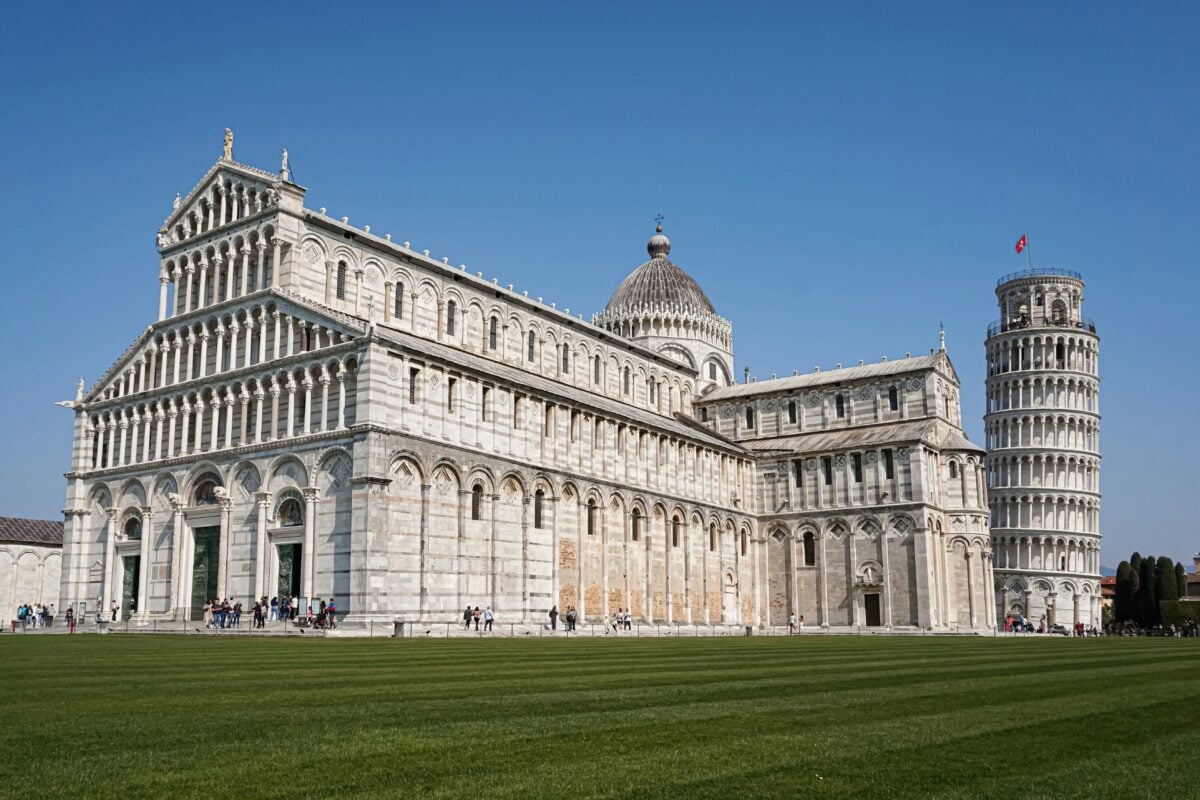
Given that the name Pisa comes from the Greek word for ‘marshy land,’ you would think that the cathedral’s architects would have taken the subsoil into account while building a very tall bell tower. Instead, they created a shallow foundation in notoriously unstable ground.
The base measures 2.44 meters wide, and the entire structure weighs an estimated 14,500 tonnes. It’s like trying to balance a bowling pin on soft sand.
There Are Other Leaning Towers in Pisa
Due to the soft subsoil of the entire area, there are actually several leaning towers of Pisa. You can see two others in Pisa’s Borgo Stretto. The bell tower of the Church of St. Nicola is perhaps the most famous, after the official Leaning Tower of Pisa.
The soft clay soil throughout the region makes straight towers something of a challenge. There’s also the bell tower at the church of St. Michele degli Scalzi, located on Viale delle Piagge.
It’s Not Actually the World’s Most Tilted Building
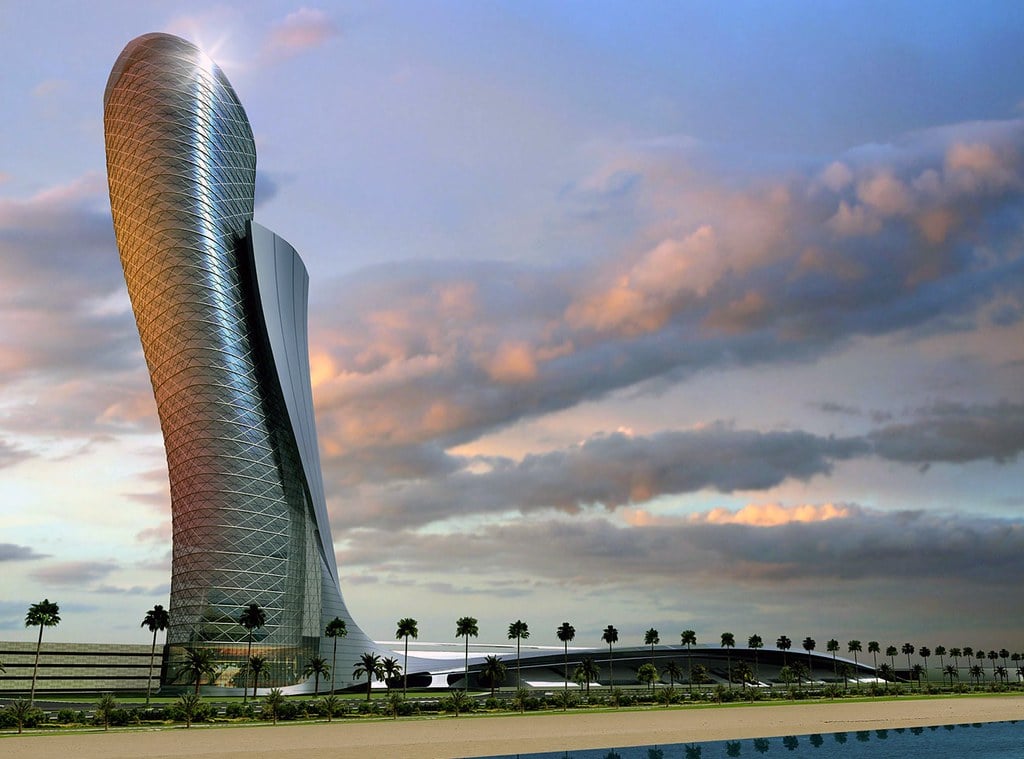
While the Leaning Tower of Pisa is the most famous tilted structure, it’s not the most extreme. The Capital Gate building in Abu Dhabi, UAE is the world’s most tilted man-made tower.
It has an 18 degree slope – five times more than Pisa – although it was deliberately constructed to slant. Two German churches have challenged the tower’s status as the world’s most lopsided building: the 15th-century square Leaning Tower of Suurhusen and the 14th-century bell tower of the Oberkirche in the town of Bad Frank.
Galileo May Have Conducted His Famous Experiment Here

Between 1589 and 1592, Galileo Galilei, who lived in Pisa at the time, is said to have dropped two cannonballs of different masses from the tower to demonstrate that their speed of descent was independent of their mass, in keeping with the scientific law of free fall. Most historians consider it to have been a thought experiment rather than an actual event, but the story has become part of the tower’s legend nonetheless.
The Tower Has Seven Musical Bells
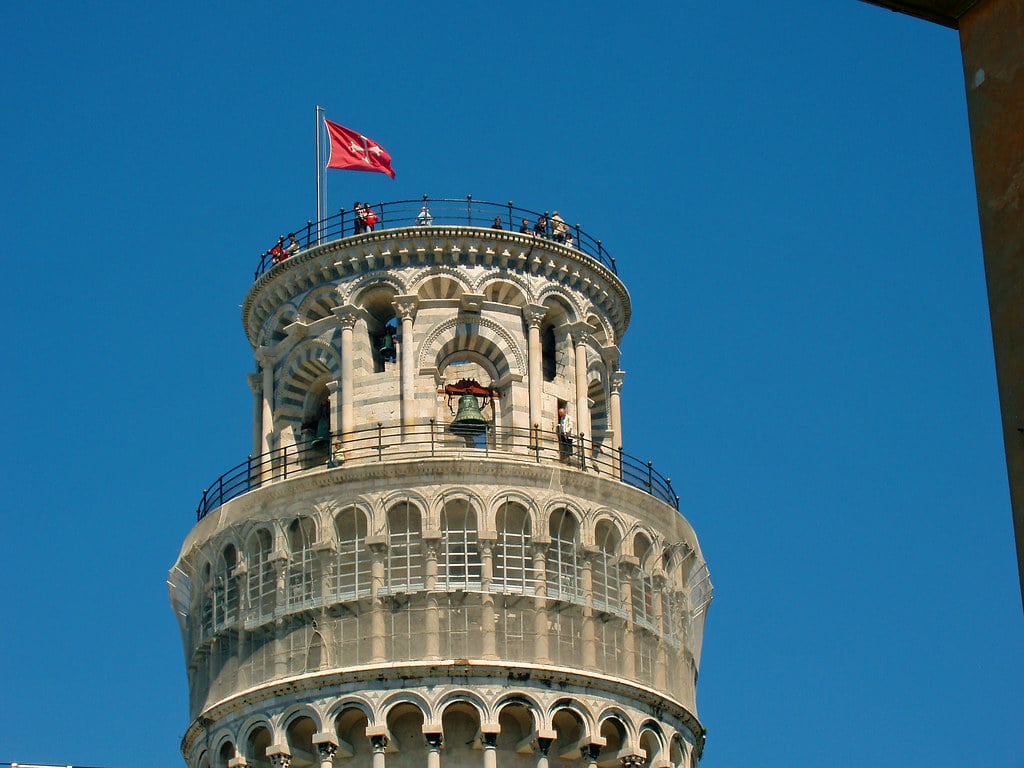
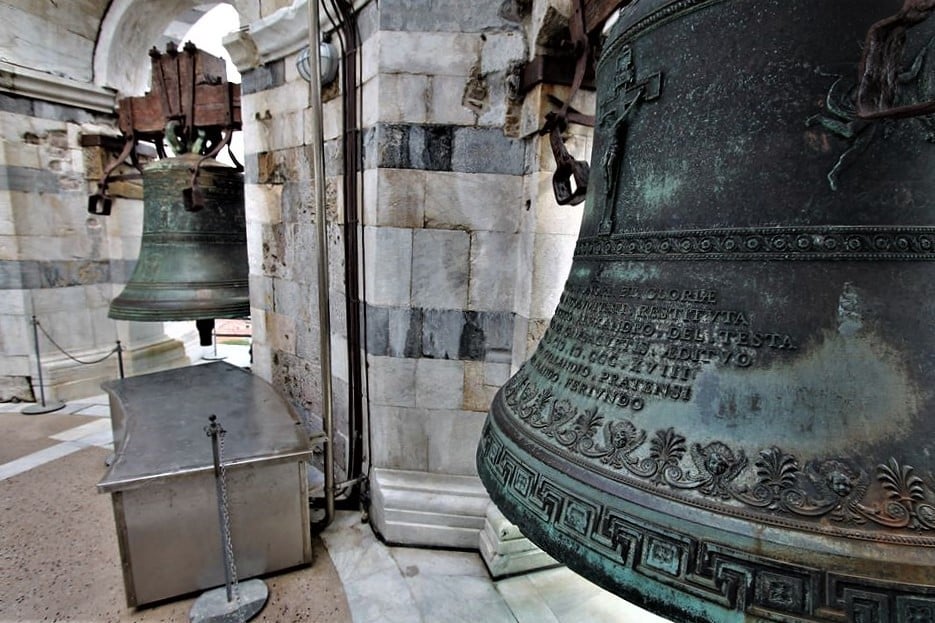
There are seven bells, one for each note of the musical major scale. The largest one was installed in 1655. Over the next four centuries the tower’s seven bells were installed; the largest weighed more than 3,600 kg (nearly 8,000 pounds).
However, the heavier bells have been largely silenced in recent decades because their ringing could worsen the tower’s lean.
It Has Two Different Heights
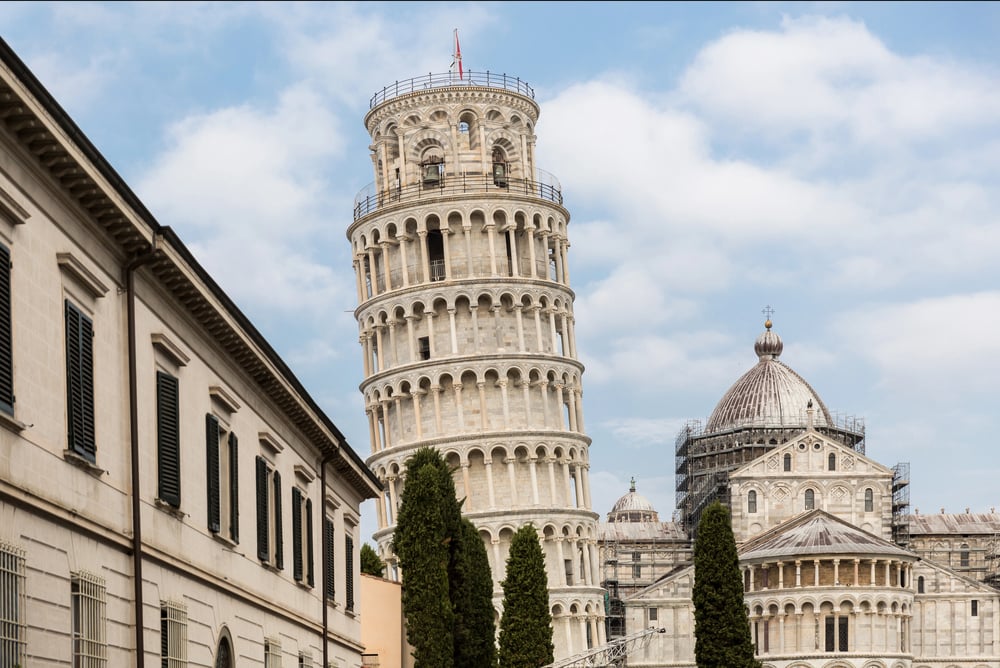
— Photo by AlexGukBO
Because of its tilt, the Leaning Tower of Pisa doesn’t have a single height measurement. The height of the tower is 55.86 metres (183 feet 3 inches) from the ground on the low side and 56.67 m (185 ft 11 in) on the high side. The leaning tower of Pisa was supposed to be 60 meters tall (196.85 feet).
After the lean, however, the highest side of the tower reaches a mere 56.67 meters (about 186 feet), while the lowest side is 55.86m, or 183 feet.
The Stairs Are Uneven Too
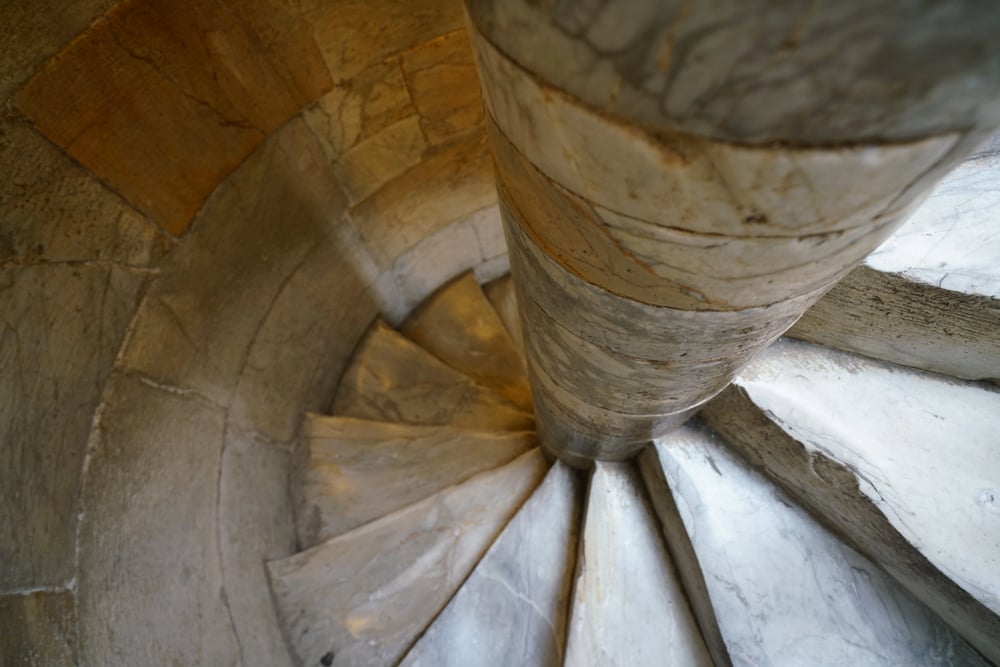
— Photo by KhunTa
Twin spiral staircases lined the tower’s interior, with 294 steps leading from the ground to the bell chamber (one staircase incorporates two additional steps to compensate for the tower’s lean). Because of the tower’s original tilt, the north side staircase has something like 296 steps to the top, while the south side has just 294.
Climbing the tower feels distinctly odd because you’re walking up a curved, tilting staircase.
Engineers Built It Deliberately Curved
When construction resumed after the first halt, engineers tried to compensate for the existing lean by making adjustments to the upper floors. Giovanni di Simone, the engineer in charge when construction resumed, sought to compensate for the lean by making the new stories slightly taller on the short side, but the extra masonry caused the structure to sink still further.
As construction continued, the builders tried to offset their mistake by adding taller columns and arches on the south side of the tower. This means the tower is actually curved as well as tilted.
It Survived World War II by Pure Luck

The tower narrowly avoided destruction during World War II through an extraordinary stroke of fortune. When American soldiers invaded Pisa, they were ordered to destroy all buildings to prevent enemy snipers finding suitable places to hide.
There were no exceptions to this rule, and many buildings were blown up everyday, as the US forces advanced over the Italian countryside. However a retreat took place shortly after the arrival of the Americans, making it unnecessary to destroy the Leaning Tower of Pisa!
It’s Surprisingly Earthquake-Resistant
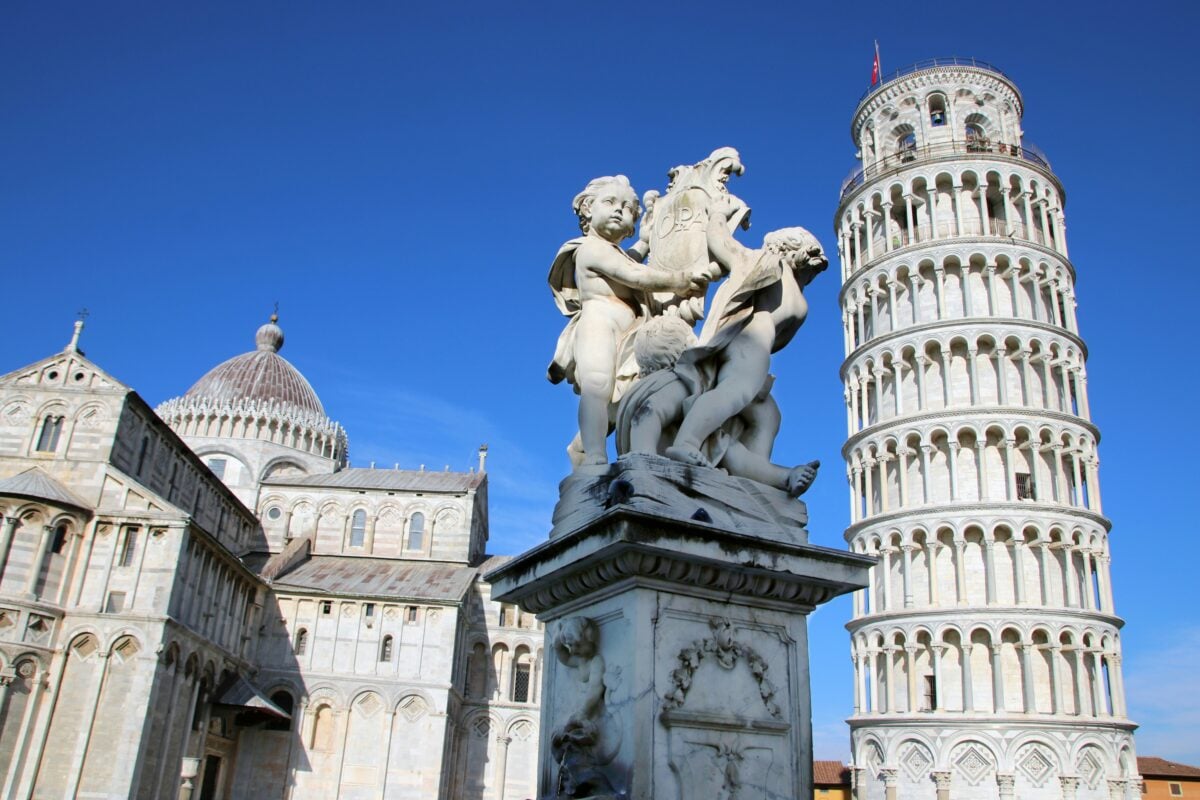
Despite appearing unstable, the tower has shown remarkable resilience during seismic events. The tower has survived at least four strong earthquakes since 1280.
A 2018 engineering investigation concluded that the tower withstood the tremors because of dynamic soil-structure interaction: the height and stiffness of the tower combined with the softness of the foundation soil influences the tower’s vibrational characteristics in such a way that it does not resonate with earthquake ground motion.
Modern Stabilization Required 870 Tonnes of Lead
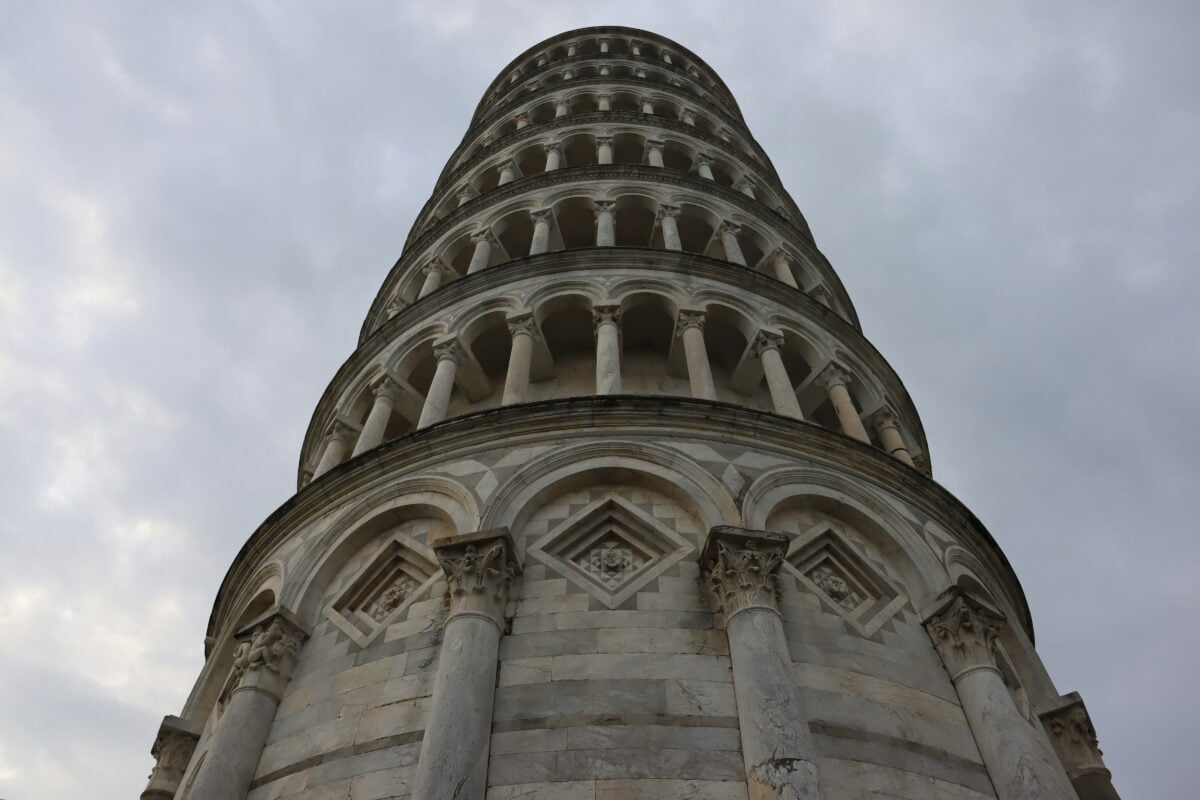
Recent conservation efforts have been extensive and creative. Starting in 1993, 870 tonnes of lead counterweights were added, which straightened the tower slightly.
In 1990 the tower was closed and all the bells silenced as engineers undertook a major straightening project. Earth was siphoned from underneath the foundations, decreasing the lean by 17 inches (44 cm) to 13.5 feet (4.1 metres). The work was completed in 2001, and engineers say it should remain stable for at least 200 years.
It’s Actually Getting Straighter
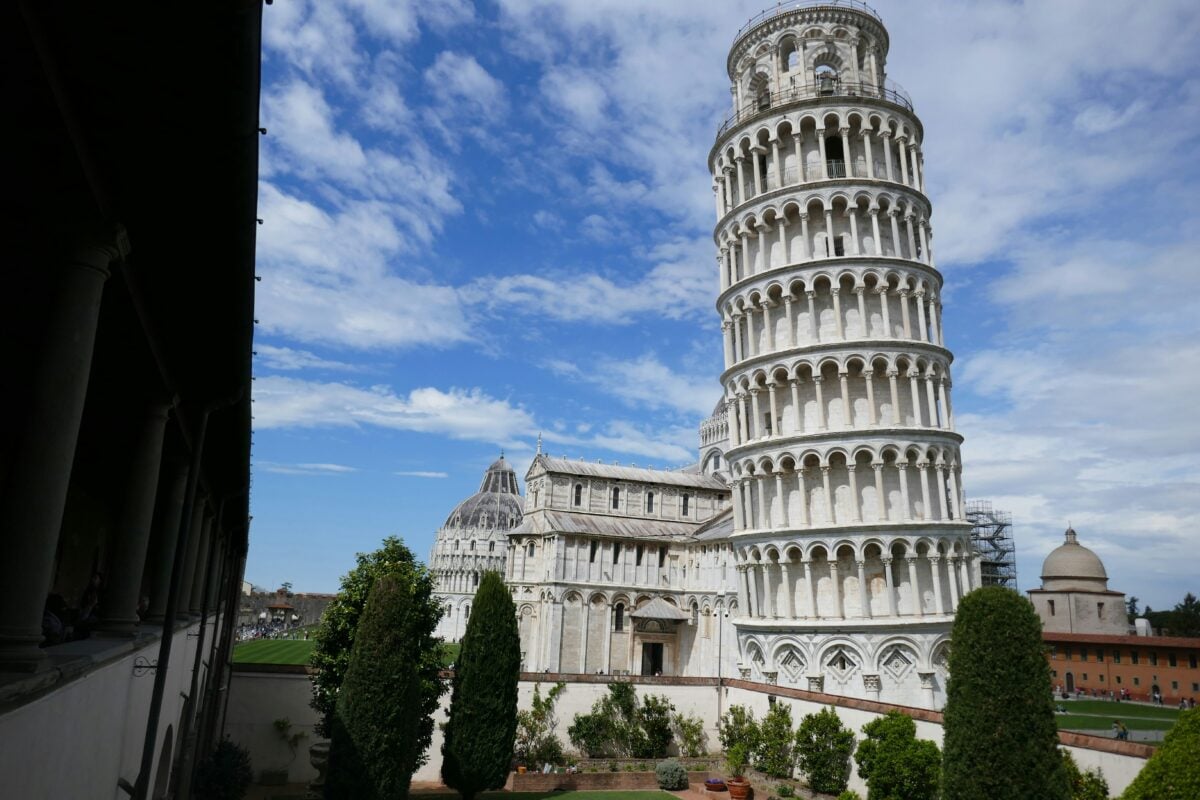
A 2013 study found that ‘the bell tower is stable but tending to straighten’ and that it had moved a further 2.5cm vertically since 2001. The structure is expected to straighten another couple of millimeters and then start to lean again – but at a much slower rate.
The Leaning Tower started to lean backward after the works ended in 2001. This gradual self-correction is an unexpected bonus of the stabilization work.
It Generates Millions in Tourism Revenue
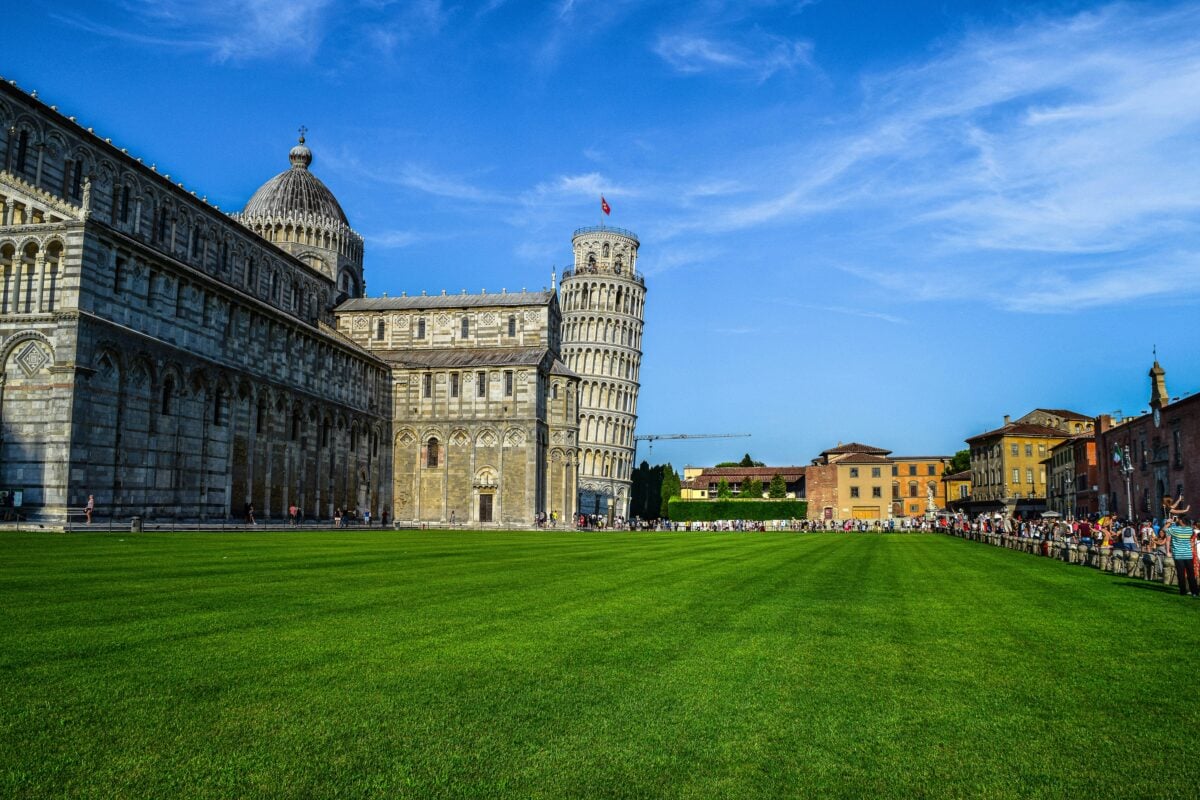
The tower’s fame has made it an economic powerhouse for the region. Over time, the tower has become one of the most visited tourist attractions in the world as well as an architectural icon of Italy, receiving over 5 million visitors each year.
Today the Tower gathers over 5 million visitors each year and it makes about 21 million Euro per year. What began as an engineering failure became one of Italy’s greatest tourism successes.
From Mistake to UNESCO World Heritage Site
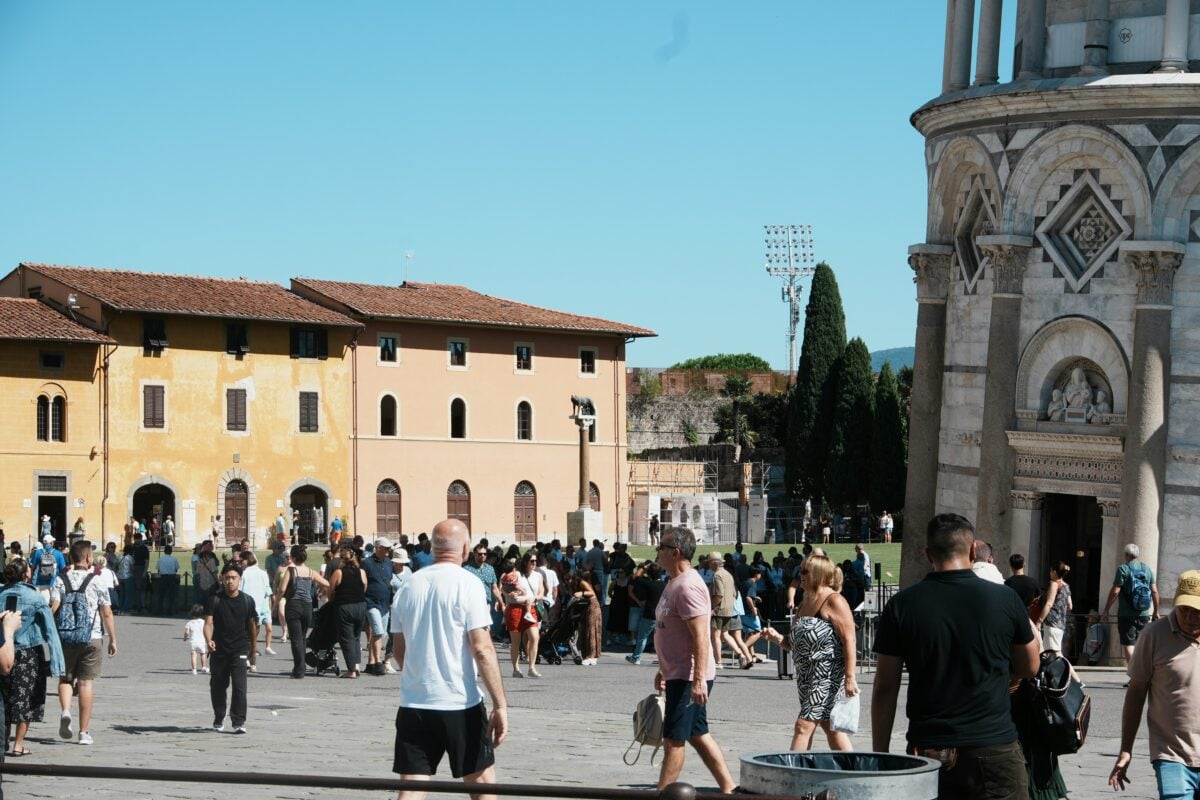
The tower and the neighbouring cathedral, baptistery, and cemetery are included in the Piazza del Duomo UNESCO World Heritage Site, which was declared in 1987. The recognition came not despite the tower’s flaws, but because of how it represents medieval engineering ambition and the human spirit of perseverance.
The entire complex demonstrates the artistic and architectural achievements of medieval Pisa at the height of its maritime power.
A Monument to Happy Accidents
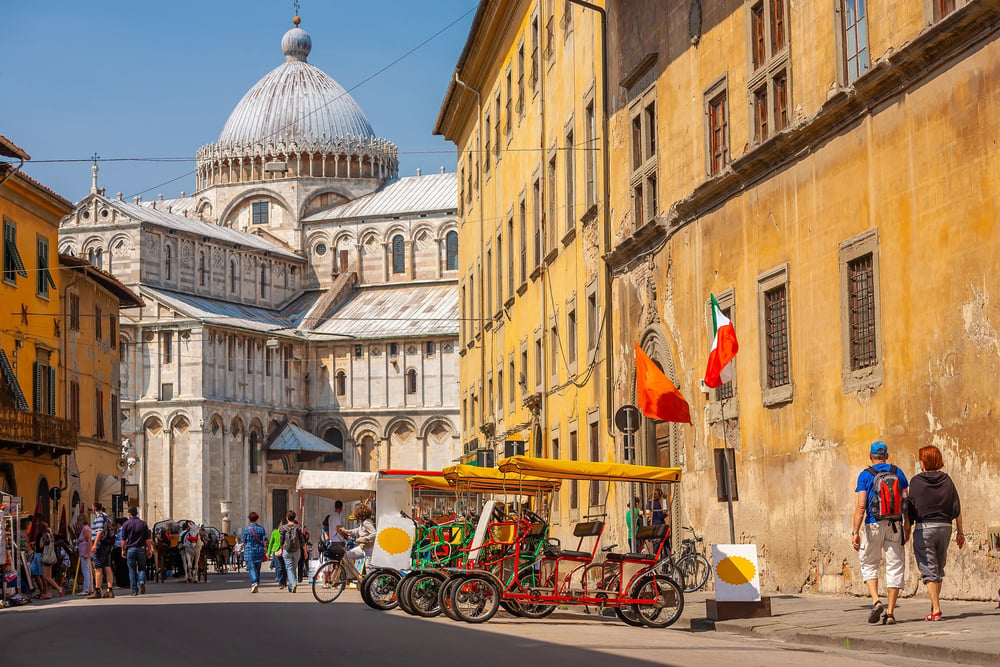
The Leaning Tower of Pisa stands today as proof that sometimes our greatest failures become our most celebrated achievements. What medieval engineers intended as a perfectly straight bell tower became an enduring symbol of Italy and a testament to human ingenuity in turning disaster into triumph.
The tower’s continued popularity shows that imperfection can be more captivating than perfection, and that the best monuments often tell stories of struggle, adaptation, and ultimate success against the odds.
More from Go2Tutors!

- The Romanov Crown Jewels and Their Tragic Fate
- 13 Historical Mysteries That Science Still Can’t Solve
- Famous Hoaxes That Fooled the World for Years
- 15 Child Stars with Tragic Adult Lives
- 16 Famous Jewelry Pieces in History
Like Go2Tutors’s content? Follow us on MSN.



