27 Bedtime Routines Kids from the 80s Followed Without Asking
There was no negotiating with 9 p.m. in the 1980s. The TV clicked off, a parent appeared in the doorway, and the whole house shifted into a different gear — quieter, dimmer, smelling faintly of dish soap and whatever was left on the stove.
Nobody handed kids a checklist. Nobody needed to.
The routine ran itself, the same way every night, as reliable and unquestioned as the evening news. If you grew up in that era, every single item on this list will hit somewhere specific.
Watching The Last Few Minutes Of Whatever Your Parents Had On

The tail end of the adult programming was as close as most kids got to staying up late. You’d catch the final scene of something you didn’t fully understand, and that partial glimpse felt like a privilege.
So you filed it away — context-free, half-remembered — and went to bed slightly more sophisticated than you’d been that morning.
Getting Told “Five More Minutes” Meant Zero More Minutes

Every child of the ’80s knew the real translation of “five more minutes.” It meant stand up now, because the second warning wasn’t coming with as much patience.
And yet the game always got played — one more level, one more chapter, one more cartoon — because the small chance of a real five minutes was worth the risk every single time.
The Bathroom Lineup

In households with more than one kid, the single bathroom became a minor nightly battleground. There was an unspoken order of operations — oldest first, or youngest first, depending on the parent — and everyone stood just outside the door waiting their turn like a very tired, very short queue.
Efficiency was non-negotiable, because the hot water wasn’t infinite and the patience even less so.
Washing Your Face With Whatever Bar Soap Was On The Sink

Nobody had a skincare routine in 1983. You rubbed whatever brick of Ivory or Dial was sitting in the dish across your face, rinsed with lukewarm water, and called it done.
That was the entire regimen — which, to be fair, probably explains a few things about adult skin in the late 2000s.
Brushing Teeth With Toothpaste That Tasted Like Bubblegum Or Nothing

The ’80s kids had two flavors: aggressively sweet bubble gum paste that made brushing feel like a reward, or the flat white mint that tasted like obligation. There was no in-between, no spectrum of options, no minty-fresh gel in a sleek pump dispenser.
You squeezed the tube from the bottom when it was new and from the middle when nobody was watching.
Changing Into Pajamas That Were An Entire Outfit

Pajama sets in the ’80s took themselves seriously — matching top and bottom, often with a licensed character printed across the chest, Strawberry Shortcake or the Ghostbusters logo or something in a NASA font. They weren’t loungewear.
They were a uniform, and putting them on was the official signal that the day had ended. The act of changing carried real weight, like clocking out of a shift.
Drinking A Glass Of Water You Didn’t Actually Need

The glass of water was less about thirst and more about buying time. Every kid understood this, and every parent understood it too, and the exchange happened anyway — a small, mutually accepted fiction that let the transition from wakefulness to bed feel slightly more gradual.
It was the ’80s version of a decompression ritual, just with fewer wellness buzzwords attached.
The Specific Fear Of The Hall Light Being Left On Or Off

The hall light situation was a delicate negotiation. Too dark and the imagination started doing structural damage to the shadows.
Too bright and sleep genuinely wouldn’t come. Some parents left it on, some didn’t, and the child had no real say in the matter — which meant lying in bed recalibrating expectations based on whatever the hallway looked like that particular night.
Checking Under The Bed
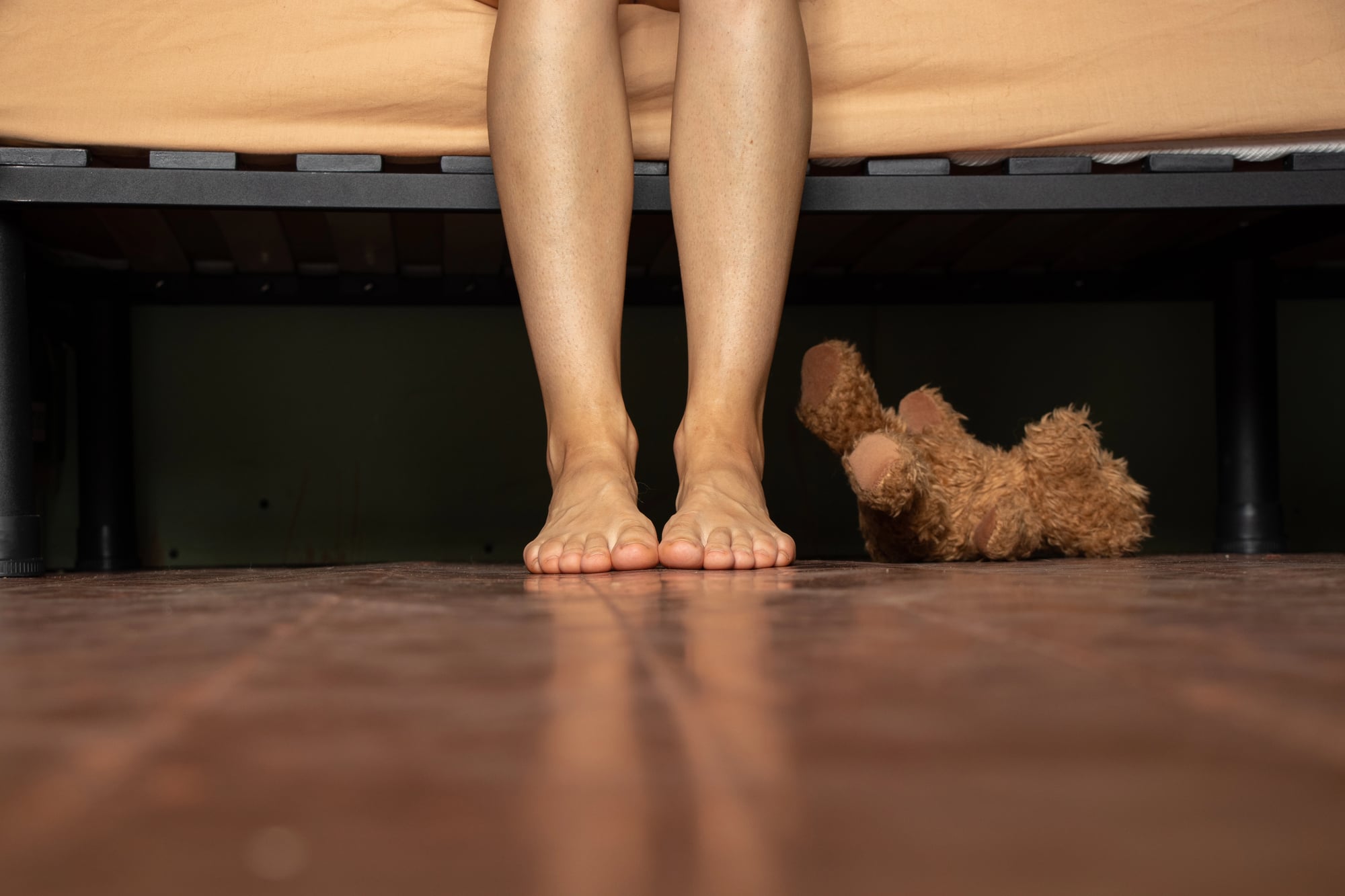
The under-bed check wasn’t casual. It was a full visual sweep, usually done with one hand still on the mattress for quick re-entry, scanning the dark space with the kind of focus rarely applied to homework.
Whatever logic suggested that nothing was under there, the check still happened — because not checking felt worse than whatever you might find. And yet nothing was ever under there.
Go figure.
Arranging Stuffed Animals In A Specific Order

The placement of stuffed animals wasn’t arbitrary — it followed a logic that made complete sense to its architect and zero sense to anyone else. Certain animals had to be facing the door.
Others had specific positions relative to the pillow. Moving them, even by an inch, felt like a small structural failure that needed correcting before sleep was even possible.
Being Read To, Or Reading To Yourself With A Flashlight
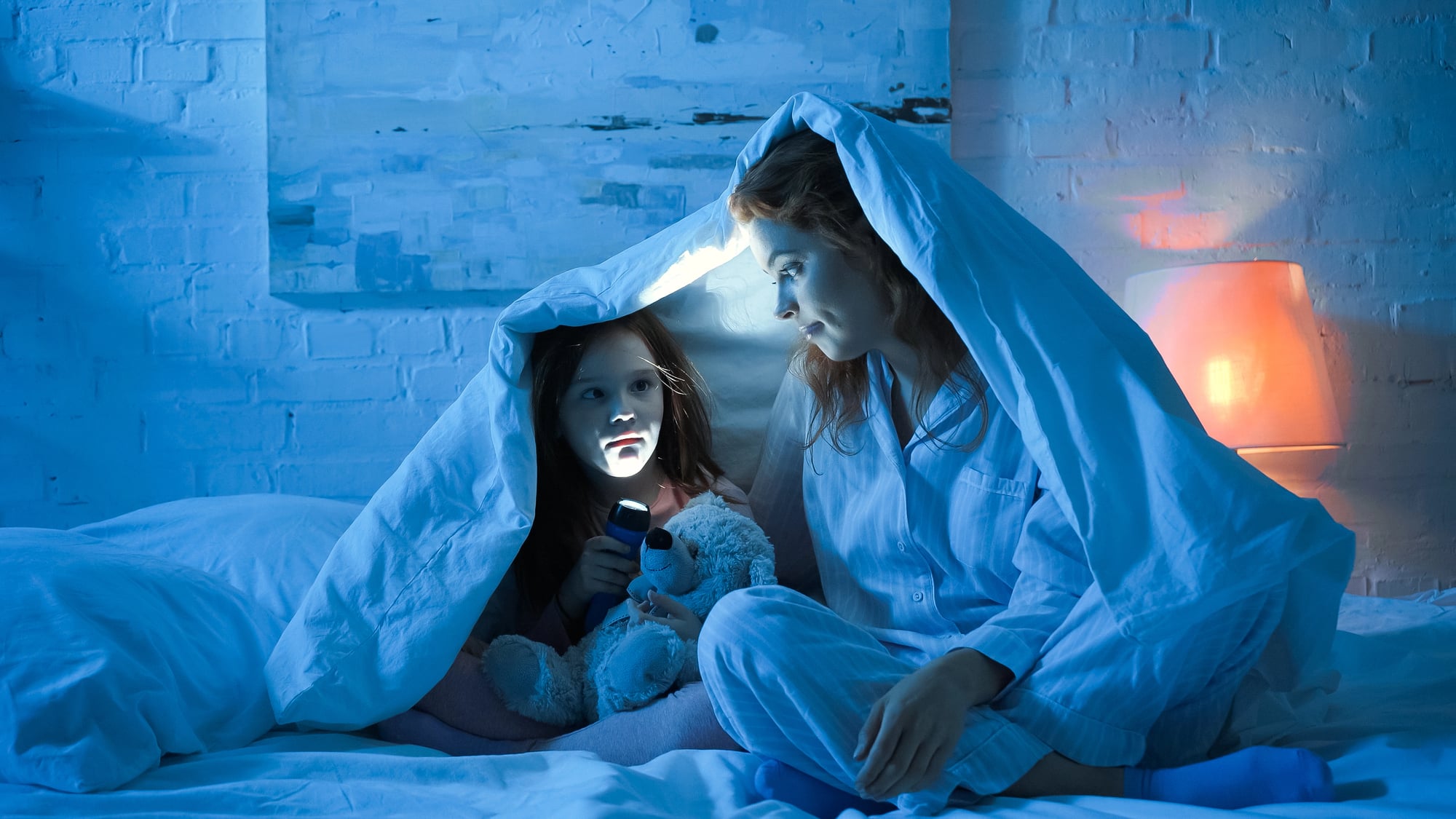
For some kids it was a parent’s voice, working through a chapter of something — Charlotte’s Web, The BFG, one of the Hardy Boys — and the story arriving softly in a lit room felt like a gift being handed over. For others, when the lights went out officially, a flashlight under the covers extended the reading by another forty minutes, the thin beam making the page feel slightly clandestine.
Both versions were equally real.
Listening To The House Settle

The ’80s house had a sound profile at night that was entirely its own. The furnace cycling on.
A floorboard in the hallway. The faint noise of the TV from the living room, indistinct but present.
Kids lay in the dark and catalogued these sounds with the attention of someone trying to understand a new language. And most of the time, the sounds became familiar enough to be almost comforting, like background music the house composed on its own.
Having The Same Exact Blanket Every Night

The blanket situation was not flexible. One specific blanket — ratty at the edges, printed with footballs or rainbows or geometric patterns that hadn’t aged well even by 1985 standards — was the only acceptable option.
A substitute blanket, however similar, was simply not the same, and anyone who offered one knew immediately from the expression that it would not be received well.
Getting Tucked In Even When You Were Too Old For It

At some point kids became too old to need tucking in, and everybody knew it, and it kept happening anyway. The blanket gets pulled up, a corner gets pressed flat against the mattress, and the whole ritual gets completed without discussion — because the parent needed to do it as much as the kid needed to receive it.
That fact only becomes obvious later, from the other side of the equation.
Saying Prayers, Out Loud Or Quietly

For a significant slice of ’80s households, prayers were a fixed part of the closing sequence — kneeling beside the bed or lying flat, reciting something memorized or making it up as you went. It was quiet and routine and rarely questioned.
The act itself created a brief, contained stillness that was different from just lying there, and even kids who weren’t entirely sure what they were doing found something grounding in the repetition.
Getting A Kiss Or A Hug At The Door

The goodnight kiss or hug was the official close of business. It was brief, expected, and entirely non-optional — the final checkpoint before the parent retreated and the night became the kid’s own territory.
Some parents did a forehead kiss. Some did a quick hug from the doorway.
The variation didn’t matter. What mattered was that it happened, because the nights it didn’t felt measurably different.
Asking For One More Story Or One More Song

The one-more ask was essentially a formality — both sides understood it would probably be declined, but the asking was still required. It was less about getting the story and more about extending contact for another sixty seconds, delaying the moment the door closed and the room became fully quiet.
Kids in the ’80s were surprisingly sophisticated negotiators when the stakes were bedtime.
Staring At The Ceiling
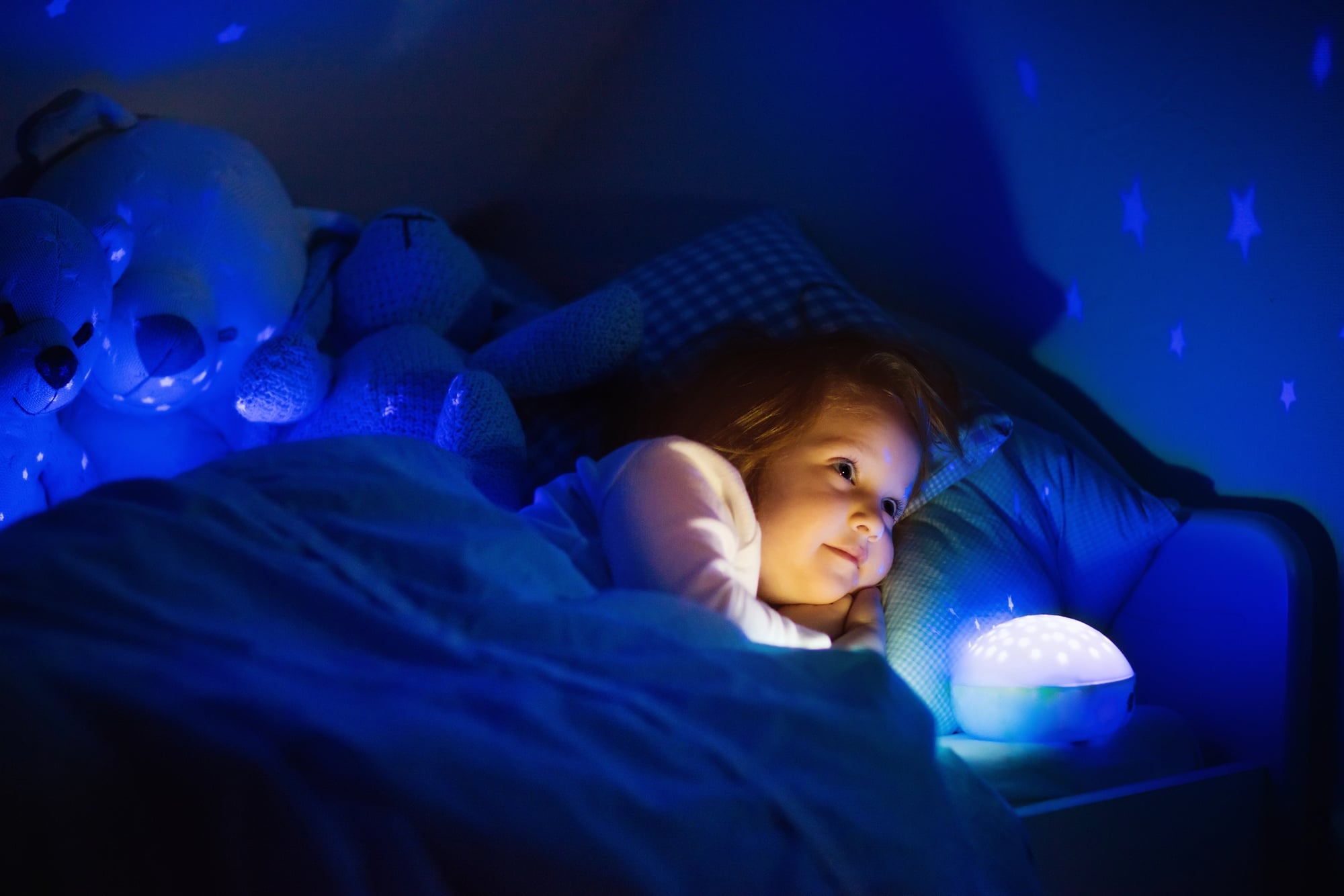
Once the lights were out and the negotiations had ended, the ceiling became the default screen. It was blank, it offered nothing, and yet kids stared at it with the kind of focus they couldn’t sustain during long division.
Thoughts moved differently in the dark — looser, stranger, following chains of association that daylight would never have allowed. Some of the best thinking of childhood happened in those twenty minutes before sleep arrived.
Letting Your Imagination Turn The Room Into Something Else

The dark bedroom was a remarkably productive creative space. A familiar dresser became a silhouette with ambiguous intentions.
The window let in just enough ambient light to make the curtains look like something moving. Children in the ’80s had no screens to stare at once the lights went out, so the room itself became the entertainment — and the imagination, left unsupervised, was a genuinely capable producer.
Hearing Your Parents’ Muffled Conversation Through The Wall

The adult world continued after bedtime, and it was audible through the drywall in a way that made it seem both close and completely inaccessible. The specific words rarely came through clearly — just tones, rises and falls, the occasional laugh.
Lying there half-asleep, parsing the emotional temperature of a conversation you couldn’t quite hear, was a strange and particular kind of childhood experience. It felt like the house had its own private life that started when yours was supposed to end.
Waking Up For Water You Actually Needed This Time

The 2 a.m. water run was distinct from the pre-bedtime one — this one was real, driven by actual thirst, navigated in complete dark down a hallway that felt twice as long at night. The kitchen was different without its daytime context: quieter, slightly foreign, the refrigerator hum loud in a way it never was during the day.
You filled a glass, drank it standing at the sink, and went back to bed without turning on a single light if you could help it.
Calling Out To A Parent From Bed
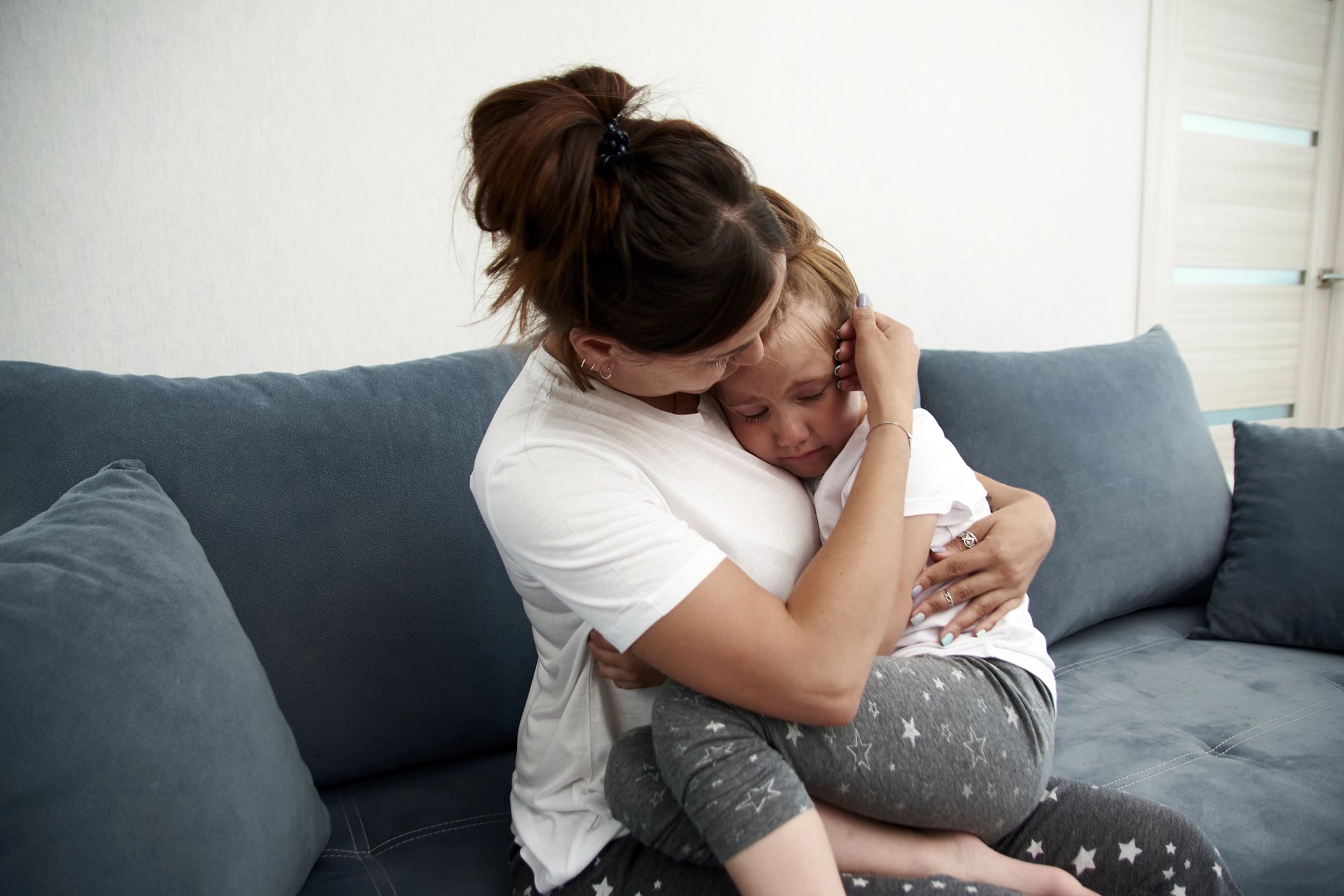
The post-lights-out call was a ritual unto itself. “Mom.”
A pause. “Mom.”
A longer pause. Then the sound of someone getting up from the couch with audible patience.
The reason for the call was often secondary — sometimes it was genuine fear, sometimes a stomach ache, sometimes just the need to confirm that someone was still out there, still awake, still available. That last one was the most common, even if it was never described that way.
Sleeping With The Door Cracked

The cracked door was a negotiated border between two worlds. Fully closed felt like isolation; fully open felt like the boundary between sleep and the rest of the evening had collapsed entirely.
The crack — two, maybe three inches — let in just enough hallway light, just enough ambient household sound, to make the room feel connected to something larger. Most ’80s kids would have struggled to explain why it mattered so much.
And yet it mattered enormously.
Listening To The Radio Quietly

Some kids had a small clock radio on the nightstand — a tinny little thing that picked up the Top 40 station if the dial was positioned correctly. Falling asleep to whatever was charting in 1986 meant waking up with a partial song stuck somewhere in your head, context-free, arriving like a transmission from a frequency you couldn’t quite find again.
It was an oddly pleasant way to lose consciousness.
Having A Night Light That Projected Something On The Ceiling

The night light of the ’80s was frequently overqualified for its job. Some projected a faint pattern — stars, fish, a rudimentary shape — across the ceiling, and watching it was better than any screen, mostly because it required the child to do all the interpretive work.
The image didn’t move or talk or explain itself. It just sat there on the ceiling, and whatever you made of it was entirely your own.
Falling Asleep Before You Meant To‘

Every ’80s kid has a memory of not making it to the end of something — a story, a thought, a plan for the next day — and simply being gone before the sentence finished. Sleep in childhood arrived quickly and without warning, the way weather changes in spring: one moment you were present, and the next you weren’t.
And adults had a way of knowing it had happened before the child did, which is its own particular kind of knowledge.
Waking Up Already In Bed When You Fell Asleep On The Couch

The couch-to-bed transfer was one of childhood’s stranger gifts. You fell asleep watching TV, and at some point the room changed — quieter, darker, horizontal — and you were in bed with no memory of how you arrived.
Someone had carried you, or walked you half-awake down the hallway, and done the whole routine on your behalf while you were unconscious for it. That’s a specific kind of being cared for that doesn’t have a clean adult equivalent.
Bedtime Memories

Those bedtime routines weren’t just logistics. They were the architecture of safety — the nightly confirmation that the world was in its correct position, that someone was nearby, that tomorrow was allowed to come.
The rituals themselves were mundane: soap, pajamas, a glass of water, a cracked door. But the thing they added up to was something harder to name and much more durable.
Plenty of people carry a version of those routines into adulthood without fully realizing it — the specific pillow, the particular light, the need for some faint sound in the background before sleep becomes possible. The ’80s kid who needed the hall light left on at 7 is still in there somewhere, just better at pretending otherwise.
More from Go2Tutors!

- The Romanov Crown Jewels and Their Tragic Fate
- 13 Historical Mysteries That Science Still Can’t Solve
- Famous Hoaxes That Fooled the World for Years
- 15 Child Stars with Tragic Adult Lives
- 16 Famous Jewelry Pieces in History
Like Go2Tutors’s content? Follow us on MSN.