27 Unwritten Rules of Childhood Nobody Had to Be Taught
There was no handbook. No orientation session, no laminated chart on the wall explaining how things worked. And yet somehow, every kid in every neighborhood figured it out — the same rules, in roughly the same order, without anyone sitting them down to explain.
The rules of childhood were absorbed the way kids absorb everything: through watching, through consequence, through the particular sting of getting it wrong in front of other people. Some of these rules were about fairness.
Some were about survival. Some existed purely because children, left to their own devices, build remarkably consistent societies.
Here’s what everyone already knew.
Car Seat Dibs
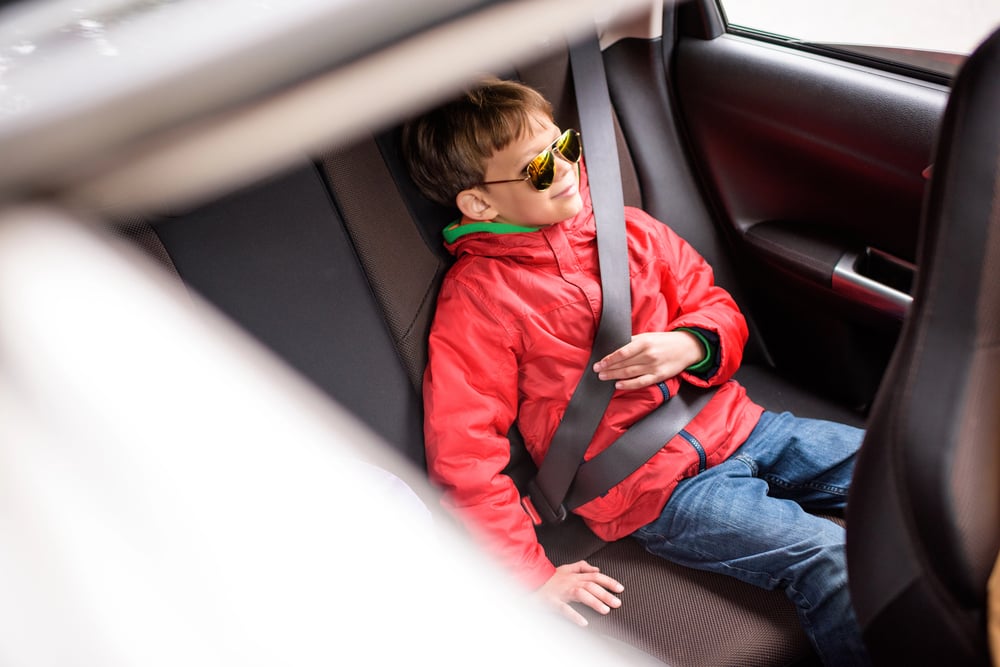
Called it. That’s the whole rule.
The first person to say “shotgun” when the car comes into view gets the front seat — no appeals, no retroactive claims, no exceptions for being older or taller. It’s a clean system, which is saying something for one invented entirely by people under twelve.
The Floor Is Lava

The furniture in any room was, at a moment’s notice, an archipelago — and the carpet between the couch and the armchair was something you’d rather not touch, something with weight and consequence, even though everyone in the room knew it was just carpet. What’s remarkable isn’t that kids invented this game but that they played it with full commitment, leaping from cushion to cushion with a seriousness usually reserved for things that actually matter.
The floor being lava required no explanation, no rulebook, no adult to set the stakes.
The Oldest Sibling Goes First

The oldest child goes first. Always.
Not because it’s fair — it isn’t, particularly — but because birth order functions as a kind of silent authority that younger siblings absorb early and challenge rarely. To be fair, the youngest usually got away with things the oldest never could, so the universe balanced itself out in its own lopsided way.
Pinky Promise Supremacy
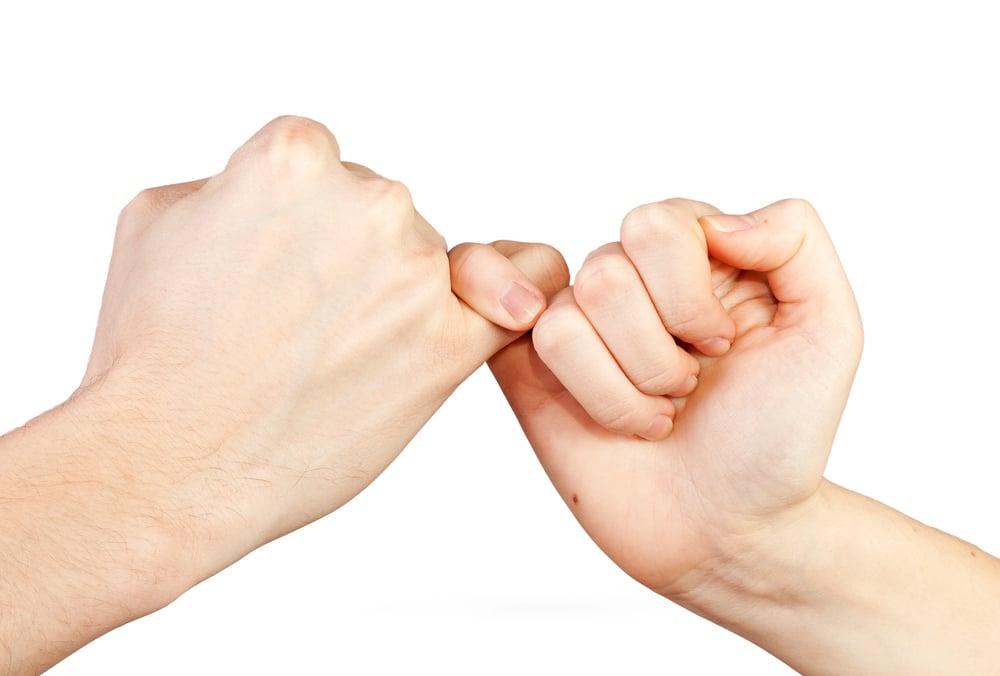
A pinky promise outranks a regular promise the way a signed contract outranks a handshake. There’s no logical reason a linked finger should carry more weight than a spoken word — and yet every child understands, without being told, that breaking a pinky promise is a different category of betrayal entirely.
Some agreements just carry the ritual.
Calling the Corner Seat

The corner of a sectional couch, the window seat on the school bus, the spot at the end of a cafeteria bench — real estate with a wall on one side and open space on the other holds a specific gravity for children that adults mostly forget. Claiming it required nothing more than arriving first and sitting down.
But everyone understood the claim was valid, and honoring it was not optional.
Dibs Lasts Forever (Until You Leave)

Dibs is a binding agreement, but it has a time limit: the moment you leave the space, the claim expires. You can’t call dibs on the best chair and then wander off to the kitchen for twenty minutes — that’s not how it works, everyone knows it’s not how it works, and trying to enforce a stale dibs claim is the kind of thing that makes everyone in the room quietly side against you.
The beauty of the system is its efficiency.
Tag Rules Require No Referee

Tag, at its core, has maybe three rules — and yet somehow a game involving twenty kids in a park manages to self-govern almost completely. No adult sets the boundaries, calls a disputed touch, or decides who’s “it.”
Kids negotiate all of that in real time, at full speed, usually without stopping running. The system works because everyone already agrees it’s supposed to.
You Can’t Use the Sprinkler Without Getting Wet

There was never a version of running through the backyard sprinkler where you could stay mostly dry and still participate — and deep down, everyone who tried to skirt the edge of the spray knew they were being cowardly about it. Getting halfway wet is worse than getting soaked, a lesson that water teaches without words.
So you either ran through or you sat on the porch and watched. Both were valid.
Only one was memorable.
Whoever Holds the Controller Goes Next

The kid holding the controller — or who has been holding it for the last three rounds — goes next in a multiplayer rotation. Not the kid who asks loudest.
Not the kid who’s been waiting the longest by strict time measurement. The controller passes in a direction and continues in that direction, and interrupting the rotation for any reason requires a level of justification that almost nothing could meet.
This was understood without discussion.
Rock-Paper-Scissors Settles Everything

Arguments about who goes first, who gets the last slice, who has to carry the bag — all of these dissolved the moment someone held out a fist and started counting. Rock-Paper-Scissors carried a quiet authority that no adult-imposed decision ever quite managed, because both parties had agreed to it before the outcome existed.
The result felt fair in a way that few things in childhood actually were. Three throws, and the matter was closed.
Finders Keepers Has Conditions

“Finders keepers” is not a universal law — it’s a situational one, and every child understands the conditions even if they can’t articulate them. If it’s clearly someone else’s and they’re standing right there, finders keepers doesn’t apply.
If it’s been abandoned long enough that ownership has lapsed into ambiguity, it applies completely. The grey zone in between is where childhood courts convene and deliberation happens fast.
The Birthday Kid Picks the Movie

On your birthday, you pick the movie. You pick the restaurant.
You pick the game. These aren’t negotiations — they’re one of childhood’s few genuine entitlements, a day where your preferences carry weight they otherwise wouldn’t.
The rest of the year you compromise, you argue, you lose the vote. But the birthday belongs to the birthday person, and everyone accepts that without needing it written down.
No Crying Over Losing at Cards

Losing at Go Fish or Uno is not grounds for visible devastation — not because feelings don’t matter, but because everyone at the table understands you’ll win eventually and has agreed, by sitting down, that both outcomes are possible. The kid who cries at a card game makes everyone uncomfortable in a very specific way, because the social contract of playing a game includes accepting that it might go wrong.
To be fair, losing to a younger sibling specifically tests the limits of this rule.
Wet Willies Are Declared War

A wet willy — a moistened finger inserted into someone’s ear — is not a prank. It’s an act of aggression that authorizes retaliation of nearly any kind.
The recipient does not need to explain why they’re upset. The recipient does not need to be proportionate.
Everyone already knows what a wet willy is and what it means, and the person who administered it knew exactly what they were starting.
The Last One to Bed is the Bravest

At a sleepover, staying awake the longest carries a distinction that’s understood even by children too young to explain why. Sleep, in this context, is a form of surrender — and the last person awake wins something intangible but real, a quiet championship in a competition nobody officially entered.
Most kids who “won” this fell asleep mid-sentence shortly after everyone else.
Trading Food at Lunch Is a Contract

When you hand someone half your sandwich in exchange for half their bag of chips, that transaction is complete. You don’t get to look at what you received and decide the trade was unfair after the fact — the moment hands changed, the deal closed.
Attempting to reverse a completed lunch trade is the kind of thing that follows a kid for weeks.
The Jump Rope Counts

The kid turning the jump rope is not a lesser participant — they’re essential, and everyone knows it. Taking a turn at the handles isn’t a consolation prize or a waiting room; it’s part of the game, rotated fairly, and refusing to take a turn at the handles when yours comes is one of the quieter violations of playground law.
The rope doesn’t turn itself. Somebody has to do it, and that somebody deserves their jump.
You Don’t Snitch on the Hiding Spot
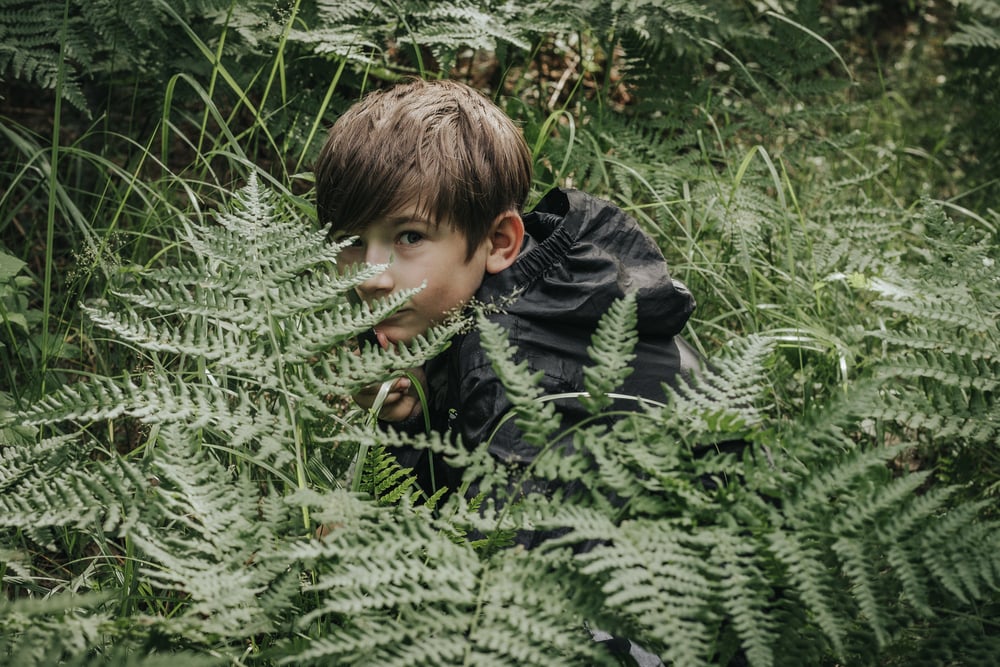
If someone tells you where they hid during hide-and-seek — confiding the location in a whisper, trusting you with the intelligence — you don’t pass that along to whoever’s seeking. Not because anyone said so, but because that information was shared in confidence and using it would mean something about your character.
Children understand this without the word “loyalty” being anywhere nearby.
Dare Means Dare

In Truth or Dare, choosing Dare means accepting whatever comes — you don’t get to hear the dare and then negotiate down to something manageable. The moment you say dare, you’ve committed, and backing out of it carries a social cost that lingers.
The whole game rests on that contract. Without it, you’re just sitting in a circle asking questions.
Sidewalk Cracks Are Optional Obstacles

“Step on a crack, break your mother’s back” doesn’t hold up logically, and no child over the age of seven fully believed it — and yet plenty of kids over the age of seven still stepped around them anyway, just in case, because the cost of being wrong felt surprisingly high for something so improbable. Superstition in childhood moves like a weather system: you don’t choose to be in it, you’re just suddenly in it and navigating around it.
The Ghost Seat

Nobody sits in the seat that belongs to the kid who’s absent that day — not in the classroom, not at the lunch table. The seat holds a kind of phantom claim, a placeholder for someone who isn’t there, and occupying it feels wrong in a way that’s hard to justify but impossible to ignore.
It’s a small loyalty, offered without acknowledgment, to someone who’ll never know it happened.
Don’t Touch the Thermostat

Children who grew up in houses with thermostats learned early that the device on the wall was not for them. It wasn’t discussed.
It wasn’t forbidden in any explicit conversation. But the understanding was absolute: the thermostat belonged to the adults, and reaching for it would set something in motion that nobody wanted.
Some boundaries exist without fences.
No Cheating at the Honor System

When the game required someone to count with their eyes closed — covering their face, counting to twenty while everyone scattered — that person was expected to actually close their eyes and actually count. Peeking wasn’t against the rules in any documented sense.
It was just understood to be the specific kind of dishonesty that ruins something for everyone, including yourself, and the cheater always knew it while they were doing it.
Knock Before Entering a Fort

A fort — whether made of couch cushions, blankets, or three wooden pallets someone found behind a garage — was sovereign territory. You don’t walk into a fort uninvited.
You announce yourself. You ask.
The fort’s occupant decides who enters and when, and that authority is respected because everyone, when it’s their fort, wants the same thing.
You Finish What You Started in a Dare

If you agreed to a dare and started it, you finish it. Not finishing a dare you’re already doing is worse than refusing it at the outset — at least then you’d have just said no, and people would’ve moved on.
Stopping halfway is a different kind of thing entirely. This, too, was never explained.
Saying Jinx Locks Someone’s Voice

The moment two people said the same word at the same time, the first one to say “jinx” had power over the other. The jinxed person could not speak — not really, not without consequence — until their name was said three times.
Nobody invented this rule in a meeting. It arrived, somehow, fully formed, understood instantly by every child who encountered it, and enforced with a seriousness that jinxed parties found deeply unfair and administering parties found deeply satisfying.
You Always Have Room for Dessert

No child, having declared themselves too full to finish dinner, has ever turned down dessert on the grounds of fullness. This is not hypocrisy — it’s a different stomach, everyone knows it’s a different stomach, and if the adults at the table found this logic convenient when it suited them, that point was carefully left unmade.
The dessert stomach is real. It was never scientifically confirmed.
It didn’t need to be.
The Rules Hold Up

Nobody sat the children down. Nobody ran a seminar.
And yet, in backyards and school buses and living rooms across the country, the same rules emerged — the same hierarchy, the same codes, the same quiet agreements about what was fair and what wasn’t. What that says about kids is something worth sitting with: that fairness isn’t taught so much as it’s felt, and that some social instincts arrive before language does, before explanation does, before adults have had a chance to complicate them.
The rules of childhood weren’t arbitrary. They were the first attempt at justice most people ever made — imperfect, occasionally brutal, and remarkably consistent.
More from Go2Tutors!

- The Romanov Crown Jewels and Their Tragic Fate
- 13 Historical Mysteries That Science Still Can’t Solve
- Famous Hoaxes That Fooled the World for Years
- 15 Child Stars with Tragic Adult Lives
- 16 Famous Jewelry Pieces in History
Like Go2Tutors’s content? Follow us on MSN.