Photos of 16 Oldest Functioning Clocks in the World
There’s something quietly astonishing about a machine that has been ticking for six centuries. No software updates.
No replacement parts ordered online. Just gears, weights, and the patient engineering of people who understood time differently than we do.
These clocks weren’t built for convenience — they were built for permanence. And somehow, against all odds, many of them are still running.
Here are 16 of the oldest functioning clocks in the world, still keeping time today.
1. Salisbury Cathedral Clock, England (1386)
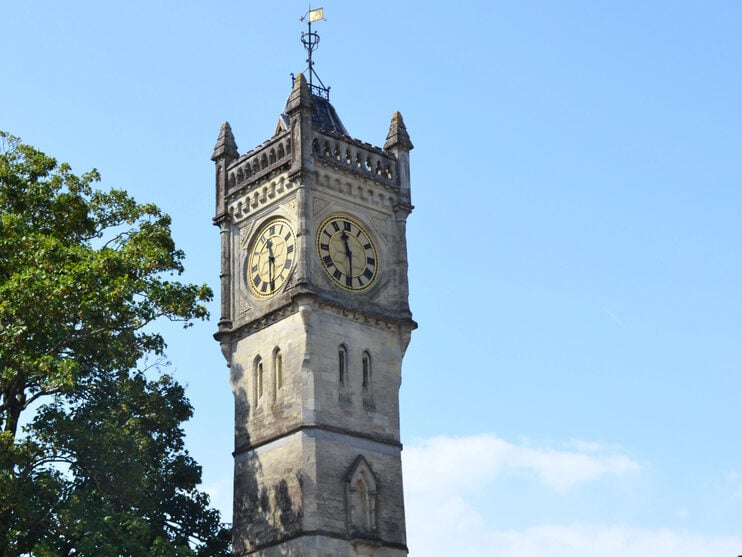
This is it — the one most historians agree holds the title. Built in 1386 for Salisbury Cathedral, this iron-framed clock has been ticking for over 630 years.
It has no clock face. Instead, it was designed purely to ring a bell at regular intervals, which was all most people needed at the time.
The clock was rediscovered in the cathedral tower in 1929, having been out of use for decades. After restoration, it was set running again and has remained operational ever since.
You can still see it working in the north aisle of the cathedral.
2. Chioggia Clock Tower, Italy (1386)
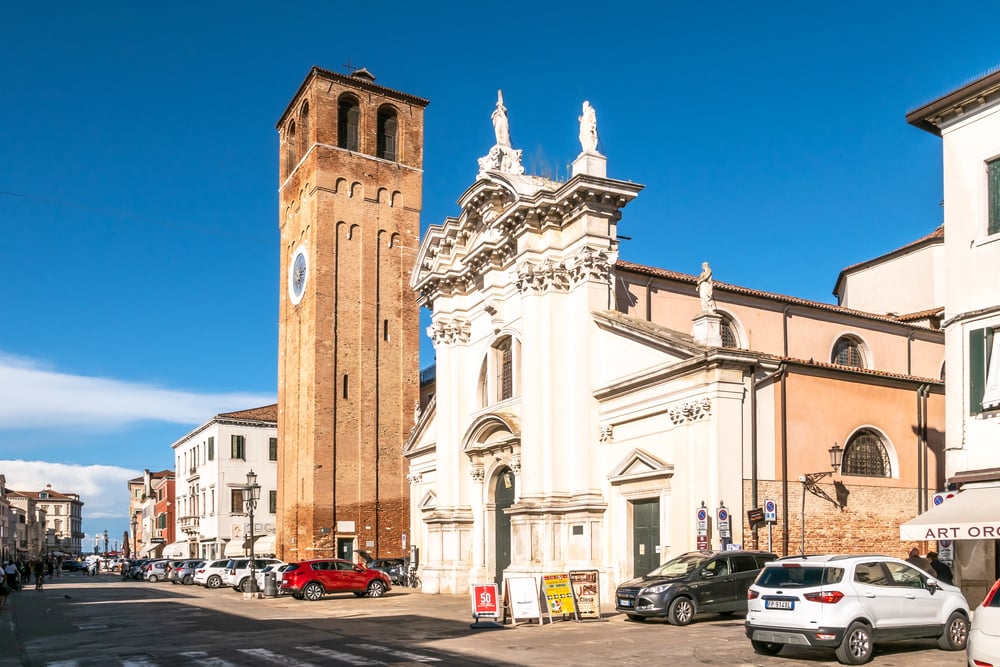
Built in the same year as the Salisbury clock, the Chioggia tower clock in northeastern Italy makes a strong case for being among the world’s oldest. Located in the small fishing town of Chioggia near Venice, the clock was constructed by Jacopo and Piero Dondi — members of the same family that pioneered astronomical clockwork in 14th-century Italy.
The clock originally sat atop the town’s civic tower and has been restored multiple times over the centuries while retaining its core medieval mechanism.
3. Wells Cathedral Clock, England (1392)
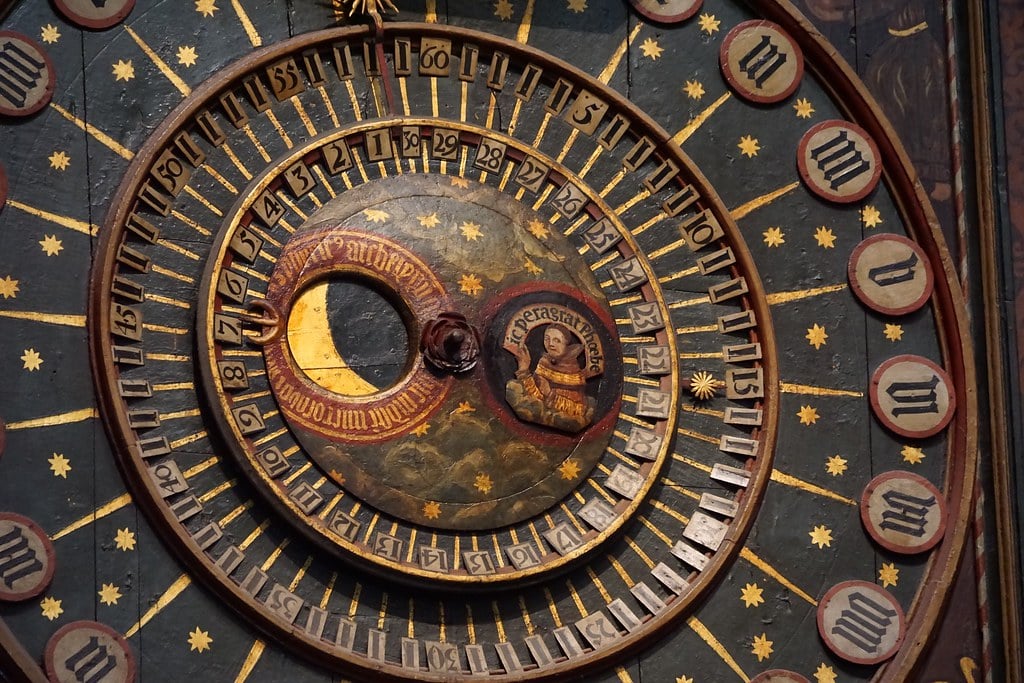
The Wells Cathedral clock is the second oldest in England and one of the most visually striking medieval clocks anywhere. Installed around 1392, its astronomical dial shows the position of the sun, moon, and stars against a fixed Earth at the center — reflecting the cosmological understanding of the time.
Every quarter hour, jousting knights circle the clock face in a mechanical procession. The original movement is now at the Science Museum in London, but an exact replica continues to run inside the cathedral.
4. Rouen Gros-Horloge, France (1389)
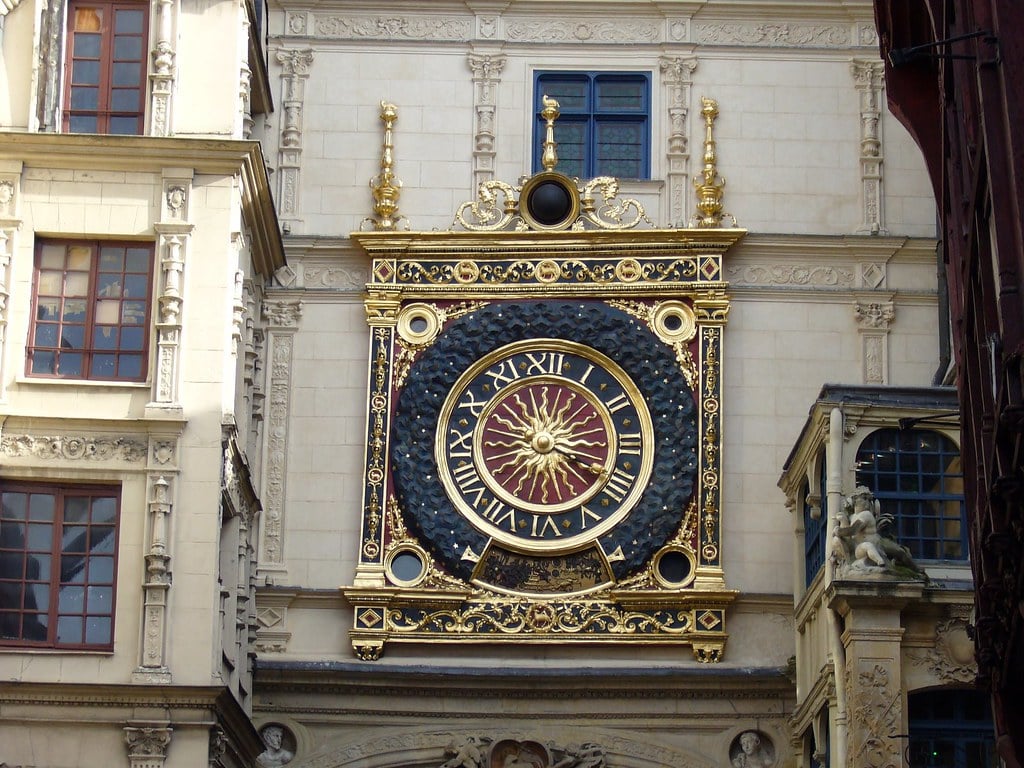
The Gros-Horloge, or “Great Clock,” of Rouen is one of France’s oldest astronomical clocks. Its mechanism dates to 1389, though the ornate Renaissance arch it sits in was added in 1527. The single-handed dial — showing only the hour — sits above a busy pedestrian street in the old city center.
Below the main dial, a sphere rotates to display the phases of the moon. The clock was restored in the 21st century and remains one of the most visited historical monuments in Normandy.
5. Dover Castle Clock, England (c. 1348)
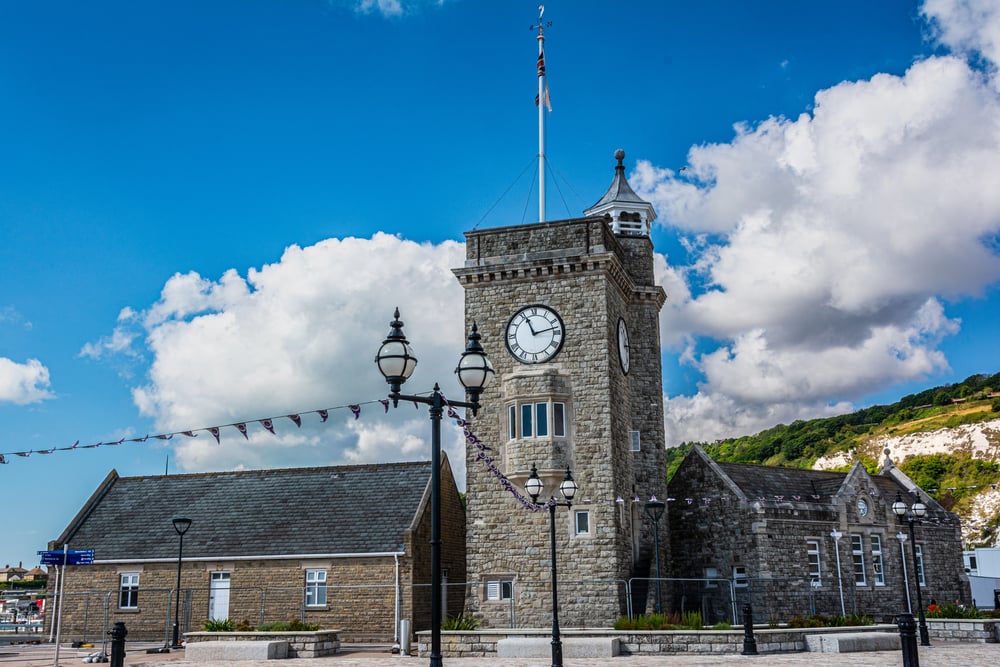
Some scholars place the Dover Castle clock even earlier than Salisbury, dating it to around 1348. If that dating is correct, it would be the oldest surviving mechanical clock in the world.
The mechanism is simple — wrought iron with a verge escapement — and was almost certainly used to ring a bell in the castle chapel. The original movement is now housed at the Science Museum in London, where it remains a subject of debate among horologists over its exact age.
6. Exeter Cathedral Clock, England (c. 1484)
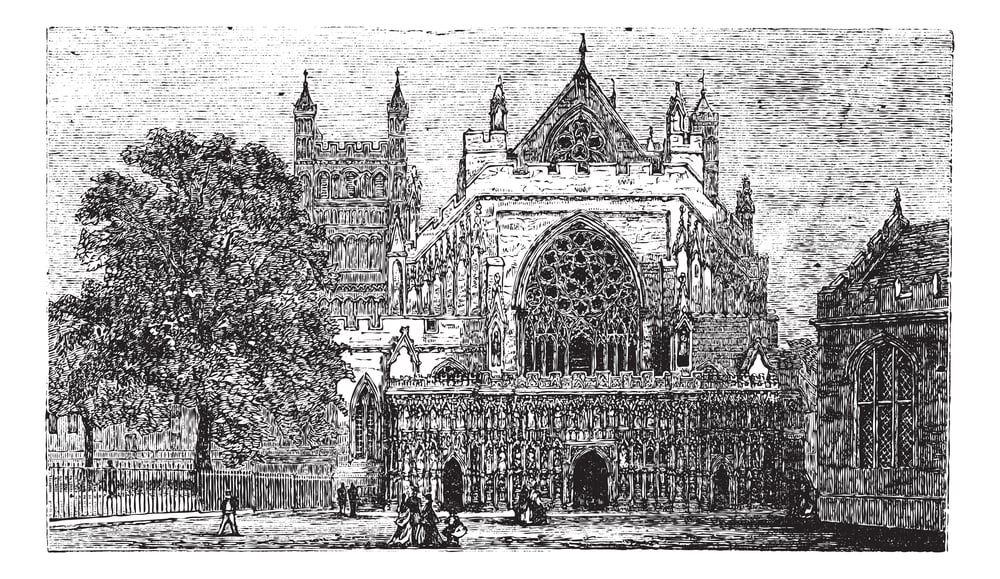
The Exeter Cathedral clock dates to around 1484, though it incorporates older components that may reach back even further. Like the Wells clock, it shows an Earth-centered universe with the sun and moon orbiting a stationary world.
The dial’s hand is a small golden sun that travels across the face, marking the hour. The moon phase is shown through an aperture in the dial.
It’s one of the most complete surviving examples of medieval astronomical timekeeping in England.
7. Prague Orloj, Czech Republic (1410)
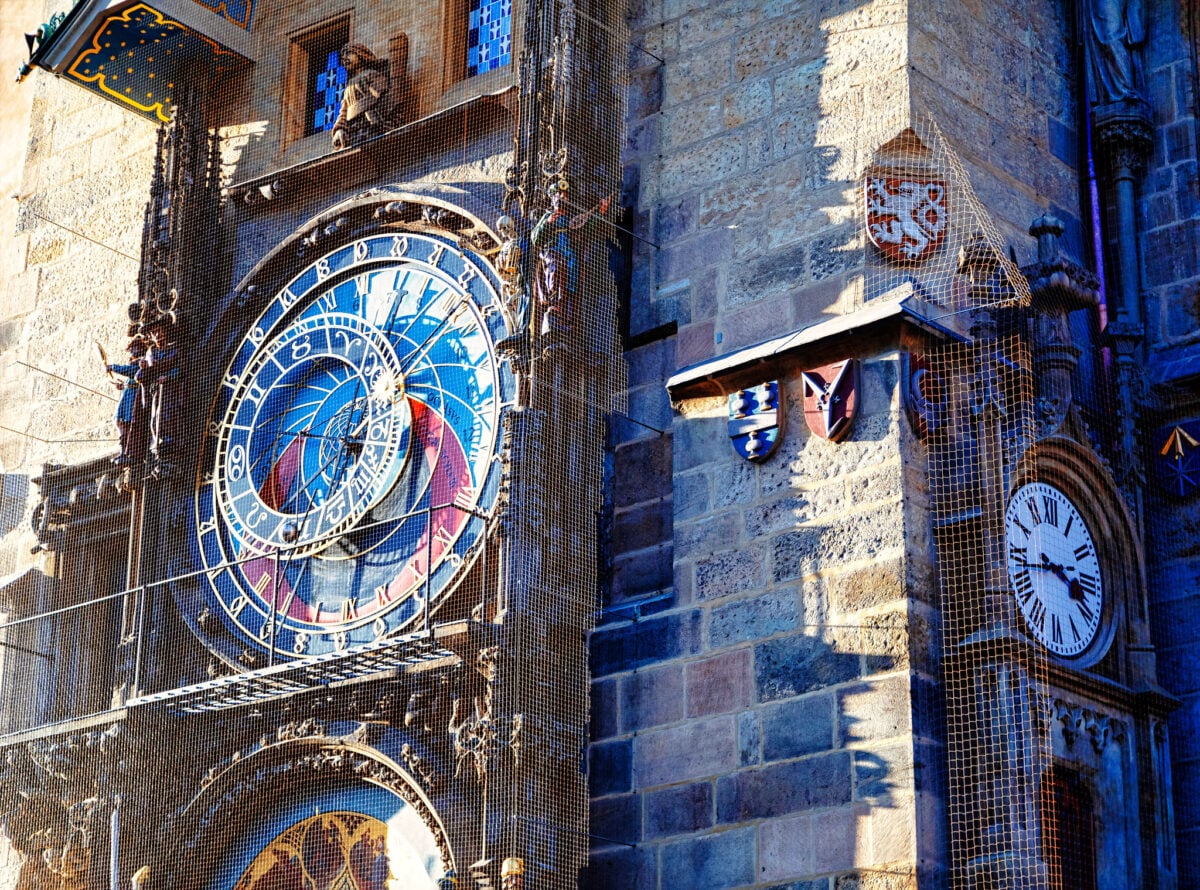
The Prague Astronomical Clock, installed in 1410, is one of the most photographed clocks in Europe. It sits on the Old Town Hall Tower in Prague’s main square and draws crowds every hour when its mechanical procession of the Twelve Apostles emerges from small windows above the dial.
The main face tracks solar time, sidereal time, and the signs of the zodiac simultaneously. A calendar dial below shows the day of the year with medallion paintings for each month.
The clock has survived fires, war, and centuries of political upheaval — and it still runs today.
8. Ottery St Mary Church Clock, England (c. 14th century)
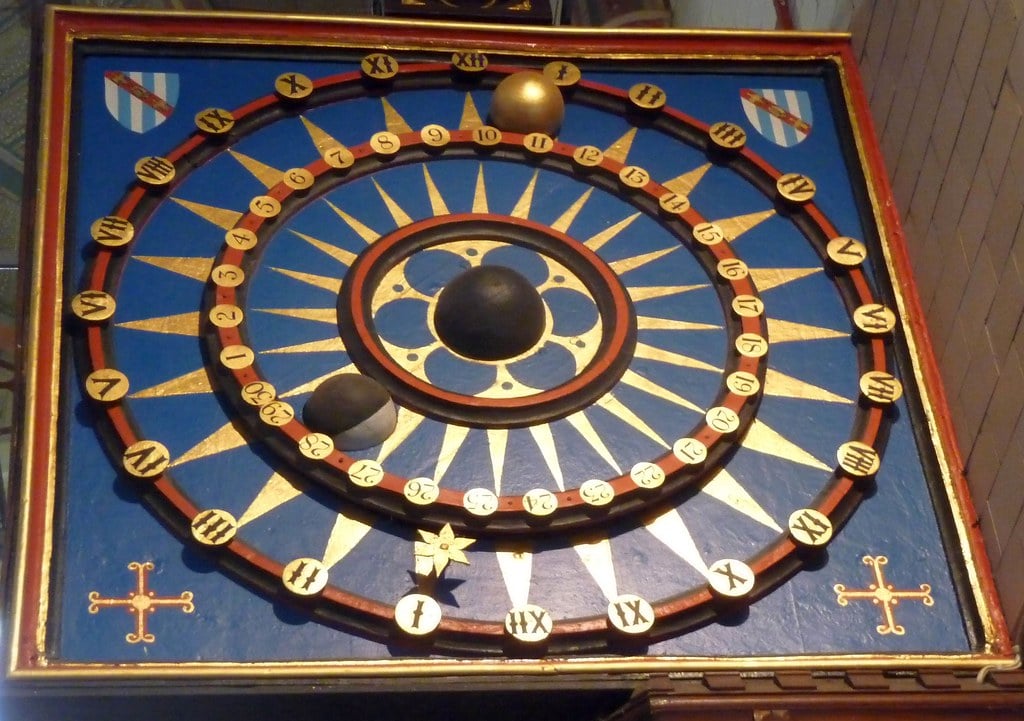
The church of St Mary in Ottery St Mary, Devon, houses one of England’s lesser-known but remarkably old clocks. The mechanism dates to the 14th century and displays astronomical information alongside basic timekeeping.
The clock is linked to Bishop Grandisson, who refounded the church in 1337 and is thought to have brought skilled clockmakers from Exeter to build it. The face retains much of its original medieval design, with the characteristic geocentric model of the universe.
9. Wimborne Minster Clock, England (14th century)
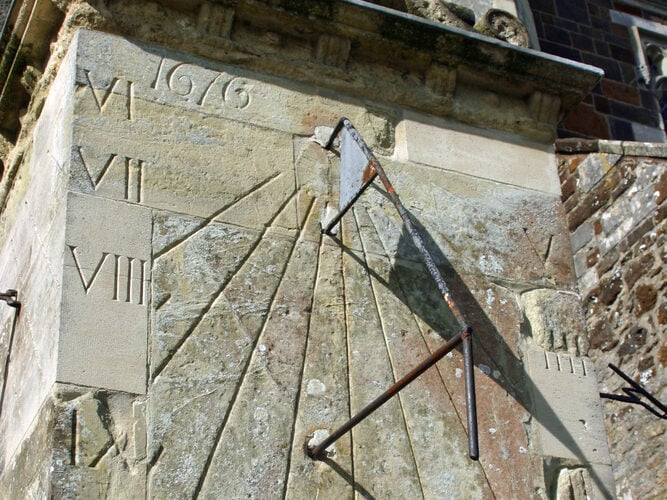
The Wimborne Minster in Dorset is home to a clock with origins in the 14th century. On the outside of the building, a painted wooden figure — known as the Quarter Jack — strikes the bells with hammers on the quarter hour.
The figure is dressed as a grenadier from the Napoleonic era, though the underlying mechanism is far older. Inside the minster, the astronomical dial shows the 24-hour day and the phases of the moon.
It’s one of the few medieval church clocks in England that has never been fully removed from its original building.
10. Gdansk Astronomical Clock, Poland (1464–1470)
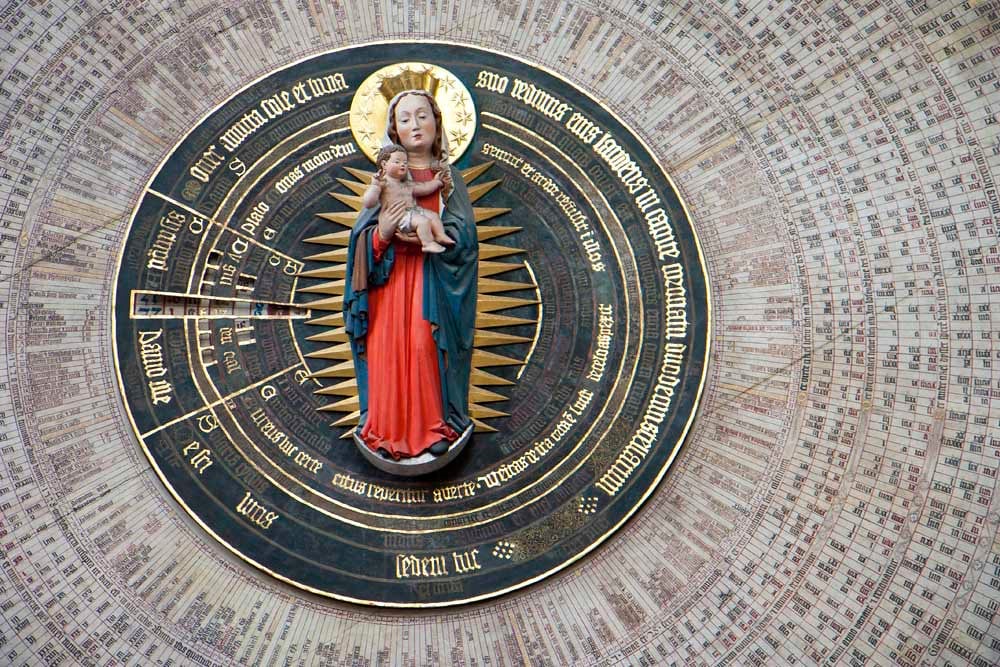
Built between 1464 and 1470, the astronomical clock of St. Mary’s Church in Gdansk is the tallest medieval clock in the world, standing at around eight meters. It tracks the calendar, the zodiac, solar and lunar positions, and even the feast days of various saints.
The clock stopped working in the 19th century and spent decades as a silent monument inside the church. After painstaking restoration work completed in 1464, it was set in motion again and today runs as it did when it was first built.
11. Bern Zytglogge, Switzerland (mechanism from 1530)
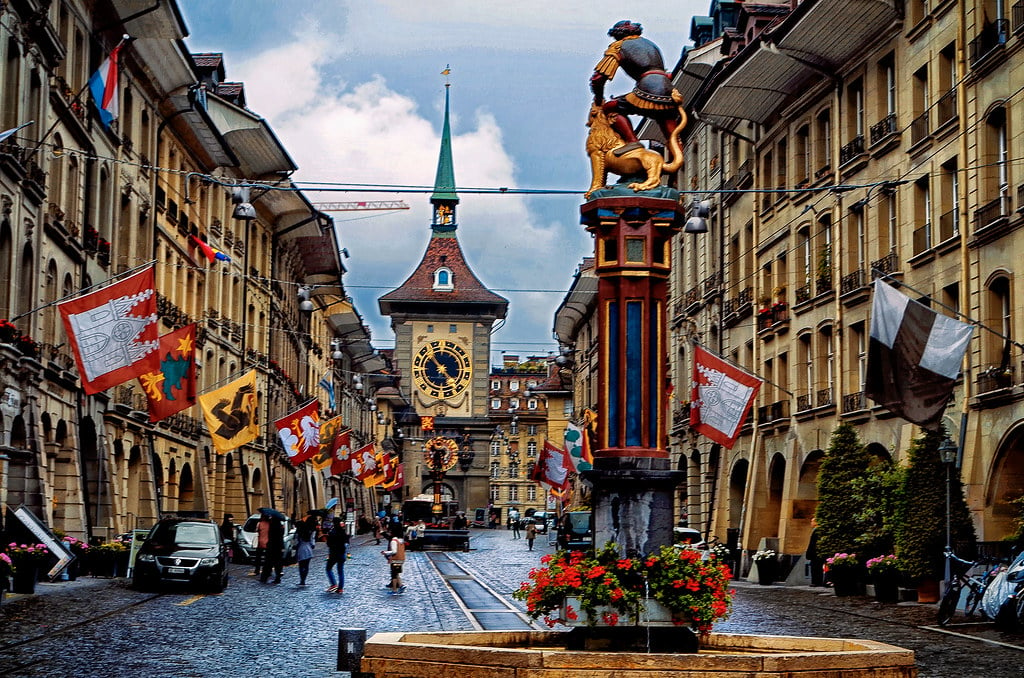
The Zytglogge tower in Bern has stood since the early 13th century, but the astronomical clock mechanism inside it dates to 1530. Four minutes before each hour, a small mechanical theater springs to life — bears parade, a rooster crows, and a crowned figure strikes the bell.
The tower itself is a UNESCO World Heritage Site as part of the old city of Bern. The clock mechanism has been serviced and maintained continuously for nearly 500 years, making it one of the longest-running maintained timepieces in Europe.
12. Beauvais Cathedral Astronomical Clock, France (16th–19th century)
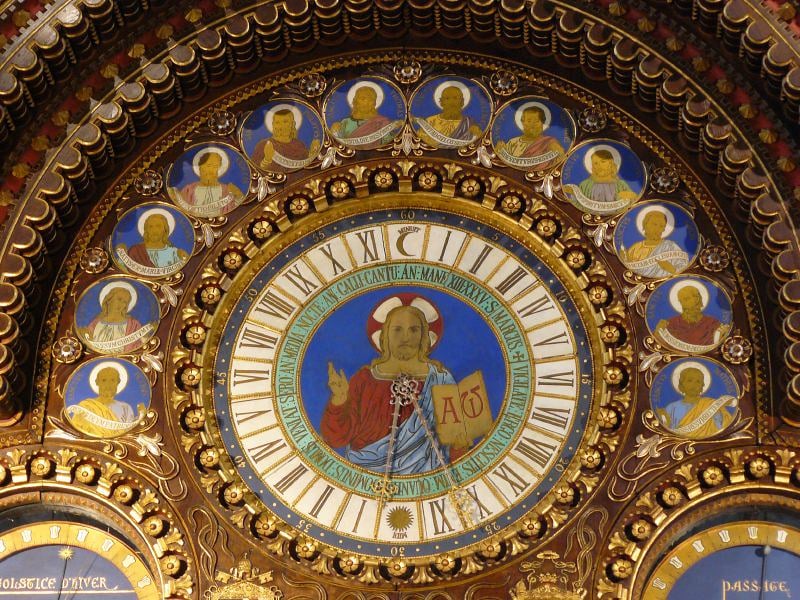
The astronomical clock inside the Cathédrale Saint-Pierre de Beauvais is more recent in its current form but incorporates components and design principles stretching back to the 16th century. The present mechanism was constructed between 1865 and 1868 by Auguste-Lucien Vérité, who built it into the medieval cathedral fabric.
With over 90,000 individual parts, it tracks astronomical, religious, and civil time on 52 separate dials. It was described at the time of its construction as the most complex clock ever built.
13. Lyon Cathedral Astronomical Clock, France (1598)
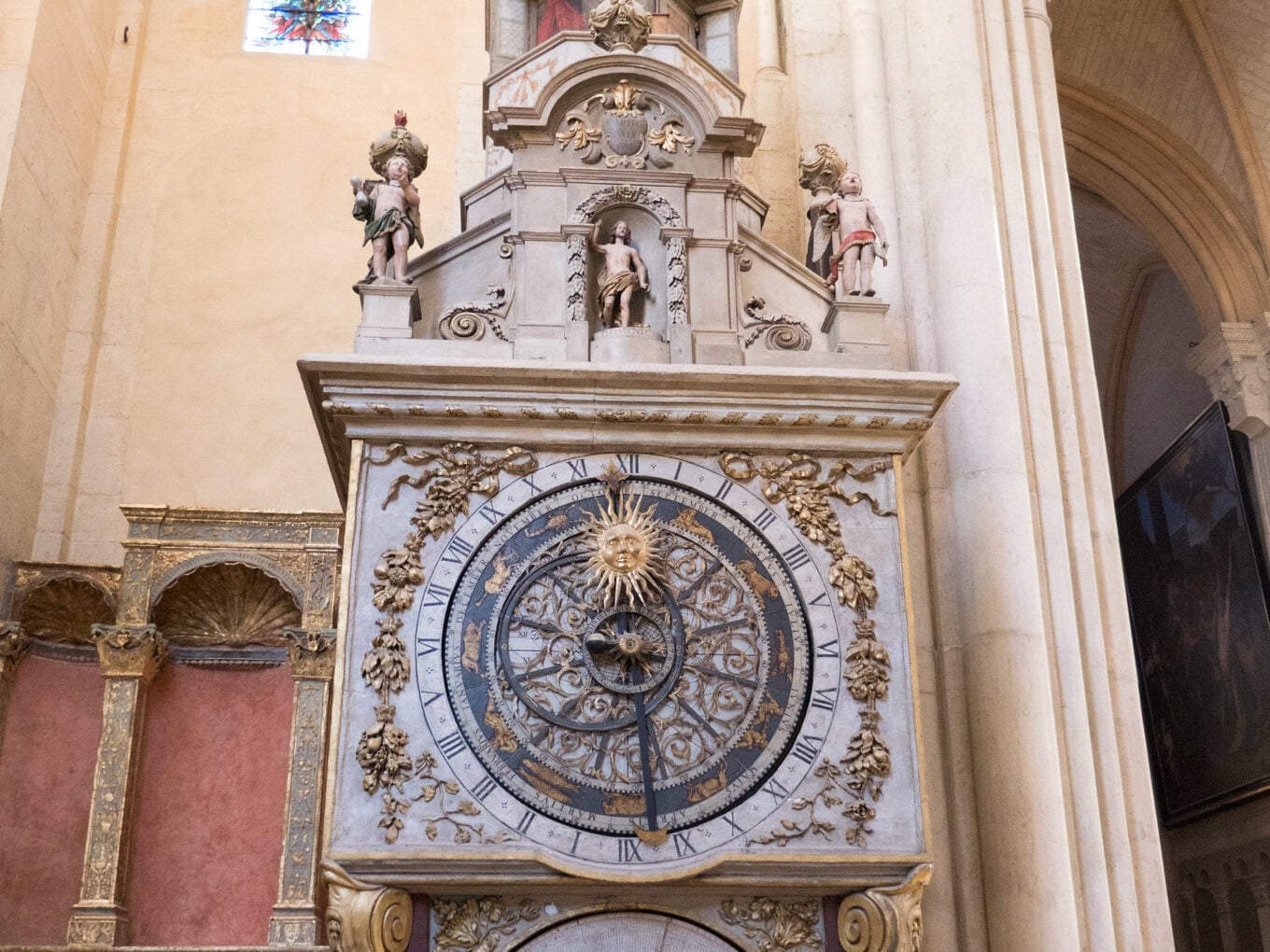
Housed inside the Cathédrale Saint-Jean-Baptiste de Lyon, this clock dates to 1598 and is a feat of Renaissance engineering. Its upper section delivers a mechanical automaton show every day at noon, 2 p.m., 3 p.m., and 4 p.m., featuring the Annunciation scene with moving figures.
The clock was built over the course of many decades using components from even older mechanisms, some dating back to the 14th century. It has run continuously — with brief interruptions for restoration — for over 400 years.
14. Torre dell’Orologio, Venice, Italy (1499)
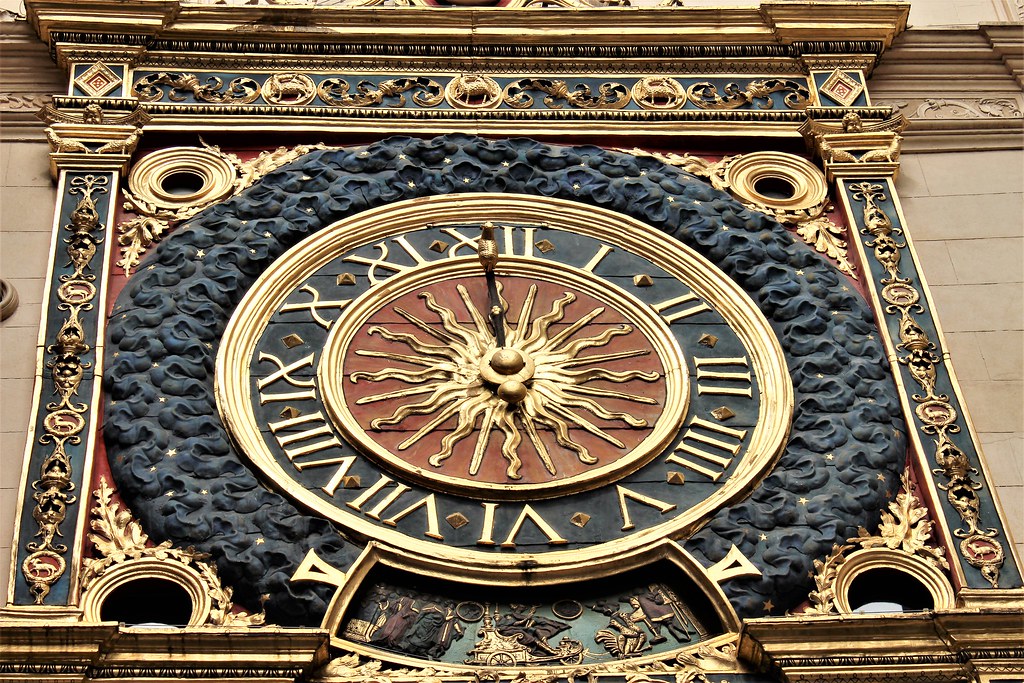
Above the Mercerie in Venice’s St Mark’s Square, a clock tower went up in 1499. It shows hours, the moon’s shape, along with which zodiac symbol rules now. When each new hour begins, twin bronze statues – called locally the Moors of Venice – swing into motion.
They hit a big bell perched high on the structure. A few skilled artisans have kept the timepiece running across hundreds of years.
When Epiphany arrives, followed later by Ascension Day, three moving king figures circle the dial – this scene unfolding just as it did five centuries ago.
15. Hampton Court Astronomical Clock England 1540
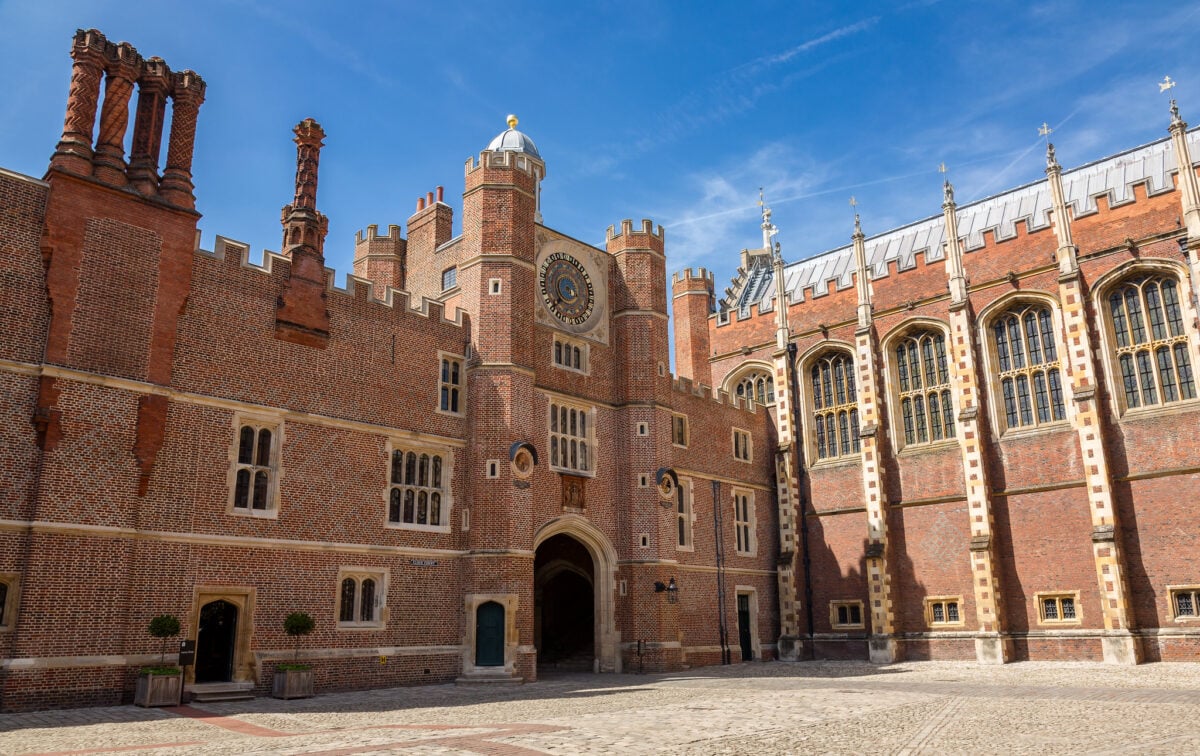
Starting life in 1540, this timepiece was made for King Henry VIII, a fine example of Tudor skill. Though many forget his name now, Nicholas Oursian shaped its design with care.
Above what people call Anne Boleyn’s Gate, it found its home at the palace. Set into stone high up, the clock watched centuries pass without moving fast.
A round face marks each hour, day, and month alongside yearly progress, lunar shifts, tidal swings by London Bridge, plus where the sun sits among zodiac signs. Fixed once in 1879, then again that same year, it still moves quietly within the palace walls now.
16. Strasbourg Cathedral Astronomical Clock France current mechanism 1843
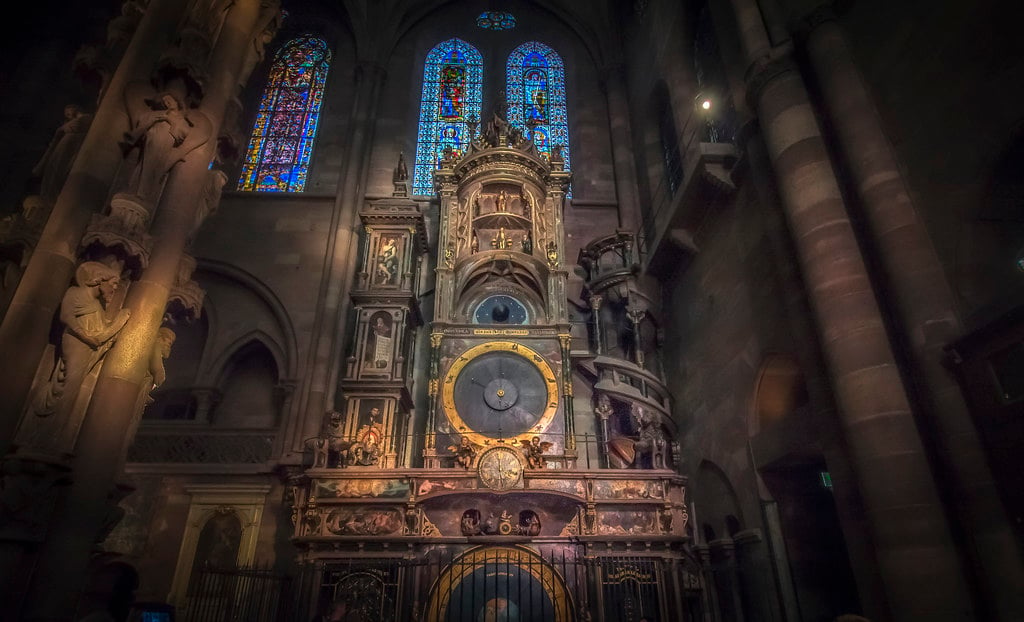
Begun long ago, the clock inside Strasbourg Cathedral dates back to the 1300s; yet what ticks today came together much later. Though centuries apart, one followed another when the original failed.
The version now in place took shape under Jean-Baptiste Schwilgué, finishing its work in 1843. Not old enough to be medieval, it still upholds a rhythm that started in 1354.
Time there never truly halted – just changed hands. Standing in the south part of the cathedral, the timepiece reaches 18 meters high yet keeps ticking now as people come from distant places.
When noon shifts into afternoon, twelve figures march slowly by a carved image of Jesus – this small show moves forward for just a few moments every single day.
Lessons from six centuries of clocks
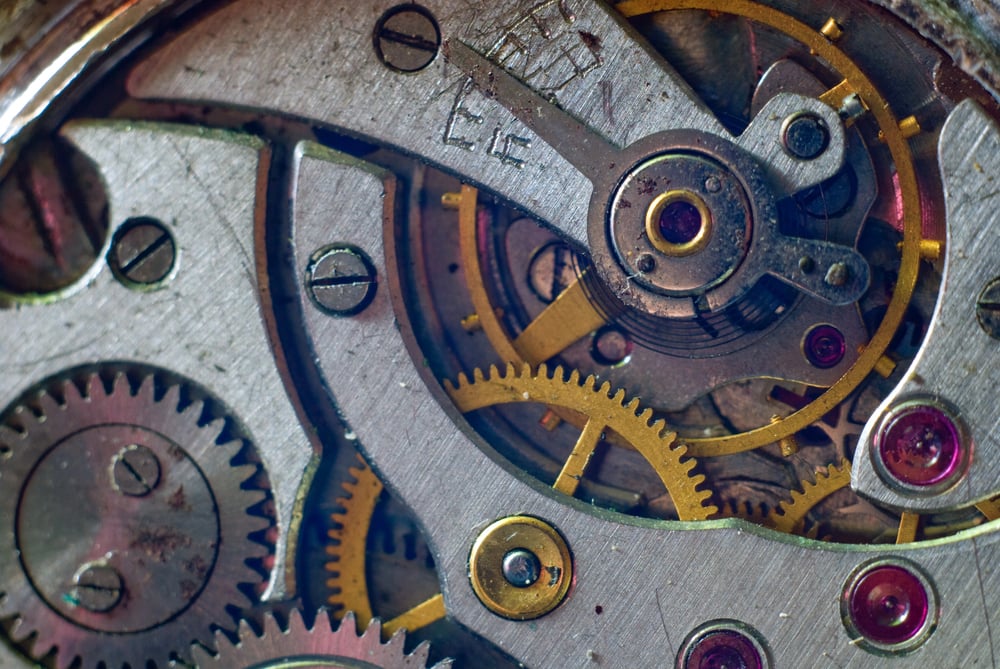
Forever was the goal when these clocks took shape. Most objects made now will fade within ten years.
Yet here they stand, close to timeless. Hands shaped by makers who themselves wore no timepieces.
Placed inside structures meant to survive nations. Cared for by keepers aware of a deeper thread – one linking those alive today to every soul gone past.
Each step closer to such a clock pulls you into motion – hands turning like they always have. Not merely looking, but feeling how moments linger when someone refuses to let them fade.
More from Go2Tutors!

- The Romanov Crown Jewels and Their Tragic Fate
- 13 Historical Mysteries That Science Still Can’t Solve
- Famous Hoaxes That Fooled the World for Years
- 15 Child Stars with Tragic Adult Lives
- 16 Famous Jewelry Pieces in History
Like Go2Tutors’s content? Follow us on MSN.