Album Covers Banned Around the World
Music has always pushed boundaries. The artwork wrapping those records sometimes pushed even harder.
Throughout history, album covers have sparked outrage, faced censorship, and gotten pulled from shelves faster than you can say “parental advisory.” Some of these images seem tame by today’s standards, while others still make people uncomfortable decades later.
The controversy often boosted sales rather than hurt them. Forbidden fruit tastes sweeter, after all.
Retailers refused to stock certain albums, governments banned them outright, and record labels scrambled to create alternative covers that wouldn’t offend. But the original versions became collector’s items, worth far more than their sanitized replacements.
The Beatles Get Butchered
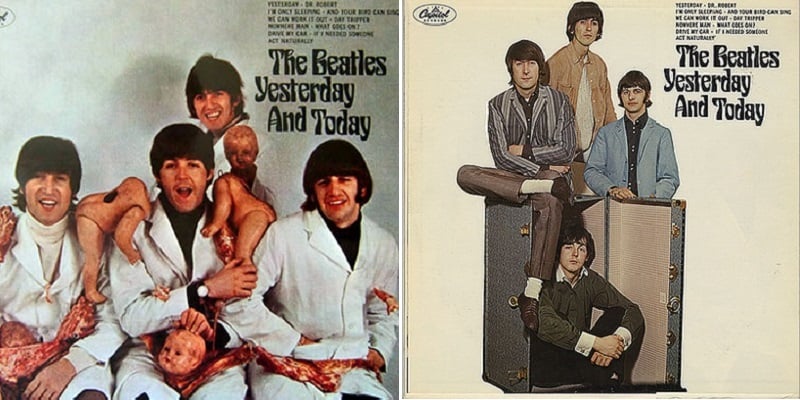
The Fab Four shocked America in 1966 with the cover for Yesterday and Today. Photographer Robert Whitaker captured the band wearing white butcher coats, surrounded by raw meat and dismembered doll parts.
Capitol Records initially pressed 750,000 copies before realizing their mistake. Retailers refused to stock the album.
The public response was immediate and harsh. Paul McCartney later claimed the image was a statement against the Vietnam War, though some historians believe it was actually a protest against how Capitol shuffled their albums for American release.
The label recalled every copy and pasted a bland photo of the band around a steamer trunk over the offensive image. Today, collectors who carefully peel away that pasted-over image find the original “butcher cover” underneath.
These copies sell for thousands of dollars. The controversy cemented the cover’s place in rock history, even though the band probably just wanted to make an artistic statement.
A Toilet Wall Goes Too Far

The Rolling Stones aimed to release Beggars Banquet in summer 1968. Mick Jagger wanted the cover to show graffiti on a toilet wall, complete with the band name and song titles scrawled across the porcelain.
Decca Records took one look and refused to release the album. Record executives found the bathroom setting vulgar and unacceptable.
The image came from a Porsche dealership restroom in Los Angeles, which somehow made it worse rather than better. Jagger defended the choice by pointing out that toilet walls are where most graffiti appears anyway.
The standoff delayed the release by months. Decca eventually gave in and released the album with a plain white cover featuring mock RSVP invitation text instead.
Later reissues restored the toilet wall image, proving that what seemed shocking in 1968 becomes nostalgic decoration fifty years later.
Sticky Fingers and Working Zippers

Andy Warhol designed the cover for the Stones’ 1971 album Sticky Fingers. The art featured a close-up of a man’s crotch in tight jeans.
The original vinyl pressing included an actual working zipper that you could pull down to reveal white underwear beneath. Spain banned the album outright under General Franco’s fascist regime.
Other countries found the imagery suggestive and inappropriate. The zipper itself caused practical problems too, damaging records stacked next to it in stores and warehouses.
Later pressings replaced the functional zipper with a printed image. The cover became iconic despite the controversy.
Warhol’s bold design captured the Stones’ rebellious spirit perfectly. You can still find original pressings with working zippers, though they command premium prices from collectors who want that tactile experience of unzipping a record.
Electric Ladyland and Unclothed Models
Jimi Hendrix wanted a lighthearted cover for his 1968 album Electric Ladyland. He envisioned the band photographed in Central Park.
Instead, when the intended UK artwork didn’t arrive in time, the label threw together a hasty replacement featuring 19 unclothed women lounging together. Hendrix hated the cover.
Record stores in York banned it immediately. The Gramophone Retailers’ Committee protested loudly, with one secretary claiming this type of sleeve would reduce record sales.
The paper reporting this story also noted that Electric Ladyland sold 35,000 copies in its first four days, proving the exact opposite. The controversy highlighted a recurring problem in the music industry.
Artists lost control of their visual presentation when labels panicked about deadlines and made decisions without consulting the musicians. The US version featured a different cover showing Hendrix’s face surrounded by flames, which everyone agreed was far more appropriate.
Blind Faith Crosses a Line

The supergroup Blind Faith featured Eric Clapton and Steve Winwood. Photographer Bob Seidemann took a picture he called “Blind Faith” showing an 11-year-old girl without her shirt, holding a silver model airplane.
He positioned the image as a commentary on innocence versus technology. The model, Mariora Goschen, was promised a horse as payment but received 40 pounds sterling instead.
American record buyers recoiled from the image of an undressed preteen. The record company quickly offered an alternative cover showing just the band members.
This remains one of the few cases where censorship seems justified. The cover makes most people deeply uncomfortable for good reason.
Goschen later spoke about the experience, adding another layer of complexity to an already problematic situation. The band’s music gets overshadowed by the controversy every time someone mentions the album.
Two People Without Clothes

John Lennon and Yoko Ono created their most controversial cover in October 1968 for the album Two Virgins. Shot while Lennon was still technically married to his first wife, the front showed the couple fully exposed from the front, while the back showed them from behind.
Distributors refused to sell the album without covering it in brown paper wrapping. Authorities in several jurisdictions impounded copies as obscene material. Lennon later claimed the outrage stemmed from the couple not being conventionally attractive, saying they looked like “two slightly overweight ex-junkies” rather than models.
The cover served Lennon’s artistic purpose perfectly. He wanted to make a statement about vulnerability and authenticity. Whether audiences understood that message remains debatable.
The album sold primarily to die-hard fans willing to overlook the packaging, while casual buyers stayed far away.
Bowie’s Canine Anatomy
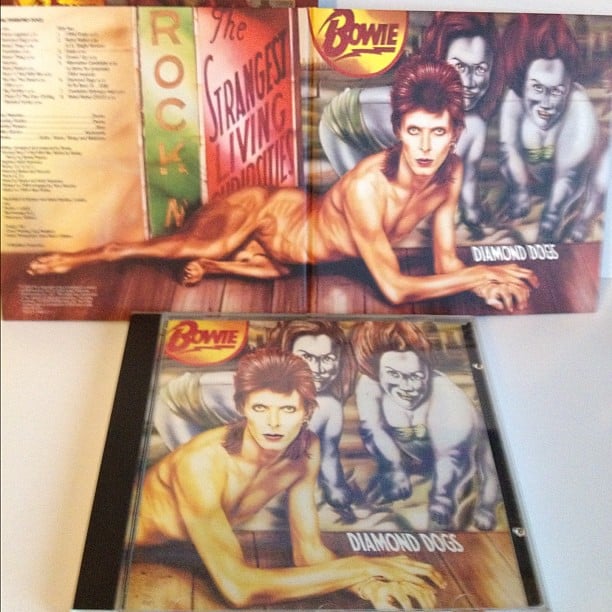
David Bowie’s Diamond Dogs featured artwork by Belgian painter Guy Peellaert. The front cover showed Bowie looking strange but relatively tame.
Open the gatefold though, and you found Bowie depicted with a dog’s body, complete with visible canine anatomy prominently displayed. Censors immediately demanded changes.
The phrase “dog’s bollocks” proved too accurate for comfort. Publishers and retailers put the album on the chopping block.
Someone quickly airbrushed the hindquarters smooth, creating a Barbie-like blank groin area. The censored version returned to shelves while collectors scrambled to find original pressings.
Bowie’s willingness to appear this way on an album cover showed his commitment to artistic vision over commercial appeal. The controversy added to his reputation as rock’s most theatrical and unpredictable performer.
Alice Cooper’s Thumb Trick

Alice Cooper’s band was still establishing their shock rock credentials when they released Love It to Death in 1971. The cover photo seemed simple until you looked closely.
Cooper had poked his thumb through his cape, creating an optical illusion that made it appear something else was sticking out. The juvenile prank was too much for retailers and censors.
Cooper got his entire arm airbrushed out of the photo as punishment. This happened before the staged executions and theatrical horror shows that would define his career, proving that even mild suggestions could trigger censorship.
The controversy helped rather than hurt the album’s sales. People who might not have noticed the trick started looking for it specifically.
Cooper learned a valuable lesson about how manufactured outrage can boost your profile. He’d use that knowledge throughout his career.
Germany’s Most Controversial Cover

Scorpions released Virgin Killer in 1976. The German rock band chose imagery so inappropriate that describing it feels wrong.
The cover showed a 10-year-old child in a highly provocative pose. This remains one of the most censored album covers in music history.
The controversy temporarily boosted sales, proving that some people specifically seek out forbidden material. That makes the situation even more disturbing.
Most countries refused to stock the album. Stores that did carry it kept it behind the counter or in plain packaging.
The band later expressed regret over the cover choice. Modern reissues use completely different artwork.
This stands as perhaps the clearest example of an album cover that crossed every possible line of decency. Time hasn’t softened the impact or made it more acceptable.
Guns N’ Roses and Robot Violence

Appetite for Destruction originally featured artwork by Robert Williams. The painting showed a robot attacker and victim in a graphic scene, with a flying metal creature about to deliver justice.
The surrealist imagery came from Williams’ psychedelic art collection, but stores refused to stock it. The band switched to their now-iconic Celtic cross design.
The original artwork appeared only on the inside sleeve of early pressings. Collectors prize those first editions, though the Celtic cross ultimately became more recognizable and commercially successful.
Williams’ painting perfectly captured the raw, dangerous energy of Guns N’ Roses’ debut album. The violence in the image reflected the violence in songs like “Welcome to the Jungle.”
Sometimes artistic vision gets sacrificed for commercial viability, and the band made the smart choice by changing the cover.
Jane’s Addiction Dreams in Flames

Perry Farrell claimed the cover for Ritual de lo Habitual came to him in a dream. The image showed conjoined twins without clothing sitting in a rocking chair with their heads aflame.
He probably ate too much cheese before bed. American record store chains refused to stock an album with that title and imagery.
The band created an alternative cover wrapped in brown paper, featuring only the text of the First Amendment. That replacement cover made an even stronger statement about censorship and freedom of expression.
The controversy embodied the alternative rock spirit of the early 1990s. Farrell refused to compromise his vision, forcing the industry to either accept his art or make their censorship obvious.
The brown-paper version became a collector’s item in its own right.
A Monk’s Ultimate Protest

Rage Against the Machine chose a photograph for their 1992 debut that showed Vietnamese monk Thích Quảng Đức setting himself on fire in 1963. The monk was protesting the persecution of Buddhists by South Vietnam’s Catholic-majority government.
The graphic historical image sparked immediate controversy. The band never intended to play by establishment rules though.
Their entire identity revolved around challenging authority and exposing uncomfortable truths. The cover fit perfectly with songs like “Killing in the Name.”
Some retailers refused to stock the album based on the cover alone. That didn’t stop it from becoming one of the most influential rock albums of the 1990s.
The band proved that confrontational imagery can serve a legitimate artistic and political purpose, even when it makes people deeply uncomfortable.
A Baby Chasing Money

Nirvana’s Nevermind featured a four-month-old baby named Spencer Elden submerged underwater, reaching toward a dollar bill on a fishing hook. The 1991 image became one of rock’s most recognizable album covers. It also became one of its most controversial.
Kurt Cobain intended the image as commentary on capitalism and innocence. Critics worried about featuring an infant in this way.
The album’s massive success meant millions of copies circulated worldwide, making the image inescapable throughout the 1990s. Elden later attempted legal action against the band, arguing the image violated federal protections and caused lifelong damages.
Courts dismissed the lawsuit, but the case reignited debates about the cover thirty years after its release. The controversy refuses to fade, unlike so many other banned covers that now seem harmless.
Death Metal Goes Too Far

Cannibal Corpse built their reputation on extreme imagery and lyrics. Their 1991 album Butchered at Birth featured artwork so graphic that describing it feels unnecessary.
Germany banned all their albums until the mid-1990s. Russia and Canada imposed restrictions too.
Early pressings came wrapped in butcher’s paper stamped with the logo and title in red ink. This clever workaround let stores stock the album without displaying the offensive artwork.
The paper wrapping became part of the album’s identity and collectibility. The band never apologized for pushing boundaries.
Death metal thrives on extremity, and Cannibal Corpse understood their audience perfectly. Mainstream retailers avoided them entirely, while specialty metal shops stocked their albums proudly.
The bans and restrictions only enhanced their underground credibility.
When Art Meets Commerce

Album covers getting banned say a lot about people’s limits, not just songs. These visuals crossed lines folks weren’t ready to see out in the open.
A few went way overboard; others showed up before anyone could handle them. Stores felt heat – locals and shoppers demanded things stay within expected norms.
Artists dealt with mixed demands – record companies pushed for hits, while bands chased creative control, yet photographers aimed for lasting visuals. These clashing goals now and then sparked amazing artwork that stood out even when debated.
Still, some outcomes clearly went too far by most people’s standards. The digital era shook things up.
These days, you rarely step into a shop only to spot shelves packed with actual records. Music platforms use tiny images – so small they turn bold covers into little stickers.
Even so, creators keep pushing to make art that sticks. What once felt powerful now feels smaller, but effort hasn’t faded.
The Art That Refuses to Fade

Those debated magazine fronts still grab attention years after they came out. Art butted heads with bans at those times, profit goals clashed against creative dreams, people set limits just so creators could push past them.
A few of these fights feel dumb today, yet some keep folks arguing nonstop. The banned covers turned out way more prized plus iconic than the ones that made it through.
Nobody misses that twist – it’s obvious. Shutting things down usually just boosts what they’re hiding.
Those records hidden under brown bags drew bigger crowds than the open-shelf versions. Pulling a cover ended up making it a sought-after gem.
Music keeps going further, yet album art doesn’t stun like before. Could be we’ve witnessed it all already. Physical formats might just mean less now.
Then again, young creators could bring fresh methods to unsettle, irritate, or test our limits. Past bans on covers show that urge sticks around somehow.
More from Go2Tutors!

- The Romanov Crown Jewels and Their Tragic Fate
- 13 Historical Mysteries That Science Still Can’t Solve
- Famous Hoaxes That Fooled the World for Years
- 15 Child Stars with Tragic Adult Lives
- 16 Famous Jewelry Pieces in History
Like Go2Tutors’s content? Follow us on MSN.