Aquariums With the Largest Tanks
A person can feel very small when near one of those huge aquarium windows. Glass seems to fade away, size gets hard to judge, yet the water acts alive, almost wild.
Not just boxes holding sea life, these enclosures blend science, nature care, space design. Each one builds a world we watch through flat transparent walls.
The biggest fish tanks on Earth sit where wonder meets care. Not just glass and water – machines clean it nonstop, heaters hold steady temps, each creature gets watched closely.
What shifts most is how folks see sea animals when walls vanish behind waves of scale. Step close enough to one massive pool and suddenly you are not looking anymore – you are inside the view.
Distance melts. The deep feels near.
What stands out about the world’s biggest aquariums? It all comes down to how massive their central tanks really are.
Size changes everything – space for bigger species, deeper environments, fewer barriers between visitor and sea life. Some hold millions of gallons, shaping entire underwater scenes under one roof.
These volumes allow animals to move like they do in the wild. Large tanks support complex ecosystems you cannot see elsewhere.
The result is immersion – not just observation. Scale enables realism most places can’t match.
Chimelong Ocean Kingdom
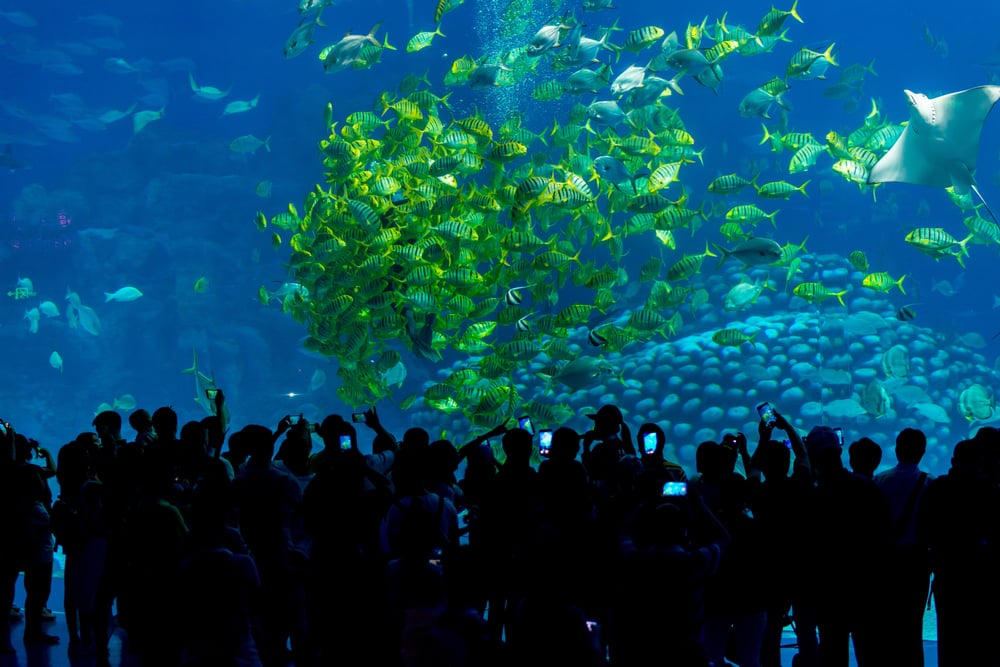
Chimelong Ocean Kingdom is home to the largest aquarium tank in the world by volume. Its primary exhibit holds tens of millions of gallons of water, making it less a tank and more an indoor sea.
What sets this tank apart is not just size, but visibility. The acrylic viewing panel is among the largest ever installed, allowing visitors to watch whale sharks, rays, and schooling fish move through an uninterrupted expanse of water.
The scale enables natural swimming patterns that smaller tanks simply cannot support. While the spectacle draws attention, the infrastructure behind it is equally monumental, relying on industrial-scale filtration systems to keep conditions stable.
Georgia Aquarium
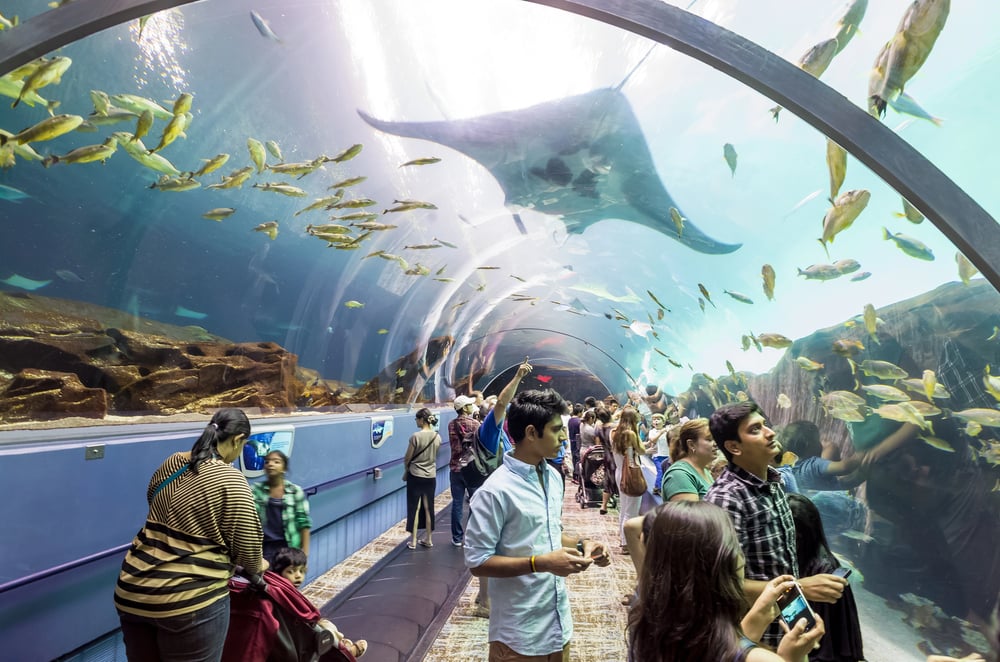
Georgia Aquarium houses one of the most famous large tanks in the world, known as the Ocean Voyager exhibit. Holding several million gallons of water, it was the largest aquarium tank on Earth when it opened.
The tank was designed specifically to support large pelagic species, including whale sharks, which require long, unobstructed swimming space. Its tunnel walkway allows visitors to pass beneath the animals, creating a sense of shared environment rather than separation.
That design choice changed expectations for aquarium exhibits globally, proving that scale could be used to enhance education rather than overwhelm it.
Dubai Aquarium and Underwater Zoo

Dubai Aquarium features one of the largest suspended aquarium tanks in the world, holding millions of gallons of water inside a massive shopping complex.
The tank’s visibility from multiple levels gives it a unique presence. Instead of entering a dedicated aquarium building, visitors encounter marine life unexpectedly, woven into everyday space.
The tank supports a diverse mix of species, including sharks and rays, and uses its scale to emphasize movement and density. While its location is unconventional, the engineering required to suspend such volume safely is anything but ordinary.
Okinawa Churaumi Aquarium

Okinawa Churaumi Aquarium is renowned for its Kuroshio Sea tank, which holds several million gallons and was among the first to successfully house whale sharks long-term.
The tank’s design prioritizes calm over spectacle. Gentle lighting, slow water flow, and expansive open space allow animals to behave naturally.
The massive acrylic panel offers clear, distortion-free views that emphasize the animals’ size without exaggeration. This approach reflects a philosophy where scale serves biological needs first, with visitor experience built around that foundation.
Monterey Bay Aquarium

Monterey Bay Aquarium may not have the single largest tank by volume, but its Open Sea exhibit ranks among the most sophisticated large tanks ever built.
The tank draws water directly from Monterey Bay, circulating fresh seawater through the exhibit. This system allows for highly dynamic conditions, including changing currents and temperature shifts.
The scale supports species that thrive in open-water environments, while the natural water exchange reinforces the aquarium’s strong conservation focus. Here, size works hand in hand with realism rather than pure visual impact.
Osaka Aquarium Kaiyukan

Osaka Aquarium Kaiyukan features a massive central tank representing the Pacific Ocean, holding millions of gallons and extending through multiple floors.
Visitors descend in a spiral around the tank, observing the same ecosystem from different depths. This vertical approach makes the tank feel even larger than its volume suggests.
The design emphasizes continuity, showing how marine life changes with depth rather than location. The tank’s size allows for a stable mix of species that coexist in ways smaller exhibits struggle to maintain.
L’Oceanogràfic
L’Oceanogràfic is Europe’s largest aquarium and houses several enormous tanks, including a vast oceanic exhibit.
Its large tanks are spread across architecturally distinct structures, each designed around a specific marine environment. The scale supports complex habitats rather than single-species displays.
What makes these tanks notable is how they balance size with diversity, using volume to reduce stress on animals by giving them space to retreat and interact naturally.
Aqua Planet Jeju

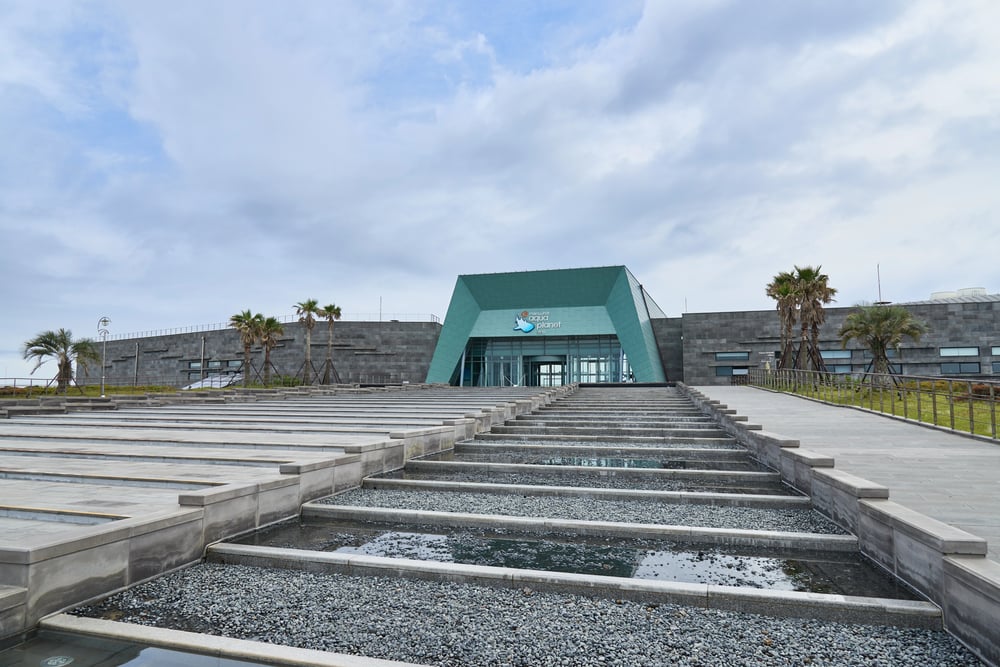
Aqua Planet Jeju contains one of Asia’s largest aquarium tanks, designed as a panoramic ocean showcase.
The tank emphasizes width and depth, creating long sightlines that encourage slow viewing. Its scale allows for large schools of fish to move cohesively, reinforcing natural behavior.
The exhibit is paired with educational storytelling that focuses on regional marine ecosystems, using size as a tool to foster connection rather than overwhelm.
The Engineering Behind Massive Tanks

Building a tank that holds millions of gallons is not simply a matter of pouring concrete and adding water. The forces involved are enormous.
Pressure increases with depth, requiring thick acrylic panels engineered to flex slightly without cracking. Filtration systems must process vast volumes continuously, removing waste while maintaining chemical balance.
Temperature regulation becomes more complex at scale, as even small fluctuations can affect sensitive species. Backup systems are critical, ensuring stability during maintenance or power interruptions.
In the largest aquariums, these behind-the-scenes operations resemble small utility plants, quietly working to keep an artificial ocean alive.
Why Size Changes the Experience

Large tanks do more than impress. They change how animals move and how people perceive them.
In expansive environments, fish and sharks can swim in broad arcs rather than tight loops, reducing stress and encouraging natural patterns.
For visitors, size slows perception. Instead of darting from exhibit to exhibit, people tend to linger, watching subtle interactions unfold.
This shift from novelty to observation is one reason large tanks have become central to modern aquarium design. Scale encourages patience, and patience deepens understanding.
The Responsibility That Comes With Scale

With great size comes heightened responsibility. Large tanks consume significant energy and require constant oversight.
Ethical scrutiny increases alongside scale, placing pressure on aquariums to demonstrate conservation value rather than pure entertainment.
Many institutions respond by linking large exhibits to research, rescue programs, and public education. The goal is to ensure that spectacle serves a purpose beyond awe.
When done well, massive tanks become ambassadors for ocean conservation, translating abstract environmental issues into tangible experiences.
Why These Tanks Matter

Built on curiosity, today’s biggest aquariums rethink our place near sea creatures. Not just glass boxes, these spaces pull visitors into watery worlds shaped like real oceans.
Instead of distance, they offer closeness through design that flows like tides. Right there by the glass, a shift happens.
Water stretches beyond what you thought possible. Life pulses through layers, linked in ways hard to miss.
Each tank breathes like it has its own rhythm. You feel it more than you think it.
Big numbers fade into background hum. What stays is how delicate everything seems.
Care shows up quietly, built into every current. Understanding slips in when distraction leaves.
More from Go2Tutors!

- The Romanov Crown Jewels and Their Tragic Fate
- 13 Historical Mysteries That Science Still Can’t Solve
- Famous Hoaxes That Fooled the World for Years
- 15 Child Stars with Tragic Adult Lives
- 16 Famous Jewelry Pieces in History
Like Go2Tutors’s content? Follow us on MSN.



