Blue Animals Found in Nature
Blue rarely shows up in the animal kingdom. Most creatures stick to browns, greens, and grays that help them blend in.
But some animals break the pattern entirely and wear shades of blue that seem almost impossible. These creatures use their color for everything from attracting mates to warning predators to stay away.
The science behind their blue hues turns out to be just as fascinating as the animals themselves.
Blue Jay
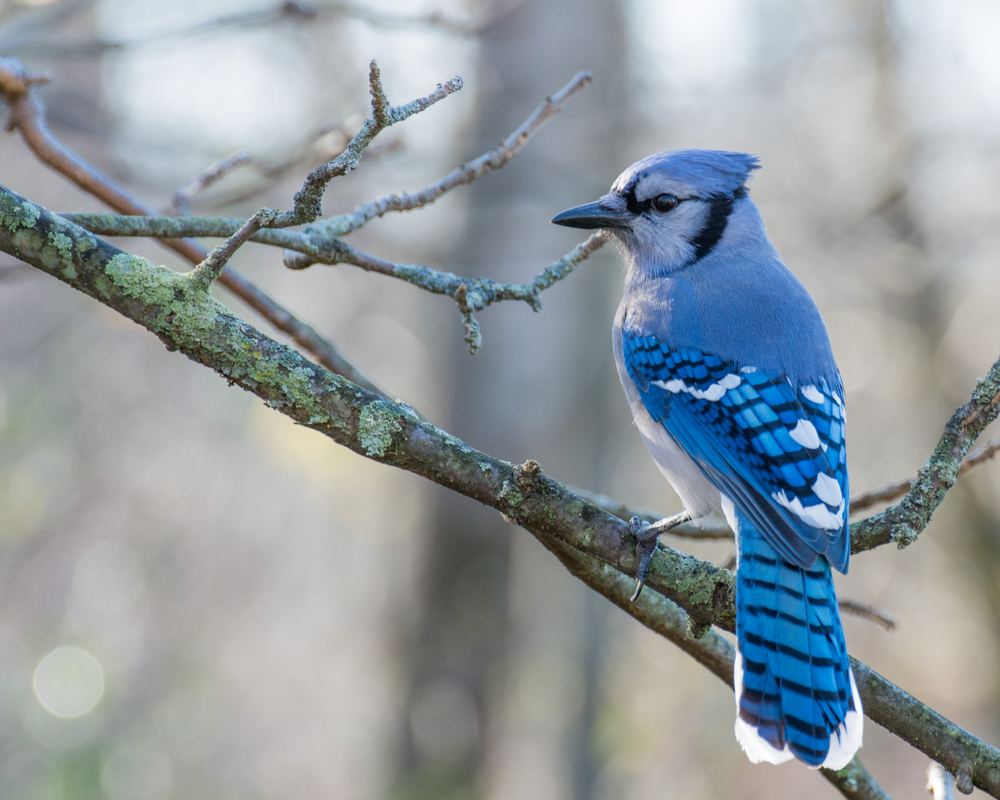
The blue jay catches your eye the moment it lands in your backyard. That bright blue color seems to glow, especially against winter snow or autumn leaves.
But here’s something strange: blue jays don’t actually have blue pigment in their feathers. The color comes from the structure of their feathers.
Tiny air pockets scatter light in a way that makes your eyes see blue. If you held a blue jay feather up to a light, you’d see it looks brown.
The bird’s intelligence matches its striking appearance—blue jays can mimic hawk calls to scare other birds away from feeders.
Blue Morpho Butterfly
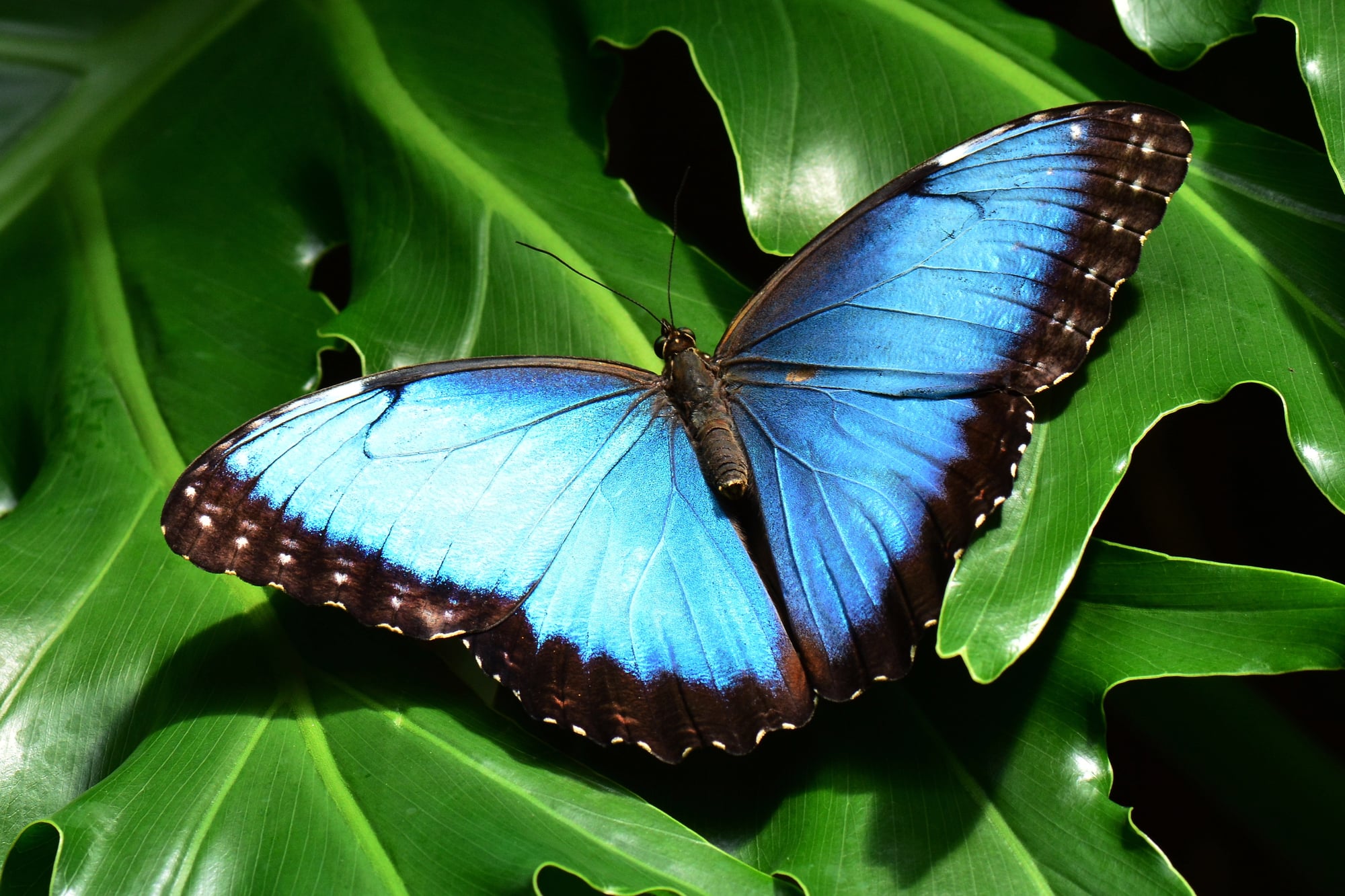
These butterflies flash through rainforests like flying sapphires. Their wings span up to six inches and shimmer with an electric blue that changes depending on how light hits them.
The underside of their wings tells a different story—brown with eyespots that help them disappear when they close their wings.
The blue morpho uses its color as a defense mechanism. That intense blue makes them hard to track when they’re flying, and predators lose sight of them when they land and close their wings.
The males have more vibrant blue than females, and they use this during aerial battles over territory.
Blue Poison Dart Frog

This tiny frog from Suriname packs enough toxin to kill ten grown men. The bright blue skin serves as nature’s warning label.
Everything about this frog tells predators to back off—from its electric blue color to its bold behavior. While most frogs hide, poison dart frogs hop around in plain sight during the day.
Indigenous people used the frog’s toxin on their hunting arrows, which gives the species its name. But the frogs raised in captivity lose their toxicity because they get it from eating certain insects in the wild.
These frogs make devoted parents too. The mothers carry tadpoles on their backs and feed them unfertilized eggs.
Blue Tang
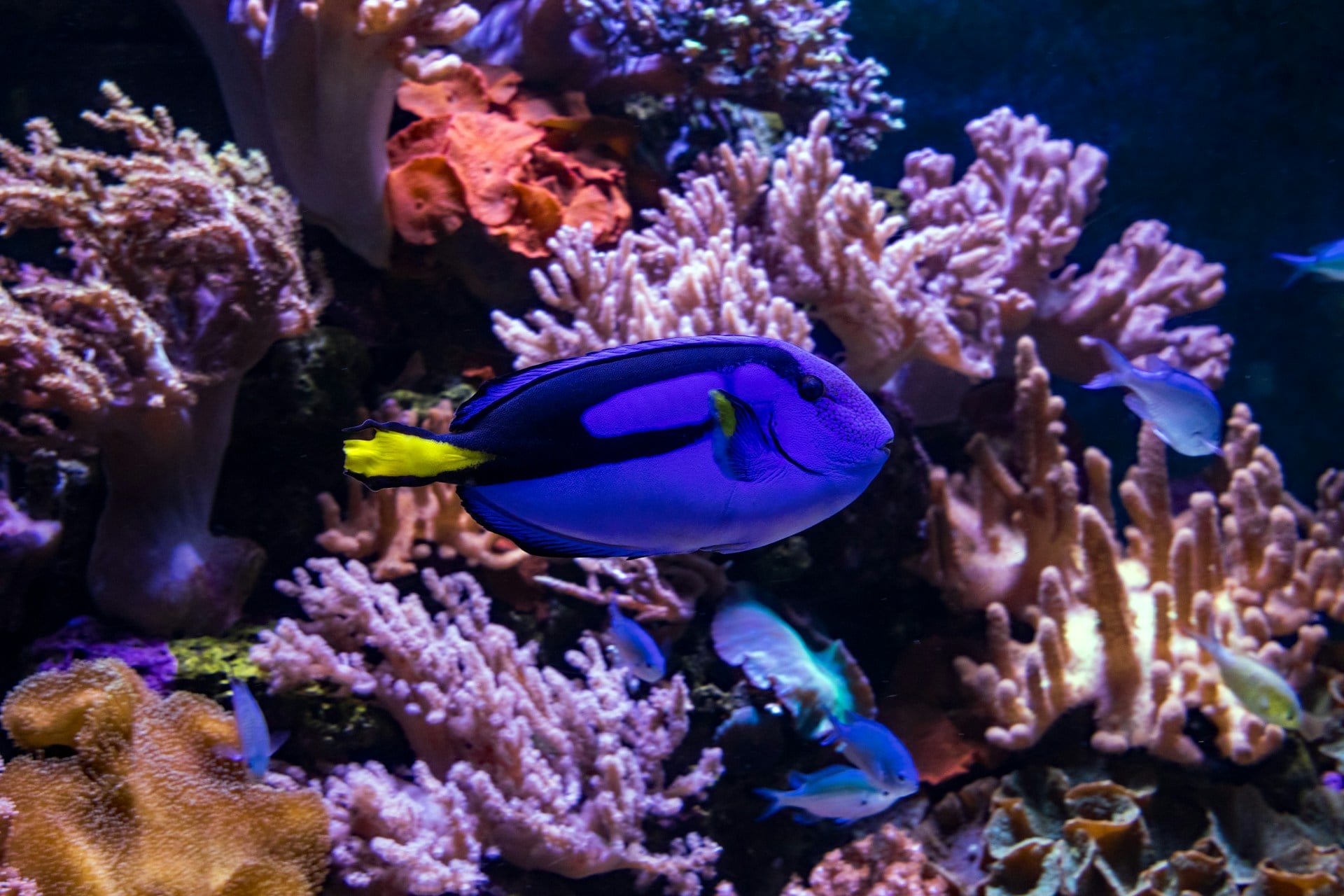
You probably recognize this fish from movies, but blue tangs live throughout coral reefs in the Indo-Pacific. They graze on algae all day, keeping reefs healthy.
Young blue tangs start life bright yellow and gradually turn blue as they mature.
The fish has a sharp spine on each side of its tail that it uses for defense. When threatened, it raises these spines and can inflict painful wounds.
Blue tangs often travel in groups, and watching a school of them move across a reef looks like a flowing blue river.
Blue Whale
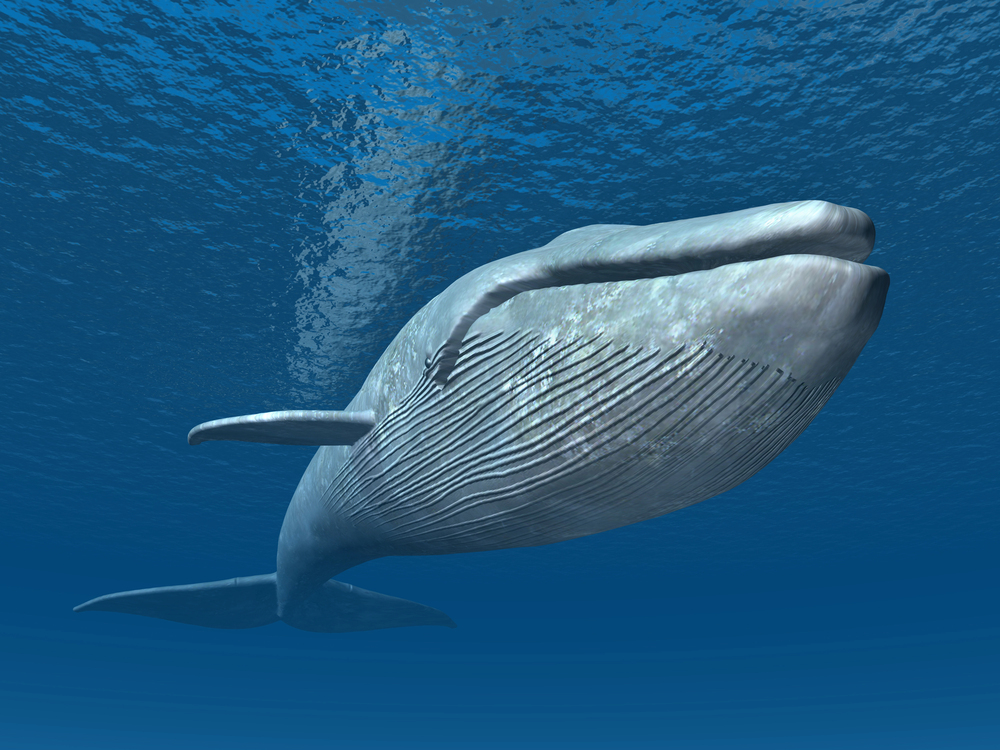
The largest animal ever to exist on Earth carries a bluish-gray color that appears more vivid underwater. These whales can reach 100 feet long and weigh 200 tons.
Their hearts alone weigh as much as a car.
Despite their size, blue whales eat some of the smallest creatures in the ocean—krill. A single whale can consume four tons of krill in a day during feeding season.
Their calls travel hundreds of miles through the ocean, making them some of the loudest animals on the planet. Commercial whaling nearly drove them to extinction, but their numbers have slowly recovered since hunting was banned.
Mandrill
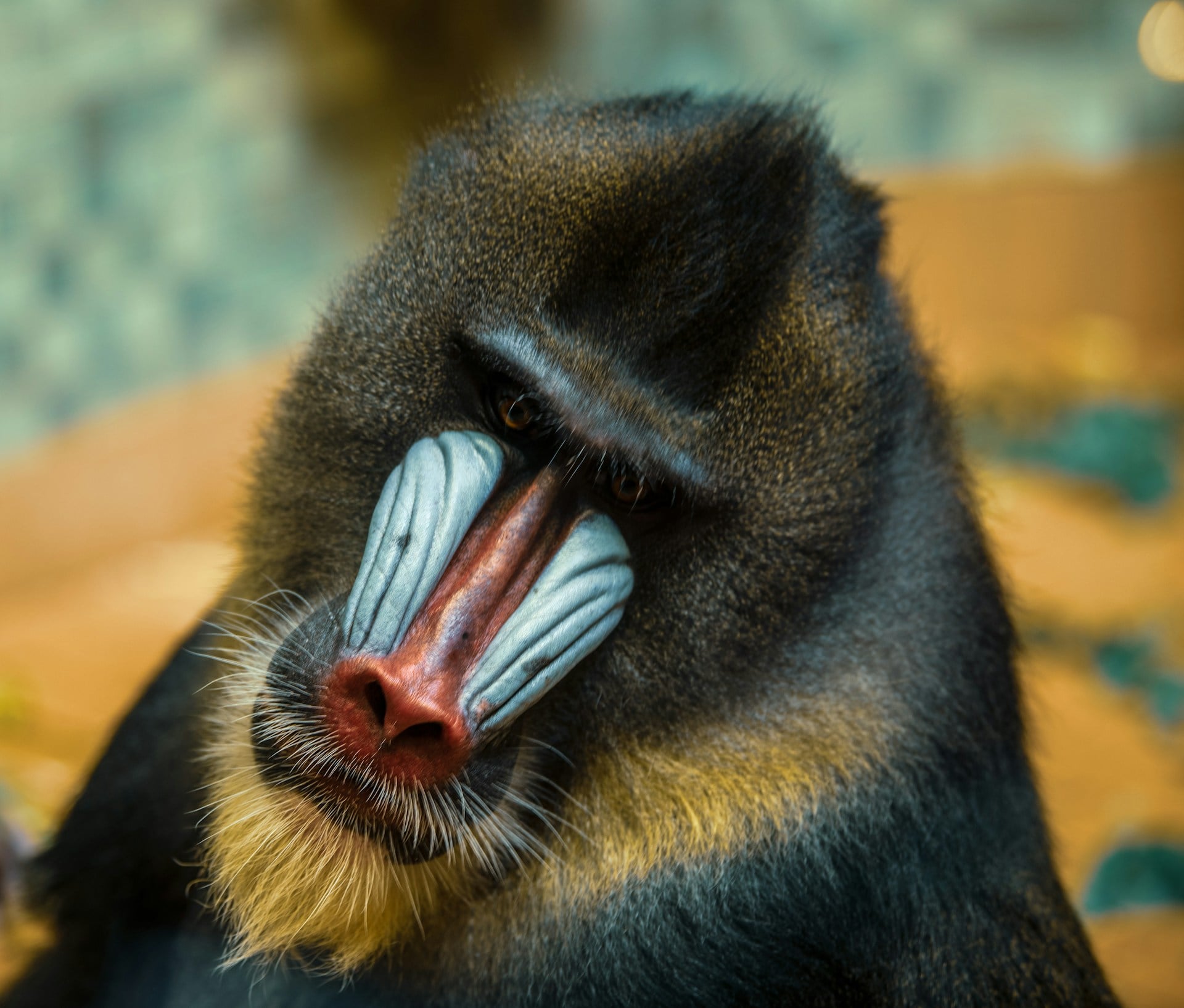
The mandrill’s face displays one of nature’s most unusual color combinations. Males develop bright blue ridges on their faces, contrasted with red down the center of their nose.
These colors intensify during mating season.
The blue comes from light reflecting off collagen fibers in the skin, similar to how blue jay feathers work. Dominant males show the most vibrant colors, and females pay attention to these displays when choosing mates.
Mandrills live in groups that can number over 1,000 individuals, making them the largest monkey troops in the world.
Blue Lobster
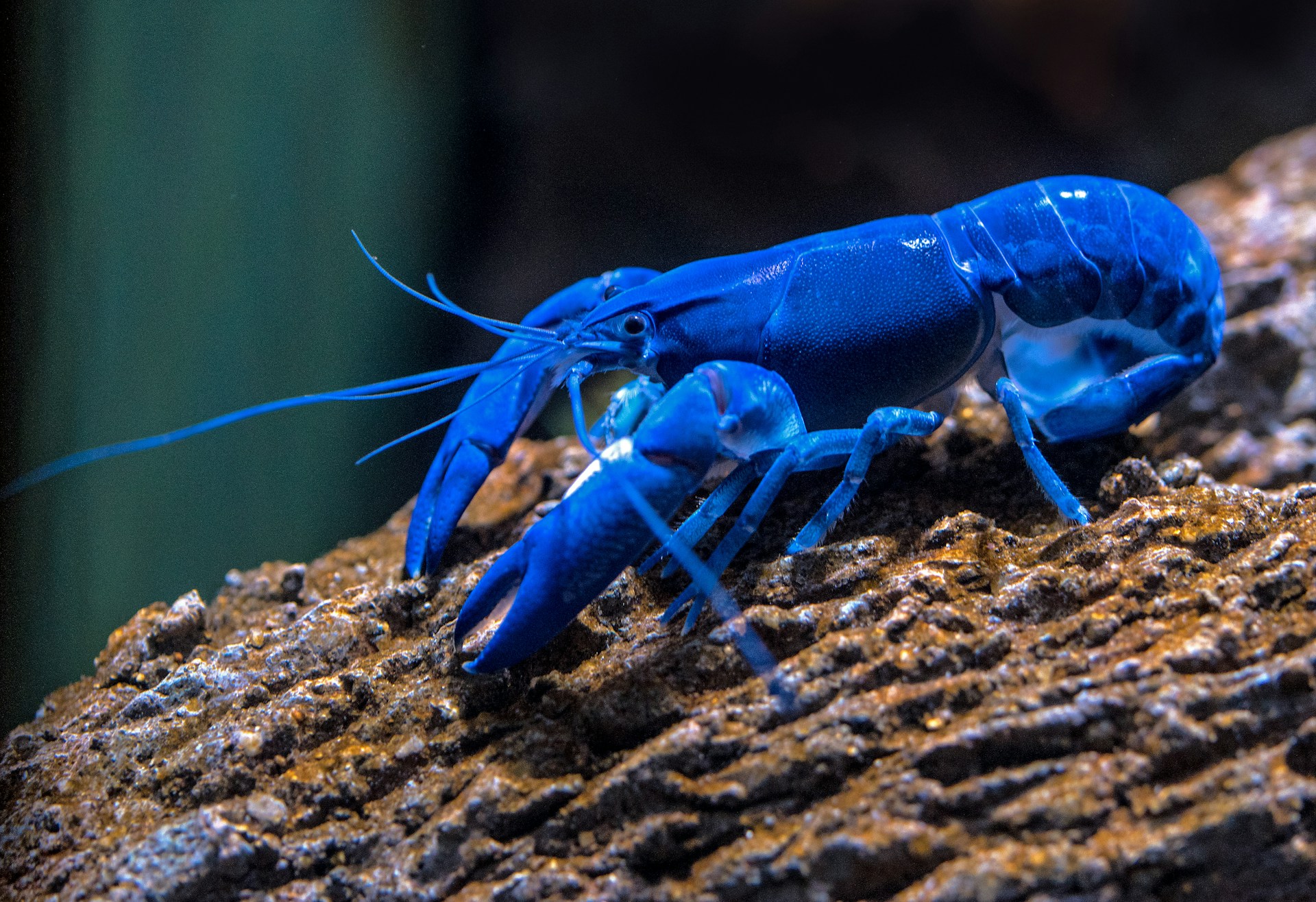
Genetic mutations create these rare creatures. Only one in two million lobsters turns bright blue instead of the normal mottled brown and green.
The mutation affects how they produce pigments, resulting in their unusual color. Fishermen who catch them often donate them to aquariums rather than cook them.
The odds of finding a blue lobster compare to winning certain lotteries. But even rarer are yellow lobsters, which occur in only one in 30 million individuals.
When cooked, blue lobsters turn red like any other lobster because heat breaks down all the pigments except for one red compound.
Blue Dragon Sea Slug
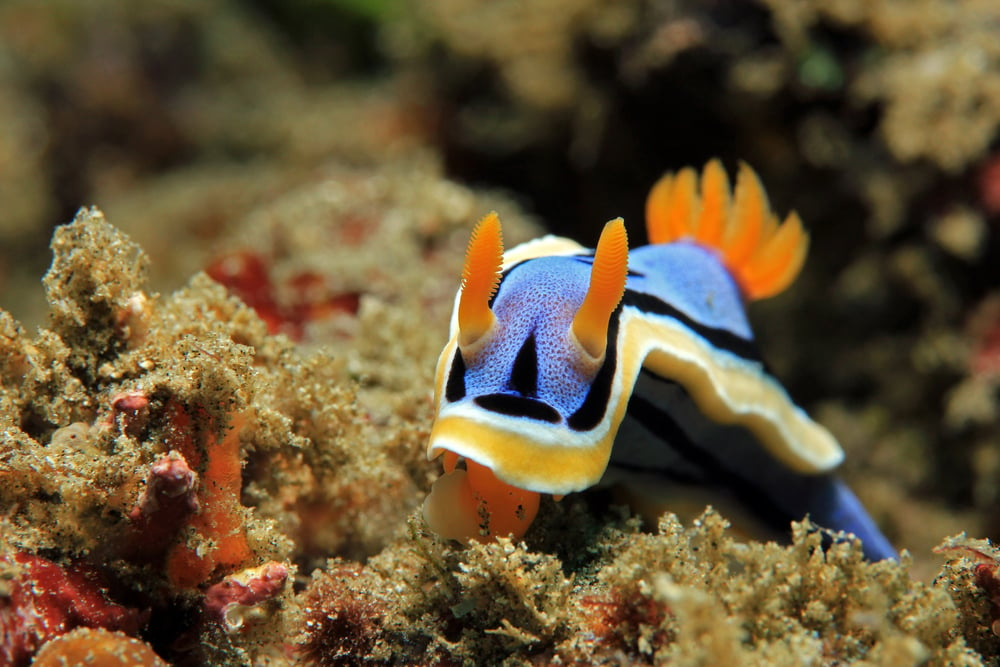
This tiny creature floats upside down on the ocean surface, using a gas-filled sac in its stomach as a flotation device. The blue coloration on its underside provides camouflage against the water when predators look up from below.
Silver on its back blends with the bright surface when viewed from above.
Blue dragons eat Portuguese man-o-wars and store their stinging cells to use as their own defense. They can deliver a sting more powerful than the man-o-war itself.
These slugs rarely exceed an inch in length, but they take on prey much larger than themselves.
Indigo Bunting
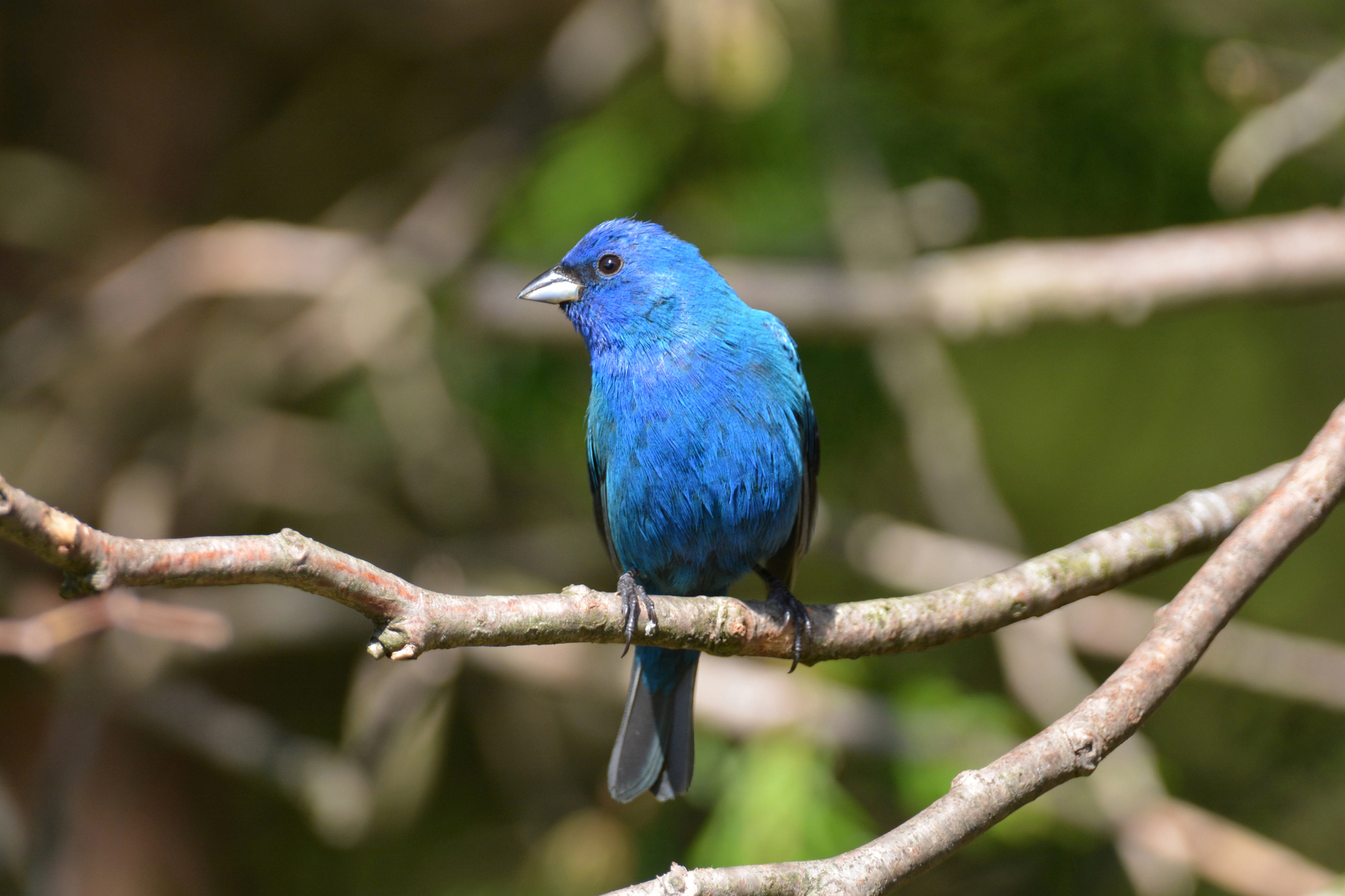
This small songbird appears deep blue in sunlight, but like many blue birds, it lacks blue pigment. The male indigo bunting molts into its blue plumage each spring to attract females.
By fall, it returns to brown. These birds navigate during migration using the stars, learning the pattern of constellations as young birds.
Males sing from high perches throughout the day during breeding season. Each male learns his song from older males nearby, creating local dialects that vary across regions.
Despite their bright color, indigo buntings can be hard to spot when they’re feeding low in shrubs.
Blue-Ringed Octopus
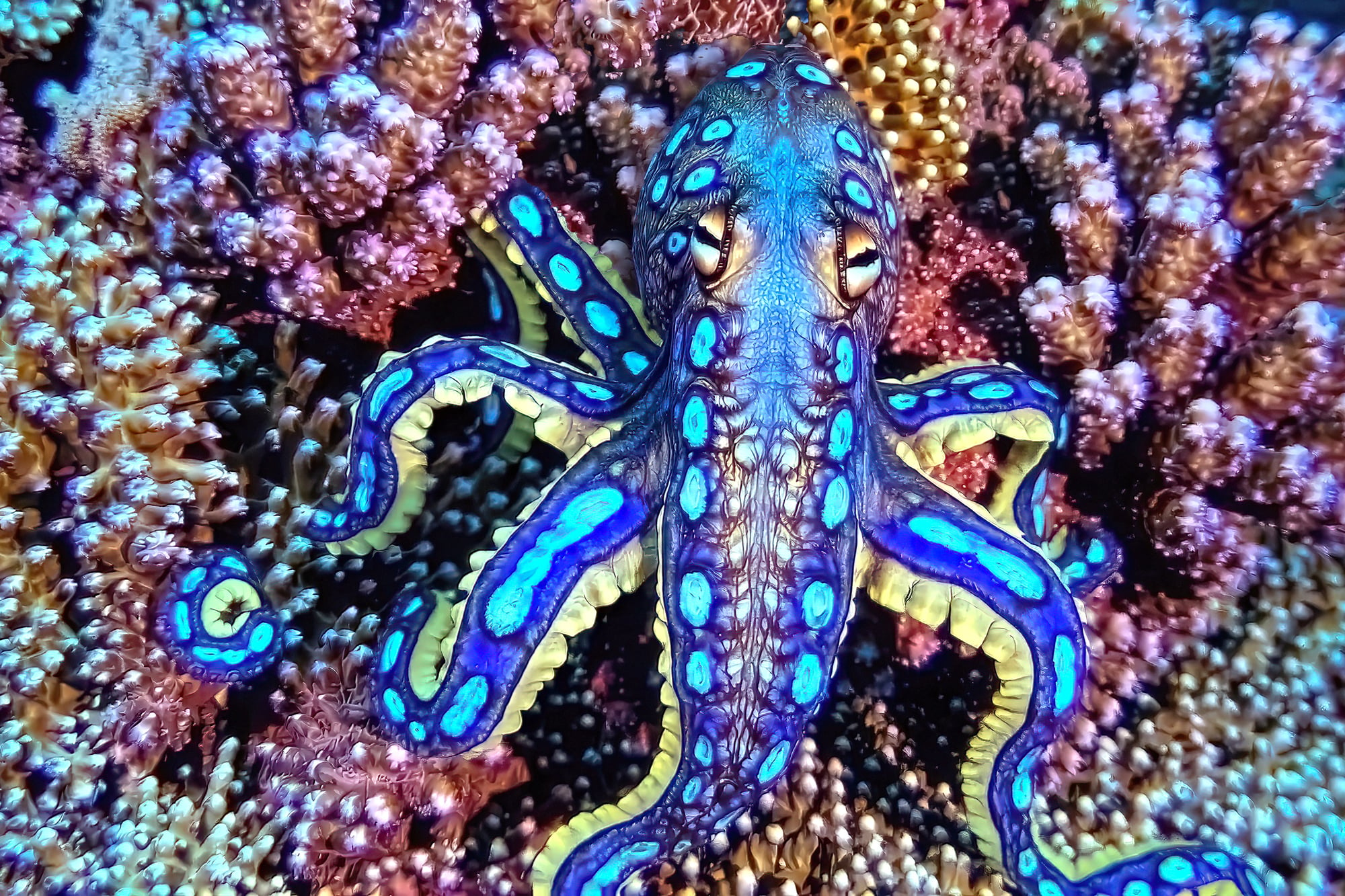
Four species of blue-ringed octopus live in Pacific waters, and all of them rank among the most venomous marine animals. When calm, they look fairly plain, but when threatened, bright blue rings flash across their bodies.
This display warns potential predators that one bite contains enough venom to kill 26 humans within minutes.
The octopus itself measures only eight inches across. There’s no antivenom for its bite, which causes paralysis.
Despite this danger, blue-ringed octopuses are shy and only bite when people handle them. They hunt small crabs and shrimp, using their venom to paralyze prey almost instantly.
Blue Grosbeak
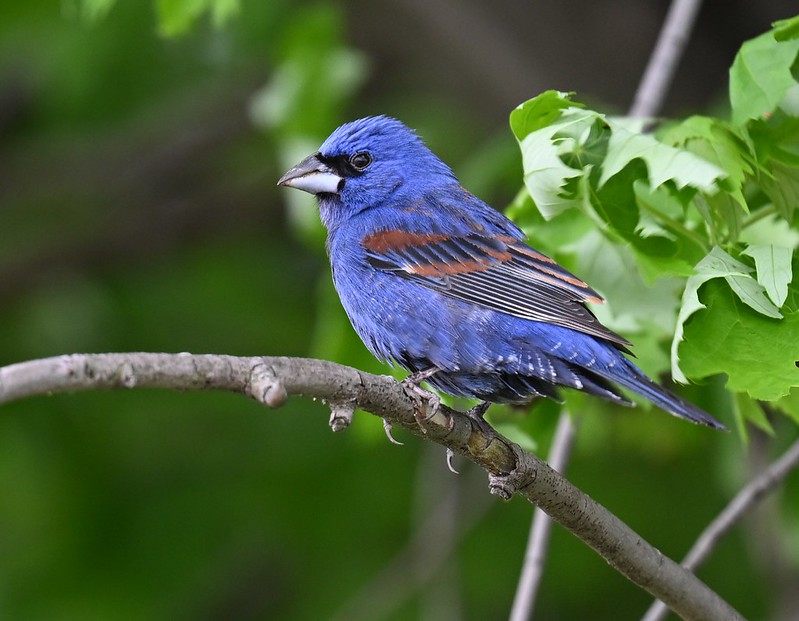
These stocky songbirds spend their summers across the southern United States and Mexico. Males wear deep blue plumage with rusty wing bars, while females dress in shades of brown.
Blue grosbeaks often sit on fence posts and power lines, singing their warbling songs.
The males arrive first each spring to claim territories before the females show up. They nest low in shrubs and small trees, weaving together grass, bark strips, and sometimes snakeskin into their nests.
These birds eat mainly insects during breeding season but switch to seeds and grain in winter.
Hyacinth Macaw
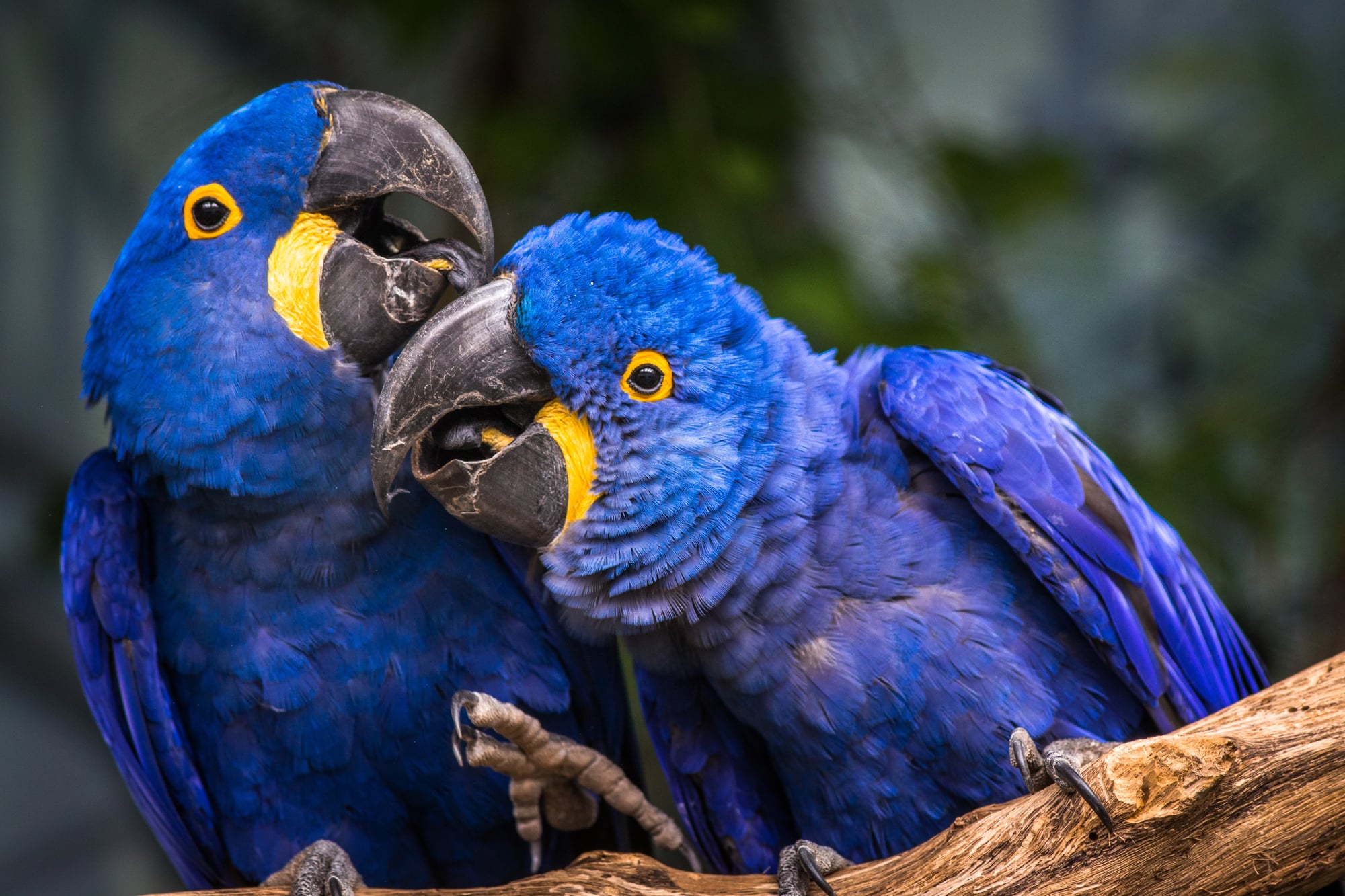
The largest flying parrot species comes wrapped in brilliant cobalt blue feathers. These birds measure over three feet from head to tail.
They live in specific regions of Brazil, Bolivia, and Paraguay, where they feed mainly on palm nuts.
Their powerful beaks can crack nuts that no other animal can open. Pairs mate for life and often stay together even outside of breeding season.
Habitat loss and the pet trade reduced their numbers dramatically, but conservation efforts have helped stabilize populations. These macaws nest in tree cavities and raise only one or two chicks per year.
Blue Damselfly
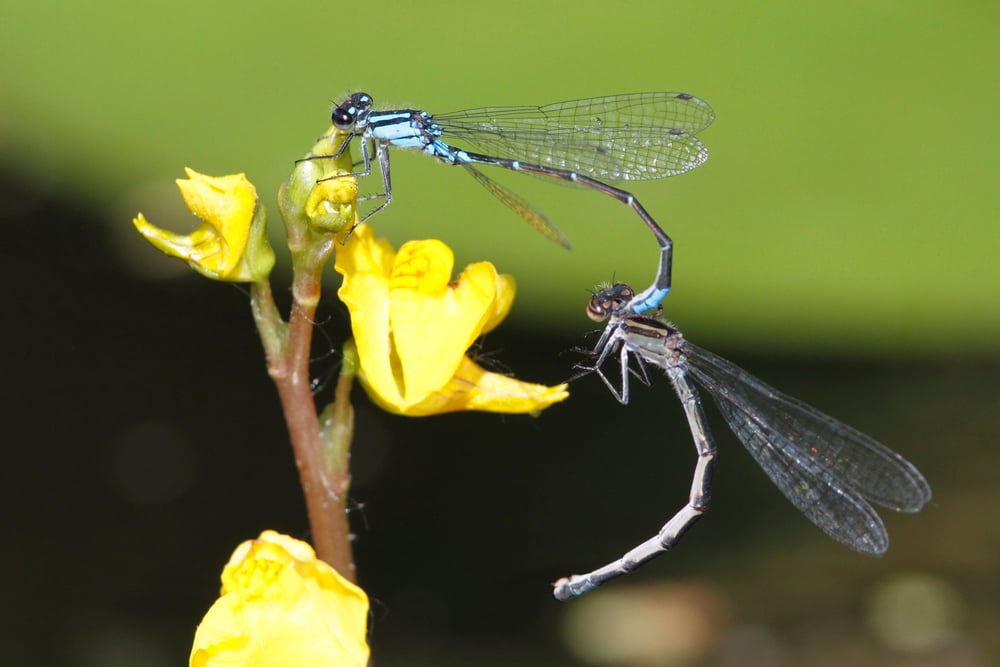
These delicate insects patrol ponds and streams across much of the northern hemisphere. Males display bright blue bodies with black markings, though color patterns vary by species.
Damselflies look similar to dragonflies but rest with their wings folded back along their bodies.
They spend most of their lives as aquatic nymphs before emerging as adults. The adult stage lasts only a few weeks, during which they must mate and lay eggs.
Blue damselflies hunt small flying insects, catching them in mid-air with remarkable precision.
Blue Tree Monitor
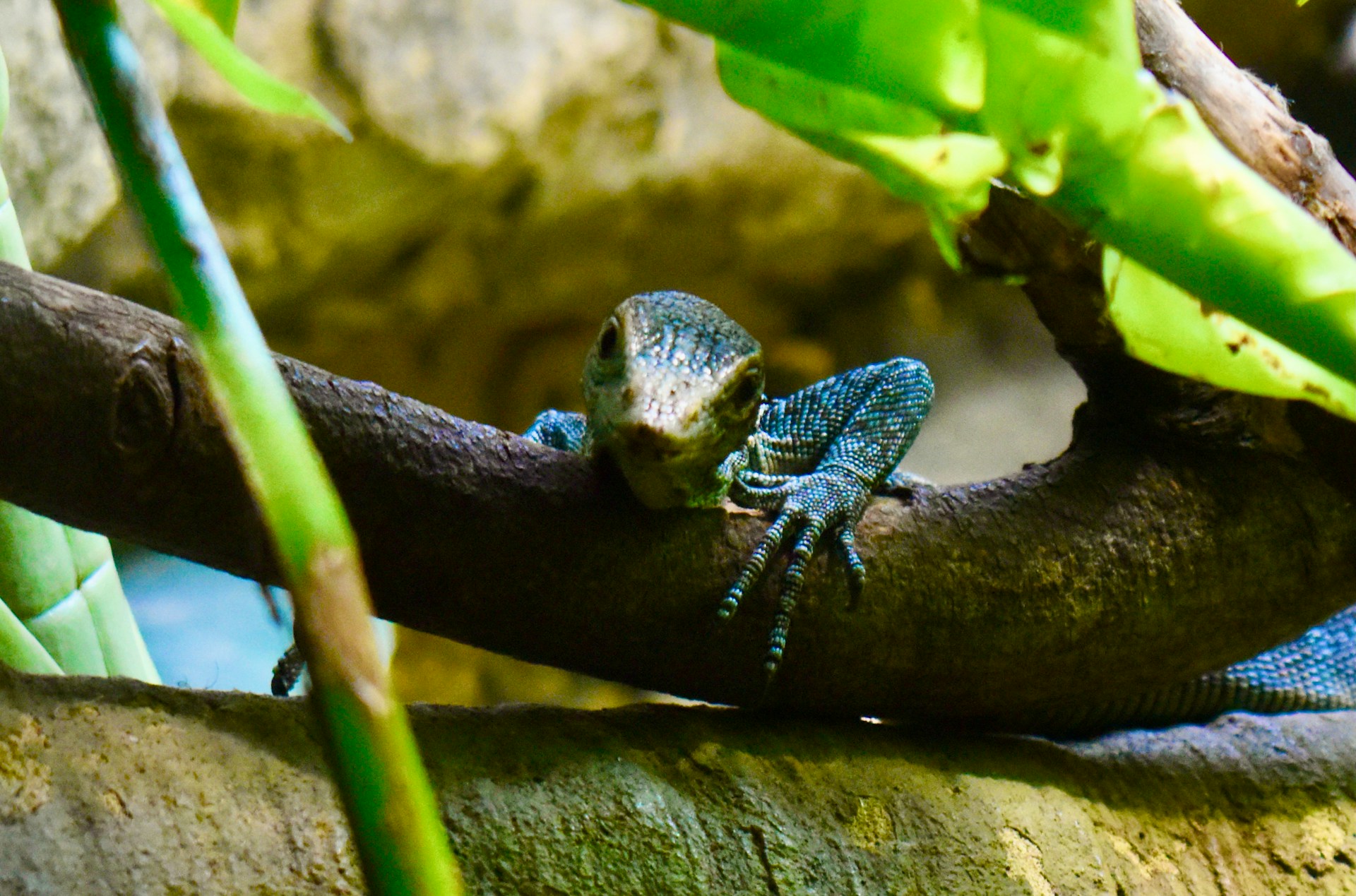
This lizard from Indonesia and New Guinea shows off scales in shades of turquoise and blue-green. Unlike many blue animals, this monitor actually has blue pigment in its skin.
The color helps them blend with the dappled light filtering through rainforest canopies.
These monitors spend most of their time in trees, using their long tails for balance and their sharp claws for climbing. They hunt birds, insects, and small mammals.
Some individuals develop more intense blue coloring than others, and the reasons for this variation remain unclear.
When Blue Becomes Survival
The color blue in nature almost always means something specific. Whether it’s a warning, a mating display, or camouflage, animals don’t waste energy producing or maintaining this rare color without good reason.
Scientists continue discovering new blue species and learning how these animals create their colors. Each discovery reveals another piece of how evolution shapes not just what animals look like, but how they survive in their environments.
More from Go2Tutors!

- The Romanov Crown Jewels and Their Tragic Fate
- 13 Historical Mysteries That Science Still Can’t Solve
- Famous Hoaxes That Fooled the World for Years
- 15 Child Stars with Tragic Adult Lives
- 16 Famous Jewelry Pieces in History
Like Go2Tutors’s content? Follow us on MSN.



