Bridges That Hold World Records
Bridges do more than connect two points. They represent human ambition, engineering genius, and the desire to overcome natural obstacles.
Some bridges stretch so far you can’t see the other end. Others rise so high they pierce the clouds.
Each record-breaking bridge tells a story about what people can build when they refuse to accept limitations.
The Danyang-Kunshan Grand Bridge Spans 102 Miles

China’s Danyang-Kunshan Grand Bridge holds the record for the longest bridge in the world. It runs for 102.4 miles, connecting Shanghai and Nanjing.
The bridge took four years to complete and required 10,000 workers. Most of it crosses flat rice paddies and waterways, keeping trains moving smoothly across terrain that would have been difficult to navigate otherwise.
The bridge cost about $8.5 billion to build. Engineers designed it to withstand earthquakes and typhoons, common threats in the region.
You can’t drive across it though—it’s exclusively for high-speed trains that travel at speeds up to 186 miles per hour.
The Akashi Kaikyo Bridge Stretches Nearly 13,000 Feet
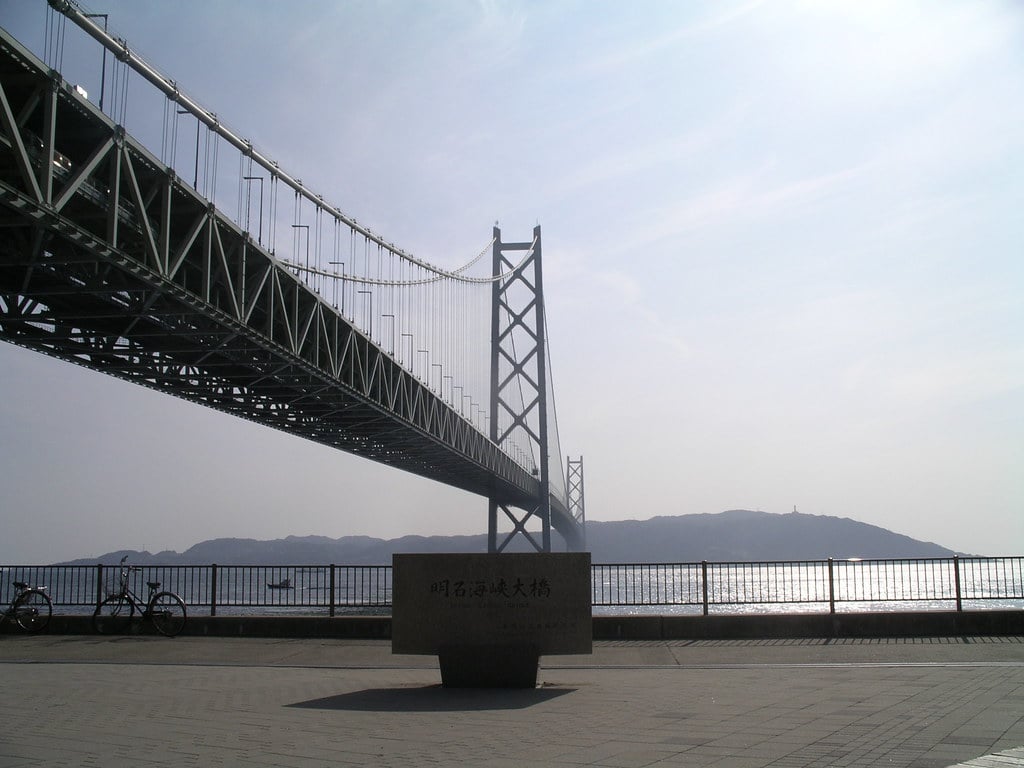
Japan’s Akashi Kaikyo Bridge holds the record for the longest suspension bridge span in the world. The main span stretches 6,532 feet between its two towers.
The entire bridge measures 12,831 feet long. Engineers built this bridge to connect Kobe to Awaji Island across the turbulent Akashi Strait.
The location made construction particularly challenging. Strong currents, deep water, and frequent earthquakes all complicated the work.
During construction, the Great Hanshin earthquake struck, pushing the two towers farther apart and forcing engineers to make the bridge three feet longer than originally planned. The bridge opened in 1998.
About 23,000 vehicles cross it daily, and it can withstand winds up to 178 miles per hour and earthquakes measuring 8.5 on the Richter scale.
The Millau Viaduct Towers 1,125 Feet Above Ground

The Millau Viaduct in France holds the record for the tallest bridge in the world. One of its towers rises 1,125 feet above the base of the structure.
That makes it taller than the Eiffel Tower. The bridge crosses the Tarn River valley in southern France.
Before it existed, drivers had to navigate a winding route through the valley that was often backed up with traffic, especially in summer. Now they can cross the valley in minutes, sailing above the morning fog that often fills the gorge below.
British architect Norman Foster designed the bridge to look delicate despite its massive size. The seven pylons stand at different heights, creating a graceful curve that follows the valley’s contours.
It opened in 2004 and quickly became one of France’s most photographed bridges.
The Quebec Bridge Claims the Longest Cantilever Span
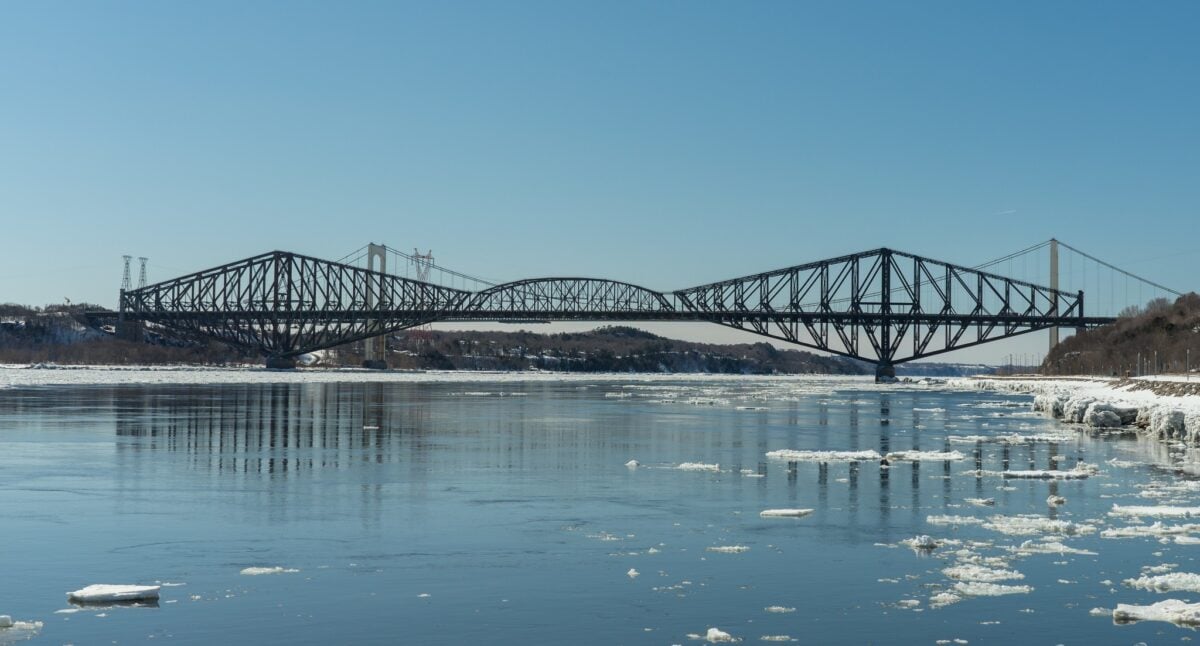
Canada’s Quebec Bridge holds the record for the longest cantilever bridge span, measuring 1,800 feet. The bridge crosses the St. Lawrence River near Quebec City, and its construction came at a terrible cost.
The first attempt collapsed in 1907, killing 75 workers. Engineers tried again, but in 1916, the central span fell into the river during installation, killing 13 more people.
The bridge finally opened in 1919, and it stands as both an engineering achievement and a memorial to those who died building it. The bridge carries both vehicles and trains.
Its massive steel framework dominates the river crossing, a reminder of early 20th-century engineering ambition and the price sometimes paid for progress.
The Russky Bridge Holds the Cable-Stayed Record
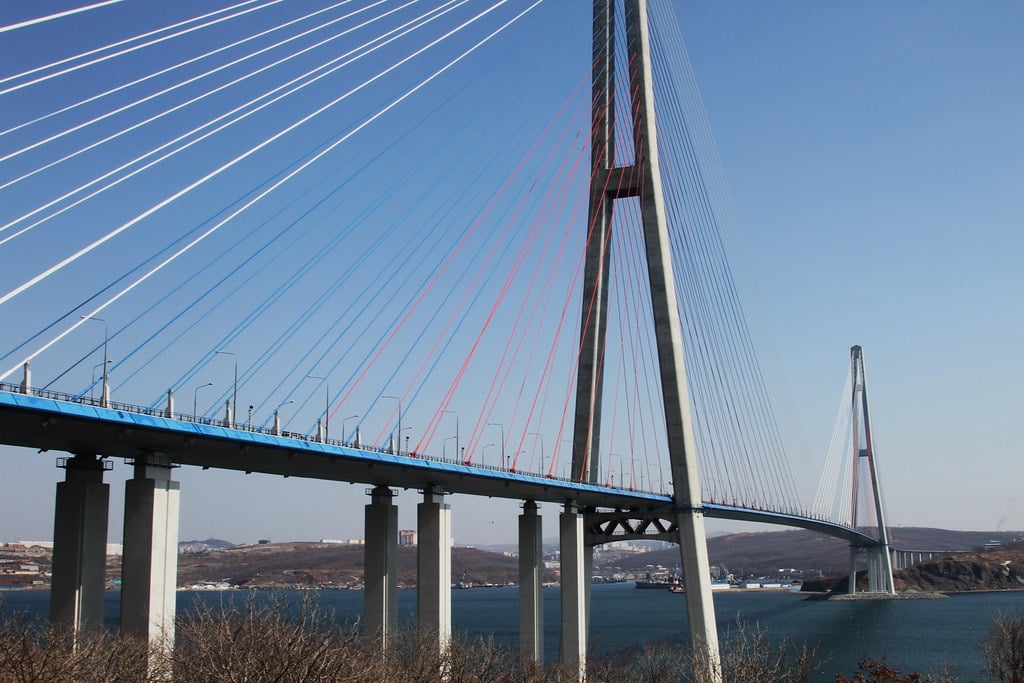
Russia’s Russky Bridge has the longest cable-stayed span in the world at 3,622 feet. The bridge connects Vladivostok to Russky Island in the far eastern reaches of Russia.
Russia built the bridge for the 2012 APEC summit, completing it in just four years. The construction happened in one of the harshest environments imaginable, with temperatures dropping to -31°F in winter.
Workers poured concrete in heated forms and wrapped everything in insulation to keep the work moving. The bridge towers stand 1,053 feet tall, and engineers designed it to withstand extreme weather conditions common in the region.
The bridge opened up Russky Island to development, though traffic remains lighter than planners expected.
The San Francisco-Oakland Bay Bridge Stretches Ten Lanes Wide

The San Francisco-Oakland Bay Bridge holds the record for the widest bridge in the world. Ten lanes of traffic cross it, split between two decks.
The upper deck carries five lanes going west, and the lower deck carries five lanes going east. About 260,000 vehicles cross this bridge every day, making it one of the busiest bridges in the United States.
The western span opened in 1936, just months before the Golden Gate Bridge. The eastern span suffered damage in the 1989 Loma Prieta earthquake, and California replaced it with a new span that opened in 2013.
The new eastern span includes the world’s largest self-anchored suspension span. At night, 25,000 LED lights illuminate the bridge’s cables, creating patterns that change throughout the evening.
The Lake Pontchartrain Causeway Crosses 24 Miles of Water
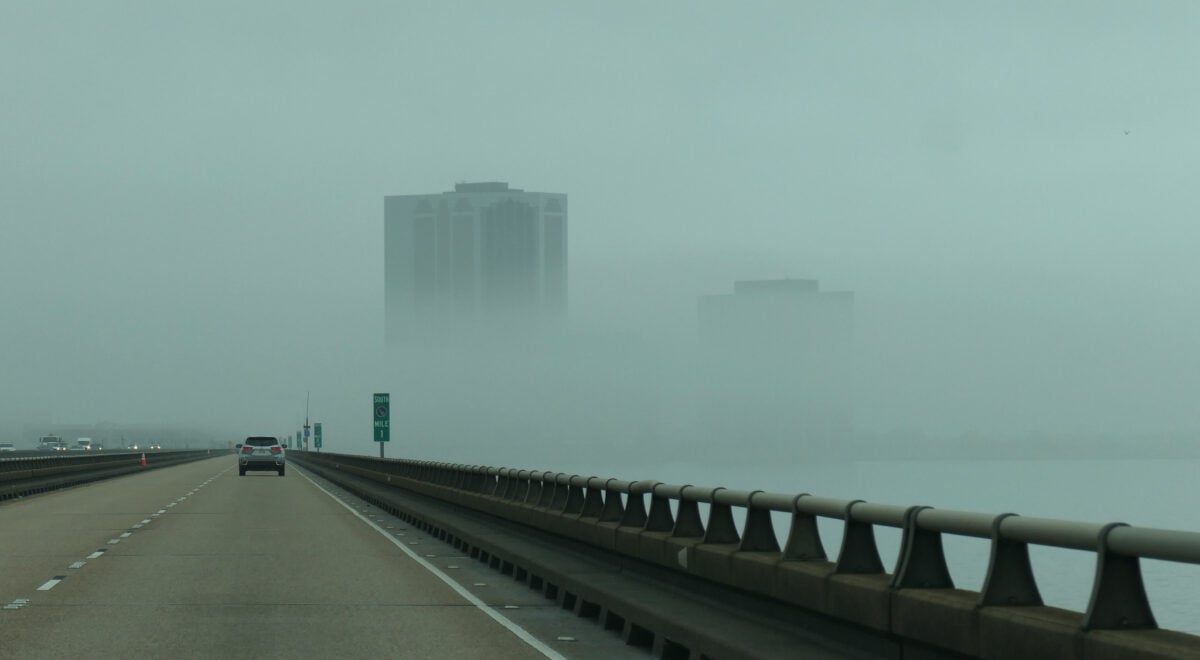
The Lake Pontchartrain Causeway in Louisiana holds the record for the longest continuous bridge over water. It stretches 23.83 miles across Lake Pontchartrain, connecting New Orleans to Mandeville.
The causeway actually consists of two parallel bridges. The first opened in 1956, and the second was added in 1969 to handle growing traffic.
For most of the drive, you see nothing but water on both sides. The curve of the Earth makes the opposite shore disappear from view when you reach the middle.
Driving the causeway takes about 25 minutes under normal conditions. But weather can make the trip more exciting than you want.
During storms, waves crash over the roadway, and crosswinds push vehicles sideways. The causeway closes when conditions become too dangerous.
The Ponte Vecchio Carries Shops Across the Arno
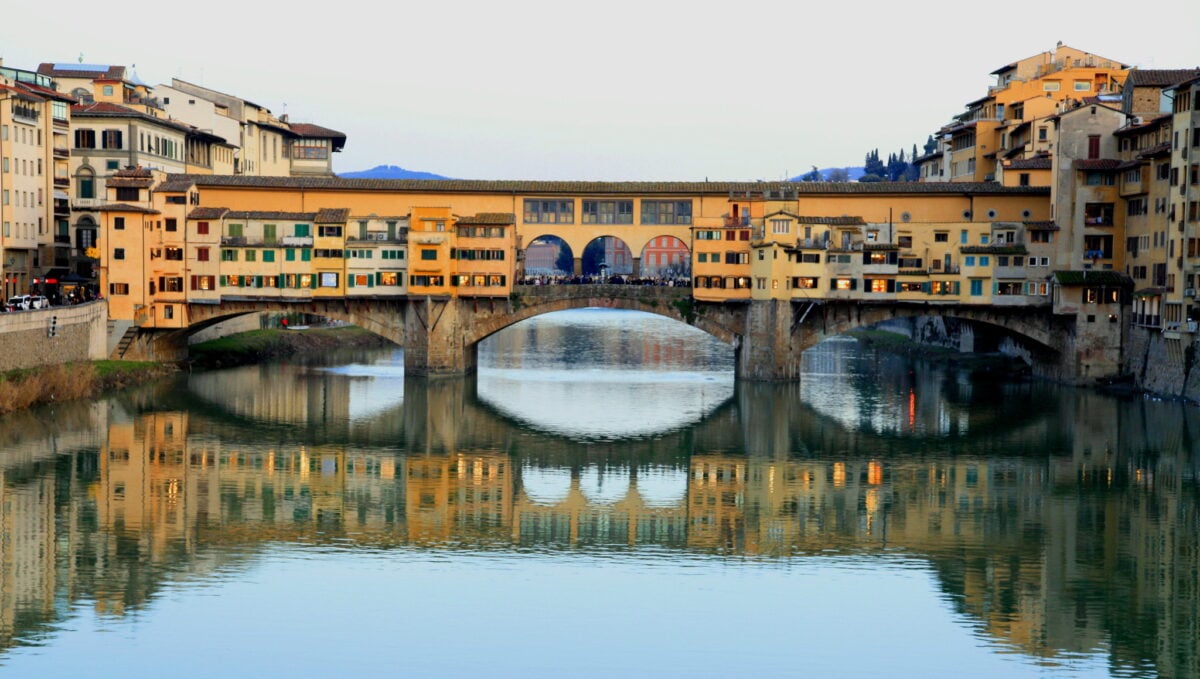
Italy’s Ponte Vecchio isn’t the longest or tallest, but it holds records for age and uniqueness. This medieval bridge has spanned the Arno River in Florence since 1345, making it one of the oldest functioning bridges in Europe.
Shops line both sides of the bridge, a practice that began in the 1400s when butchers set up there. The bridge was the only one in Florence that survived World War II intact.
Hitler reportedly ordered it spared during the German retreat because of its beauty. Today the shops sell jewelry and art instead of meat.
The bridge remains one of Florence’s most recognizable landmarks, and visitors crowd it from morning until night.
The Zhangjiajie Glass Bridge Dangles 980 Feet Up
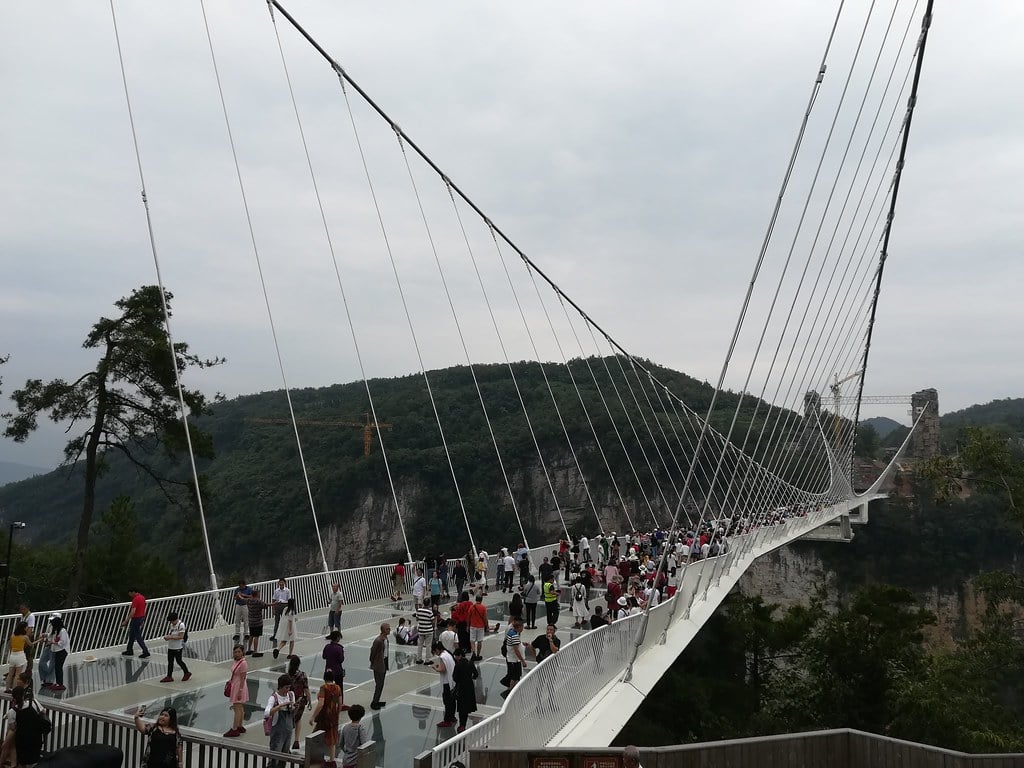
China’s Zhangjiajie Glass Bridge holds the record for the longest and highest glass-bottomed bridge. It stretches 1,410 feet across and hangs 980 feet above the canyon floor in Zhangjiajie National Forest Park.
The bridge opened in 2016 and immediately became a tourist sensation. Walking across feels like floating in midair.
The glass panels can support the weight of 800 people at once, though engineers tested it with much heavier loads during construction. The bridge offers more than just views.
It includes the world’s highest bungee jump, though that’s not for everyone. Some visitors can’t make it all the way across.
The transparent floor triggers vertigo in people who normally don’t have issues with heights.
The Arouca 516 Tests Your Fear of Heights
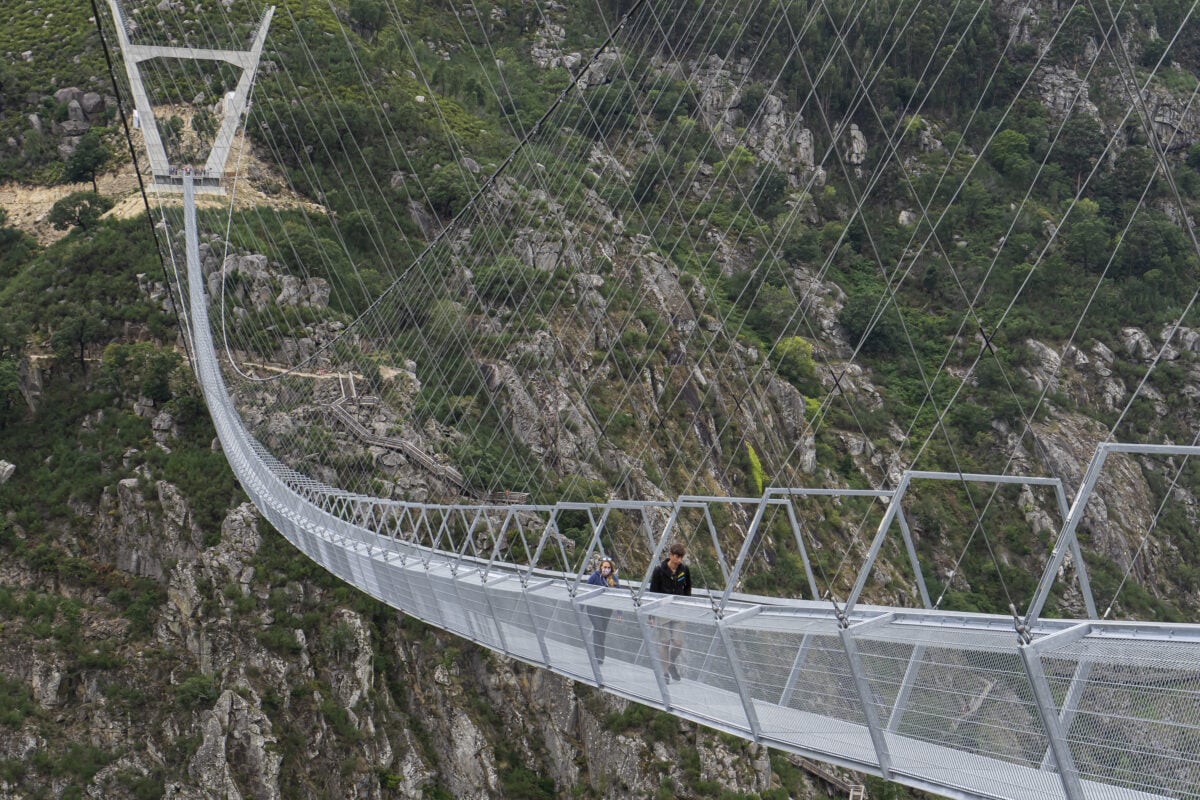
Portugal’s Arouca 516 holds the record for the longest pedestrian suspension bridge at 1,692 feet. It hangs 574 feet above the Paiva River in Arouca Geopark.
The bridge opened in 2021. Walking across takes about 10 minutes if you keep moving, but many people stop frequently to catch their breath and calm their nerves.
The bridge sways slightly in the wind, adding to the sensation of floating above the gorge. The metal mesh floor allows you to see straight down to the rocks and river below.
Hand rails run along both sides, but they feel inadequate when you’re in the middle. The bridge has become popular with thrill-seekers, though local officials limit the number of people allowed on it at once.
The Hong Kong-Zhuhai-Macau Bridge Extends 34 Miles
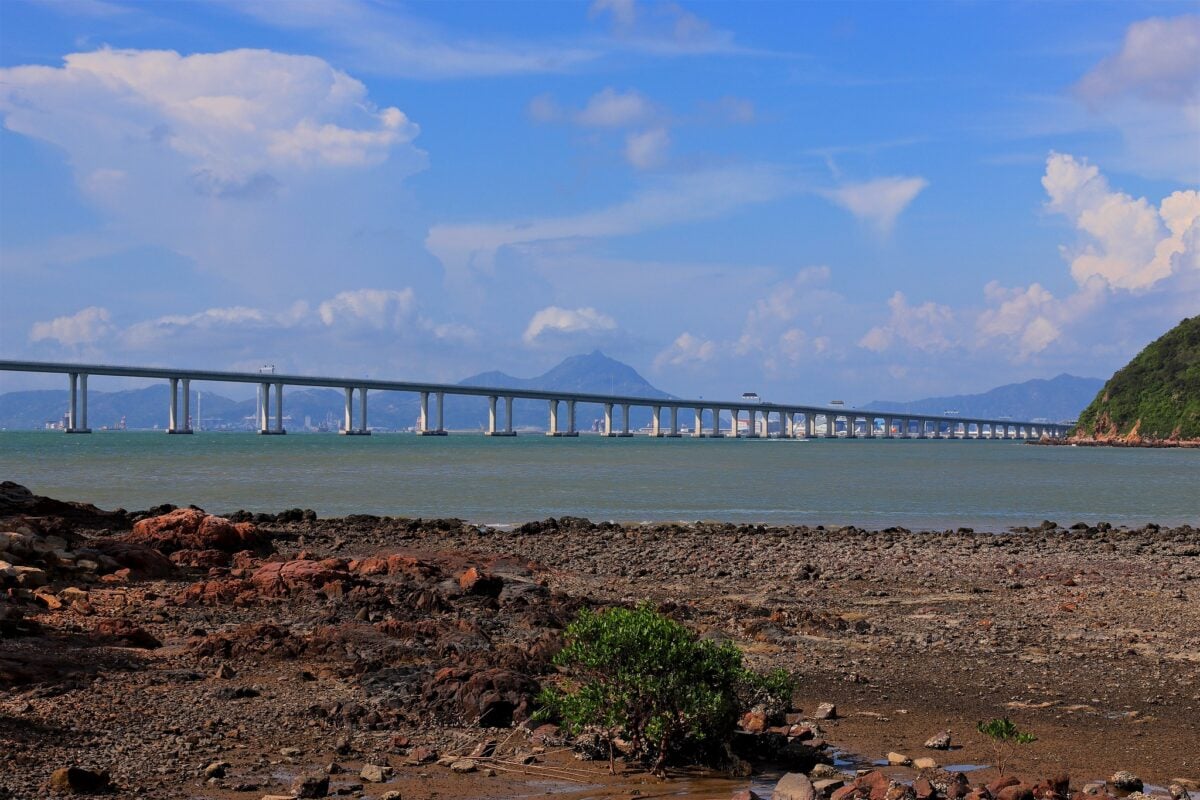
The Hong Kong-Zhuhai-Macau Bridge holds the record for the longest sea crossing bridge-tunnel system. The total structure spans 34 miles, linking Hong Kong, Zhuhai, and Macau.
The bridge took nine years to build and cost about $20 billion. Part of it dips underwater into a tunnel to allow ships to pass overhead.
The tunnel portion runs for four miles, making it one of the longest underwater tunnels in the world. The bridge cut travel time between Hong Kong and Zhuhai from three hours to just 30 minutes.
Engineers designed it to last 120 years and to withstand earthquakes, typhoons, and ship collisions. About 10,000 vehicles cross it each day, though traffic hasn’t reached the levels authorities initially projected.
The Chaotianmen Bridge Spans 1,741 Feet
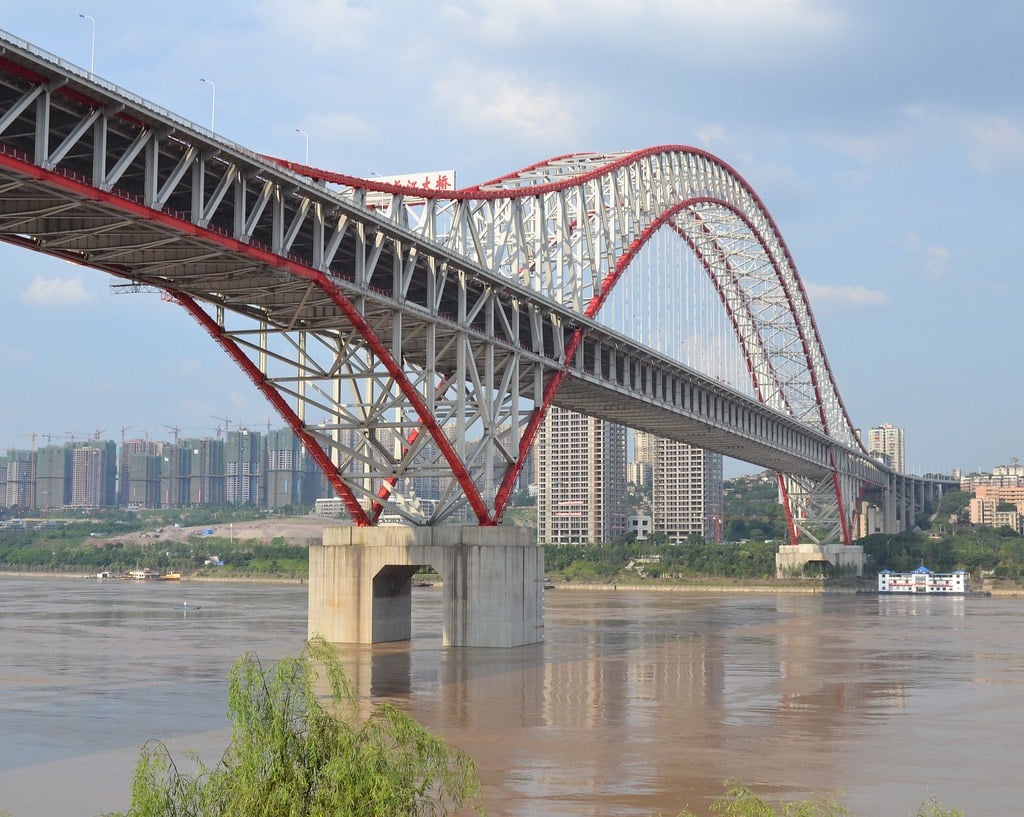
China’s Chaotianmen Bridge holds the record for the longest steel arch bridge. Its main span stretches 1,741 feet across the Yangtze River in Chongqing.
The bridge opened in 2009. Its double-deck design carries six lanes of traffic on the upper deck and light rail on the lower deck. The arch required 46,000 tons of steel, and engineers had to account for the Yangtze’s notorious flooding when designing the foundations.
The bridge sits where two rivers meet, creating challenging currents and water conditions. Its distinctive arch shape has made it a landmark in Chongqing, visible from miles away as you approach the city.
The Confederation Bridge Battles Ice and Cold
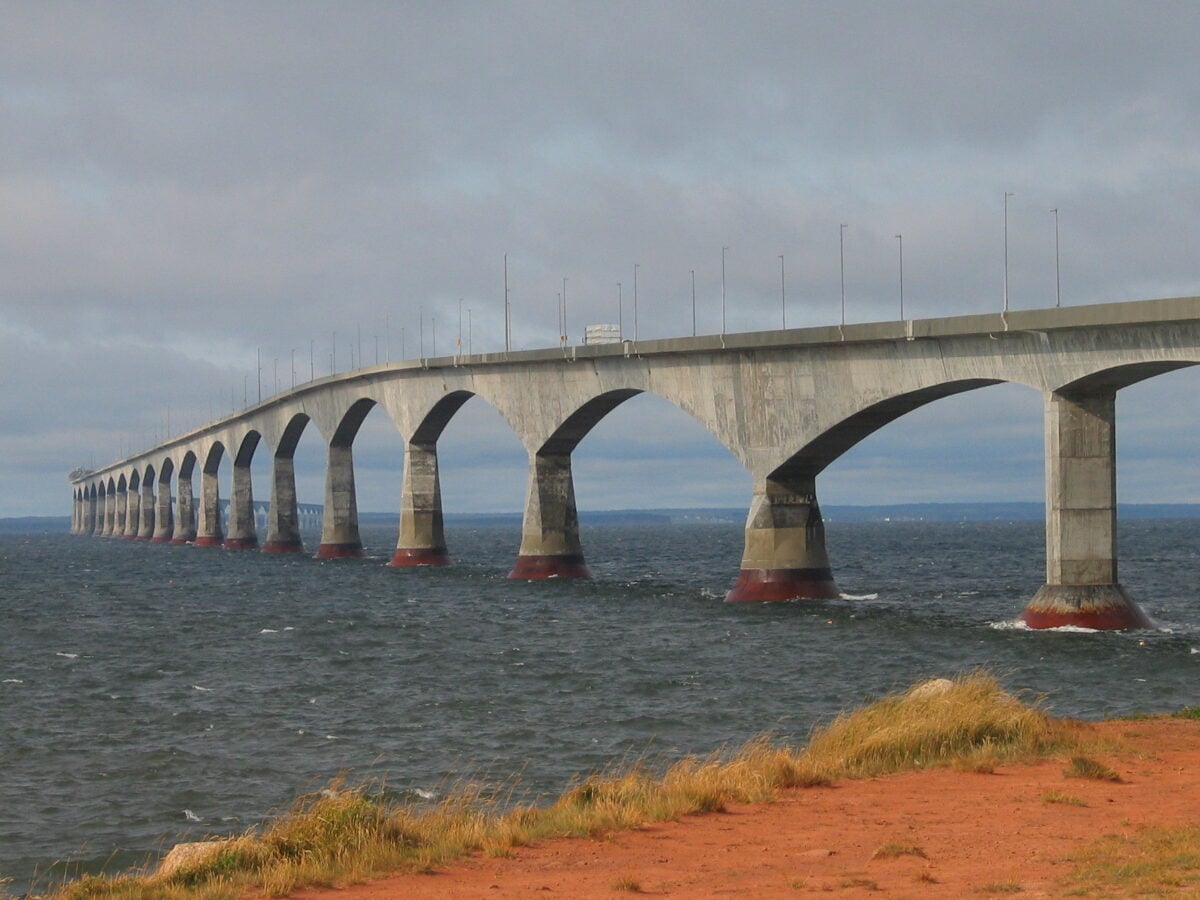
Floating above icy waves, Canada’s Confederation Bridge stretches eight miles without pause. Linking Prince Edward Island to New Brunswick on solid land, it claims the title of longest span across frozen sea routes.
Winter ice once stopped ferries, so the bridge arrived in 1997. Its design fights heavy pressure from drifting ice chunks. A bend in the structure guides ice away from supports.
This shape prevents buildup by letting floes split and move smoothly past. Ice grips the bridge hard when winter hits.
Strong gusts, now and then, make authorities shut it down. Still, it runs through all seasons – unlike the outdated ferry that came before.
For locals on Prince Edward Island, things shifted completely once it opened, ending their long seasonal cut-offs.
Standing Where Others Couldn’t
Someone once thought these bridges possible, so they built them. Calculations came first – engineers measuring force and weight under tight margins.
High above rivers, people climbed steel beams in wind and cold, risking everything. Ideas shaped metal before a single bolt was placed. Lives were lost while raising girders into the open air.
Time stretched across years, even generations, for some to finish. Yet each holds a quiet truth in common.
The impossible became ordinary. Journeys lasting hours shrink to mere minutes.
Places once isolated now link with ease. Step onto any span like this, and you move across evidence – people won’t let water, height, or risk block their way forward.
More from Go2Tutors!

- 16 Historical Figures Who Were Nothing Like You Think
- 12 Things Sold in the 80s That Are Now Illegal
- 15 VHS Tapes That Could Be Worth Thousands
- 17 Historical “What Ifs” That Would Have Changed Everything
- 18 TV Shows That Vanished Without a Finale
Like Go2Tutors’s content? Follow us on MSN.