Bright Facts About the Color White
White is disregarded. People describe it as dull, uninteresting, and devoid of anything fascinating. White, however, is anything but straightforward. Every visible light wavelength is contained in this color, or non-color, depending on who you ask.
Everything is reflected back at you by white. It exposes everything and conceals nothing. Most people are unaware of how deeply ingrained white symbolism, science, and history are.
White Contains All Colors

When light strikes an object that is truly white, it reflects every color in the spectrum without absorbing any. White is therefore the lightest color imaginable.
Because the object is simultaneously reflecting all visible light wavelengths, your eyes perceive white. White functions differently on screens.
In reality, the white you see on your computer or TV is a combination of red, blue, and green light. White on a display is not produced by a single wavelength. Your brain is tricked into seeing white by three different colors.
Ancient Humans Used White First

One of the first colors humans used for art was white. The earliest cave art using chalk shows drawings of animals in France that date back 18,000 years.
Ancient people ground up chalk and limestone to create white pigments for their paintings. These early artists understood that white made other colors stand out.
They used it for highlights and to create contrast against darker cave walls. White has been part of human artistic expression since the beginning.
Many Languages Have Multiple Words for White

English speakers use one word for white, but some cultures developed more specific vocabulary for subtle variations. Different languages have created terms to distinguish between types of white surfaces, materials, and shades.
These multiple words reflect how much attention certain cultures pay to subtle differences in snow, ice, cloth, and other white materials. What looks like plain white to English speakers can contain a spectrum of meaningful variation to others.
White Noise Includes All Sound Frequencies

White light is the source of the term “white noise.” White noise is made up of all audible sound frequencies, just as white light is made up of all visible wavelengths.
Although human ears do not perceive all frequencies equally, the technical definition refers to equal power per frequency. White noise is used by people to drown out other sounds in order to focus or fall asleep.
Individual sounds that might otherwise be distracting are hidden by the full spectrum of sound. White noise machines are now frequently found in offices and bedrooms.
Romans Wore White Togas as Citizenship Symbols

When Roman boys came of age, they received white togas called toga virilis. These garments signaled that they could now vote, marry, and form their own households.
White represented their transition into full citizenship. Only Roman citizens could wear these white togas.
The garment became a visual marker of status and rights within Roman society. Foreigners and non-citizens were forbidden from wearing them.
Ancient Greek Statues Were Never Actually White
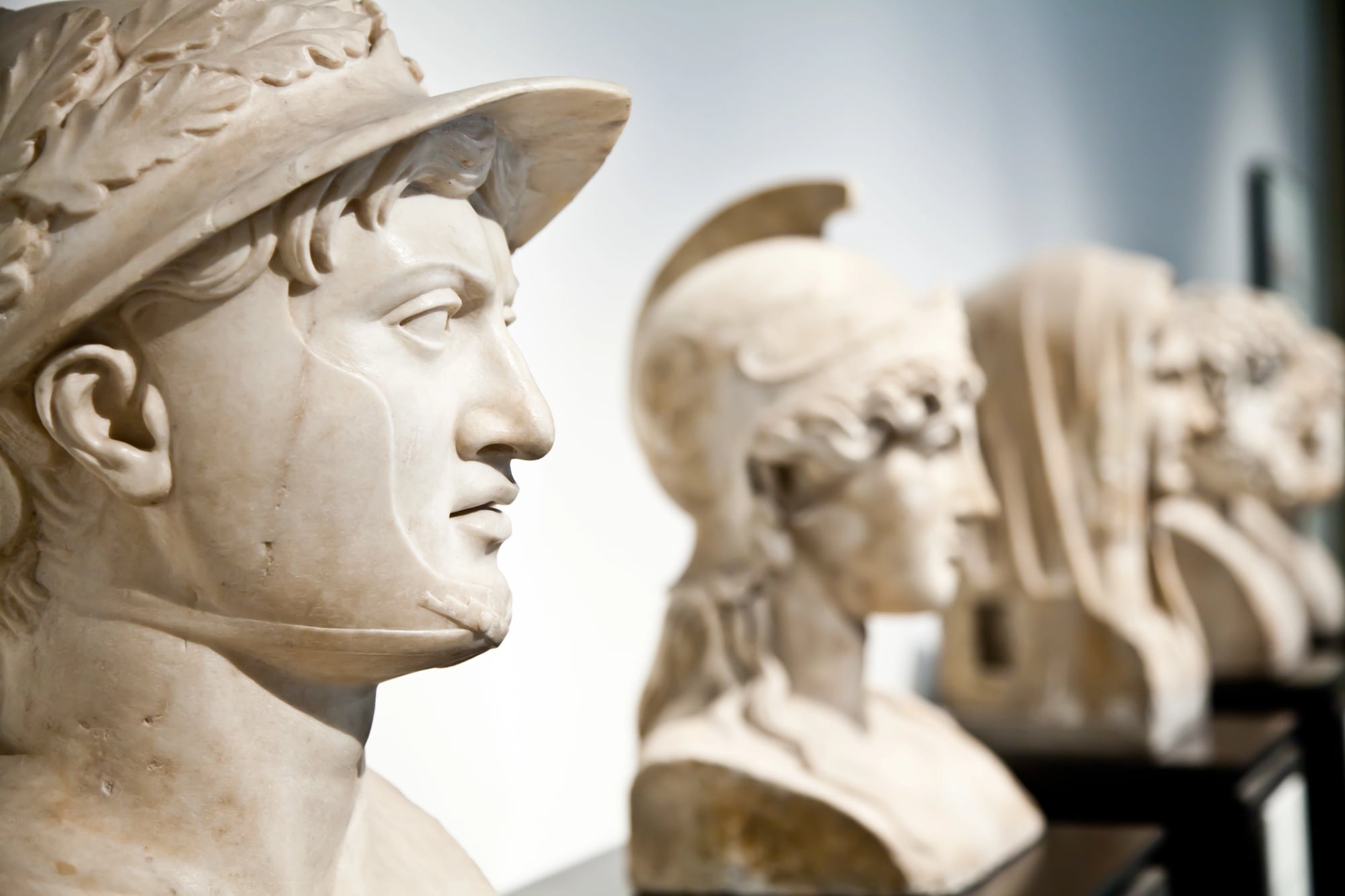
The white marble sculptures we associate with ancient Greece weren’t originally white. Modern research shows that much of Greek sculpture was polychromatic—painted in vibrant colors.
Time wore away the paint, leaving bare white marble. Renaissance artists who rediscovered these statues assumed white was the intended aesthetic.
They built an entire artistic movement around the purity of white marble. The mistake shaped Western art for centuries. What we think of as classical white elegance was actually faded color.
White Wedding Dresses Became Popular Recently

Brides haven’t always worn white. Before the 19th century, women wore their finest dress to their wedding, regardless of color.
Queen Victoria popularized the white wedding gown when she wore white lace in 1840. The trend spread among wealthy families first, then gradually became the standard for everyone.
White symbolized purity and new beginnings, but the association is relatively recent in the long history of marriage ceremonies. Many cultures still use different colors for wedding attire.
White Flags for Surrender Started in Ancient Times

The white flag as a sign of surrender was officially adopted at the 1949 Geneva Convention. But the practice dates back much further—the earliest recorded use appears in Roman times during the 2nd century AD.
The white flag was already well-established by the Hundred Years War in the 15th century. White made sense as a surrender symbol because it was visible from a distance and clearly distinct from military banners.
Any army could produce a white cloth quickly. The color’s association with peace and non-violence reinforced its use as a surrender signal.
White Cosmetics Once Contained Lead

Until the 20th century, white makeup came from lead. People applied lead-based powders to their faces to achieve pale complexions that signified wealth and nobility.
The whiter your skin, the less you work outdoors. Lead poisoning from cosmetics caused serious health problems, but the fashion persisted for centuries.
In 1916, titanium white was introduced as a safer alternative. Today, titanium dioxide accounts for almost 70% of all pigment production worldwide and appears in everything from paint to toothpaste.
Different Cultures Use White for Mourning

In Western cultures, black is the traditional mourning color. But in China, India, and Korea, white represents death and mourning.
White symbolizes infinity and the journey to the afterlife in these traditions. Until the 16th century, Europeans also wore white for mourning.
The association shifted over time as black became the dominant color for funerals in the West. The symbolism of white proves flexible enough to represent both purity and death depending on cultural context.
White Animals Were Considered Sacred

Many cultures believed white animals had divine connections. The Holy Spirit appeared as a white dove in Christianity.
Zeus revealed himself as a white bull. White cows in India embody light and remain sacred.
White stoats have their own legend. A widespread European myth claims these animals would rather die than let their snow-white coats get dirty.
In reality, their coats change from white in winter to reddish-brown in summer as camouflage.
Muslim Pilgrims Wear White to Mecca

Muslims wear white garments during their pilgrimage to Mecca. The white clothes symbolize purity and equality before God.
Rich and poor wear the same simple white garments, removing visible markers of wealth or status. The Japanese Shinto religion also associates white with the sacred.
Places covered with white stones or gravel are considered holy because spirits dwell there. White marks spiritual spaces across many religious traditions.
Titanium White Changed Painting Forever

For centuries, artists used lead white paint despite its toxicity. The pigment created beautiful effects but poisoned painters who worked with it regularly.
Titanium white provided a safer alternative when it was introduced. Titanium white is more opaque than lead white and thermally stable.
It doesn’t yellow with age like some other whites. Artists can mix it with other colors to create tints and lighter values.
The development of titanium white expanded what painters could safely achieve.
White Creates Visual Space in Design

Designers use white strategically to create breathing room. White space—sometimes called negative space—gives the eye places to rest.
It makes other elements stand out more clearly and prevents visual clutter. Minimalist movements in art and architecture embraced white for its simplicity.
White walls became associated with modern galleries and contemporary homes. The color suggests cleanliness, order, and a fresh start.
Too much white can feel stark and cold, but the right amount creates elegant simplicity.
White Reflects Heat and Light

White clothing stays cooler in summer because it reflects sunlight instead of absorbing it. Dark colors absorb light and convert it to heat.
White bounces that energy away. This practical property makes white popular for summer fashion and hot climates.
Buildings painted white stay cooler inside. Reflective white roofing materials reduce air conditioning costs.
The physics of white make it functional beyond aesthetics.
White Blood Cells Aren’t Actually White

White blood cells are colorless, despite their name. They appear pink or light purple when examined under a microscope with dye.
Red blood cells greatly outnumber white blood cells, which normally range from 4,000 to 11,000 per microliter of blood in a healthy adult. Your body is protected from infections by these cells.
Depending on your health, their number varies. White blood cell counts are used by doctors to diagnose diseases.
Despite the fact that the cells themselves lack white coloring, the deceptive name persisted.
White Represents Opposites Simultaneously

White is a symbol of both sterility and purity. It stands for fresh starts and finishes.
It represents both everything and nothing. White is the absence of any one hue and the presence of all colors.
White is particularly potent in symbolism because of this paradox. It can signify joy or sorrow, peace or surrender, hope or emptiness.
The context is all that determines the meaning. White is one of the most adaptable colors in human experience because it can take on any symbolic significance that a culture assigns to it.
The Complexity Hidden in Plain Sight

White appears simple until you look closely at it. The contradictions then become apparent.
People argue over whether it’s a color at all, even though it’s just a combination of wavelengths. In one culture, it stands for purity; in another, it symbolizes death.
Although we remember them as pure white, ancient sculptors painted their marble in vibrant hues. Every white surface you see is capturing every visible light photon and flawlessly reflecting it back, performing a tiny physics miracle.
More effort is being put into that white wall than any other colored surface in the space. White seems to be nothing, but it contains everything. That’s how it works. The most complex color is also the brightest.
More from Go2Tutors!

- The Romanov Crown Jewels and Their Tragic Fate
- 13 Historical Mysteries That Science Still Can’t Solve
- Famous Hoaxes That Fooled the World for Years
- 15 Child Stars with Tragic Adult Lives
- 16 Famous Jewelry Pieces in History
Like Go2Tutors’s content? Follow us on MSN.



