Disappearances that Defy Explanation
Some people vanish without leaving so much as a footprint behind. These aren’t your typical missing person cases with obvious suspects or clear motives.
These are the ones that make seasoned investigators shake their heads and file reports they’d rather forget. The evidence doesn’t add up, the timelines make no sense, and the circumstances read like something out of a fever dream.
What makes these cases particularly unsettling isn’t just that people disappeared — it’s that they disappeared in ways that seem to mock our understanding of how the world works.
The Vanishing Hiker of Crater Lake

David Paulides disappeared on a clear Tuesday morning while hiking alone at Crater Lake National Park. His car sat in the parking lot for three days before anyone noticed.
His backpack was found neatly placed on a picnic table two miles from any trail, contents arranged as if someone had been taking inventory. The search teams found his hiking boots.
Both of them. Sitting side by side on a rocky outcrop that required technical climbing gear to reach.
Paulides was a casual day hiker who wore tennis shoes on most walks. No one could explain how the boots got there.
No one could explain why they were there.
Frederica’s Midnight Drive

So here’s what happened to Frederica Langer on the night she drove to pick up milk and never came home — and it’s the kind of story that (if you’re the type who needs logical explanations for everything) will leave you staring at the ceiling at 3 AM wondering how the universe actually works. She left her house in Burlington at 11:47 PM, which her husband knew because he glanced at the kitchen clock when she grabbed her keys, and the convenience store clerk remembered her buying a gallon of two percent at exactly 12:03 AM, which meant she’d made the usual seven-minute drive in the usual amount of time.
But then — and this is where the story turns into something that makes hardened detectives reach for another cup of coffee — her car was found the next morning in the parking lot of a diner in Montreal, which is a four-hour drive from Burlington, with the milk still cold in a grocery bag on the passenger seat and her purse sitting on the dashboard with all her money and credit cards untouched. The diner owner said the car had been there when he arrived at 5 AM to prep for the morning rush, but the surveillance cameras (and there were three of them covering that parking lot) showed absolutely nothing unusual between midnight and dawn.
No car arrived. No woman walked away.
Frederica Langer has never been seen since, which leaves everyone who knows her with a question that doesn’t have an answer: how do you drive four hours in negative time and then disappear into air that apparently swallows people whole?
The Case of the Backwards Footprints
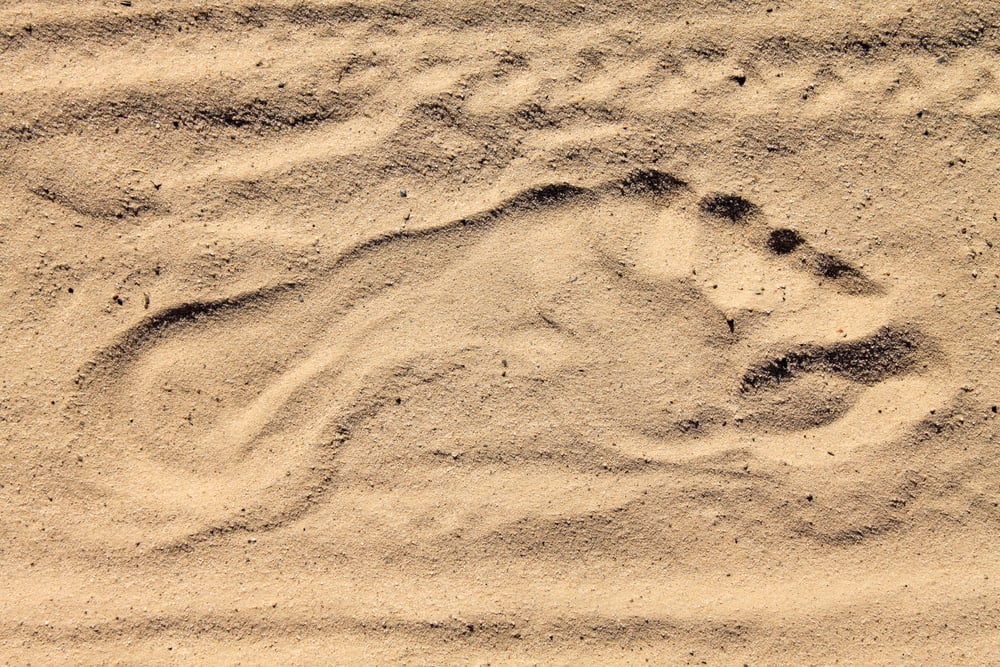
There’s something about tracking that refuses to let go of the logical mind. Footprints tell stories — where someone was going, how fast they were moving, whether they were carrying weight.
But the prints left by Marcus Webb in the Adirondack wilderness tell a story that reads like a book with pages torn out and reshuffled by someone who never learned proper order. Webb’s prints start at his abandoned campsite and head directly toward the lake, which makes sense.
A thirsty man walks to water. But then the prints circle the lake once, twice, three times — each loop getting smaller, tighter, like a spiral drawn by someone losing their grip on purpose.
And then, at the water’s edge, the prints reverse direction. Not as if Webb had turned around. The prints themselves face backward.
Left foot where right should be, right where left belongs, as if Webb had suddenly learned to walk in ways that anatomy doesn’t typically allow. The trail of backwards prints leads into dense forest for exactly 847 steps (yes, someone counted) and then stops.
Not fades, not becomes unclear — stops. Mid-stride. The left foot pressed clear and deep into soft earth, the right foot nowhere to be found.
As if Webb had taken one final step into the air that decided to keep him.
The Vanishing Runner

Martha Chen ran the same route every morning for eight years. Six miles through residential streets, past the elementary school, around the park, home in time for coffee.
Neighbors set their clocks by her. On March 15th, she left for her run and disappeared somewhere between the third and fourth mile.
Her fitness tracker recorded every step until 7:23 AM, then went dead. Her route was populated, well-lit, covered by security cameras from four different houses.
Nobody saw her pass. Nobody saw her stop.
The cameras show the empty sidewalk where Martha should have been running at 7:23 AM. They show nothing unusual at all.
The Photographer’s Last Shot

But here’s the thing about Thomas Brennan’s final photograph that nobody talks about in the official missing person reports: it shouldn’t exist. Brennan was a landscape photographer who’d been documenting the remote areas of Montana’s Glacier National Park for a magazine feature, and his camera (a professional-grade digital model that timestamps everything) was found three days after he failed to return from what was supposed to be a day shoot.
The camera was sitting on a boulder beside a creek, completely undamaged, which was strange enough given that the area had been hit by severe weather during the time Brennan went missing. Even stranger was the final image stored on the memory card — a shot of Brennan himself, smiling and waving at the camera, taken from an angle that would have required the photographer to be standing about ten feet in front of himself.
So either Brennan had learned to split into two people (which seems unlikely), or someone else took the photograph, which raises the question of who was with him and why they never reported him missing and where exactly they went afterward. The timestamp on that final photo reads 2:47 AM, approximately six hours after sunset, but the image is shot in broad daylight with shadows that suggest midday sun.
The Vanishing Bride

Wedding day disappearances happen more often than people like to admit. Cold feet, family drama, last-minute realizations that forever is a very long time.
But Sarah Morrison’s disappearance from her own wedding reception falls into a category that has nothing to do with pre-marital jitters and everything to do with physics that apparently don’t apply to everyone equally. Morrison was photographed on the dance floor at 9:43 PM, spinning in her wedding dress while her new husband laughed.
Professional wedding photographers don’t miss moments — they shoot continuously, especially during the dancing. The next photo in the sequence, taken exactly four seconds later, shows the same dance floor from the same angle.
Her husband is still laughing, still holding his arms in a dancing position. But Sarah Morrison is gone. Vanished mid-spin from the center of a crowded dance floor while 150 wedding guests were watching and six photographers were taking pictures.
None of the guests saw her leave. The photographers saw nothing unusual.
The video footage shows her dress spinning and then empty space where a bride should be.
The Hiker Who Walked Through Time

Time moves forward. Water flows downhill. Gravity pulls things toward the ground.
These aren’t suggestions — they’re the basic rules that keep reality from collapsing into chaos (or at least that’s what most people assume until they encounter a case like Rebecca Martinez, who somehow managed to break at least one of these fundamental laws during what should have been a routine day hike in Arizona’s Superstition Mountains). Martinez started her hike at 6 AM on a Saturday, which multiple witnesses confirmed because she’d joined a group of twelve other hikers for a guided tour of the area.
The group stayed together for the first four hours, stopped for lunch at a scenic overlook, and were preparing to head back when Martinez excused herself to use the facilities (a polite way of saying she walked behind some large rocks for privacy). That was at 12:30 PM.
The group waited fifteen minutes, then went looking for her, figuring she’d gotten turned around or maybe twisted an ankle. But they found her signature in the trail register at a checkpoint that the group wasn’t scheduled to reach until 4 PM — and the timestamp on her entry read 11:45 AM, forty-five minutes before she’d even left the group.
The Case of the Impossible Witness

Jerome Foster saw his own disappearance happen. This is according to his sworn statement, given to police three days after he was officially declared missing.
Foster walked into the station on a Thursday morning to report that he’d watched himself vanish from a downtown bus stop the previous Monday. He described seeing himself waiting for the Number 7 bus, briefcase in hand, checking his watch.
He described watching his doppelganger board the bus when it arrived. He also described watching the bus pull away with nobody on it, though he’d just seen himself get on.
Foster had no memory of Monday. His calendar showed meetings he’d apparently attended.
His credit card showed purchases he’d apparently made. Security footage from his office building showed him working a normal day.
But Foster swears he spent Monday watching himself live a life he doesn’t remember living.
The Disappearing Dinner Guest

Dinner parties have a certain rhythm. People arrive, they eat, they leave. Margaret Olsen arrived at her friend’s dinner party at 7 PM sharp and disappeared sometime between the main course and dessert.
Not left early — disappeared. Her purse remained on her chair.
Her coat hung in the closet. Her car sat in the driveway.
Six people watched her take a phone call in the hallway. Six people heard her say she’d be right back.
The hallway had no exits except the one that led back to the dining room. Margaret Olsen never came back, and she was never seen leaving.
The host found her dinner plate scraped clean and stacked neatly with the others, though no one remembered her finishing her meal.
The Runner Who Ran in Circles

So there’s this thing that happens sometimes when people get lost — they walk in circles without realizing it, and it’s got something to do with how humans naturally favor one leg over the other and how we navigate when we can’t see landmarks clearly — but what happened to Kevin Torres during his morning run through Lincoln Park doesn’t fit that explanation because (and this is where the story gets weird in a way that makes you question whether reality follows the same rules for everyone) the GPS tracking on his phone shows him running in perfect circles for six straight hours, each loop exactly 0.3 miles in circumference, each lap completed in precisely the same amount of time. But here’s the thing: Lincoln Park doesn’t have any circular paths that are 0.3 miles around, and Torres’ usual running route was a simple out-and-back along the lakefront that should have taken him forty-five minutes at most.
Even more puzzling, the GPS shows him maintaining a steady 7-minute mile pace for the entire six hours, which would require the kind of endurance that elite marathon runners struggle to sustain for half that time. And at the end of those six hours, the GPS signal just stops.
Not lost signal, not device malfunction — stops, as if Torres had suddenly decided to run somewhere that GPS satellites can’t see.
The Photographer’s Darkroom

Carol Zhang developed photographs for forty years before digital cameras made darkrooms feel like museums. She kept her darkroom in the basement of her house, a perfectly organized space where chemicals sat in labeled containers and prints dried on lines strung corner to corner like laundry that never quite finished hanging.
Zhang went down to her darkroom on a Sunday evening to develop film from a weekend wedding shoot. Her husband found the basement door locked from the inside Monday morning when she didn’t come up for breakfast.
He broke down the door and found the darkroom empty, chemicals still mixed in their baths, photos still hanging on the lines. The photos were of Zhang herself, taken from angles that suggested someone else had been operating the camera.
The timestamps on the negatives showed they’d been shot inside the darkroom, but the room had no windows and the door had been locked from the inside.
The Vanishing Commuter

Rush hour crowds provide perfect camouflage for disappearing. Thousands of people moving in predictable patterns, everyone focused on getting somewhere else, nobody paying attention to faces they don’t recognize.
But subway cars are contained spaces with limited exits, which makes what happened to Anthony Rodriguez particularly difficult to explain using conventional logic. Rodriguez boarded the 5:47 train at Union Station, same as he’d done every weekday for twelve years.
Security cameras show him taking his usual seat in the third car. The train made its normal stops — 14th Street, Dupont Circle, Woodley Park.
At each station, cameras recorded people getting on and off. The cameras never recorded Rodriguez leaving the train.
But when the train reached the end of the line, Rodriguez wasn’t on it.
Conductors searched every car twice. They found his briefcase on his usual seat, his coffee still warm in the cup holder, his newspaper folded to the crossword puzzle he’d been solving.
The Midnight Librarian

Libraries after hours feel like churches where the congregation has gone home but left their prayers hanging in the air. Patricia Nevins worked alone in the university library every Tuesday night, cataloging new acquisitions and processing returned books, and she’d developed the kind of routine that made the building feel comfortable rather than creepy — lights on in her section, classical music playing softly from her portable radio, coffee brewing in the small break room she’d set up behind the reference desk.
On the Tuesday she disappeared, everything was exactly as it should have been. The building was locked and secure.
The alarm system was active. Campus security made their regular rounds and saw Nevins working at her desk at 11 PM and again at 1 AM.
But when the morning shift arrived at 7 AM, they found her section empty, her work half-finished, her coffee still warm. The strange part wasn’t just that she was gone — it was that she’d apparently been cataloging books that the library didn’t own.
Books with titles that nobody could verify existed, by authors that nobody could trace, in languages that the linguistics department couldn’t identify. And every single one of those mystery books was gone too, as if Patricia Nevins had been cataloging items from a library that existed somewhere else entirely.
The Echo of What Remains

These stories collect dust in filing cabinets and digital databases, each one a small tear in the fabric of what we think we know about how people exist in the world. They resist easy answers because easy answers require evidence that behaves predictably, and evidence in cases like these has a tendency to point in directions that don’t exist on any map.
What’s perhaps most unsettling isn’t that these people vanished — it’s that they vanished so completely, leaving behind only questions that seem to multiply rather than resolve. Each case suggests that reality might be far more flexible than we’re comfortable admitting, that the rules we depend on to make sense of daily existence might have exceptions we’d rather not discover.
And somewhere, in spaces we can’t quite locate, these missing people might still be living lives that follow logic we haven’t learned to recognize yet.
More from Go2Tutors!

- The Romanov Crown Jewels and Their Tragic Fate
- 13 Historical Mysteries That Science Still Can’t Solve
- Famous Hoaxes That Fooled the World for Years
- 15 Child Stars with Tragic Adult Lives
- 16 Famous Jewelry Pieces in History
Like Go2Tutors’s content? Follow us on MSN.



