Discontinued Fast Food Items People Are Still Begging to Have Brought Back
Nothing stings quite like the quiet betrayal of a favorite menu item disappearing without warning. One day you’re ordering your usual, and the next day the cashier is shaking their head with that apologetic look that means your comfort food has joined the ranks of discontinued casualties.
Fast food chains have a habit of introducing items that capture hearts and taste buds, only to yank them away just when loyalty has been established.
Some discontinued items fade from memory within months. Others become legends, spawning online petitions, nostalgic social media posts, and an almost cult-like following of people who refuse to let go.
These are the menu items that defined entire eras of fast food, the ones that made people choose one chain over another, the ones that still make mouths water years after their last appearance.
McDonald’s McRib
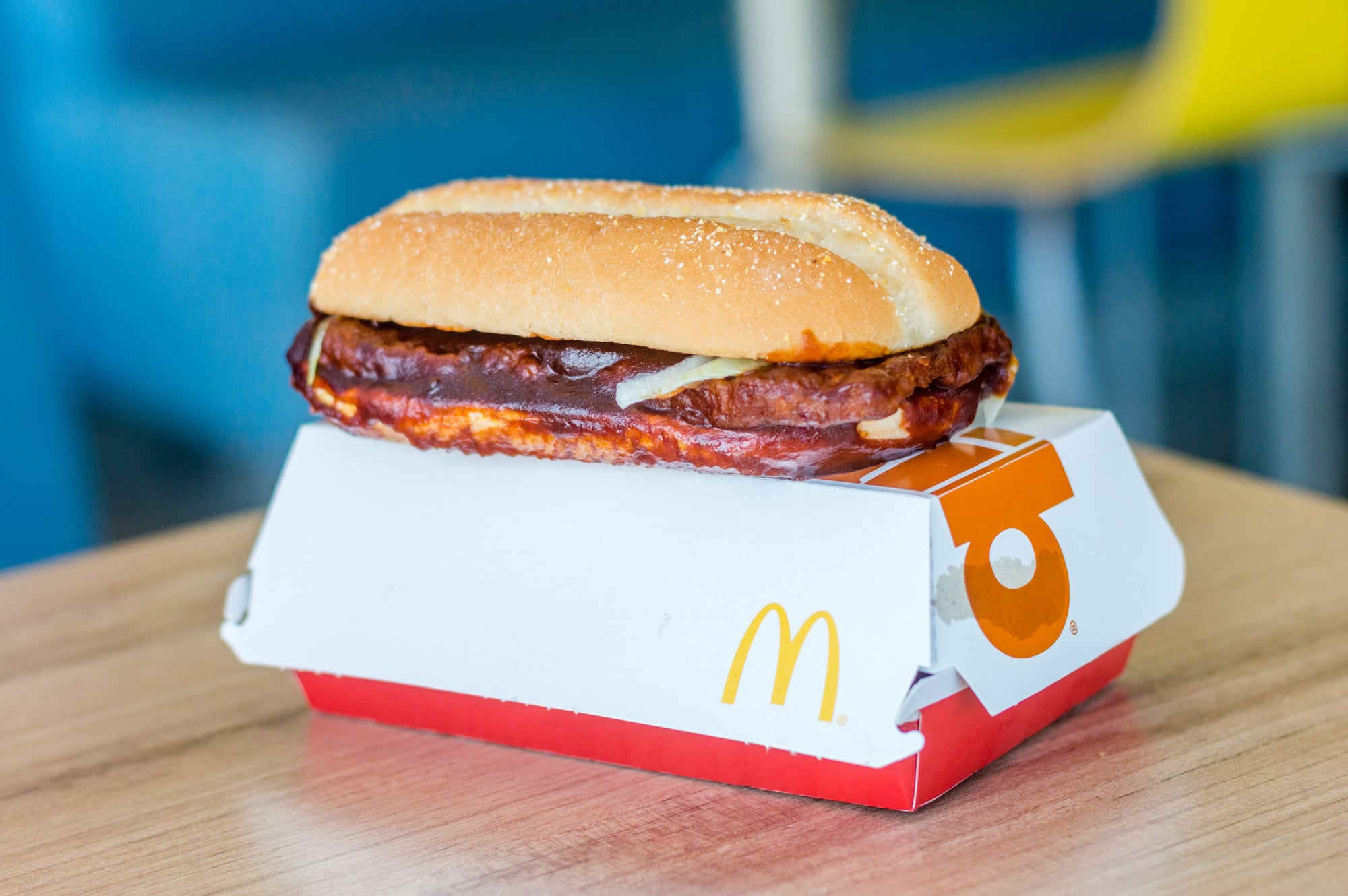
The McRib occupies a strange space in fast food mythology. It’s technically not permanently discontinued since McDonald’s brings it back for limited runs, but those appearances are so rare and unpredictable that fans treat each return like a religious experience.
The sandwich itself defies logic – processed pork shaped to look like ribs, slathered in tangy barbecue sauce, topped with onions and pickles on a hoagie roll.
Yet people plan road trips around McRib sightings and track its availability across different locations like storm chasers following tornadoes.
Taco Bell’s Mexican Pizza
Taco Bell eliminated the Mexican Pizza in 2020, citing packaging waste concerns, but the backlash was swift and unrelenting. The flat tortilla creation with seasoned beef, beans, cheese, and that distinctive red sauce had been on the menu for over three decades.
What made this loss particularly painful was how the Mexican Pizza served as a bridge food – familiar enough for people hesitant about traditional Mexican cuisine but interesting enough to feel adventurous.
Fans launched campaigns, celebrities joined the cause, and Taco Bell eventually brought it back in 2022, proving that sometimes persistence pays off.
McDonald’s Szechuan Sauce
A promotional sauce for Disney’s Mulan in 1998 shouldn’t have achieved legendary status, but McDonald’s Szechuan Sauce became the stuff of internet folklore. When the animated series Rick and Morty referenced it in 2017, demand exploded into chaos.
The sauce tasted like sweet and sour with a mild kick (most people who tried it found it unremarkable), but that wasn’t really the point.
The sauce represented something deeper: the way childhood memories get wrapped up in flavors, how scarcity creates desire, how nostalgia can turn a forgotten condiment into a cultural phenomenon.
McDonald’s brief 2017 re-release caused actual riots at some locations.
Wendy’s Spicy Chicken Nuggets
Wendy’s had spicy chicken nuggets. Then they didn’t.
The timeline feels deliberately cruel – introduced in 2010, discontinued in 2017, brought back in 2019 after Twitter campaigns reached fever pitch.
During those two years of absence, people treated regular chicken nuggets like sad substitutes.
The spicy version had that perfect burn that built gradually, not the artificial heat that hits immediately and fades.
When Wendy’s finally announced their return, the tweet became one of the most retweeted of all time (until it was surpassed by some teenager asking for free nuggets, which tells you everything about our priorities as a society).
Pizza Hut’s Stuffed Crust Pizza
Wait, stuffed crust pizza still exists, but not the way it used to matter, and here’s why that distinction cuts deeper than it should: Pizza Hut’s stuffed crust was an event when it launched in 1995, advertised by people eating pizza backwards and making it seem like the most natural thing in the world.
The original version had real weight to it – thick, genuine mozzarella that stretched when you pulled it apart, crust that felt substantial rather than just a delivery mechanism for cheese.
Modern stuffed crust exists, but it tastes like an echo of something that once felt revolutionary.
Sometimes innovation gets refined into mediocrity, and what remains is technically the same product with none of the original magic.
KFC’s Original Recipe Chicken Littles
KFC’s Chicken Littles were perfect in their simplicity – small chicken sandwiches with just mayo on a sesame seed bun.
The chicken was tender, the breading had that distinctive KFC spice blend, and the size was exactly right for when you wanted something substantial but not overwhelming.
But like many good things, they got complicated.
KFC kept bringing back versions called Chicken Littles that added pickles, different sauces, changed the bun.
Each iteration moved further from what made the original work.
The current menu has various chicken sandwiches, but none capture that specific combination of restraint and satisfaction that made people order three at a time.
Burger King’s Chicken Fries
Burger King’s Chicken Fries disappeared and returned so many times that tracking their availability became an exercise in frustration, yet each absence felt like a small tragedy because these weren’t just chicken tenders shaped like fries – they were engineered specifically for dipping, with the perfect surface area to sauce ratio.
The strips were long enough to reach the bottom of any sauce container but narrow enough to fit entirely in your mouth.
The breading stayed crispy longer than regular chicken nuggets.
When Burger King discontinued them (repeatedly), fans had to choose between regular fries that couldn’t be dipped in buffalo sauce or chicken nuggets that didn’t have the same satisfying shape.
Geometry matters more than people realize when it comes to fast food.
McDonald’s Arch Deluxe
McDonald’s spent $200 million advertising the Arch Deluxe as the burger for grown-ups, which should have been the first warning sign.
The burger itself was actually good – quarter-pound beef, lettuce, tomato, cheese, onions, and a tangy mustard sauce on a potato roll – but it carried the burden of trying to be sophisticated in a place where people went for the opposite of sophistication.
The commercials showed kids making disgusted faces while adults savored the complex flavors.
The messaging was all wrong.
McDonald’s customers didn’t want to feel grown-up; they wanted to feel like kids who could order whatever they wanted.
The Arch Deluxe lasted four years before disappearing, leaving behind only the memory of a burger that was too good for its own marketing.
Taco Bell’s Volcano Menu
Taco Bell’s Volcano Tacos and Burritos came with Lava Sauce, which was less a condiment and more a declaration of war against your taste buds, and people lined up for the assault because sometimes what you want from fast food is not comfort but challenge.
The sauce was genuinely hot – not the fake heat that most fast food chains pass off as spicy, but the kind that made you question your choices while reaching for more.
The Volcano menu lasted from 2008 to 2013, long enough for people to build tolerance and genuine affection for the pain.
When it disappeared, hot sauce packets felt like band-aids on a wound that needed surgery.
McDonald’s Holiday Pie
McDonald’s Holiday Pie was the apple pie’s more interesting cousin – vanilla custard filling instead of fruit, rainbow sprinkles on top instead of sugar, and a limited-time status that made each bite feel precious.
Available only during winter months, it represented everything good about seasonal menu items: anticipation, scarcity, and flavors that couldn’t be replicated at home.
The custard was smooth and rich without being cloying.
The sprinkles added textural interest rather than just decoration.
Most importantly, it felt festive without trying too hard, unlike so many holiday-themed foods that taste like artificial cheer.
McDonald’s still brings back holiday pies occasionally, but the formula keeps changing, and each new version feels like a tribute band covering a song you used to love.
Wendy’s SuperBar
Wendy’s SuperBar wasn’t just a salad bar – it was a full buffet with pasta, Mexican food, soup, and enough variety to satisfy groups with completely different preferences.
Running from 1988 to 1998, it represented a time when fast food chains were willing to experiment with concepts that couldn’t possibly work today.
The logistics alone seem impossible now: maintaining food safety across multiple hot and cold items, dealing with customers who treated the sneeze guard as a suggestion, keeping everything stocked during rush periods.
But for people who experienced it, the SuperBar represented abundance and choice in a way that current fast food options don’t match.
Sometimes progress means losing the ability to get tacos and soup and pasta all from the same restaurant for under ten dollars.
McDonald’s Fried Apple Pie
McDonald’s switched from fried to baked apple pies in 1992, which sounds like a minor change until you realize that frying versus baking creates completely different foods that happen to share a name.
The fried version had a crispy, slightly greasy exterior that shattered when you bit into it, releasing molten apple filling that could burn your tongue if you weren’t careful.
The baked version is safer, healthier, and utterly forgettable.
It tastes like something you’d make at home if you were trying to recreate McDonald’s and didn’t quite understand what made the original special.
Some international McDonald’s locations still serve fried pies, which only makes their absence in the US feel more deliberate and cruel.
Taco Bell’s Bell Beefer
The Bell Beefer was Taco Bell’s answer to a question nobody asked: what if a taco was shaped like a hamburger?
Seasoned ground beef, lettuce, cheese, and red sauce on a sesame seed bun – basically a sloppy joe that understood its Mexican-American heritage.
Available from 1975 to 1993, it bridged the gap between traditional American fast food and the Mexican-inspired menu that made Taco Bell famous.
The Bell Beefer worked because it didn’t try to be authentic Mexican food or a proper hamburger; it carved out its own strange middle ground and committed to it completely.
Current Taco Bell menu items are more adventurous but less willing to occupy that kind of liminal space.
McDonald’s McDLT
The McDLT came in a styrofoam container divided into hot and cool sides – the beef patty stayed warm while the lettuce and tomato stayed cool until you assembled the burger yourself.
The packaging was an environmental nightmare, but the concept was genuinely clever: recognizing that different components of a burger have different optimal temperatures.
Jason Alexander (before Seinfeld) starred in commercials singing about keeping the hot side hot and the cool side cool, which should have been embarrassing but somehow worked.
The McDLT disappeared in the early 1990s when McDonald’s phased out styrofoam, and no replacement packaging ever solved the temperature problem as elegantly.
Sometimes the solution to a problem creates a bigger problem, and what you’re left with is nostalgia for a burger that was technically superior to everything that came after.
When the Craving Outlasts the Company
These discontinued items live on in a way their creators never intended. They’ve become shared cultural touchstones, the fast food equivalent of lost songs that people remember better than current hits.
The internet has given these food memories a second life – forums dedicated to recreating recipes, petitions demanding their return, and endless debates about whether the original was really that good or if nostalgia is doing most of the work.
But maybe the truth doesn’t matter as much as the longing itself.
These discontinued items represent moments when fast food chains took risks, when menus felt less focus-grouped and more willing to surprise.
In a landscape increasingly dominated by safety and market research, the foods people miss most are the ones that dared to be strange, seasonal, or just different enough to matter.
More from Go2Tutors!

- The Romanov Crown Jewels and Their Tragic Fate
- 13 Historical Mysteries That Science Still Can’t Solve
- Famous Hoaxes That Fooled the World for Years
- 15 Child Stars with Tragic Adult Lives
- 16 Famous Jewelry Pieces in History
Like Go2Tutors’s content? Follow us on MSN.