Extraterrestrial Meteorites That Changed Science
When rocks fall from the sky, they bring more than just cosmic debris. These visitors from space have rewritten our understanding of the solar system, sparked debates about alien life, and even changed the course of scientific thinking.
Some meteorites landed with barely a whisper, while others announced their arrival with explosive force. What makes them truly special isn’t just where they came from, but what they taught us about our place in the universe.
Scientists have been studying these space rocks for centuries, but the real breakthroughs came when we started looking at them with modern tools and open minds. Here is a list of 14 meteorites that fundamentally changed what we know about space, Earth, and possibly even the origins of life itself.
Allende

The timing couldn’t have been better. When chunks of rock rained down over Chihuahua, Mexico in February 1969, NASA was just months away from bringing back the first moon samples.
Labs were prepped, scientists were ready, and then over two tons of pristine space material literally fell into their laps. The Allende meteorite became the most studied rock in history, and for good reason.
Inside this carbonaceous chondrite were calcium-aluminum inclusions that dated back 4.567 billion years, making them the oldest solid materials ever found in our solar system. These white specks locked inside the dark matrix told us what conditions were like when our sun was just forming.
The meteorite also contained presolar grains, tiny specks of stardust roughly 7 billion years old, remnants from stars that exploded long before our solar system existed.
ALH84001

Antarctica’s systematic meteorite collection program turned up an unusual rock in 1984 that would make headlines worldwide 12 years later. The Allan Hills 84001 meteorite ignited one of the fiercest scientific debates in modern history when NASA scientists suggested it might contain fossils of ancient Martian bacteria.
Researchers found tiny structures that looked like fossilized microbes, along with magnetite crystals similar to those produced by Earth bacteria. President Bill Clinton even gave a speech about the possibility.
While most scientists now believe the features formed through non-biological processes, the controversy transformed astrobiology from a fringe field into a legitimate science and sparked renewed interest in Mars exploration that continues today.
Like Go2Tutors’s content? Follow us on MSN.
Murchison
Australia’s Murchison meteorite fell in September 1969, and scientists are still discovering new things inside it today. This space rock turned out to be a cosmic chemistry set, packed with over 70 different amino acids.
That’s remarkable because Earth’s biology uses only about 20. Some of these amino acids don’t exist naturally on our planet, proving they formed in space.
Researchers also found presolar silicon carbide grains inside Murchison that formed about 7 billion years ago, making them the oldest solid materials ever discovered on Earth. The meteorite also contained sugars, including ribose, a crucial component of RNA.
It’s basically a snapshot of the organic chemistry that was floating around the early solar system, suggesting that the ingredients for life might be common throughout the universe.
Chelyabinsk

Most meteorite falls happened long before cameras existed, but Chelyabinsk was different. On February 15, 2013, dashboard cameras across Russia captured an 18-meter asteroid screaming through the sky at 42,000 miles per hour.
The resulting explosion released energy equivalent to hundreds of kilotons of TNT, roughly 30 times more powerful than the Hiroshima bomb, though thankfully at high altitude. The shockwave shattered windows across six cities and injured about 1,500 people.
Scientists recovered fragments weighing over 1,400 pounds, including a 1,200-pound chunk pulled from a frozen lake. What made Chelyabinsk scientifically invaluable was the unprecedented documentation.
Researchers used hundreds of videos to calculate the exact trajectory, speed, and breakup sequence. This data revolutionized our understanding of how asteroids behave in Earth’s atmosphere and kicked planetary defense efforts into high gear.
Hoba
In 1920, a farmer in Namibia hit something with his plow that made a very strange sound. When he dug down, he uncovered a 60-ton slab of iron and nickel, the largest meteorite ever found on Earth.
The Hoba meteorite measures about nine feet across and sits almost exactly where it landed roughly 80,000 years ago. Here’s the weird part though – there’s no crater.
An object this massive should have punched a huge crater in the ground. Scientists think it entered the atmosphere at such a shallow angle that air resistance slowed its descent significantly, though the exact mechanism remains debated.
The meteorite likely created only a small crater that eroded away over tens of thousands of years. Hoba has become a national monument in Namibia, though chunks were stolen over the years by souvenir hunters and vandals before it was properly protected.
Like Go2Tutors’s content? Follow us on MSN.
Canyon Diablo

About 50,000 years ago, a meteor roughly the size of a small building slammed into the Arizona desert with the force of several nuclear bombs. The impact carved out a crater nearly a mile wide and 600 feet deep, now known as Barringer Crater or Meteor Crater.
For decades, scientists argued about whether the crater formed from volcanic activity or meteorite impact. Mining engineer Daniel Barringer was among the first to propose the impact theory and spent his fortune trying to find what he thought would be a massive iron deposit underground.
He didn’t realize the meteor had mostly vaporized on impact, but his hypothesis about the crater’s impact origin was eventually proven correct. The fragments scattered around the crater, called Canyon Diablo meteorites, helped establish that cosmic impacts could reshape Earth’s surface.
This discovery fundamentally changed geology and planetary science, and the crater remains one of the best-preserved impact sites on Earth.
Nakhla

On June 28, 1911, stones fell from the sky near Alexandria, Egypt, terrifying witnesses who saw the fireballs and heard explosions. Local legend claims one fragment struck and killed a dog, though this colorful story remains unverified and is likely apocryphal.
What made the Nakhla meteorite groundbreaking was what scientists found inside it decades later. The rock contained carbonates and water-bearing minerals that could only have formed in the presence of liquid water.
This was the first solid evidence that Mars once had water on or near its surface. The meteorite crystallized from molten rock on Mars about 1.3 billion years ago, got blasted into space by an asteroid impact roughly 10 million years ago, and finally crashed to Earth.
This discovery opened the door to understanding Mars as a once-wetter, potentially habitable world.
Tagish Lake
When Jim Brook was driving across frozen Tagish Lake in Canada on January 25, 2000, he spotted dark rocks scattered on the ice and had the presence of mind to collect them using plastic bags to avoid contamination. That simple act preserved one of the most scientifically valuable meteorites ever recovered.
The fragments were kept frozen, meaning volatile compounds and gases that usually escape couldn’t boil off. Tagish Lake turned out to be a C2 ungrouped carbonaceous chondrite, extraordinarily primitive and containing unchanged stellar dust that predates our solar system.
Scientists discovered that its chemical composition closely matches what they believe the early solar system looked like. The meteorite also provided clues about Earth’s early oceans, as leaching studies showed which minerals would dissolve first when similar space rocks fell into primordial seas billions of years ago.
Like Go2Tutors’s content? Follow us on MSN.
EETA 79001

Antarctica turned out to be an incredible place to find meteorites because dark rocks stand out against white ice. The EETA 79001 meteorite, discovered in 1979, looked interesting but not extraordinary until scientists cracked it open.
Trapped inside tiny glass pockets were bubbles of gas. When researchers analyzed this gas, they found it matched exactly the composition of Mars’ atmosphere as measured by Viking landers in 1976.
This was conclusive evidence that certain meteorites really did come from Mars. While scientists had suspected some meteorites might be Martian, this gas match removed all doubt.
The discovery meant researchers could study actual pieces of Mars in laboratories on Earth without needing expensive space missions. It opened up an entirely new field of Martian geology done right here on our planet.
DNA and RNA Bases Discovery
For decades, scientists wondered whether the building blocks of life existed in space. The answer arrived through painstaking analysis of multiple meteorites, particularly Murchison and other carbonaceous chondrites.
Researchers gradually identified some nucleobases in space rocks over the years, but the more fragile molecules remained elusive. Then, using gentler extraction techniques with cold water instead of harsh acids, scientists confirmed the complete set of all five nucleobases used in DNA and RNA in meteorites by 2022.
Cytosine, thymine, uracil, adenine, and guanine had all traveled through space and survived. This discovery, building on decades of earlier hints, suggests that the chemical ingredients for genetic material might be delivered to planets throughout the universe.
It doesn’t prove life exists elsewhere, but it shows that the basic molecular toolkit isn’t unique to Earth.
Antarctic Meteorite Revolution

Before the 1970s, finding meteorites was mostly luck. Then scientists realized that Antarctica acts like a natural meteorite collection system.
Dark rocks sitting on ancient ice sheets are easy to spot, and the flowing glaciers actually concentrate meteorites in certain areas. The Antarctic Search for Meteorites program, launched in 1976, has since recovered over 50,000 specimens.
This systematic collection revolutionized meteorite science by providing researchers with far more samples to study. Among the Antarctic finds were numerous Martian and lunar meteorites that would never have been identified if found randomly elsewhere.
The program turned meteorite hunting from scattered amateur efforts into an organized scientific endeavor that continues delivering discoveries to this day.
Like Go2Tutors’s content? Follow us on MSN.
Ensisheim
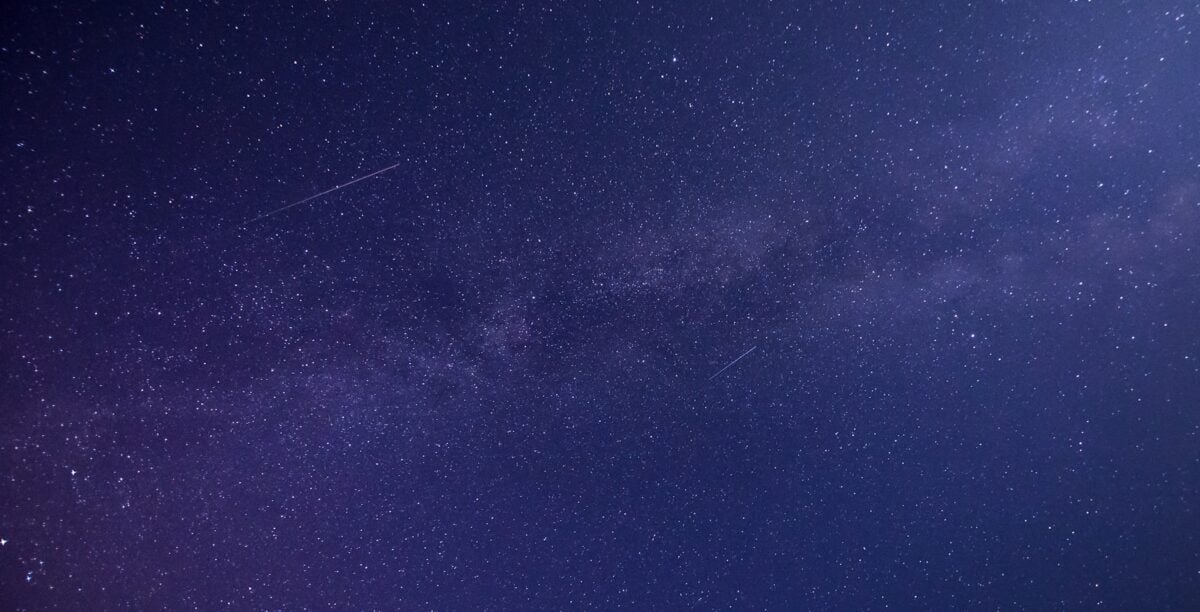
On November 16, 1492, a young boy in Alsace, France watched a large stone plummet from the sky and crash into a wheat field. This became one of the earliest preserved meteorite falls in Western records with surviving fragments.
Local authorities chained the rock to a church to prevent theft, and residents considered it a sign from God. For hundreds of years, Ensisheim sat largely forgotten, a curiosity in a church.
What made it historically significant was that it provided physical evidence that rocks really could fall from the sky, though scientists wouldn’t fully accept this idea for several more centuries. The Ensisheim meteorite became a reference point for understanding that cosmic material occasionally makes its way to Earth’s surface.
L’Aigle

Scientific skepticism about falling rocks finally crumbled on April 26, 1803, when thousands of stones rained down on the town of L’Aigle in Normandy, France. The meteor shower was witnessed by numerous reliable observers, including French officials.
The French Academy of Sciences sent physicist Jean-Baptiste Biot to investigate, and his detailed report convinced the scientific community that meteorites were real. Before L’Aigle, widespread scientific skepticism dismissed reports of falling stones as peasant superstition or misidentification.
The L’Aigle fall changed everything, establishing meteorites as legitimate objects of scientific study and opening up an entirely new field of research that connected Earth to the broader cosmos.
Presolar Stardust Grains
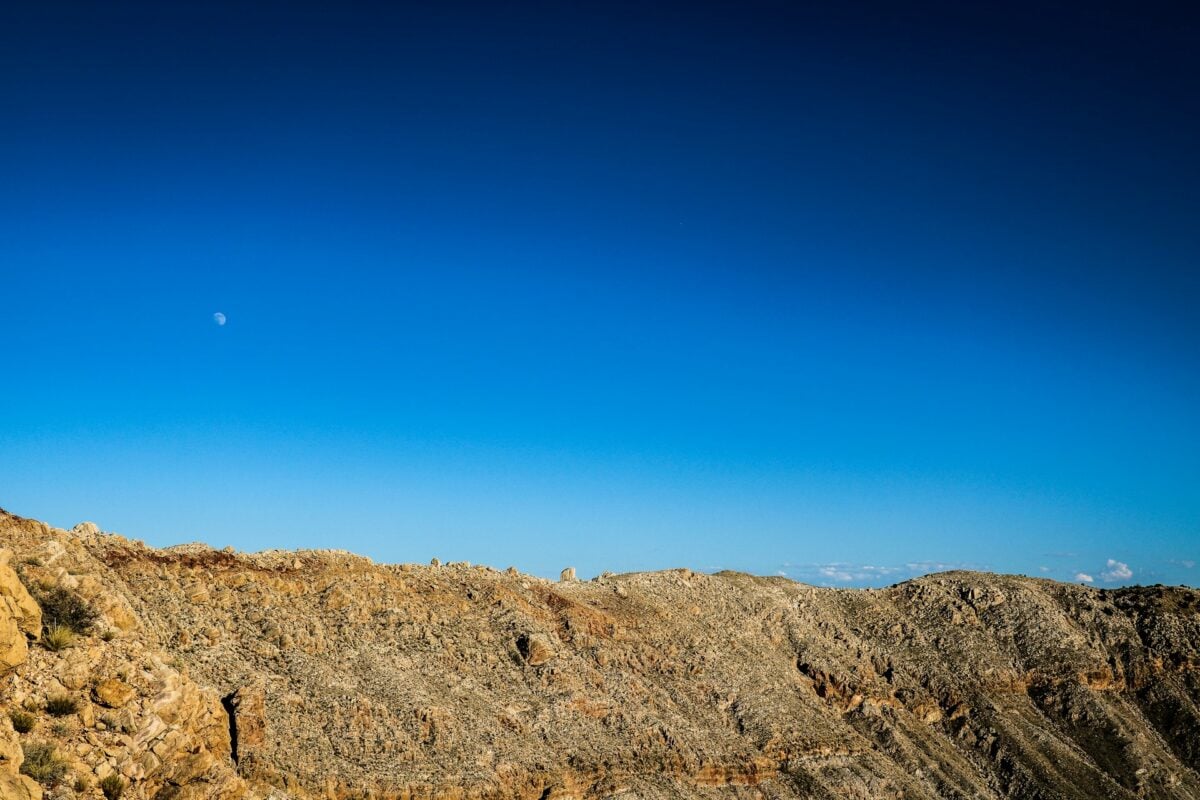
Hidden inside some meteorites are microscopic grains that formed in the atmospheres of dying stars billions of years before our sun existed. These presolar grains, first identified in the 1980s, have isotopic signatures completely different from anything that formed in our solar system.
They’re essentially fossils from stars that lived and died before the sun was born. Some grains found in Murchison and other meteorites are roughly 7 billion years old, making them the oldest solid materials scientists have ever analyzed.
These tiny specks survived the violent birth of our solar system and got incorporated into asteroids, then meteorites. By studying their composition, researchers can learn about the nuclear processes inside ancient stars and the chemical evolution of our galaxy.
Like Go2Tutors’s content? Follow us on MSN.
Where Ancient Skies Met Modern Understanding

These cosmic visitors didn’t just fall from space – they forced us to completely rethink our relationship with the universe beyond Earth. From proving that impacts could reshape planets to showing that life’s chemical building blocks drift through space, meteorites have been patient teachers.
Each one carries messages written in atoms and minerals, stories that began billions of years ago in places we’ll never visit. The next meteorite to fall might answer questions we haven’t even thought to ask yet, or raise entirely new mysteries that keep scientists busy for generations.
More from Go2Tutors!

- 16 Historical Figures Who Were Nothing Like You Think
- 12 Things Sold in the 80s That Are Now Illegal
- 15 VHS Tapes That Could Be Worth Thousands
- 17 Historical “What Ifs” That Would Have Changed Everything
- 18 TV Shows That Vanished Without a Finale
Like Go2Tutors’s content? Follow us on MSN.