Extreme Sports That Defy Gravity
Human beings weren’t designed to fly. No wings, no hollow bones, no natural defense against falling from height.
Yet some people dedicate their lives to spending as much time as possible in the air. They jump off cliffs, swing between buildings, and launch themselves into space with nothing but fabric and physics keeping them alive.
These sports push beyond traditional definitions of athletic competition. They test your relationship with fear itself.
One mistake doesn’t mean losing a game—it means dying. The people who pursue these activities accept that reality and go anyway.
BASE Jumping Offers Four Ways to Launch

The acronym stands for Building, Antenna, Span, and Earth—the four fixed objects you can jump from. Unlike skydiving from planes, BASE jumpers leap from stationary platforms and deploy their parachutes within seconds.
The low altitude leaves no room for equipment malfunction or hesitation. Norway’s Kjerag mountain attracts BASE jumpers from around the world.
The 3,000-foot vertical drop provides enough height for relative safety, by BASE jumping standards. Jumpers hike to the edge, check wind conditions, and step into nothing.
The freefall lasts about fifteen seconds before they deploy. Illegal jumps happen constantly in cities.
Jumpers climb skyscrapers, broadcast towers, and bridges in the middle of the night. They leap, land in predetermined spots, and disappear before security arrives.
Legal consequences include arrest and equipment confiscation. Death rates exceed those of any other sport.
No governing body regulates BASE jumping. No official training programs exist.
You learn from experienced jumpers who agree to mentor you, or you teach yourself and hope for the best. The community stays small because the mortality rate stays high.
Wingsuit Flying Adds Horizontal Distance
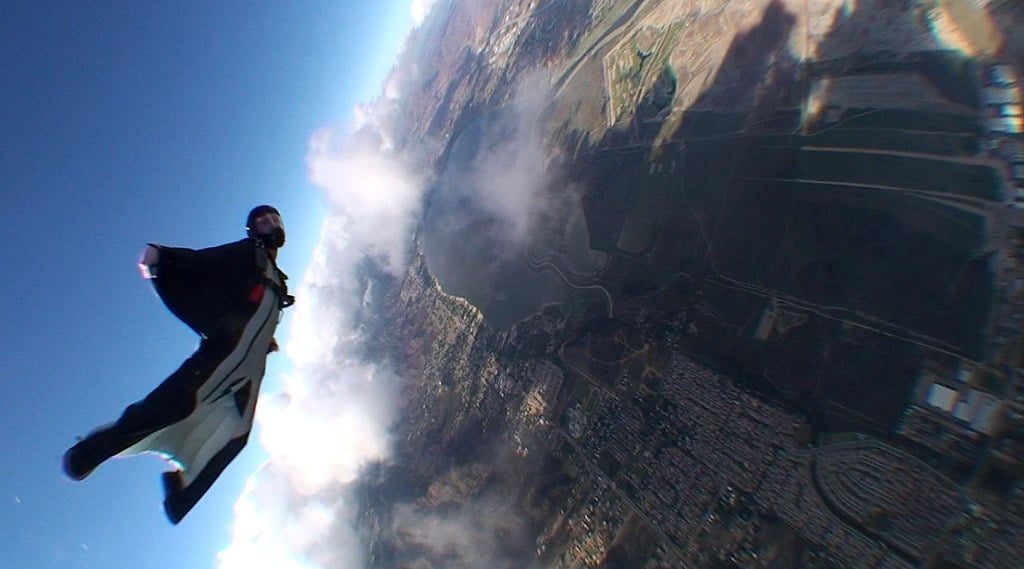
A wingsuit creates surface area between your arms and legs, allowing you to glide rather than simply fall. Experienced flyers achieve glide ratios of 3:1, meaning they travel three feet forward for every foot they descend.
This transforms vertical drops into extended flights covering miles of terrain. The sport requires hundreds of skydives before attempting your first wingsuit flight.
You need to master parachute deployment under various conditions before adding the complexity of flying a suit. Most training programs require at least 200 jumps, though many instructors recommend more.
Proximity flying takes wingsuit flight to its extreme limit. Pilots fly within feet of cliff faces, through gaps in rock formations, and between trees.
The speed exceeds 120 miles per hour. At that velocity, hitting anything means instant death.
Videos of proximity flights rack up millions of views online, but they rarely show the crashes. Dozens of experienced wingsuit pilots die each year.
The sport hasn’t existed long enough to develop comprehensive safety standards. Each flyer makes individual choices about acceptable risk.
Some stick to high-altitude flights with plenty of clearance. Others push closer and closer to terrain until eventually they misjudge.
Free Soloing Climbs Without Protection
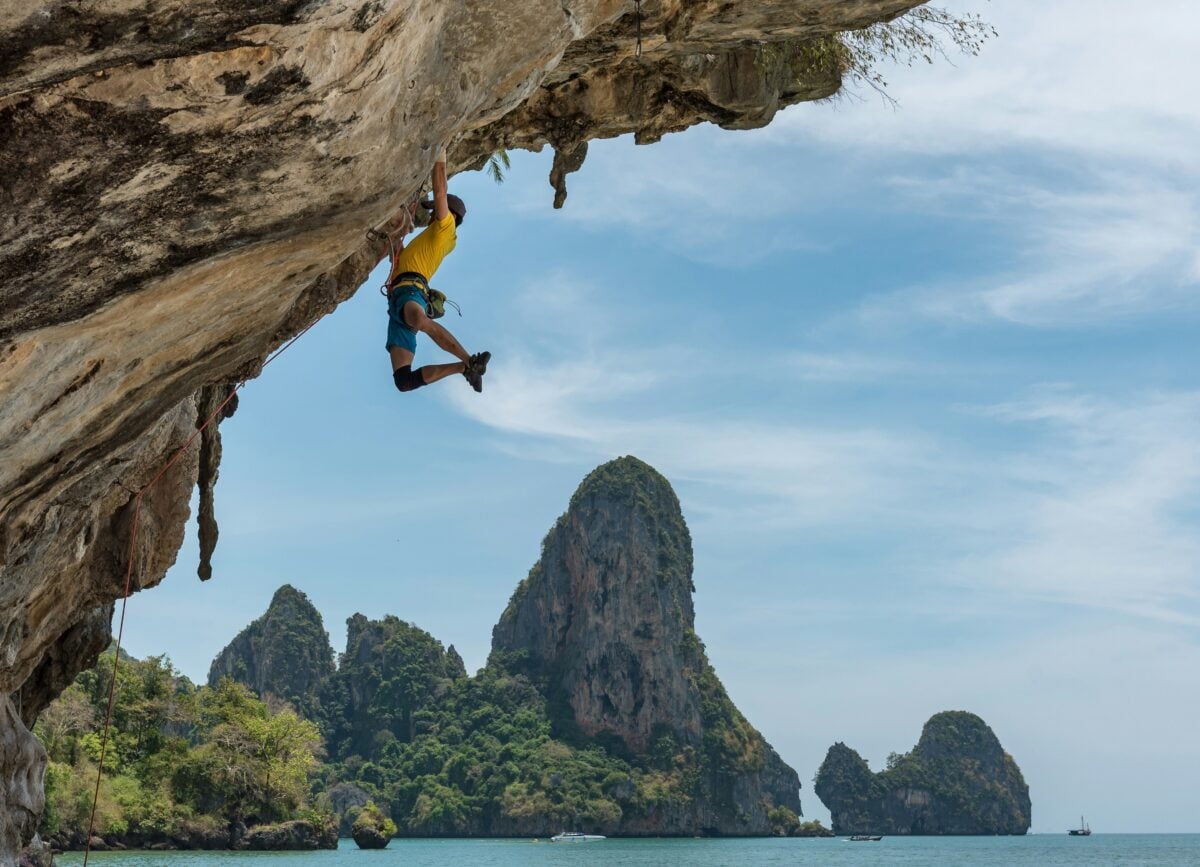
Rock climbing normally involves ropes, harnesses, and safety equipment. Free soloing strips all that away.
You climb using only your hands and feet. Falling means dying.
No second chances, no safety nets, just you and several hundred feet of empty air. Alex Honnold’s 2017 free solo of El Capitan in Yosemite brought mainstream attention to the sport.
He climbed 3,000 feet of vertical granite without ropes, completing a route that takes most climbers several days with full safety gear. The ascent took less than four hours.
Documentary footage of the climb is difficult to watch despite knowing he survived. The mental preparation for free soloing matters more than physical ability.
Climbers spend months rehearsing routes with ropes, memorizing every hold and movement. They visualize the climb repeatedly until it becomes automatic.
On the actual attempt, doubt can’t exist. Your mind needs absolute certainty in your ability to complete every move.
Most elite climbers won’t free solo. They recognize their own limits and refuse to cross certain lines.
The ones who do free solo regularly tend to die young. The list of accomplished free soloists who lived past fifty is very short.
Highlining Walks Rope at Altitude
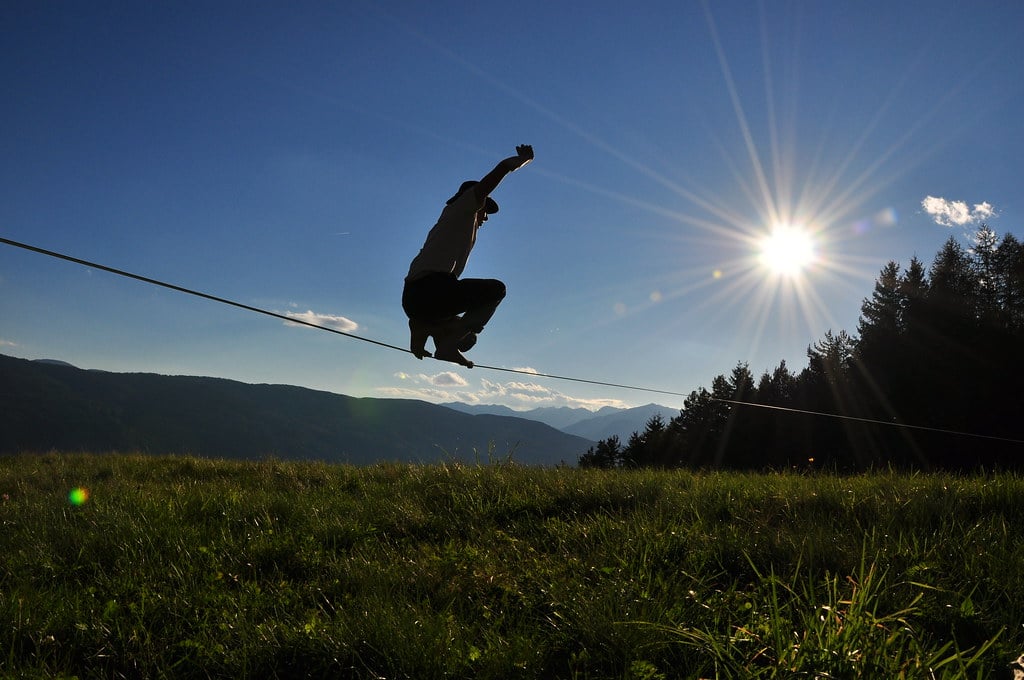
Slacklining involves balancing on flat webbing stretched between two anchor points. Highlining takes that concept several hundred feet into the air.
You walk across canyons, between rock formations, or over waterfalls with nothing but a leash connecting you to the line. The leash prevents death but not injury. Falling from a highline means swinging into whatever’s below—often a rock wall.
Climbers call this whipping. The forces involved can break bones even with proper safety equipment. The leash attachment point determines how violent the swing becomes.
Professional highliners set up lines thousands of feet above the ground. The exposure creates intense psychological pressure.
Your body knows you’re safely attached, but your brain sees the drop and panics. Learning to walk calmly across a line while everything inside screams for you to retreat takes years of practice.
The longest highline crossings extend over half a mile. Walking that distance on a one-inch piece of webbing at ground level challenges most people.
Doing it 500 feet in the air while wind buffets the line requires absolute focus. Crossings can take hours. Falling and reclimbing the line happens repeatedly.
Cliff Diving Plunges From Rocks
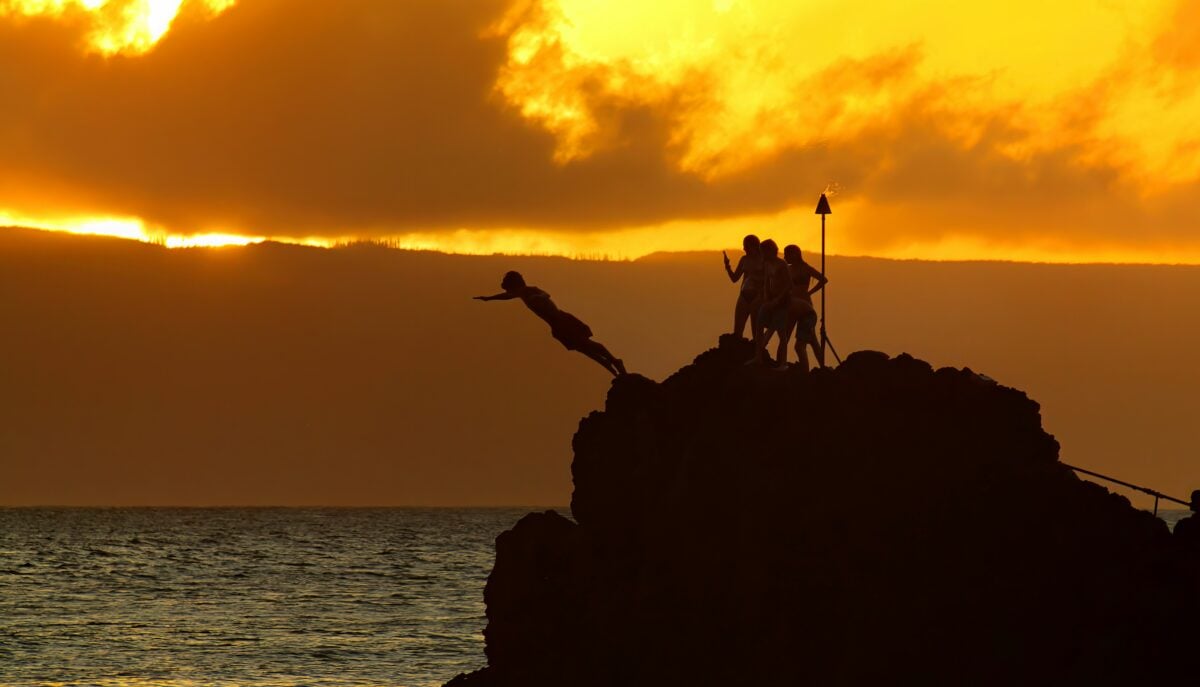
Professional cliff divers jump from heights exceeding 90 feet. Water at that distance feels like concrete.
Entry technique determines whether you walk away or need medical evacuation. Your body position in the final second before impact matters more than anything else.
The Red Bull Cliff Diving World Series showcases the sport’s elite athletes. Divers perform acrobatic maneuvers while falling at speeds approaching 60 miles per hour.
They rotate, twist, and spin before straightening out microseconds before hitting water. Judges score based on difficulty and execution, like Olympic diving but from three times the height.
Natural cliff diving locations dot coastlines worldwide. Hawaii’s South Point, Jamaica’s Rick’s Cafe, and Greece’s Santorini all attract jumpers seeking thrills.
Local divers know the safe spots and current conditions. Tourists who jump without local knowledge often injure themselves on underwater rocks or in shallow areas.
Water depth matters less than you’d expect. Professional divers can survive jumps into twelve feet of water if they enter cleanly.
But the margin for error disappears completely. One awkward landing can compress your spine, snap your neck, or knock you unconscious underwater.
Parkour Flows Through Urban Landscapes
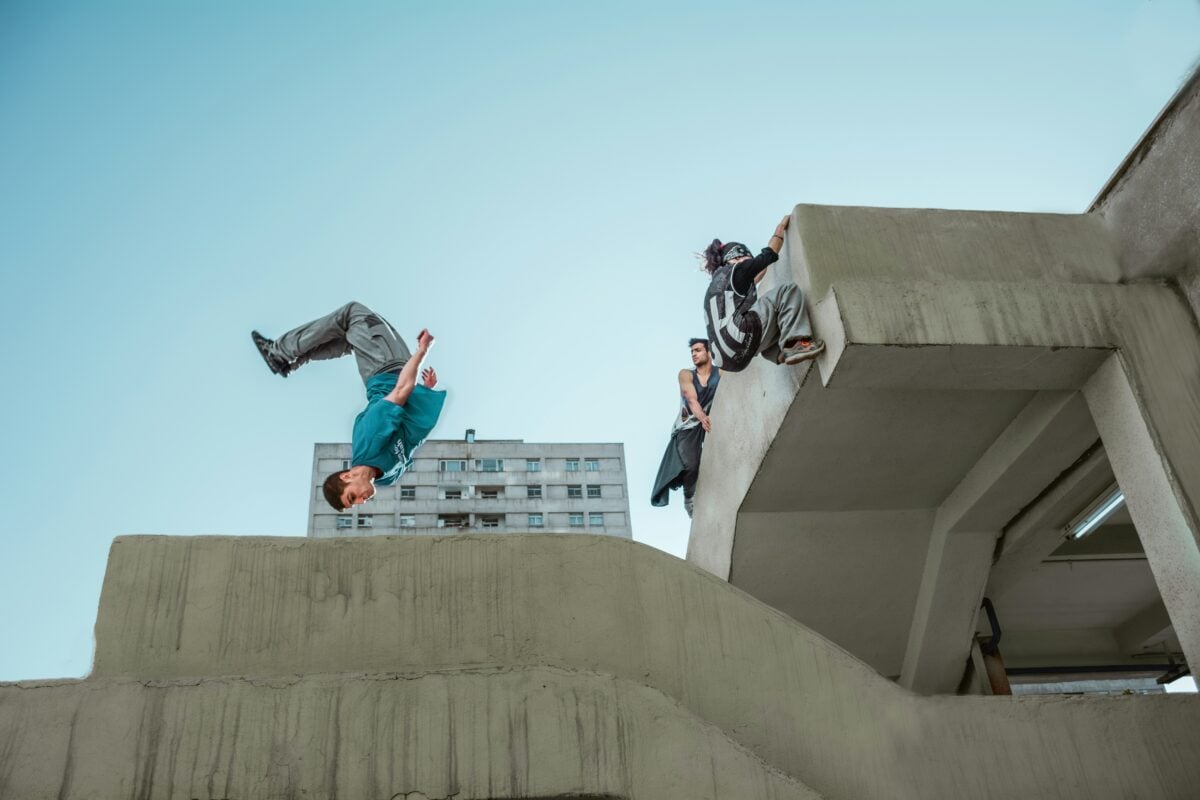
This discipline treats cities as three-dimensional playgrounds. Practitioners vault railings, jump between buildings, and scale walls without equipment.
The goal involves moving from point A to point B using the most efficient and fluid path possible, regardless of obstacles. David Belle created parkour in France during the 1990s.
His training emphasized practical movement—escaping danger, reaching destinations quickly, overcoming physical barriers. The discipline spread globally through videos showing practitioners performing seemingly impossible movements.
Serious parkour requires years of conditioning. The impact forces from jumping between concrete structures destroy unprepared joints.
Professional athletes train for hours daily, building the strength and technique needed to land safely after ten-foot drops onto hard surfaces. Rooftop parkour carries the highest risk.
Practitioners jump between buildings separated by gaps that leave no room for hesitation. You commit fully to every jump or you don’t make it.
Videos of rooftop runs show near-misses where athletes barely catch ledges or miss landings by inches. The failed attempts rarely appear online because those people don’t survive to post them.
Rope Swinging Launches Into Space
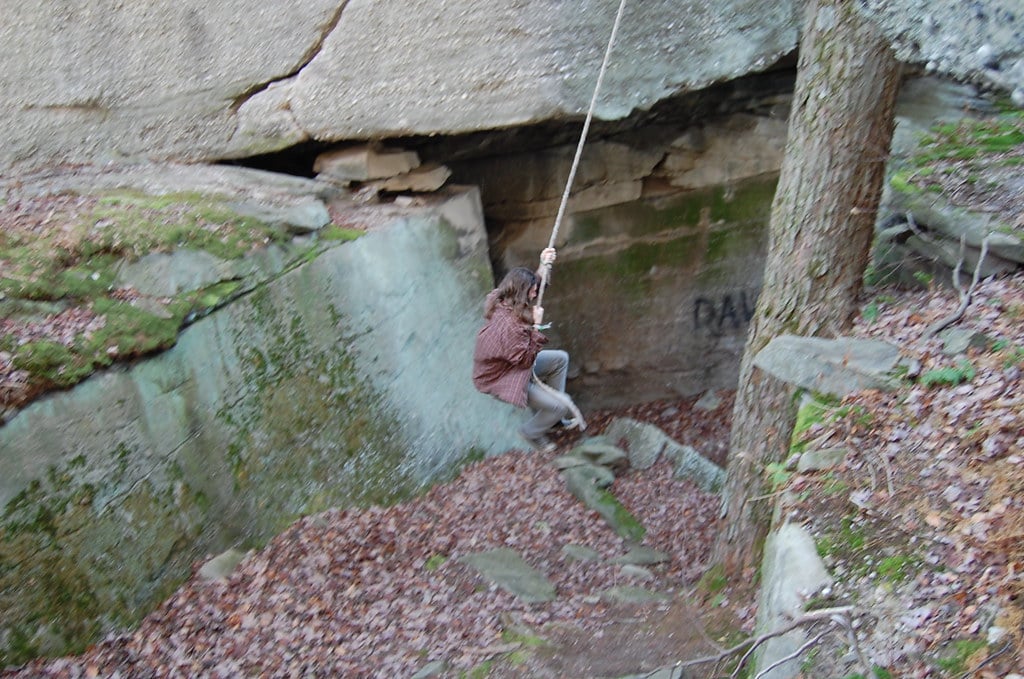
This involves climbing to a high point, attaching to a long rope, and swinging in massive arcs through the air. The rope angles determine how much horizontal distance you cover and how close you come to obstacles.
Popular locations include bridges over canyons, cliff edges, and quarries. The mechanics seem simple but the forces involved are extreme.
Your body accelerates to high speeds quickly. The rope tension at the bottom of the arc pulls with several times your body weight.
Anchor point failures cause deaths regularly. Ropes snap, carabiners break, and attachment points rip free from rock.
Corona Arch in Utah became famous for rope swinging videos showing people dropping 300 feet before the arc begins. The freefall portion lasts several seconds.
Then the rope catches and swings you out over the desert floor. The rush attracts people from around the world despite multiple deaths at the location.
Land management agencies often close rope swing sites after accidents. But new locations emerge constantly.
The basic equipment requirements stay minimal—rope, harness, carabiners. The knowledge required to set up anchors safely takes longer to acquire.
Many people skip that part and hope their setup holds.
Speed Flying Combines Skiing and Parachutes
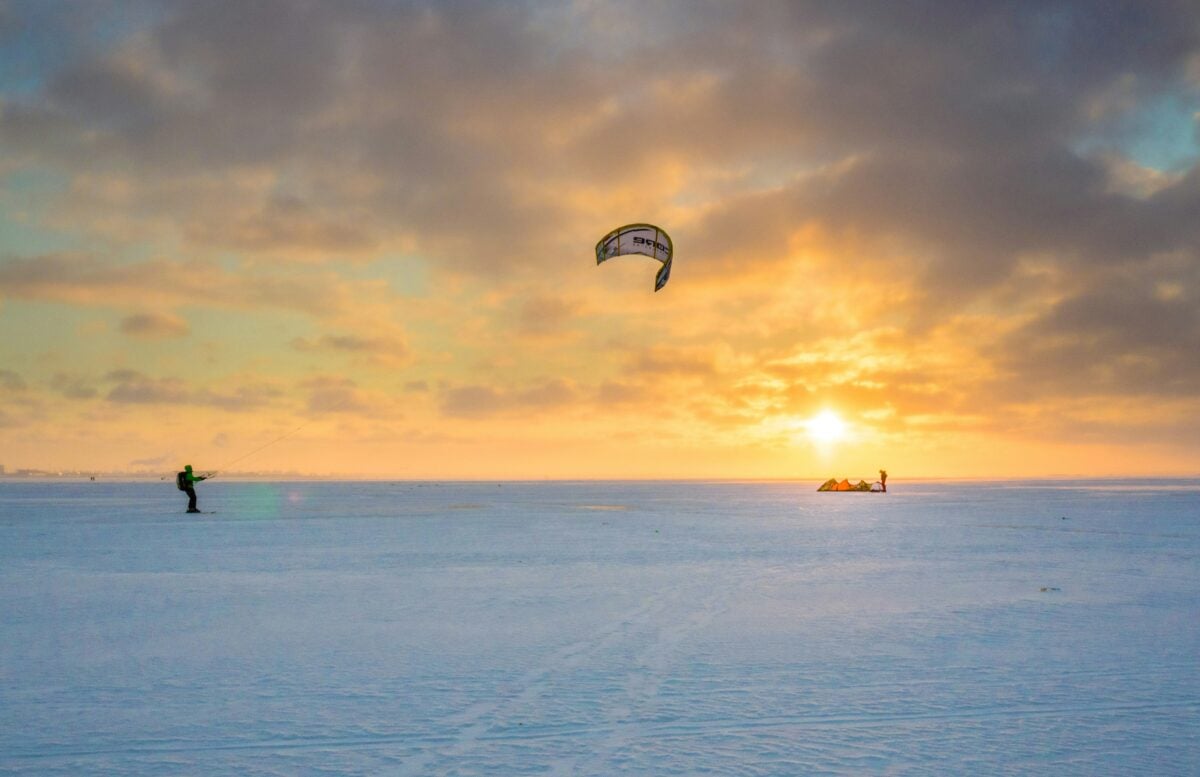
This sport uses small parachutes to glide down ski slopes at high speed. The wing generates just enough lift to keep you partially airborne.
You touch down occasionally to redirect or control speed, then lift off again. The combination of skiing skill and paragliding knowledge creates a unique challenge.
Speed flying originated in the French Alps where pilots wanted to descend mountains quickly after hiking up to launch sites. The technique evolved into a sport where pilots intentionally fly as close to terrain as possible while maintaining control.
Races follow mountain contours at speeds exceeding 60 miles per hour. The wings measure smaller than regular paragliders, trading stability for maneuverability and speed.
This makes them more responsive but also more prone to collapse in turbulent air. Collapses at low altitude result in crashes with insufficient height to recover.
The sport combines the injury risk of skiing with the death risk of aviation. European ski resorts now designate speed flying zones to separate these athletes from regular skiers.
The parachutes allow jumps over cliffs and other terrain features that skiers must avoid. Watching speed flyers launch off drops and land hundreds of feet downslope looks impossible until you understand the aerodynamics involved.
Bungee Jumping Stretches the Fall
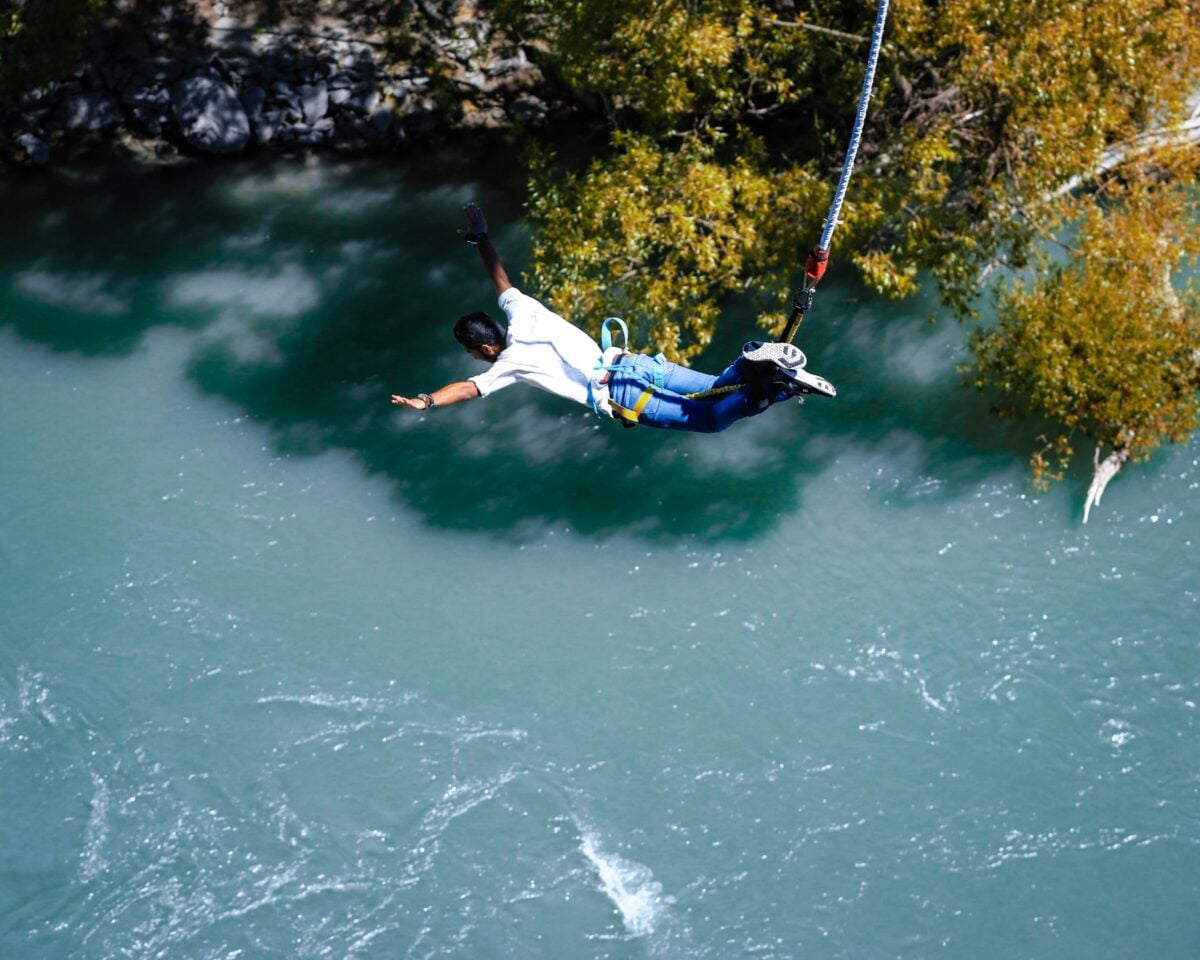
This qualifies as an extreme sport despite being relatively safe. Commercial operations have refined the equipment and procedures until catastrophic failures become rare.
But stepping off a platform attached only to an elastic cord still triggers every survival instinct you possess. The Nevis Bungi in New Zealand drops jumpers 440 feet above a canyon floor.
The freefall lasts about eight seconds before the cord engages. Then you bounce up and down repeatedly until the oscillations fade.
The rebound can bring you back within a few feet of the jumping platform. Bungee jumping injuries usually result from hitting the platform, ground, or surrounding structures rather than equipment failure.
The cord calculations must account for jumper weight, cord elasticity, and ambient temperature. Mistakes in any of these factors can cause the cord to stretch too far.
Several deaths have occurred when jumpers struck the ground or water surface. The psychological barrier of jumping exceeds the actual danger.
First-time jumpers often freeze on the edge, unable to force themselves off despite knowing the statistics favor survival. Your conscious mind says it’s safe.
Your subconscious sees death. The conflict creates paralysis that some people never overcome.
Skysurfing Boards Through Clouds
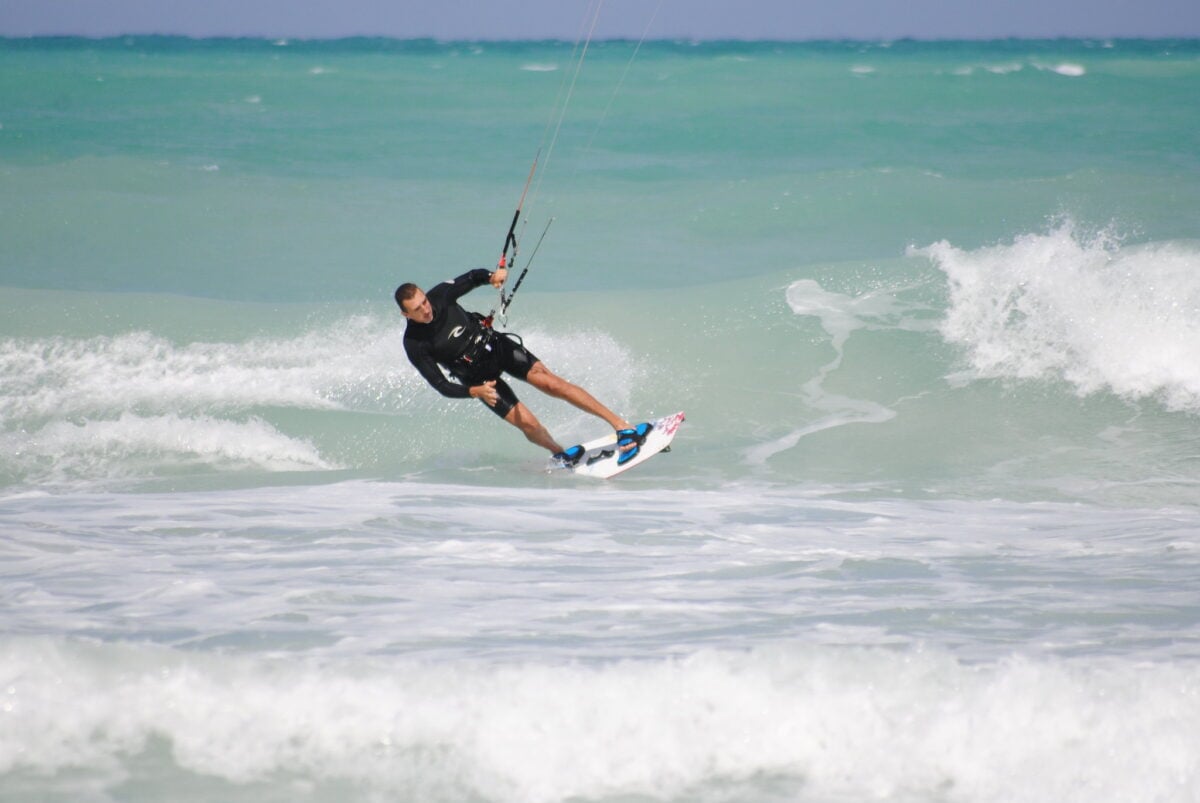
Skydivers strap small boards to their feet and perform aerial maneuvers during freefall. The board acts like a wing, allowing spins, flips, and surfing motions while falling at terminal velocity.
Videographers jump simultaneously to capture footage of the performance. The sport gained popularity during the 1990s but declined after several high-profile deaths.
The board can cause control problems during deployment. Some skydivers couldn’t release their boards when needed, leading to violent spins that prevented safe parachute opening.
Modern quick-release systems have improved safety but the sport remains high-risk. Competitions are judged based on difficulty, execution, and creativity.
Judges watch video footage since ground observers can’t see details at altitude. The best skysurfers perform combinations lasting the entire freefall, maintaining control while executing complex maneuvers at speeds exceeding 120 miles per hour.
The equipment limits participation. Specialized boards cost hundreds of dollars.
You need extensive skydiving experience before attempting to add a board. Most drop zones don’t allow skysurfing because of the increased risk to other jumpers.
The sport exists primarily at specialized events and in dedicated skydiving communities.
Volcano Boarding Slides Down Ash
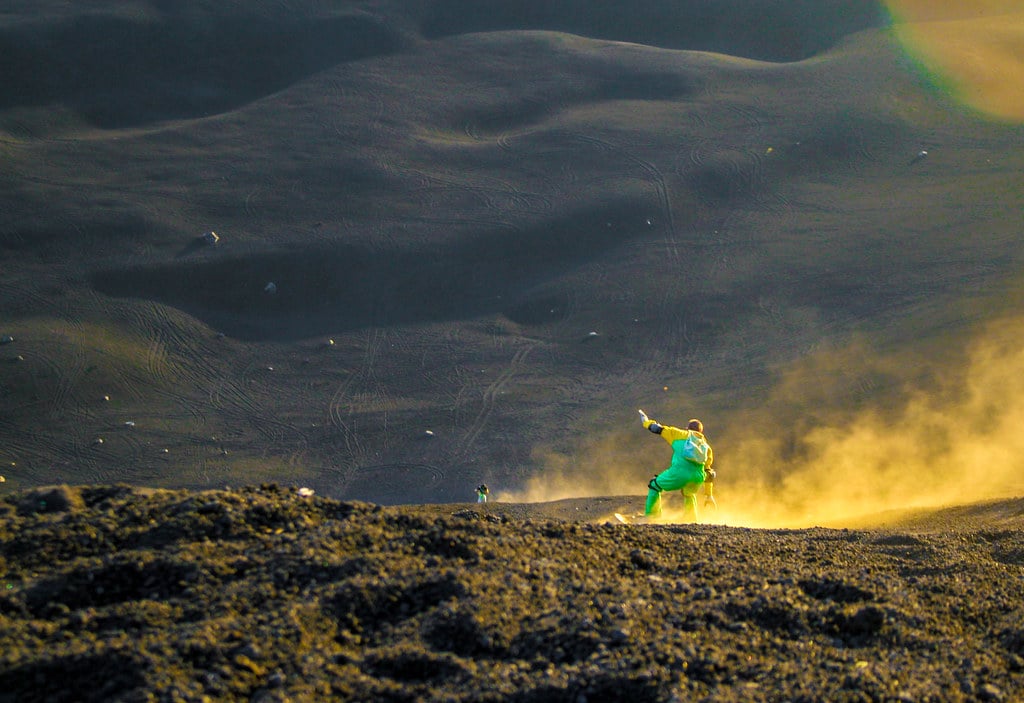
Nicaragua’s Cerro Negro volcano offers perfectly steep ash slopes for this activity. Riders wear protective suits and goggles, sit on plywood boards, and slide down black volcanic scree at speeds approaching 50 miles per hour.
The ash flies everywhere, coating everything and everyone. The climb to the top takes about an hour.
The descent lasts under five minutes. Tour companies provide equipment and transportation, making this one of the few extreme sports you can attempt without prior training.
That accessibility doesn’t reduce the danger—crashes happen constantly, resulting in cuts, burns from friction, and broken bones. The volcano actively erupts periodically.
Signs at the base warn visitors about volcanic activity. Most tourists ignore these warnings.
The lure of sliding down an active volcano overrides common sense about standing on a mountain that regularly explodes. Other volcanic locations offer similar experiences but Cerro Negro remains the most popular.
The ash consistency at this particular volcano works perfectly for boarding. Too hard and you can’t slide.
Too soft and you sink. Cerro Negro hits the exact right texture for maximum speed and minimal control.
Ice Climbing Scales Frozen Waterfalls
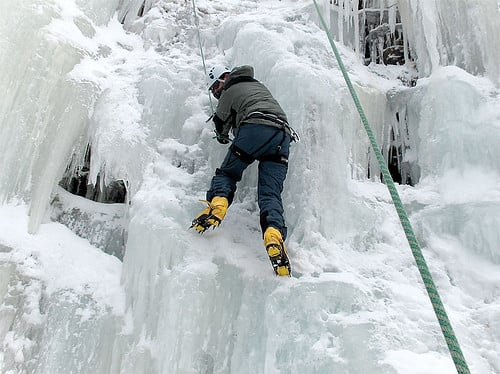
Waterfalls freeze in winter, creating vertical ice formations that climbers scale using specialized tools. Ice axes dig into frozen water while crampons spike your boots into the surface.
Every placement needs to be solid because ice is unpredictable. It cracks, breaks away, and melts without warning.
Norwegian climbers pioneered ice climbing techniques in the early 1900s. Modern equipment makes previously impossible routes accessible, but the danger remains extreme.
Ice quality changes throughout the day as temperatures fluctuate. What was solid in the morning can become rotten by afternoon.
Multi-pitch ice climbs extend hundreds of feet up frozen waterfalls. Climbers work in teams, establishing anchors and belaying each other up successive sections.
The cold saps strength and dulls mental sharpness. Wet gloves freeze solid. Ropes stiffen and become difficult to manage.
Everything becomes harder as altitude and exposure increase. Falls on ice often result in serious injury even with proper protection. Ice screws—the anchors used to secure the rope—can rip out of poor-quality ice.
The axes and crampons strapped to your body become weapons when you tumble uncontrolled down frozen slopes. Ice climbers accept these risks as the cost of experiencing frozen water formations that exist for only a few months each year.
Hang Gliding Rides Air Currents
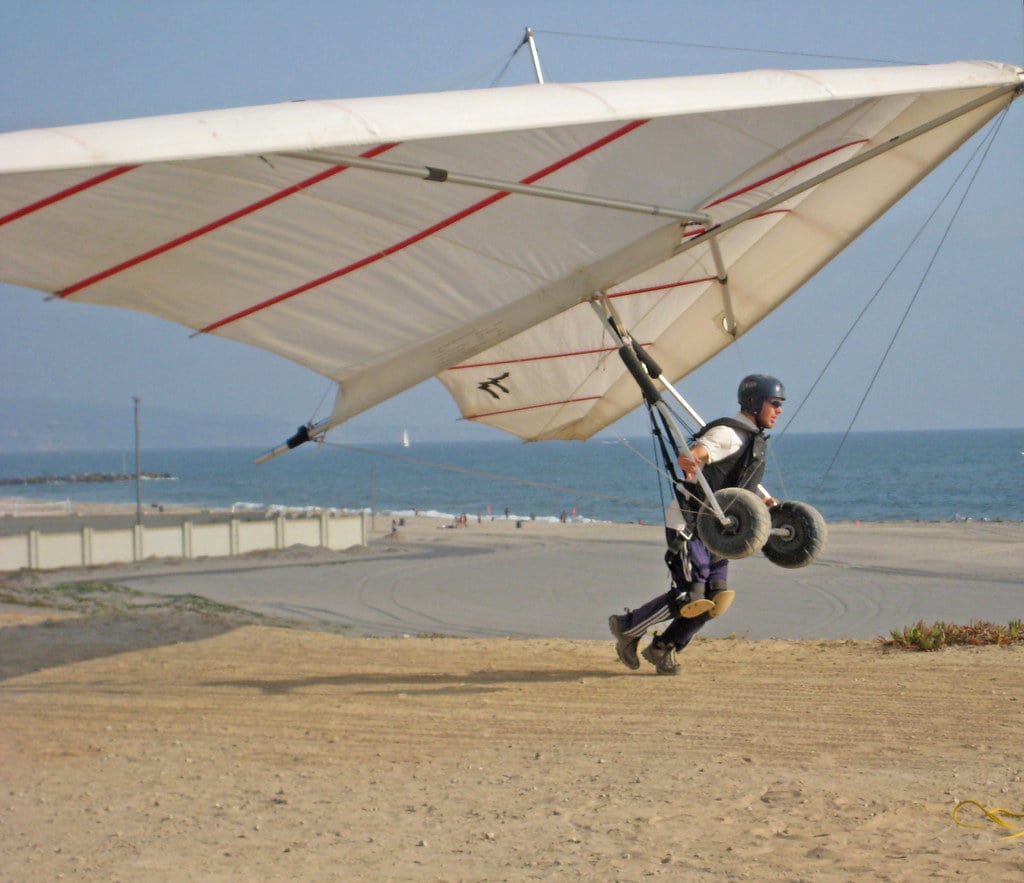
These aircraft consist of fabric stretched over aluminum frames. You hang beneath in a harness, shifting your body weight to control direction and speed.
Thermal air currents provide lift, allowing flights lasting hours and covering distances of fifty miles or more. Launch sites typically involve running down steep slopes until the glider generates enough lift to become airborne.
The transition from ground to flight happens gradually. You’re running, then you’re floating, then you’re climbing.
Landing requires precise control to touch down gently in designated areas. Modern hang gliders are remarkably safe compared to early designs.
Structural failures became rare as engineering improved. The main danger comes from pilot error and weather conditions.
Flying into storms, misjudging wind speeds, or attempting maneuvers beyond your skill level causes most accidents. Pilots need proper training and certification before flying solo.
The learning process takes weeks or months of supervised flights. You start on training hills with gentle slopes and work up to mountain launches and extended flights.
The progression feels natural until you realize you’re trusting your life to fabric and aluminum tubes.
Where Human and Sky Collide
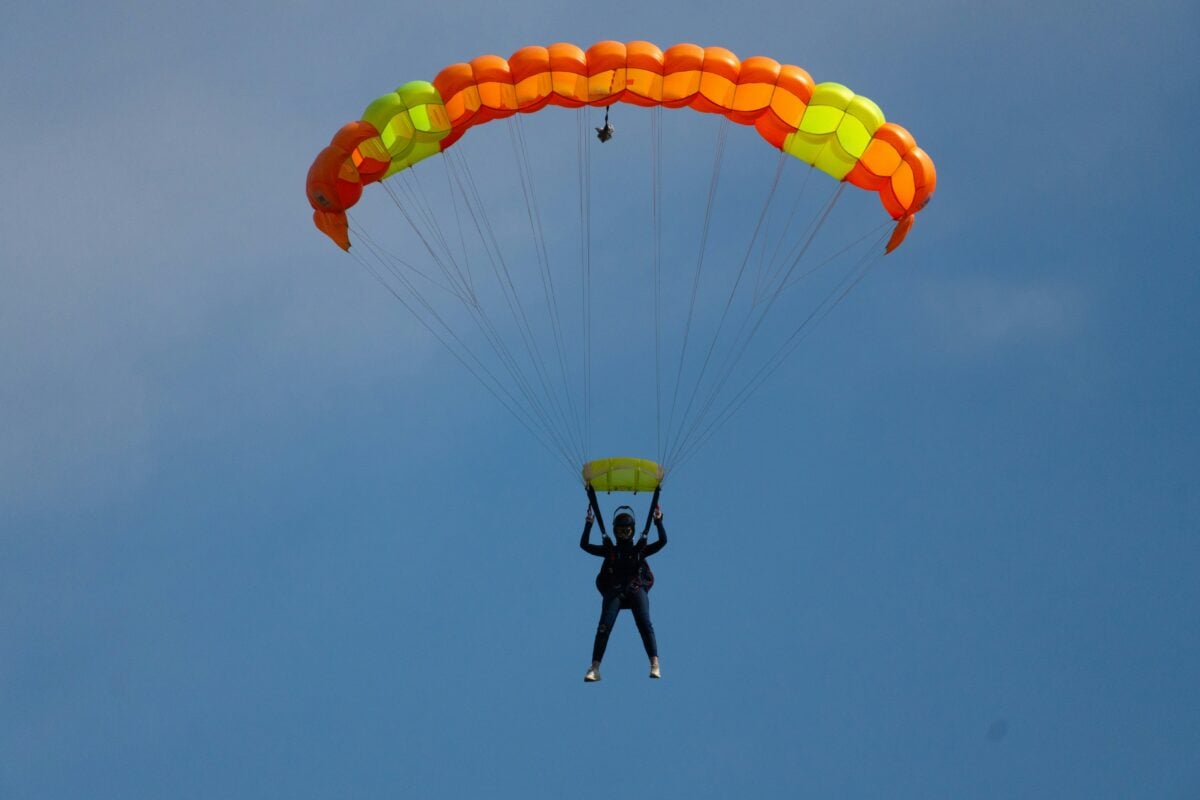
These sports represent humanity’s refusal to accept physical limitations. Gravity pulls us down, but we find ways to resist it temporarily.
We build wings, stretch ropes, and throw ourselves into space knowing we’ll eventually return to earth. The question becomes how long we can delay that return and how much terror we can endure along the way.
None of these activities are sensible. The risks far outweigh the rewards by any rational calculation.
But rationality doesn’t drive extreme athletes. They pursue something deeper—proof that fear can be confronted and sometimes defeated.
Each successful landing validates the belief that impossible things become possible through preparation, skill, and absolute commitment. The deaths mount steadily. Memorial videos flood social media after each fatality.
Friends write tributes celebrating how the deceased lived fully rather than safely. The survivors process the loss and keep jumping, keep climbing, keep flying.
They accept that their turn might come next but refuse to let that possibility stop them. Gravity never loses.
Every athlete who defies it eventually surrenders. But in the moments between launch and landing, between release and impact, between stepping off the edge and opening the parachute, they experience something most people never will.
They float in the space where courage and foolishness become indistinguishable. That’s where they choose to live, however briefly.
More from Go2Tutors!

- The Romanov Crown Jewels and Their Tragic Fate
- 13 Historical Mysteries That Science Still Can’t Solve
- Famous Hoaxes That Fooled the World for Years
- 15 Child Stars with Tragic Adult Lives
- 16 Famous Jewelry Pieces in History
Like Go2Tutors’s content? Follow us on MSN.



