Facts About the Deepest Diving Submarines Ever Built
One of the most extreme environments that humans have ever explored is the deepest parts of the ocean, which are nearly seven miles below the surface. The pressure is tremendous, the temperature is just above freezing, and there is no sunlight whatsoever.
But humans have spent decades designing and building submarines that can reach such tremendous depths. While these submarines are specialized, they are not necessarily military subs.
Most are designed to be short-range, carrying a small crew to places that few people have ever seen. Over time, advances in engineering, design, and navigation have allowed a handful of incredible machines to reach greater depths than anyone ever thought possible.
Let’s take a look at some of the most incredible submarines that have ever been built, and some of the advances that have allowed them to reach such tremendous depths.
Trieste

The bathyscaphe Trieste holds a legendary place in ocean exploration history. Built in the 1950s and later acquired by the United States Navy, it achieved one of the most daring dives ever recorded.
In January 1960, Trieste carried Jacques Piccard and Navy officer Don Walsh to Challenger Deep in the Mariana Trench, the deepest known point in the world’s oceans. The descent took nearly five hours and reached roughly 6.8 miles beneath the surface.
At that depth, the craft endured pressure exceeding a thousand times what humans experience at sea level. Its design relied on a gasoline-filled float for buoyancy and a thick steel pressure sphere to protect the crew.
That historic mission proved that humans could safely reach the ocean’s greatest depths.
DSV Alvin

Although it cannot reach the deepest trenches, the research submersible Alvin has played a pivotal role in deep-ocean discovery. Operated by the Woods Oceanographic Institution, the vessel has been exploring the seafloor since the 1960s.
Over decades of missions, it has become one of the most famous scientific submersibles ever built. Alvin can dive to around 4.1 miles below the surface after a major modernization completed in the 2010s.
Even so, its true legacy lies in the discoveries it enabled. Scientists aboard the craft helped uncover hydrothermal vent ecosystems in 1977, revealing thriving communities of life in total darkness.
That finding reshaped how researchers understand life in extreme environments.
Deepsea Challenger

The Deepsea Challenger was built for a single, ambitious mission: a solo dive to the deepest point in the ocean. Developed by filmmaker and explorer James Cameron with a team of engineers and marine scientists, the unusual vessel resembled a tall, vertical torpedo rather than a traditional submarine.
In March 2012, Cameron piloted the craft to Challenger Deep, descending nearly 6.8 miles beneath the Pacific Ocean. The dive lasted several hours and produced valuable scientific data along with high-definition footage of the remote seafloor.
Still, the mission also demonstrated the potential of lightweight materials and innovative buoyancy systems for extreme-depth exploration.
Limiting Factor

Among modern submersibles, Limiting Factor represents one of the most significant engineering achievements in ocean exploration. Built by Triton Submarines and launched in 2018, the vessel is the first craft designed for repeated journeys to the deepest parts of every ocean basin.
The submersible can reach full ocean depth—around 6.8 miles—and return safely multiple times. Explorer Victor Vescovo used it during the Five Deeps Expedition, a project that sent the craft to the deepest points of all five oceans.
That said, its design also prioritizes durability and reliability, making it one of the few vessels capable of regular missions to places once visited only once or twice in history.
Shinkai 6500

Japan’s Shinkai 6500 has long been one of the world’s most capable scientific research submersibles. Operated by the Japan Agency for Marine-Earth Science and Technology, the vessel first entered service in 1990 and quickly became a cornerstone of deep-sea research.
As its name suggests, the craft can dive to about 6,500 meters—roughly four miles beneath the surface. Over decades of expeditions, Shinkai 6500 has helped scientists study tectonic activity, unusual seafloor ecosystems, and underwater geological formations.
Even so, its careful engineering and dependable performance have kept it active for more than thirty years, an impressive lifespan for such a demanding environment.
Fendouzhe

China’s deep-sea exploration program reached a major milestone with the submersible Fendouzhe, often translated as ‘Striver.’ Completed in 2020, the craft is designed to reach the deepest parts of the Mariana Trench and conduct extended scientific investigations.
During test missions, Fendouzhe descended nearly 6.8 miles below the ocean surface, joining a very small group of vessels capable of full-depth dives. The submersible carries advanced cameras, robotic arms, and research instruments that allow scientists to collect samples and study deep-sea ecosystems directly.
On the other hand, its development also reflects growing international interest in exploring and understanding the planet’s most remote environments.
Nautile

France’s research submersible Nautile has quietly contributed to many significant underwater missions since its launch in the 1980s. Operated by the French oceanographic institute IFREMER, the craft can descend to roughly 3.7 miles beneath the surface.
One of its most widely known missions involved exploring the wreck of the RMS Titanic. The vessel’s robotic arms and imaging systems allowed researchers to carefully study the site and recover artifacts.
Still, Nautile has also participated in numerous scientific expeditions, including surveys of underwater volcanic regions and deep geological formations across the Atlantic and Pacific oceans.
Mir Submersibles
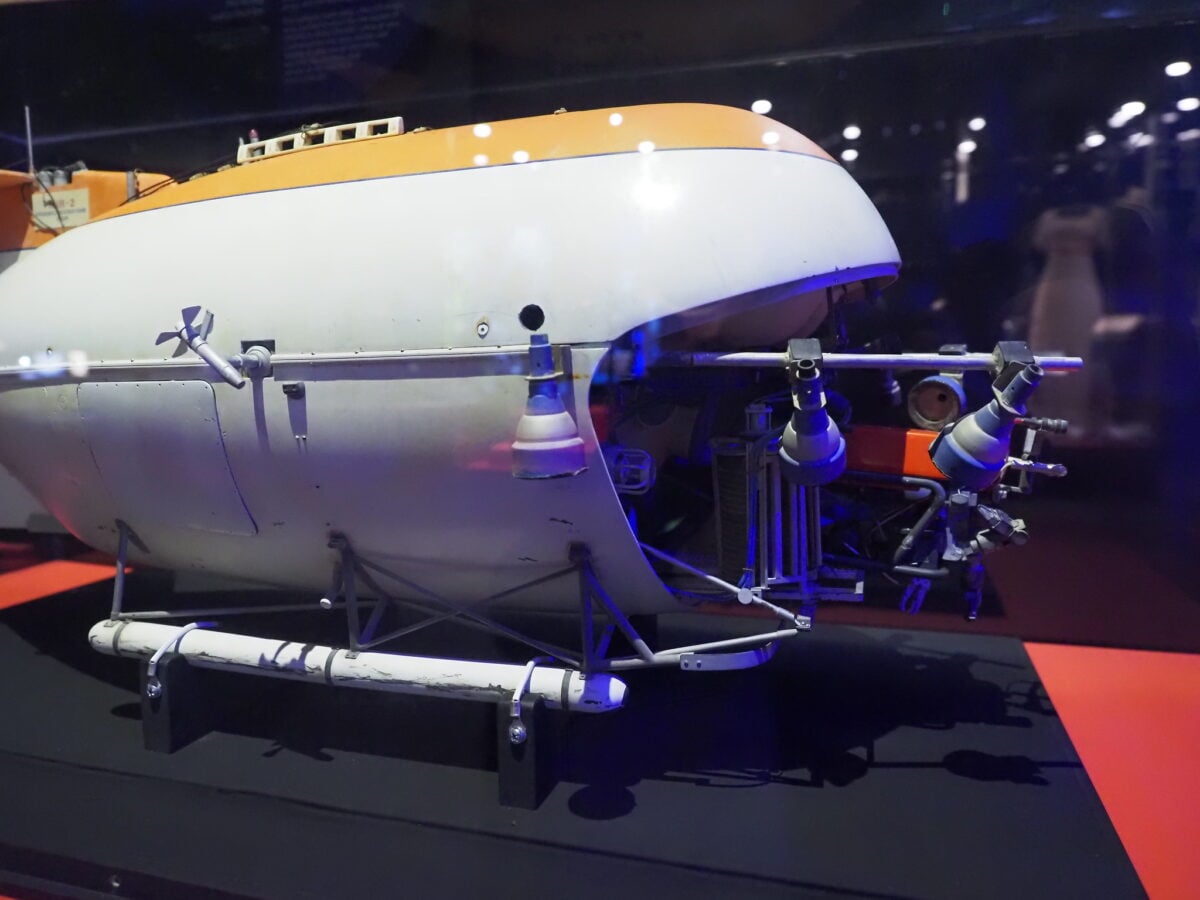
The Russian-built Mir 1 and Mir 2 submersibles became widely recognized during major scientific expeditions in the late twentieth century. Constructed in Finland and operated by the Soviet Academy of Sciences, the twin vessels were designed to explore depths of about 3.7 miles.
The crafts gained global attention during deep-ocean research missions and later through documentary filmmaking projects. Their robust titanium pressure spheres allowed crews to operate safely under enormous pressure.
Even so, the Mir submersibles also helped scientists examine underwater mountain ranges, hydrothermal systems, and deep-sea geological structures.
Why These Machines Still Matter

The history of deep-diving submarines is, at its heart, a history of human curiosity and determination. From the first dive of Trieste back in 1960, through more recent exploits of vessels such as Limiting Factor and Fendouzhe, each new generation of submarine is able to take human exploration a little further than before.
Despite all of these advances, however, there is still a great deal of ocean floor yet to be explored. These incredible machines enable scientists to investigate ecosystems, geological phenomena, and environments that play a role in shaping our world, yet are still not fully understood.
In many ways, the deepest ocean is still Earth’s last frontier, and these submarines are the key to unlocking its secrets.
More from Go2Tutors!

- The Romanov Crown Jewels and Their Tragic Fate
- 13 Historical Mysteries That Science Still Can’t Solve
- Famous Hoaxes That Fooled the World for Years
- 15 Child Stars with Tragic Adult Lives
- 16 Famous Jewelry Pieces in History
Like Go2Tutors’s content? Follow us on MSN.



