Facts about the Sagrada Familia in Barcelona
Barcelona’s most famous church has been under construction for over 140 years, and it still isn’t finished. The Sagrada Familia stands as one of the most unusual religious buildings ever created, with its twisted towers and colorful stained glass windows that look like nothing else in the world.
Architect Antoni Gaudí spent 43 years of his life working on this project, and even though he died in 1926, construction continues based on his original plans and models. So what makes this building so special that people wait decades to see it completed?
Let’s dig into some surprising facts about this Barcelona landmark.
Construction started in 1882
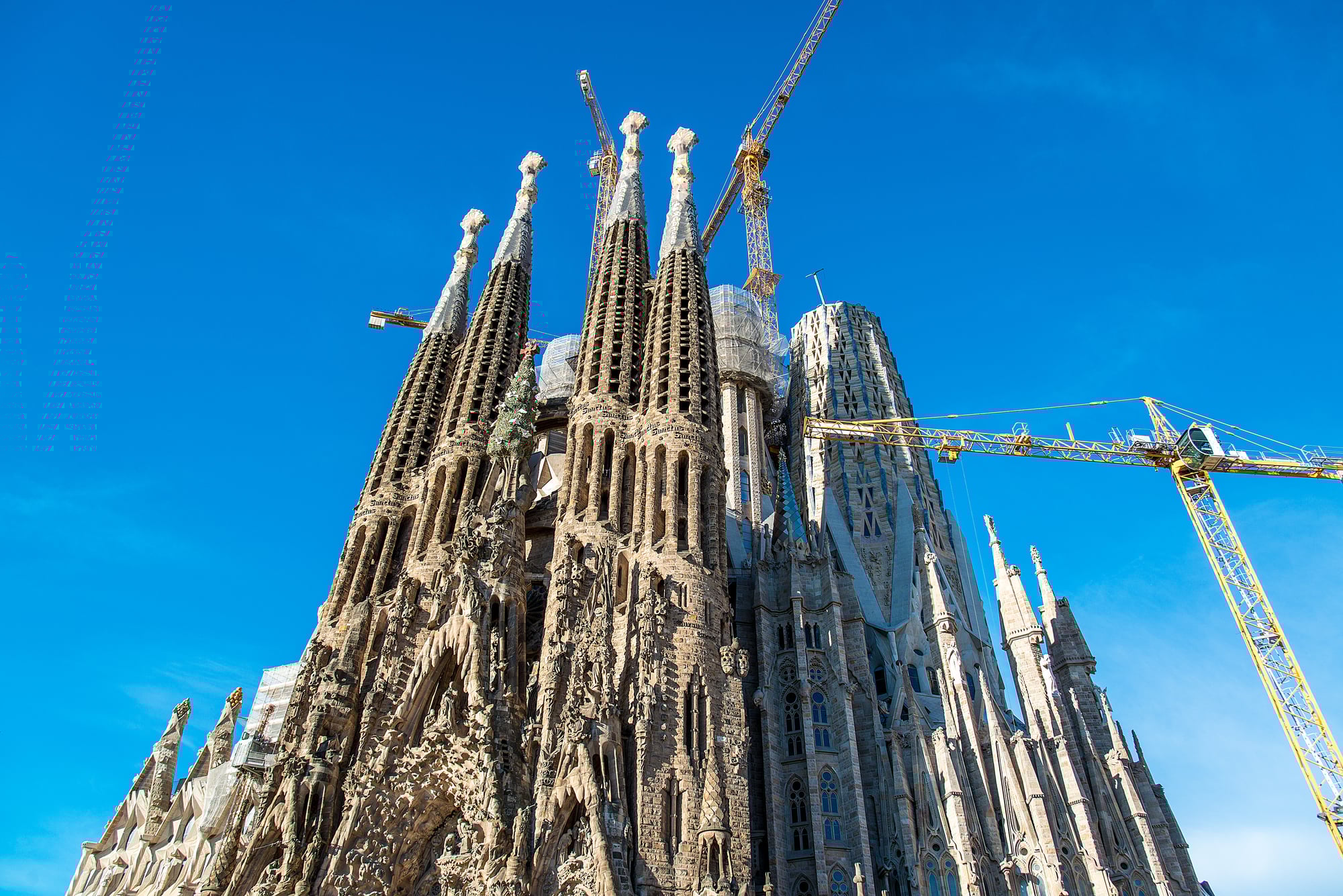
The foundation stone for the Sagrada Familia was laid on March 19, 1882, during the feast of Saint Joseph. A different architect named Francisco de Paula del Villar started the project, but he quit after just one year due to disagreements with the clients.
That’s when a young Antoni Gaudí took over at age 31, and he completely reimagined the entire design. What was supposed to be a traditional Gothic church turned into something the world had never seen before.
Gaudí lived in the construction site
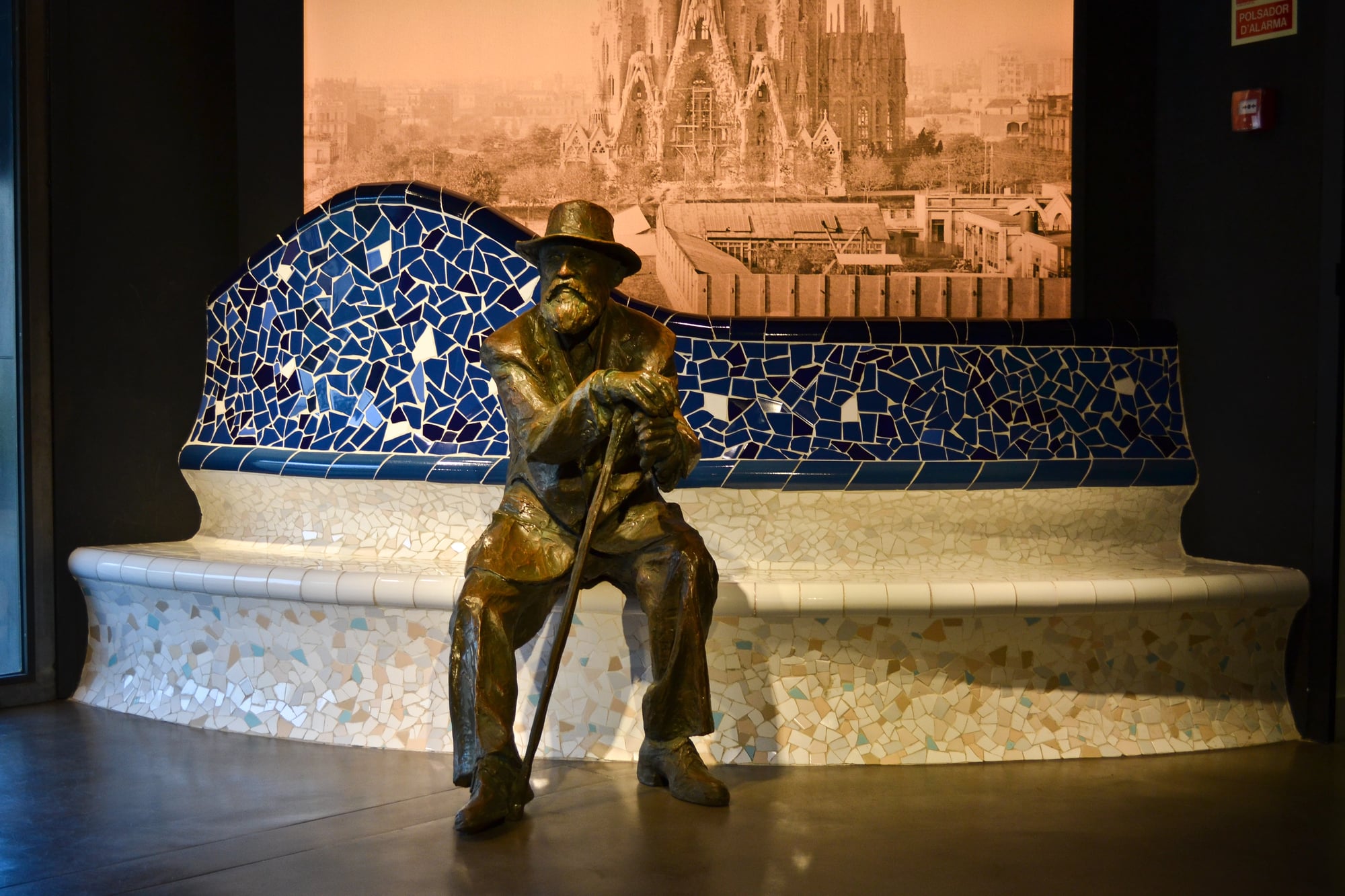
For the last years of his life, Gaudí actually moved into a workshop at the construction site. He became so obsessed with the project that he stopped taking other commissions and dedicated every waking hour to the church.
His living space was basic and simple because he had given up most of his possessions. Gaudí would sleep, eat, and work all in the same building, rarely leaving the construction area.
A streetcar killed the architect

On June 7, 1926, Gaudí was hit by a streetcar while walking to his daily prayer service. Because he dressed so plainly and carried no identification, people thought he was just a homeless man.
Several taxi drivers refused to take him to the hospital because of his shabby appearance. By the time someone finally got him medical help, his injuries were too severe, and he died three days later at age 73.
The church has no straight lines

Gaudí hated straight lines and called them ‘the line of man’ while curves were ‘the line of God.’ Every surface in the Sagrada Familia curves, twists, or slopes in some way.
The columns inside look like trees branching toward the ceiling. Even the windows and doorways avoid rigid angles.
This design philosophy came from Gaudí’s deep study of nature, where he rarely found perfectly straight lines.
It will have 18 towers when complete
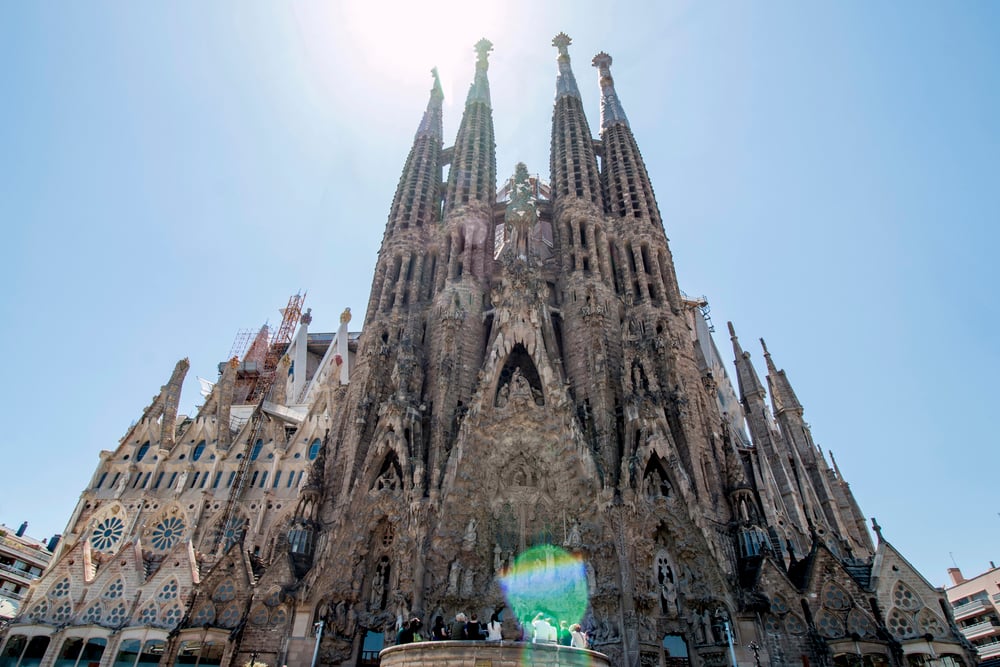
The final design calls for 18 towers, each representing a different biblical figure. Twelve towers represent the apostles, four represent the evangelists, one represents the Virgin Mary, and the tallest will represent Jesus Christ.
Right now, only nine towers have been completed. The central Jesus tower will reach 564 feet high, making it the tallest church building in Europe when finished.
Gaudí designed it to be shorter than God’s work
The Jesus tower will be exactly one meter shorter than Montjuïc hill, the highest natural point in Barcelona. Gaudí believed that human creations should never surpass God’s natural work.
This wasn’t a technical limitation but a deliberate spiritual choice. The architect wanted to show humility through architecture itself.
The Spanish Civil War destroyed most of Gaudí’s plans

During the Spanish Civil War in 1936, anarchists set fire to Gaudí’s workshop in the crypt. They destroyed most of his original drawings, plaster models, and plans for the church.
What remained were fragments and photographs that architects have been using to piece together Gaudí’s vision. Some critics argue that continuing construction without complete plans goes against what Gaudí would have wanted, while others believe honoring his spirit matters more than exact precision.
Computer technology is helping finish it

Modern architects use 3D computer modeling and digital scanning to interpret Gaudí’s remaining sketches and models. These technologies have sped up construction significantly compared to the slow progress of the 20th century.
Computer-controlled stone cutters can now create complex curved pieces that would have taken craftsmen months to carve by hand. The current completion date is projected for 2026, exactly 100 years after Gaudí’s death.
Tourists pay for the construction

Unlike most churches, which rely on donations from congregations or church funds, ticket sales from tourists finance the Sagrada Familia’s construction. Over 4 million people visit each year, and their entrance fees provide the money needed to keep building.
This makes it one of the few religious buildings in history funded primarily by curious visitors rather than worshippers. The business model has proven so successful that construction has actually accelerated in recent decades.
The interior looks like a forest

When you walk inside, the columns branch out like massive stone trees reaching toward the ceiling. Gaudí studied how trees support weight and used similar principles in his column design.
Natural light filters through colorful stained glass windows, creating patches of red, blue, green, and yellow that move across the floor as the sun shifts. The effect makes visitors feel like they’re standing in a enchanted woodland rather than a traditional church.
Three different building facades tell biblical stories

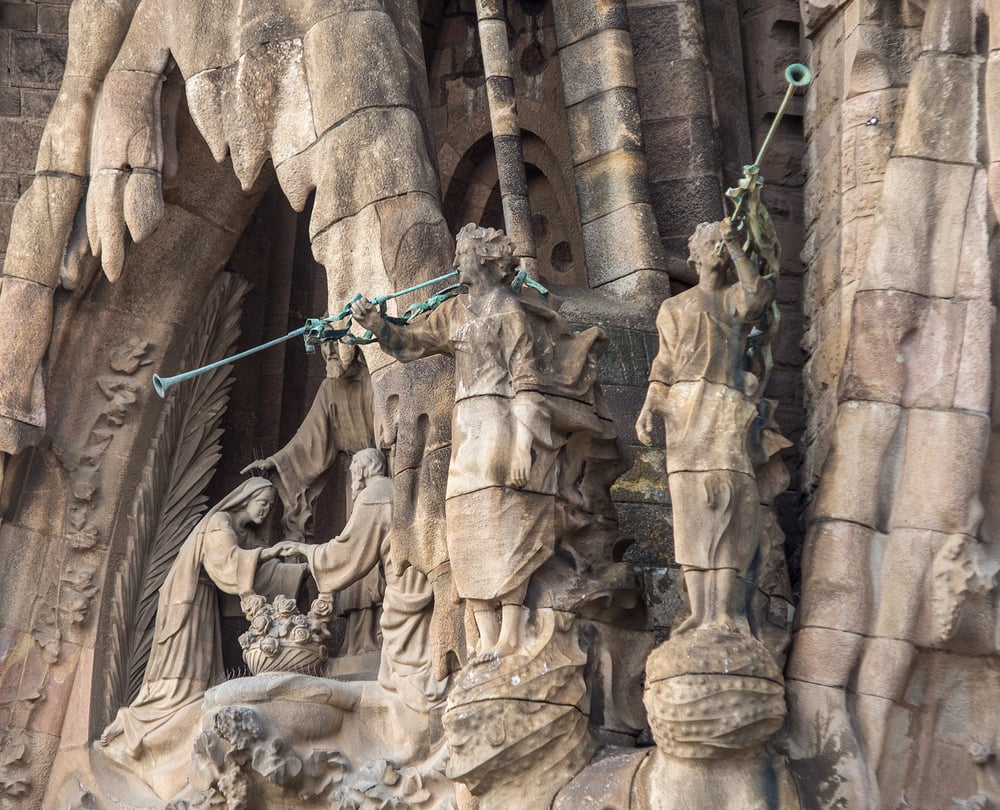
The Nativity Facade shows the birth of Jesus with incredibly detailed sculptures of plants, animals, and people. The Passion Facade depicts the crucifixion with harsh, angular sculptures that look deliberately stark and painful.
The Glory Facade, still under construction, will show humanity’s path to God and will be the largest of the three. Each facade has four towers and faces a different direction, creating completely different atmospheres on each side of the building.
Gaudí used real people and animals as models

For the sculptures on the Nativity Facade, Gaudí made plaster casts of real workers, local residents, and even corpses from the morgue. He also cast animals from the Barcelona zoo and collected plants from the surrounding countryside.
A donkey, chickens, and a turtle all served as models for various sculptures. This commitment to realism was unusual for church architecture at the time, where artists typically worked from imagination or classical ideals.
UNESCO declared it a World Heritage Site before completion

In 2005, UNESCO put the Sagrada Familia on its World Heritage list – so it became one of the few unfinished structures to get that title. That move celebrated Gaudí’s one-of-a-kind mark on architecture.
Some sections were protected earlier, starting in 1984 under ‘Works of Antoni Gaudí,’ yet the 2005 pick stressed how special this church really is.
The church runs a small school right there

Gaudí threw up a little school near the worksite – meant for laborers’ kids. With its curvy rooftop, this classroom block stood out, one of his rare finished pieces.
It ran nonstop for years but shifted spots now and then when cranes needed space. Plain-looking yet clever, it quietly inspired designers across continents by proving art hides in everyday builds.
Pope Benedict XVI consecrated it in 2010
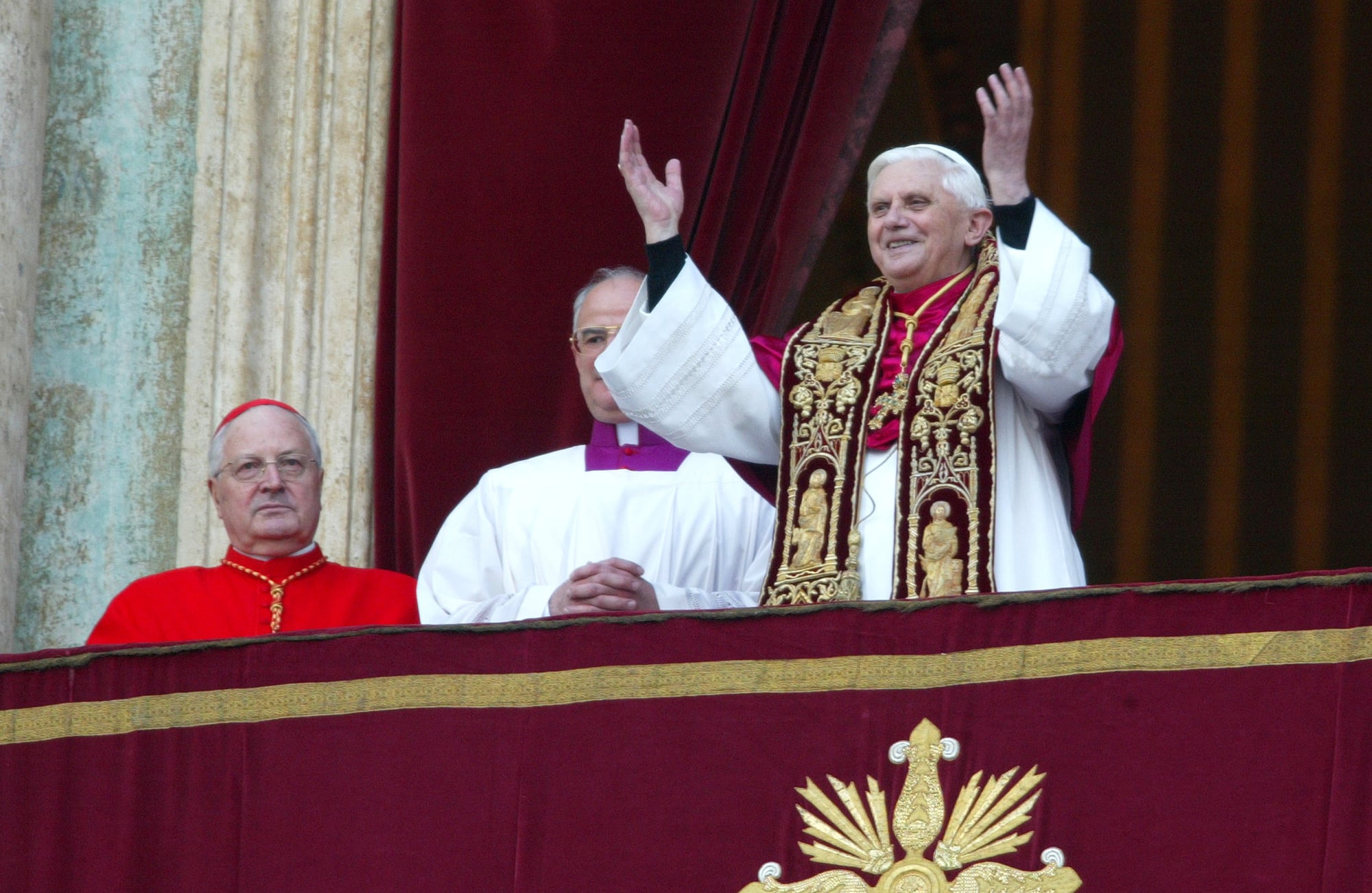
On November 7, 2010, Pope Benedict XVI showed up in Barcelona to make the Sagrada Familia a full basilica. Because of this, services could happen there – despite ongoing work.
Crowds packed inside that day while TV stations streamed everything nationwide. That moment changed things: what used to be just scaffolds and stone became a living church.
Morning light looks blue, yet evening turns it red

Gaudí placed the colored windows on purpose to shift the vibe as hours pass. On the east, calm blues and greens light up gently when dawn hits.
Over on the west, hot oranges, reds, or yellows flare up big-time by evening. The mood inside shifts hard based on when you show up.
Those hues weren’t just tossed in – they shaped a deep, thought-out feeling.
Rock came from four nations – so each spot had its own kind of slab, yet all fit together without issue

The build pulls rock from Spain, then Italy, also Scotland – picked by how it looks or holds up. Certain types handle rain and sun well, whereas some are easier to shape into tiny patterns.
Together, they shift the tone and feel from one section to another. Hauling slabs from far-off pits to Barcelona hikes price tags, on top of headaches already piling up.
Where belief walks with calm

The Sagrada Familia shows certain jobs take ages – tech changes, yet patience still matters. One person’s dream turned into a mission passed down through families, linking folks from different eras.
Once the last spire goes up in 2026, it won’t only honor Gaudí’s bold designs but also salute countless hands shaping a future beyond their years. This never-quite-done temple in Barcelona teaches a quiet truth: big wins usually stretch far past what one life can cover.
More from Go2Tutors!

- The Romanov Crown Jewels and Their Tragic Fate
- 13 Historical Mysteries That Science Still Can’t Solve
- Famous Hoaxes That Fooled the World for Years
- 15 Child Stars with Tragic Adult Lives
- 16 Famous Jewelry Pieces in History
Like Go2Tutors’s content? Follow us on MSN.