“Futuristic” 80s Gadgets That Failed Miserably
The 1980s promised a future filled with robot assistants, flying cars, and technology that would solve every problem. Companies poured millions into gadgets designed to change how people lived, worked, and played.
Most of these ambitious products ended up in dumpsters, storage units, or landfills before their manufacturers could say ‘revolutionary innovation.’ The decade delivered some genuine hits like the Nintendo Entertainment System and personal computers that actually worked, but it also brought disasters that cost companies their futures.
Behind every successful product from that era sit dozens of failures that taught the tech industry hard lessons about what happens when ambition ignores reality. The graveyard of failed gadgets tells better stories than the success stories ever could.
Here are the disasters that defined the decade.
Apple Lisa
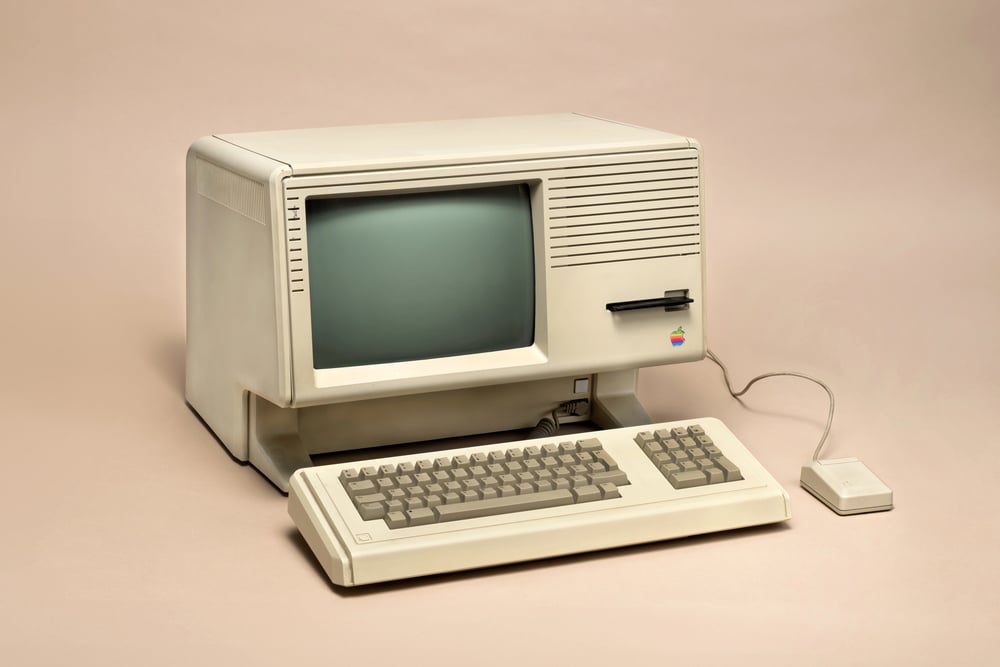
Apple released the Lisa in January 1983 with a price tag of almost $10,000. That’s over $30,000 in today’s money for a computer.
The Lisa featured a graphical interface, a mouse, and capabilities years ahead of its time, but nobody could afford the thing. Even NASA used Lisa machines for project management, proving the technology worked beautifully.
The problem was simple math: families could buy three or four complete computer systems from competitors for the same price. By 1986, Apple had discontinued the Lisa and was literally burying unsold units in a Utah landfill to get a tax write-off.
The technology lived on in the Macintosh, but the Lisa itself became one of tech’s most expensive lessons about pricing.
RCA VideoDisc

RCA spent nearly 20 years developing the Capacitance Electronic Disc system, finally launching it in 1981. The discs looked like vinyl records and played movies using a stylus, just like a turntable.
Picture quality was decent, and you didn’t need to rewind like VHS tapes. But the discs were huge, fragile, and came in heavy plastic cases that took up massive shelf space.
You couldn’t record anything, couldn’t pause properly, and had to flip the disc over partway through most movies. By 1984 only half a million players had been sold, and RCA was forced to announce the discontinuation of the format.
The failure contributed to GE buying and dismantling RCA in 1986. All those years of development and millions of dollars created a product nobody wanted.
Coleco Adam
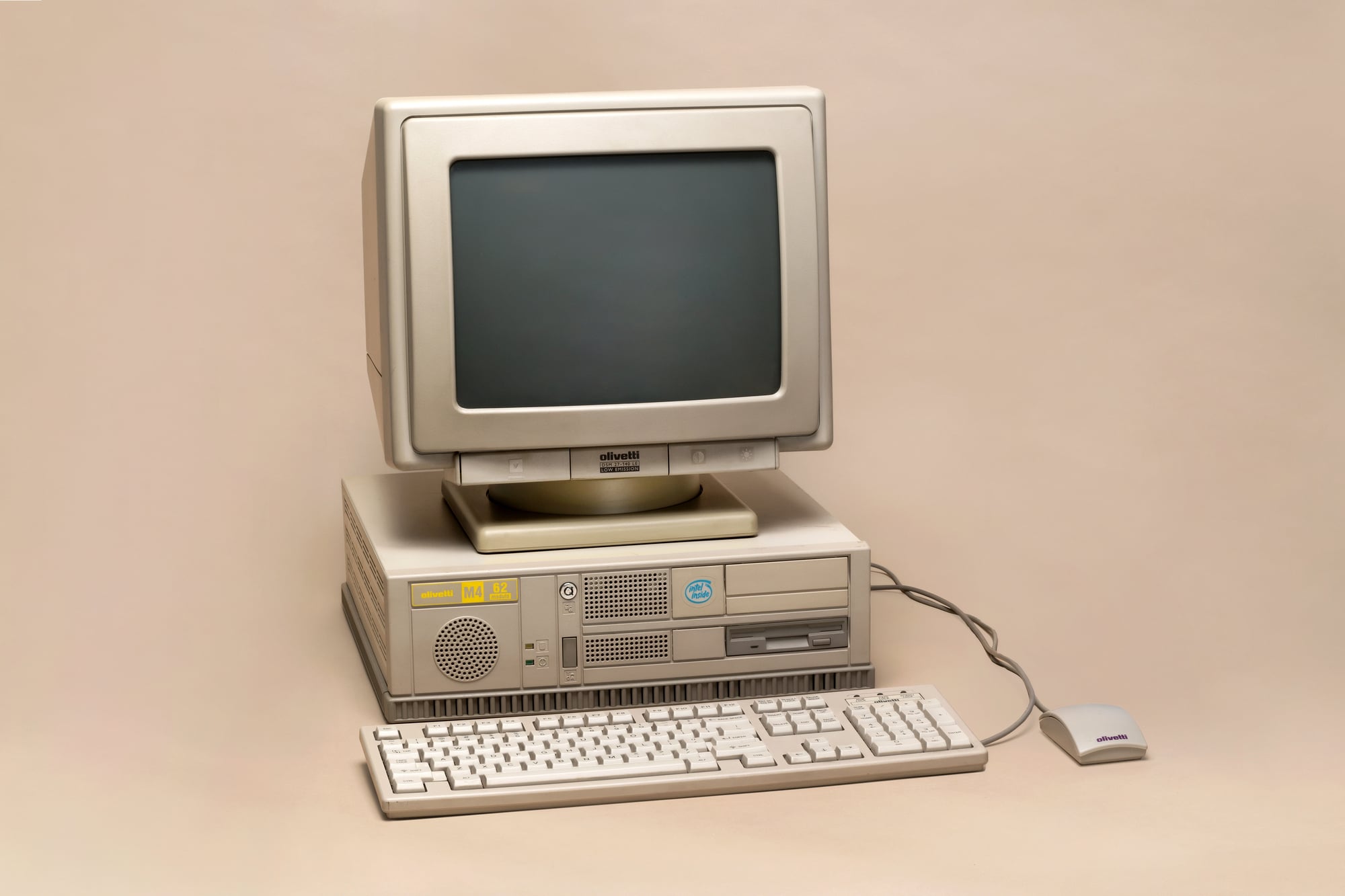
Coleco promised a complete home computer system for just $600 in 1983. The Adam came with 64K of RAM, dual tape drives, and a printer, all for less than half what Apple or IBM charged.
People went crazy with anticipation before the holiday season. Then the units started arriving.
The thing produced an electromagnetic surge every time it booted up. That surge could erase any magnetic media near the computer, including the data tapes the Adam used for storage.
Firing up your computer could destroy your saved work. Quality control was terrible, with many units arriving dead or dying within days.
Coleco lost millions as stores and customers returned defective machines, and the company discontinued the Adam in 1985. Three years later, Coleco filed for bankruptcy, partly because the Adam disaster drained their resources.
Sinclair C5
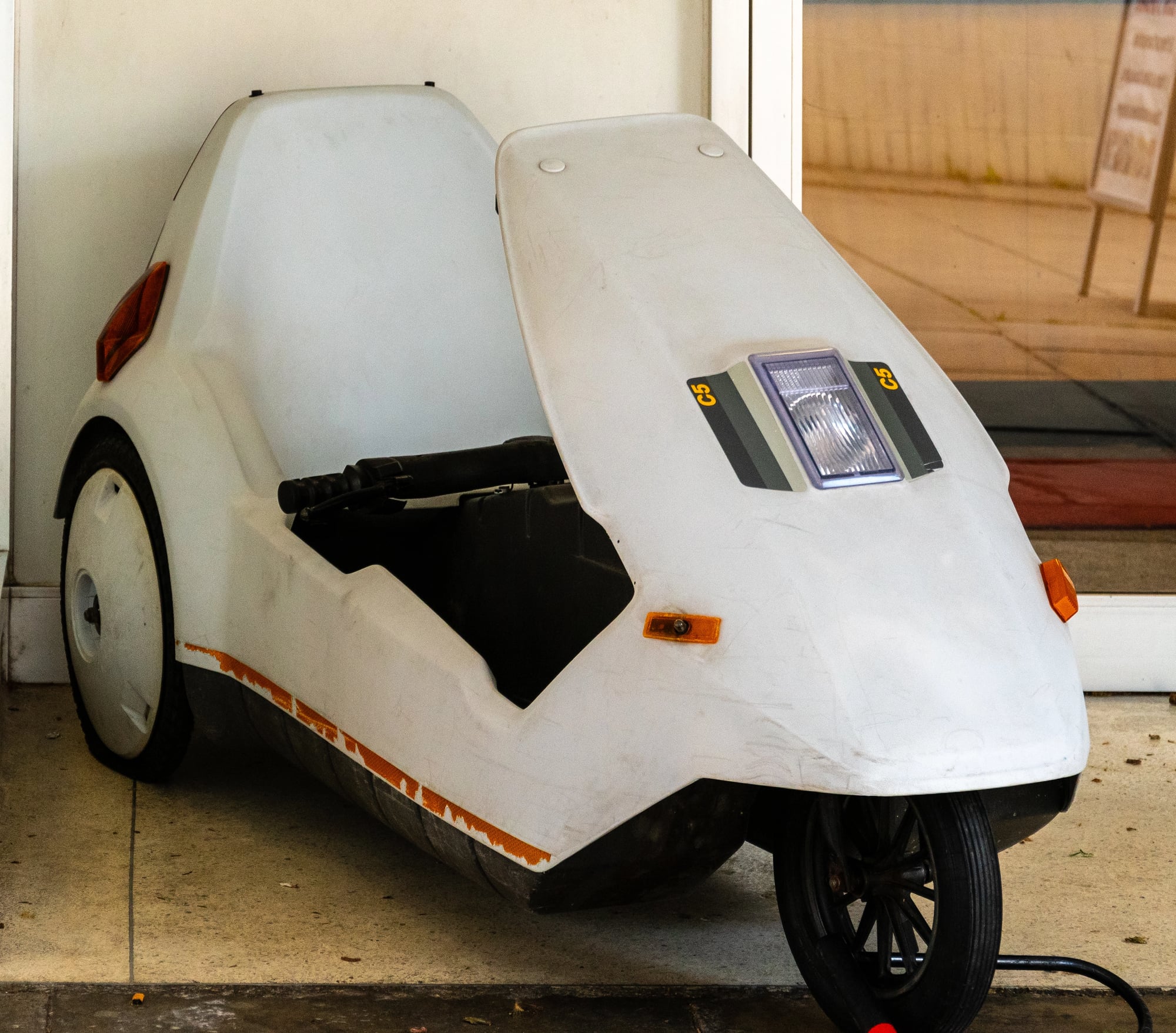
British inventor Clive Sinclair unveiled his vision for personal transportation in 1985. The C5 was a battery-powered tricycle that looked like a plastic bathtub on wheels.
At just under $600, it seemed affordable. The reality was terrifying.
The C5 had a pitiful range and topped out at 15 miles per hour. Worst of all, it was so low, drivers were practically invisible to other traffic.
Riders sat at bumper height, meaning every car and truck towered over them. The vehicle offered zero weather protection and barely enough power to climb gentle hills.
Reviews were brutal, and the vehicle was a commercial disaster, selling just 17,000 units. Today, the C5 represents one of the most laughable transport ideas ever mass-produced, though Sinclair still claimed it as the best-selling electric vehicle until 2010, which says more about electric vehicles than the C5.
LaserDisc

LaserDisc technology debuted in the late 1970s with the unfortunate name DiscoVision. The format offered superior picture quality and sound compared to VHS, but that’s where the advantages ended.
Laserdiscs were the size of records, and like records you had to flip them over (a typical feature-length film fit on four DiscoVision discs). The players cost as much as used cars.
You couldn’t record television shows or home videos. The discs scratched easily and required special care.
Storing a movie collection meant dedicating serious shelf space to these dinner-plate-sized discs. VHS won because it was cheaper, more convenient, and let people record their favorite shows.
LaserDisc survived as a niche format for home theater enthusiasts until DVDs finally killed it off in the late 1990s.
Betamax

Sony introduced Betamax in 1975, a year before VHS arrived. The format delivered better picture quality than VHS, and Sony had every reason to expect success.
But Sony made critical mistakes. They didn’t license Betamax to other manufacturers early on, while JVC let anyone make VHS players.
By the early 1980s, VHS became the dominant home video format as manufacturers raced to offer better and cheaper models. Betamax tapes also recorded less time than VHS, which mattered to people wanting to record entire football games or multiple TV shows.
Movie studios sided with VHS because that’s what consumers were buying. Sony kept making Betamax players until 2002 and tapes until 2016, long after everyone else had moved on.
Technical superiority meant nothing against convenient recording times and market adoption.
Timex Sinclair 1000

Timex partnered with Britain’s Sinclair Research to create the first personal computer under $100. That price tag came with serious compromises.
The Timex Sinclair 1000 launched in 1982 with only 2 kilobytes of memory, barely enough for simple BASIC programming. The membrane keyboard felt like typing on calculator buttons wrapped in plastic, while the 2KB of memory could barely handle basic calculations.
Later models could be upgraded to 16 KB of RAM, but the software library was tiny and the cassette tape storage was unreliable. The thing was too limited for serious programming and too frustrating for home office work.
Timex quickly retreated to making watches after realizing that cheap computers nobody could actually use weren’t worth selling.
IBM PCjr
IBM tried to create an affordable home computer in 1984 to compete with Apple and Commodore. The PCjr was supposed to bring IBM computing to families.
Instead, it brought IBM one of its first major computing flops. The keyboard connected wirelessly using infrared, which sounds modern except the implementation was terrible and signals got blocked constantly.
The computer came with limited memory that was difficult to expand. Software compatibility was spotty.
All the issues combined to create a mega flop, one of the first major ones in home computing, and by 1985, IBM had discontinued its little baby PC. The PCjr taught IBM that making cheap versions of business computers doesn’t automatically create good home computers.
Kodak Disc Camera

Kodak introduced disc film in 1982 to replace bulky film rolls. The film came on small discs that looked like ViewMaster reels, with 15 exposures per disc.
The cameras could be incredibly thin and compact because the disc format eliminated the need for heavy film-flattening plates. Marketing made it sound perfect for casual photographers.
The problem was image quality. The negatives were tiny, producing grainy, poor-quality prints that looked worse than regular 35mm film.
Professional photo labs hated working with disc film. By the time digital cameras arrived in the 1990s, disc film had already failed, and Kodak quietly discontinued the format.
The cameras were convenient, but convenience means nothing when your photos look terrible.
Seiko TV Watch

Seiko released a watch with a tiny television screen in 1982. The screen measured smaller than a postage stamp, and watching it required an external receiver pack that clipped to your belt.
The screen was smaller than a postage stamp, battery life lasted roughly 1.5 hours, and the required external receiver made wearers look like they were sporting house arrest monitoring equipment. The whole setup made people look like they were wearing ankle monitors.
Reception was terrible indoors, and finding a comfortable viewing angle for the microscopic screen was nearly impossible. The technology was impressive for 1982, but the execution was comically impractical.
Today’s smartwatches owe nothing to this disaster except perhaps a lesson in what not to build.
Atari Touch Tablet

Atari launched the CX77 Touch Tablet in 1984 as a drawing and painting peripheral for its 8-bit computers. An InfoWorld review claimed users could paint pictures and draw diagrams with it.
The tablet connected to Atari computers and came with basic art software. Sounds reasonable until you consider that most people had no interest in digital art in 1984, and those who did found the tablet imprecise and frustrating.
The software was limited, and creating anything worthwhile required patience most users didn’t have. Light pens and joysticks cost less and worked better for most applications.
The Touch Tablet disappeared quickly because it solved a problem barely anyone had and did so poorly.
RCA Dimensia

RCA pitched its Dimensia televisions as ‘thinking televisions’ that would usher in a new tech revolution. The name itself was unfortunate, sounding like a medical condition rather than cutting-edge technology.
Dimensia TVs featured remote controls that could manage multiple components and basic automated functions. The problem was complexity and price.
RCA thought it could lead the charge into a new tech revolution with a so-called ‘thinking television.’ There’s only one problem: they got off on the wrong foot when they chose the name.
Regular people wanted TVs that turned on and showed their programs, not complicated systems that required thick instruction manuals. The added features didn’t justify the premium price, and RCA’s reputation for quality had already started slipping.
Dimensia became a punchline about corporate hubris and poor naming choices.
Sony BetaMovie
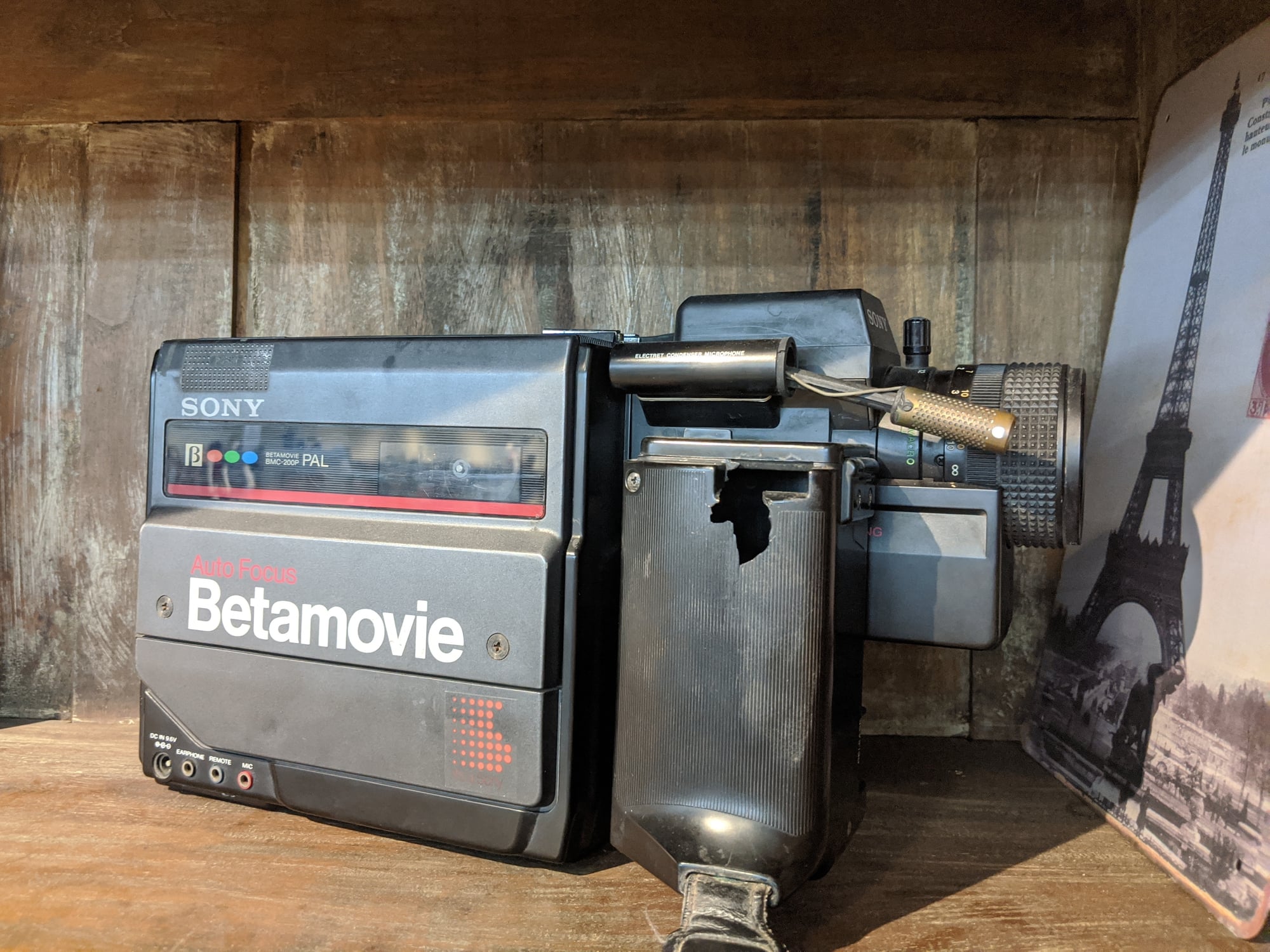
Built right into one unit, Sony’s BetaMovie hit stores in 1984 at fourteen hundred dollars. Tossing aside the bulky external recorder, it streamlined filming by combining everything inside the camera itself.
Three hours of smooth playback came standard, clarity outdoing VHS rivals on tape. Here’s the twist – despite sharp visuals and clever design, something big held it back.
Waiting to view your recording meant extra gear was needed. Only at home would parents discover whether their child’s first walk made it onto tape.
Spending that much cash bought both a VHS camera and a little television set. As Betamax fell behind in the battle of formats, Sony’s BetaMovie sat unused on shelves.
Most households picked ease and working together over advanced specs.
Fisher-Price PXL-2000

Fish out of water, really – Fisher-Price launched the PXL-2000 in 1987 thinking children ought to film things. Running on plain audio cassettes rather than actual video tape, it captured fuzzy monochrome clips with hardly any detail.
Price tag hovered near $180, heavier than expected when compared to a Nintendo system going for roughly ninety bucks. Parents paused at checkout, then reached for dolls or trucks instead.
By the standards of that decade’s home cameras, its pictures still came off as rough, jagged like old newspaper print. Funny thing is, Fisher-Price moved less than five hundred thousand PXL-2000 units.
Yet somehow, underground film folks in the nineties started swearing by it. These days, you’ll find functioning models popping up on eBay – artists grab them fast, drawn to that gritty look.
Thing never caught on as a children’s gadget though – it flopped hard.
Polaroid Polavision

Back then, Polaroid ruled instant pictures – Edwin Land wanted more. Instead of standing still, he pushed into moving images.
By 1977, Polavision arrived, dragging itself through the next few years. It relied on unique cartridges; they developed right after filming, just like photo prints did.
Viewers saw results fast – but too much felt off. Timing missed the mark.
Quality disappointed. People had better options elsewhere.
The idea fizzled out quietly, long before the decade ended. Costing a lot, the movie format came with blurry visuals plus required a unique player instead of using regular TVs.
As video recorders dropped in price, families gained the ability to capture shows off air – something this gadget never offered. Hundreds vanished into buying gear that performed worse than what tape machines already handled.
After bleeding cash, Polaroid pulled the plug, realizing folks had zero interest in instant film reels at home.
Rabbit Telepoint Service

Back in 1992, just as the nineties began, Britain introduced Rabbit – a phone system stuck in eighties ideas. Not quite like modern mobiles, it needed custom handsets.
These devices worked only if you stood close to one of their transmitters, never farther than a football field away. Getting calls? Impossible.
Even London had dead zones. Though marketed as freedom, it really tied people to spots on the map.
When regular cell networks grew smarter and reached further, Rabbit looked outdated fast. Its one-way talk felt more like a gimmick than progress.
Shutting it down came after losses hit about 183 million dollars. What doomed the venture wasn’t just cost – it felt like a stopgap, awkward and half-built.
Priced below regular mobile plans, sure, yet held back so much the lower price meant nothing.
Tomorrow shows up sooner than expected

Futuristic dreams of the 1980s often crashed into real life. Firms mistook novelty for usefulness, thinking if a thing worked, someone must want it, so they made it anyway.
Some inventions weren’t flawed at their core. Yet they cost too much, did too little, broke too easily, or arrived before roads existed to carry them forward.
What began with LaserDisc later found its form in DVDs. Out there among old prototypes, the Apple Lisa turned into what we now call the Macintosh, shaping how screens talk to us.
Long before quiet electric cars rolled smoothly through neighborhoods, the Sinclair C5 arrived, got mocked, then vanished – yet it whispered lessons that stuck around. Turns out, brilliant numbers on a datasheet fade fast when real folks cannot pay for it, figure it out, or trust it near their kids.
Hidden inside every device humming quietly in living rooms is a memory of some forgotten flop from the eighties, its ghost nudging designers toward better choices.
More from Go2Tutors!

- The Romanov Crown Jewels and Their Tragic Fate
- 13 Historical Mysteries That Science Still Can’t Solve
- Famous Hoaxes That Fooled the World for Years
- 15 Child Stars with Tragic Adult Lives
- 16 Famous Jewelry Pieces in History
Like Go2Tutors’s content? Follow us on MSN.