High-End Fashion Trends That Flopped Hard
Luxury fashion has flourished over the last ten years by pushing limits and defying expectations.
The industry is sometimes reshaped by the iconic moments that result from that creative audacity.
At other times, it results in costly catastrophes that leave customers baffled and looking at their wallets.
From outrageously expensive basics to campaigns that provoked international outrage, the haute couture industry has seen its share of spectacular failures.
It’s not always bad design or poor quality that causes a high-end fashion trend to fail.
These failures frequently result from brands misjudging their target market, setting prices that are too high, or pursuing controversy that verges on being offensive.
Fashion houses have forgotten that even their most affluent clients have boundaries at these times.
Let’s examine the high-end fashion trends that failed miserably.
Balenciaga’s Destroyed Sneakers
In 2022, Balenciaga released the Paris Sneaker in its Full Destroyed edition, featuring high-tops that looked like they’d been salvaged from a landfill.
The shoes came pre-distressed with rips, tears, stains, and an overall aesthetic suggesting years of hard wear.
The limited edition of 100 pairs commanded $1,850, while the standard distressed versions retailed between $495 and $625.
Critics immediately accused the brand of letting wealthy consumers cosplay poverty, spending thousands to mimic wear that comes from necessity for others.
The backlash was swift across social media platforms, with many pointing out the tone-deaf nature of selling artificial hardship to the privileged.
Balenciaga defended the choice through press releases emphasizing the handcrafted nature of the aging process, framing it as an artistic statement.
Creative director Demna revealed the brand maintained an entire department dedicated to aging and distressing products.
Even so, the controversy highlighted a growing disconnect between luxury brands and broader society, where authentic struggle exists alongside manufactured aesthetic poverty.
The destroyed sneaker trend became emblematic of fashion’s occasional descent into absurdity, where artistic vision collided with accusations of insensitivity.
The See Now, Buy Now Disaster
Around 2016, several luxury brands embraced an innovative concept called see now, buy now.
The idea seemed brilliant: show collections on the runway and make them immediately available for purchase, rather than forcing customers to wait months.
Tommy Hilfiger, Rebecca Minkoff, Burberry, and others jumped aboard this express train to the future.
The model crashed spectacularly.
Thakoon relaunched in September 2016 with backing from investor Silas Chou and a direct-to-consumer approach.
By March 2017, operations had halted entirely following a sales slump.
Tom Ford abandoned the model citing scheduling concerns.
Burberry briefly adopted it in 2016 before reverting to the traditional format.
The problem was that luxury fashion benefits from the time between runway debut and retail availability.
Those months allow cultural significance to develop as pieces appear in magazines and on influencers.
Luxury customers weren’t buying aspirational $3,000 dresses on impulse the way they might grab fast fashion.
The concept worked better for brands like Tommy Hilfiger with accessible price points, but true luxury houses discovered their customers preferred anticipation over instant gratification.
The see now, buy now trend proved that disruption for disruption’s sake doesn’t always translate to luxury retail success.
Balenciaga’s 2022 Campaign Catastrophe
No fashion flop list would be complete without mentioning Balenciaga’s November 2022 advertising disaster.
The brand released two distinct campaigns that sparked unprecedented outrage.
The Gift Collection holiday campaign featured children holding teddy bear handbags dressed in what appeared to be bondage gear.
The separate Spring 2023 Garde-Robe campaign showed a handbag positioned atop legal documents, including text from a Supreme Court decision related to child exploitation laws.
The backlash was immediate and devastating.
The brand lost 100,000 Instagram followers within days.
Sales declined approximately 4 percent during the fourth quarter of 2022, according to parent company Kering’s earnings report.
Kim Kardashian, a major brand ambassador, publicly stated she was reevaluating her relationship with Balenciaga.
The Business of Fashion rescinded its 2022 Global Voices Award to creative director Demna.
Singer Dua Lipa removed Instagram posts featuring the brand.
Balenciaga initially filed a $25 million lawsuit against production company North Six and set designer Nicholas Des Jardins before eventually dropping it.
CEO Cédric Charbit and Demna issued formal apologies, with the brand accepting full responsibility.
The controversy demonstrated that even brands built on provocation can go too far.
While Balenciaga has since recovered somewhat, climbing back up industry rankings, the campaign remains a cautionary tale about the difference between edgy marketing and offensive imagery.
Luxury Price Hikes Gone Wild
In 2024, luxury fashion houses pushed pricing to new extremes that left even devoted fans questioning their sanity.
Chloé’s Fall 2024 collection under new creative director Chemena Kamali featured a brown ruffled silk cape dress priced at $26,000.
Matthieu Blazy’s Bottega Veneta debut included leather fringed skirts approaching $29,000.
A Gucci wool skort from designer Sabato De Sarno’s first collection commanded nearly $2,900.
These weren’t one-of-a-kind couture pieces.
They were ready-to-wear items available in boutiques.
The justification from brands centered on repositioning themselves as even more exclusive, deliberately pricing out aspirational buyers to cater solely to ultra-high-net-worth individuals.
Luxury fashion analyst Juan Manuel González explained in Business of Fashion that brands were intentionally separating themselves from customers affected by inflation and economic uncertainty.
Most luxury houses, including Chanel and Louis Vuitton, increased prices 8 to 12 percent in 2024 citing material and labor costs.
Personal luxury shopper Gab Waller noted that while criticism flourished online, her wealthy clients kept ordering these astronomically priced pieces without hesitation.
The trend revealed a widening gap between luxury fashion and everyone else, with brands essentially admitting they no longer cared about anyone who had to think twice before dropping five figures on a skirt.
Absurdly Overpriced Basics
Luxury brands have long tested how much customers will pay for everyday items with designer labels slapped on them.
Some experiments revealed the limits of brand loyalty.
Prada released a sterling silver paperclip in 2017 for $185.
Hermès sold wrapping paper from its 2019 holiday collection at around $195 for a dozen sheets.
Louis Vuitton offered the Christopher jump rope between $735 and $800, marketed as bringing fashionable flair to fitness.
Saint Laurent contributed a shopping bag tote designed to look like a paper bag for $890 in 2016.
These items sparked mockery across social media, with critics pointing out that functionality remained identical to versions costing a fraction of the price.
A paperclip is a paperclip, whether it bears the Prada name or comes from an office supply store.
The jump rope backlash was particularly sharp, with fitness enthusiasts noting that $800 could buy an entire home gym setup.
Even so, these luxury basics found buyers willing to pay premium prices for the privilege of brand association.
The trend highlighted how luxury fashion operates less on utility and more on status signaling, where the point isn’t the object itself but what owning it communicates to others.
The Ugly Luxury Movement
Academic research from Lehigh University examined a puzzling trend: intentionally unattractive luxury items commanding higher prices than attractive alternatives.
Research by Andreas Eisingerich and colleagues published in the Journal of Marketing in 2021 explored this phenomenon.
A Gucci cardigan from the 2017 Cruise collection featuring a bunny, flowers, a flying saucer shooting rainbow beams, a tiger head, and a bumblebee retailed for $5,500.
Balenciaga’s Crocs platform sandals at $850 exemplified the trend, as did earlier releases of sock sandals for $1,200.
The research showed that distinctively unattractive luxury products were perceived as more expensive and fashion-forward than pretty alternatives.
The uglier and more distinctive the item, the more it signaled insider fashion knowledge.
Consumers bought these pieces not despite their appearance but because of it, using aesthetic offense as a status marker.
Critics argued this represented luxury fashion’s disconnect from traditional aesthetic values, where wearability and beauty became secondary to exclusivity signaling.
The ugly luxury trend proved that high-end fashion operates in its own universe, where normal aesthetic rules don’t apply and the more unconventional something becomes, the more desirable it seems to those chasing fashion credibility.
Chanel’s Handbag Raincoat
From the Spring/Summer 2018 runway accessories collection, Chanel released a product that became instant commentary fodder: a raincoat for handbags priced around $700.
Made from PVC with lambskin trim and silver studs, this protective covering featured prominent Chanel logos to ensure everyone knew you were protecting something equally expensive underneath.
The product raised obvious questions.
If your handbag needs a $700 raincoat, perhaps it wasn’t designed for real-world use.
The accessory for an accessory highlighted luxury fashion’s habit of monetizing impracticality.
Critics noted that regular people simply avoided carrying expensive bags in bad weather rather than purchasing designer rain gear.
The handbag raincoat became shorthand for luxury excess, representing fashion’s occasional departure from practical reality into a realm where problems are solved by spending more money rather than using common sense.
What Went Wrong
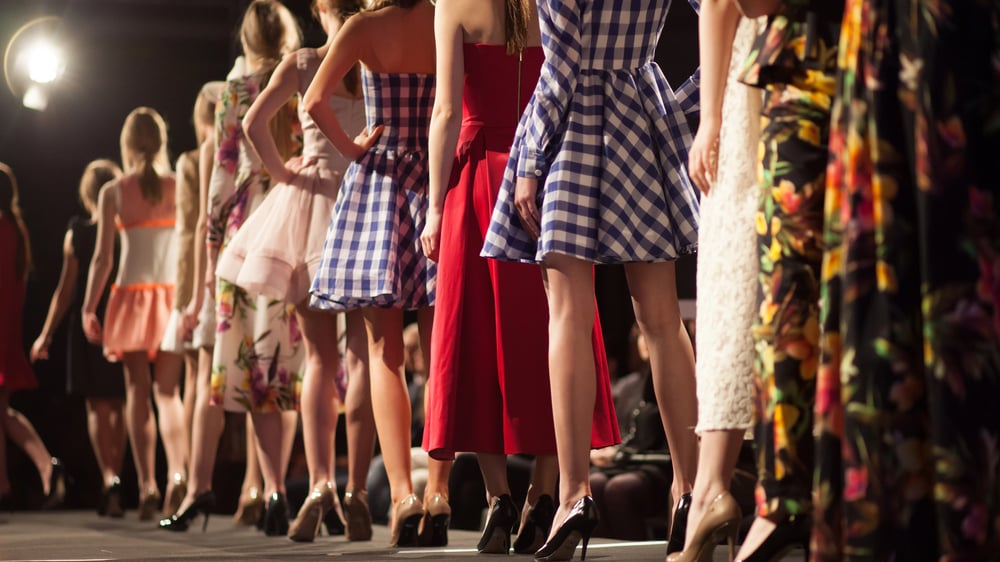
Looking across these fashion failures, clear patterns emerge.
Global luxury prices rose 25 to 30 percent between 2020 and 2024 according to the Deloitte Luxury Goods Report, while brands increasingly prioritized shock value and exclusivity over wearability and value.
Luxury’s shift toward treating fashion as an investment asset changed how consumers evaluated purchases, with resale value mattering more than quality or design.
Creative directors pushed provocation past acceptable boundaries, mistaking offense for innovation.
The high-end fashion world created an echo chamber where industry insiders validated increasingly unconventional choices while regular consumers watched in bewilderment.
Prices climbed while quality often declined in some cases, with brands relying on logo recognition rather than craftsmanship.
The result was a luxury sector that felt disconnected from everyone except the ultra-wealthy, abandoning aspirational buyers entirely.
These flops weren’t isolated incidents but symptoms of an industry struggling to balance artistic vision with commercial reality.
Luxury’s future may depend on reconnecting creativity with credibility.
More from Go2Tutors!

- The Romanov Crown Jewels and Their Tragic Fate
- 13 Historical Mysteries That Science Still Can’t Solve
- Famous Hoaxes That Fooled the World for Years
- 15 Child Stars with Tragic Adult Lives
- 16 Famous Jewelry Pieces in History
Like Go2Tutors’s content? Follow us on MSN.