Historic Evidences That Suggest Ancient Civilizations Were Advanced
The ancient world keeps surprising us. Every few years, archaeologists uncover something that forces a complete rethink of what our ancestors were capable of.
The more we dig, the more we realize that the gap between ancient and modern might not be as wide as we once thought. These weren’t primitive societies stumbling through the dark ages of human development—they were sophisticated cultures with knowledge that sometimes rivals our own.
The Antikythera Mechanism

This thing shouldn’t exist. A bronze clockwork computer from ancient Greece, more complex than anything that would appear again until the 14th century.
It tracked planetary movements, predicted eclipses, and calculated the four-year cycle of the Olympic Games. Found in a shipwreck off the Greek island of Antikythera in 1901, it took decades for researchers to understand what they were looking at.
The craftsmanship alone defies everything we thought we knew about ancient Greek technology.
Roman concrete that heals itself

The Romans weren’t just building monuments (though they certainly did that well enough, given how many are still standing after two thousand years) — they were engineering solutions to problems we’re only just beginning to understand, and their concrete is perhaps the most remarkable example of their technological sophistication. While modern concrete deteriorates and cracks under stress and time, requiring constant maintenance and eventual replacement, Roman concrete actually becomes stronger over time, developing what can only be described as self-healing properties that continue to function centuries after it was first mixed and poured.
The secret lies in their inclusion of volcanic ash, specifically a type called pozzolan, which creates a chemical reaction with seawater that produces new crystalline structures within the concrete matrix — so when cracks form (which they inevitably do), these crystals grow to fill the gaps, effectively repairing the damage without any human intervention whatsoever. Modern engineers have been trying to replicate this formula for decades.
And yet here we are, replacing highway overpasses every fifty years while Roman harbors remain intact at the bottom of the Mediterranean.
The Baghdad Battery
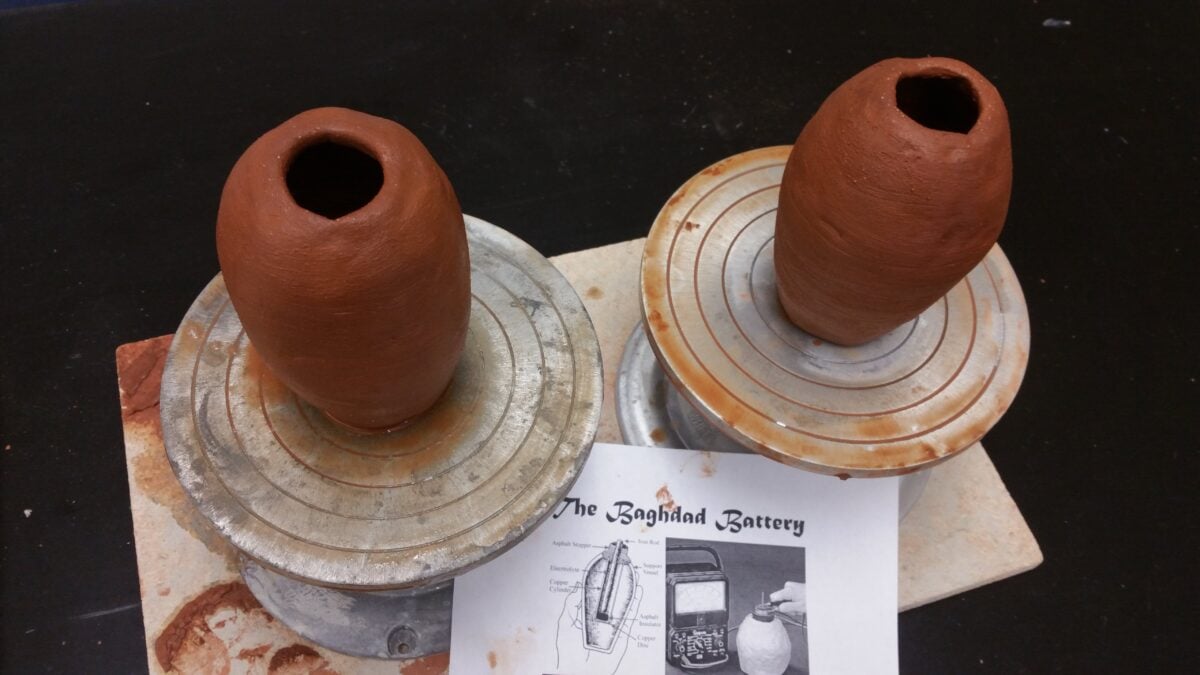
Sometimes archaeology feels like opening a jewelry box that plays a song you’ve never heard before — familiar enough to recognize as music, strange enough to make you wonder who composed it and why you can’t place the melody. That’s exactly what the Baghdad Battery represents: a 2,000-year-old clay jar containing a copper cylinder and iron rod that, when filled with an acidic solution, produces a small electrical current.
Found in 1938 near Baghdad, these objects sit quietly in museums while experts debate their purpose. The arrangement is too deliberate to be accidental, too functional to be purely decorative.
Whether they powered ancient electroplating operations or served some ritual function, they demonstrate a practical understanding of electrical principles that supposedly wasn’t discovered until the 18th century. The mystery isn’t just what they were for — it’s what else these civilizations understood about the invisible forces we think we invented.
Precision stone cutting in ancient Egypt

Egyptian stonemasons were obsessed with perfection, and it shows. The blocks at Giza fit together so tightly you can’t slide a credit card between them. Some cuts are accurate to within 2/100ths of an inch — precision that would impress modern contractors.
The conventional explanation involves copper tools, wooden wedges, and endless patience. Fair enough, but that doesn’t explain the perfectly smooth surfaces on granite blocks weighing several tons, or the intricate interior passages carved with mathematical precision.
To be fair, the logistics alone should have been impossible given the tools historians claim they had available.
The Nazca Lines
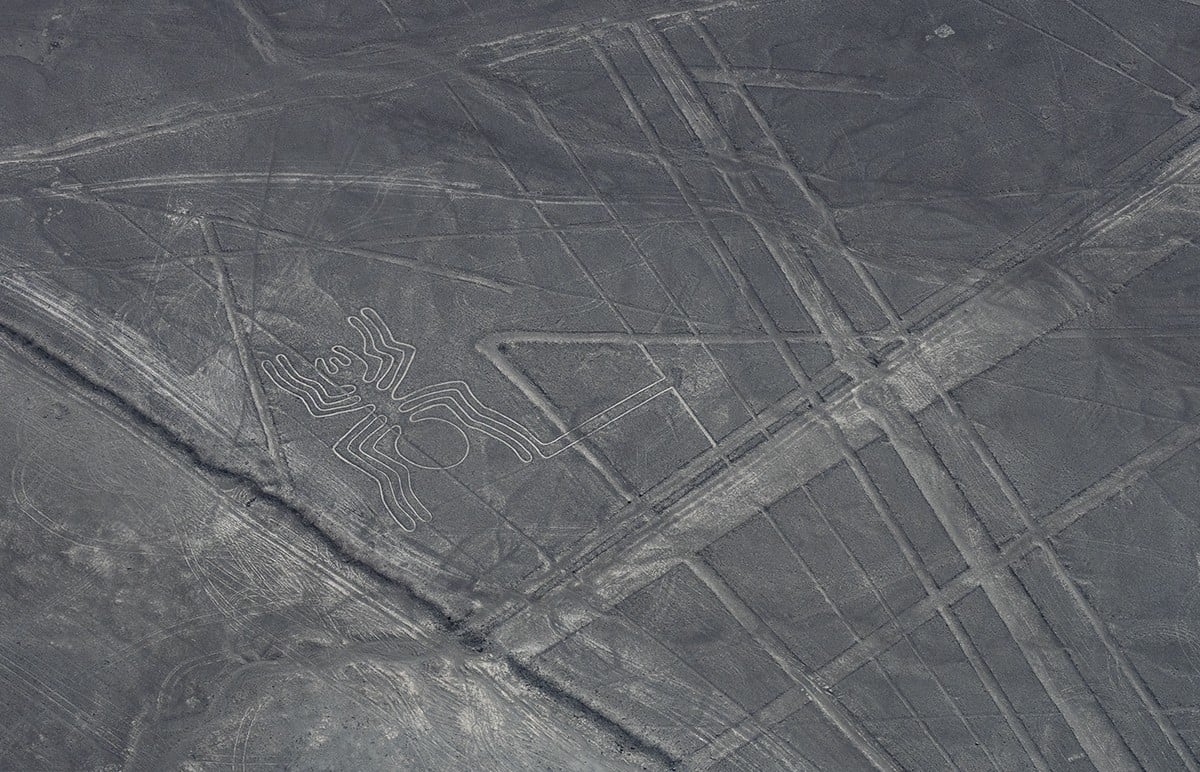
You can spend years walking through the Nazca desert in Peru and never understand what surrounds you, because the massive geoglyphs etched into the ground (some stretching over 1,200 feet in length) only reveal their true form when viewed from hundreds of feet above — which raises the obvious question of how a civilization without aircraft managed to create images that can only be properly appreciated from the sky. The lines themselves were created by removing the darker surface rocks to expose the lighter soil underneath, and they’ve remained largely intact for over a thousand years thanks to the desert’s stable climate and lack of significant rainfall.
The precision is what gets you, though: these aren’t rough sketches or approximations, but geometrically perfect representations of animals, plants, and abstract designs that required sophisticated planning and mathematical understanding to execute at such massive scale. But here’s what really makes you pause — the Nazca people had to somehow conceptualize these enormous images without being able to see them as they worked, creating detailed drawings that could only be verified from a perspective they supposedly never had access to.
And yet there they are, perfect and permanent, waiting for the invention of flight to finally be seen as their creators intended.
Greek fire and chemical warfare

Byzantine chemists created something truly nasty around 672 AD: Greek fire. This liquid weapon burned on water, stuck to everything it touched, and couldn’t be extinguished by conventional means.
Ships would launch it through bronze tubes, creating floating infernos that dominated naval battles for centuries. The formula was so closely guarded that it died with the empire.
Modern attempts to recreate it have produced various flammable mixtures, but nothing that matches the historical descriptions. The Byzantines essentially perfected chemical warfare, then took the secret to their graves.
Advanced metallurgy in ancient Damascus

There’s something almost magical about holding a piece of Damascus steel — the way light catches the watered patterns that flow across the blade like frozen rivers, the impossible sharpness that could slice through European swords while remaining flexible enough to bend without breaking. These weren’t just weapons; they were masterpieces of metallurgy that combined beauty with functionality in ways that seemed to defy the natural properties of iron and carbon.
The steel came from wootz ingots forged in India, but it was in Damascus (hence the name) that smiths developed the techniques to transform this raw material into blades of legendary quality. The process involved heating and folding the metal repeatedly, creating layers upon layers of different carbon concentrations that formed the distinctive patterns while producing a blade harder than anything produced in medieval Europe.
When Crusaders first encountered Damascus steel, they found their own swords shattering against blades that could reportedly cut through a silk scarf dropped onto the edge. Then, sometime around 1750, the knowledge simply vanished.
Modern metallurgists can analyze the remaining blades and understand the science behind their construction, but recreating the exact process has proven surprisingly difficult.
Mayan astronomical calculations

The Maya calculated the length of a year to 365.242 days. Modern astronomy puts it at 365.242199 days.
They were off by about 17 seconds — not bad for a civilization that supposedly lacked telescopes. Their calendar system tracked multiple cycles simultaneously: a 260-day ritual calendar, a 365-day solar year, and a “Long Count” that measured time from their creation date in 3114 BC.
They predicted eclipses centuries in advance and could pinpoint the position of Venus with startling accuracy. This wasn’t casual stargazing — it was precision astronomy that required generations of careful observation and mathematical sophistication.
Roman surgical instruments and medical knowledge
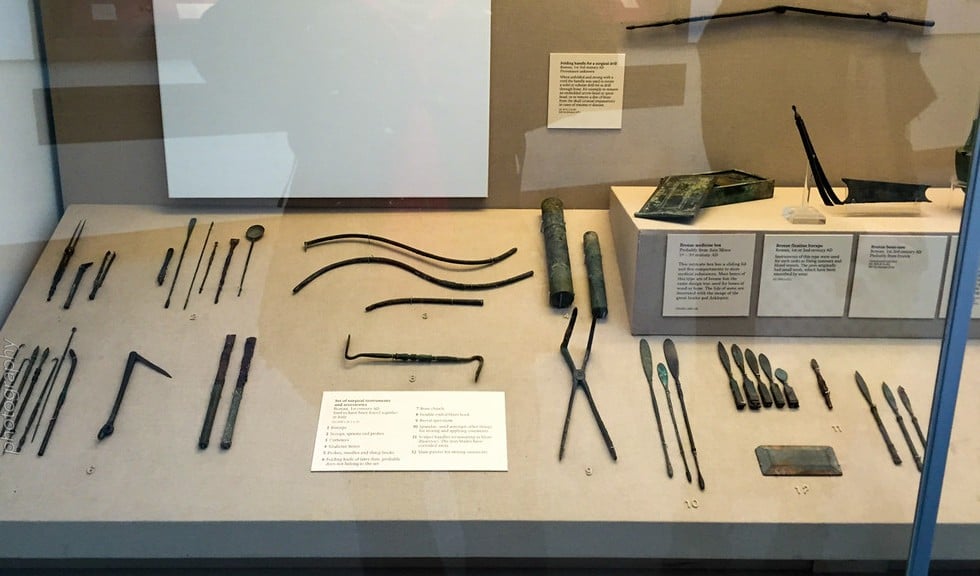
Walking through the ruins of Pompeii, you eventually reach the house of a Roman surgeon, where archaeologists found a collection of medical instruments that wouldn’t look entirely out of place in a modern operating room — forceps, scalpels, bone saws, and speculums crafted with a precision that speaks to both the metalworking skills of Roman artisans and the medical knowledge of Roman physicians. These weren’t crude tools for crude procedures, but specialized instruments designed for specific surgical applications, suggesting a level of medical understanding that went far beyond the folk remedies we often associate with ancient healthcare.
Roman military medics performed cataract surgery, removed kidney stones, and conducted amputations with remarkably high survival rates (considering this was centuries before germ theory or anesthesia). They understood the importance of cleanliness in medical procedures, used opium for pain management, and developed surgical techniques that wouldn’t be seen again in Europe until the Renaissance.
So when we talk about the “dark ages” of medicine, it’s worth remembering that some of that darkness came from forgetting what the Romans already knew. The Galen’s medical texts remained the standard reference for over a thousand years — not because medieval physicians lacked ambition, but because his work was legitimately that comprehensive.
The precision of Inca stonework
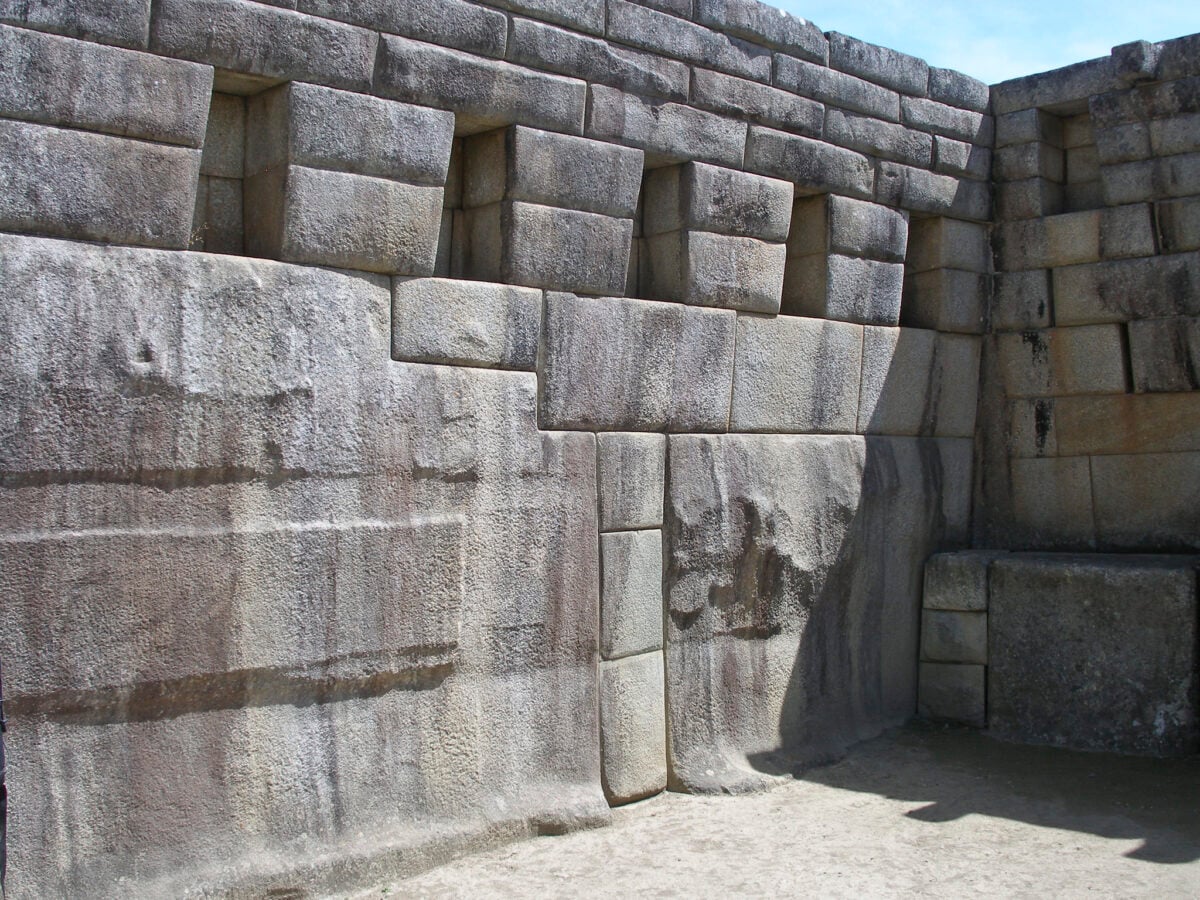
Inca masons built walls that have survived five centuries of earthquakes in one of the most seismically active regions on Earth. The secret wasn’t mortar — they didn’t use any.
Instead, they shaped each stone to fit so perfectly with its neighbors that the entire structure moves as a single unit during tremors. Some blocks weigh over 100 tons and feature dozens of angles cut to tolerances that would challenge modern machinery.
The Incas had no written language, no wheels, and no iron tools, yet they created architectural marvels that continue to baffle engineers. When the Spanish conquistadors first saw Cusco, they assumed the walls were the work of demons because human craftsmanship couldn’t possibly achieve such precision.
Chinese seismographs from 132 AD
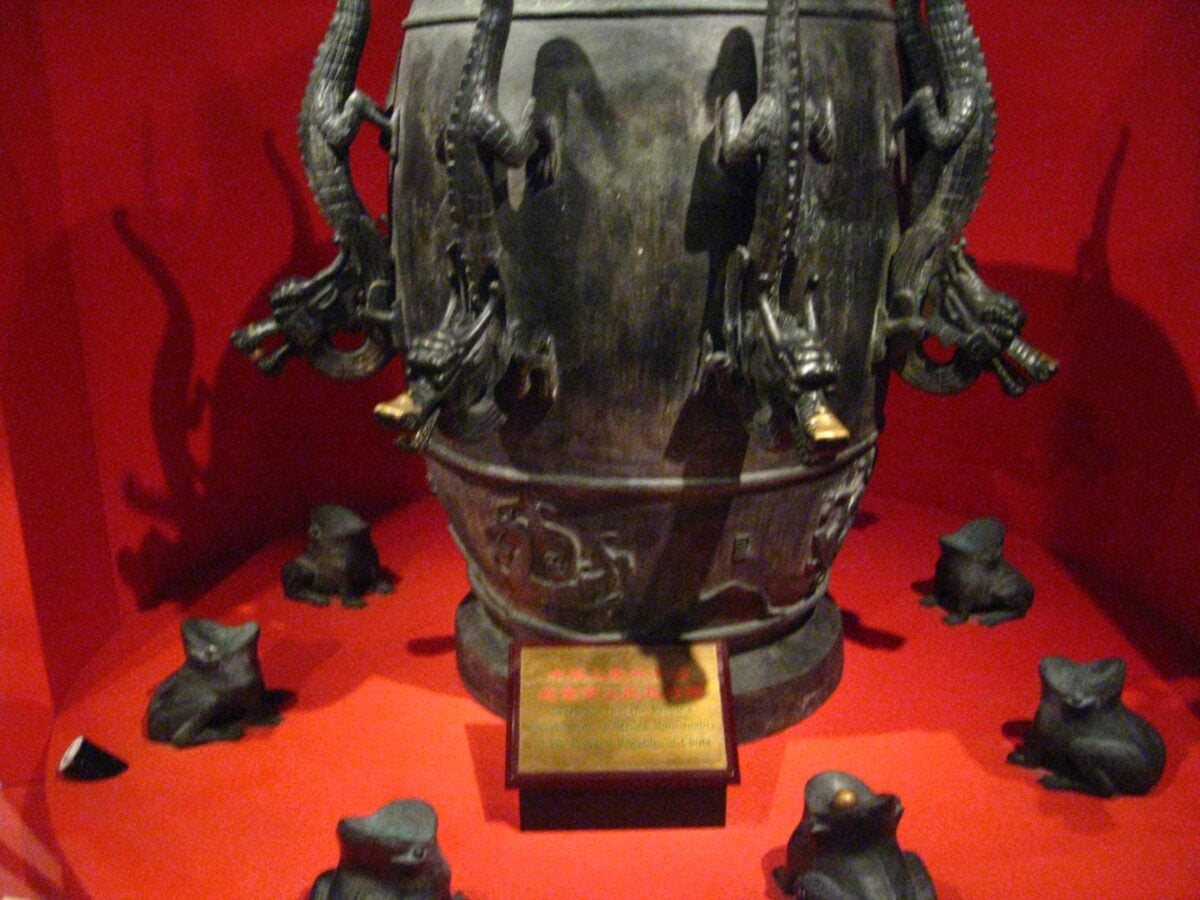
Zhang Heng’s earthquake detector looked like an elaborate piece of art: a bronze vessel surrounded by dragons holding orbs in their mouths, with frogs positioned below to catch the orbs when they dropped. When seismic waves reached the device, a pendulum mechanism inside would trigger one of the dragons to release its orb, indicating the direction of the earthquake.
In 132 AD, the device detected an earthquake that hadn’t been felt in the capital city of Luoyang. Officials dismissed it as a malfunction until messengers arrived days later confirming a major earthquake had struck 400 miles to the west. The instrument had worked exactly as designed — detecting seismic activity from a distance that should have been impossible with the technology of the time.
Advanced knowledge of pi and mathematical constants
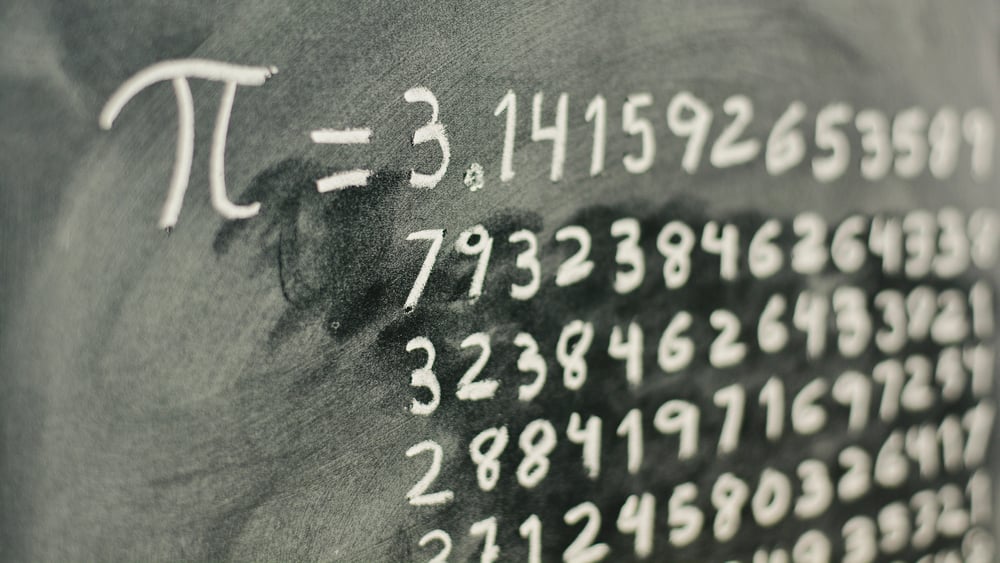
Ancient mathematicians got closer to unlocking the universe’s mathematical secrets than most people realize, and their calculations of pi demonstrate a precision that required both theoretical understanding and computational skill that we tend to associate with much later periods in human development. The Babylonians approximated pi as 3.125 (which is accurate to within 0.5%), while Egyptian mathematicians working around 1650 BC calculated it as approximately 3.16 — remarkably close considering they were working with basic arithmetic and geometric principles rather than the calculus and infinite series we use today.
But it was Archimedes who really pushed the boundaries, using a method of inscribed and circumscribed polygons to pin pi between 3.1408 and 3.1429 — accurate to three decimal places and achieved through pure geometric reasoning that wouldn’t be substantially improved upon until the development of more advanced mathematical tools centuries later. And here’s the thing that makes you pause: these weren’t just abstract exercises in mathematical curiosity, but practical calculations used in construction projects and astronomical observations that required real precision to function properly.
The fact that ancient mathematicians could achieve this level of accuracy suggests they understood mathematical principles in ways that go well beyond what we typically credit them with.
Evidence of ancient electrical phenomena understanding
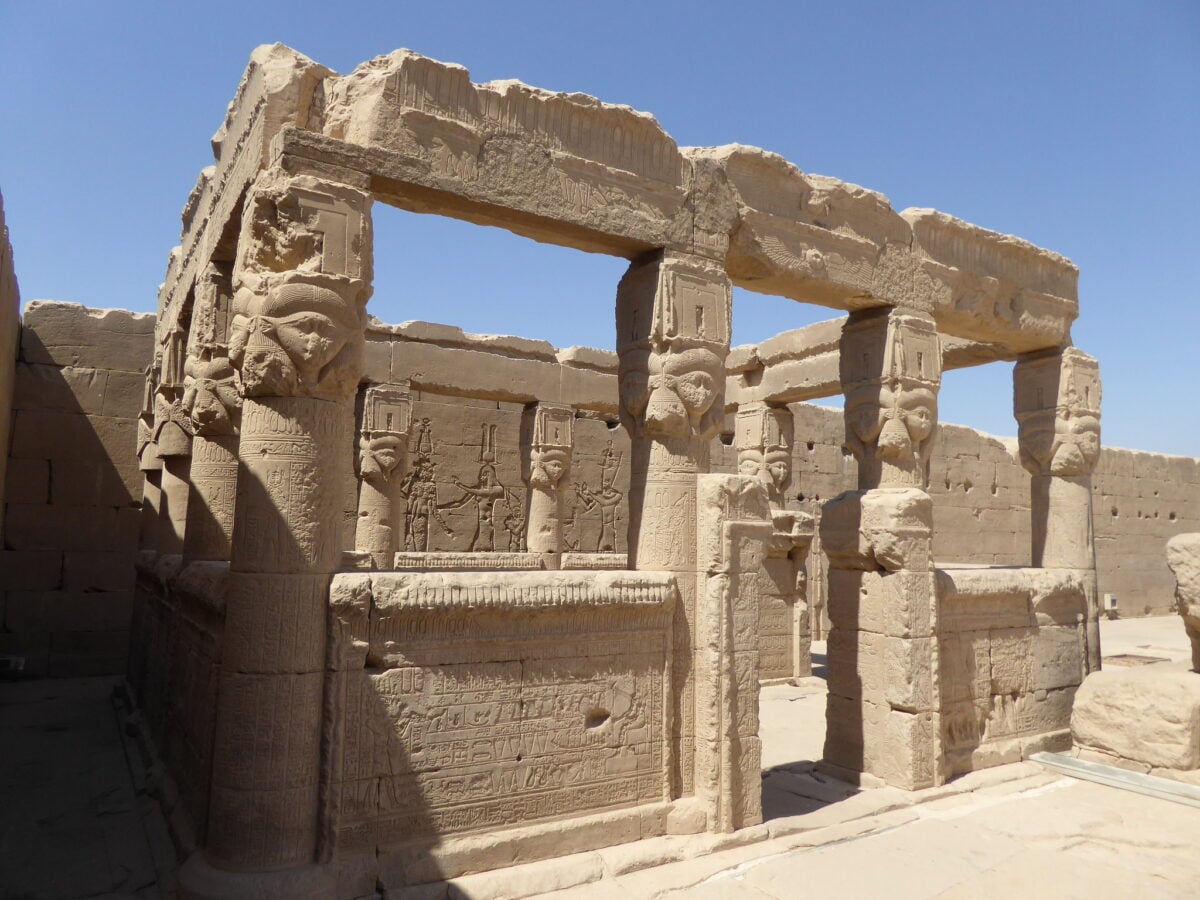
The Egyptians decorated the Dendera Temple with images that look suspiciously like giant light bulbs. Carved reliefs show figures operating what appears to be electrical equipment — bulb-shaped objects connected to braided cables, with figures manipulating controls that bear an uncomfortable resemblance to modern electrical diagrams.
Conventional archaeology dismisses these as religious symbols, which is probably the safe interpretation. But the level of detail suggests the artists were depicting something they had actually observed.
The “bulbs” even show internal structures that match what you’d expect to see in early electrical lighting. Whether or not the ancient Egyptians had electricity, they certainly had detailed knowledge of something that looked remarkably similar to electrical phenomena.
The enduring mystery of what we’ve forgotten

Perhaps the most unsettling realization isn’t what ancient civilizations accomplished, but how much knowledge simply vanished when empires fell and libraries burned. Each of these artifacts represents not just individual achievement, but entire bodies of understanding that were developed, refined, and then lost to time.
The ancients weren’t primitive people stumbling toward enlightenment — they were sophisticated problem-solvers working with the same human intelligence we possess today. Given enough time, motivation, and cultural continuity, they achieved things that continue to challenge our assumptions about technological progress.
History, it turns out, isn’t always a straight line pointing upward.
More from Go2Tutors!

- The Romanov Crown Jewels and Their Tragic Fate
- 13 Historical Mysteries That Science Still Can’t Solve
- Famous Hoaxes That Fooled the World for Years
- 15 Child Stars with Tragic Adult Lives
- 16 Famous Jewelry Pieces in History
Like Go2Tutors’s content? Follow us on MSN.