Historical Artifacts Owned by Modern Billionaires
When most people think about billionaire collections, they picture walls lined with Picassos or garages filled with vintage Ferraris.
But some of the world’s wealthiest individuals have taken their acquisitions in a decidedly different direction—one that reaches back millions of years or through centuries of human achievement.
From Leonardo da Vinci’s scientific notebooks to dinosaur skulls smuggled out of the Gobi Desert, the artifacts owned by today’s ultra-rich tell stories far more complex than simple displays of wealth.
The intersection of extreme wealth and historical artifacts has created a fascinating—and sometimes troubling—subculture where ancient treasures become status symbols, scientific specimens disappear into private homes, and cultural heritage becomes a commodity.
Here’s a closer look at some of the most remarkable historical artifacts that have found their way into billionaire hands.
Bill Gates and Leonardo’s Lost Notebook

In 1994, Bill Gates made headlines by purchasing Leonardo da Vinci’s Codex Leicester for a staggering $30.8 million at a Christie’s auction.
At the time, it became the most expensive book ever sold, and it remains one of the priciest manuscripts in existence.
The 72-page document, written between 1506 and 1510, contains Leonardo’s observations and theories on subjects ranging from astronomy to hydraulics, all penned in his characteristic mirror writing.
The codex isn’t just a historical curiosity.
It represents Leonardo’s attempts to understand phenomena like why the Moon glows, how water flows in rivers, and what causes fossils to appear on mountaintops.
Remarkably, some of his theories proved accurate centuries before modern science could verify them.
He correctly explained ‘earthshine’—the pale glow on the dark part of the crescent moon—a full century before German astronomer Johannes Kepler proved the concept.
Gates didn’t simply lock the manuscript away in a vault.
He had the pages digitally scanned and even distributed some images as screensavers in Windows 95.
The codex has traveled to museums worldwide, appearing in Sydney, Dublin, Phoenix, and Minneapolis, allowing the public to glimpse Leonardo’s genius.
For Gates, the purchase represented more than wealth—it embodied his admiration for curiosity and innovation.
He’s often spoken about how Leonardo’s interdisciplinary approach to knowledge mirrors the kind of thinking needed to solve modern problems.
The Dinosaur Skull Debacle
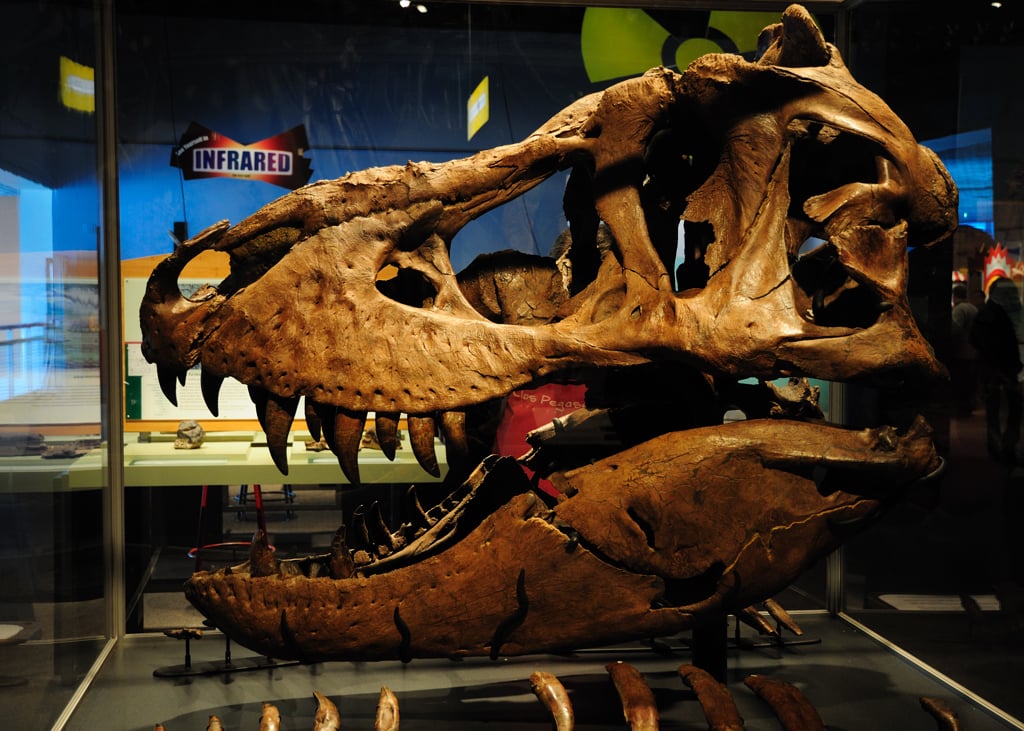
The market for prehistoric fossils has exploded in recent years, attracting collectors who see these ancient specimens as the ultimate conversation pieces.
But this trend has also exposed the murky ethics and legalities surrounding fossil ownership.
No story illustrates this better than Nicolas Cage’s brief ownership of a Tyrannosaurus bataar skull.
In 2007, Cage purchased the 67-million-year-old skull at a Manhattan auction for $276,000, reportedly outbidding Leonardo DiCaprio in the process.
The skull was impressive—32 inches long and about 65 percent complete, with knife-like serrated teeth still intact.
Cage received a certificate of authenticity from the Beverly Hills auction house and displayed his prize at home, unaware of the storm brewing beneath the surface.
The problem was that the skull had been illegally excavated from Mongolia’s Gobi Desert and smuggled into the United States through Japan.
Mongolia considers all dinosaur fossils national heritage that cannot be removed without government permission.
The skull had passed through the hands of Eric Prokopi, a self-described ‘commercial paleontologist’ who later pleaded guilty to smuggling numerous fossils from Mongolia and China.
When authorities contacted Cage in 2014, the actor cooperated immediately, voluntarily surrendering the skull so it could be returned to Mongolia.
Cage wasn’t alone in his fascination with prehistoric specimens.
DiCaprio has built his own collection of fossils, primarily predatory dinosaurs including a Torvosaurus skull.
The natural history museum was a childhood favorite for DiCaprio, and that early wonder apparently never faded.
Russell Crowe auctioned off a Mosasaur skull during his divorce proceedings.
The trend has become so pronounced that auction houses like Christie’s and Sotheby’s now regularly feature dinosaur fossils alongside paintings and sculptures.
When Collecting Crosses Legal Lines

Michael Steinhardt’s case represents perhaps the most egregious example of how billionaire collecting can fuel illegal trafficking in cultural artifacts.
The hedge fund manager and philanthropist spent decades amassing an extensive collection that authorities eventually determined included 180 stolen pieces worth over $70 million.
Steinhardt’s collection spanned 11 countries and included items like stone death masks from Israel, a chest for human remains from Crete, and a fresco torn from the walls of an ancient Roman villa.
Manhattan District Attorney Cyrus Vance Jr. didn’t mince words, describing Steinhardt as displaying ‘a rapacious appetite for plundered artifacts without concern for the legality of his actions.’
The investigation revealed that at least 171 pieces in his collection had passed through known trafficking networks.
This wasn’t Steinhardt’s first brush with questionable acquisitions.
In 1997, a federal judge ruled that he had illegally imported a 4,500-year-old gold bowl from Italy, valued at $1 million, and rejected his claim that he was an ‘innocent owner’ with no knowledge of its dubious origins.
As part of a 2021 agreement with prosecutors, Steinhardt surrendered the entire collection and accepted a lifetime ban on acquiring any additional antiquities.
The pieces have since been returned to their countries of origin.
The Private Museum Phenomenon

Some billionaires have responded to their collecting passions by transforming their homes into private museums.
These aren’t just display cases in a study—they’re climate-controlled galleries with professional lighting, custom mounts, and security systems that rival public institutions.
One tech billionaire in Silicon Valley built an entire wing dedicated to Picasso paintings.
A Saudi collector reportedly installed a 150-million-year-old Tyrannosaurus rex skeleton as the centerpiece of an underground gallery.
The appeal goes beyond mere possession.
For many wealthy collectors, these private museums represent attempts to surround themselves with beauty, history, and significance.
They create immersive environments where a person can walk through rooms themed around ancient Egypt or medieval Europe, complete with authentic artifacts displayed in glass cases.
One Hollywood figure even designed a hidden room that recreates the interior of the Titanic using real artifacts from the ship.
David Geffen, the entertainment mogul whose art collection is valued at over $2 billion, took a different approach.
In 1994, he orchestrated an unusual exchange with the Iranian government, trading a valuable Persian manuscript for Willem de Kooning’s ‘Woman III’ from the Tehran Museum’s collection.
This kind of creative deal-making shows how billionaires can leverage their resources and connections to acquire pieces that would be impossible to obtain through traditional means.
The Scientific Cost

Paleontologists and archaeologists have grown increasingly alarmed about the privatization of important specimens.
When fossils disappear into private collections, they become unavailable for scientific study.
Researchers can’t examine them, measure them, or compare them with other specimens.
Each fossil represents millions of years of evolutionary history—an irreplaceable piece of evidence about life on Earth.
David Polly, president of the Society of Vertebrate Paleontology, has argued that fossils fundamentally differ from art objects.
A painting by Picasso has cultural value, but multiple Picasso paintings exist.
A unique fossil specimen, once lost to science, cannot be replaced.
The private market also drives prices beyond what most museums can afford.
When a Tyrannosaurus rex skeleton nicknamed Stan sold for $32 million in 2020, it set a record that effectively priced public institutions out of the market for complete specimens.
Some private collectors have tried to bridge this gap by loaning their acquisitions to museums or making them available for research.
Gates’s handling of the Codex Leicester serves as one positive example.
Still, there’s no comprehensive tracking system for privately owned fossils, meaning science may be losing access to specimens without even knowing they exist.
The Ethical Maze

The modern market for historical artifacts exists in a complicated space between legal commerce and cultural theft.
Many countries have enacted strict laws protecting archaeological sites and fossils, but enforcement remains challenging.
Objects can be smuggled across borders, their origins obscured through layers of intermediaries, and their provenance falsified with impressive-sounding documentation.
Wealthy collectors often claim they purchased items in good faith from reputable dealers or auction houses, unaware of any illegal activity.
Sometimes this is true—the chain of custody can be genuinely murky, and even experts struggle to verify origins.
But critics argue that collectors have a responsibility to ask hard questions before acquiring artifacts, especially when they come from regions known for trafficking problems.
The repatriation movement has gained momentum in recent years, with countries like Greece, Egypt, and Mongolia successfully recovering stolen cultural property.
These victories represent not just the return of objects but the restoration of cultural heritage to the peoples and nations from which it was taken.
When Cage returned the dinosaur skull or when Steinhardt surrendered his collection, they acknowledged—however belatedly—that some treasures belong to everyone, not just those who can afford them.
Where History Meets Wealth
The fascination with owning pieces of history isn’t likely to disappear.
For billionaires seeking objects that money can’t easily buy, historical artifacts offer both prestige and connection to something larger than themselves.
A Leonardo notebook links its owner to one of humanity’s greatest minds.
A dinosaur skull represents a tangible connection to a world that existed before humans even evolved.
But as these stories demonstrate, the line between collecting and hoarding, between preservation and exploitation, remains razor-thin.
The most responsible collectors recognize that their ownership comes with obligations—to share these treasures with scholars and the public, to ensure proper care and documentation, and to acknowledge when an artifact’s rightful place is somewhere other than a private home.
The billionaires who grasp this distinction become stewards rather than simply owners, temporary caretakers of wonders that will outlast any individual fortune.
More from Go2Tutors!

- The Romanov Crown Jewels and Their Tragic Fate
- 13 Historical Mysteries That Science Still Can’t Solve
- Famous Hoaxes That Fooled the World for Years
- 15 Child Stars with Tragic Adult Lives
- 16 Famous Jewelry Pieces in History
Like Go2Tutors’s content? Follow us on MSN.



