How Vintage Toys Reveal Childhood Trends Across Eras
Walk into any toy store today and you’ll see aisles divided by pink and blue, screens flashing from every corner, and price tags that make your wallet weep. But rewind a few decades and the toy landscape looked completely different.
Toys weren’t just playthings—they were tiny mirrors reflecting what society valued, feared, and dreamed about. A closer look at vintage toys reveals fascinating patterns about gender roles, technological obsessions, economic shifts, and cultural anxieties that defined each generation.
The toys kids played with weren’t accidents of design. They were carefully crafted responses to the world around them, shaped by wars, social movements, economic booms, and advertising revolutions.
Here is a list of 12 ways vintage toys reveal childhood trends across different eras, showing how playtime became a window into the hopes and hang-ups of each generation.
The Post-War Plastic Revolution

World War II changed everything about toy manufacturing, and not just temporarily. During the war, metal and rubber were reserved for military production, forcing toy makers to get creative with wood and cardboard.
But when the war ended and soldiers came home, a manufacturing boom flooded the market with a brand-new material: plastic. This wasn’t just a material swap—it was a complete reimagining of what toys could be.
Suddenly, toys became cheaper, more colorful, and mass-produced at scales never seen before. The 1950s introduced iconic plastic toys, including Play-Doh, which had originally been created as a wallpaper cleaner in the 1930s before being repurposed as a modeling compound for kids in the mid-1950s.
This shift signaled that childhood itself was becoming a commercialized experience where every kid could own the same bright, shiny things.
Television Advertising Transforms Everything

Before 1952, toy companies relied on catalogs and word-of-mouth to sell their products. Then Mr. Potato Head became the first toy ever advertised on television, and the game changed overnight.
The original 1952 version required families to use real potatoes, with the kit providing just the plastic facial features and accessories. More than one million kits sold in the first year, proving that kids could be directly targeted as consumers.
Television became the ultimate sales tool, speaking directly to children rather than their parents. The plastic potato body wasn’t added until 1964, but by then the advertising revolution was already in full swing.
This shift didn’t just sell more toys—it fundamentally changed how children viewed themselves as consumers with their own desires and purchasing power.
Like Go2Tutors’s content? Follow us on MSN.
The Space Race Launches Toy Imagination

When the Soviet Union launched Sputnik in 1957 and the United States landed on the moon in 1969, toy manufacturers weren’t far behind. The 1960s exploded with space-themed toys, from rocket ship playsets to astronaut action figures.
Kids suddenly wanted to be space explorers rather than cowboys, reflecting a cultural shift toward technological optimism and scientific achievement. G.I. Joe, introduced in 1964 as a 12-inch soldier doll, quickly expanded to include astronaut versions to capitalize on space fever.
These toys revealed a generation raised to believe that the future belonged in the stars, and that scientific progress was the ultimate adventure.
Barbie Reflects Changing Female Aspirations
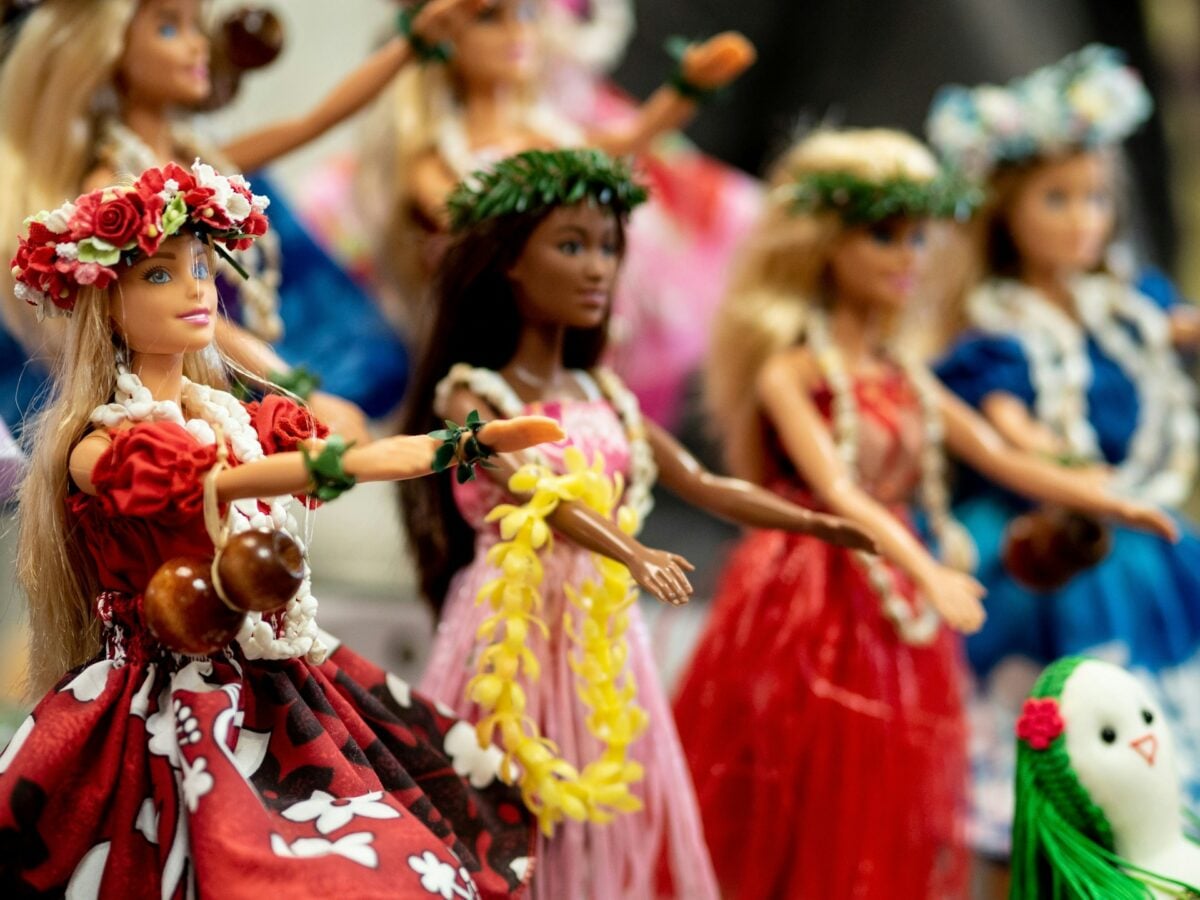
When Barbie debuted in 1959, she was revolutionary—not because she was just another doll, but because she wasn’t a baby. Inspired by the German Bild Lilli doll, Barbie represented an adult woman with her own wardrobe, career possibilities, and independent lifestyle.
Over the decades, Barbie became a cultural barometer for female expectations. Astronaut Barbie appeared in 1965, riding the wave of space exploration excitement, and surgeon Barbie followed in 1973.
Each iteration revealed what society thought girls should aspire to become, making Barbie both a reflection of progress and a lightning rod for criticism about beauty standards and gender roles.
The Rise of Collector Culture

Star Wars changed toys forever when it hit theaters in 1977. Kenner couldn’t produce action figures fast enough to meet demand, so in 1978 they issued the Early Bird Certificate Package—vouchers promising future delivery of four figures.
This created the first modern toy shortage frenzy and introduced the concept of toys as collectibles. Adults started collecting these figures alongside kids, giving birth to the concept of toys as investments rather than just playthings.
This trend exploded in the 1980s and 1990s with limited editions, special packaging, and collector’s items that were never meant to be opened. The shift revealed a cultural obsession with nostalgia and material accumulation, where childhood memories could be preserved and monetized through objects kept in mint condition.
Like Go2Tutors’s content? Follow us on MSN.
Electronic Toys Signal Technological Anxiety

The 1970s and 1980s introduced a wave of electronic toys that seemed almost magical—Simon with its memory game, Speak and Spell with its robotic voice, and handheld electronic games that felt like the future. These toys reflected both excitement and anxiety about computers entering everyday life.
Parents wanted their kids to be technologically literate but weren’t quite sure what that meant yet. The Atari 400, released in 1979, was marketed as a home computer for families, blurring the line between educational tool and entertainment device.
These products revealed a society betting that the future belonged to people who understood machines, with childhood serving as training for the digital age their parents couldn’t fully imagine.
Cabbage Patch Kids and the Scarcity Economy

Xavier Roberts created handmade cloth dolls called Little People in 1978, but when toy manufacturer Coleco mass-produced them as Cabbage Patch Kids in 1983, they became the first toy to create legitimate riots in stores. Parents physically fought each other to secure these dolls for Christmas, revealing something uncomfortable about consumer culture.
Each doll came with adoption papers and a unique name, tapping into desires for individuality and emotional connection. But the manufactured scarcity turned them into status symbols rather than simple toys.
This phenomenon revealed how marketing had learned to weaponize parental guilt and childhood disappointment, creating artificial demand through limited supply.
Video Games Reshape Indoor Play

When home video game consoles became affordable in the 1980s and 1990s, they fundamentally changed what childhood looked like. Kids who once played outside until dark now spent hours in front of screens, mastering levels and accumulating high scores.
The Nintendo Entertainment System, released in North America in 1985, revived the video game industry after the catastrophic crash of 1983 and made gaming a mainstream childhood activity. This shift revealed growing concerns about sedentary lifestyles, screen time, and whether virtual achievements counted as real accomplishment.
Video games also became heavily gendered, with marketing that positioned gaming as a masculine activity—a bias that would shape the tech industry for decades.
Virtual Pets Teach Digital Responsibility

Tamagotchis, created by Japanese toy company Bandai, launched in Japan in 1996 and arrived in the United States in 1997. These virtual pets instantly became obsessions for kids who suddenly had to feed, play with, and care for pixelated creatures on tiny keychains.
Kids smuggled them into schools and set alarms to wake up at night for feedings, revealing how digital engagement could create genuine emotional attachment and anxiety. The trend showed that childhood responsibility was being redefined—caring for something didn’t require physical presence anymore, just constant digital attention.
It was training for a future where relationships would increasingly exist through screens.
Like Go2Tutors’s content? Follow us on MSN.
Action Figures Get Hypermasculine

G.I. Joe started in 1964 as a 12-inch soldier doll with realistic proportions. In 1982, the line was redesigned as smaller 3.75-inch figures with increasingly exaggerated muscular builds.
That same year, He-Man debuted with impossibly bulging muscles and aggressive poses. Research showed that these toys promoted increasingly extreme versions of masculinity centered on violence, dominance, and physical power.
The exaggerated physiques mirrored the bodybuilding craze and action movie heroes of the era, revealing cultural anxieties about what it meant to be a man. These toys weren’t just reflecting masculinity—they were actively shaping narrow definitions of it for young boys, teaching that strength and aggression were the most valuable male traits.
Princess Culture Reaches Peak Pink

In 2000, Disney officially launched the Disney Princess franchise, packaging existing animated princesses together as a unified brand that would explode into a cultural phenomenon. The early 2000s saw princess toys saturate childhood in shades of pink and sparkles, focusing almost exclusively on appearance, romance, and fairy tale endings.
This hyperfeminine trend revealed a strange contradiction—girls were being told they could do anything while simultaneously being marketed products that emphasized beauty, passivity, and finding a prince. The princess obsession showed how corporate marketing could overpower parental values, as even parents who actively discouraged princess culture found their daughters drawn to the glittery merchandise that dominated every store.
Licensed Characters Dominate Imagination

By the late 1990s and 2000s, original toy concepts became increasingly rare. Even LEGO, which had built its reputation on open-ended creative play, pivoted heavily to licensed sets after striking deals with Star Wars in 1999 and Harry Potter in 2001.
Kids played with toys based on characters someone else had invented rather than creating their own stories from scratch. This trend revealed how intellectual property had colonized childhood imagination, with corporations controlling not just what kids played with but the narratives and characters that filled their pretend worlds.
The shift from generic toys to licensed merchandise showed that play itself had become another revenue stream in an entertainment ecosystem designed to extract maximum profit from every angle of childhood.
Like Go2Tutors’s content? Follow us on MSN.
From Playthings to Cultural Artifacts
The evolution of toys across eras tells a story that goes far beyond plastic and paint. These objects captured moments when society wrestled with technological change, redefined gender expectations, commodified childhood, and turned play into big business.
The post-war optimism of the 1950s gave way to space-age dreams in the 1960s, brief egalitarianism in the 1970s, aggressive marketing in the 1980s, and digital dominance by the 1990s. Each shift revealed anxieties and aspirations that adults projected onto children through the toys they bought.
Today’s vintage toys serve as time capsules, preserving not just memories of individual childhoods but snapshots of entire cultural moments when society collectively decided what children should value, practice, and become.
More from Go2Tutors!

- 16 Historical Figures Who Were Nothing Like You Think
- 12 Things Sold in the 80s That Are Now Illegal
- 15 VHS Tapes That Could Be Worth Thousands
- 17 Historical “What Ifs” That Would Have Changed Everything
- 18 TV Shows That Vanished Without a Finale
Like Go2Tutors’s content? Follow us on MSN.



